
Ac Heating Not Working? Quick Fixes
That sudden, creeping chill in your house when you expect warmth can be jarring. You listen for the familiar hum of the heater, but there's only silence. It’s a moment that sends a shiver down your spine, and not just from the cold. The mind immediately jumps to complex, expensive problems.
But hold on. Before you dial for an emergency repair, take a breath. More often than not, the culprit is something surprisingly simple.
We've seen it countless times: a system that seems completely dead is just reacting to a wrong setting or a tripped safety switch. Let's walk through the first few places you should look. A few minutes of your time could save you a service call fee and get your heat back on right away.
Start With The Thermostat
The thermostat is command central for your HVAC system, so it's always the best place to start your detective work. A tiny oversight here can easily mimic a total system failure.
Here’s what to look for:
Is it set to "Heat"? This sounds almost too obvious, but it’s the number one reason we get calls in the fall. It's easy to forget you left it on "Cool" or "Fan."
Check the temperature setting. Make sure the temperature is set at least five degrees higher than the current room temperature. If the set point is lower than the room temp, the system has no reason to turn on.
What about the batteries? Many digital thermostats run on batteries. If the screen is blank or you see a flashing battery icon, a quick swap could be all you need.
Check Power At The Source
If the thermostat looks good, the next logical step is to make sure the unit is actually getting power. This is another really common issue when the AC heating is not working.
Find your home's main electrical panel; it's usually in the garage, basement, or a utility closet. Scan the labels for the breaker marked "Furnace," "HVAC," or "Air Handler."
If that switch is flipped to the "Off" side or stuck in the middle, it's been tripped. To reset it, push it firmly all the way to "Off," then switch it back to "On."
A tripped breaker is doing its job: protecting your system. If you reset it and it trips again soon after, don't keep flipping it. That’s a clear sign of a more serious electrical issue that needs a professional eye to prevent equipment damage or a fire risk.
Inspect The Air Filter
Finally, don't overlook the humble air filter. A filter that's packed with dust and debris can choke off the airflow to your system. When this happens, the furnace can overheat and shut itself down as a safety precaution. To you, it just looks like it died.
Pull your filter out and hold it up to a light. Can you see the light through it? If not, it’s well past time for a replacement.
Swapping out a dirty filter not only solves this specific problem but also boosts your system’s efficiency and improves your home’s air quality. These simple checks are your first line of defense, and knowing how to do basic upkeep is key to preventing future headaches. You can learn more about the benefits of routine AC maintenance right here on our site.
Okay, so the simple stuff, thermostat, breaker, filter, didn’t fix the problem. Now it's time to roll up our sleeves and dig a little deeper.
What you check next depends entirely on the kind of heating system you have. A gas furnace and a heat pump are two totally different animals, and they fail for very different reasons. Figuring out which one is sitting in your basement or on the side of your house is the key to cracking the case of why your heat isn't working.
This is a problem more and more people are facing. Our reliance on climate control is skyrocketing worldwide, and that puts a massive strain on our home systems. The International Energy Agency predicts the number of AC units will balloon to 5.6 billion by 2050. All that extra work means more wear, tear, and unexpected failures.
Troubleshooting A Gas Furnace
If your home is heated by a gas furnace, the problem is very often tied to ignition. Do you hear a distinct "clicking" sound when the heat is supposed to kick on, only for it to go silent? That’s the classic sign of an ignition failure. The system is trying to light the burners, can't, and then shuts itself down as a safety measure.
You can often spot the issue just by looking.
Older furnaces typically have a pilot light, which is a small, continuous blue flame. If that flame is out, you've found your culprit.
Newer, high-efficiency systems use an electronic ignition. When the heat cycles on, you should see a component glow bright orange (that's a hot surface ignitor) or see a spark jump across an electrode. No glow, no spark, no heat.
While you're looking, pay attention to the flame's color if it does light:
A strong, steady blue flame is what you want to see. It means everything is burning cleanly and efficiently.
A flickering, weak, or yellow flame is a major red flag. This could mean the burners are dirty, but it can also point to a dangerous problem with the gas-to-air mixture.
Never, ever ignore a yellow flame. It’s a tell-tale sign that your furnace could be producing carbon monoxide, a deadly, odorless gas. If you see a yellow flame, turn the system off immediately and call a professional. It's not worth the risk.
Diagnosing Heat Pump Problems
Heat pumps play by a different set of rules. Instead of creating heat, they move it from one place to another. So, when a heat pump isn’t heating, the problem usually lies with its reversing valve or something going on with the outdoor unit.
One of the most common complaints we hear is the system blowing cold air even when it’s set to "heat." This almost always points to a faulty reversing valve. That little part is responsible for switching the direction of the refrigerant, and when it gets stuck, your system is locked in A/C mode.
Another big one is ice. A thin layer of frost on the outdoor coils on a cold day can be normal, but if the unit looks like a solid block of ice, you've got a problem. This usually happens for a few reasons:
Restricted airflow from a dirty filter or blocked outdoor coils.
The system is low on refrigerant.
The automatic defrost cycle isn't working correctly.
Your first move should be to check the outdoor unit. Make sure it's clear of any leaves, snow, or debris that might be smothering it. If the simple fixes don't work and you suspect a bigger issue like a refrigerant leak or a bad valve, it's time to call in the pros. Getting these problems fixed correctly is crucial for the health of your system. You can learn more about our approach to these specific issues on our heat pump repair page.
Before you call for help, running through a quick checklist can save you time and even a service fee. Here’s a simple table to guide you.
DIY Troubleshooting Checklist
Symptom | Potential Cause | DIY Action Item |
|---|---|---|
Furnace makes clicking sounds, but no heat | Ignition failure | Check for a pilot light that's out or watch for the electronic ignitor to glow/spark. |
Furnace flame is yellow or flickering | Dirty burners, poor combustion | Safety Alert: Turn off the system immediately. This requires a professional. |
Heat pump blows cold air on "heat" mode | Reversing valve is stuck | Try switching the system to A/C, then back to heat. If it persists, call for service. |
Outdoor heat pump unit is a solid block of ice | Defrost cycle failure, low refrigerant, or airflow blockage | Check and clean the air filter. Ensure the outdoor unit is clear of debris. |
System runs constantly but doesn't warm the house | Clogged air filter or a more serious issue | Your first and easiest check is always the air filter. Replace it if it's dirty. |
This checklist covers the most common issues homeowners can safely investigate. If you've run through these steps and are still stuck in the cold, it’s a clear sign that a deeper, more technical problem is at play.
Recognizing When It's Time To Call A Professional
While it feels great to solve a heating issue yourself, the smartest homeowners know their limits. Some problems go beyond a simple DIY fix; they can be complex, and frankly, dangerous to tackle without certified training and specialized tools. Knowing when to step back and call in a pro isn't admitting defeat; it's making a wise decision to protect your home and your family.
When you're dealing with an ac heating not working and the symptoms are more serious than a flipped breaker or dirty filter, it's time to bring in an expert. Think of these as clear stop signs, signaling a deeper problem that needs a professional diagnosis.
Red Flags That Demand A Professional Call
Some warning signs should have you reaching for the phone immediately. Trying to fix these on your own can lead to much bigger problems, more expensive damage, or serious safety risks.
Suspected Refrigerant Leaks: If your heat pump is icing over or you hear a distinct hissing sound, you could have a refrigerant leak. Handling refrigerant isn't a DIY task; it requires an EPA certification for a reason.
Major Electrical Malfunctions: A breaker that trips over and over is a huge red flag. If you smell a burning odor coming from your vents or see any scorch marks on the unit, shut the power off right away. These point to serious electrical faults that need an expert.
Loud, Unsettling Noises: Banging, grinding, or a high-pitched squeal coming from your furnace or air handler is a cry for help. It often signals a major mechanical failure, like a broken blower motor or other failing parts.
When your system starts acting erratically, it's telling you something is seriously wrong. Ignoring these warnings or trying a fix without the right know-how can quickly turn a repairable issue into a full system replacement.
The first step in any advanced troubleshooting is figuring out what kind of system you even have. This decision-making process can help.
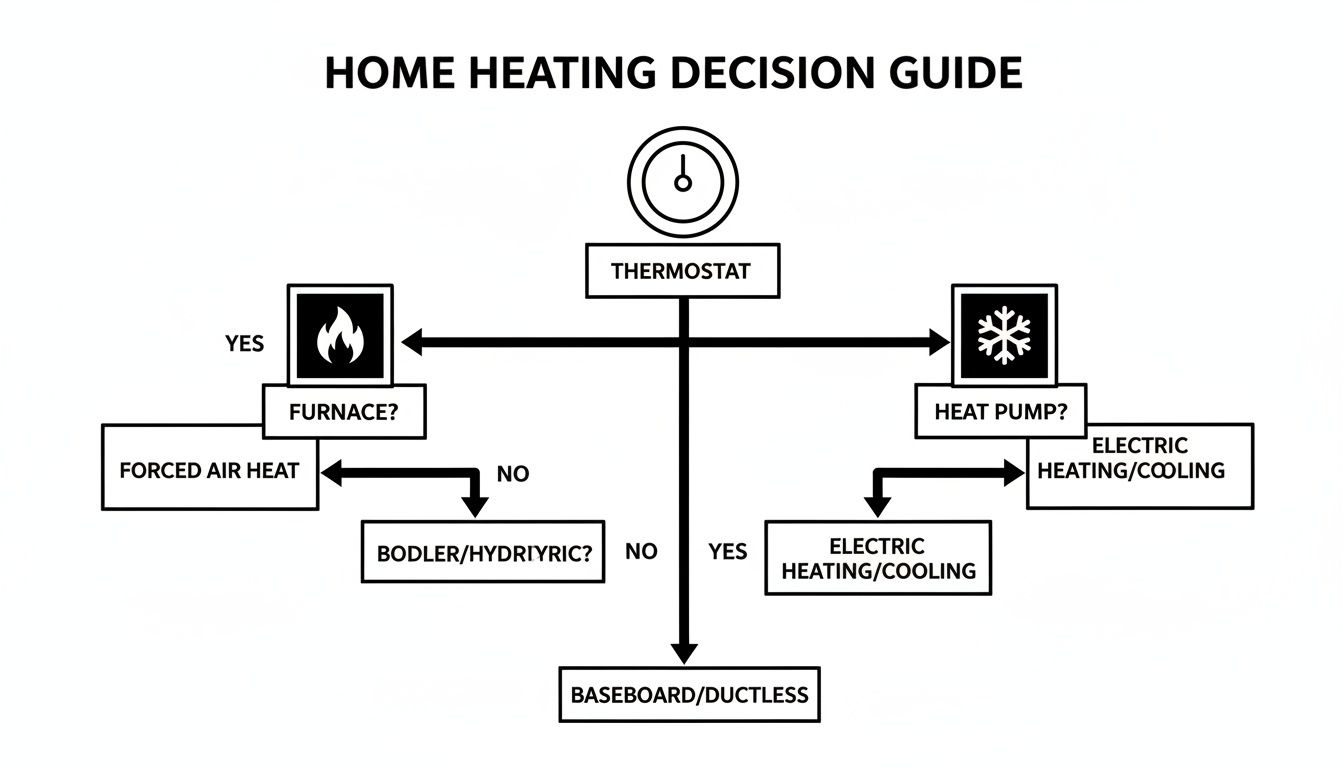
This guide can help you distinguish between a furnace and a heat pump by looking at your thermostat and how the system behaves. Knowing this helps you explain the problem clearly when you call a technician.
Finding A Trustworthy HVAC Contractor
Choosing the right technician is just as important as deciding to make the call. You want to look for a company with proper licensing and insurance, a solid history of positive customer reviews, and a commitment to transparent, upfront pricing. A reputable contractor will give you an honest diagnosis without trying to pressure you into expensive upgrades you don't need.
The cost of a repair is a real concern for many families. In the U.S., 5% of households reported their AC equipment broke last year and they couldn't afford to fix it, which really underscores how important fair pricing and reliable service are. You can get a better sense of these challenges by reviewing this global cooling report.
When you're facing a complex problem and need a team you can count on, our certified technicians are ready to help. Learn more about our approach to professional AC repair services and see how we can get your system back up and running safely and efficiently.
Of course. Here is the rewritten section, crafted to sound like it was written by an experienced human expert.
How To Prevent Future Heating System Breakdowns
The best repair is the one you never have to make. Once you've figured out why your heat wasn't working, the next step is to shift your mindset from reactive to proactive. A little consistent maintenance can head off the vast majority of surprise system failures, saving you a ton of stress and the cost of an emergency call on the coldest night of the year.
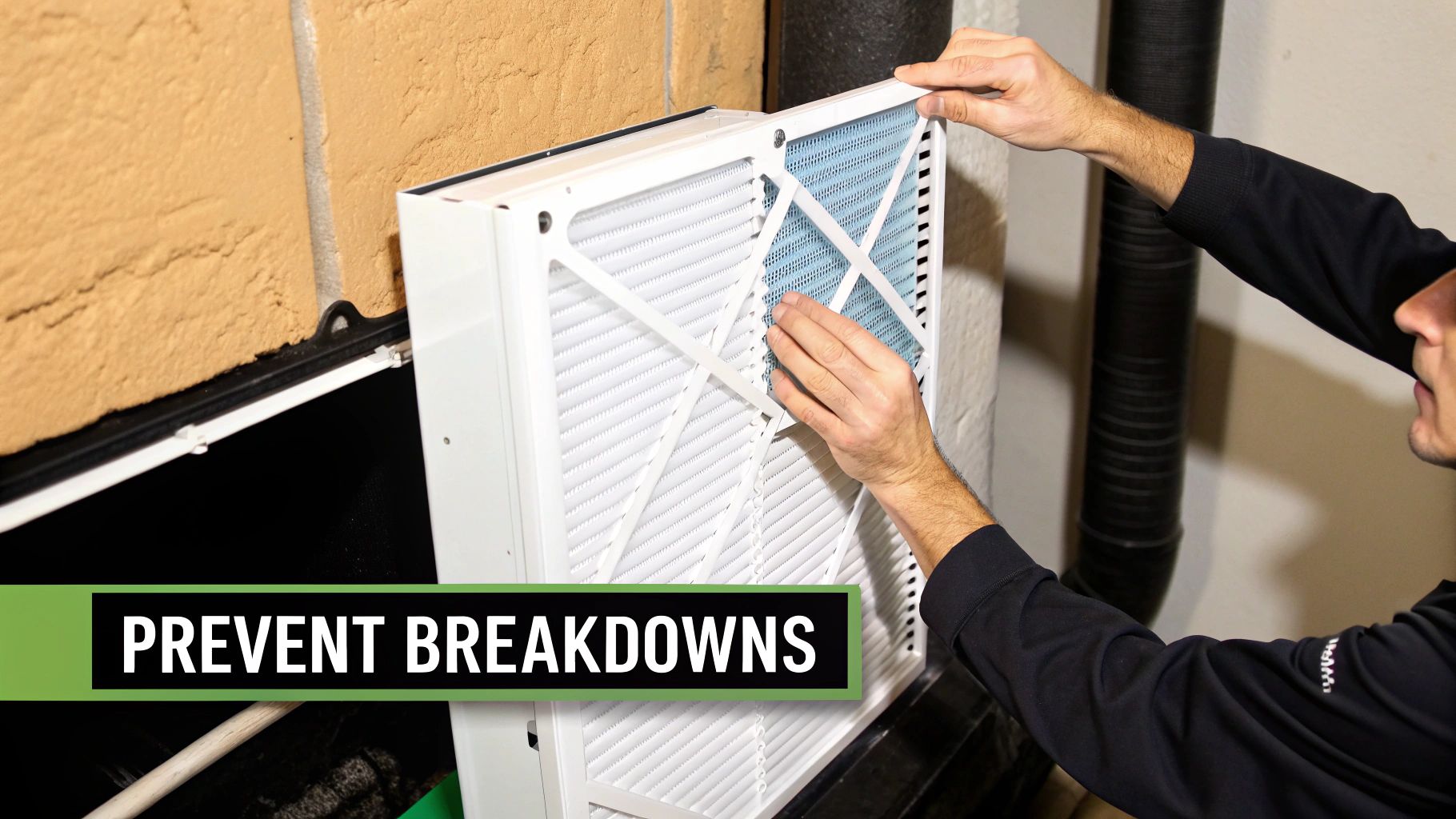
This preventative approach is more critical than ever. With 88% of U.S. homes now equipped with air conditioning, breakdowns really highlight how much we depend on these systems. These failures aren't just inconvenient; they can be downright dangerous. TIME has reported on how system failures contribute to thousands of heat-related emergency room visits every year, showing just how vital reliable climate control is.
Your Seasonal Maintenance Checklist
Building a simple routine is the secret to getting more life out of your HVAC system. These tasks don't require any special expertise, just a bit of time and attention.
Change Your Air Filter Monthly: This is non-negotiable and the single most important thing you can do. A clogged filter chokes your system's airflow, forcing it to work overtime and leading to premature wear and tear.
Keep the Outdoor Unit Clear: Your outdoor heat pump or AC unit needs room to breathe. Make sure there’s at least two feet of clear space around it, free from overgrown bushes, leaves, and grass clippings.
Check Your Vents and Registers: Do a quick walkthrough of your home. Are all your supply and return vents open? Is furniture or a rug blocking any of them? Good airflow is everything for efficiency and comfort.
A well-maintained system doesn't just sidestep breakdowns; it runs cheaper. According to the Department of Energy, simply replacing your filters on schedule can cut your system's energy use by up to 15%. That's real money back in your pocket.
The Value of a Professional Tune-Up
While your DIY efforts are crucial, they can't take the place of an annual professional inspection. Think of it like a yearly physical for one of your home's most expensive and essential appliances. A certified technician can perform vital services that ensure safety and peak performance.
To help you see the difference, here's a quick look at what you can handle versus what a pro takes care of during a tune-up.
Seasonal HVAC Maintenance Checklist
Maintenance Task | DIY Frequency | Included in Professional Service |
|---|---|---|
Change/Clean Air Filter | Monthly | ✔ |
Clear Outdoor Unit Debris | Seasonally | ✔ |
Check Vents for Obstructions | Monthly | ✔ |
Inspect & Tighten Electrical | N/A | ✔ |
Clean Condenser & Evaporator Coils | N/A | ✔ |
Test Refrigerant Levels & Leaks | N/A | ✔ |
Verify Safe System Operation | N/A | ✔ |
During a tune-up, a technician digs deeper, checking things like electrical connections, refrigerant levels, and the condition of the coils. This annual service is designed to catch small issues before they snowball into catastrophic failures.
It also keeps your system running efficiently. For instance, leaky ductwork can sabotage your system's performance without you even realizing it. Our Aeroseal duct sealing services can dramatically improve your system’s performance and lower your energy bills by sealing those hidden leaks. Ultimately, investing in professional care isn't an expense; it's a smart financial decision.
When Does a Heating Problem Become an Emergency?
Some heating issues are an inconvenience, but others are immediate threats that put your family's safety on the line. When your heat stops working, you need to know the difference between a simple breakdown and a genuine emergency that requires an urgent response. Certain signs are unmistakable red flags; you need to act fast and call a professional without a second thought.
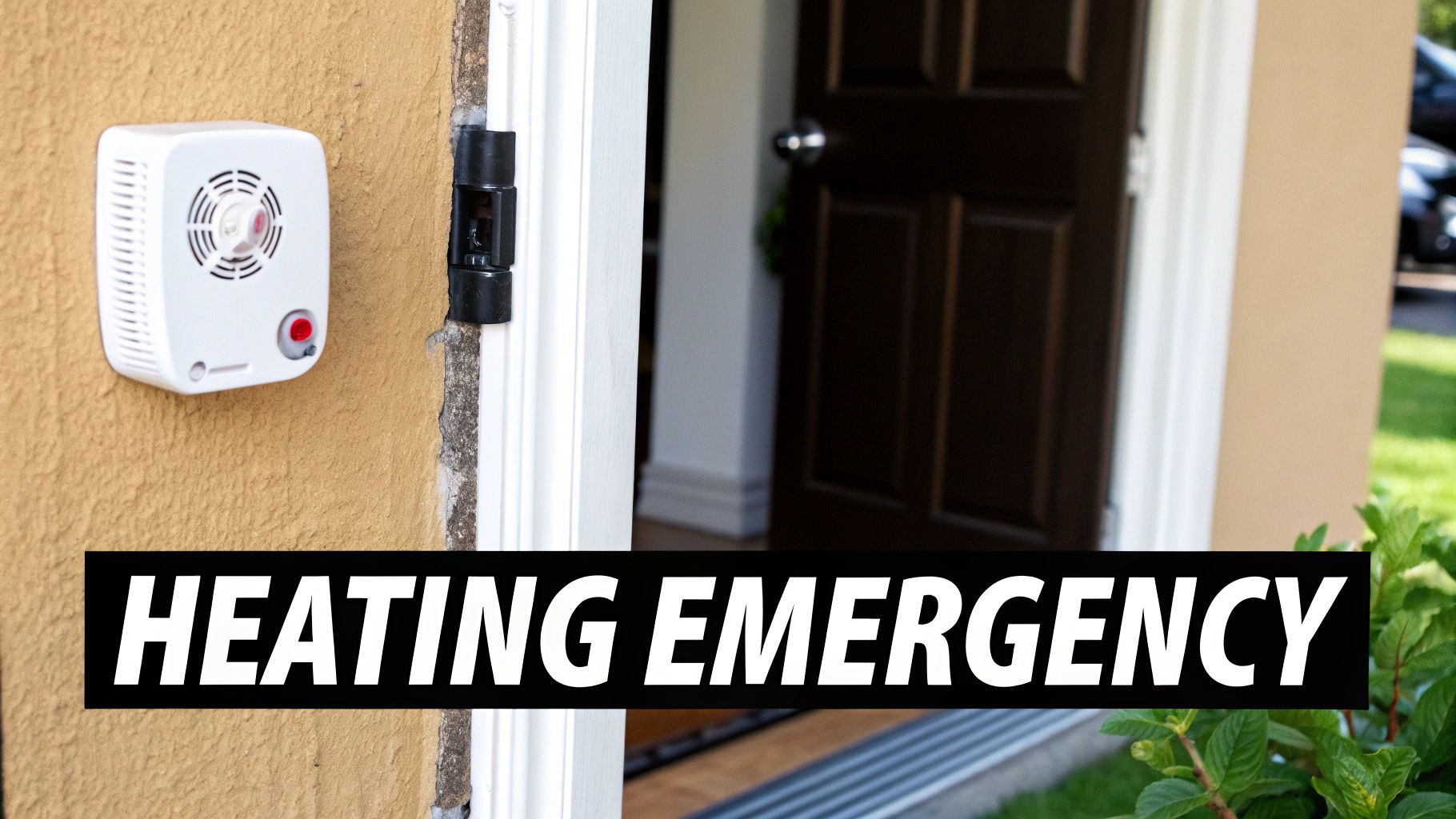
Often, your own senses are the best first line of defense. Trust what you see, hear, and smell. Your system has ways of telling you when something is seriously wrong, and these warnings should never be brushed aside.
Dangerous Smells and Sounds to Watch For
The most critical warning sign is a distinct rotten egg or sulfur smell near your furnace. This odor is deliberately added to natural gas so you can detect a leak. If you smell this, do not turn on lights, use your phone, or operate any electrical device. A single spark could be catastrophic.
Another major red flag is a strong burning smell, like melting plastic or scorched wiring. This points directly to a dangerous electrical problem that could quickly lead to a fire.
Loud, unusual mechanical noises are also a reason for immediate concern.
Grinding or screeching noises often mean you have a failing blower motor or other broken internal parts.
Loud banging or booming sounds can signal a delayed ignition in your furnace. This is essentially a small, contained explosion happening each time the furnace tries to light.
If you notice any of these signs, your next move is critical. Shut off the system at both the thermostat and the circuit breaker. If you smell gas, get everyone out of the house immediately and call your gas company's emergency line from a safe distance, like a neighbor's home or down the street.
Carbon Monoxide: The Silent Threat
While strange smells and sounds are obvious, the most dangerous threat from a malfunctioning furnace is one you can't see or smell: carbon monoxide (CO). This odorless, colorless gas is a byproduct of incomplete fuel combustion, often caused by a cracked heat exchanger or a blocked flue.
CO poisoning can be fatal. That's why having working carbon monoxide detectors on every level of your home isn't just a good idea; it's absolutely non-negotiable for your family's safety. If your CO detector ever goes off, you must treat it as a real emergency, every single time.
Your action plan has to be immediate:
Evacuate everyone from the house right away.
Call 911 from outside or from a neighbor's home.
Do not go back inside until emergency responders have declared it safe.
These emergency scenarios are precisely why our 24/7 services exist. When you're facing a serious threat, you need a team that can respond immediately. Learn more about our professional heating services and how we help keep families safe.
Frequently Asked Questions About Heating Problems
Even after doing some troubleshooting on your own, it’s completely normal to have a few more questions when your heat decides to quit. Over the years, we've found that most homeowners run into the same handful of confusing issues. We’ve put together the most common ones we hear to give you clear, straightforward answers.
Think of this as your cheat sheet. This knowledge will help you get a better handle on what’s happening with your system and make it easier to explain the problem to a technician if you need to make that call.
Why Is My AC Blowing Cold Air When The Heat Is On?
This is easily one of the most common, and frustrating, calls we get. Your thermostat is set to "heat," but all you feel is cold air. The good news? The fix is often surprisingly simple. The number one culprit is usually a severely clogged air filter.
Here’s what’s happening behind the scenes: when that filter is packed with dirt, it chokes off the airflow moving across the heat exchanger. That part gets incredibly hot, and without enough air to carry that heat away, a safety switch trips and shuts down the burners to prevent a fire hazard. The blower fan, however, doesn't always get the message and just keeps running, pushing that unheated, chilly air right through your vents.
A few other things could be at play, too:
An extinguished pilot light on an older furnace means there’s no flame to generate heat in the first place.
The thermostat settings might be incorrect, failing to properly signal the start of a heating cycle.
If you have a heat pump, a faulty reversing valve could be stuck in cooling mode, preventing the switch to heat.
How Often Should I Change My Furnace Filter?
There’s really no single, one-size-fits-all answer here. It comes down to the type of filter you use and what’s going on inside your home. But getting into a good rhythm is one of the best things you can do to prevent future breakdowns.
For the standard, 1-inch thick fiberglass filters you see everywhere, plan on a change every 30 days. If you’ve upgraded to the thicker, pleated filters that have more surface area to grab gunk, you can usually stretch that to 90 days.
However, you’ll want to check your filter much more often if your household includes:
Pets: All that fur and dander will clog a filter in no time.
Smokers: Smoke particles are tiny but build up incredibly fast.
Allergy Sufferers: A clean filter is your best friend for trapping airborne irritants.
In these homes, it’s a smart move to physically pull the filter out and look at it every four to six weeks. A clean filter is the cheapest insurance you can buy for your HVAC system’s health and efficiency.
Is It Worth Repairing An Old Furnace?
Trying to decide between paying for a repair on an aging furnace and investing in a whole new system is a tough spot to be in. It’s a major financial decision. To take some of the guesswork out of it, we often point homeowners to a simple guideline called the "5,000 Rule."
It’s easy to use: just multiply the age of your furnace (in years) by the estimated repair cost. Let’s say your furnace is 12 years old and you just got a quote for a $500 repair. The math would be 12 x 500 = 6,000.
If that final number is over 5,000, replacement is usually the smarter financial move for the long haul. An older unit needing a pricey repair is basically telling you that more failures are just around the corner.
And don’t forget about efficiency. Today’s furnaces are leaps and bounds more efficient than the models from 15-20 years ago. A new, high-efficiency unit can slash your monthly utility bills, helping that investment pay for itself over time. If your furnace is pushing past 15 years and needs a major repair, replacement is almost always the best bet for reliability and long-term savings.
When your heating system fails, you need a team you can trust for honest answers and reliable service, day or night. For expert diagnostics, professional repairs, and transparent pricing, contact Covenant Aire Solutions. Our certified technicians are available 24/7 to restore comfort and safety to your home. Visit us online to schedule your service.