
The Ultimate Commercial HVAC Maintenance Checklist for 2025
- Nov 27, 2025
- 19 min read
In the demanding Tucson climate, a commercial HVAC system isn't just a machine; it's the operational heart of your business. It protects sensitive equipment, ensures customer comfort, and maintains employee productivity. Neglecting its upkeep isn't an option, it's a direct path to unexpected downtime, soaring energy bills, and costly emergency repairs. A "quick look" from a team member is insufficient for these complex systems. True preventative care requires a structured, detailed approach to identify potential issues before they escalate into catastrophic failures.
This article provides a definitive, actionable commercial HVAC maintenance checklist designed for facility managers and business owners. We will break down essential tasks by frequency: daily, monthly, quarterly, and annually. The guide details specific checks for critical components like rooftop units, chillers, air handlers, and ductwork. To understand the broader impact of consistent care, explore this complete guide to air conditioning maintenance, which emphasizes keeping your AC running efficiently.
You will gain practical insights into everything from air filter replacement and thermostat calibration to advanced diagnostics like compressor performance testing and refrigerant charge verification. We've included seasonal tips specifically for Arizona's extreme weather, common signs of system failure to watch for, and guidance on documentation. Following this comprehensive checklist will help you create a proactive maintenance strategy that extends equipment life, ensures regulatory compliance, and secures your bottom line against preventable, and often expensive, operational disruptions.
1. Air Filter Inspection and Replacement
Regular inspection and replacement of air filters is the cornerstone of any effective commercial HVAC maintenance checklist. This fundamental task directly impacts system efficiency, indoor air quality (IAQ), and long-term equipment health. Clogged filters create significant airflow resistance, forcing system fans and motors to work harder to circulate air. This strain leads to increased energy consumption, reduced heating and cooling performance, and premature component failure.
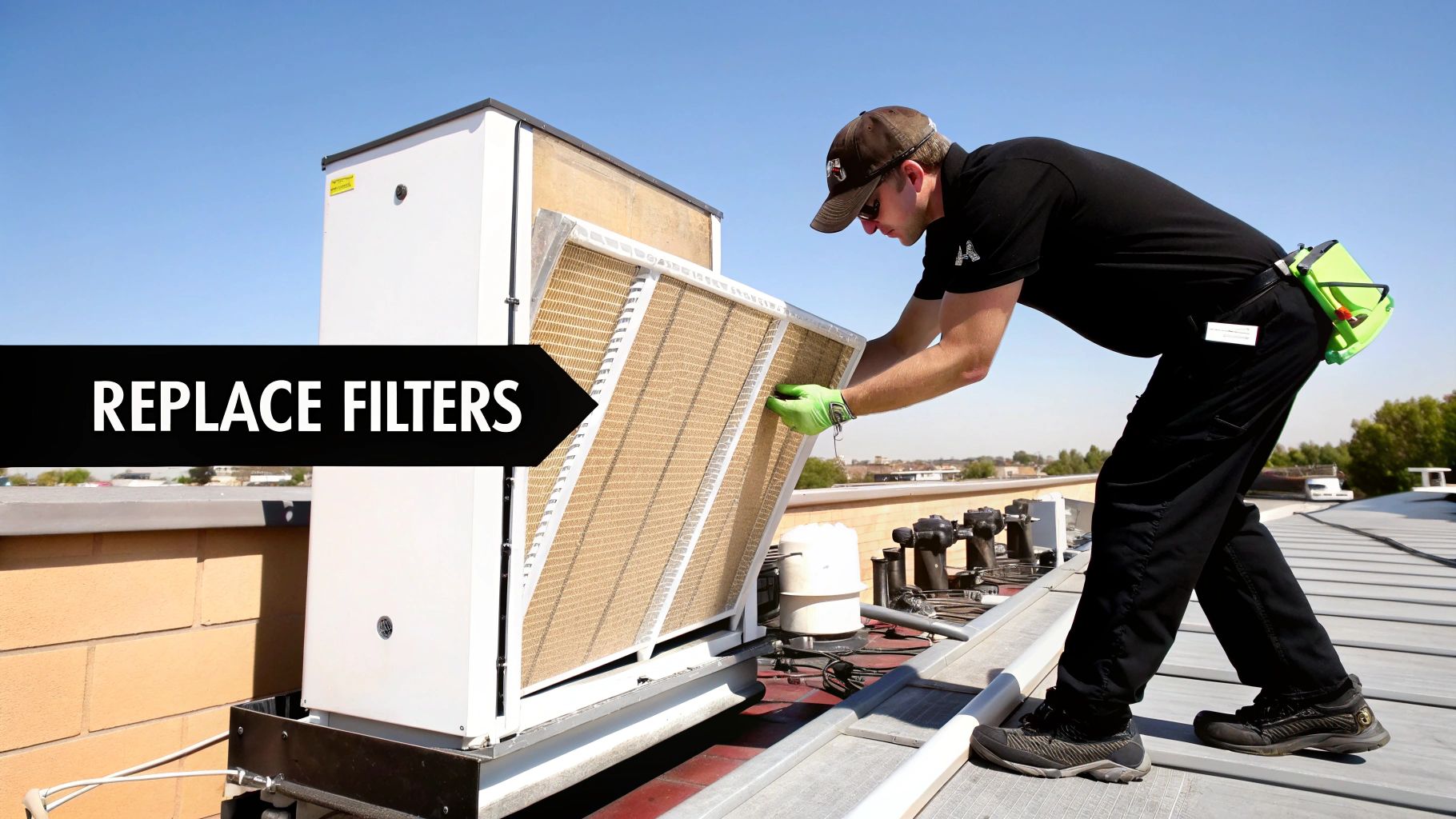
The primary goal is to maintain optimal airflow and capture airborne contaminants before they can accumulate on sensitive internal components like evaporator coils or circulate throughout the building. For most commercial properties in environments like Tucson, a filter change schedule of every 1-3 months is standard, though this varies based on operational hours, occupant density, and the specific MERV (Minimum Efficiency Reporting Value) rating of the filters used.
Successful Implementation Examples
Healthcare Facilities: Hospitals and clinics often upgrade to high-efficiency MERV-13 or HEPA filters and adhere to a strict monthly replacement schedule to control pathogens and maintain sterile environments.
Office Buildings: A standard quarterly filter replacement program is common, balancing cost-effectiveness with the need for good IAQ for employees and visitors.
Data Centers: These facilities frequently use specialized electrostatic or high-MERV filters to protect sensitive electronic equipment from dust, changing them based on pressure sensor readings rather than a fixed schedule.
Actionable Tips for Filter Management
To integrate this crucial step into your maintenance routine, follow these best practices:
Schedule and Document: Mark filter replacement dates on a shared building maintenance calendar. Meticulously log every filter change, including the date, unit number, and filter type used. This documentation is often required for warranty compliance.
Objective Monitoring: Install and use filter pressure gauges. These devices measure the pressure drop across the filter, providing an objective indicator of when it's clogged and needs replacement, removing any guesswork.
Proper Installation: Train facility staff to check the airflow direction arrow on the filter frame and install it correctly. Improper installation can render a filter useless and may even cause damage.
Select the Right Filter: Choose filters that match your system’s specifications and your building's specific needs. For facilities with allergy-sensitive occupants, exploring higher MERV options can make a significant difference. You can learn more about selecting the right HVAC filters for your needs on covenantairesolutions.com.
2. Thermostat Calibration and Testing
As the central nervous system of your HVAC system, the thermostat dictates operational efficiency and directly controls building comfort levels. Regular calibration is a critical item on any commercial HVAC maintenance checklist, ensuring that temperature readings are accurate and the system cycles correctly. A miscalibrated thermostat can cause equipment to short-cycle, run excessively, or fail to engage, leading to significant energy waste, inconsistent temperatures, and increased wear on major components.
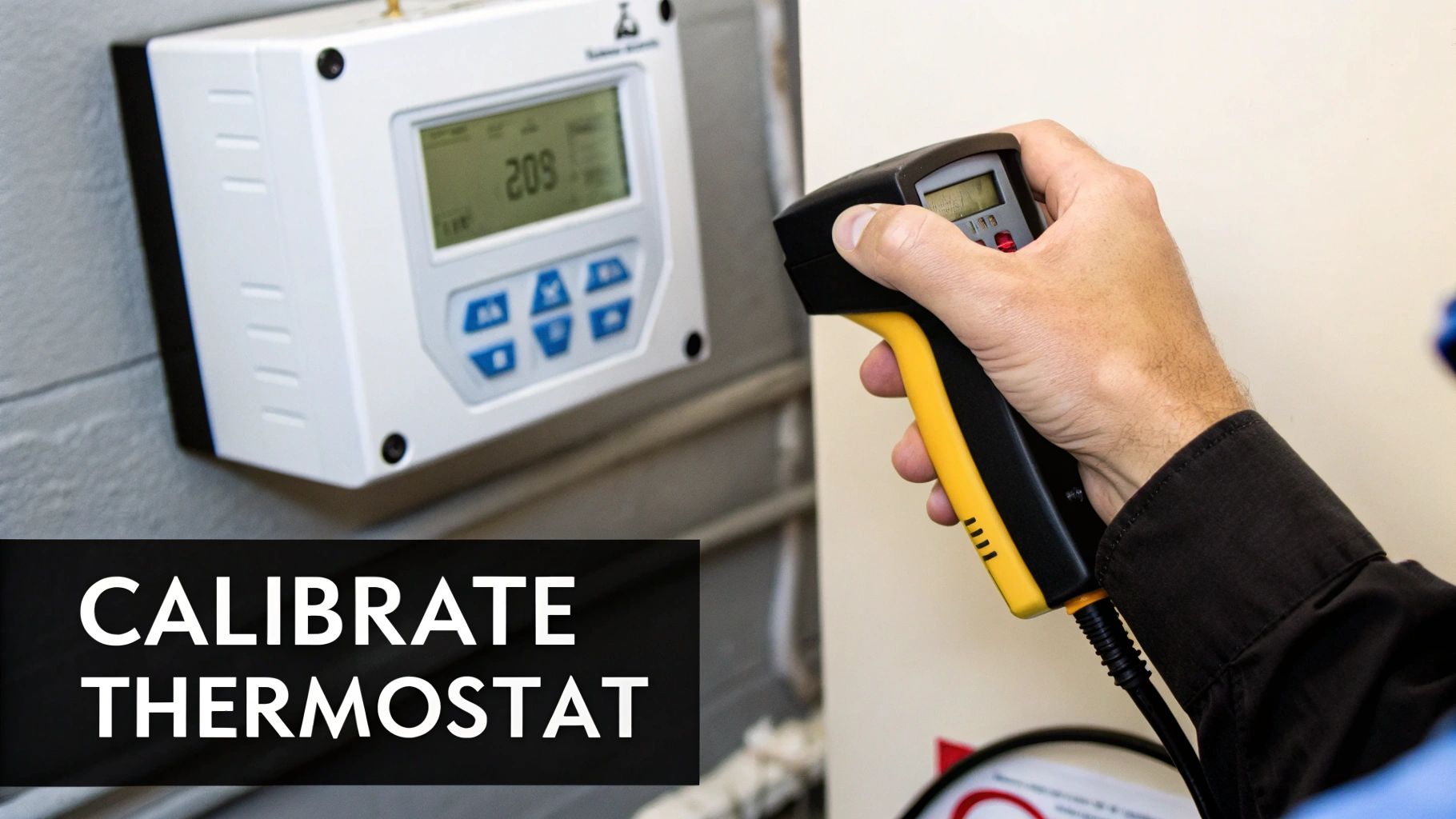
The primary goal of this task is to verify that the temperature sensed by the thermostat matches the actual room temperature, allowing for precise control. Even a deviation of a few degrees can result in thousands of dollars in wasted energy costs annually for a large commercial facility. This process involves testing sensor functionality, setpoint accuracy, and system response times to command inputs, ensuring the HVAC system operates exactly when and how it's needed.
Successful Implementation Examples
Corporate Offices: A large office complex reduced its annual energy expenditure by nearly 8% simply by implementing a quarterly thermostat calibration schedule across all zones, eliminating wasted runtime.
Retail Chains: National retailers often deploy centralized energy management systems, allowing facility managers to remotely monitor, calibrate, and lock thermostat setpoints across hundreds of locations for brand consistency and cost control.
Educational Institutions: School districts use programmable and smart thermostats to automatically implement aggressive temperature setbacks after hours and on weekends, aligning HVAC usage with occupancy schedules and saving on utility costs.
Actionable Tips for Thermostat Management
To properly integrate this check into your routine maintenance, consider these best practices:
Verify Accuracy: Periodically compare the thermostat's reading with a calibrated, independent thermometer placed next to it. Any consistent discrepancy greater than two degrees warrants professional recalibration or replacement.
Document and Track: Maintain a log of all setpoint adjustments, calibration dates, and any observed temperature variances for each zone. This data helps identify failing units or problematic areas.
Check Batteries: For wireless or battery-powered thermostats, schedule a monthly check to inspect and replace batteries. Low batteries can cause erratic behavior and total system failure.
Program for Efficiency: Ensure thermostats are programmed to optimize energy use based on occupancy. For more advanced strategies, you can learn more about how to program a thermostat to save money on covenantairesolutions.com.
3. Condenser and Evaporator Coil Cleaning
Maintaining clean heat exchanger coils is a critical component of any commercial HVAC maintenance checklist, directly influencing system efficiency, energy costs, and indoor air quality. Condenser coils (outdoor) and evaporator coils (indoor) are designed for heat transfer; however, over time they accumulate a thick layer of dust, dirt, pollen, and grime. This buildup acts as an insulator, severely impeding the coil's ability to absorb or release heat and forcing the compressor to work harder and longer to achieve set temperatures. This strain increases energy consumption and accelerates wear and tear on the system's most expensive components.
The primary goal is to restore the coils to their original heat transfer capability, ensuring the HVAC system operates at peak performance. For facilities in dusty environments like Tucson, this task is even more crucial. Furthermore, the dark, damp environment of an evaporator coil can become a breeding ground for mold and bacteria, which can then be circulated throughout the building, negatively impacting occupant health. Regular cleaning mitigates these risks, preserving both equipment integrity and air quality.
Successful Implementation Examples
Hospitality Sector: Hotels in humid climates often implement aggressive coil cleaning schedules, sometimes monthly, to prevent mold growth, eliminate odors, and ensure guest comfort while controlling high cooling costs.
Industrial Facilities: A manufacturing plant improved its system efficiency by over 12% by instituting a quarterly deep cleaning protocol for its process cooling and comfort cooling HVAC coils, which were frequently fouled by industrial particulates.
Healthcare Facilities: Hospitals prevent healthcare-associated infections by adhering to rigorous coil sanitation and disinfection standards, using EPA-approved antimicrobial cleaners to ensure patient and staff safety.
Actionable Tips for Coil Management
To effectively integrate coil cleaning into your maintenance plan, consider these professional tips:
Strategic Scheduling: Schedule condenser coil cleaning just before the peak cooling season begins in late spring. This ensures the unit is operating at maximum efficiency when it's needed most.
Proper Technique: Before applying any chemical cleaners, gently inspect and straighten any bent coil fins using a fin comb. This maximizes airflow and allows the cleaner to penetrate evenly.
Use Appropriate Cleaners: Select biodegradable, non-corrosive, and environmentally safe coil cleaning agents to protect the equipment and surrounding environment. Always wear appropriate personal protective equipment (PPE).
Verify Performance: Measure and document key performance indicators like superheat and subcooling both before and after cleaning. This provides tangible data proving the effectiveness of the maintenance task. You can discover more about the benefits of expert cleaning for air conditioning coils on covenantairesolutions.com.
4. Refrigerant Level Monitoring, Charge Verification and Performance Monitoring
Proper refrigerant management is a critical component of any commercial HVAC maintenance checklist, directly influencing system efficiency, cooling capacity, and regulatory compliance. Refrigerant is the lifeblood of the cooling cycle; incorrect levels, known as charge, force the compressor to work harder, consume more energy, and ultimately lead to premature failure. Verifying the charge involves precise measurements of system pressures, temperatures, subcooling, and superheat to ensure performance aligns with manufacturer specifications.
This process is not just about topping off refrigerant; it's a diagnostic tool that reveals the overall health of the system. A consistently low charge often indicates a leak, which must be located and repaired to prevent ongoing performance degradation and environmental impact. Proactive monitoring helps identify these issues before they cause catastrophic component damage or an unexpected system shutdown, which is crucial for business continuity.
Successful Implementation Examples
Commercial Grocery Stores: By implementing a quarterly charge verification program on their extensive refrigeration systems, these facilities can identify and repair small leaks early, often resulting in annual energy savings of over $2,000 per unit.
Data Centers: Continuous refrigerant pressure and temperature monitoring integrated with a Building Management System (BMS) helps prevent emergency shutdowns, optimizing system efficiency by 8-12% and protecting mission-critical hardware.
Office Buildings: Optimizing refrigerant charge reduces compressor run times during peak hours, significantly lowering expensive demand charges from utility providers, especially during Tucson's hot summer months.
Actionable Tips for Refrigerant Management
To properly integrate this technical task into your maintenance plan, adhere to these professional standards:
Ensure Certification: All technicians handling refrigerants must have EPA 608 certification. This is a federal requirement designed to protect the environment from the release of ozone-depleting substances.
Establish Baselines: During commissioning or a comprehensive tune-up, record system pressures, superheat, and subcooling under standardized operating conditions. This data serves as a vital performance baseline for future comparisons.
Document Everything: Log all readings, refrigerant added or recovered, and leak repair details in your maintenance management software. This documentation is essential for tracking trends and proving compliance.
Stay Informed on Transitions: The HVAC industry is phasing out older refrigerants like R-22 in favor of more environmentally friendly alternatives. You can learn more about what refrigerant replaces R-22 to ensure your systems remain compliant and serviceable.
5. Electrical Connection and Component Inspection
A thorough inspection of electrical connections and components is a critical, non-negotiable part of any commercial HVAC maintenance checklist. HVAC systems are powered by a complex network of electrical parts, including contactors, capacitors, relays, and motor starters. Over time, these components can degrade, leading to loose connections, corroded terminals, and failing capacitors, which are common points of failure that can disable an entire system without warning.
The primary goal of this inspection is to identify and correct deteriorating electrical components before they cause a catastrophic failure. Proactive maintenance, such as tightening connections and testing component performance, prevents unexpected downtime, mitigates fire hazards, and averts costly emergency repairs. This is particularly vital in Tucson’s high-temperature climate, where electrical systems are under constant strain during peak cooling season.
Successful Implementation Examples
Hospital HVAC Systems: Facilities avoid critical system outages in operating rooms and patient areas by implementing quarterly electrical inspections and component testing, ensuring continuous operation.
Manufacturing Plants: Proactive electrical maintenance programs, including thermal imaging and contactor inspection, have helped industrial facilities reduce emergency HVAC repair calls by up to 40%.
Office Buildings: Maintaining comprehensive documentation of electrical component checks and readings allows property managers to easily pass safety audits and demonstrate due diligence.
Actionable Tips for Electrical System Management
To safely and effectively integrate this step into your maintenance plan, follow these expert recommendations:
Prioritize Safety: Always de-energize circuits and follow proper lockout/tagout (LOTO) procedures before performing any work. This is a non-negotiable safety standard mandated by OSHA.
Document and Trend Data: Record baseline voltage and amperage readings for major components like compressors and fan motors during each service. Trending this data helps identify abnormalities that signal impending failure.
Tighten All Connections: Vibration can loosen electrical connections over time, creating high resistance and a serious fire risk. A technician should check and tighten all accessible electrical lugs and terminals during every service visit.
Proactive Capacitor Replacement: Capacitors have a typical lifespan of 10-15 years. Replace them proactively based on age or declining performance readings rather than waiting for them to fail and cause a system shutdown. Understanding schematics is key; you can learn how to read HVAC wiring diagrams to better identify these components.
6. Ductwork Inspection and Cleaning
The ductwork acts as the circulatory system for your building, distributing conditioned air to every space. Over time, these pathways can accumulate dust, debris, mold, and other contaminants, which not only degrades indoor air quality but can also restrict airflow and diminish system efficiency. Leaks, disconnected sections, and poor insulation further compound these issues, leading to significant energy loss and uneven temperature control, making ductwork a critical part of any commercial HVAC maintenance checklist.
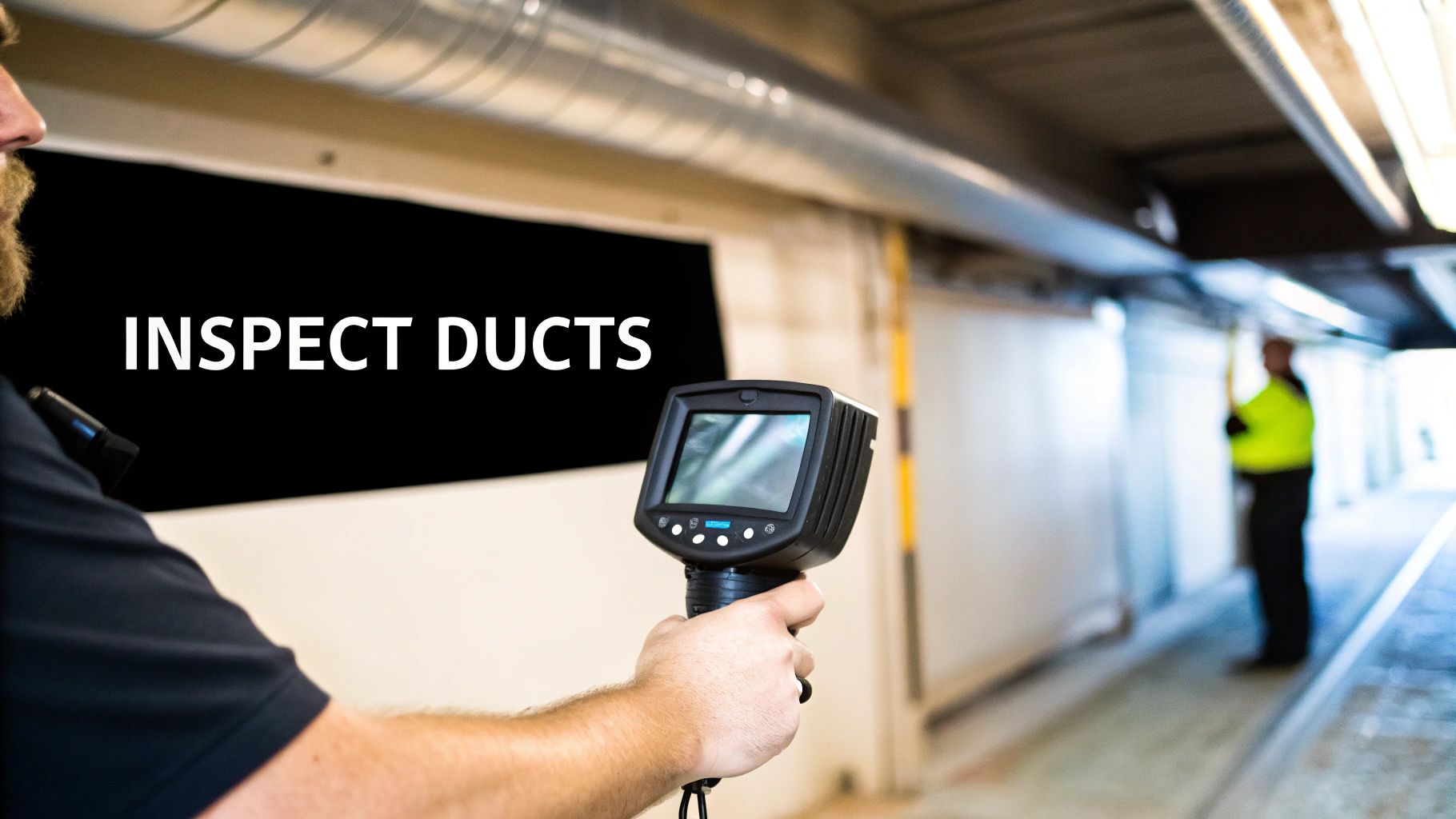
The primary goal of inspecting and cleaning ducts is to ensure a clean, sealed, and efficient air delivery network. This process involves a thorough visual inspection, often with specialized cameras, to identify blockages, contamination, or breaches. Subsequent professional cleaning removes harmful buildup, while sealing leaks restores system integrity, directly improving performance and occupant health.
Successful Implementation Examples
Educational Facilities: School systems that implement routine duct cleaning programs have reported improvements in student health and attendance, as cleaner air reduces the circulation of allergens and viruses.
Office Buildings: Commercial properties have achieved significant energy savings, some as high as 12 percent, by combining professional duct cleaning with comprehensive duct sealing to eliminate conditioned air loss.
Healthcare Environments: Hospitals rigorously maintain ductwork to prevent the spread of nosocomial (hospital-acquired) infections, adhering to strict standards from bodies like ASHRAE.
Actionable Tips for Ductwork Management
To effectively manage your building's air distribution system, incorporate these best practices:
Demand Visual Proof: Before and after any cleaning service, request video inspection documentation. This provides a clear record of the ductwork's condition and verifies the quality of the work performed.
Hire Certified Professionals: Always use contractors certified by the National Air Duct Cleaners Association (NADCA). NADCA members adhere to a high standard of service and ethics for HVAC system cleaning.
Use Proper Sealing Materials: Ensure technicians use mastic sealant or foil tape for sealing leaks. Standard "duct tape" degrades quickly and is not a permanent solution for sealing ducts.
Balance Airflow Post-Repair: After any significant cleaning, sealing, or modification, the system's airflow should be tested and balanced to ensure proper air distribution throughout the facility.
7. Compressor Performance Testing and Diagnostics
The compressor is arguably the most critical and expensive component within a commercial HVAC system, acting as the heart that circulates refrigerant. Given that a catastrophic failure can lead to replacement costs ranging from $3,000 to over $8,000, proactive performance testing is a non-negotiable part of any comprehensive commercial HVAC maintenance checklist. This process involves monitoring key operational metrics to identify signs of wear and tear before they lead to a complete system shutdown.
The primary goal of these diagnostics is to ensure the compressor is operating within its designed specifications for efficiency and longevity. By regularly measuring its current draw (amperage), discharge temperature, vibration levels, and oil condition, technicians can spot deteriorating performance early. This data allows for predictive maintenance, preventing costly unplanned downtime and extending the useful life of the entire HVAC unit.
Successful Implementation Examples
Hotel Chains: Large hospitality brands use proactive compressor monitoring to avoid an estimated 20 or more emergency HVAC shutdowns annually, preventing guest complaints and lost revenue.
Data Centers: These mission-critical facilities extend equipment lifespan by 3-5 years through routine, preventive compressor diagnostics, protecting invaluable server equipment from overheating.
Industrial Facilities: Manufacturing plants have reduced unplanned maintenance costs by up to 35% by implementing condition-based monitoring, scheduling compressor service during planned shutdowns instead of disruptive failures.
Actionable Tips for Compressor Management
To effectively integrate compressor diagnostics into your maintenance plan, follow these expert recommendations:
Establish a Baseline: During initial system commissioning or the first major service, record the compressor's amperage draw under normal operating conditions. This baseline is essential for identifying significant deviations later.
Monitor Key Trends: Track discharge temperature and pressure trends over time. A consistent rise can indicate issues like refrigerant loss or internal wear long before a total failure occurs.
Perform Annual Oil Analysis: On larger, critical systems, perform an annual compressor oil analysis. The test can reveal the presence of moisture, acid, or metal particles, which are early indicators of internal degradation.
Standardize Testing Conditions: For valid year-over-year comparisons, perform diagnostics when outdoor temperatures are relatively consistent. This helps isolate compressor issues from environmental variables.
Document Everything: Meticulously log all performance metrics, including amperage, temperatures, pressures, and oil analysis results, in your maintenance tracking system for trend analysis.
8. Belt and Pulley Inspection and Tension Adjustment
In many belt-driven commercial HVAC systems, the condition and tension of belts are critical links in the operational chain. This part of a commercial hvac maintenance checklist focuses on inspecting these components to prevent inefficiency and catastrophic failures. Worn, frayed, or improperly tensioned belts cause slippage, which wastes energy, reduces airflow, and places immense strain on motor bearings, leading to premature burnout and costly system downtime.
Regular inspection ensures belts are in good condition and pulleys are correctly aligned. Proper tension is a delicate balance; a belt that is too loose will slip and generate excess heat, while one that is too tight will over-stress motor and blower-shaft bearings, causing them to fail. This proactive check is essential for maintaining mechanical integrity and operational efficiency.
Successful Implementation Examples
Retail Facilities: Large retail stores rely on consistent airflow for customer comfort. Implementing quarterly belt tensioning and inspections maintains peak fan efficiency, preventing performance degradation and reducing energy consumption during peak shopping hours.
Manufacturing Plants: In industrial settings, HVAC vibration can be a major issue. By establishing strict belt and pulley alignment protocols, plants reduce system vibration, which minimizes noise complaints and protects sensitive manufacturing equipment from collateral vibration damage.
Educational Institutions: School districts often extend the operational lifespan of their HVAC motors by 2-3 years through a diligent preventative maintenance program that prioritizes regular belt inspection and replacement, avoiding budget-breaking emergency repairs.
Actionable Tips for Belt and Pulley Management
To effectively manage this crucial mechanical component, integrate these practices into your routine:
Inspect and Document: During every service visit, visually inspect belts for signs of cracking, fraying, glazing, or other wear. Document belt replacement dates and track motor run hours to forecast the next replacement cycle accurately.
Check Tension and Alignment: Use a tension gauge or the deflection method to ensure proper tension. Before installing new belts, use a straight edge or a laser alignment tool to confirm pulleys are perfectly aligned, which is crucial for preventing premature wear.
Replace in Matched Sets: If a unit uses multiple belts, always replace them as a matched set. Mixing new and old belts will cause uneven loading and lead to rapid failure of the new belt.
Inspect Pulleys: A worn or damaged pulley will quickly destroy a new belt. Check pulley grooves for wear, chips, or damage and replace them as needed to protect your investment in new belts.
9. Bearing Lubrication and Condition Assessment
Proper bearing lubrication and regular condition assessment are critical tasks in any commercial HVAC maintenance checklist, safeguarding the heart of the system's rotating equipment. Bearings in motors, fans, and pumps are essential for smooth operation, and their failure can lead to catastrophic system breakdowns. Regular, correct lubrication minimizes friction, reduces heat buildup, and prevents the premature wear that causes seizure and costly motor failure.
The primary goal is to extend the operational life of these vital components from mere months to many years. This involves not just applying grease, but also a systematic assessment to detect early signs of degradation. Technicians use visual inspections, temperature monitoring, and sometimes advanced diagnostics like acoustic or vibration analysis to predict failures before they occur, ensuring system reliability and preventing unexpected downtime.
Successful Implementation Examples
Data Centers: Facilities requiring 99.99% uptime rely on rigorous, scheduled bearing maintenance protocols, often using predictive analytics to preemptively replace bearings and maintain cooling system integrity.
Industrial Cooling Systems: Manufacturing plants have extended the life of their process cooling equipment by as much as 40% through optimized bearing lubrication schedules and condition monitoring.
Hospital HVAC Systems: Healthcare facilities use predictive bearing diagnostics, including vibration analysis, to ensure the unwavering reliability of air handlers and ventilation systems critical to patient care and air quality.
Actionable Tips for Bearing Management
To effectively integrate this into your maintenance routine, follow these best practices:
Follow Manufacturer Specifications: Always consult the equipment manufacturer’s guide for the precise lubricant type, amount, and application frequency. Using the wrong grease or mixing types can cause lubricant breakdown and bearing failure.
Avoid Over-Greasing: More is not better. Over-lubricating can blow out bearing seals, leading to contamination and failure. Train technicians on the correct application volume for each specific bearing.
Establish Baselines: During commissioning or routine service, establish a baseline for bearing temperature and vibration. Monitor these trends over time; a consistent rise in temperature is a key indicator of lubrication issues or impending wear.
Document Everything: Meticulously log all lubrication activities, including the date, lubricant used, and any temperature or vibration readings. Also, document bearing replacement dates and running hours to support future failure analysis and predictive maintenance efforts.
10. System Balance Verification and Airflow Optimization
Proper air distribution is essential for occupant comfort and system efficiency, making system balancing a critical part of any commercial HVAC maintenance checklist. When a system is unbalanced, some areas receive too much conditioned air while others receive too little, leading to temperature inconsistencies, energy waste, and persistent occupant complaints. Airflow verification confirms that the system delivers conditioned air according to its design specifications, maintaining comfort across all zones.
The process involves measuring air velocity at supply registers and return grilles and then adjusting dampers to achieve the intended distribution. Correcting imbalances prevents the HVAC system from overworking to compensate for "hot" or "cold" spots, directly impacting operational costs and equipment longevity. In a climate like Tucson's, ensuring every zone receives adequate cooling is not just about comfort, it is about energy management.
Successful Implementation Examples
Office Buildings: Facility managers have eliminated over 80% of temperature-related complaints from employees by rebalancing their systems after office layout changes or tenant turnover.
Healthcare Facilities: Hospitals perform precision balancing to guarantee that critical care areas, operating rooms, and isolation wards receive the specific, regulated airflow required for patient safety and compliance.
Retail Facilities: Large retailers have reduced their energy consumption by up to 6% by optimizing air distribution, preventing over-cooling in low-traffic areas and ensuring customer comfort in high-traffic zones.
Actionable Tips for Airflow Management
To effectively integrate system balancing into your maintenance plan, consider these professional practices:
Use Calibrated Tools: Always use a calibrated anemometer or air capture hood to get accurate velocity measurements at multiple supply and return points.
Incremental Adjustments: Adjust balancing dampers in small increments. A change in one area will propagate throughout the entire duct system, so patience and re-testing are key.
Clear Blockages First: Before making damper adjustments, identify and remove any airflow blockages, such as furniture placed over vents or closed diffusers.
Document Everything: Meticulously record all "before" and "after" measurements for each zone. This data provides a crucial baseline for future adjustments and is vital for demonstrating compliance.
Schedule Rebalancing: Plan for a full system rebalance annually or anytime building occupancy, an interior layout, or system components change significantly.
Commercial HVAC: 10-Item Maintenance Checklist Comparison
Item | 🔄 Implementation Complexity | ⚡ Resource Requirements | 📊 Expected Outcomes | ⭐ Key Advantages | 💡 Tips / Ideal Use Cases |
|---|---|---|---|---|---|
Air Filter Inspection and Replacement | Low: routine, quick task | Low cost filters, basic tools, optional pressure gauges | Improves IAQ; energy savings ~5–15%; immediate ROI | High impact per low cost | Monthly inspection; MERV 8–13 for commercial; offices, hospitals, data centers |
Thermostat Calibration and Testing | Low–Medium: simple checks to specialized calibration | Reference thermometer, calibrator, possible smart integration | Better comfort; energy savings ~3–8%; prevents cycling issues | Improves control accuracy and scheduling | Quarterly calibration; verify batteries; offices, retail, schools |
Condenser and Evaporator Coil Cleaning | Medium: requires shutdown and safe procedures | Chemical cleaners, pressure washer, fin combs, PPE | Efficiency gain ~5–10%; extends equipment life; IAQ benefits | Significant efficiency and lifespan improvements | Annual or semi-annual in harsh environments; hotels, industrial, hospitals |
Refrigerant Level Monitoring & Charge Verification | High: technical, regulated work requiring certification | Manifold gauges, leak detectors, recovery units, data loggers, EPA 608 | Efficiency gain ~5–10%; prevents compressor damage; regulatory compliance | Enables predictive maintenance and major cost avoidance | Quarterly/continuous monitoring; grocery stores, data centers; obtain EPA 608 |
Electrical Connection and Component Inspection | Medium–High: electrical risk; may need licensed pros | Multimeter, thermal imager, capacitor tester, LOTO equipment | Prevents failures and fire risk; reduces emergency service costs | Critical for safety and uptime | Semi-annual for critical systems; hospitals, manufacturing plants |
Ductwork Inspection and Cleaning | Medium–High: can be invasive and costly | Video cameras, blower door tests, negative-pressure cleaning, NADCA contractors | Improves IAQ; reduces leakage losses (5–20%); restores airflow | Large IAQ and energy impact when ducts are contaminated | Inspect annually; clean every 3–5 years; schools, healthcare, offices |
Compressor Performance Testing and Diagnostics | High: specialized diagnostics, some live testing | Ammeters, vibration analyzers, thermal cameras, oil analysis labs | Prevents catastrophic failure; extends compressor life; efficiency trends | Protects most expensive component; early fault detection | Quarterly monitoring; critical facilities (data centers, hotels) |
Belt and Pulley Inspection and Tension Adjustment | Low–Medium: routine mechanical maintenance | Tension meter or deflection method tools, alignment tools, replacement belts | Improves efficiency ~2–5%; reduces noise and unexpected failures | Low cost with good preventive ROI | Visual semi-annual; tension annually; retail, manufacturing |
Bearing Lubrication and Condition Assessment | Medium: requires correct lubricant and technique | Specified lubricants, infrared thermometer, vibration sensors | Extends bearing life 3–5 years; reduces heat and power loss | Key for reliability and uptime | Lubricate every 3–12 months; perform semi-annual assessments; data centers, industrial |
System Balance Verification and Airflow Optimization | Medium–High: time-consuming, skilled balancing | Anemometers, pressure instruments, balancing dampers, TAB technicians | Improves comfort; energy savings ~5–10%; reduces temperature complaints | Ensures uniform comfort and efficient distribution | Commissioning and annual verification; hospitals, multi-zone offices |
Partner with Experts for Unmatched System Reliability
Navigating the complexities of commercial climate control is a significant undertaking. The comprehensive commercial HVAC maintenance checklist provided in this guide, from daily visual inspections to in-depth annual diagnostics, serves as a powerful roadmap for facility managers and property owners. It demystifies the process, breaking down what needs to be done, when it should be done, and why each task is critical for operational success. By understanding the cadence of maintenance, from monthly filter changes to biannual coil cleanings and annual belt inspections, you can transition from a reactive "fix it when it breaks" model to a proactive, strategic approach. This shift is fundamental to protecting your substantial investment, ensuring occupant comfort, and controlling operational expenditures.
However, knowledge is only the first step; execution is where true value is realized. The checklist highlights numerous tasks that, while seemingly straightforward, carry significant risks and require specialized expertise. Handling refrigerants, diagnosing complex electrical faults, calibrating sensitive control systems, and accurately tensioning motor belts are not tasks for the untrained. Attempting these without proper certification and experience can lead to safety hazards, voided warranties, and potentially catastrophic system failures, turning a minor issue into a major expense.
From Checklist to Actionable Strategy: The Professional Partnership
The real power of a commercial hvac maintenance checklist is not just in its execution but in its integration into a broader asset management strategy. This is where partnering with a certified, experienced commercial HVAC provider becomes an invaluable business decision. A professional technician doesn’t just follow a list; they interpret the data, identify subtle signs of impending failure, and provide insights that a simple walkthrough cannot.
Consider these key distinctions:
Diagnostic Depth: A facility manager might note a strange noise from a rooftop unit. A certified technician, however, can use diagnostic tools to determine if that noise is a simple belt squeak, a failing compressor bearing, or an electrical short, differentiating between a minor adjustment and a critical repair.
Compliance and Safety: Professionals are versed in all local codes, EPA regulations for refrigerant handling (like R-22 phase-outs), and OSHA safety protocols. This protects your business from potential fines and legal liabilities associated with improper maintenance or hazardous working conditions.
Efficiency Optimization: Beyond simple cleaning, technicians use specialized tools like anemometers and combustion analyzers to fine-tune system performance. They ensure your equipment operates at peak efficiency, which directly translates into lower utility bills, a crucial factor in managing Tucson's high cooling demands.
A professional maintenance plan transforms your HVAC system from a potential liability into a predictable, high-performing asset. It’s the difference between managing constant emergencies and managing long-term reliability.
The True Value: Beyond the Tangible Repairs
Ultimately, the goal is not just to keep the system running but to create an environment of uninterrupted productivity and comfort. A partnership with a trusted provider like Covenant Aire Solutions offers peace of mind. It means knowing that your facility is prepared for a scorching Tucson summer, that your indoor air quality is protecting the health of your employees and customers, and that you have a dedicated team on call for any unexpected issues. A structured maintenance agreement provides predictable budgeting, priority service during peak seasons, and a documented history of care that enhances your property's value. This systematic approach ensures that your comprehensive commercial HVAC maintenance checklist is not just a document but a living strategy that safeguards your operations, your people, and your bottom line.
Don't let your HVAC system's performance be a matter of chance. Partner with Covenant Aire Solutions to implement a professional, proactive maintenance strategy tailored to your facility's unique needs. Visit us at Covenant Aire Solutions to schedule a consultation and transform your commercial HVAC maintenance checklist into a plan for guaranteed reliability and efficiency.