
Air Conditioner Doesn't Blow Cold Air - air conditioner doesn't blow cold air
- Dec 16, 2025
- 15 min read
When your air conditioner doesn't blow cold air, it’s tempting to think the worst. But in my experience, the most common culprits are often the simplest ones you can fix yourself: a mixed-up thermostat setting, a dirty air filter, or a tripped circuit breaker.
Knocking these three potential issues off the list first can often get your cool air flowing again without you ever needing to pick up the phone and call a pro.
What To Check First When Your AC Is Not Cooling
Feeling that first puff of lukewarm air from your vents on a sweltering Tucson day is a feeling no homeowner enjoys. Before you panic, take a moment to run through a few basic checks. More often than not, the reason your air conditioner is blowing warm air is something you can sort out in just a few minutes.
These initial troubleshooting steps are your first line of defense. They’re safe, don’t require any special tools, and could save you the cost and hassle of a service call you didn't actually need.
Verify Your Thermostat Settings
The thermostat is the command center for your entire HVAC system, and a simple settings error is a surprisingly frequent cause of cooling problems. It's an easy thing to overlook, especially if you have a newer programmable or smart thermostat with lots of options.
First things first, make sure the thermostat is actually set to "Cool" mode. If it somehow got switched to "Heat," "Fan," or "Off," your AC’s cooling cycle will never kick on. Next, check that the set temperature is at least a few degrees lower than the current temperature in the room. If you have it set to 78°F but the room is already a comfortable 75°F, the system simply has no reason to run.
Getting these settings right is key. We have a detailed guide that explains the nuances between fan settings, and you can learn more about whether your thermostat's fan should be on AUTO or ON.
Inspect the Air Filter
Your system's air filter does more than just clean the air; it’s absolutely critical for the mechanical health of your unit. When it gets choked with dust and debris, it drastically restricts airflow. This forces your AC to work much harder and can stop cold air from ever reaching your living spaces.
A clogged filter essentially starves your system for air. This can trigger a whole cascade of other problems, and it’s one of the top reasons we see evaporator coils freeze up solid, a condition that brings the entire cooling process to a dead stop.
When you're trying to figure out why your air conditioner isn't blowing cold air, frozen coils are a definite possibility. You can learn more about what causes AC coils to freeze and how to fix it to get a better handle on that specific problem.
This flowchart gives you a simple, logical path to follow when your AC stops cooling.
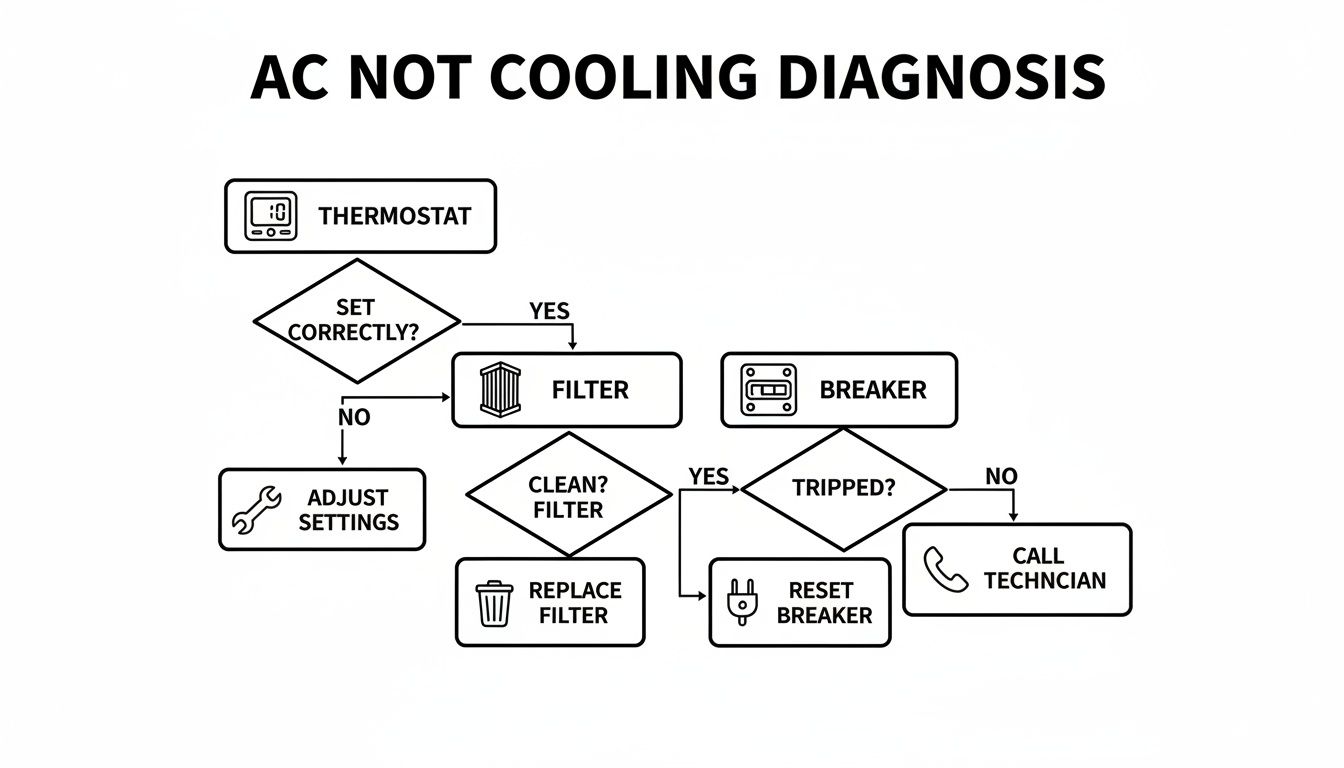
As you can see, the smart move is to always start with the easiest and most common issues: thermostat, filter, and breaker, before assuming it’s something more serious.
To make it even simpler, here's a quick rundown of these first steps.
Quick Troubleshooting Checklist
Check | Potential Cause | Simple Solution |
|---|---|---|
Thermostat | Incorrect mode or temperature setting. | Ensure it's set to "Cool" and the temperature is lower than the room temp. |
Air Filter | Clogged with dust, restricting airflow. | Check the filter. If it's visibly dirty, replace it with a new one. |
Circuit Breaker | Tripped breaker for the indoor or outdoor unit. | Locate the breaker panel and reset any tripped HVAC breakers. |
These three checks are the foundation of any DIY AC diagnosis.
Check Your Circuit Breaker
Last but not least, head over to your home's main electrical panel. Your HVAC system is a major appliance, so it has dedicated circuit breakers. Typically, you'll find two of them: one for the indoor unit (the air handler) and another for the outdoor unit (the condenser).
If either one has tripped, part or all of your system won't have power. Look for a switch that’s flipped to the "Off" position or is stuck awkwardly in the middle. To reset it properly, you need to push it firmly all the way to "Off" first, and then flip it back to "On." If it trips again right away, that’s a sign of a deeper electrical problem, and it's time to call a professional.
Clogged Filters and Poor Airflow Can Choke Your AC

A dirty air filter is one of the most common culprits we see when an air conditioner doesn't blow cold air. I always tell homeowners to think of their AC as a living thing: it has to breathe. When that filter gets packed with dust, pet hair, and whatever else is floating around, your system is essentially trying to breathe through a clogged straw.
This kicks off a nasty chain reaction. First, the system has to work way harder just to pull in enough air, putting a ton of strain on the blower motor and cranking up your energy bills. But the real problem, the one that stops the cold air, is what happens next inside the unit.
The Chain Reaction From a Dirty Filter
With airflow choked off, not enough warm indoor air is passing over the evaporator coils. This causes the coils to get incredibly cold, so cold that the condensation on them freezes solid. Before you know it, you've got a block of ice where your cooling should be happening.
Once that evaporator coil is frozen, the game is over. No air can get through to be cooled, and all you get from your vents is room-temperature air being pushed around by the fan. You might even notice that the airflow feels weaker than usual or see water dripping from the indoor unit as the ice starts to melt between cycles.
Don't underestimate this issue. Clogged filters are a factor in a staggering 15-20% of all HVAC service calls we see. Just letting a filter get too dirty can spike your energy use by up to 15% and slash your AC's cooling power by 25%. If you want to dive deeper, some expert market research on air conditioners highlights just how critical this simple component is.
Tucson's Unique Dust Problem
Here in Tucson, we're in a constant battle with fine desert dust. That stuff can clog a standard filter in what feels like record time. After a big dust storm or during monsoon season, the amount of grit in the air goes through the roof, making frequent filter checks an absolute must for any Arizona homeowner.
A quick tip on filters: It's all about finding the right balance. A filter with a super-high MERV (Minimum Efficiency Reporting Value) rating might catch more dust, but it can also restrict airflow too much if your system wasn't designed for it. For most homes in our area, a MERV rating between 8 and 11 is the sweet spot.
We've put together a specific guide on this; check out our advice on how often you should change your AC air filter in Arizona for a more tailored schedule.
Other Airflow Blockages to Check
The filter isn't the only thing that can block airflow. Take a quick look around your house and make sure all the supply vents are open and aren't covered by furniture, rugs, or drapes. Closing even a few registers can throw off the pressure balance in your system and hurt its efficiency.
Finally, step outside and check on your condenser unit, which is the big boxy unit with the fan. This is where your AC dumps all the heat it pulled from your house. If it's smothered in leaves, tangled up in overgrown bushes, or caked with dirt, it can't get rid of that heat. This forces the entire system to run longer and harder, which is a fast track to a breakdown. Often, a gentle rinse with a garden hose is all it needs to breathe freely again.
Recognizing The Signs Of A Refrigerant Leak
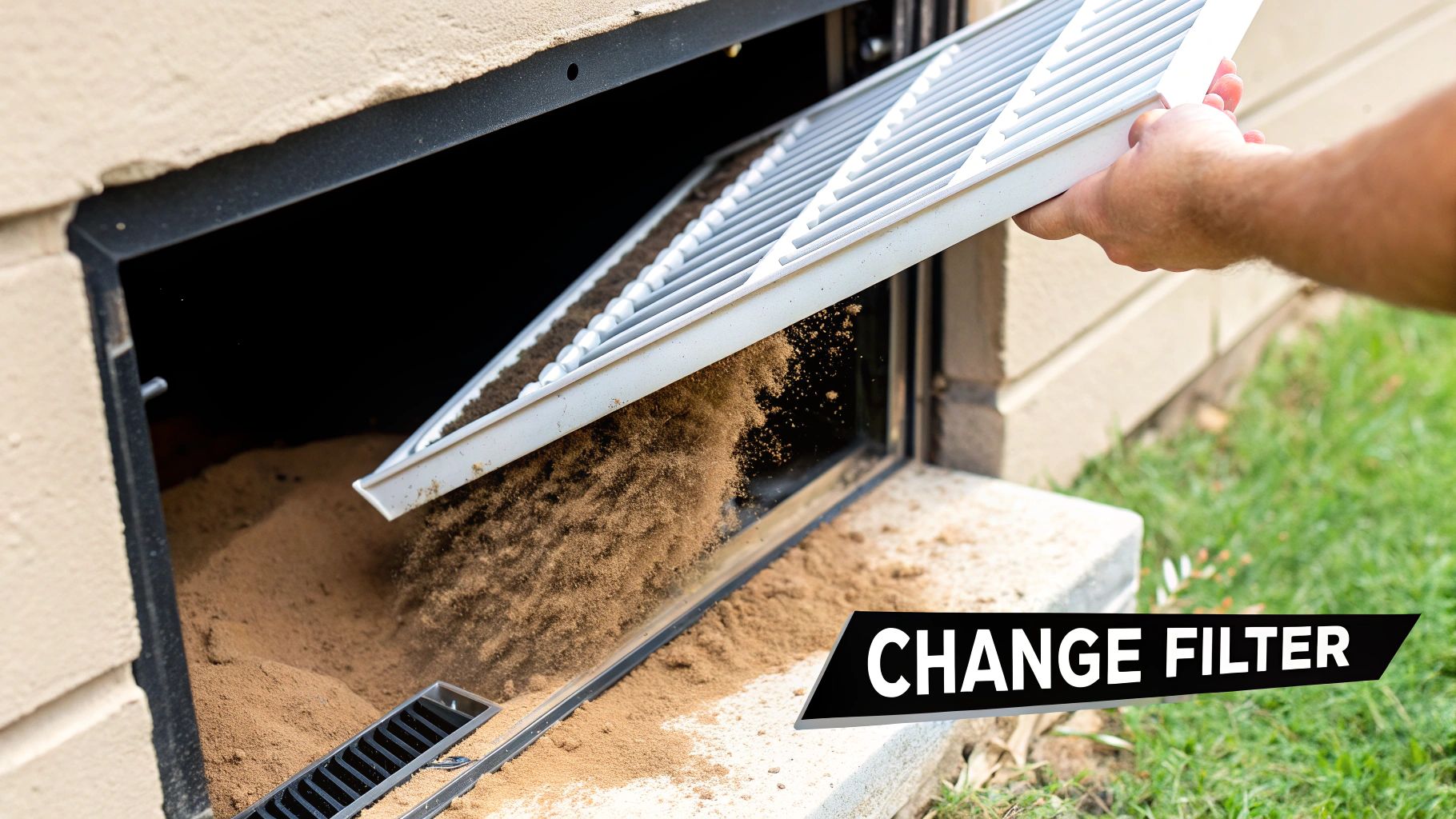
So you've already checked the thermostat and swapped out that dirty filter, but your air conditioner doesn't blow cold air. Now what? The next likely culprit is a refrigerant leak.
Think of refrigerant as the lifeblood of your AC system. It's the specialized chemical that cycles through the coils, absorbing heat from inside your home and dumping it outside. Unlike gasoline in a car, refrigerant isn't something your AC "uses up." If your system is low, it means there’s a leak somewhere. Period.
That leak forces your entire system to work overtime just to keep up, causing a serious drop in performance and a major spike in your energy bills.
Telltale Symptoms Of Low Refrigerant
You can't see refrigerant, but you can definitely spot the clues it leaves behind when it's escaping. Catching a leak early can be the difference between a straightforward repair and a catastrophic system failure.
Here are the big red flags to watch for:
Lukewarm Air From Vents: This is the most common and frustrating sign. The fan is blowing, but the air coming out just isn't cold.
Hissing or Bubbling Sounds: Get close to your indoor or outdoor unit. If you hear a faint hissing or a gurgling sound, that could be refrigerant gas escaping through a tiny crack or hole.
Ice on the Refrigerant Lines: I know it sounds backward, but a lack of refrigerant can cause the copper lines on your outdoor unit to freeze solid, even on a blazing hot Tucson afternoon.
This happens because the pressure inside the system drops, causing the remaining refrigerant to get super-cold and freeze any moisture on the coils and lines.
Why "Topping Off" Refrigerant Is Never The Solution
Some people might suggest just "recharging" or "topping off" the refrigerant. Let me be clear: this is a terrible idea. It’s like endlessly pumping air into a tire with a nail in it instead of just patching the hole. The new refrigerant will simply leak out, and you’ll be right back where you started, only poorer.
A true HVAC professional will always find and fix the source of the leak first. Simply adding more refrigerant is a temporary band-aid that wastes money and, worse, can cause irreversible damage to your compressor, the heart of your AC system.
Refrigerant leaks are no small matter. They are a primary reason for service calls, accounting for 25-35% of cases where an air conditioner fails to cool. A significant leak can slash your system's efficiency by a staggering 50-70%, effectively turning your powerful AC into a very expensive fan. To get a sense of the broader market, you can check out these trends in the air conditioners market.
Because of strict environmental regulations, handling refrigerant is a job exclusively for certified pros. The type of refrigerant your system uses is also a major factor, especially with older coolants being phased out. We cover this in detail in our guide on what replaces R-22 refrigerant for homeowners. A technician has the specialized tools to pinpoint the leak, repair the line, and then charge the system with the precise amount of refrigerant needed to get it back to factory specs.
What If It’s a Major Part Failure, Like the Compressor?
Okay, so you've checked the thermostat and the filter, and your AC is still just blowing warm air. At this point, we have to consider that a major component might have given up the ghost. Issues with parts like the compressor or capacitor are a whole different ballgame and definitely not something you should try to fix yourself.
But knowing the warning signs is incredibly valuable. It helps you understand what's happening and relay the right information when you call a pro.
Think of the compressor as the heart of your entire AC system. It's the powerhouse in the outdoor unit that pressurizes the refrigerant and pumps it through the system to move heat out of your house. When it dies, the cooling process comes to a dead stop, even if the fans are still spinning.
What A Failing Compressor Sounds Like
A healthy compressor has a familiar, steady hum when it kicks on. When it's in trouble, the sounds it makes are a dead giveaway. From a safe distance, listen for any of these red flags coming from your outdoor unit:
Loud Buzzing or Humming: This can point to an electrical problem or mean the compressor is seized up and struggling to start.
Clanking or Banging Noises: This is a bad one. It almost always means internal mechanical parts have broken loose and are rattling around inside.
Screeching or Squealing: That high-pitched scream often means dangerously high pressure is building up inside the compressor. It's a sign of severe distress.
If you hear any of these sounds, shut the whole system down immediately, first at the thermostat, then at the circuit breaker. This can prevent a catastrophic failure from causing even more damage. To get a deeper dive, our complete guide to replacing an HVAC compressor has a lot more detail.
Identifying Capacitor Problems
Another critical part that often fails is the capacitor. It’s like a small, powerful battery that gives the compressor and fan motors the jolt of energy they need to get started and keep running smoothly.
When a capacitor goes bad, the motors might try to start; you'll hear a hum, but they won't have the juice to actually turn over. Sometimes, they won't even try. The most obvious sign is seeing that the big fan on your outdoor unit isn’t spinning, even though the unit is making noise.
A failing capacitor often gives you a visual clue. With the power shut off at the breaker, peek through the grates of your outdoor unit. If you see a component that looks swollen or is bulging on top, or if it's leaking an oily substance, that's a classic sign the capacitor has failed.
Compressor failures are a huge deal, making up 30-40% of all AC repair calls we see in the thick of summer. It’s wild to think that a stunning 45% of these failures are simply due to overheating from poor maintenance, with repair costs averaging anywhere from $1,200 to $2,500. You can see the full scope of these trends in the air conditioning compressor market data.
Recognizing these symptoms early allows you to shut things down and get a professional on the phone before the damage gets any worse.
When To Call A Tucson HVAC Professional
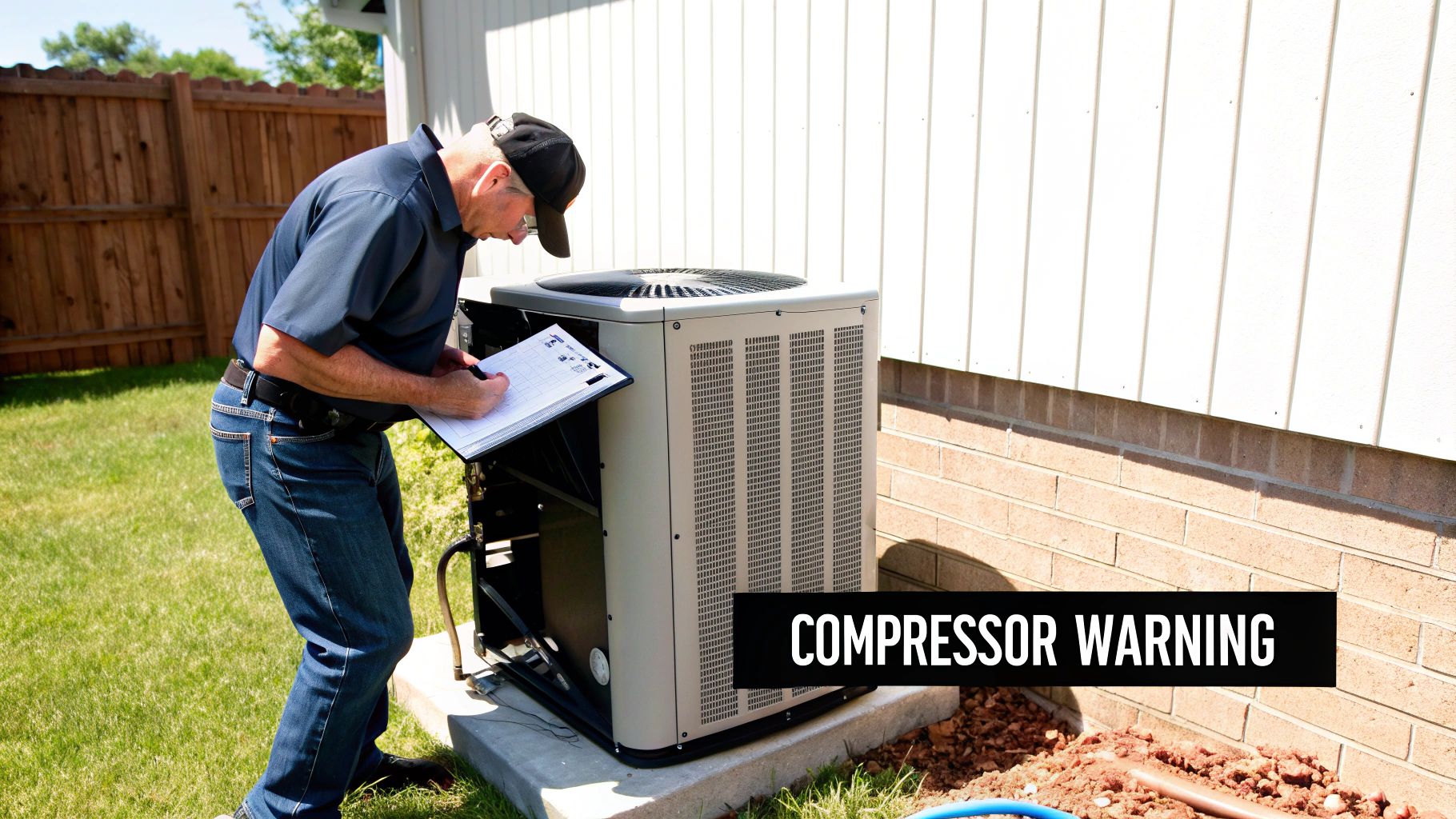
While I'm a huge advocate for homeowners tackling basic fixes, the most important tool in your kit is knowing when to put the tools down. Some symptoms are clear signals that your air conditioner doesn't blow cold air for reasons that go way beyond a simple DIY job.
Pushing your luck can turn a straightforward repair into a full-blown, expensive replacement. Worse, you could be creating a serious safety hazard. The moment you suspect the problem is more than a dirty filter or a wonky thermostat setting, it's time to call in a pro.
Definitive Signs You Need an Expert
Some problems are unambiguous warnings that your system needs immediate professional attention. If you see, hear, or smell any of these, your next step is to call a qualified technician, especially with how hard our systems work in the Tucson heat.
These are the non-negotiable red flags:
Repeatedly Tripping Breaker: You reset the breaker, and it trips again right away or a few minutes later. Stop. This points to a serious electrical fault, like a short circuit or an overheating part, which is a major fire risk.
Loud Mechanical Noises: Any sudden grinding, screeching, or banging from your indoor or outdoor unit is a cry for help. It often signals a failing compressor or a busted motor bearing that's on its last legs.
Any Electrical Smells: A burning smell from the vents or the unit itself is an emergency. Shut the system off at the breaker immediately and call for service. Don't wait.
Suspected Refrigerant Leaks: See ice building up on the copper lines outside? Hear a faint hissing sound? That's likely a refrigerant leak. Only EPA-certified technicians are legally allowed to handle and recharge refrigerant.
Remember, an HVAC system is a complex beast, combining high-voltage electricity, pressurized chemicals, and powerful moving parts. Your safety, and the long-term health of your system, relies on leaving these heavy-duty repairs to a trained and insured professional.
DIY vs. Professional HVAC Repair
Knowing what you can safely handle versus what requires a license and years of experience is key. Here’s a quick breakdown to help you decide when to tackle it yourself and when to make the call.
Symptom | DIY Action | Call a Pro If |
|---|---|---|
AC won't turn on | Check thermostat settings. Replace thermostat batteries. Check the circuit breaker. | The breaker keeps tripping or the unit still has no power. |
Weak airflow | Inspect and replace the air filter. Make sure all vents are open and unobstructed. | Airflow is still weak after changing the filter; could be a fan motor issue. |
Water leaking | Check for a clogged condensate drain line. Use a wet/dry vac to clear it. | You can't clear the clog or see significant water damage. |
Warm air blowing | Check thermostat is on "Cool." Clean the outdoor unit of debris. | The air is still warm after cleaning; likely a refrigerant or compressor issue. |
Icy buildup | Turn off the AC and let it thaw. Replace the air filter once thawed. | The ice returns quickly; this points to low refrigerant or a bigger airflow problem. |
Strange noises | Check for loose panels or debris in the outdoor unit. | You hear grinding, screeching, or banging mechanical noises. |
Odd smells | Check the filter for mold. | You smell burning plastic, electrical odors, or a "gunpowder" smell. |
Ultimately, if a simple, safe fix doesn't solve the problem, or if the issue involves electrical components or refrigerant, it's always the right decision to contact a professional.
Finding a Qualified Tucson Technician
Choosing the right HVAC company is everything. When your AC is out and the house is heating up, it’s tempting to call the first number you find, but a few minutes of diligence can save you a lot of headaches.
A trustworthy company will have no problem answering a few key questions. Be ready to ask:
Are your technicians licensed, bonded, and insured to work in Arizona?
Do you provide upfront, flat-rate pricing so there are no surprises?
What kind of warranty do you offer on your repair work and any parts you use?
Getting solid answers to these questions will give you the confidence that you're putting your home's comfort and safety in capable hands.
Don’t Just Fix It—Prevent It From Happening Again
Let’s be honest, the best way to handle an AC that won't blow cold air is to make sure it never gets to that point in the first place. Think of proactive maintenance as your first line of defense against a sweltering Tucson summer and an unexpected repair bill.
This isn't just about avoiding the stress of a breakdown on a 100-degree day. It’s a smart investment. A little regular care keeps your system running like it should, catching those tiny issues before they have a chance to turn into full-blown, expensive disasters.
A Simple Maintenance Rhythm for Your Home
Keeping your HVAC system healthy doesn't have to be complicated. A consistent, straightforward schedule is all it takes to stay ahead of trouble, especially with the unique demands of our Southern Arizona climate.
Here's what a basic year-round plan looks like:
Check Your Filter. Every. Single. Month. I can't stress this enough. With all the dust we have here, this is non-negotiable. A dirty filter is the #1 cause of airflow problems. Just check it monthly and swap it out if it looks clogged.
Give the Outdoor Unit a Spring Cleaning. Before the summer heat really kicks in, take a look at your condenser unit outside. You’ll want to clear away any leaves, branches, or other debris that’s piled up over the winter. This helps it breathe and release heat properly.
Do a Quick Fall Check-Up. As things start to cool down, it's a good time for one last look to make sure everything is in good shape before you use it less frequently.
For some more great habits that will help you sidestep future AC problems and keep things running smoothly, check out these general tips to avoid common appliance faults with regular maintenance.
Why a Pro Tune-Up Is Worth Every Penny
While those DIY tasks are absolutely essential, they don't replace the trained eye of a professional. An annual tune-up is like a wellness check for what is arguably the most important appliance in your home.
A certified technician can spot things you just can't see. We’re talking about a failing capacitor that’s about to give out, a tiny refrigerant leak that’s slowly killing your efficiency, or an electrical connection that's rattled loose. Finding these things early is the difference between a quick fix and a total system meltdown.
That small investment in a yearly inspection more than pays for itself. It extends the life of your unit, keeps it running as efficiently as possible, and honestly, just gives you peace of mind. To see exactly what a pro looks for, you can dive into our HVAC preventative maintenance checklist.
Still Have Questions? We've Got Answers
Even after running through the basic checks, it's completely normal to have a few lingering questions when your air conditioner isn't blowing cold air. Here are some of the most common things Tucson homeowners ask us, with straight-up, practical answers to help you figure out your next move.
Why Is My AC Running but Not Cooling?
If your AC is running but the air isn't cold, it means the fan is working, but the cooling part of the cycle is broken. It's a classic symptom.
Nine times out of ten, the culprit is something simple: a dirty air filter choking the system, low refrigerant from a leak, or a frozen evaporator coil (usually caused by the first two issues). Less often, it could point to a bigger problem like a failed compressor or capacitor in the outdoor unit. Always start by checking your filter. If that's not it, it's probably time to bring in a pro.
Should I Repair or Replace My Old AC Unit?
This is the big question, and it's a tough call. We often use the $5,000 rule to help homeowners get some clarity: multiply the age of your AC unit by the estimated repair cost. If that number is over $5,000, replacement is almost always the smarter financial decision in the long run.
For example, let's say your 12-year-old system needs a compressor repair that costs $1,500. The math is 12 x 1,500 = $18,000. That's way over the $5,000 threshold, signaling that putting that money toward a new, more efficient unit is a much better investment.
Another major red flag is if your system uses the old R-22 refrigerant. That stuff is phased out and incredibly expensive, making replacement the only logical choice over a costly repair.
What Is the Average AC Repair Cost in Tucson?
HVAC repair costs can be all over the map, but here are some ballpark figures for common fixes we see around Tucson. Remember, these are just estimates to give you an idea.
Capacitor Replacement: $150 – $400
Refrigerant Leak Repair and Recharge: $500 – $1,800+ (depending on the leak's severity)
Condenser Fan Motor Replacement: $400 – $800
Compressor Replacement: $1,500 – $3,000+ (often the point where replacement makes more sense)
A trustworthy technician will always give you an upfront quote before starting any work.
If you've tried the basics and your AC is still on the fritz, don't sweat it. The certified experts at Covenant Aire Solutions are on call 24/7 to pinpoint the problem and get your home cool and comfortable again. Give us a call or schedule service online.