
Air Conditioning Not Blowing: air conditioning not blowing tips for Tucson
When the cool air from your AC suddenly stops, especially during a Tucson summer, it’s easy to jump to worst-case scenarios. But before you panic, take a breath. More often than not, the reason your air conditioning isn’t blowing is something surprisingly simple.
The problem is often a tripped circuit breaker, an incorrect thermostat setting, or a severely clogged air filter. These are issues you can usually spot and fix yourself in just a few minutes, getting your cool air back without needing a service call.
Your First-Response AC Checklist
Let’s walk through the three most common culprits. Think of this as your initial triage before calling in the professionals.
Check Your Thermostat Settings
Your thermostat is the brain of the entire operation, so it's always the best place to start. A simple setting error is a frequent and easily corrected cause for an AC that won't turn on.
Cooling Mode: First things first, make sure the system is actually set to "Cool." It sounds basic, but it’s an easy thing to overlook, especially when we're switching between heating and cooling seasons.
Temperature Setting: Is the set temperature lower than the current room temperature? Your AC will only kick on if it has a reason to. If the thermostat is set to 78°F and the room is already 76°F, it's just going to wait.
Fan Setting: Take a look at the fan setting. If it's on "Auto," the fan will only run when the AC is actively cooling. To get constant air circulation, you'll want to switch it to "On." If you're curious about the pros and cons, check out our guide to the thermostat fan "On" or "Auto" setting.
Inspect the Breaker Box
If the thermostat settings are correct, your next stop is the main electrical panel. Your AC system is made of two key parts, the indoor air handler and the outdoor condenser, and they often have separate circuit breakers. If either one has tripped, the system can't run.
Go to your breaker box and find the circuits labeled for your HVAC system (you might see "AC," "Air Handler," or "Furnace"). A tripped breaker will be shifted to the middle or "Off" position. To reset it, flip it firmly to "Off," then back to "On."
If the breaker trips again right away, don't keep resetting it. This is a clear sign of a more serious electrical problem that needs professional attention. It's a safety issue, so it's time to call us.
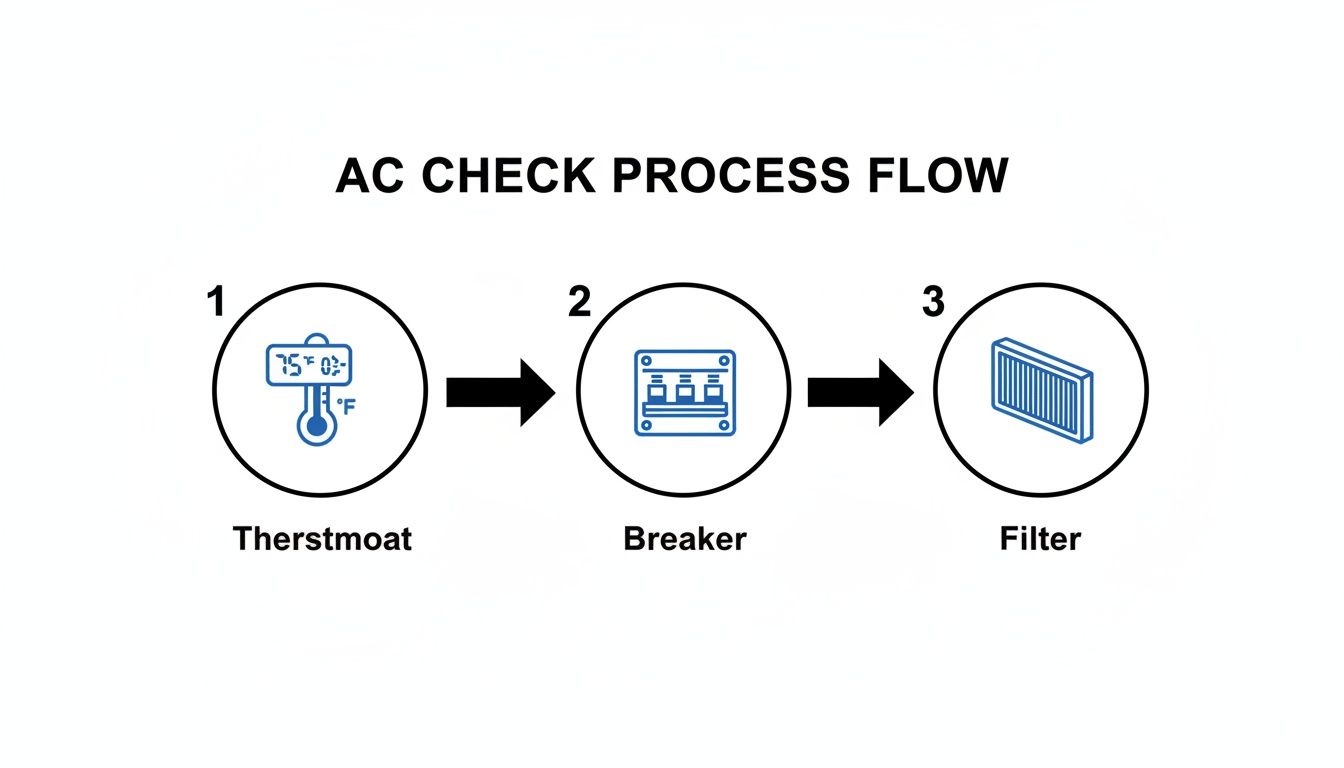
Examine the Air Filter
This is a big one. A clogged air filter is probably the single most common cause of airflow problems we see. Think of it like trying to breathe with a hand over your mouth: if air can't get through the filter, it can't get into your home.
Here in Arizona, dust builds up fast. Pull your filter out and hold it up to a light. Can't see the light through it? It's long overdue for a change.
A filter that's completely blocked can suffocate the system, causing the evaporator coils to freeze over into a solid block of ice, which stops airflow entirely. Keeping this simple component clean is critical, especially since nearly 90% of American households depend on their AC to stay comfortable.
This quick diagnostic flow: thermostat, breaker, filter, covers the simplest fixes first and can often solve the problem right away.
Before you go any further, use this simple table to run through the basics.
Your First-Look Troubleshooting Checklist
This quick reference table helps you perform those crucial initial checks when your AC unexpectedly stops blowing air.
Potential Cause | Where to Look | What to Do |
|---|---|---|
Incorrect Settings | Your thermostat display | Ensure it's set to "Cool," the fan is on "Auto" or "On," and the set temperature is below the room temperature. |
Power Loss | Your home's main circuit breaker panel | Look for breakers labeled "AC" or "Air Handler." If tripped, flip it off and then on again. |
Blocked Airflow | The air filter slot on your indoor unit | Remove the filter. If it's visibly dirty or you can't see light through it, replace it with a new one. |
Working through this checklist will resolve the most common issues. If you've checked all three and your AC still isn't blowing, it's likely a more technical problem that requires a professional diagnosis.
Diving Deeper Into Airflow Problems
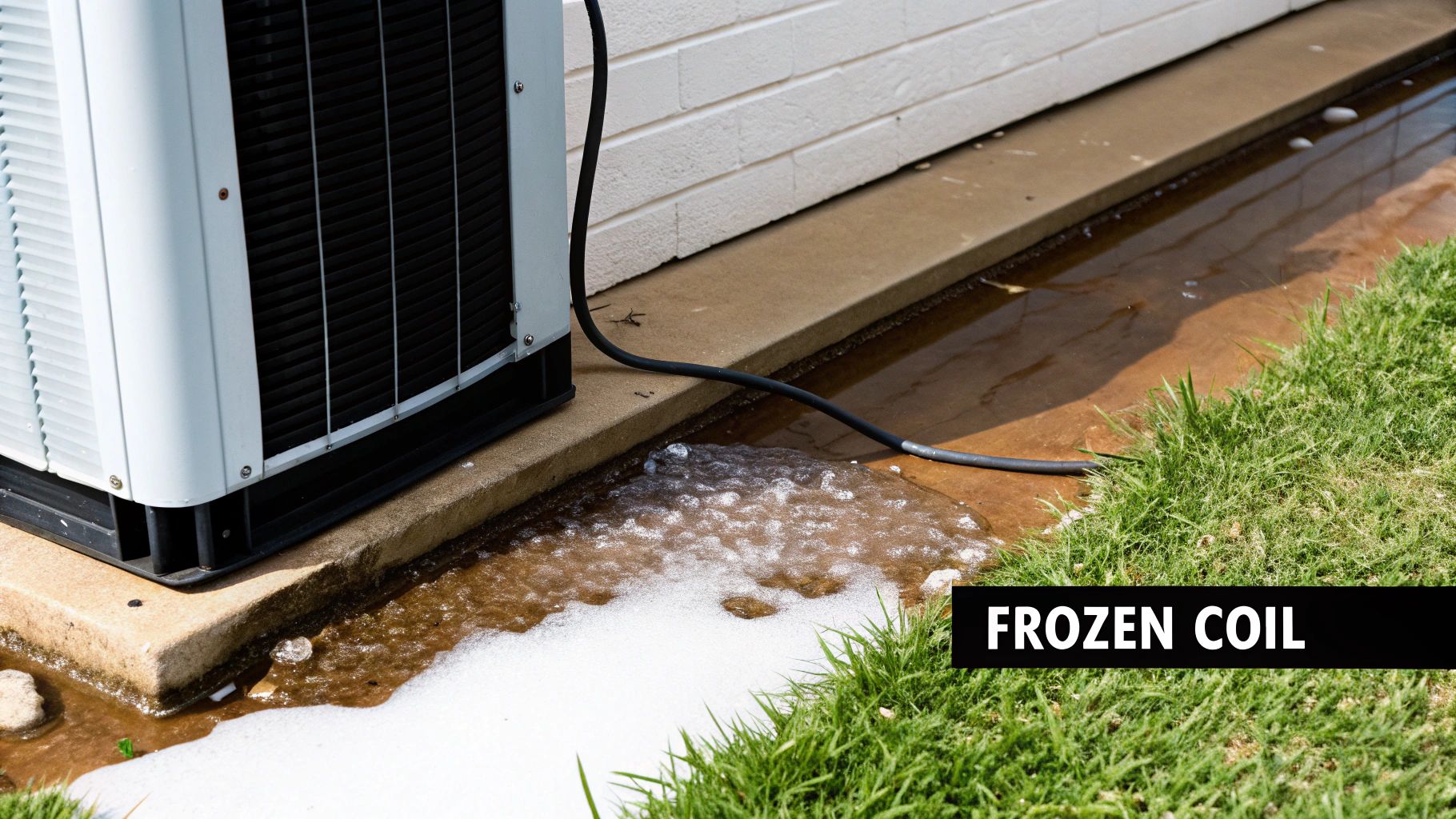
If the quick checks didn't get the air moving again, it's time to roll up your sleeves and look into a couple of the most common culprits we see out in the field. These issues are a step up in complexity but are often the reason your air conditioning is not blowing. With a little guidance, you can often diagnose them yourself.
The two main suspects are a frozen evaporator coil and a blocked condensate drain line. Spotting the signs is half the battle. If you notice a layer of frost on the refrigerant lines near your indoor unit, you're almost certainly looking at a frozen coil. This ice creates a solid barrier that air simply can't get through.
Another classic symptom is a puddle of water around your indoor air handler. In our dusty Arizona climate, this almost always points to a clogged condensate line, which is designed to drain away moisture but can get backed up.
What to Do About a Frozen Evaporator Coil
Seeing your indoor coil encased in a block of ice can be alarming, but the fix is straightforward; it just takes some patience. The absolute worst thing you can do is keep the AC running. This can cause catastrophic damage to the compressor, which is the heart of your system and one of its most expensive components.
Instead, you need to give it time to thaw out safely. Here’s how:
Kill the Cooling: First, head to your thermostat and switch the system from "Cool" to "Off." This stops the refrigeration process that’s causing the ice buildup.
Keep the Fan Running: Next, flip the fan setting from "Auto" to "On." This will force room-temperature air across the ice, helping it melt much faster.
Get Ready for Water: As the ice melts, it’s going to create a lot of water. Place some old towels around the base of the indoor unit to soak up the runoff and prevent any damage.
A frozen coil is always a symptom, not the root cause. It’s usually triggered by restricted airflow or a low refrigerant charge. While thawing it out fixes the immediate blockage, you'll still need to figure out why it froze, like severely clogged ductwork, to keep it from happening all over again.
Checking the Condensate Drain Line
As your AC works, it pulls a surprising amount of humidity out of the air. This moisture collects and drains away through a simple PVC pipe. When that pipe gets clogged with dust, algae, and other gunk, the water has nowhere to go. It backs up and usually trips a safety float switch, which shuts down your entire system to prevent a flood.
You can often see the clog yourself. Find the PVC pipe coming out of your indoor unit. Many systems have a clear P-trap or a T-shaped access port with a cap. If you can see standing water inside, you've found your problem.
While carefully clearing this line can get your AC running again, it's worth thinking about what caused the blockage. A backed-up drain can sometimes be a sign of a bigger issue, like excessive debris throughout your duct system. If you suspect that might be the case, our homeowner's guide to AC duct cleaning in Arizona is a great resource.
Knowing When To Call An HVAC Professional
While it’s great to roll up your sleeves and handle the simple stuff, some AC problems are squarely in the "call a pro, no questions asked" category. When your AC isn't blowing air, trying to fix major electrical or mechanical parts yourself isn't just risky, it's a recipe for more expensive damage and, frankly, it can be dangerous. Knowing the signals that it's time to put down the tools and pick up the phone is the smartest thing you can do for your system and your safety.
Certain symptoms are immediate red flags. These aren't just minor quirks; they're clear signs that a critical component has likely failed and needs an expert eye.
Signs of a Major Component Failure
If you run into any of these issues, your first move should be to shut off the power to your AC unit at the circuit breaker. Then, call us.
A very common one is a distinct humming or buzzing sound coming from the unit, but no air is actually moving. This is the classic signature of a failed capacitor. This little part gives the motors the powerful jolt they need to get started, and without it, they just can't get going.
Another serious sign is when the system is completely dead. You've checked the thermostat and the breaker, but you're getting nothing: no clicks, no sounds, nothing. This often points to a fried control board, which is basically the brain of your entire HVAC system. If the brain is down, the system is down.
And maybe the most straightforward symptom: you hear the indoor unit click on like it’s about to start, but the fan blades never begin to spin. This usually means you’ve got a dead blower motor. The blower is what physically pushes the cool air through your vents, so if it's out of commission, that air isn't going anywhere.
The single biggest risk in trying to fix these things yourself is electrical shock. Your HVAC system uses high-voltage components that are absolutely lethal if handled incorrectly. For anything involving capacitors, motors, or control boards, trusting a certified technician is always the safest and most effective way forward.
DIY Fix Or Professional Repair?
Use this guide to decide whether to tackle an AC issue yourself or call for professional help.
Symptom You Notice | Likely Cause | Your Best Action |
|---|---|---|
No air from vents, unit is silent | Tripped breaker or thermostat issue | DIY First: Check breaker and thermostat settings. |
Unit humming but fan isn't spinning | Failed capacitor | Call a Pro: High-voltage component. Do not attempt to handle yourself. |
System is completely unresponsive | Fried control board or major wiring issue | Call a Pro: Complex electrical diagnosis and repair required. |
Fan won't start, but you hear a click | Burned-out blower motor | Call a Pro: Involves electrical work and replacing a major component. |
Weak airflow from vents | Clogged air filter or blocked vents | DIY First: Change the filter and ensure all vents are open and unobstructed. |
Water leaking around the indoor unit | Clogged condensate drain line | DIY or Pro: You can try clearing it, but a pro can do it thoroughly. |
Ice forming on the refrigerant lines | Low refrigerant or dirty evaporator coil | Call a Pro: Refrigerant should only be handled by a licensed technician. |
Remember, when in doubt, the safest move is always to call for professional help. It’s better to have an expert take a look than to risk further damage or personal injury.
Why Professional Help Is The Only Real Option Here
Beyond the very real danger of getting electrocuted, there are solid, practical reasons to leave these repairs to a technician. We have specialized diagnostic tools to pinpoint the exact problem, which keeps you from wasting money replacing a part that wasn't even broken. What might look like a bad motor to you could just be a simple wiring problem an expert can spot in minutes.
Plus, professional technicians have access to high-quality, warrantied replacement parts and, more importantly, know how to install them correctly. Botching a capacitor installation, for example, can create a domino effect of electrical failures that could fry other, much more expensive parts of your system. For a deeper dive into emergency situations, our emergency air conditioning repair guide for homeowners has more great info.
Bottom line: when your air conditioning is not blowing because you suspect a major electrical or mechanical part has failed, the risk just isn't worth the potential savings. A professional repair from Covenant Aire Solutions gets the job done safely, correctly, and quickly, getting your home comfortable again without putting you in harm's way.
How Regular Maintenance Prevents Airflow Failures
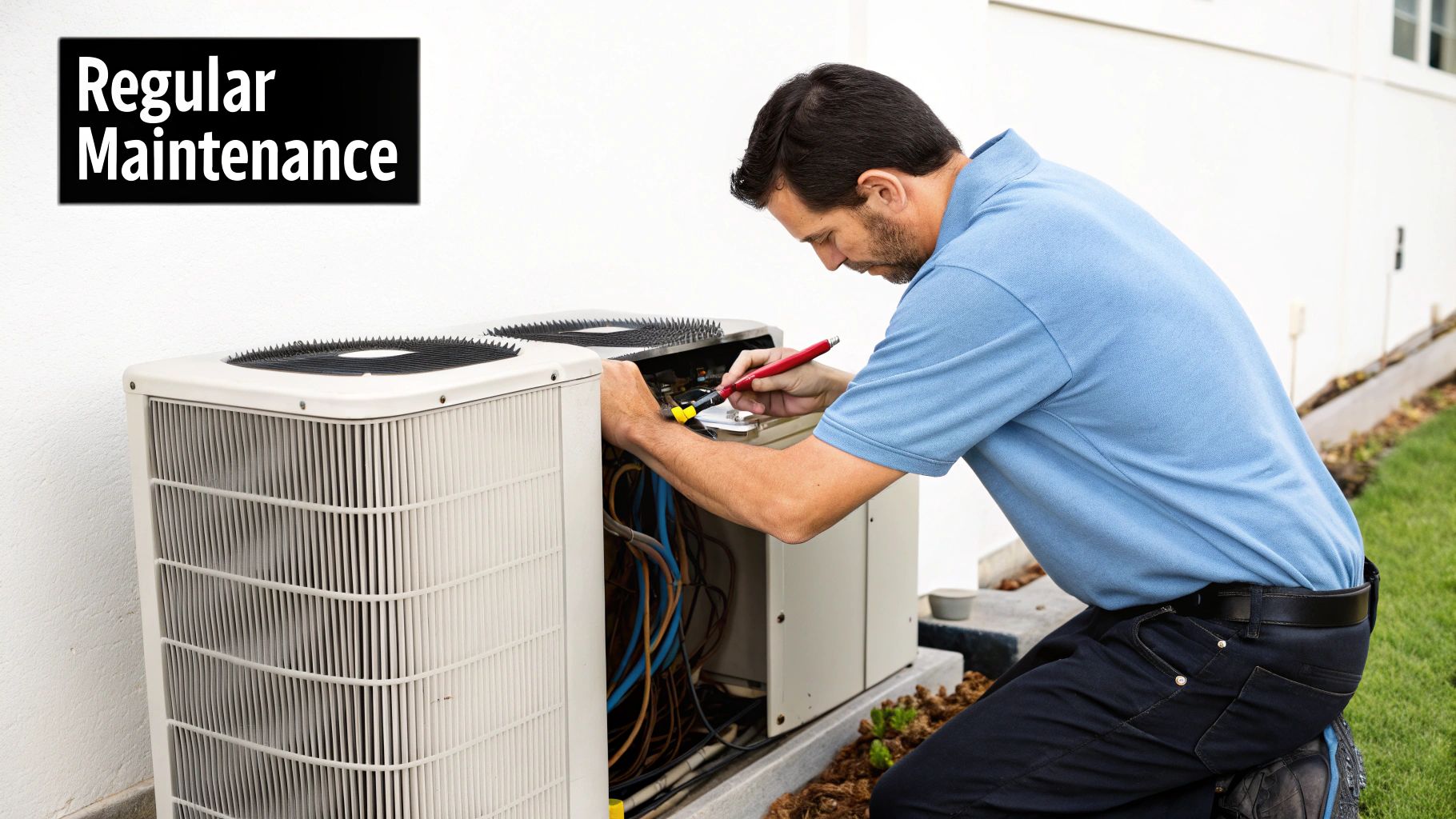
The single best way to handle an AC that's not blowing air is to make sure the problem never starts in the first place. Think of professional maintenance as the most valuable investment you can make in your home’s comfort. It’s what turns your HVAC system from a potential liability into a reliable asset.
It's a lot like taking care of your car. You wouldn't drive for 50,000 miles without an oil change and still expect it to run perfectly. Your AC is a complex machine that works incredibly hard, especially in the brutal Tucson heat, and it needs that same level of care to perform well and avoid a sudden, expensive breakdown.
What a Real Tune-Up Involves
A true, professional tune-up is a lot more than just swapping out the air filter. It’s a meticulous inspection and cleaning process designed to tackle the most common causes of system failure, especially airflow blockages.
When our technicians are on-site, they’re cleaning both the indoor evaporator coils and the outdoor condenser coils. Over a season, these coils get caked with dust and grime, which acts like an insulating blanket. This forces the system to run harder and longer, and it’s one of the top reasons coils freeze over and completely stop air from moving.
A professional tune-up is all about preventative care. By cleaning coils, lubricating motors, and tightening connections, a technician can stop a future problem from ever happening, ensuring your system is ready for the peak summer demand before it arrives.
We also check and lubricate the blower motor bearings. An unlubricated motor creates friction, which leads to overheating and, eventually, a total seizure. A seized blower motor is a surefire way to have an air conditioning not blowing emergency on the hottest day of the year.
The Growing Need for Reliable Systems
Preventative care is becoming more important than ever before. There are around 2 billion air conditioners operating worldwide, and that number is expected to nearly triple by 2050. This incredible growth means billions of potential system failures each year, making reliable maintenance a vital service for homeowners everywhere.
A complete maintenance visit from Covenant Aire Solutions also includes:
Checking refrigerant levels: Incorrect levels are a classic cause of freezing and poor performance.
Tightening electrical connections: Loose connections aren't just inefficient; they're a serious fire hazard.
Inspecting the condensate drain: Clearing this line prevents water damage and frustrating safety shutoffs.
Testing system controls: This ensures your thermostat and safety circuits are working exactly as they should.
Each one of these steps directly contributes to preventing airflow failures and other common breakdowns. For a deeper look at what to expect, check out our 2025 air conditioner tune up checklist. Investing in a maintenance plan is the smartest way to guarantee powerful, consistent airflow all summer long.
Choosing Your Go-To AC Repair Partner In Tucson
You’ve tried all the DIY tricks, but your home is still getting hotter by the minute. When your air conditioning is not blowing, the next decision you make is a big one. Finding the right HVAC partner here in Tucson goes beyond a quick fix; it's about trusting someone to bring comfort back to your home safely and honestly.
The quality of the repair, the fairness of the price, and your peace of mind all hang on who you call. Not all companies operate with the same integrity, so knowing what to look for is your best defense against a bad experience.
Look For Around The Clock Availability
An AC breakdown in the middle of a Tucson summer isn’t just an inconvenience, it’s a genuine emergency. When a system gives out at 9 PM on a Friday, your home can become dangerously hot by Saturday morning. That's why 24/7 emergency service isn't just a nice perk; it's an absolute must-have.
You need a company that gets the urgency and is ready to roll, day or night. Waiting for "the next business day" simply isn't an option when the heat is on.
Your ideal HVAC partner should offer true 24/7 availability, ensuring you can get a certified technician to your door when you need one most, not just when it's convenient for them. This commitment to immediate response is a hallmark of a customer focused company.
Insist On Upfront And Transparent Pricing
One of the biggest worries for homeowners is the dreaded surprise bill. A company you can trust will always give you clear, upfront pricing before any work starts. After a technician diagnoses the problem, they should walk you through a detailed quote explaining the issue and exactly what it will cost to fix it.
This approach gets rid of hidden fees and lets you make a decision without feeling pressured. You should never have to approve a repair without knowing the full cost. It’s that transparency that builds trust and turns a one-time customer into a lifelong client.
Prioritize Certified Technicians And Genuine Service
The person who shows up at your door is the face of the company, and their skill directly affects the outcome of your repair. Look for companies that invest in certified, experienced technicians who know how to diagnose problems correctly the first time.
An expert technician will do more than just patch up the immediate problem; they’ll spot underlying issues that could cause another breakdown down the road. Just as important is an honest approach. A great partner will clearly explain your options, distinguishing between what’s necessary and what’s optional, so you can make the best choice for your home and your budget.
When you're ready to find a team you can rely on, our expert AC repair services in Tucson are available 24/7.
When your AC isn't blowing, it's often time to call a professional. For similar needs in other cooling appliances, you might look into finding trusted pros for fan repair. Choosing the right expert, whether for an AC unit or a ceiling fan, ensures a safe and effective repair.
Your Top Questions About AC Airflow Problems
When the cool air stops flowing, the questions start flying. It’s a stressful spot for any homeowner, especially here in Tucson where a working AC is non-negotiable. To give you some clarity, we've put together answers to the most common questions we hear when a system goes quiet.
How Much Is This Going To Cost Me?
That's the big question, isn't it? The final cost really depends on what’s causing the problem. It could be a simple, five-minute fix or something that requires a bit more work.
A simple fix, like swapping out a filthy air filter, will only set you back the cost of a new filter, usually under $20. But if a key component has failed, the numbers look different.
Bad Capacitor: If your unit is humming but the fan won't spin, a bad capacitor is a likely culprit. Replacing one typically runs between $150 to $400.
Failed Blower Motor: This is a more serious repair. A full blower motor replacement can range from $400 to over $1,500, depending on your specific AC model.
No matter what, we’ll diagnose the issue first and give you a clear, upfront quote. You’ll know exactly what to expect before we start any work.
Keep in mind that a small problem left ignored can snowball. A cheap, dirty filter can cause your evaporator coil to freeze up, which puts massive strain on the compressor, a very expensive part to replace.
Can I Just Let It Run with Weak Airflow?
We get why you'd ask, but we strongly advise against it. Weak airflow is your AC’s way of waving a red flag. It’s telling you something is wrong, whether it's a clogged filter, ice building up on the coils, or a motor that's about to give out.
Trying to run it anyway is like forcing yourself to run a marathon with the flu. You’re just going to make things worse. You put a huge amount of strain on the most important parts of the system, which can quickly turn a minor fix into a major system failure. It's always safer, and cheaper in the long run, to turn it off and figure out the cause.
How Often Should I Really Change My Air Filter Here in Arizona?
With all the dust we have in the desert, this is one of the most important maintenance tasks you can do. A good rule of thumb is to check your filter every month and plan on replacing it at least every 90 days.
However, that’s just a baseline. If you have pets shedding dander, family members with allergies, or smokers in the house, you’ll want to be much more proactive. In those cases, changing the filter every 30 to 45 days is a smart move to keep your air clean and your system breathing easy.
What Are the Telltale Signs of a Failing Blower Motor?
A blower motor usually doesn't just die without warning. It will almost always give you some hints that it's on its way out. If you can catch these signs early, you can avoid a complete breakdown at the worst possible time.
Be on the lookout for these symptoms:
Strange Noises: Listen for any screeching, unusually loud humming, or rattling coming from your indoor unit (the air handler).
Weak or Spotty Airflow: The air coming from your vents just feels weak, or maybe it seems to surge and then fade, even while the system is running.
A Slow Start-Up: You might hear the system kick on, but the fan blades seem to turn really slowly or struggle to get up to full speed.
If you notice any of these things, turn the system off right away and give a professional a call. A failing motor can overheat, which can become a serious safety hazard if it's ignored.
When you need fast, reliable answers and expert service for your AC, don't hesitate. For any issue, from a simple question to a full-blown emergency, the certified technicians at Covenant Aire Solutions are here to help 24/7. Learn more about our commitment to honest, transparent service and find the right solution for your home at https://www.covenantairesolutions.com.