
Finding the Best Air Filters for Dust
For most homes, the best air filters for dust are pleated ones with a MERV rating between 8 and 13. This range is really the sweet spot; it’s strong enough to trap a ton of fine dust particles without choking your HVAC system's airflow. You get cleaner air without putting unnecessary strain on your equipment.
Why Your Air Filter Choice Matters for Dust Control
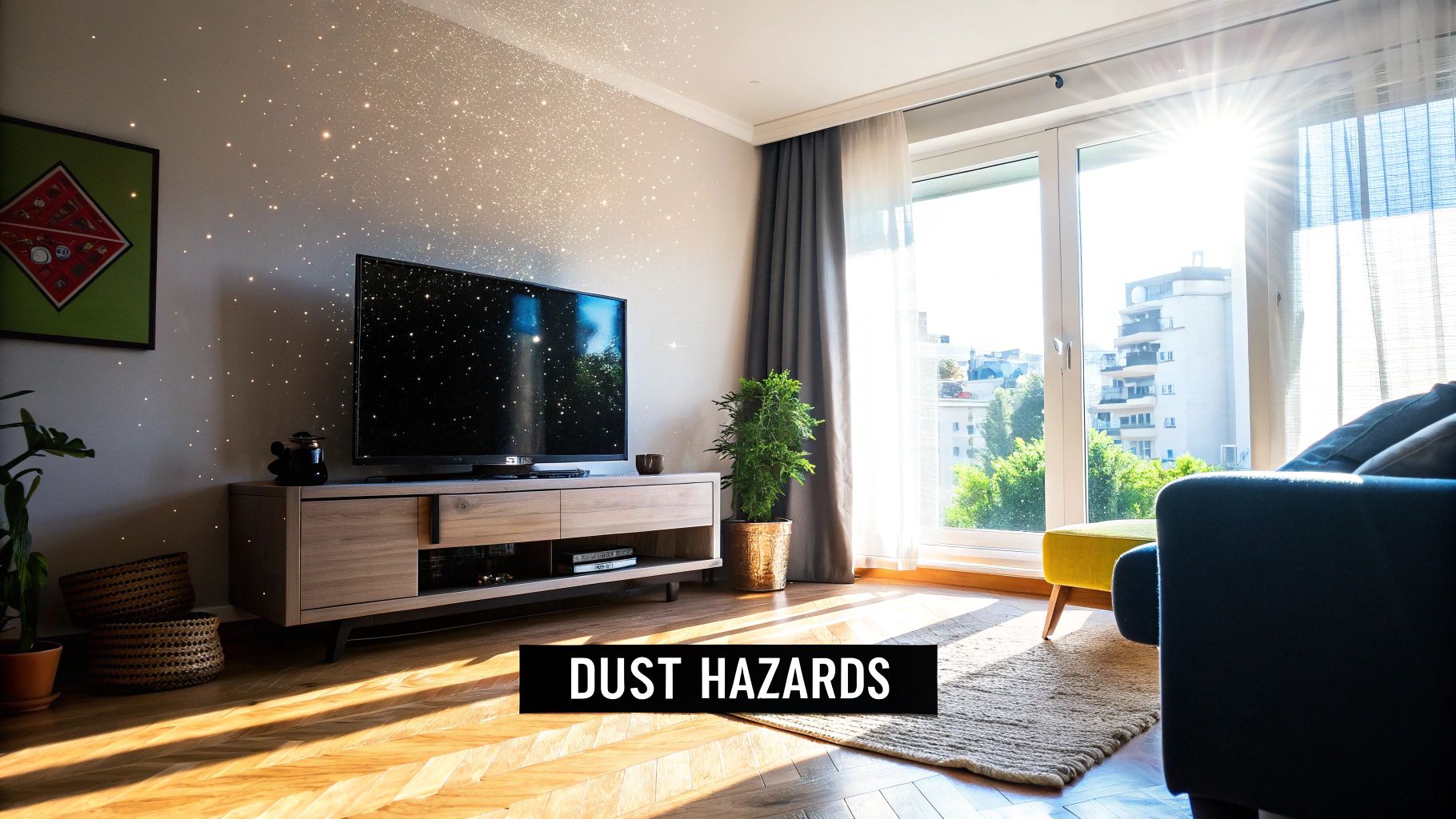
That thin layer of dust that keeps reappearing on your furniture? It’s more than just a cleaning chore. It's a mix of skin cells, pet dander, fabric fibers, pollen, and all sorts of gunk tracked in from outside. Once these tiny particles go airborne, your HVAC system sends them on a tour of your entire home.
A good air filter is your first line of defense. Its one job is to grab these particles out of the air as it cycles through, stopping them from being blown right back into your living room. A better filter means a visibly cleaner home and fewer airborne irritants that can make allergy and sinus problems miserable.
Understanding the Key Players in Dust Filtration
To pick the right filter for dust, you really only need to get a handle on two things: MERV ratings and HEPA filters. They might sound technical, but they're just simple tools to help you get a less dusty, healthier home.
MERV (Minimum Efficiency Reporting Value): This is just a simple 1-16 scale. A higher MERV number means the filter is better at trapping smaller particles. Simple as that.
HEPA (High-Efficiency Particulate Air): This isn't just a rating; it's a certification. A true HEPA filter is the gold standard, capturing an incredible 99.97% of particles as small as 0.3 microns.
The trick is finding the highest MERV rating your specific HVAC system can handle without struggling to pull air through it. For most homeowners, a MERV 11 or MERV 13 filter delivers fantastic dust removal without needing any special system upgrades.
The goal isn't just to buy the filter with the highest number. The best strategy is to match the filter's capability to your home's specific needs and your HVAC system's limitations.
The Connection Between Dust and Air Quality
The amount of dust you see is a pretty direct clue about your indoor air quality. If you're constantly fighting a losing battle with dust, it's a strong sign your current filter just isn't cutting it. This is especially a concern for families where someone has asthma, allergies, or other breathing sensitivities.
If you’re really not sure what’s floating around in your air, you can find more details in a guide to an air quality home test kit.
Upgrading your air filter is one of the most direct and effective steps you can take for a cleaner, healthier home. By choosing the right MERV rating for your system, you can dramatically cut down on the amount of dust making endless laps through your house.
How Air Filters Actually Trap Dust Particles
An air filter might just look like a simple cardboard frame with some folded paper inside, but that simple design is actually a clever trap for all sorts of airborne gunk. Don't think of it as a solid wall; it's more like an incredibly complex maze of fibers. As your HVAC system pulls air through this maze, dust and other particles get snatched out of the air through a few different, pretty fascinating processes.
These mechanisms all work together, which is why a dense, pleated filter is one of the best air filters for dust, miles better than a flimsy, see-through fiberglass one. It’s all about creating as many opportunities as possible to catch those tiny intruders as they zip past.
The Brute Force Method: Straining
The most obvious way a filter grabs dust is through straining. It’s the same basic idea as using a colander to drain pasta: the pasta stays, and the water goes. In this case, large particles like lint, pet hair, and visible clumps of dust are just too big to squeeze through the gaps between the filter's fibers.
They get stuck right on the surface, plain and simple. This is what even the cheapest filters are good at, but straining alone doesn't do much for the microscopic stuff that really aggravates allergies and respiratory issues.
The Sticky Science: Interception
For the medium-sized particles, things like pollen, pet dander, and larger dust mites, a different process called interception comes into play. As these particles ride the air currents flowing around the filter fibers, they get just close enough to make contact and stick.
Think of how a dandelion seed might drift by a spiderweb and get snagged on a single sticky thread. The particle doesn't even try to go through a gap; it just brushes up against a fiber and stays put. The more fibers a filter has, the more chances there are for this "sticky" capture to happen.
A filter's real magic isn't just about the size of the holes. It’s about the density and layout of its fibers, which are designed to maximize the chances of particles making contact and getting stuck for good.
Capturing the Unseen: Diffusion
Now for the really tiny, troublesome particles like smoke, bacteria, and the finest dust. These are captured through a wild process called diffusion. These particles are so incredibly small and light that they don't travel in a straight line with the airflow. Instead, they bounce around randomly, zigzagging like a bee in a jar.
This erratic movement, known as Brownian motion, dramatically increases the odds that they will eventually collide with a filter fiber and get stuck. It’s a bit like trying to walk a perfectly straight line through a dense forest while blindfolded; you’re bound to bump into a tree eventually. This is how high-MERV filters are so effective at trapping the contaminants that would blow right through lesser filters.
Of course, all these capture methods only work if your filter is clean and the air can actually flow through it. Keeping your ductwork clean is a massive part of that equation. You can learn more with our easy home maintenance tips for cleaning air ducts to make sure your filter has a fighting chance to do its job.
Decoding MERV, HEPA, and Other Filter Ratings
Walking down the air filter aisle can feel like trying to read a foreign language. With acronyms like MERV, HEPA, MPR, and FPR plastered on every package, it's easy to get lost in the technical jargon. But here’s the secret: understanding these ratings is the key to finally getting control over the dust in your home.
Think of these ratings as a nutritional label for your filter; they tell you exactly what it's good at catching. Once you know what to look for, you can confidently pick a filter that matches your specific needs, whether you're battling allergies, dealing with pet dander, or just tired of dusting every other day.
This image gives you a quick visual guide to the different filter materials you'll run into.
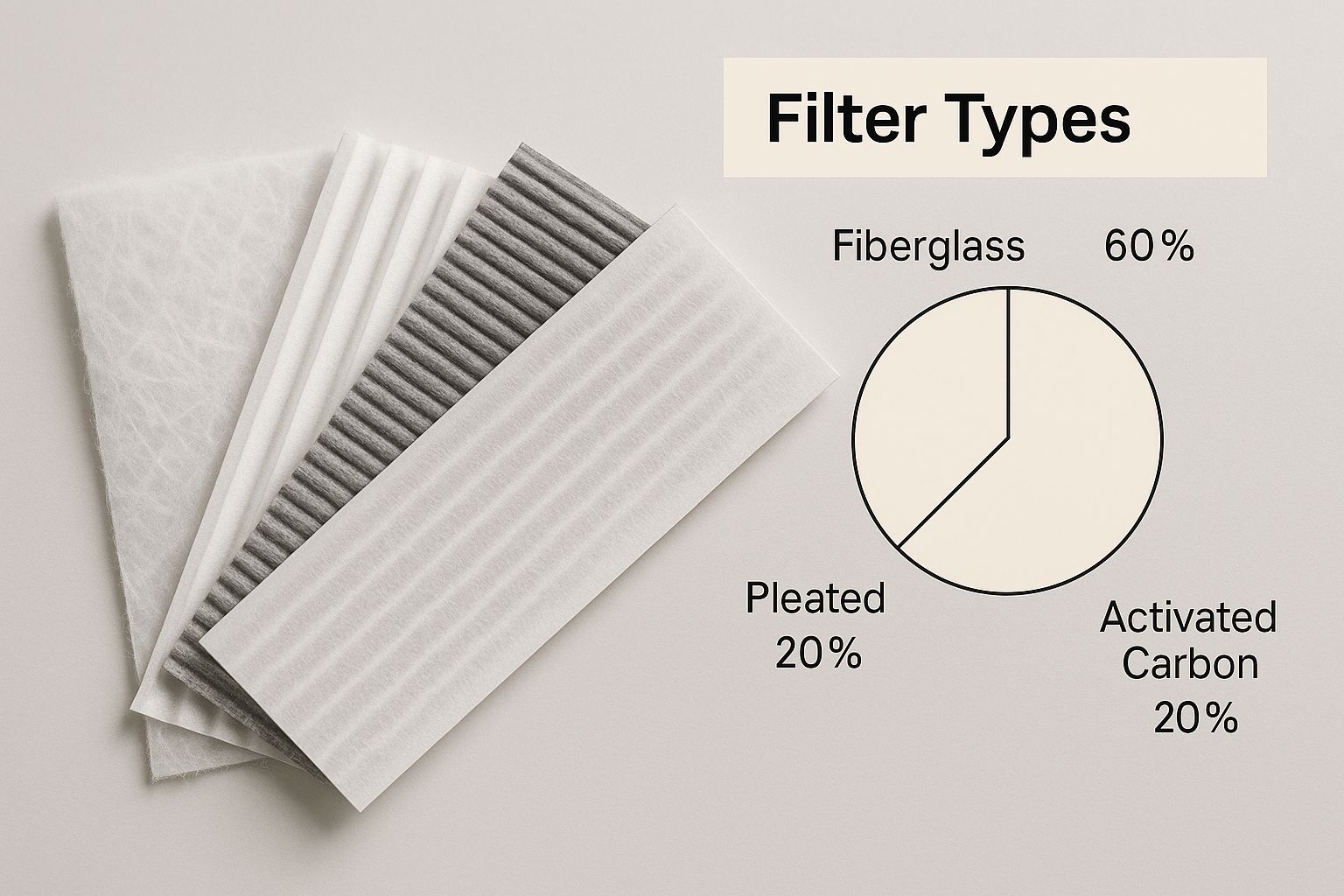
As you can see, the denser and more complex the filter material is, the better it is at trapping those smaller, more irritating particles like fine dust.
The Gold Standard: MERV Ratings
If you're going to remember one acronym, make it MERV. This stands for Minimum Efficiency Reporting Value, and it's the universal, industry-standard scale regulated by ASHRAE (the big authority in heating and air conditioning). It rates a filter’s ability to catch particles on a simple scale from 1 to 16.
It's pretty straightforward: the higher the MERV number, the smaller the particles it can trap. For most homes looking for serious dust reduction, the sweet spot is between MERV 8 and MERV 13. This range offers the perfect balance, as it's strong enough to grab a high percentage of dust, pollen, and dander without choking off the airflow to your HVAC system.
Choosing a filter within the MERV 8-13 range is often the most practical and effective step a homeowner can take. It’s a direct upgrade that yields noticeable results in dust reduction without requiring any special equipment.
Filters rated below MERV 8 are usually the cheap, flimsy fiberglass models. They’ll stop big stuff like lint and carpet fibers, but fine dust sails right on through. On the other end, anything above MERV 13 can be too restrictive for a standard residential HVAC system, potentially straining the fan motor and tanking its efficiency. Always check your HVAC unit’s manual for its maximum recommended MERV rating before you buy.
To help you choose, here's a quick breakdown of how different MERV ratings stack up for tackling dust.
Comparing MERV Ratings for Dust Removal
This table provides a simple comparison to help you match a MERV rating to your home's needs.
MERV Rating | Typical Particles Captured | Best For |
|---|---|---|
MERV 8 | Pollen, dust mites, mold spores, most household dust. | Good for basic dust and allergen control. A solid upgrade from cheap filters. |
MERV 11 | Pet dander, smoke, smog, finer dust particles. | Great for homes with pets or moderate allergy concerns. |
MERV 13 | Bacteria, virus carriers, and most microscopic allergens. | Ideal for homes with significant allergy issues or compromised immune systems. |
As you can see, jumping from a basic filter to even a MERV 8 can make a huge difference in the amount of dust circulating in your air.
Understanding HEPA Filtration
When you need the absolute maximum level of air purification, you'll hear about HEPA filters. HEPA stands for High-Efficiency Particulate Air, and it’s not just a rating, it's a strict certification. To earn the HEPA label, a filter has to be lab-tested and proven to trap 99.97% of airborne particles as small as 0.3 microns.
This level of filtration is incredibly powerful. It captures not just dust, but also smoke, bacteria, and other microscopic gunk. However, true HEPA filters are so dense that they are almost never compatible with a standard central HVAC system. Using one would be like trying to breathe through a brick. You'll typically find them in standalone, portable air purifiers or specialized medical-grade systems. If you're weighing your options, our guide on HEPA vs. carbon filters dives deeper into the differences.
What About MPR and FPR?
Just to make things a little more confusing, some big-box stores came up with their own rating systems. You might see MPR (Microparticle Performance Rating) or FPR (Filter Performance Rating) on certain brands. They use different numbers, but they're trying to do the same thing as MERV: tell you how well a filter catches tiny particles.
Here’s a rough translation guide:
A MERV 8 is similar to an MPR 600 or an FPR 5.
A MERV 11 is in the ballpark of an MPR 1000-1200 or an FPR 7.
A MERV 13 aligns with an MPR 1500-1900 or an FPR 10.
When in doubt, always look for the official MERV rating. It’s the most consistent and reliable measure of performance you'll find, no matter what brand you're buying.
Choosing the Right Filter Material for Your Home
The rating on the box is only half the story. What your filter is actually made of plays a massive role in its dust-trapping ability, how long it lasts, and what it costs you.
Think of it like buying tires for your car. They all do the same basic job, right? But you know a cheap, thin tire won't give you the same grip and will wear out way faster than a high-performance one. It's the same principle here: the material inside your air filter determines how well it "grips" dust and other gunk floating through your air.
Let's break down the most common filter types you'll find on the shelf. This will help you match a filter to your budget, how often you want to do maintenance, and the level of air quality you're aiming for. Finding the best air filters for dust means knowing the real-world pros and cons of each option.
Fiberglass Filters: The Basic Minimum
These are the cheap, flimsy-looking filters you see everywhere, usually with blue fibers so thin you can practically see through them. Let's be clear: their main job is to protect your HVAC system from big stuff like lint and chunks of pet hair, not to actually improve the air you breathe.
Because the fibers are woven so loosely, smaller particles like fine dust, pollen, and pet dander sail right on through. They offer almost no defense against the dust that settles on your furniture or triggers your allergies.
Pleated Filters: The All-Around Champion
If you're looking for a serious upgrade in dust-capturing power, pleated filters are the way to go. They’re typically made from blends of cotton, paper, or polyester that are folded into an accordion-like shape. This clever design dramatically increases the filter's surface area, giving it more space to trap particles without choking off your system's airflow.
That larger surface area is exactly why pleated models are consistently ranked among the best for dust control. They catch the smaller junk that fiberglass filters miss, such as pollen, mold spores, and fine dust, making them the best bet for most homes.
The pleats in a filter act like a bigger net. They create way more opportunities to catch airborne particles as they pass through. This design is the secret to balancing effective filtration with the healthy airflow your HVAC system needs to run properly.
For most homeowners, a pleated filter with a MERV rating between 8 and 11 hits that sweet spot of performance and affordability.
Washable Filters: The Eco-Friendly Option
At first glance, washable (or reusable) filters sound like a great idea. They appeal to homeowners who want a long-term, environmentally friendly solution. Instead of tossing a dirty filter, you just pull it out, wash it with water, let it dry, and pop it back in. While they can save you money over time, there's a pretty big catch.
If that filter isn't 100% bone dry before you put it back, it can quickly turn into a breeding ground for mold and bacteria. Your HVAC system will then happily blow those new contaminants all through your house. On top of that, they usually have lower MERV ratings, often around MERV 4, making them far less effective at grabbing fine dust than a disposable pleated filter.
Electrostatic Filters: The Particle Magnets
Electrostatic filters are a bit different. They use self-charging fibers (usually polypropylene) to create a static field. Think of it like the static cling that makes a sock stick to your shirt; this charge acts like a magnet for dust and other airborne particles, pulling them out of the air and making them stick to the filter.
You can find these in both disposable and washable versions, and they can be quite good at trapping very fine particles.
Disposable Electrostatic: These are a fantastic middle ground. They offer better filtration than standard pleated filters but don't come with the high-maintenance risks of the washable kind.
Washable Electrostatic: Just like other reusable filters, these demand careful, consistent cleaning and have to be dried completely to stop mold from growing and to keep them working effectively.
Understanding how different materials perform is a key skill for any homeowner. The same logic applies when you're comparing different screen materials for your windows; you want something that blocks pests but still allows for good airflow. And for homes that need an even more powerful solution, it's worth learning about choosing whole-house air purification systems, which often use several different filtration technologies together.
Getting Filter Installation and Maintenance Right
You can buy the best, most expensive air filter on the market, but it’s only as good as its installation and upkeep. A fancy MERV 13 filter won’t do you a bit of good if it’s jammed in backward or left to clog up with months of dust and grime. Getting the basics right ensures you get the clean air you paid for and protects your HVAC system from unnecessary strain.
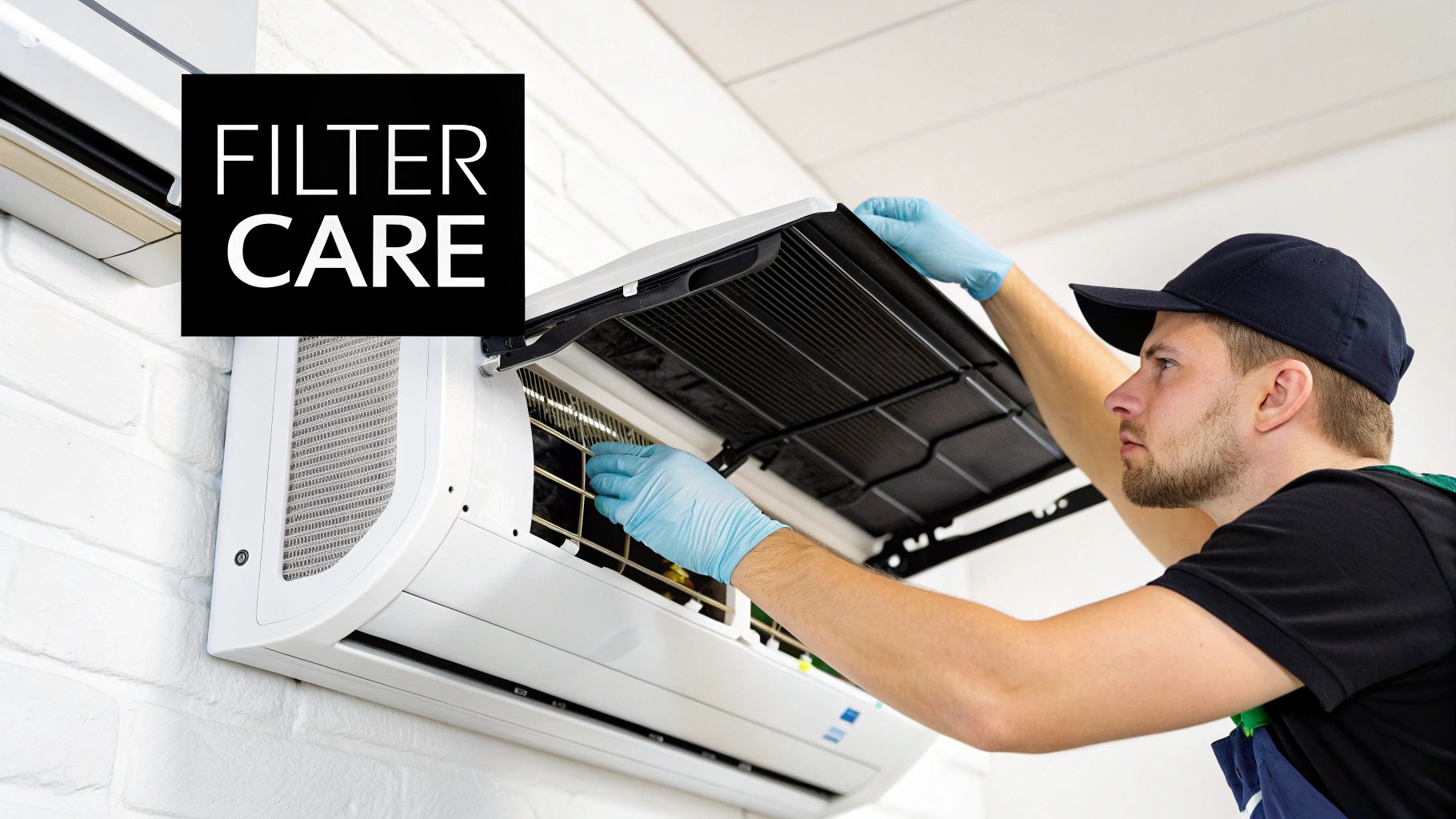
Think of it like the oil filter in your car. If you neglect it, performance suffers, and eventually, you could be looking at serious, wallet-busting damage. A few simple, consistent habits are all it takes to keep your system running smoothly and your air clear.
The Right Way to Install Your Air Filter
Getting the installation right is step number one, and it's absolutely critical. It seems easy enough, but one little mistake can make your new filter almost useless. The most important detail? The airflow direction.
Every single filter has arrows printed on the side of its cardboard frame. These arrows must point toward your HVAC unit’s fan motor, which is the part that’s usually deeper inside the system. This makes sure air flows through the filter material exactly as the manufacturer designed it, trapping the maximum amount of dust.
Installing a filter backward is a surprisingly common mistake, and it chokes your system. This forces your HVAC to work much harder to pull air through, leading to higher energy bills, poor performance, and even long-term damage to the fan motor.
You also need to make sure the filter fits snugly in its slot. If it's too small, air, and all the dust it’s carrying, will just sneak around the edges, bypassing the filter completely. A tight seal is non-negotiable if you want effective dust removal.
Creating a Consistent Maintenance Schedule
"How often should I change my filter?" It’s the million-dollar question for homeowners. The truth is, there's no single answer like "every 90 days." Your replacement schedule really depends on what’s going on inside your home.
A good rule of thumb is to pull the filter out and look at it every 30 days. If it looks dark, gray, and caked with gunk, it's time for a new one, no matter how long it’s been.
Several things will force you to change your filter more often:
Pets: Homes with shedding cats or dogs will need filter changes much more frequently, sometimes every single month.
Allergies or Asthma: If anyone in your house struggles with respiratory issues, a fresh filter is one of your best defenses against airborne triggers.
Location: Living in a dusty climate, near a construction site, or close to a busy road means more junk is getting into your home's air.
This kind of proactive approach is key, especially as more people focus on air quality. The air filter cartridges market, valued at USD 2.21 billion in 2024, is expected to climb to USD 3.23 billion by 2033. This growth shows just how important effective dust control has become in homes and even specialized places like data centers. You can discover more about the air filter market and its trends. For more specific advice tailored to our region, take a look at our guide on how often to change your air filter in Arizona.
Common Questions About Air Filters and Dust
When you're trying to get a handle on the dust in your home, a few questions about air filters always seem to pop up. Let's cut through the noise and get you some clear, practical answers so you can choose the right filter with confidence.
Is a Higher MERV Rating Always Better for Dust?
Not necessarily. It's easy to think "higher number, better filter," but it's a bit more complicated than that. While a filter with a super high MERV rating (think MERV 14 or more) is a champ at grabbing microscopic dust, it's also much thicker.
This thickness creates a lot of resistance, making it harder for air to pass through. If your HVAC system wasn't built for that kind of restriction, it has to work overtime just to keep up. That extra strain can lead to higher energy bills, reduced airflow, and even burn out your fan motor over time.
For most homes, a MERV rating between 8 and 13 hits the sweet spot. It does an excellent job of filtering out dust without putting your HVAC system through a marathon. The best move is to always check your unit's manual to see the maximum MERV rating it can handle.
How Often Should I Change My Filter to Control Dust?
That old "change it every 90 days" rule is more of a suggestion than a hard-and-fast rule. The truth is, how often you need to swap out your filter depends entirely on what’s going on inside your house.
You'll want to check your filter monthly, especially if you're dealing with:
Pets that shed: All that fur and dander can clog a filter in no time.
Allergies or asthma: A fresh filter is your first line of defense against airborne irritants.
A dusty environment: Living near a construction site or in a dry, windy area means more particles are making their way inside.
Forget the calendar; your eyes are your best tool here. Pull the filter out once a month. If it's caked in a visible layer of gray dust and debris, it's time for a new one, even if it's only been a few weeks.
Don't just rely on a set schedule. A clogged filter can't do its job, and it forces your entire HVAC system to struggle. Regular visual checks are the most reliable way to know when it's time for a change.
Can I Put a HEPA Filter in My Central HVAC System?
This is a great question, but the answer is almost always a firm "no." True HEPA filters are filtration powerhouses, designed to trap 99.97% of particles as small as 0.3 microns. That incredible performance comes from an extremely dense filter media.
That density creates a massive wall that standard residential HVAC systems just aren't powerful enough to pull air through. Trying to force it can seriously strain your system and might even fry the fan motor.
If you need that level of air purification for a specific area, like a bedroom for someone with severe allergies, your best bet is a portable, standalone HEPA air purifier. It's designed to do that one job perfectly without putting your entire HVAC system at risk.
Ready to improve your home's air quality and finally win the war on dust? The experts at Covenant Aire Solutions can help you find the perfect filtration solution for your specific HVAC system and needs. Visit us online to schedule a consultation today.