
How to Clean AC Condensate Drain Line Like a Pro
Updated: Aug 5, 2025
So, how do you clean an AC condensate drain line? The basic idea is to use a wet/dry vacuum to pull out whatever is causing the blockage from the outside drain opening. Then, you'll flush the line with a simple distilled white vinegar solution from the indoor access point. This one-two punch is usually all it takes to clear out the gunk, like algae, sludge, and debris, that leads to water backing up into your home.
Why a Clogged Drain Line Is a Silent Home Wrecker
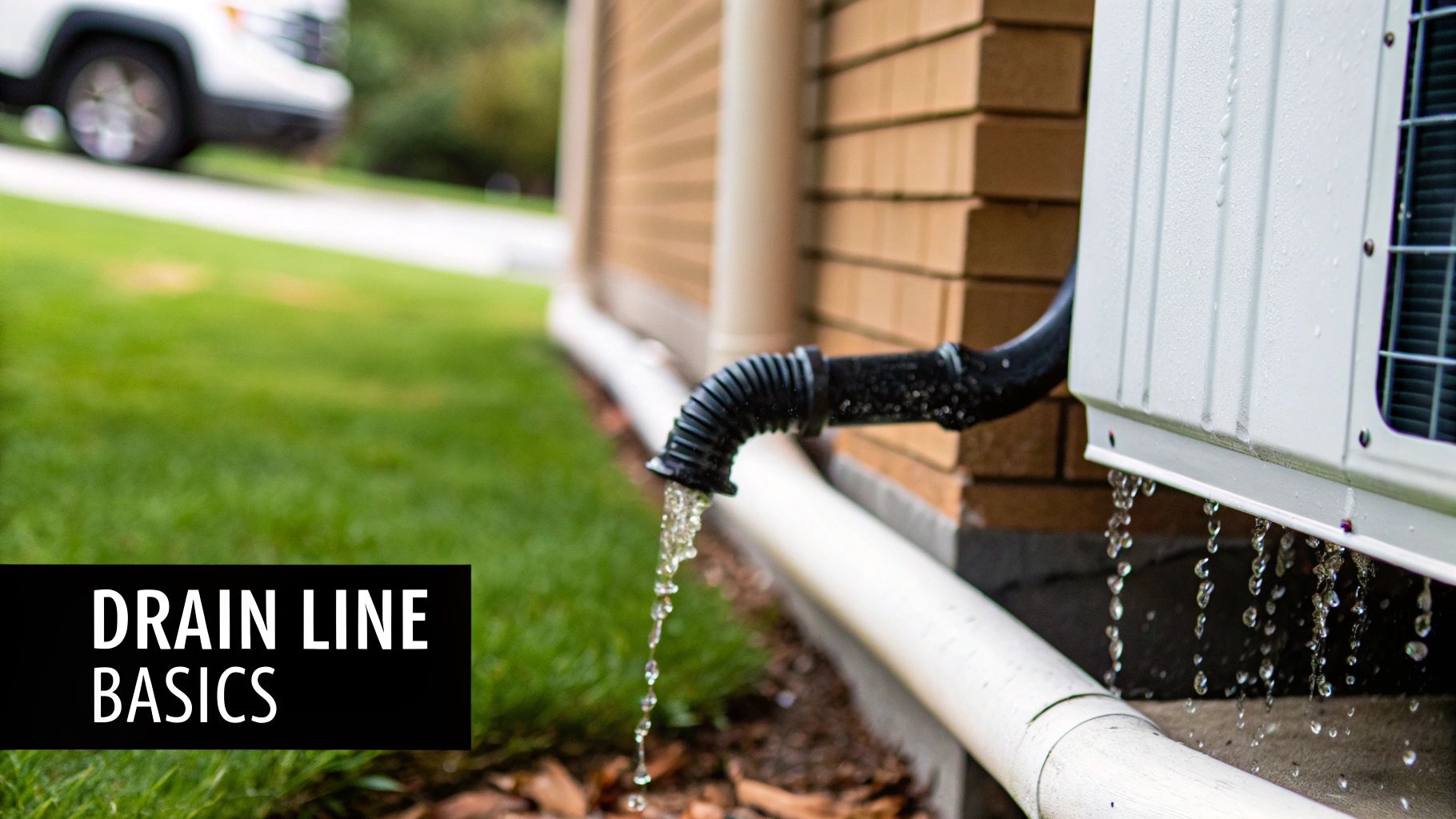
You’ve probably seen that simple PVC pipe running from your air conditioner, but it’s easy to overlook just how important it is. That little pipe is your home's first line of defense against moisture damage. Its only job is to get the water your AC pulls out of the air, a process essential for both cooling and dehumidifying, safely outside.
When that path is blocked, the water has nowhere to go. It backs up, and that’s when the trouble starts.
The Hidden Dangers of a Blocked Line
A clogged drain line might seem like a small problem, but it can quickly turn into a nightmare. The backed-up water can cause hidden leaks inside your walls and ceilings, creating the perfect breeding ground for mold and mildew. Not only does this damage your home, but it can seriously harm your indoor air quality and pose health risks.
It gets worse. To prevent a major flood, many modern AC systems have a float switch that will automatically shut everything down if the water level gets too high. It’s a great safety feature, but it always seems to kick in on the hottest day of the summer, leaving you without any cool air.
Don’t underestimate the damage a lack of maintenance can cause. To get a better handle on how your system works, I'd recommend reading our guide on **air conditioning basics for homeowners**.
Believe it or not, nearly 90% of HVAC system failures can be traced back to poor maintenance, and a clogged condensate line is one of the biggest culprits.
On a humid day, that pipe is responsible for draining anywhere from 5 to 20 gallons of water. When it’s clogged with a nasty mix of dust, algae, and mold, all that water has to go somewhere.
Early Warning Signs to Watch For
The good news is that your AC will usually give you a few hints that something is wrong before it becomes a full-blown disaster. If you know what to look for, you can step in and fix a minor clog before it leads to expensive repairs. Being proactive here is everything.
I’ve seen it all over the years, and there are a few tell-tale signs that your drain line is begging for attention. This table breaks down the most common red flags.
Warning Signs of a Clogged AC Condensate Drain Line
Symptom | What It Means | Urgency Level |
|---|---|---|
Musty or Moldy Smell | You're smelling standing water and microbial growth in the drain pan or the line itself. | Medium |
Visible Water Leaks | Water pooling around the indoor unit is a clear sign the condensate can't drain out. | High |
Full Overflow Pan | The secondary pan is for emergencies. Water here means the primary line is definitely blocked. | Critical |
AC System Shuts Off Unexpectedly | The float switch has likely been triggered by high water levels, signaling a major blockage. | Critical |
If you notice any of these signs, especially water where it shouldn't be or a system that keeps shutting off, it’s time to take action immediately. Ignoring these warnings is a surefire way to end up with a much bigger, and more expensive, problem on your hands.
Gathering the Right Tools for the Job
Before you even think about tackling your AC unit, take a few minutes to get your gear together. Trust me, this small step makes a world of difference. Proper prep is what turns a potentially messy headache into a straightforward weekend task. It isn't just about having any tools; it's about having the correct ones to clean your AC condensate drain line safely and effectively.
The goal here is to get this done in one go. No frustrating trips back to the garage or, worse, the hardware store mid-project. Think of it like cooking a meal: you wouldn't start chopping onions without having everything else out on the counter, ready to go.
The Essential Cleaning Kit
Each item on this list has a specific job, from breaking up the initial clog to sanitizing the pipe so you don't have to do this again in a few months. Having it all on hand means you’re ready for whatever gunk you find lurking in that drain line.
A Wet/Dry Vacuum: This is your heavy hitter. Its suction power is exactly what you need to pull out that nasty mix of algae, sludge, and whatever else is causing the blockage.
A Flexible Wire Brush: Sometimes suction isn't enough for the really caked-on gunk. A thin, flexible brush lets you get inside the access pipe and manually scrub away anything the vacuum leaves behind.
Distilled White Vinegar: This is your cleaning and sanitizing agent. It’s acidic enough to kill off mold and algae but gentle enough that it won’t damage your PVC pipes. Unlike harsh chemical cleaners, you also don't have to worry about nasty fumes getting into your home's air.
Duct Tape and Rags: You'll use these for creating a good seal and for general cleanup. It's always a good idea to have an old towel or two nearby, just in case of any small spills.
Pro Tip: When you connect your wet/dry vac to the drain line, don’t just try to hold it in place. Use duct tape to create a completely airtight seal between the vacuum hose and the pipe. This simple trick dramatically boosts the suction power, making it far more likely you’ll pull out the entire clog on the first try.
Why the Right Solution Matters
I know it’s tempting to grab a powerful chemical drain cleaner from under the sink, but that can be a huge mistake with your HVAC system. Aggressive chemicals can easily corrode your PVC pipes or eat away at the glue holding the joints together, which can cause serious leaks down the road.
Even worse, any fumes from those harsh cleaners can be pulled right into your air handler and spread throughout your entire home.
That’s why professionals stick with a natural solution like distilled white vinegar. It gets the job done without putting your system or your family’s health at risk. It’s a simple choice that protects both your big-ticket HVAC investment and the air you breathe every day.
Your Guide To Clearing a Clogged AC Drain Line
Alright, let's get our hands dirty and walk through how to clean your AC condensate drain line. But before you even think about touching anything, we have to talk about safety. First things first: kill the power to your AC system.
Start at the thermostat and turn it off completely. Then, head over to your home's main breaker panel and find the one labeled for your HVAC unit. Flip it to the "off" position. This isn't optional; it's a critical two-step process to make sure there’s zero electricity running to the unit while you work. It prevents any chance of a nasty shock or the system kicking on unexpectedly.
Locating The Access Point
With the power safely off, it's time to find the condensate drain line's access point. You’ll usually find this near your indoor air handler, which might be tucked away in a closet, the attic, or down in the basement. You're looking for a white PVC pipe with a T-shaped fitting on top. This fitting should have a cap or plug that you can remove. That’s your entry point.
Once you’ve found it, gently twist or pull the cap off. Don't be surprised if you get hit with a musty smell, especially if there’s a stubborn clog in there. This is where you'll be flushing the line once you've cleared the main blockage from outside.
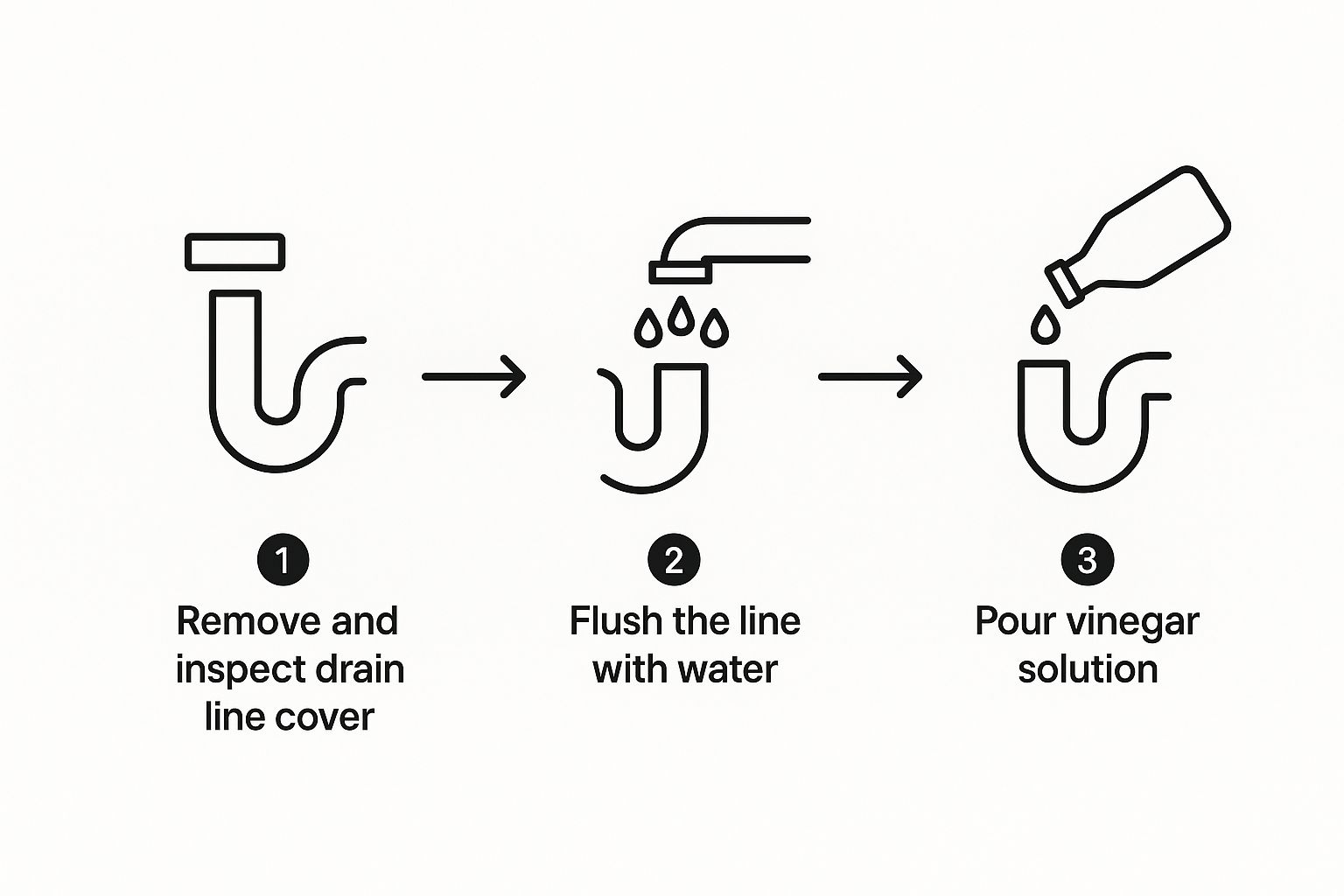
This diagram gives you a quick visual of the cleaning cycle from the inside: inspecting the line, flushing it out, and then sanitizing it to finish the job.
Pulling The Clog With a Wet/Dry Vacuum
Now, head outside to where the drain line pokes out of your house. It’s typically a small PVC pipe sticking out of the wall, usually close to the big outdoor condenser unit. This is where your wet/dry vacuum gets to be the hero.
Position the vacuum hose directly over the end of the drain pipe. To get the best suction, you need a tight seal. I usually wrap some duct tape around the connection, but you can also just press a damp rag firmly around the hose and pipe to close any air gaps. Now, fire up the vacuum and let it run for a couple of minutes.
What you're listening for is the deeply satisfying sound of sludge and water getting sucked into the canister. After a minute or two, turn off the vacuum and take a peek inside. See a bunch of gross, murky water? Success! That visual confirmation is the best sign that you've yanked the clog right out.
A clogged drain line is an incredibly common problem. In fact, some studies show that about 80% of air conditioning service calls during the hottest months are tied to condensation issues. These clogs love to form after the system has been dormant, like over the winter, when all that gunk and biofilm has time to settle and harden in the pipe.
Flushing And Sanitizing The Line
You've cleared the main blockage from the outside, but we're not quite done. The final step is to give the line a good flush from the inside to get rid of any leftover mold or algae. This is what helps keep a new clog from forming right away.
Head back to that indoor access tee you opened earlier. Grab a funnel and slowly pour about a cup of distilled white vinegar into the pipe. Vinegar is a fantastic, mild acid that will kill any lingering gunk without being harsh enough to damage your PVC pipes. Let that vinegar sit in the line for about 30 minutes to really do its work.
After 30 minutes have passed, flush everything out by pouring a gallon of clean water through the same access point. This will rinse out the vinegar and any debris it loosened up. If you hit a snag or something doesn't seem right, our team has put together a helpful guide with some top AC troubleshooting tips to fix your air conditioner fast.
With the line now clear and sanitized, you can put the cap back on the access tee. Go ahead and restore power to your system, first at the breaker panel, then at the thermostat. Your AC should now be draining properly, protecting your home from any potential water damage.
Troubleshooting Stubborn Clogs and Common Problems
So you did everything right, but the clog is just laughing at your wet/dry vac. It happens. While the vacuum method is a powerhouse, it’s not a silver bullet for every single blockage. Sometimes you just can't get a good seal, or the gunk is so packed in there that suction alone won't break it free.
When this happens, don't get discouraged. It just means it's time to pivot your strategy. Having a backup plan is part of the game when you decide to clean your AC condensate drain line, because some clogs need a more direct approach.
When Suction Fails
If your wet/dry vac isn’t making a dent, you'll need to get a little more physical with the clog. Your best bet is usually a thin plumber’s snake, sometimes called a drain auger. This tool lets you go in and manually break up whatever is causing the blockage.
Gently guide the end of the snake into the drain opening outside. You’ll feel a bit of resistance when you hit the clog; that’s your target. Slowly turn the crank, working the auger’s tip into the mass to start breaking it apart.
Just be careful not to get too aggressive here. You don't want to accidentally damage the PVC pipe or bust one of the joints. After you've worked the snake through and broken up the clog, go back to your wet/dry vac to suck out all the loosened debris.
It's worth remembering that a clogged drain line is more than a simple nuisance; it's a major reason for system breakdowns. In fact, an estimated 90% of central AC repair calls involve leaks or water damage from condensate overflow. This can even cause ice to form on your coils, turning a small problem into a much bigger one.
Responding to System Alerts
What if your AC has already shut itself off, or you walk into your attic to find a full emergency drain pan? This is your HVAC system’s version of a fire alarm. Standing water in that pan is a sure sign that the primary drain line is completely blocked.
Your first move should be to kill the power to your unit at the circuit breaker. This prevents any further operation or potential electrical issues. Next, you have to get that water out of the pan, either with your wet/dry vac or a small pump.
Float Switch Activation: If your AC shut down automatically, that means the float switch did its job perfectly. Once you clear the clog and get the water out of the pan, the switch should reset itself, and your system can turn back on.
Persistent Issues: What if the system doesn't restart, or you notice the pan refilling quickly? That's a sign the clog is more severe than you thought.
In these cases, it’s smart to look at the bigger picture. If you’re dealing with stubborn issues, our **ultimate AC troubleshooting guide** offers more in-depth solutions. A persistent clog can sometimes be a symptom of a larger problem that's best left to a professional diagnosis.
Keeping Your AC Drain Line Clear All Year
Alright, you’ve wrestled that clog into submission and got your AC running again. That’s a huge win. But now comes the important part: making sure you don't have to do it all over again next month.
The goal isn't just to react to problems but to prevent them from happening in the first place. A little proactive maintenance is all it takes to keep that drain line clear, and it’s a whole lot less stressful than dealing with a surprise shutdown and water damage.
Think of it this way: you wouldn't wait for your car's engine to seize before changing the oil. The same logic applies right here. A few minutes of care each month keeps your system healthy and humming along.
A Simple Monthly Maintenance Routine
The best way to stop clogs before they start is with a quick monthly flush, especially during the hot cooling season when your AC is working overtime. This simple task stops algae and other gunk from building a home in your drain line.
Here’s all you need to do:
Grab Some Vinegar: Once a month when it's warm outside, pour one cup of distilled white vinegar into the access tee. That’s the same T-shaped PVC pipe you used earlier to flush out the clog.
Let It Sit: Give the vinegar at least 30 minutes to work its magic. This gives it enough time to break down any gunk that’s starting to form.
Rinse It Out: After 30 minutes, pour a gallon of plain water down the same pipe to flush everything out.
That's it. This quick habit is your number one defense against future blockages, buying you some serious peace of mind.
A proactive approach is always better than a reactive one. The goal isn't just to clean your AC condensate drain line when it clogs but to create conditions where clogs are far less likely to form in the first place.
The Overlooked Role of Your Air Filter
While flushing the line is a game-changer, there’s another piece of the puzzle that a surprising number of homeowners overlook: the air filter. It might not seem directly related, but a dirty air filter is a major contributor to the sludge that creates clogs.
When your filter is choked with dust, pet dander, and other junk, that debris gets sucked into your system. It then mixes with the moisture on the evaporator coils and gets washed right down into the condensate drain, creating a perfect recipe for a blockage.
Changing your filter regularly, usually every 30 to 90 days, dramatically cuts down on the amount of grime entering the drain line to begin with. For more expert advice on this, you can learn how to improve AC efficiency in our dedicated article.
By combining a monthly vinegar flush with routine filter changes, you create a powerful one-two punch for AC maintenance. These two simple habits work together to protect your system and keep your home cool and comfortable all year long.
Frequently Asked Questions About AC Drain Line Care
Even with a step-by-step guide, it's totally normal to have a few more questions pop up. When homeowners tackle cleaning an AC condensate drain line for the first time, they often hit some specific snags. We’ve pulled together the questions we hear most often to give you clear, quick answers so you can handle this job with confidence.
How Often Should I Clean My AC Drain Line?
For most homes, a good preventative flush every one to three months during the cooling season does the trick. But if you're in a really humid place like Arizona, or if you have pets or allergy sufferers at home, you'll want to aim for a monthly flush. That extra dust and dander can clog things up surprisingly fast.
Of course, if you ever notice warning signs, like a musty smell near your indoor unit or water pooling in the drain pan, don't wait. Clean it out right away, no matter when you last did it. It’s also smart to have a pro look at it once a year; they can often spot subtle issues you might miss.
Can I Use Bleach Instead of Vinegar?
We get this question a lot. While you’ll see plenty of online guides suggesting bleach, we strongly advise against it. Stick with distilled white vinegar. Bleach is a pretty harsh corrosive, and over time it can eat away at your PVC pipes and the glue holding the joints together, leading to leaks down the road.
A common question we get is about using bleach. It's an effective disinfectant, but its corrosive nature poses a risk to your system's components. Vinegar provides the same anti-algae and anti-mold benefits without the potential for long-term damage, making it the safer choice for your HVAC system.
On top of that, bleach fumes can get sucked into your air handler and spread through your home’s air. That’s a major hit to your indoor air quality. Vinegar gets the job done safely without the harsh chemicals or fumes.
What Should I Do If I Can't Find the Outside Drain Opening?
Finding that outdoor drain line isn't always as simple as it sounds. Sometimes it’s tucked away behind bushes, terminates under a deck, or, in some newer homes, drains directly into a household plumbing line.
First, look carefully. Start your search near the outdoor condenser unit and try to trace the line from where it exits the wall.
Check plumbing vents. In some setups, the condensate line connects to a plumbing vent on the roof.
Consult your manual. Your HVAC system’s manual might include a diagram that shows where the drain line is supposed to go.
If you’ve searched everywhere and still can't find it, don't just start pouring water or compressed air into a pipe you're unsure about. It's better to focus your cleaning efforts on the indoor access point using a wet/dry vac or to call in a professional. This is a standard part of a full system check-up, much like the prep covered in [your guide to fall HVAC maintenance](https://www.covenantairesolutions.com/post/your-guide-to-fall-hvac-maintenance). An experienced tech will know exactly where to look and how to handle it safely.
When preventative maintenance isn't enough and you need a team you can trust, Covenant Aire Solutions is ready to help. For expert diagnostics, repairs, and 24/7 emergency service, contact us today.