
Understanding Heat Pump Lifespan and How to Maximize It
- Aug 15, 2025
- 13 min read
Updated: Aug 18, 2025
When you're thinking about a new heating and cooling system, one of the first questions that pops into your head is probably about heat pump lifespan. It’s a big investment, after all. Generally, you can expect a standard air-source heat pump to last somewhere between 15 and 20 years. If you've got a ground-source (geothermal) unit, that number can jump to 20 to 25 years or even longer.
This range is a solid starting point, but it's not set in stone.
Understanding the Average Heat Pump Lifespan
Think of a heat pump's lifespan like the life of a car. How long it lasts really depends on the model you bought, how much you drive it, and most importantly, how well you take care of it. While that 15-to-25-year window is a common benchmark, a few critical factors can nudge that number up or down. It's best to see this as a baseline, not a fixed expiration date.
The biggest factor right out of the gate is the type of heat pump you have. For example, air-source models have to work a lot harder in climates with wild temperature swings, and that extra work can take a toll on their longevity. Geothermal systems, on the other hand, are buried underground and more insulated from harsh weather, which is a big reason they often have a longer operational life.
Lifespan by Heat Pump Type
Not all heat pumps are built the same, and their design has a direct impact on how long you can expect them to keep your home comfortable. The type of unit you choose is the single biggest factor influencing its service life.
To give you a clearer picture, we've put together a quick breakdown of what you can expect from the most common types.
Average Lifespan by Heat Pump Type
This table gives you a quick comparison of the expected operational lifespan for different types of heat pumps under typical conditions.
Heat Pump Type | Average Lifespan |
|---|---|
Air-Source Heat Pump | 15 - 20 years |
Geothermal Heat Pump | 20 - 25+ years |
Ductless Mini-Split Heat Pump | 15 - 20 years |
This table provides a great starting point for setting some realistic expectations for your own system. For a deeper dive into what these numbers really mean for you as a homeowner, be sure to check out our detailed homeowner's guide to heat pump life expectancy.
By understanding these averages, you can get a much better sense of where your own unit stands and start planning for the future.
What Really Determines Your Heat Pump Lifesppan
That 15 to 25-year average is a good starting point, but it doesn't tell the whole story. The real lifespan of your heat pump isn't a fixed date on a calendar; it's the result of a handful of key influences.
Think of it this way: two identical cars can roll off the assembly line, but one might last twice as long as the other. It all comes down to where they're driven, how they're treated, and the quality of the tune-ups they receive. The same exact principle applies to your heat pump. Things like the quality of the initial install, the local climate, and your daily habits all play a massive role. Understanding these factors is the first step to making sure your unit runs efficiently for as long as possible.
Quality of the Initial Installation
The single most critical day in your heat pump's life is the day it’s installed. An improperly sized unit or poorly connected ductwork will force the system to work harder than it should, causing premature wear and tear on its most important parts. This is why choosing a certified, reputable installer isn't just a suggestion, it's non-negotiable.
A professional installation gets everything right from the start:
Correct Sizing: The unit is perfectly matched to your home's square footage and heating needs. This prevents inefficient short cycling and the constant strain of overworking.
Proper Ductwork Sealing: Leaky ducts can lose up to 30% of your conditioned air, forcing the heat pump to run longer and harder just to keep up.
Accurate Refrigerant Charge: Too much or too little refrigerant can absolutely wreck the compressor, which is the heart of your entire system.
An expert installation sets the foundation for a long, efficient life. It ensures every component works in harmony from day one, preventing the kind of chronic stress that leads to early system failure.
Your Local Climate and Usage Patterns
Where you live dramatically affects how hard your heat pump has to work. A unit in a mild, temperate climate is going to experience far less strain than one battling extreme summer heat or brutal winter cold. That constant, heavy workload naturally shortens the operational life of the equipment.
For example, a heat pump in a scorching climate like Arizona might only last 12 to 15 years, while the same model in a more moderate region could easily hit that 15 to 20-year mark. Your daily thermostat habits also make a difference. Constantly cranking the temperature up or down forces the system to run at max capacity more often, increasing wear on the compressor and fan motors. A steady, consistent setting is always gentler on the machinery.
Maintenance and Upkeep Schedule
Finally, proactive care is the secret to longevity. Neglecting routine maintenance is like skipping oil changes in your car: sooner or later, small, preventable issues are going to blow up into major, costly failures. Regular professional tune-ups are essential for keeping your system in peak condition.
A consistent maintenance plan catches problems before they even start. By following a simple guide like your guide to fall HVAC maintenance, you can get ahead of seasonal wear and tear. This kind of consistent attention ensures your heat pump runs efficiently, saving you money on energy bills and extending its overall service life.
Why Regular Maintenance Is Not Optional

Skipping maintenance on your heat pump is a lot like never changing the oil in your car. Sure, you might get away with it for a little while, but a major, expensive breakdown is pretty much guaranteed down the road.
When it comes down to it, regular maintenance is the single most important thing you can do to get a long, trouble-free life out of your system. It's the clear dividing line between a unit that limps its way to its 10th birthday and one that's still running strong for 15 years or more.
This proactive approach catches small, easily fixable issues before they have a chance to snowball into catastrophic failures. A dirty filter or a loose wire might not seem like a big deal, but over time they force the entire system to work harder. That puts a ton of unnecessary strain on the most critical parts, like the compressor and fan motor. Consistent care is what protects your investment and truly maximizes your heat pump lifespan.
What a Professional Tune-Up Includes
Getting a professional tune-up every year is the cornerstone of responsible heat pump ownership. This isn't just a quick once-over; it's a deep-dive inspection and cleaning that gets your system back into peak fighting shape. A certified technician will tackle several critical tasks.
Key elements of a professional service call include:
Inspecting and Cleaning Coils: The indoor evaporator and outdoor condenser coils are magnets for dust and grime. A technician cleans them thoroughly to make sure heat can transfer efficiently.
Checking Refrigerant Levels: The wrong amount of refrigerant can wreck a compressor. A pro will check for the exact levels specified by the manufacturer.
Testing Electrical Connections: Technicians inspect and tighten every electrical connection and measure motor voltage to prevent component failure and safety hazards.
Lubricating Moving Parts: A little grease goes a long way. Proper lubrication on motors reduces friction and wear, helping them last longer and run quieter.
These steps are just a taste of what you get from routine service. To see the full picture, check out the top benefits of HVAC maintenance for Tucson homes in 2025 and how it impacts both your comfort and your wallet.
Your Simple DIY Maintenance Checklist
Between those professional visits, there are a few simple but powerful things you can do yourself to keep your heat pump humming along. These tasks only take a few minutes but make a huge difference in your system's efficiency and longevity.
Regular homeowner maintenance is your first line of defense. Simple tasks like changing filters and clearing debris can prevent up to 70% of the most common causes of HVAC system failure.
Here’s a quick checklist of things you should be doing regularly:
Change Your Air Filter Consistently: This is the easiest and most impactful job on your list. Check the filter every month and swap it out at least every 90 days. If you have pets or live in a dusty part of Arizona, you'll want to do it even more often. A clogged filter chokes the airflow and forces the whole system to overwork.
Keep the Outdoor Unit Clear: Your outdoor unit needs to breathe. Make sure there are at least two feet of clear space all the way around it. Rake away any leaves, grass clippings, or other debris that could block airflow.
Listen for Unusual Noises: Get to know what your system sounds like when it's running normally. If you suddenly hear new grinding, squealing, or rattling noises, that’s your cue to call a professional before a small problem becomes a big one.
Telltale Signs Your Heat Pump Is Failing
Think of these signs as your system’s way of asking for help. Paying attention means you can make a smart, proactive decision instead of being forced into one when your house suddenly feels like an oven.
Unexplained Spikes in Your Energy Bills
One of the first places a struggling heat pump shows itself is on your monthly power bill. If you've noticed a sudden, sharp jump in your energy costs without changing your habits, your heat pump is likely the culprit.
As the internal parts get old and worn, the system has to work much harder and run longer just to keep your home comfortable. That extra effort consumes a lot more electricity, sending your bills climbing. It’s a classic sign that the unit is losing its efficiency and nearing retirement.
Inconsistent Heating and Cooling
Is one room always stuffy while another feels like an icebox? When a heat pump can no longer keep the temperature even throughout your house, it’s a major red flag. This often points to a serious issue, like a failing compressor or a major refrigerant leak.
This inability to do its primary job, maintain consistent comfort, is a clear signal that the system is losing its power. This problem only gets worse over time, leaving your home more and more uncomfortable.
A heat pump's core job is to provide consistent comfort. When it can no longer heat or cool your home effectively, it signals that key components are wearing out, and the system is likely nearing the end of its lifespan.
Frequent and Costly Repairs
An occasional repair is just part of owning a home. But if your HVAC technician is on speed dial and you're scheduling service calls several times a year, you’ve got a bigger problem on your hands. This is often a domino effect: one part fails, putting extra stress on others, leading to another breakdown.
At this point, you're not really "maintaining" the unit anymore; you're just keeping a dying system on life support. To get a better handle on the numbers, check out our guide on **decoding your heat pump repair costs**. Most air-source and ground-source heat pumps have a reliable lifespan of 10 to 15 years before replacement becomes the more sensible financial choice.
Strange Noises and Odors
You get used to the normal hum and whir of your heat pump. So when new, alarming sounds pop up, it’s time to listen closely.
Grinding or Squealing: These noises are bad news. They usually point to worn-out motor bearings, which is a serious mechanical failure.
Loud Banging or Clanking: This often means a part has come loose or broken, like a fan blade hitting something it shouldn't.
Musty Smells: If you notice a damp, musty odor coming from the vents, it could be mold or mildew growing inside the unit, often caused by a drainage issue.
These aren't sounds you can afford to ignore. They typically signal major internal damage that is often far too expensive to justify fixing on an older system.
Deciding Between a Costly Repair and a Full Replacement
Every homeowner dreads it: the moment a technician hands you a hefty repair estimate for your aging heat pump. It immediately kicks off that classic, stressful debate: do you sink more money into the old unit, or is it finally time to replace it? It's a major financial decision, but there are some straightforward ways to think through it logically.
A great rule of thumb I share with clients is the “5,000 Rule.” It’s simple math that cuts right to the heart of the issue. Just multiply your heat pump’s age in years by the estimated repair cost. If that number tops $5,000, roughly the ballpark for a new, mid-range heat pump, then replacement is almost always the smarter financial move.
Think about it this way: say your 12-year-old heat pump needs a $450 repair. You'd calculate 12 x 450 = 5,400. Since that’s over 5,000, you’re better off putting that money toward a brand-new system instead of patching up a unit that’s already on its last legs.
Weighing Your Financial Options
Beyond quick rules of thumb, you have to compare the immediate pain of a repair bill against the long-term gains of a replacement. A new, high-efficiency system isn't just an expense; it's an investment that pays you back every month through lower energy bills. Those savings can really add up, offsetting the initial cost over the life of the unit.
This quick visual guide helps frame the decision based on what really matters: age, maintenance history, and how well it's still performing.
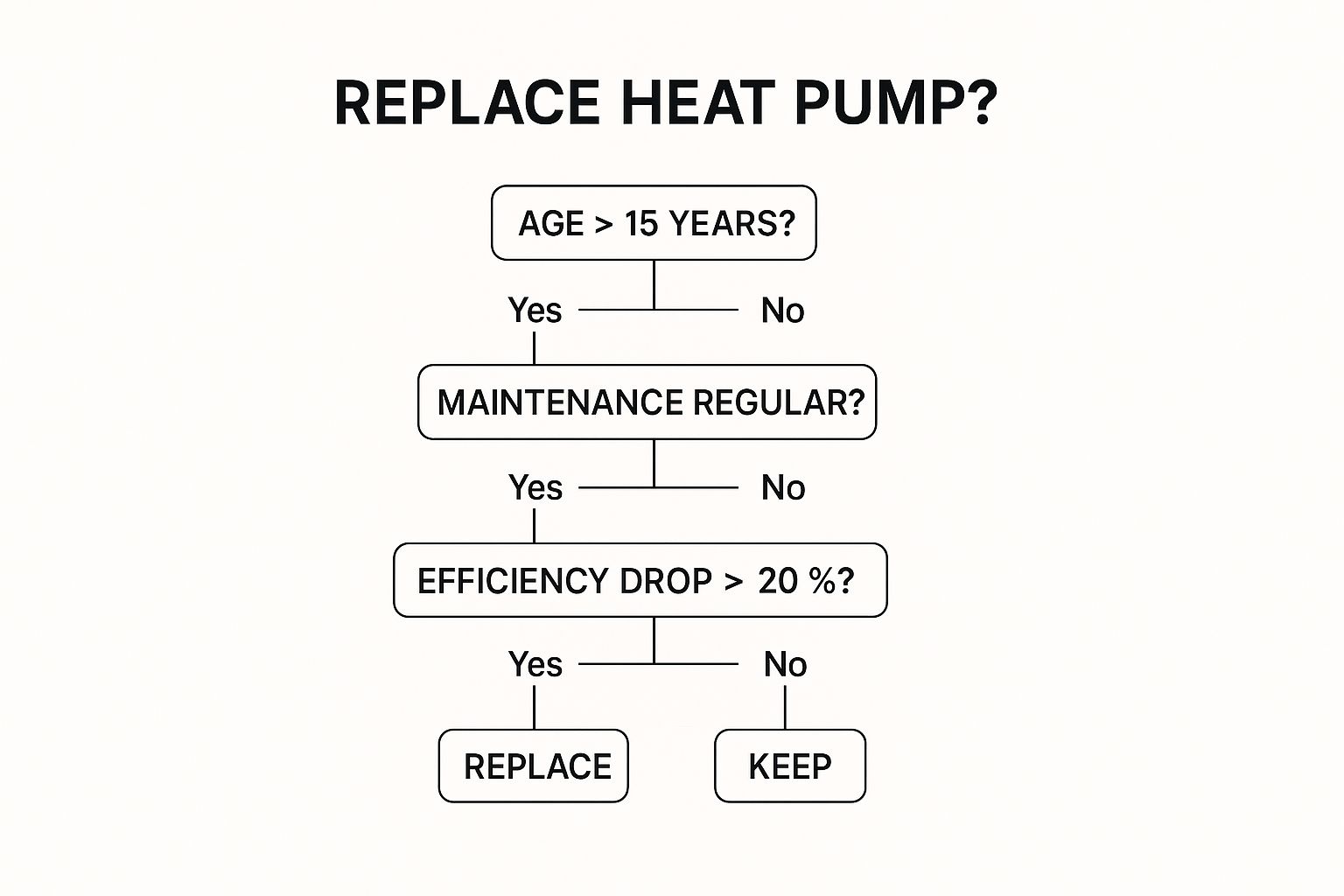
The takeaway here is that once a unit passes the 15-year mark or starts losing its efficiency, you're almost always better off planning for a replacement.
Cost Analysis: Repairing vs. Replacing an Aging Heat Pump
To really see the numbers side-by-side, it helps to break down the costs and benefits. Let's look at how a common major repair stacks up against a full replacement.
Consideration | Cost of Repair | Cost of Replacement |
|---|---|---|
Compressor Failure | A painful $1,500 - $2,500+ bill. | $5,000 - $8,000 for a whole new system. |
Return on Investment | Very little. You're just buying time until the next thing breaks. | Big returns from long-term energy savings and a fresh warranty. |
Future Costs | It's a gamble. High chance of another major component failing soon. | Predictable, low maintenance costs for the next decade or more. |
Efficiency | Continues to get worse as other parts wear down. | A massive jump in efficiency with modern SEER2/HSPF2 ratings. |
When you lay it all out, it becomes clear. Choosing a new system is about more than just dodging one repair bill. You're upgrading to a more reliable, efficient, and worry-free solution for your home's comfort.
To get a better handle on what kind of new equipment would be a good fit for your home, this guide to residential HVAC system types is a fantastic resource. It'll help you make an informed choice that brings comfort and savings for years to come.
Choosing a New Heat Pump Built to Last
When it's clear that a replacement is the only way forward, you want to pick a new unit that’s going to give you the best return on your investment for years to come. A smart purchase isn't just about picking a recognizable brand; it's about understanding the guts of the machine and what makes one heat pump outlast another.
The first thing to look at is modern efficiency ratings. You'll see new models rated with SEER2 (Seasonal Energy Efficiency Ratio 2) and HSPF2 (Heating Seasonal Performance Factor 2). These aren't just alphabet soup, they give you a much more accurate picture of how the unit will perform in the real world compared to the old standards. Higher numbers here translate directly to lower energy bills and less daily strain on the machine.
Key Features for Longevity
Some technologies are specifically engineered to cut down on wear and tear, and these are the features you want to prioritize. At the top of that list is a variable-speed compressor.
Unlike old-school single-stage systems that are either off or blasting at 100%, a variable-speed unit hums along quietly, making tiny, constant adjustments to hold your home at the perfect temperature. Think of it like cruise control for your house. This gentle, continuous operation dramatically reduces the stress on the system's most vital parts. When you're ready to start looking, it's a good idea to explore various energy-efficient products that can integrate smoothly with your home.
I can't stress this enough: The single most important factor in a long heat pump lifespan isn't the equipment itself, but the quality of the installation. A top-notch installation from a certified professional is the bedrock for years of trouble-free performance.
A true expert makes sure the unit is sized perfectly for your home, the ductwork is sealed up tight, and the refrigerant charge is dialed in to the exact ounce. Getting these details right prevents the kind of chronic overwork that sends systems to an early grave. I've seen it time and again: a perfectly installed mid-range unit will run circles around a top-of-the-line model that was slapped in carelessly.
Frequently Asked Questions About Heat Pump Longevity
When it comes to your heat pump’s lifespan, you’ve probably got some questions. That's a good thing. Getting clear, honest answers helps you plan, budget, and make smarter decisions for your home's comfort system. Let's dig into a few of the most common questions we hear from homeowners just like you.
Can a Heat Pump Really Last 30 Years?
While it’s definitely not the norm for a standard air-source unit, it is possible for some systems to hit that impressive milestone. This kind of longevity is almost always seen with geothermal (ground-source) heat pumps.
Think about it: their most important components are buried underground, shielded from Arizona’s scorching sun, monsoon storms, and daily temperature swings. This stable environment dramatically cuts down on wear and tear, allowing them to potentially run for 25 to 30 years, sometimes even longer, as long as they get consistent professional maintenance.
Does Using the Emergency Heat Setting Wear Out My Unit Faster?
Using the emergency heat setting won’t directly wear out your heat pump’s main components, but it's a major red flag and a guaranteed way to spike your energy bills. This setting typically just activates a set of electric resistance heating strips, which are separate from parts like the compressor.
However, if your system is constantly falling back on emergency heat, it's a clear sign that the heat pump itself is struggling to keep up or was improperly sized for your home from the start. That underlying problem is what’s really shortening its lifespan, not the emergency heat itself.
Your heat pump should be able to handle the vast majority of cold days on its own. If you’re seeing the "EM Heat" light up often, it means the system is losing its efficiency, a key indicator that it might be on its last legs.
Is It Worth Repairing a 15-Year-Old Heat Pump?
This is the big one, and our answer is almost always the same. Generally, pouring money into major repairs for a 15-year-old heat pump is not a sound financial move. At that age, your unit is already living on borrowed time, and one major component failure is often just a preview of what’s to come.
Instead of shelling out for a costly fix like a new compressor or fan motor, that money is far better invested in a new, high-efficiency system. A modern unit won't just work, it will give you superior performance, lower energy bills, and the peace of mind that comes with a full manufacturer's warranty. It’s a much better value in the long run.
If you're stuck on a repair-or-replace decision or just want to know how to get the most out of your current system, the certified experts at Covenant Aire Solutions are here to help. We give honest advice and reliable service to keep your Arizona home comfortable all year long. Visit us online at https://www.covenantairesolutions.com to schedule a consultation.