
Your Guide to Ideal Indoor Humidity Ranges in Arizona
You know that feeling when the air in your home is just… off? Sometimes it feels thick and muggy, other times it's so dry you get a static shock every time you touch a doorknob. What you're sensing is the indoor humidity, and finding the right balance is one of the most important, and overlooked, aspects of a comfortable, healthy home.
The Ideal Indoor Humidity Range for Health and Comfort
For both your family's health and your home's structural integrity, the sweet spot for indoor humidity is between 40% and 60% relative humidity (RH). Think of this as the "Goldilocks zone" for your air. It's not too damp, not too dry: it's just right.
This isn't just a matter of opinion; it's a recommendation backed by major health and building authorities, including the Environmental Protection Agency (EPA) and ASHRAE (the American Society of Heating, Refrigerating and Air-Conditioning Engineers). They've landed on this 40% to 60% window for some very specific reasons.
Staying in this range does wonders. It helps minimize the survival of airborne viruses, stunts the growth of nasty allergens like mold and dust mites, and supports your body's natural defenses. Nailing this balance is the first step toward a healthier indoor environment, especially here in Arizona where our climate presents unique challenges.
The Problem with Low Humidity
When your indoor humidity dips below 40%, the air gets uncomfortably dry. This is a battle many Arizona homeowners know all too well, particularly in the winter when the furnace is running.
Dry air acts like a sponge, pulling moisture from everything around it, including you and your house. The result?
Dry, itchy skin and constantly chapped lips.
Irritated sinuses, scratchy throats, and a higher chance of catching a cold.
Those annoying static electricity shocks every time you touch something metal.
Damage to your home itself, causing wood floors, furniture, and even trim to shrink, crack, or warp.
If these symptoms sound familiar, you'll want to check out the common signs your air is too dry in our detailed guide.
The Danger of High Humidity
On the flip side, when humidity levels shoot past 60%, the air feels heavy, sticky, and just plain uncomfortable. Worse, it turns your home into a perfect breeding ground for things you definitely don't want.
High humidity is a primary driver for biological contaminants. Mold, mildew, dust mites, and bacteria all thrive in damp conditions, which can trigger allergies and asthma symptoms.
This excess moisture can also wreak havoc on your house over time, leading to peeling paint, musty smells, condensation on your windows, and even destructive wood rot.
To make it simple, here’s a quick breakdown of what happens at different humidity levels.
Indoor Humidity Levels at a Glance
This table sums up the effects of different indoor humidity levels, making it easy to see why staying in that 40% to 60% range is so important for your well-being and your home's condition.
Humidity Level | Impact on Health | Impact on Home |
|---|---|---|
Low (Below 40%) | Dry skin, irritated sinuses, increased virus survival | Static electricity, cracking wood floors, warped furniture |
Ideal (40% - 60%) | Optimal comfort, healthy respiratory system, reduced allergens | Preserved wood integrity, minimal dust, stable structure |
High (Above 60%) | Mold and mildew growth, dust mite proliferation, allergy flare-ups | Musty odors, condensation on windows, peeling paint, wood rot |
From viruses and bacteria on the low end to mold and mildew on the high end, straying from the ideal zone can cause real problems. Getting it "just right" is key.
Why Humidity Levels Affect Your Health and Home
You know that feeling when the air in your home is just… off? It’s not just about the temperature. Humidity plays a massive role in how comfortable, and healthy, your home is.
To get a handle on this, think of the air in your house like a big sponge. Warmer air can hold more moisture, just like a big sponge soaks up more water. This concept is called relative humidity (RH), and it’s a measure of how “full” the air is with water vapor compared to the absolute maximum it could hold at that temperature.
When RH levels are in that sweet spot between 40% and 60%, everything feels right. But when they get out of whack, the consequences for both your health and your property are real and measurable.
The Health Impact of Dry Air
When your home’s humidity dips below 40%, the air gets thirsty. It will start pulling moisture from wherever it can find it, including you.
This is why low humidity dries out the mucous membranes in your nose and throat. Those membranes are your body’s first line of defense against airborne viruses and bacteria. When they're compromised, you’re suddenly much more vulnerable to colds, the flu, and other respiratory infections.
And this isn’t just a hunch; solid research backs it up. It’s worth understanding how long viruses persist on surfaces, affected by environmental factors like humidity. On top of that, dry air brings on a host of other uncomfortable side effects:
Itchy, flaky skin and constantly chapped lips.
Irritated sinuses that can even lead to nosebleeds.
A nagging dry cough or a scratchy throat that just won’t go away.
The Dangers of Excess Moisture
On the flip side, when humidity climbs above 60%, you’re rolling out the welcome mat for all sorts of unwanted biological guests. The air becomes so saturated with moisture that it starts dropping it on cooler surfaces like windows and walls, creating condensation.
This dampness is the perfect breeding ground for allergens. Dust mites, a major trigger for asthma and allergies, absolutely thrive in high-humidity conditions. Even worse is the threat of mold and mildew, which release spores into the air that can cause serious respiratory issues and allergic reactions, not to mention that persistent musty smell. You can learn more about improving your home’s air quality in our article to get ahead of these problems.
The connection between humidity and health is no secret. The World Health Organization and building science experts all agree: keeping your home in the 40-60% RH range is a key strategy for a healthier indoor environment, minimizing both virus spread and allergen growth.
Structural Damage from Improper Humidity
Your home is just as sensitive to humidity as you are. The materials it’s made of, wood, drywall, paint, all expand and contract based on the moisture in the air.
When humidity is too low, that contraction can cause real damage:
Hardwood floors can shrink, leaving ugly gaps between the planks.
Wooden furniture, cabinets, and even musical instruments can crack or warp.
Drywall and plaster might develop cracks, and wallpaper can start peeling at the seams.
Keeping indoor humidity in the right range isn’t a luxury; it's a necessity. This is backed by large-scale studies showing the direct link between humidity and our well-being. One comprehensive study across 43 office buildings in six countries found that a staggering 42% of measurements during work hours fell below the ideal 40% RH. This dryness was especially bad in the UK (72% of work hours) and the Mexico/USA region (45%).
In more humid climates like China and Thailand, over 25% of hours went above 60% RH. These numbers really drive home how critical HVAC systems are for managing humidity, something Tucson homeowners know all too well as they battle our dry desert air. A professional HVAC service can help you avoid the dry skin, throat irritation, and fatigue that were common in the study, where maintaining that 40-60% RH zone directly correlated with fewer health complaints.
Navigating Humidity in Arizona’s Dry Climate
If you're managing a home anywhere else in the country, you're probably fighting off sticky, damp air in the summer. But here in Arizona, we have the exact opposite problem. Our famous dry desert air means we're in a constant battle against uncomfortably low indoor humidity.
This isn't just a seasonal thing; it's a year-round challenge. In the summer, our air conditioners are blasting to keep us cool. While they do an amazing job pulling out heat, they also strip a ton of moisture from the air, making an already dry situation even worse. Then winter rolls around, and firing up the furnace has the same parching effect.
The Consequences of Desert Dryness Indoors
When the humidity outside is hovering in the single digits, it’s practically impossible to hit that ideal 40% to 60% indoor range without some help. This chronic dryness causes a whole host of problems that are more than just a minor annoyance.
You'll notice the little things first, like getting zapped by static electricity every time you touch a doorknob. But the bigger issues start to show up when the dry air pulls moisture from everything in your house. Expensive hardwood floors can start to gap, antique wooden furniture can crack, and even your door frames might begin to warp.
And it’s not just your house that suffers; your health takes a hit, too. Dry sinuses, persistent coughs, itchy skin, and getting sick more often are all common complaints in Arizona homes. That's because dry air weakens your body's natural defenses, leaving you more open to whatever's floating around in the air.
The Monsoon Season Exception
Of course, anyone who lives here knows about the one major exception to our dry climate: monsoon season. From about July to September, the script flips completely. The outdoor humidity can spike, bringing a whole new set of worries.
This sudden blast of moisture can push your indoor humidity well past the recommended 60% limit, especially if your home isn't sealed up tight. During these few months, you might start to feel:
A stuffy, clammy feeling in every room.
Condensation building up on your windows or pipes.
A faint musty smell that hints at mold starting to grow.
This wild seasonal swing is exactly why generic humidity advice just doesn't work for Arizonans. Our homes need to be ready to combat extreme dryness for most of the year but also be prepared to handle sudden, intense moisture.
Local climate knowledge is critical. An HVAC system set up for a humid Florida summer will fail spectacularly in a dry Tucson winter, and vice versa. Your home’s climate control strategy must be specifically adapted to the Sonoran Desert’s unique demands.
This is where having a local expert makes all the difference. A system designed for our unique environment can add moisture when the air is bone-dry and pull it out during our brief but powerful monsoon season. A huge part of that system is making sure your ductwork is clean and properly sealed. To learn more, check out our homeowner's guide to AC duct cleaning in Arizona and see how it affects your home's entire climate.
An HVAC solution built for our region accounts for these dramatic shifts, giving you year-round comfort and protecting your home and family. It’s about more than just heating and cooling; it’s about creating a stable, healthy indoor environment in a land of extremes.
How to Measure Your Home's Humidity Accurately
So, you know the ideal humidity ranges, but what's the actual number inside your home? You can't manage what you don't measure. It’s like driving without a fuel gauge: you're just guessing. To get a real handle on your home's air, you need a way to check its humidity.
This is where a hygrometer comes into play. Think of it as a thermometer for moisture. This simple device is your go-to tool for measuring relative humidity, giving you the hard data needed to make smart decisions about your indoor climate.
Choosing the Right Tool for the Job
Hygrometers generally come in two flavors: analog and digital. While the old-school analog dials have a certain charm, digital hygrometers are the clear winner for accuracy and ease of use. They give you a precise, easy-to-read number, often down to a single percentage point.
The good news is that many modern home devices already have hygrometers built right in, making it easier than ever to keep an eye on things:
Smart Thermostats: Many new thermostats display the humidity level right on the screen next to the temperature, creating a central command center for your home's climate.
Indoor Air Quality Monitors: These devices go a step further, measuring humidity alongside other things like CO2 and VOCs. They offer a complete picture of what's in your air. If you're curious about this, explore our guide to home air quality test kits.
Standalone Digital Hygrometers: These are inexpensive, easy to find, and perfect for placing in different rooms to spot any inconsistencies between, say, the basement and the master bedroom.
No matter which one you pick, having a reliable tool is the first step toward getting control over your home’s environment and hitting that sweet spot for humidity.
Where to Place Your Hygrometer for Accurate Readings
Now, where you put your hygrometer is just as important as the tool itself. If you stick it in the wrong spot, you'll get skewed readings that don't really tell you what's going on. A measurement taken right next to a steamy shower, for example, isn't going to give you a useful picture of the living room's climate.
To get a true baseline reading, place your hygrometer in a central area of your home, like a living room or main hallway. This location should be away from anything that could artificially throw off the measurement.
For the most reliable numbers, just follow these simple placement rules:
Avoid Moisture Sources: Keep it far away from kitchens, bathrooms, and laundry rooms. The steam and moisture in these areas will give you temporarily high readings that aren't representative of the whole house.
Steer Clear of Direct Sunlight: Placing a hygrometer in a sunny spot can warm it up, which messes with its ability to measure relative humidity accurately.
Keep it Away from Drafts: Don't put it near open windows, doors, or right in front of an HVAC vent. The constant airflow can disrupt the reading.
Place it in the "Breathing Zone": Position the hygrometer about three to five feet off the floor. This is the zone where you and your family actually live and breathe.
By following these tips, you can trust that the numbers on the screen are a true reflection of your home's environment. That's what empowers you to take action that actually works.
Practical Strategies For Controlling Indoor Humidity
Alright, so you know what your home's humidity level is. Now what? The next step is taking control. Whether you're dealing with that classic Tucson winter dryness or the sudden, sticky air of monsoon season, you can absolutely dial in your home's air to that sweet spot between 40% and 60% relative humidity.
The right game plan really just depends on the season and what your home needs. This quick flowchart shows you exactly where to start.
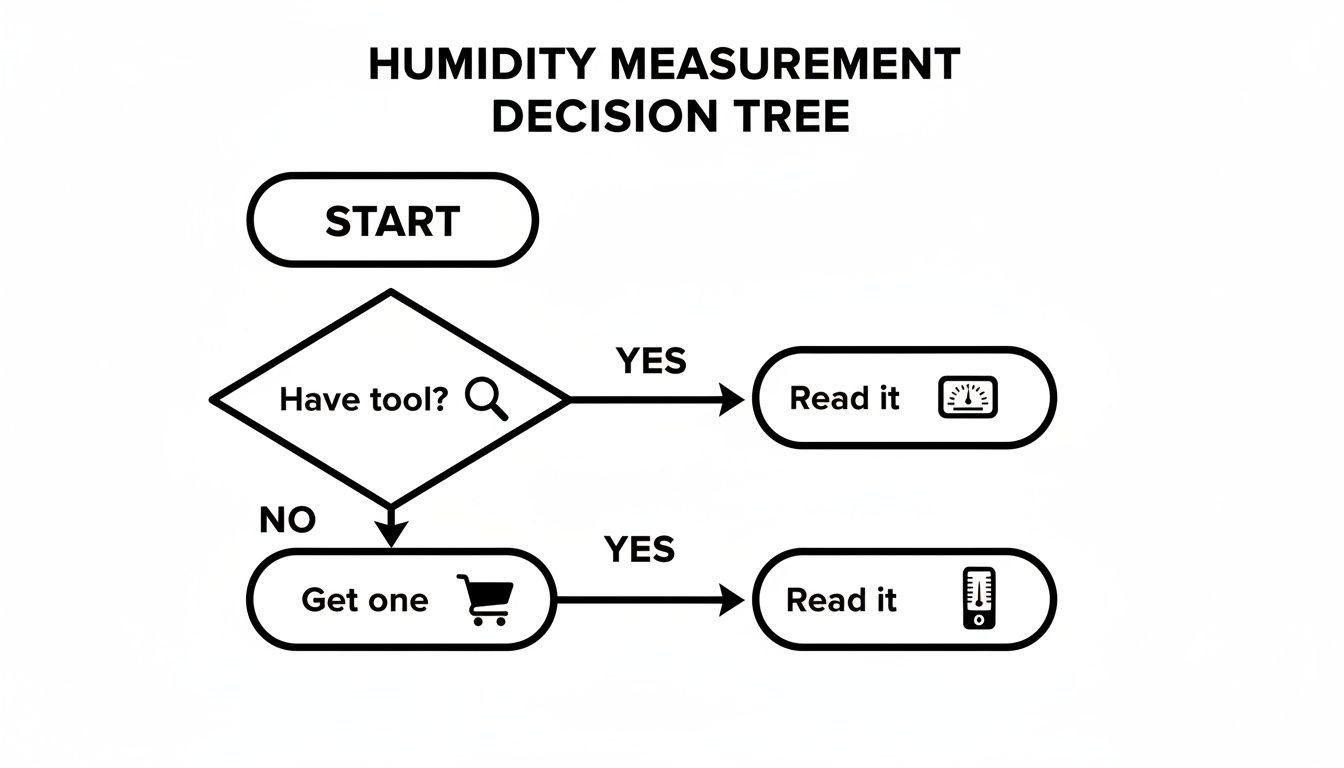
As you can see, getting the ball rolling is simple. If you don’t have a hygrometer yet, grabbing one is the essential first move. You can’t fix what you can’t measure!
How To Raise Humidity In Dry Conditions
For most of the year here in Arizona, our main battle is getting more moisture into the air. That persistently dry air is the culprit behind everything from itchy skin and static shocks to your favorite wood furniture developing cracks.
Here are a few ways to fight back:
Whole-Home Humidifiers: This is the heavyweight champion of humidity control. These systems are tied directly into your HVAC system, adding a perfectly controlled amount of water vapor to the air as it circulates. The result? Consistent, healthy humidity throughout your entire house, without you lifting a finger.
Portable Humidifiers: If you need a more targeted or budget-friendly fix, portable units are fantastic. They're perfect for boosting moisture in specific spots, like a bedroom or a nursery. They do need to be refilled and cleaned regularly, but they offer immediate relief right where you need it most.
Simple Lifestyle Tweaks: Believe it or not, you can add moisture back into your air just by tweaking a few daily habits. Try leaving the bathroom door open after a shower, air-drying laundry on an indoor rack, or even adding a few houseplants to your space. Every little bit helps!
How To Lower Humidity During Monsoon Season
When the summer monsoons roll in, the script completely flips. All of a sudden, the goal is to pull all that extra moisture out of the air to ditch that uncomfortable, sticky feeling and, more importantly, stop mold before it even thinks about starting.
Your first and best line of defense is your air conditioner. A well-maintained AC naturally dehumidifies as it cools.
Your air conditioner is your best friend during humid months. As it cools the air, it naturally pulls out water vapor. However, an improperly sized or poorly maintained unit won't do the job effectively, highlighting the importance of regular professional service.
To really get the most out of your system, it’s worth understanding your air conditioning controller functionality, since your AC does so much of the heavy lifting.
Beyond just running the AC, here are a few other smart moves:
1. Run Your Exhaust Fans: This one is huge. Always, and I mean always, use the exhaust fans in your kitchen when you cook and in your bathroom when you shower. These fans are designed specifically to vent that moisture-heavy air straight outside before it has a chance to spread through your home.
2. Seal Up Air Leaks: Think of gaps around your windows, doors, and pipes as tiny open doors for humid air. Use some caulk and weatherstripping to seal those leaks shut. Creating a tighter home is a simple way to keep that sticky outdoor air where it belongs.
3. Use a Dehumidifier: If you have a persistently damp area like a basement or if your AC just can't seem to keep up with the monsoon humidity, a dedicated dehumidifier is a fantastic tool. These appliances work by pulling moisture directly from the air. For a more permanent, whole-home solution, you can even explore adding a dehumidifier for HVAC systems that works right alongside your central air.
Comparing Humidity Control Solutions
Choosing the right method really comes down to your home's unique needs, your budget, and whether you're looking for a whole-house solution or just need to treat a single room. This table breaks down the most common options to help you see which one fits best.
Solution | Best For | Pros | Cons |
|---|---|---|---|
Whole-Home Humidifier | Consistent, low-maintenance moisture for the entire house, especially in dry climates like Arizona. | "Set-it-and-forget-it" convenience; maintains a stable humidity level in every room; integrates seamlessly with your HVAC. | Higher upfront cost; requires professional installation. |
Portable Humidifier | Adding moisture to specific rooms, like bedrooms or nurseries, on a budget. | Affordable and easy to set up; can be moved where needed; provides targeted relief. | Requires frequent refilling and cleaning; only treats a limited area. |
Whole-Home Dehumidifier | Removing excess moisture throughout the home, especially during humid seasons or in damp climates. | Powerful and efficient; works with your HVAC system for widespread control without you having to think about it. | Professional installation is required; higher initial investment. |
Portable Dehumidifier | Tackling dampness in specific areas like basements, laundry rooms, or poorly ventilated spaces. | Cost-effective and portable; easy to use right out of the box; great for spot treatment. | Can be noisy; requires you to empty the water collection tank regularly. |
Exhaust Fans & Sealing | Supporting your primary HVAC system by preventing moisture buildup and infiltration. | Very low-cost and energy-efficient; targets moisture right at the source (kitchens, bathrooms). | Not a standalone solution; only addresses specific sources of humidity, not the whole house. |
When you get right down to it, many of these solutions depend on a healthy, well-functioning HVAC system. Professional maintenance ensures your central air is clean, efficient, and ready to handle the demands of both adding and removing humidity, keeping you comfortable no matter what the Arizona weather throws at you.
When It’s Time to Call in the HVAC Pros
Let's be honest, while DIY fixes are great for fine-tuning your home's climate, some humidity problems are like a check engine light that just won't turn off. They're a sign of a deeper issue that a portable unit or a simple thermostat tweak can't solve. Knowing when to wave the white flag and call a professional is key to protecting your home and your family's health.
If you’ve tried adjusting your AC, running a dehumidifier, and improving ventilation, but the air still feels stubbornly sticky or bone-dry, it’s a huge clue that something bigger is going on. This often points to problems with your HVAC system’s performance, hidden leaks in your ductwork, or even poor insulation that only a certified technician can properly track down.
Red Flags You Shouldn't Ignore
Some symptoms go way beyond a little discomfort and demand immediate professional attention. These aren’t issues you want to put on the back burner, as they can lead to some seriously expensive damage or health concerns down the road.
Think of a persistent musty odor as an alarm bell. It’s one of the most reliable signs of hidden mold or mildew growing somewhere in your walls, ducts, or under the floor. This isn't just an unpleasant smell; it's a direct threat to your indoor air quality that requires a professional inspection right away.
Other critical signs to watch out for include:
Constant Condensation: If your windows are always foggy or sweating, it means there's far more moisture in the air than your home can handle.
Warping Wood: Have you noticed your hardwood floors starting to cup or your cabinet doors refusing to close properly? That’s a physical sign that excess moisture is being absorbed into your home's structure.
Visible Mold or Mildew: Any visible splotches of mold on walls, ceilings, or around vents are an urgent call to action. Don't just wipe it away; you need to find the source.
Why a Professional Diagnosis Is Worth It
When you call a trusted HVAC professional like Covenant Aire Solutions, you're not just getting a quick fix. You’re investing in a real, long-term solution. A trained technician can perform a comprehensive assessment to pinpoint the exact root cause of your humidity imbalance, not just treat the symptoms.
They have the tools and expertise to determine if your AC unit is oversized for your home (a common issue in Arizona!), if your ductwork is leaking precious cool air into the attic, or if your home’s building envelope needs to be sealed up. By getting to the heart of the problem, a professional service ensures your indoor humidity ranges are stable and healthy all year long, protecting both your property and your peace of mind.
Common Questions About Indoor Humidity
Even after you get a handle on the ideal humidity range, a few common questions always seem to pop up. Let's tackle them head-on, because getting these details right is what transforms a house from just "fine" to perfectly comfortable.
What Is the Best Indoor Humidity for Sleeping?
For the best possible night's sleep, you'll want to keep the humidity right in that sweet spot of 40% to 60%. It’s amazing how much of a difference this makes.
If the air gets too dry, it can irritate your throat and nasal passages, leaving you with that annoying dry mouth or a tickly cough that keeps you up. On the flip side, overly humid air feels stuffy and can encourage allergens like dust mites and mold to thrive, which is the last thing you want when you're trying to breathe easy. Nailing this balance in the bedroom is a direct path to waking up feeling truly refreshed.
Does My Air Conditioner Control Humidity?
Yes, it does: it’s a natural side effect of the cooling process. As your A/C pulls warm, humid air across its cold evaporator coils, water vapor condenses out of the air and drains away. Voila, dehumidification.
But here's the catch: an oversized air conditioner can be a real problem. It blasts your home with cold air so quickly that it satisfies the thermostat and shuts off before it has had enough time to pull that sticky moisture out of the air. This is what leaves you feeling cool but uncomfortably clammy. This is why having a properly sized system is non-negotiable for real comfort, especially during Arizona's muggy monsoon season.
An air conditioner's ability to dehumidify is a side effect of its primary job: cooling. While effective, it's not a dedicated humidity control tool. For persistent issues, a whole-home humidifier or dehumidifier offers a more precise solution.
Are Whole Home Humidifiers Better Than Portable Units?
This is a classic "right tool for the right job" situation. One isn't automatically "better" than the other; it all comes down to what you're trying to accomplish.
Whole-Home Humidifiers are the set-it-and-forget-it solution. They tie directly into your HVAC system to deliver perfectly balanced humidity to every single room, all without you having to lift a finger. For tackling a whole-house problem, they are the undisputed champions.
Portable Units are fantastic for targeted relief. They're less expensive upfront and perfect for adding moisture to a specific area, like a bedroom when someone has a cold or a nursery for a newborn. Their main drawback is the constant need for refilling and cleaning.
For anyone dealing with Arizona's chronically dry air day in and day out, a whole-home system is almost always the superior long-term investment. It solves the humidity problem at its source, ensuring your entire home stays comfortable and healthy year-round.
If you're tired of battling your home's humidity and want a lasting solution, Covenant Aire Solutions can help. Our expert technicians can assess your home's unique needs and recommend the perfect system to keep your indoor air healthy and comfortable. Schedule your consultation today!