
A Homeowner's Guide to Air Quality Inspection in Tucson
An air quality inspection is basically a professional checkup for the air inside your home. It’s designed to identify and measure pollutants that are usually invisible to the naked eye. We’re talking about things like hidden mold, chemicals, and fine dust that could be affecting your family’s health. At the end of the day, it gives you a clear, actionable plan to make your indoor environment safer.
What an Air Quality Inspection Reveals About Your Home
Think of an air quality inspection as hiring a detective for your home's atmosphere. You might be dealing with symptoms, like nagging allergies, strange odors that won't go away, or even headaches you can't explain, but the real culprit is often hidden from view. Our job is to follow these invisible clues to get to the root of the problem.
This isn’t just about running through a simple checklist. A professional inspector uses specialized tools to gather hard data, much like a crime scene investigator collects evidence. We aren't just looking for problems; we're tracing them back to their source.
The Investigator's Toolkit
Our inspectors don't rely on guesswork. They come equipped with advanced tools to get an accurate picture of what’s really going on in your home's air. Some of the key equipment includes:
Air Samplers: These devices are crucial for capturing airborne particles and spores. We send these samples to a lab to identify specific contaminants like mold.
Particle Counters: These tools give us a precise measurement of tiny dust particles, including that fine desert dust we get all over Tucson that can so easily get into your lungs.
Gas Detectors: We use these to sniff out threats that have no color or odor, like dangerous carbon monoxide or elevated levels of carbon dioxide.
VOC Meters: These instruments are designed to detect Volatile Organic Compounds, which are chemicals that off-gas from everyday household items like paint, furniture, and cleaning products.
The goal is straightforward: to identify the exact pollutants present, pinpoint their origin, and develop a clear, effective strategy for creating a healthier living space. This is a vital investment in your family’s long-term health.
From Mystery to Solution
Once all the evidence is collected, we translate that scientific data into a story that makes sense. We’ll walk you through what we found, explain where it’s coming from, and give you precise steps on what to do about it.
For instance, a high mold spore count might lead us to discover a hidden leak behind a wall, something you would never have found on your own. Uncovering these kinds of details is what makes a professional inspection so valuable. If you’re worried about a potential mold problem, you can learn more about what causes mold in air ducts and how to stop it in our detailed guide.
Ultimately, an air quality inspection changes your perspective. Instead of seeing it as just another expense, you start to see it as a fundamental step in protecting your home and the people you care about. It replaces uncertainty with a clear path forward to cleaner, safer air.
What Pollutants Are Hiding In Your Home’s Air?
An air quality inspection is all about revealing the invisible threats circulating inside your home. Many of these pollutants have no smell or color, but that doesn't mean they aren't affecting your health and comfort. Getting a handle on what these specific threats are, where they come from, and how they impact you is the first step to breathing easier.
The process a professional follows is pretty straightforward. It's not just about finding pollutants; it's about tracing them back to the source to create a plan that actually works.
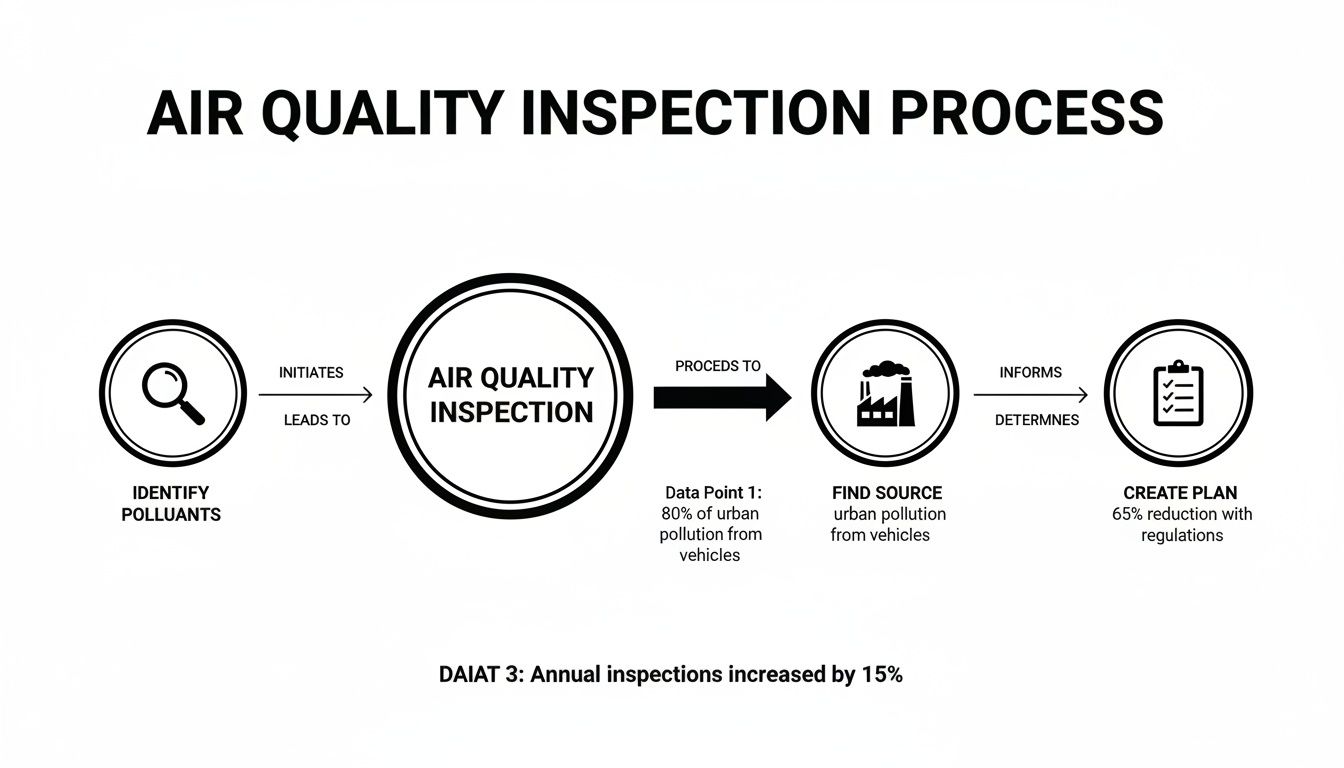
This graphic really highlights that a good strategy goes beyond just detection. You have to figure out why the problem exists to solve it for good.
To give you a better idea of what we're looking for, here's a quick rundown of the most common culprits we find in Tucson homes.
Pollutant Type | Common Household Sources | Potential Health Impact |
|---|---|---|
Volatile Organic Compounds (VOCs) | Paint, new furniture, cleaning supplies, air fresheners | Headaches, dizziness, eye/nose/throat irritation |
Particulate Matter (PM2.5) | Dust, pollen, smoke, vehicle exhaust, construction | Lung irritation, asthma triggers, cardiovascular issues |
Biological Contaminants | Mold spores, bacteria, dust mites from damp areas | Allergic reactions, respiratory infections, asthma |
Carbon Monoxide (CO) | Gas stoves, furnaces, water heaters, attached garages | Fatigue, confusion, nausea, potentially fatal |
Carbon Dioxide (CO2) | Human breath in poorly ventilated areas | Drowsiness, stuffiness, poor concentration |
This table is just a starting point. A professional inspection gives you the real data on what’s actually floating around in your specific environment.
Volatile Organic Compounds: The Chemical Culprits
You know that "new car" or "fresh paint" smell? That distinct odor often comes from Volatile Organic Compounds, or VOCs for short. These are chemicals that turn into gas at room temperature, released from thousands of everyday household products.
Where do they come from? Pretty much everywhere.
Paints, varnishes, and cleaning supplies
New carpeting, vinyl flooring, and adhesives
Air fresheners, cosmetics, and even home office printers
Even after the strong smell fades, these items can continue to release low levels of chemicals for months, or even years, in a process called "off-gassing." This slow release can be behind nagging headaches, dizziness, and irritation of the eyes, nose, and throat. If you're worried about this, learning how to remove VOCs from home is a great next step.
Particulate Matter: The Invisible Dust
Picture dust so tiny it just hangs in the air, completely invisible. That's Particulate Matter (PM). The smallest of these particles, called PM2.5, are the ones we worry about most. They measure less than 2.5 micrometers in diameter, which is about 30 times smaller than a single strand of your hair.
Because they're so microscopic, PM2.5 particles can get inhaled deep into your lungs and can even make their way into your bloodstream. Here in Tucson, our dry, desert climate means dust, pollen, and other fine particles are always in the air. Even a home project like refinishing your floors can kick up a massive amount of particulates; choosing a contractor who uses a dustless floor sander can make a huge difference for your indoor air.
A professional air quality inspection uses specialized equipment to measure the concentration of these particles, identifying whether your home's filtration system is effectively protecting you from this common Sonoran Desert threat.
Biological Contaminants: Mold and More
Biological contaminants are living things that can take root indoors, especially anywhere there's moisture. The most common offenders are mold spores, bacteria, and dust mites. These are the pollutants most often tied to allergic reactions and respiratory issues.
High humidity is like rolling out the welcome mat for these unwanted guests. A tiny, undetected pipe leak or a bathroom without proper ventilation can quickly become a mold factory, pumping millions of spores into your air. An inspection is critical for catching elevated spore counts that tell us there’s a hidden moisture problem, long before you ever see or smell mold.
Carbon Monoxide and Carbon Dioxide: The Silent Gases
Not every airborne threat comes from a chemical or a particle. Two of the most dangerous pollutants are simple gases that are byproducts of things we do every day.
Carbon Monoxide (CO) is a colorless, odorless gas that's produced when fuels don't burn completely. Think gas stoves, water heaters, and furnaces. It is extremely toxic, and an inspection can confirm that your appliances are running safely and not leaking this dangerous gas.
Carbon Dioxide (CO2) isn't as acutely toxic as CO, but it can still cause issues. High CO2 levels, usually a sign of poor ventilation, lead to that stuffy, drowsy feeling and can make it hard to concentrate. Monitoring CO2 is a great way to figure out if your home is getting enough fresh air exchange.
The Professional Inspection Process From Start To Finish
So, what actually happens during a professional air quality inspection? It’s a fair question. Knowing what to expect can take a lot of the guesswork out of the process and give you confidence in the results. Here at Covenant Aire Solutions, we believe in being completely transparent, walking you through everything from our first phone call to the final report you hold in your hands.
Our whole process is built around a structured, three-phase approach that’s designed to be thorough and efficient. Each step logically follows the last, making sure we don't just put a band-aid on a symptom, we find the root cause. It's a bit like how a pest control expert needs a specific methodology for how to properly conduct an inspection; our air quality analysis follows a proven path to get you clear, actionable answers for your Tucson home.
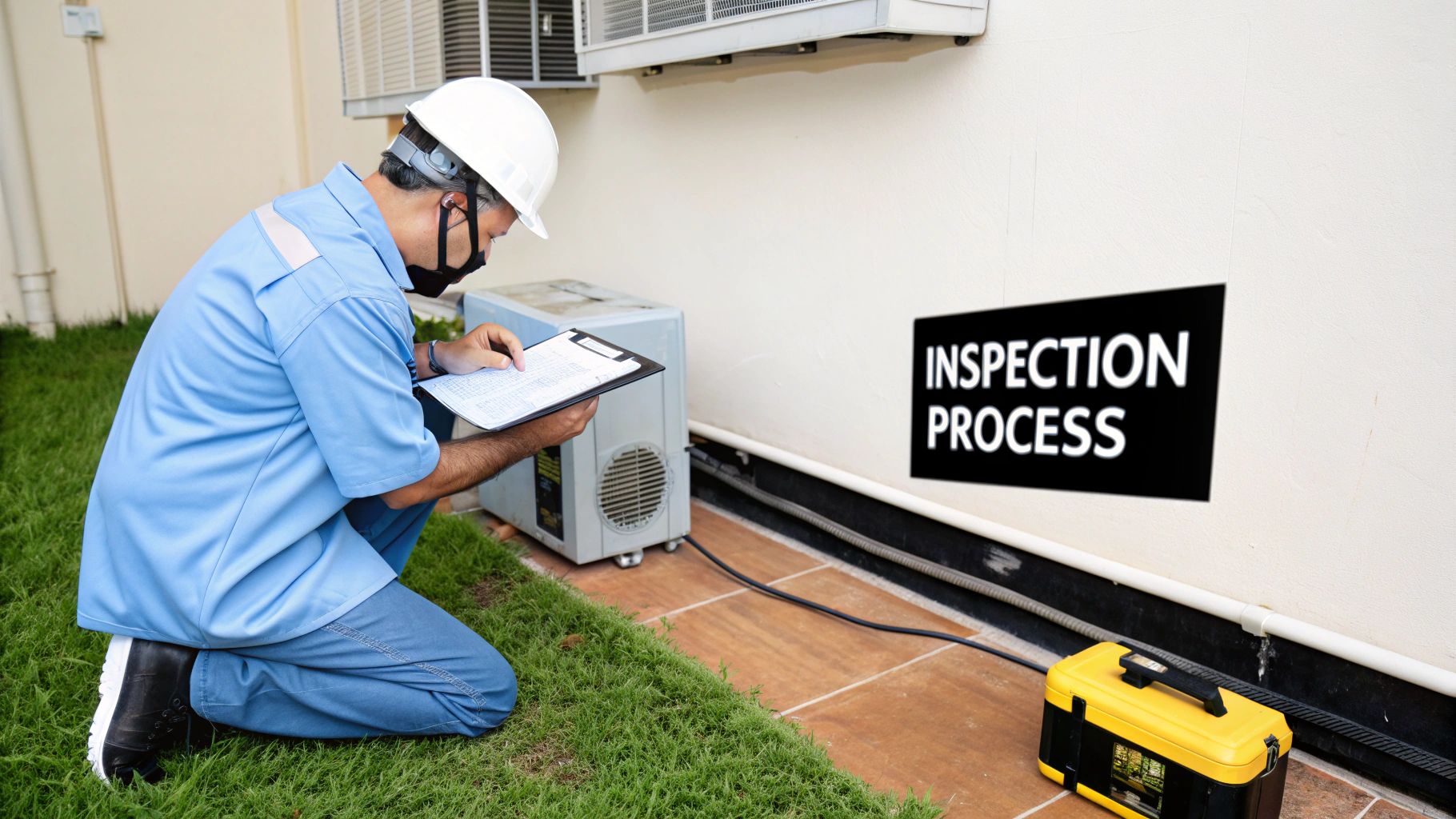
The goal is simple: move from a nagging concern to a concrete plan that empowers you to create a healthier home.
Phase 1: Initial Consultation and Goal Setting
Believe it or not, the process starts long before we ever set foot in your home. It begins with a conversation. We take the time to listen to your specific concerns because this initial chat is what helps us tailor the entire inspection to what’s actually happening in your house.
Are you dealing with nagging allergies that seem to flare up indoors? Have you noticed a musty smell you just can’t track down? Or are you just trying to be proactive about your family's health?
During this first phase, we will:
Discuss Your Concerns: We want to hear about any symptoms, weird odors, or health issues your family is experiencing.
Review Your Home’s History: Things like recent renovations, past water damage, or even new furniture can give us important clues.
Set Clear Objectives: We’ll figure out exactly what you want to learn from the air quality inspection so that our work is perfectly aligned with your goals.
This conversation really acts as our roadmap, guiding everything we do once we’re on-site.
Phase 2: The On-Site Assessment and Data Collection
This is where the real detective work begins. Our certified technicians will arrive at your Tucson home with advanced, calibrated equipment ready to gather hard data. This phase is way more than just a quick walkthrough; it's a systematic deep-dive into your home’s "respiratory system."
First, we do a detailed visual check. We’ll be looking closely at your HVAC system for any red flags like dust buildup, moisture, or microbial growth. Our techs have seen it all and know exactly where problems like to hide. If you want to get a better sense of what this involves, take a look at our guide on what an HVAC duct inspection entails.
Next up, we use specialized gear to collect air samples from strategic spots around your home. This is where science takes over, giving us objective measurements of those invisible pollutants. The data collection is meticulous, ensuring the samples we send off to an accredited lab are accurate and totally reliable.
Phase 3: Reporting and Actionable Recommendations
Once the lab analysis comes back, we pull all the findings together into a comprehensive report that’s actually easy to understand. We know that raw data and scientific jargon can be overwhelming, so we make it a priority to translate everything into plain English.
Your final report is not just a list of problems; it is an educational tool. We explain what we found, what it means for your health, and provide a prioritized list of clear, actionable steps you can take to improve your indoor air quality.
Our commitment is to empower you with knowledge, not just sell you a bunch of services you don’t need. The recommendations are tailored specifically to your home’s results. Maybe it's a simple fix like adjusting your ventilation, or perhaps we recommend a certain type of air purifier or point you toward a hidden moisture source. We’ll walk you through the entire report, answer every single question you have, and help you create a practical plan to get your home back to being the healthy, comfortable space it should be.
Comparing DIY Test Kits to a Professional Inspection
When you first suspect something is off with your home’s air, it’s natural to want a quick, easy answer. Those DIY test kits you see at the hardware store seem like the perfect place to start, and in some cases, they can be a useful first step. But it’s critical to understand what they can and can’t do.
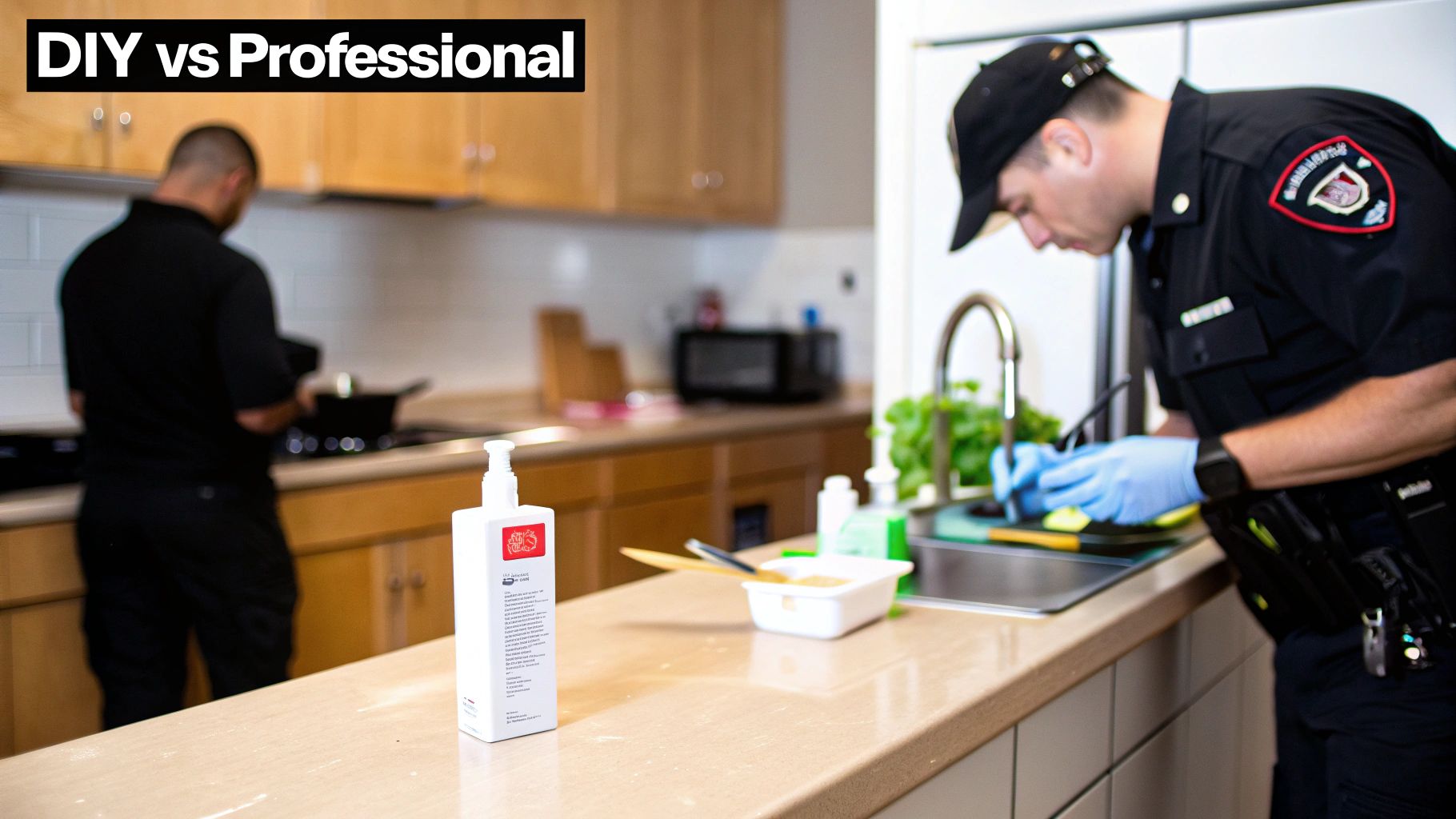
Think of it this way: a DIY air quality kit is like a home thermometer. When you’re feeling sick, it can definitely confirm you have a fever. That’s a clear signal something is wrong. But it can’t tell you why you have a fever. Is it a common cold, the flu, or something more serious that needs a doctor's diagnosis?
That’s what a DIY kit does. It might flag the presence of mold or a particular chemical, giving you a starting point. But that single data point is just one small piece of a much larger puzzle. It tells you there's a symptom, but it can't explain the cause or point you toward the right solution.
The Limitations of DIY Kits
While these kits can offer a preliminary peek, they come with some serious drawbacks that could lead to either a false sense of security or a whole lot of unnecessary panic. It's important to know what you're not getting.
The biggest issue is their incredibly narrow scope. Most kits are designed to look for just one or two specific things, like mold spores or formaldehyde. The air inside your home, however, is a complex soup of particulates, gases, and biological contaminants. A test that only looks for one thing could easily miss the real culprit.
And then there's the accuracy problem. It’s a big one.
User Error: It's surprisingly easy to mess up. Collecting the sample incorrectly, accidentally contaminating it, or even running the test at the wrong time can completely throw off the results.
Environmental Factors: Something as simple as the temperature or humidity in the room can impact the test, leading to false positives or negatives.
Lack of Context: A DIY mold test that comes back positive for mold spores is almost meaningless on its own. Mold spores are literally everywhere. The real question is whether the levels are abnormally high, and that requires professional interpretation.
A professional air quality inspection is like getting that full diagnostic workup from a specialist. We move past just identifying the "fever" to uncover the underlying cause, giving you a complete picture of your home’s health.
The Professional Inspection Advantage
Going with a professional service isn't just about getting a more accurate test; it's an investment in expertise and a real, lasting solution. It’s the difference between guessing and knowing. Our team uses highly specialized, calibrated equipment that is worlds more sensitive and reliable than anything available over the counter.
There’s a reason the EPA has teams of experts dedicated to calibrating and maintaining their sophisticated air monitoring equipment. That same level of scientific rigor is what a professional technician brings to your home, ensuring the data we collect is precise and verifiable.
But the real value comes from what happens next: the expert interpretation. A certified inspector doesn’t just hand you a sheet of raw numbers and wish you luck. They analyze those findings within the unique context of your home, your family’s health concerns, and the specific environmental factors we deal with here in Tucson. We dig much deeper into this in our article, Your Guide to an Air Quality Home Test Kit.
This in-depth analysis is what allows a professional to connect the dots. For example, we can see that elevated humidity readings plus a certain type of mold spore point directly to a hidden plumbing leak or an HVAC condensation issue. That’s a conclusion a DIY kit could never give you, and it’s the key to creating a remediation plan that actually works.
DIY Air Quality Test Kits vs Professional Inspection
To really spell it out, here’s a straightforward comparison to help you decide which path is right for you. This table breaks down the key differences between a DIY approach and a professional service, looking at everything from accuracy to the final outcome.
Feature | DIY Test Kits | Professional Inspection |
|---|---|---|
Accuracy | Variable; highly prone to user error and environmental factors. | High; uses calibrated, lab-grade equipment for precise results. |
Scope | Limited; typically tests for only one or two specific pollutants. | Comprehensive; tests for a wide range of pollutants all at once. |
Analysis | None; you get raw data with no context or professional interpretation. | In-depth; includes expert analysis and root cause identification. |
Solution | None; identifies a potential problem but offers no path forward. | Actionable; provides a detailed, customized remediation plan. |
Cost | Lower initial cost, but can lead to expensive, incorrect fixes. | Higher initial investment, but provides a definitive, cost-effective solution. |
So, what's the bottom line? A DIY kit can be a decent screening tool if you have a very specific concern and you go in understanding its limitations. But if you want a complete, definitive understanding of your home’s air and a clear plan to make it healthier, a professional air quality inspection is the only way to get the certainty and expertise you need to protect your family.
Why Tucson Homeowners Trust Our Inspection Services
Choosing a partner to safeguard your home's health is a decision that comes down to trust. Here in Tucson, our unique desert environment throws some specific challenges at our indoor air quality. Homeowners need more than a service provider, they need a local expert, a neighbor who gets it. At Covenant Aire Solutions, that’s who we are.
We're a family-owned business, not some faceless national chain. Our reputation has been built one home, one family at a time on a foundation of honesty and integrity. That means when we perform an air quality inspection, our only goal is to give you clear, truthful answers, not to find reasons to upsell you on services you don’t actually need.
Our Commitment to Your Peace of Mind
Trust starts with accountability. We're fully licensed, bonded, and insured because we believe in providing you with complete peace of mind. This protects you and your property, guaranteeing that every job is handled with the utmost professionalism and care.
We also know that problems don't stick to a 9-to-5 schedule. A sudden HVAC failure or a worrying smell can be incredibly stressful, which is why we offer 24/7 emergency availability. We’re always here for our community, ready to step in when you need us most.
Advanced Solutions for a Healthier Home
Identifying a problem is only half the battle; providing an effective, lasting solution is what really counts. We invest in advanced technology to ensure your home’s air isn’t just tested, but truly purified. This includes offering NASA-certified ActivePure® technology, a groundbreaking air and surface purifier first developed for use in space.
This isn't your standard air filter. ActivePure® technology goes on the offensive, actively seeking out and neutralizing contaminants both in the air and on surfaces. It's proven effective against:
Viruses and bacteria
Mold spores
VOCs and other harsh chemicals
By using these cutting-edge tools, we provide a level of protection that most standard systems simply can't match.
We believe in combining small-town service with world-class technology. Our mission is to bring the best air quality solutions available to our Tucson neighbors, ensuring your home is a true sanctuary for your family.
Transparent Pricing and Community Focus
The last thing you need when dealing with a home maintenance issue is a financial surprise. We operate with upfront, transparent pricing. You'll always get a clear, detailed estimate before any work begins, so you know exactly what to expect. No hidden fees, no last-minute charges, just honest work at a fair price.
Our roots run deep in the Tucson community. We live here, our kids go to school here, and we're committed to making our city a better place. This commitment goes beyond our HVAC work. We actively support local schools, churches, and families in need through donations and community initiatives.
When you choose Covenant Aire Solutions for your air quality inspection, you’re partnering with a company that invests right back into the community we all call home. We’re not just your technicians; we’re your neighbors. For more ways to protect your indoor environment, check out our guide on the top tips for improving indoor air quality in Tucson.
Got Questions About Air Quality Inspections? We've Got Answers.
Making the call to get your home's air checked out can bring up a lot of questions. We get it. That’s why we’ve put together some straightforward answers to the things Tucson residents ask us most. Our goal is to clear up any confusion and help you feel confident about taking the next step.
Let's dive into what you can expect, when you should act, and what the process looks like.
How Often Should I Get My Air Quality Checked?
For most homes here in Tucson, a proactive air quality inspection every 3 to 5 years is a great rule of thumb. It's enough to stay ahead of any creeping issues, especially with all the dust our desert climate kicks up.
However, sometimes you need to act sooner. You should definitely schedule an inspection if you've:
Just Finished a Renovation: All that construction dust and those new materials can release a ton of stuff into your air.
Moved into a New Place: This sets a clean baseline so you know exactly what you're starting with.
Had Any Water Damage: Leaks or floods are a prime breeding ground for hidden mold. You need to find it fast.
Smell Something... Off: That musty, chemical, or just plain weird smell that won't go away? That's a huge red flag.
Noticed Worsening Allergies: If you or your family feel worse inside the house, your air could be the culprit.
These situations can completely change your indoor environment, making a timely inspection a smart move for your family's health.
What's a Professional Inspection Going to Cost in Tucson?
The price for a professional air quality inspection isn't one-size-fits-all, as it really comes down to a couple of key things. The size of your home obviously plays a part, as a bigger space takes more time and might need more samples. The biggest factor, though, is how deep we need to go with the testing.
A basic visual check of your HVAC system, for instance, is going to be less than a comprehensive analysis that involves sending multiple samples to a lab to test for specific troublemakers like mold spores or VOCs. Here at Covenant Aire Solutions, we're all about being upfront.
We promise clear, honest pricing. You'll get a detailed estimate with no hidden fees or last-minute surprises, so you know the exact cost before we even start. This way, you can make the best choice for your budget.
We also have flexible financing options available. We firmly believe everyone in our community deserves to have a healthy home.
My House is Brand New. Do I Really Need an Inspection?
Yes, absolutely! In fact, a new home is one of the most important times to get an air quality inspection. It sounds a little backward, but new construction comes with its own unique set of air quality problems that you want to catch right away.
The biggest culprit is something called off-gassing. Think about that classic "new house smell." That smell is actually a cocktail of chemicals called Volatile Organic Compounds (VOCs) being released from all the new materials: paint, carpet, glue, cabinets, you name it. The concentration of these VOCs is at its absolute highest in the first few months after the house is built.
On top of that, all the fine dust and debris from construction can get sucked right into your shiny new HVAC system. The first time you crank up the AC, it blasts all that junk throughout every room in your house. An inspection finds these issues from day one, helping you make sure your new dream home is a healthy one right from the start.
Ready to stop wondering and start knowing what's really in the air you breathe? The team at Covenant Aire Solutions is here to give you the clear answers and actionable solutions you need. Schedule your professional air quality inspection today and take the first step toward a healthier, more comfortable home. Visit us online at https://www.covenantairesolutions.com to learn more.