
What Causes Mold in Air Ducts and How to Stop It
Finding mold lurking in your air ducts can be a shock, but it doesn't just appear out of thin air. Mold growth is a predictable outcome when the right ingredients come together: excess moisture, a food source like dust, and a dark, undisturbed space. Unfortunately, your HVAC system's hidden network of ductwork can provide the perfect habitat for this unwanted guest to thrive.
The Recipe for Mold in Your Air Ducts
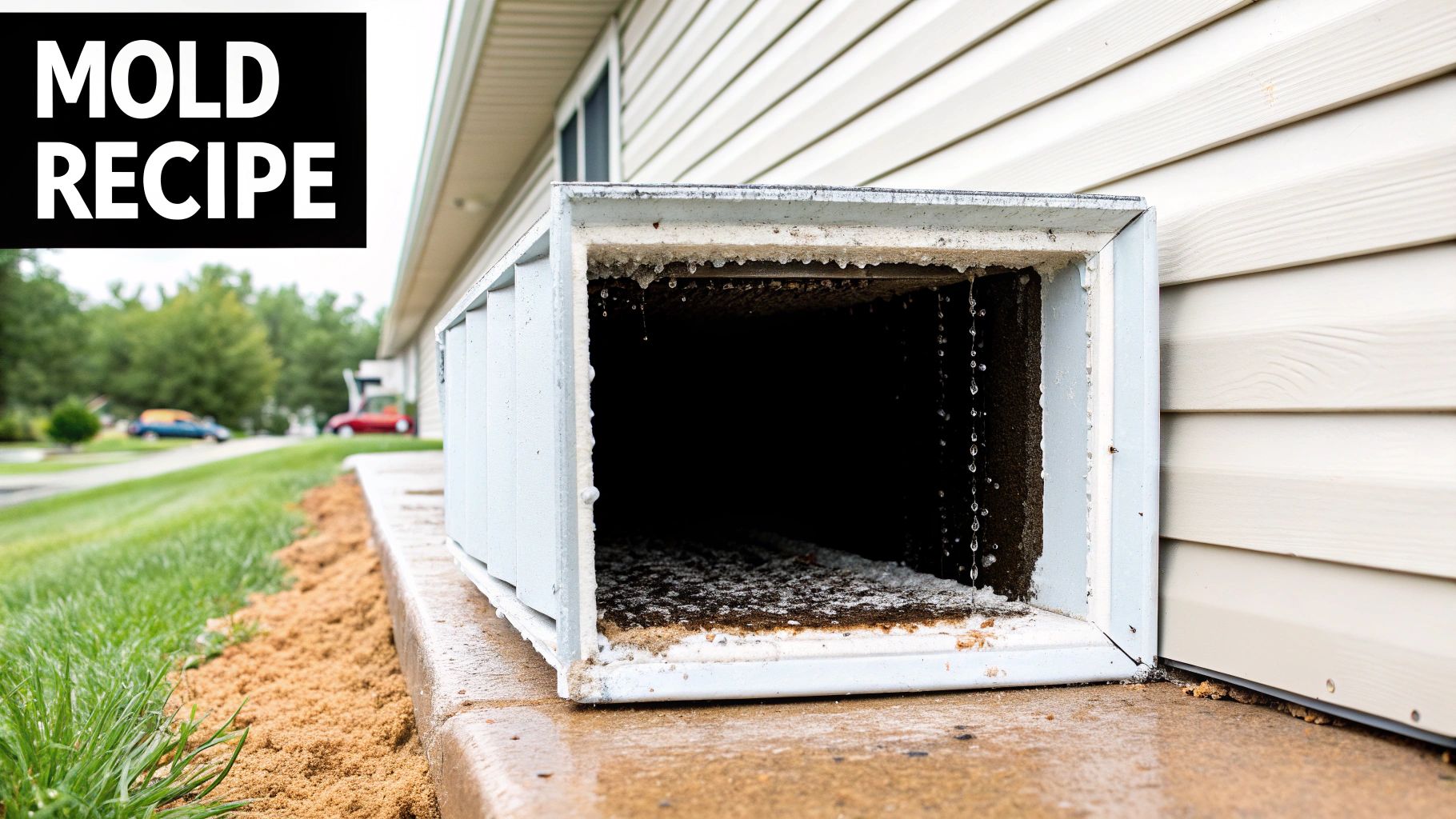
Think of it like a simple recipe. If you know what goes into it, you can take those ingredients away and stop mold before it starts. While mold spores are a natural part of the air everywhere, they only become a problem when they find a place with everything they need to grow and multiply.
Your air ducts can accidentally create this ideal breeding ground. The darkness is a given, but it’s the other two key ingredients, moisture and food, that really kickstart a mold problem. Once those are present, your ducts can go from simply moving air to spreading contaminants throughout your home.
Quick Guide to Mold Triggers in Air Ducts
The recipe for mold in your ductwork really comes down to four main culprits that work together. Understanding them is the first step toward prevention, especially when you realize how a humid Tucson day can translate into problems inside your AC ducts. Here’s a quick breakdown:
Key Ingredient | Why It Matters in Your Ducts | Common Source |
|---|---|---|
Excess Moisture | This is the non-negotiable ingredient for mold growth. Without it, spores can't activate. | Condensation from cooling, roof leaks, or high indoor humidity. |
Organic Debris | Mold needs to eat. Dust provides a nutrient-rich buffet for spores to feast on. | Dust, skin cells, pet dander, and other tiny organic particles. |
Darkness | Ductwork is pitch-black, creating the preferred environment for nearly all indoor molds. | The enclosed, hidden nature of your duct system. |
Poor Airflow | Stagnant air lets moisture settle and gives mold spores the undisturbed time they need to colonize. | An oversized or poorly maintained HVAC system. |
When you connect these dots, you can see the chain of events. High humidity leads to condensation, which provides the water for mold to feed on the dust already in your ducts. To get a better sense of your system's layout and where these issues hide, you can explore a homeowner's guide to the parts of ductwork.
It's astonishing how fast this process can happen. Once moisture is introduced, mold can begin to visibly grow within just 24-48 hours.
Environmental health experts have found this happens because all the other ingredients are usually already there, waiting for water. In fact, it's estimated that at least 45 million buildings in the U.S. have unhealthy levels of mold, with much of it hidden away inside HVAC systems. You can see the full picture and more statistics over at realtimelab.com.
Why Moisture Is Mold's Best Friend
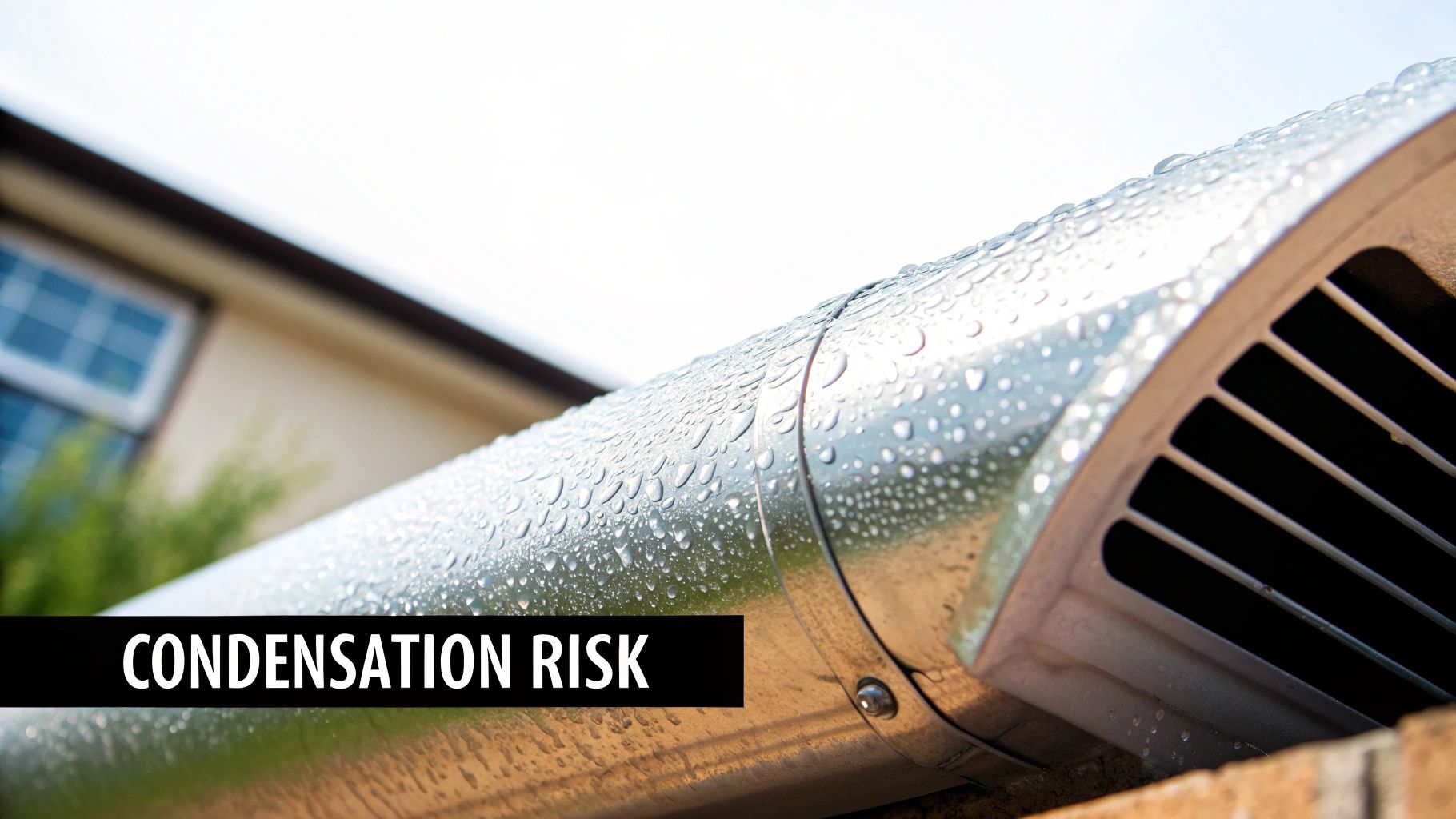
When it comes to mold, there’s one ingredient that matters more than anything else: moisture. You can think of mold spores as microscopic seeds that are floating around everywhere, all the time. They’re completely harmless and dormant, until they find water.
Without moisture, mold simply can't start its life cycle, no matter how much dust or darkness is available. In an HVAC system, water is the trigger that turns those dormant spores into a full-blown colony, transforming your quiet ductwork into a potential breeding ground. For Tucson homeowners, figuring out where that moisture comes from is the single most important step in preventing a serious indoor air quality problem.
The Condensation Connection
More often than not, the culprit behind moisture in air ducts is condensation. We’ve all seen this happen on a hot day with a glass of iced tea: water droplets magically appear on the outside of the glass. Your air ducts can do the exact same thing, especially here in Southern Arizona's hot, dry climate.
When your AC is running, it pushes cold air through metal ductwork. If those ducts happen to run through a sweltering space like an uninsulated attic, the hot air in that space meets the cold outer surface of the duct. This stark temperature difference forces moisture from the air to condense into water droplets, right on your ductwork.
Even a small temperature difference between the air inside and outside your ducts is enough to cause "duct sweating." Over time, that consistent little bit of moisture is all it takes for mold to grab hold and start to spread.
This is the primary reason behind what causes mold in air ducts. The constant presence of condensation creates a perpetually damp environment, which is the perfect welcome mat for mold.
Other Hidden Moisture Sources
While condensation is the big one, it’s not the only way water can sneak into your HVAC system. A few other common issues can introduce moisture and set the stage for mold growth. It's smart to know where these weak points might be.
Here are a few other culprits to watch out for:
Leaky Ductwork: Tiny cracks or poor seals in your ducts can suck in humid air from places like attics or crawl spaces. This moisture-heavy air then condenses once it hits the cooler interior of the duct system.
Oversized AC Units: A system that's too big for your house cools the space too quickly and shuts off before it gets a chance to properly dehumidify the air. This process leaves behind excess moisture that can easily collect inside the ducts.
External Water Leaks: A slow roof leak or a hidden plumbing issue near your ductwork can drip water directly onto or into your vents, giving mold a direct and steady supply of water.
Keeping the humidity levels inside your home in check is one of the most powerful ways to fight back against these moisture problems. For a deeper dive, take a look at our guide on how to reduce humidity in your home with five easy tips.
Why High Humidity Is a Problem
Even if you don't have direct leaks or heavy condensation, high indoor humidity all by itself can be enough to start a mold problem. Once the relative humidity inside your home consistently stays above 50%, the air itself holds enough moisture to support mold growth on surfaces, including the inside of your ductwork.
Here in Tucson, our air is usually dry, but our monsoon season can bring short, intense bursts of humidity. During those months, your air conditioner is working double-duty to both cool and dehumidify your home. If it isn't running at peak efficiency, that moisture can get trapped indoors.
This trapped humidity raises the dew point inside your duct system, making it much easier for condensation to form and for those dormant mold spores to get the water they need to spring to life. Managing your indoor climate is absolutely crucial for keeping your home healthy and mold-free.
The Hidden Buffet Fueling Mold Growth
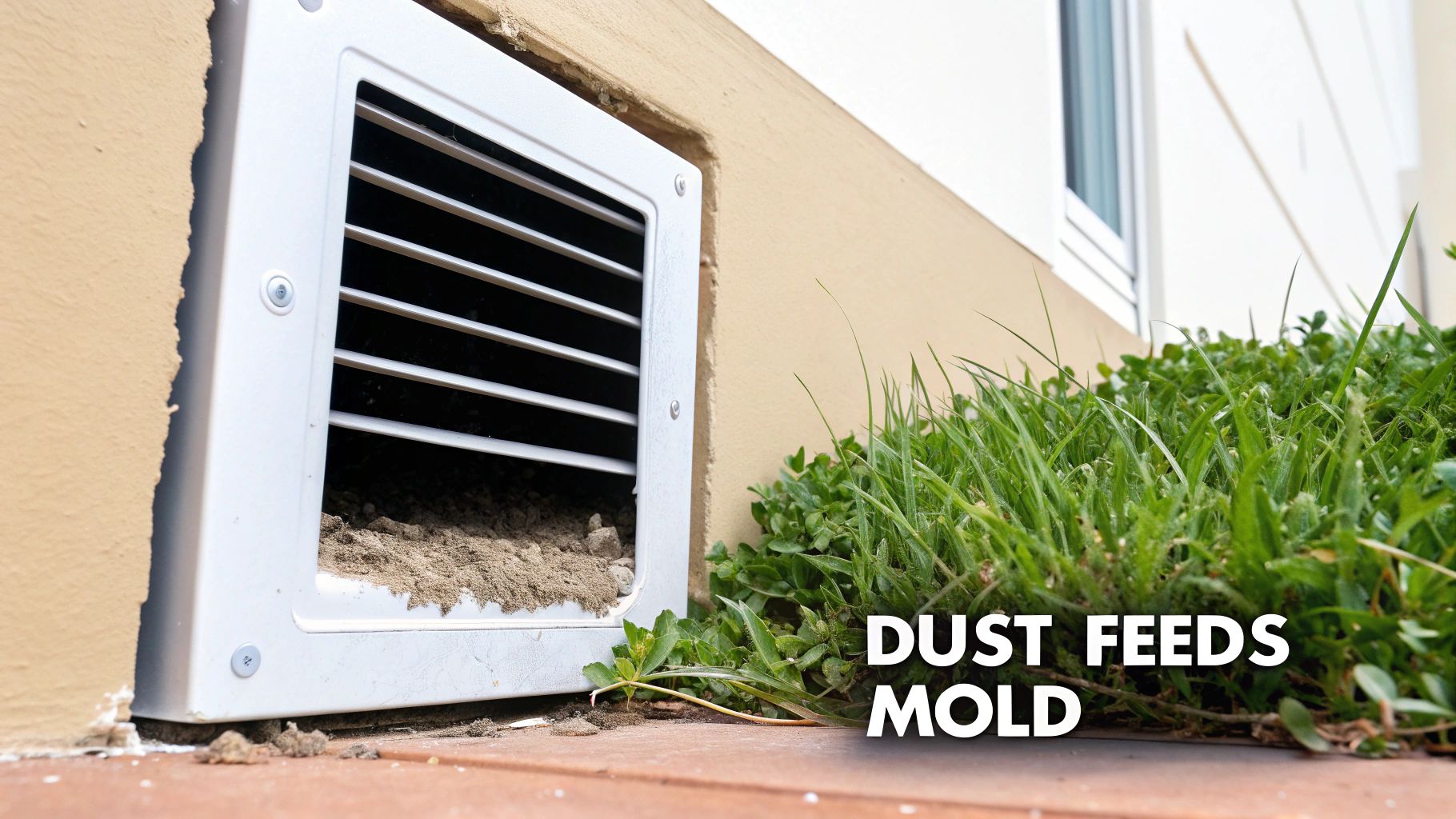
While moisture is the spark that gets mold started, it's the dust and debris inside your ducts that really fans the flames. Think of your ductwork like a hidden pantry: if the shelves are bare, mold spores have nothing to eat and will just lie dormant.
But let's be realistic: the average home’s duct system is anything but empty. It collects a constant supply of what mold considers a five-star meal, which is a huge piece of the puzzle of what causes mold in air ducts.
This "buffet" is made up of everyday household dust, which is far from being just simple dirt. It’s actually a rich cocktail of organic materials like dead skin cells, pet dander, pollen, and tiny fabric fibers that mold loves to feed on.
How Dust Becomes Mold's Perfect Meal
Every time your HVAC system kicks on, it pulls in air from your home, and all those microscopic particles come right along with it. Even a good filter can’t catch everything, so some of this debris inevitably slips through and settles on the interior surfaces of your ductwork, building up month after month.
The moment condensation or a leak introduces moisture into that dusty environment, you’ve got the perfect recipe for a mold outbreak. The spores, which are always present in the air, suddenly have everything they need: water and an endless food supply.
This combination creates a sticky, nutrient-dense film along the walls of your ducts, providing the ideal foundation for a mold colony to take root and start spreading.
The Role of Clogged Air Filters
A dirty or clogged air filter makes this whole situation a lot worse, and a lot faster. Your filter's main job is to act as a gatekeeper, trapping dust and contaminants before they can ever get into your ductwork.
But when that filter is full, it can't do its job. Air gets forced around the filter, carrying even more dust and dander straight into the ducts. In essence, you’re force-feeding any potential mold colonies waiting inside.
Neglecting to change your air filter is like leaving the pantry door wide open for mold. It accelerates the buildup of organic debris, giving spores an endless supply of food the moment moisture becomes available.
Keeping your filter clean is a simple but absolutely critical step in starving out potential mold. If you're not sure how to handle it, our guide on cleaning AC unit components can walk you through the basics.
Beyond Dust: The Condensate Drain Pan
Another trouble spot where food and moisture meet is the condensate drain pan. This part is designed to catch water that condenses on your AC’s cold evaporator coils and safely drain it away.
Unfortunately, these drain pans often get clogged with sludge, a gross, slimy mixture of dust, algae, and other gunk. The blockage traps water in a dark, dusty place, creating a perfect incubator for mold. Research from moldsci.com shows clogged drains are a top cause of HVAC mold, with one study finding a staggering 83.2% of buildings surveyed had serious mold issues tied directly to HVAC moisture problems.
Once mold establishes a foothold in the drain pan, its spores are easily picked up by the circulating air and blown throughout your entire duct system. What started as a small, contained issue has now become a whole-home problem.
How Stagnant Air Creates a Mold Haven
Even with moisture and a food source around, there's one last ingredient that completes the perfect storm for mold: stagnant air. Poor airflow creates quiet, undisturbed pockets in your ductwork, turning a system designed for circulation into something more like a murky, stagnant pond.
Think of it like the difference between a flowing river and a still puddle. The river's constant movement keeps things clean and prevents anything from settling for too long. In contrast, the puddle quickly becomes a breeding ground for algae and bacteria. Your air ducts need to be the river, not the puddle.
When air movement is weak or inconsistent, humid pockets form and linger. This is where mold spores, which are incredibly lightweight, finally get the chance to settle onto the dust-covered surfaces of your ducts and begin to grow. A lack of circulation is a key factor in what causes mold in air ducts.
Common Culprits Behind Restricted Airflow
Several common issues can choke off the airflow in your HVAC system, creating the stagnant conditions mold loves. Many of these problems develop slowly over time, making them easy to miss until a bigger issue, like a musty smell, appears. Being aware of these culprits can help you spot trouble early.
Here are a few of the most frequent causes:
Dirty Air Filters: A filter clogged with dust and debris is like trying to breathe through a thick blanket. It severely restricts the amount of air that can pass through, slowing down the entire system.
Blocked Vents and Registers: Furniture, rugs, or curtains covering your supply or return vents can block airflow to entire sections of your home, creating dead zones in your ductwork.
A Failing Blower Motor: The blower motor is the heart of your HVAC system, responsible for pushing air through the ducts. If it’s weak or failing, the airflow will be sluggish and ineffective.
Improperly Sized Ducts: Ductwork that is too small or too large for your HVAC unit can cause pressure imbalances and inefficient airflow, leading to areas where air barely moves.
Inadequate ventilation is a major contributor to mold growth. When air stops moving, humidity levels in localized areas of the ductwork can spike. This allows moisture to condense and provides the perfect opportunity for mold to colonize dust-laden surfaces.
This is a widespread issue. According to the World Health Organization, dampness and the resulting microbial growth impact an estimated 10-50% of indoor environments across North America and Europe. In a climate like Arizona's, where humid monsoon air is pulled into a cool AC system, the risk is even higher. To explore this topic further, you can read more about how inadequate ventilation contributes to unhealthy mold levels.
Why Professional Maintenance Is Your Best Defense
The most effective way to combat stagnant air is through consistent, professional HVAC maintenance. A routine tune-up isn't just about preventing breakdowns; it's about ensuring your system maintains the strong, steady airflow needed to keep your ducts dry and inhospitable to mold.
During an inspection, a certified technician can measure airflow and identify hidden restrictions. This includes checking the blower motor's performance, cleaning essential components, and ensuring there are no blockages.
Maintaining optimal airflow helps evaporate any incidental moisture before it can accumulate and keeps spores moving through the system to be captured by the filter. It's a proactive step that directly disrupts the mold recipe. Ensuring proper circulation is also key to a healthy home, and you can even calculate air changes per hour to better understand your home's ventilation.
Your Action Plan for Preventing Duct Mold
Knowing what causes mold in your air ducts is one thing, but taking decisive action is what truly protects your home. A proactive approach is always your best defense. This plan will help you turn your HVAC system from a potential mold haven into a source of clean, healthy air for your family.
By combining some simple DIY habits with professional expertise, you can build a powerful, multi-layered defense. The game plan is simple: manage moisture, get rid of mold's food source, and keep the air moving. When you take away the key ingredients mold needs to thrive, you stop it before it even has a chance to start.
Control Your Indoor Humidity
Moisture is the lifeblood of mold, so your top priority should be keeping your home's air dry. Here in Tucson, the monsoon season can cause sudden spikes in humidity, making it critical to manage indoor moisture levels to prevent condensation from forming inside your ducts.
Your goal is to keep your home's relative humidity between 30% and 50%. A simple digital hygrometer from a hardware store is a great tool for monitoring these levels. If you notice your home is consistently humid, using a dehumidifier in specific rooms or installing a whole-home dehumidifier that integrates with your HVAC system can make a world of difference.
Commit To Regular HVAC Maintenance
You simply can’t skip consistent maintenance when it comes to mold prevention. A well-maintained system runs efficiently, handles moisture the way it’s supposed to, and keeps air circulating, all things that disrupt the perfect conditions mold is looking for. Think of it as preventative care for your home's respiratory system.
Here are the maintenance tasks you can’t afford to miss:
Change Air Filters Routinely: This is your first line of defense. A clean filter is designed to trap dust, pet dander, and even mold spores, keeping them from ever entering your ductwork. Check your filter every month and replace it at least every 90 days. If you have pets or allergy sufferers at home, you’ll want to change it more often.
Inspect and Clean the Condensate Drain Line: Your AC unit’s condensate drain line is responsible for safely removing moisture. If it gets clogged with sludge and grime, water will back up, creating a perfect breeding ground for mold. You can find out more about keeping this line clear in our guide to HVAC condensate drain cleaning.
Schedule Annual Professional Tune-Ups: A certified technician can inspect, clean, and service the parts of your system you can't easily reach, like the evaporator coils and blower motor. They'll confirm your system is running correctly, spot any potential leaks, and make sure your airflow is optimized.
Improve Your Home's Air Quality and Flow
Beyond the basics, you can take a few more steps to really starve out mold and keep air moving through your home effectively. These strategies are all about removing contaminants from the air and ensuring your ductwork is sealed up and protected.
Poor airflow is a major culprit, as it creates stagnant, humid pockets where mold can easily take hold. The decision tree below breaks down how poor airflow directly increases your mold risk.
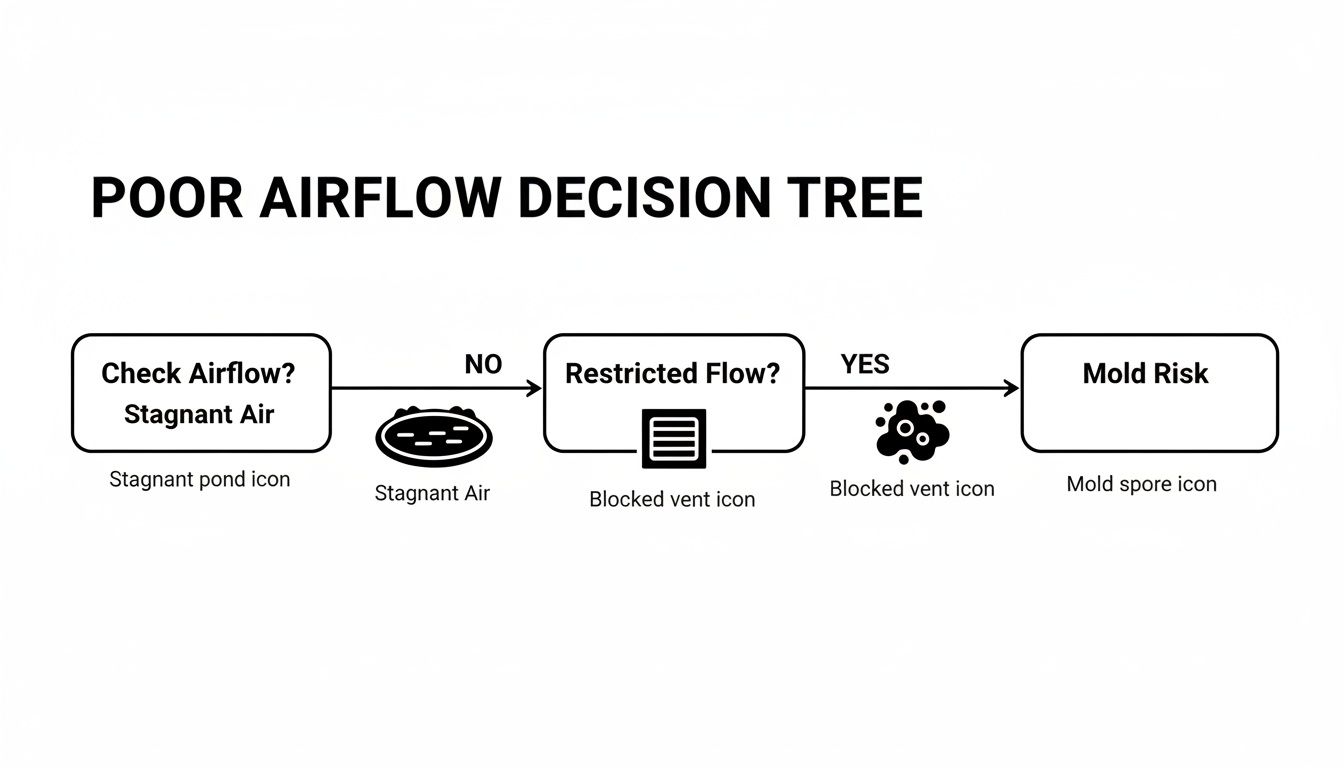
As you can see, both a total lack of circulation (stagnant air) and blockages (restricted flow) create the ideal environment for mold to colonize your ducts.
Key Takeaway: An HVAC system isn’t just about temperature; it’s about air circulation. Consistent airflow is one of your most powerful tools for preventing moisture buildup and keeping mold spores from settling in your ducts.
DIY Prevention vs Professional Services
Knowing what you can handle yourself versus when it's time to call in a pro is key to effective mold prevention. This table breaks down the roles and responsibilities.
Prevention Task | DIY Action | When to Call a Professional |
|---|---|---|
Air Filter Management | Check monthly, replace every 1-3 months. | For advice on filter upgrades (e.g., higher MERV). |
Humidity Control | Use a hygrometer, run dehumidifiers as needed. | For installation of a whole-home dehumidification system. |
Condensate Drain Line | Visually inspect the outlet, flush with vinegar. | If the line is severely clogged or you suspect a leak. |
Vent & Register Cleaning | Vacuum vents to remove dust and debris. | For a comprehensive duct cleaning service. |
Duct Inspection | Visually check for obvious signs of moisture or damage. | For internal camera inspections and pressure testing. |
Annual Maintenance | N/A | For a full system tune-up, coil cleaning, and safety check. |
Advanced Purification | N/A | For consultation and installation of systems like ActivePure®. |
While DIY tasks are your first line of defense, a certified HVAC technician provides the deep cleaning, diagnostics, and advanced solutions needed for complete protection.
Advanced Solutions for Ultimate Protection
For homeowners who want the highest level of protection available, modern technology offers some powerful solutions. These systems go way beyond passive filters to actively neutralize contaminants floating in your air and landing on surfaces.
One of the most effective is ActivePure® Technology, a system that can be installed directly inside your ductwork. It uses a patented process to create and send out oxidizing molecules into your home's air. These molecules actively seek out and destroy contaminants like mold spores, bacteria, and viruses on contact, giving you continuous purification.
And while you're focused on your air ducts, don't forget that mold can pop up elsewhere. You might find these general tips for preventing mold on window sills helpful for keeping your entire living space healthier.
Figuring out what's causing mold to grow in your air ducts is a great first step. But picking the right professional to handle it is what really protects your home and family in the long run. When it comes to the air you breathe every day, you just can't compromise on expertise and honesty.
The real goal isn't just to wipe away the mold you see. It's about getting to the root of the problem: diagnosing and fixing the underlying moisture or airflow issue so that mold never gets a chance to come back.
Why Professional Expertise Is a Non-Negotiable
Trying to clean duct mold yourself often backfires, accidentally spreading spores all over your house and making a contained problem much, much worse. A true HVAC pro brings the right training and specialized tools to the job, safeguarding both your property and your family’s health.
A certified technician knows how to spot the subtle signs of a hidden condensation issue, a slow leak, or poor ventilation that a homeowner would easily miss. This deep-dive diagnostic approach means you get a real, lasting solution, not just a temporary patch-up that fails in a few months.
Here’s what you get with a true professional:
Certified Technicians: These experts are trained to see the why behind the mold, not just the what. They can pinpoint the moisture and airflow problems that are feeding the growth in the first place.
Advanced Diagnostic Tools: Pros use specialized cameras and sensors to inspect the dark, hidden corners of your ductwork, confirming exactly where the contamination is and how bad it is.
Proper Containment: They follow strict, non-negotiable protocols to seal off the work area. This is critical for preventing cross-contamination and keeping mold spores from escaping into the rest of your home during the cleanup.
Effective, Safe Treatments: Professionals rely on EPA-approved solutions that eliminate mold for good without leaving behind any nasty chemical residues that could harm your family.
Trusting your home's air to a certified expert is an investment in a definitive solution. It’s the difference between temporarily masking a symptom and permanently curing the disease.
Building a Long-Term Defense Against Mold
Real peace of mind doesn't come from a one-time fix. It comes from a proactive strategy that keeps mold from ever getting a foothold. This is where a reliable HVAC partner becomes truly invaluable, offering services that prevent problems before they start.
Your best line of defense is a preventive maintenance plan. With biannual check-ups, a technician can catch potential disasters like a clogged AC drain line or weakening airflow before they turn into a full-blown mold invasion. They keep your system running at peak performance, which is key to managing humidity and keeping your ducts dry and clean.
On top of that, 24/7 emergency services are an absolute must. An unexpected AC leak can introduce a massive amount of moisture into your system in just a few hours. A rapid response can stop a mold outbreak before it even begins, saving you from a world of stress and costly remediation down the road. If you want a broader perspective on this topic, it's worth reading more about understanding the importance of indoor air quality, especially concerning duct systems.
For families who want an even higher level of protection, advanced air purification systems offer a continuous, active defense. Unlike passive filters that just wait for contaminants to pass through them, these systems work around the clock to neutralize airborne threats like mold spores.
Your home should be your sanctuary, a place where the air is clean and healthy. If you've noticed musty odors or have any worries about your home's air quality, don't wait for the problem to get worse. Schedule a professional inspection today to get the answers you need and ensure your family is breathing safely.
Got Questions About Mold in Your Air Ducts?
Even when you’re doing everything right, it’s natural to have questions pop up about mold. Homeowners here in Tucson, in particular, often ask us about how to spot and deal with potential issues in our dry climate. Let's clear the air with some straightforward answers to the questions we hear most often.
How Can I Tell If There Is Mold in My Air Ducts?
Trust your senses; they’re often the first to pick up on a problem. A persistent, musty smell that seems to get stronger right after the AC or furnace kicks on is a classic red flag. You might also spot some visible signs, like black or greenish specks cropping up around your air vents and registers.
Another big clue can come from your family's health. Are allergy-like symptoms suddenly flaring up, sneezing, coughing, or congestion that magically gets better when you leave the house? That could be it. Since most mold growth happens deep inside the ducts where you can't see it, the only way to be 100% certain is to have a professional take a look.
Is a Little Bit of Mold in Vents Dangerous?
Absolutely. Any amount of visible mold is a signal you need to take seriously. What you can see on the outside of a vent is often just the tip of the iceberg, hinting at a much larger, hidden colony growing inside your ductwork.
Even a tiny patch can pump millions of lightweight spores into the air you breathe every day. For many people, these airborne particles are enough to trigger allergic reactions, asthma attacks, and other respiratory issues. Acting fast is key to protecting your family’s health and stopping the problem from getting worse.
Think of visible mold on a vent like smoke from a fire. It’s not the fire itself, but it’s a clear warning that a much bigger problem is burning out of sight. Ignoring it gives the issue time to grow.
Can I Clean Mold Out of My Air Ducts Myself?
We strongly advise against trying to clean mold out of an HVAC system on your own. It's a risky job that, without the right containment gear and professional training, can easily backfire. You could disturb the mold colony and accidentally send spores flying throughout your entire home, turning a contained issue into a house-wide contamination.
Professionals use specialized tools like high-powered HEPA vacuums and EPA-approved antimicrobial treatments to safely trap and kill the mold. More importantly, they’ll also pinpoint and fix the moisture source that allowed the mold to grow in the first place, the most critical step to making sure it never comes back.
How Much Does Professional Mold Remediation Cost?
The cost for professional mold remediation can vary quite a bit. The final price really depends on a few things: how widespread the mold growth is, the size and accessibility of your duct system, and the specific methods needed to fix it properly.
A small, localized problem might only run a few hundred dollars. On the other hand, extensive contamination that requires deep cleaning, sealing, and repair work could cost several thousand. Your best bet is to schedule a detailed inspection with a reputable HVAC company. They can give you a precise, no-nonsense quote based on exactly what’s going on in your home.
Don't let mold compromise your home's air quality and your family's health. For a professional inspection and lasting solutions you can trust, contact Covenant Aire Solutions. Schedule your service online today