
A Homeowner's Guide to HVAC Condensate Line Cleaning
That little PVC pipe running from your indoor AC unit is one of the most overlooked, and most important, parts of your entire HVAC system. It’s the condensate drain line, and its only job is to get rid of the moisture your air conditioner pulls out of the air. When it gets clogged with algae, dust, and other gunk, that water has nowhere to go. The result is often costly water damage and unexpected system shutdowns.
Why Your Condensate Line Is an HVAC Hero
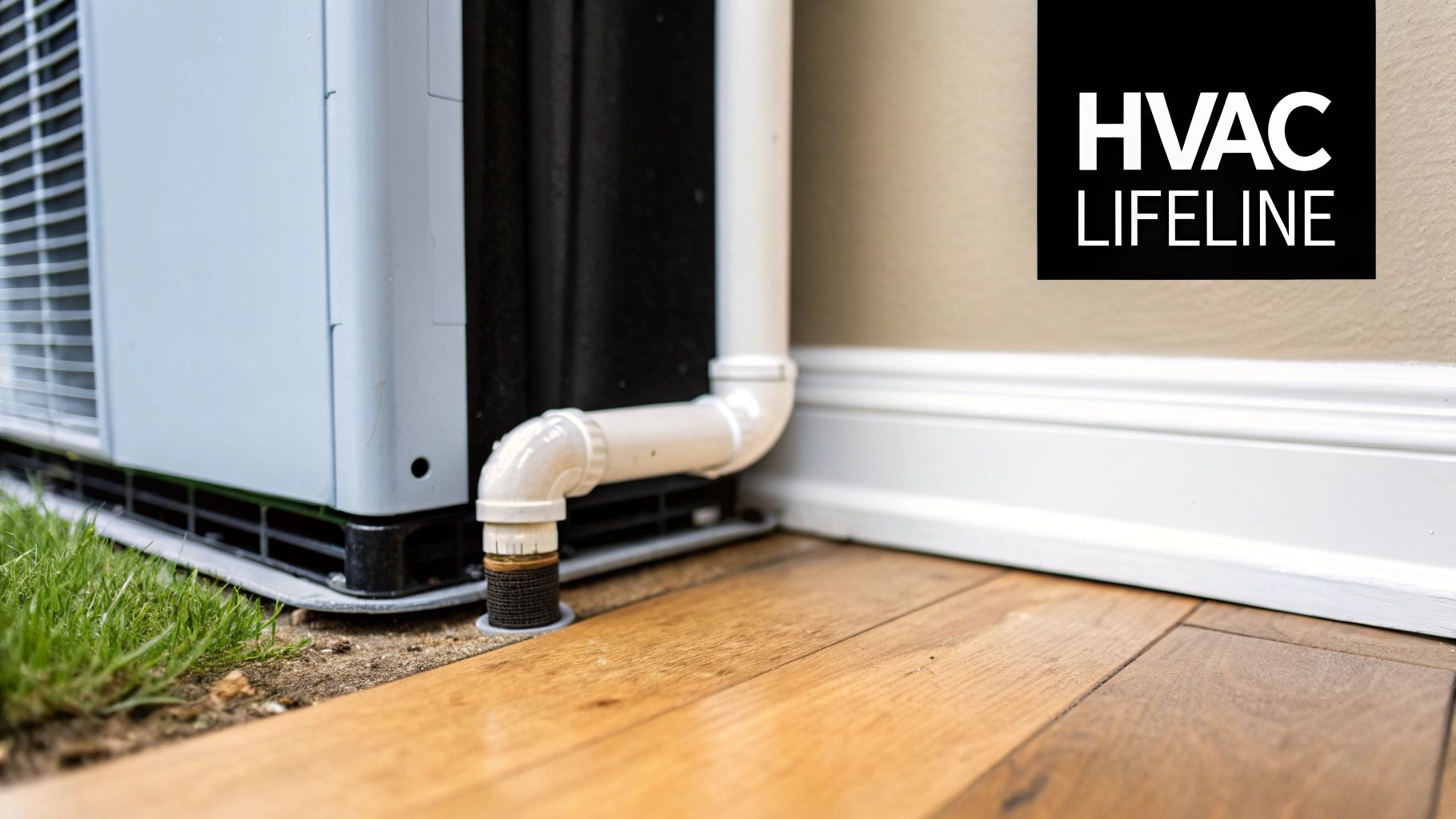
Think of your air conditioner as a powerful dehumidifier. As warm, sticky air from inside your house blows over the cold evaporator coils, moisture condenses into water, just like on a cold glass of iced tea on a summer day. This is a core part of how your AC makes your home comfortable.
All that collected water drips into a drain pan and then funnels out of your house through the condensate line. It might not seem like much, but a single central air conditioner can pull between 5 to 20 gallons of water per day out of the air on a hot, humid afternoon. If that water doesn't have a clear escape route, it quickly becomes a huge problem.
The Real Consequences of a Blockage
When the condensate line clogs up, the trouble starts almost immediately. The drain pan overflows, and water starts spilling out. Depending on where your system is located, this could mean water is seeping into your attic, a closet, or your basement.
The results are predictable and always frustrating.
Surprise Water Damage: You might spot mysterious water stains on your ceiling or walls. This is a classic sign of a slow, persistent leak from an overflowing pan.
Musty Odors: Standing water is the perfect breeding ground for mold and mildew. If you notice a musty smell coming from your vents, it's a strong hint that something is wrong with the drainage.
Sudden System Shutdowns: Many modern HVAC systems have a float switch, a safety device that detects high water levels in the drain pan. It will automatically shut off your AC to prevent a flood, leaving you without cool air on the hottest day of the year.
Knowing these risks helps reframe cleaning the condensate line. It’s not just a minor chore; it's a critical preventative task that protects your property and keeps your system running reliably. It helps to know what each part of your system does: check out our guide on the parts of a central air conditioner to learn more.
The real problem with a clogged condensate line isn't just the clog itself, but the chain reaction of damage it starts. From structural rot to poor indoor air quality, the consequences can be way more severe than the simple fix needed to prevent them.
A Growing Focus on Maintenance
Homeowners are getting smarter about preventative maintenance. The global drain cleaner market was valued at USD 2.18 billion in 2023 and is projected to keep growing as more people recognize how crucial proactive maintenance is for their homes.
This trend shows a wider understanding of how small tasks impact the health of a whole system. In fact, learning about broader strategies for condensation management in different settings really highlights the critical role your HVAC condensate line plays. Once you understand the 'why,' you can confidently tackle the 'how' and keep this unsung hero of your HVAC system in perfect working order.
How to Spot a Clogged AC Drain Line
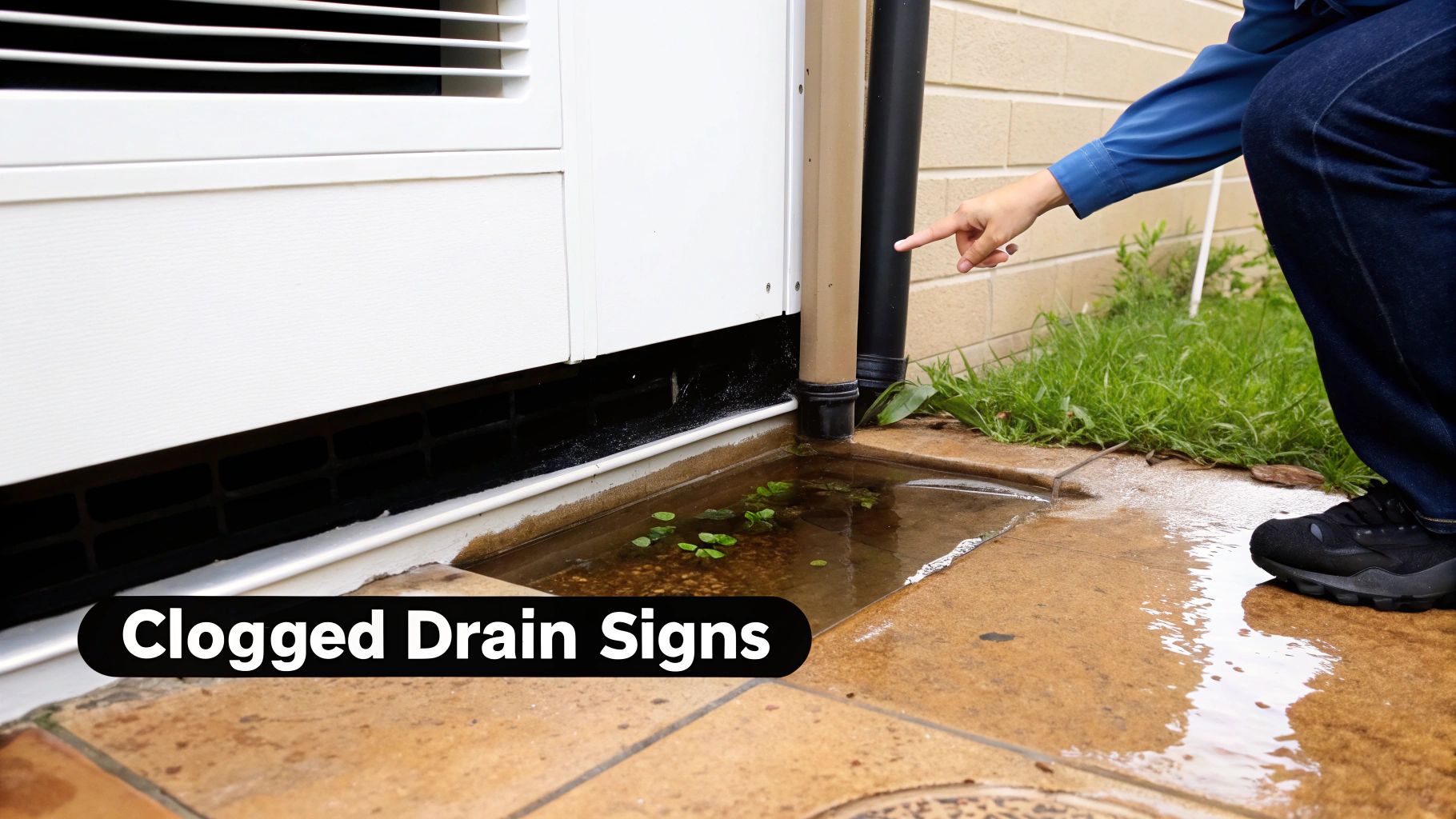
Your HVAC system almost never fails out of the blue. It’s usually pretty good about sending out warning signals, some subtle, some not so subtle, that something’s wrong. When it comes to a clogged condensate line, catching these clues early is your best defense against a world of expensive water damage.
Knowing what to look for transforms you from a homeowner waiting for a disaster into a proactive troubleshooter. You can spot a small clog before it becomes a big, messy, and expensive problem.
Standing Water Near the Indoor Unit
The most obvious, in-your-face sign of a blockage is a puddle of water around your indoor air handler. This is the part of your system tucked away in a closet, the attic, or maybe the basement. The water you’re seeing is condensation that was supposed to go down the drain but has overflowed the primary drain pan instead.
This isn’t just a tiny drip; it's a clear signal that the drainage system has failed. If you let it go, that water will soak into your subflooring, drywall, and insulation, creating a perfect breeding ground for mold. For a deeper dive, our guide on diagnosing an air conditioner condensation leak has more details.
Your AC Suddenly Shuts Itself Off
Ever had your air conditioner just quit on you during the hottest day of summer? A clogged condensate line is a surprisingly common reason for this. Most modern AC systems have a built-in safety feature called a float switch.
This little device sits in the secondary drain pan or is attached directly to the drain line. When water backs up from a clog, the rising water level lifts a float, which then trips a switch and cuts power to the whole system. It's a smart feature designed to prevent a flood, but it's also your AC's way of screaming for help.
Think of the float switch as your HVAC system's emergency brake. It stops the unit to prevent a bigger mess, but it's telling you that the primary drainage route has already failed. Ignoring this warning is asking for trouble.
Musty or Moldy Odors from Your Vents
Another tell-tale sign is a persistent damp or musty smell that hits you right when the AC kicks on. That funky odor is caused by stagnant water sitting in the drain pan and line, an ideal spot for mold, mildew, and bacteria to set up camp.
When the blower fan starts up, it pushes those smelly spores all over your house, tanking your indoor air quality. If you catch a whiff of something earthy or like "dirty socks," it’s a huge red flag that you need to check your system's drainage. Besides the obvious puddles, it's vital to recognize subtler issues that signal a problem; learn about these 8 critical signs of water damage to protect your home.
Visible Water Drips or Stains
Sometimes the signs are less dramatic than a big puddle. You might just see:
Water stains on the ceiling right below where your attic air handler is located.
Damp drywall around the indoor unit if it's in a closet.
Slow, steady drips coming from the PVC piping or fittings connected to the unit.
These symptoms often point to a slow leak or a partial clog that's causing the drain pan to overflow every now and then. Catching these smaller signs during a routine check can help you get ahead of the problem before it leads to a total system shutdown or serious property damage.
To help you quickly figure out what's going on, we've put together a simple table that connects the symptoms you're seeing with what's likely happening and what you should do first.
Common AC Condensate Line Symptoms and First Steps
Symptom | Likely Cause | What to Do First |
|---|---|---|
Puddle of water around the indoor unit | Complete clog in the primary drain line | Turn off your AC immediately to stop more water from overflowing. |
AC won't turn on or shuts off randomly | Float switch was activated by backed-up water | Check the drain pan for water. If it's full, the clog is the reason for the shutdown. |
Musty or mildew smell from vents | Stagnant water and algae/mold growth in the drain pan or line | Investigate the source of the smell; it's a strong indicator of a drainage problem. |
Water stains on ceilings or walls | Slow leak or a partial clog causing intermittent overflows | Pinpoint the location of the stain relative to your air handler and check the area for drips. |
This table is a great starting point, but remember, every home is different. If you check these things and are still unsure, or if the problem seems bigger than a simple clean-out, that's the perfect time to call in a professional.
A Practical Guide to Cleaning Your Condensate Line
So, you’ve noticed the classic signs of a clog and you’re ready to get your hands dirty. Good on you! Tackling your own condensate line cleaning is a totally manageable job for most homeowners. All you need are a few common tools and a little bit of patience.
Following these steps will help you safely and effectively get that gunk out of there. The idea is to first pull the main blockage out from the outside, then flush any leftover residue from the inside out. It's a one-two punch that gets the line thoroughly clean.
First Things First: Safety
Before you even think about touching your HVAC system, we have to talk about safety. This isn't optional. The absolute first thing you must do is cut all power to the unit.
Kill the Power at the Thermostat: Start by setting your thermostat to the "Off" position. This ensures the system won't try to kick on while you're in the middle of working on it.
Flip the Breakers: Now, head over to your home's main electrical panel. You're looking for the circuit breaker for your HVAC system. Often, there are two of them: one for the indoor air handler (sometimes labeled "Furnace" or "Air Handler") and another for the outdoor condenser unit (usually labeled "AC"). Flip them both to the "Off" position.
Seriously, don't skip this. You're going to be working with water right next to electrical components. Water and electricity are a dangerous mix, so this precaution is critical to avoid electrical shock.
Step Two: Locate Your Access Points
With the power off, your next mission is to find the two key parts of your condensate line: the indoor access port and the end of the drain line outside.
The Indoor Access Port: This is usually a white PVC pipe found near your indoor air handler, which could be in your attic, basement, or a utility closet. Keep an eye out for a T-shaped section of the pipe that has a small, removable cap. That's your cleanout port, built specifically for maintenance like this.
The Outdoor Drain Line: Now, head outside near your big condenser unit. The drain line is a PVC pipe that pokes out of your home’s foundation or an exterior wall. It’s often just a plain, open pipe, maybe with a 90-degree elbow pointing down toward the ground. This is where you'll suck the clog out from.
Finding these two spots is the key to the whole operation. You'll flush from the inside port and apply suction from the outside end.
Step Three: Unleash the Wet/Dry Vac
Alright, time for the main event: getting that clog out. For this, you absolutely need a wet/dry shop vacuum. Don't even think about using your regular household vacuum; the water will destroy it.
Start at the outdoor drain line. Give the end of the PVC pipe a quick wipe with a rag to get a clean surface. Now, place the hose of your shop vac directly over the end of that pipe.
You need a tight seal to create powerful suction. You can wrap some duct tape around the connection or just use your hand to press the hose firmly against the pipe, covering any gaps.
With a good seal, turn on the vacuum and let it run for 60 to 90 seconds. You’ll probably hear a satisfying thump as water, sludge, and whatever else was in there gets sucked into the vacuum. This is the clog making its grand exit.
Once you’re done, turn off the vac and pull the hose away. The worst of the blockage should be gone, clearing the way for a final flush.
Step Four: Flush the Line from the Inside
With the main gunk gone, it’s time to head back inside and flush out any lingering slime. Find that T-shaped access port near your air handler that you located earlier.
Pop the cap off the cleanout port. Now, let's mix up a simple but potent cleaning solution.
Mix Your Solution: Combine one part distilled white vinegar with three parts warm water. Vinegar is a fantastic natural disinfectant that’s great at dissolving the algae and other gunk that causes clogs in the first place. You’ll want to avoid using bleach, as it can be corrosive and damage your pipes and drain pan over time.
Flush the System: Grab a funnel and slowly pour about one cup of your vinegar solution down into the access port. Just let it sit in there for about 30 minutes. This gives the vinegar time to work its magic and break down any stubborn buildup still clinging to the inside of the pipe.
After the 30 minutes are up, pour some clean water down the line to rinse everything through. To check your work, head back outside. If the line is truly clear, you should see that water draining out smoothly without any backup.
Cleaning out your condensate line is a great maintenance habit to get into. If you're feeling inspired to tackle more DIY projects, our homeowner's guide to cleaning AC unit components has plenty of other useful tips.
Step Five: Power Up and Test It Out
The last step is to button everything back up and confirm your success. Go ahead and securely screw the cap back onto the indoor access port.
Next, walk back to your breaker box and flip the HVAC breakers back to the "On" position. Finally, set your thermostat back to "Cool" at your preferred temperature.
Let your AC run for about 10 or 15 minutes, then take one last trip outside to check on that drain line. If you see water steadily dripping out, you did it! You've successfully cleaned your condensate line and likely saved yourself from a messy and expensive water damage situation.
Getting Ahead of Clogs: Essential Tools and Smart Habits
Clearing a clog is a great skill to have, but the real secret to avoiding HVAC headaches isn't about fixing problems, it's about preventing them in the first place. Making the shift from a reactive mindset to a proactive one is easier than you might think. It just takes the right tools and a few simple habits to keep that condensate line flowing freely all year long.
Having the right equipment on hand means you're always ready for a quick inspection or cleaning. The good news? Most of what you need is probably already in your garage or can be found at any local hardware store.
Assembling Your DIY Cleaning Kit
You don’t need a truck full of professional gear to stay on top of this. A small, dedicated kit will handle the vast majority of routine maintenance.
Here’s a quick list of the must-haves:
A Wet/Dry Shop Vacuum: This is your workhorse. Its powerful suction is exactly what you need to pull blockages out from the exterior drain line. Remember, never use a standard household vacuum, the water will destroy the motor.
A Funnel: Simple but effective. This helps you pour your cleaning solution directly into the access port without making a mess inside your air handler.
Distilled White Vinegar: This is a safe, effective, and non-corrosive solution for breaking down the algae and gunk that cause most clogs.
A Stiff, Flexible Brush: Something like a small bottle brush or a dedicated pipe cleaner is perfect for dislodging any stubborn buildup right at the cleanout port opening.
It's no surprise that more and more people are investing in this kind of preventative care. The global market for these tools was valued at roughly USD 1.12 billion in 2024, which shows just how many homeowners are getting serious about maintaining their drainage systems.
This infographic breaks down the core process into three simple, crucial actions.
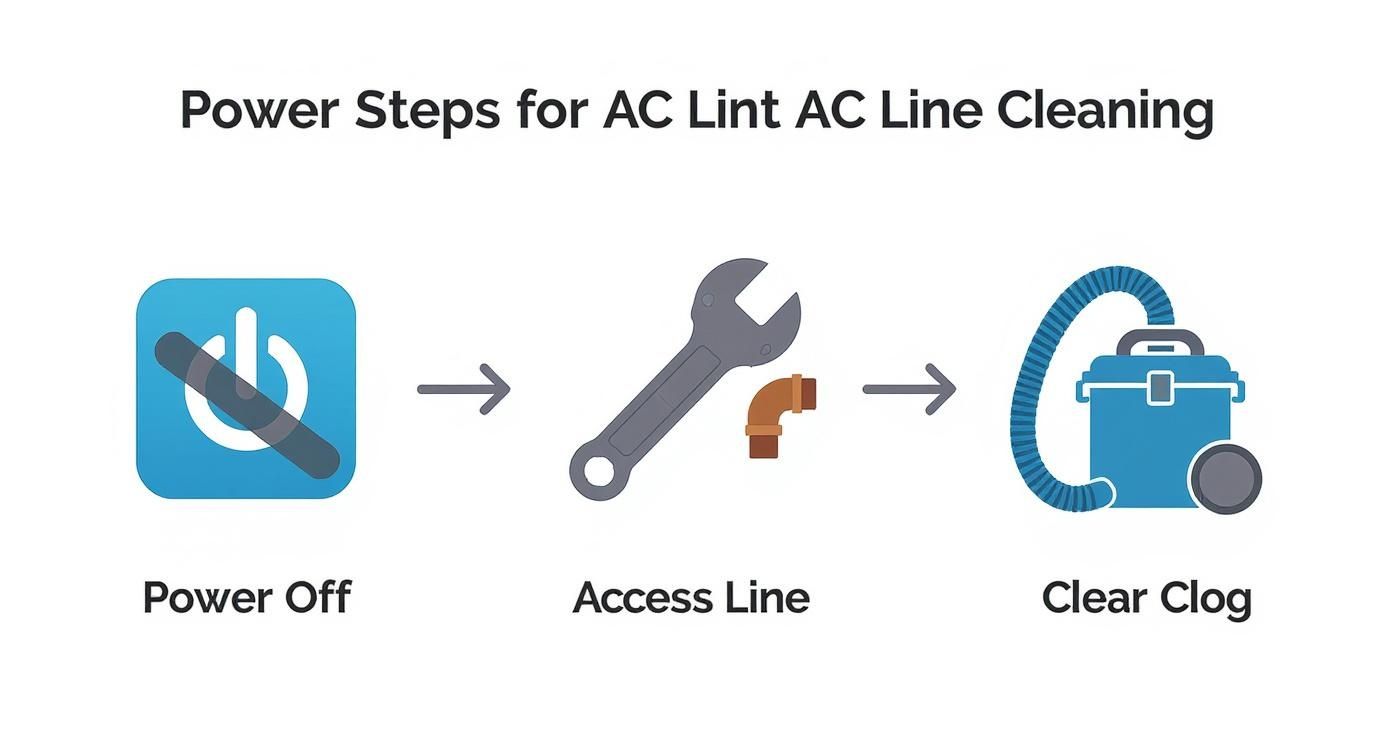
As you can see, safety is always the first step. Powering off the unit is non-negotiable before you locate the access line and use suction to clear out the blockage.
Building Smart Maintenance Habits
With your tools ready, the next move is to build a simple, repeatable routine. Consistency is what turns a one-time fix into a long-term solution that protects both your home and your HVAC system.
Start by setting a quarterly reminder on your phone or calendar. Every three months, pour a cup of a 50/50 mix of distilled white vinegar and water down the access port. This tiny habit takes less than five minutes but is one of the easiest ways to stop slime from ever getting a foothold. For more tips on scheduling, check out our guide on creating your essential HVAC maintenance schedule.
A proactive approach to maintenance isn't about adding another chore to your list; it's about eliminating future emergencies. A few minutes of prevention every quarter is always better than a few hours of cleanup and a costly repair bill.
Another great habit to adopt is using condensate pan tablets. These small, inexpensive tablets are designed to dissolve slowly in your drain pan, releasing a cleaning agent that stops algae, mold, and slime-forming bacteria in their tracks. Just drop one in the pan every few months, and it does the work for you.
Finally, make a quick visual check of your outdoor drain line part of your regular yard work. When you're outside, just glance over at the pipe to make sure it's not blocked by mulch, grass clippings, or dirt. On a humid day when the AC is running, you should see a slow, steady drip of water, a clear sign that everything is draining as it should.
When to Call Covenant Aire Solutions for Help
While tackling your condensate line yourself is a fantastic skill for any homeowner, there are definitely times when it’s best to call in a professional. Knowing when to put down the shop vac and pick up the phone can save you a ton of hassle, prevent serious water damage, and just give you peace of mind.
Think of it like this: a DIY flush is the equivalent of using a plunger on a slow bathroom drain. It often works! But sometimes, you need a pro with a power auger to really clear things out. If you’ve gone through all the cleaning steps and water is still backing up, the clog is probably too deep or too compacted for your vacuum to handle. This is a super common scenario, and it's far better to get an expert involved than to risk cracking a PVC pipe with too much force.
Signs It Is Time for a Professional
Sometimes, the problem is more complicated than a simple algae buildup. Recognizing these red flags helps you make the right call quickly, protecting both your home and your HVAC system from further trouble.
It's time to bring in the experts when you see:
Stubborn Clogs: You’ve tried the shop vac and vinegar flush a couple of times, but that water just isn’t draining.
Signs of an Internal Leak: You’re noticing new water stains on ceilings or walls, especially if they aren't right next to the indoor unit. This could mean the leak is happening inside a wall.
Major Water Damage: If the overflow has already created puddles, saturated drywall, or soaked your carpet, you need an expert to assess the clog and the extent of the damage.
The Clog Keeps Coming Back: If the line clogs up again just a few weeks after you cleaned it, there's likely an underlying problem, like an improperly sloped pipe.
A clog that won’t budge or keeps returning is your AC’s way of telling you the issue is more complex than a bit of slime. Calling a professional isn’t giving up; it’s making the smart move to get an accurate diagnosis and a real solution.
The Professional Toolkit
When our Covenant Aire Solutions technicians show up, we’re armed with more than just a standard shop vac. We bring specialized equipment, like high-pressure nitrogen or CO2 flush systems, that can safely and effectively blast through the most stubborn blockages without harming your pipes. This approach ensures the entire line is thoroughly cleared, from the air handler all the way to the outside drain.
The investment in this kind of professional gear is significant. In fact, the global market for drain cleaning equipment was valued at around USD 3.5 billion in 2024 and is projected to keep growing. This is the kind of technology that allows us to resolve issues that DIY methods simply can't touch.
If you’re dealing with a persistent clog or see signs of a bigger problem, don’t wait. You can learn more about our complete AC repair services and get a visit scheduled. Letting our certified technicians take care of it ensures the job is done right, protecting your home from costly water damage and getting your HVAC system back to peak efficiency.
Have More Questions? We Have Answers.
Even with a step-by-step guide, it's totally normal to still have a few questions floating around. Our technicians get asked about condensate lines all the time, so we’ve put together some of the most common ones we hear from homeowners just like you.
Can I Use Bleach to Clean My AC Condensate Drain Line?
This is a classic question, and the answer has changed over the years. While you might see old advice recommending bleach, most of us in the industry now strongly advise against it. Bleach is pretty harsh stuff and, over time, it can eat away at your PVC pipes and corrode the metal in your drain pan. The last thing you want is for your "fix" to cause a bigger, more expensive problem down the road.
A much safer, and just as effective, alternative is plain old distilled white vinegar.
Mix one part distilled white vinegar with three parts warm water. It’s acidic enough to dissolve the gunk and algae without being harsh on your system's components. If you want something a bit more specialized for preventative care, you can also grab condensate pan tablets from any hardware store. They're designed specifically for this job.
How Much Does Professional Condensate Line Cleaning Cost?
The cost can shift a bit depending on where you are and just how bad the clog is. If you have us clear the line during a regular HVAC tune-up, the service is usually rolled into the maintenance fee, which typically runs between $75 and $200.
If you're calling us out specifically for a clog, think of it as a standalone service. For an emergency call, you’re likely looking at a range of $100 to $250. If the blockage is really severe and we need to break out the heavy-duty tools, like a high-pressure nitrogen flush, the cost will naturally be at the upper end of that range. We always provide an upfront estimate so there are no surprises.
Think of a professional cleaning as an investment. That service call fee is a drop in the bucket compared to the cost of repairing a water-stained ceiling, replacing soggy drywall, or dealing with mold.
Where Is the End of My Condensate Drain Line Located?
Finding the end of the line is usually pretty easy. Just walk outside and head toward your big outdoor condenser unit. You’re looking for a small PVC pipe, about 3/4-inch in diameter, poking out of an exterior wall or coming straight up from the ground near your foundation.
When your AC is running on a humid day, you should see it slowly but steadily dripping water. Builders often have it drain into a flowerbed, a patch of gravel, or just onto the lawn.
Still can't spot it? The sure-fire way is to start at your indoor air handler and simply follow the PVC pipe with your eyes until you see where it punches through the wall to the outside. Knowing where it ends is crucial for both DIY flushes and quick visual checks to make sure leaves or dirt aren't blocking it up.
If you've given it your best shot and that clog isn't budging, or if you'd just rather have an expert handle it, Covenant Aire Solutions is here to help. Our certified technicians have the professional tools and know-how to clear any blockage and get your system running perfectly. Protect your home and your peace of mind by scheduling a service visit with us today.