
Air Conditioner Not Blowing Air? Your Practical Troubleshooting Guide
- Dec 31, 2025
- 15 min read
When your air conditioner hums to life but you feel nothing coming from the vents, the solution is often surprisingly simple. In my experience, the most common reasons an air conditioner is not blowing are a bad thermostat setting, a tripped circuit breaker, or a clogged air filter.
Checking these three things first can often solve the problem in just a few minutes, saving you the time and expense of a service call.
Your First Steps When The AC Runs But No Air Blows
It’s a feeling every Tucson homeowner dreads on a sweltering day: you hear the outdoor AC unit running, but the indoor vents are completely silent. It’s a frustrating moment, but before you assume the worst, a few simple checks can often get things moving again.
Most of the time, airflow issues come from minor, easily fixable oversights, not catastrophic system failures. This initial troubleshooting process is designed for any homeowner; no special tools or technical skills needed.
The goal here is to rule out the most common culprits first. By methodically checking the basics, you can handle the small stuff yourself and know when it’s truly time to call for professional help. Taking these steps can save you time, money, and a lot of discomfort. This is especially true now, as the HVAC industry is facing a shortage of about 110,000 technicians nationwide, which can mean longer waits for service. Making a quick DIY fix is more valuable than ever.
Before diving into the details, here's a quick checklist to guide you through the most common and easily fixable issues.
Immediate Troubleshooting Checklist for a Non-Blowing AC
Symptom | Potential Cause | Actionable First Step |
|---|---|---|
Outdoor unit runs, no indoor air. | Thermostat misconfiguration. | Confirm it's set to "Cool" and the temperature is 5 degrees below the room temp. |
The entire system is off. | No power to the unit. | Check the circuit breaker for the indoor air handler and the outdoor condenser. |
The system turns on but airflow is weak. | Restricted airflow. | Inspect the air filter; if it's dirty or grey, replace it immediately. |
Thermostat screen is blank. | Loss of power to the thermostat. | Check for dead batteries or a tripped safety switch near the air handler. |
This table should help you quickly identify where to start. If these initial steps don't resolve the issue, it’s time to dig a little deeper.
Check Your Thermostat Settings
The thermostat is the brain of your HVAC system, and a simple wrong setting is one of the most frequent reasons an air conditioner stops blowing. It’s always the easiest and best place to start.
Confirm "Cool" Mode: Make sure the thermostat is actually set to "Cool" and not "Heat" or "Off." This is a classic mistake, especially in the spring when you're switching from heating to cooling for the first time.
Lower the Temperature: Set your desired temperature at least 5 degrees below the current room temperature. If the set point is too high, the system won't get the signal to kick on a cooling cycle.
Check the Fan Setting: The fan should be on "Auto," not "On." When set to "On," the fan runs all the time, even when the air isn't being cooled. "Auto" ensures it only runs when your system is actively cooling.
A blank thermostat screen points to a different problem. It could be dead batteries, but it can also signal a tripped safety switch from a clogged condensate drain line, which we'll cover later. Always start by checking the power source.
This quick decision tree can help you visualize the initial troubleshooting steps for an air conditioner not blowing air.
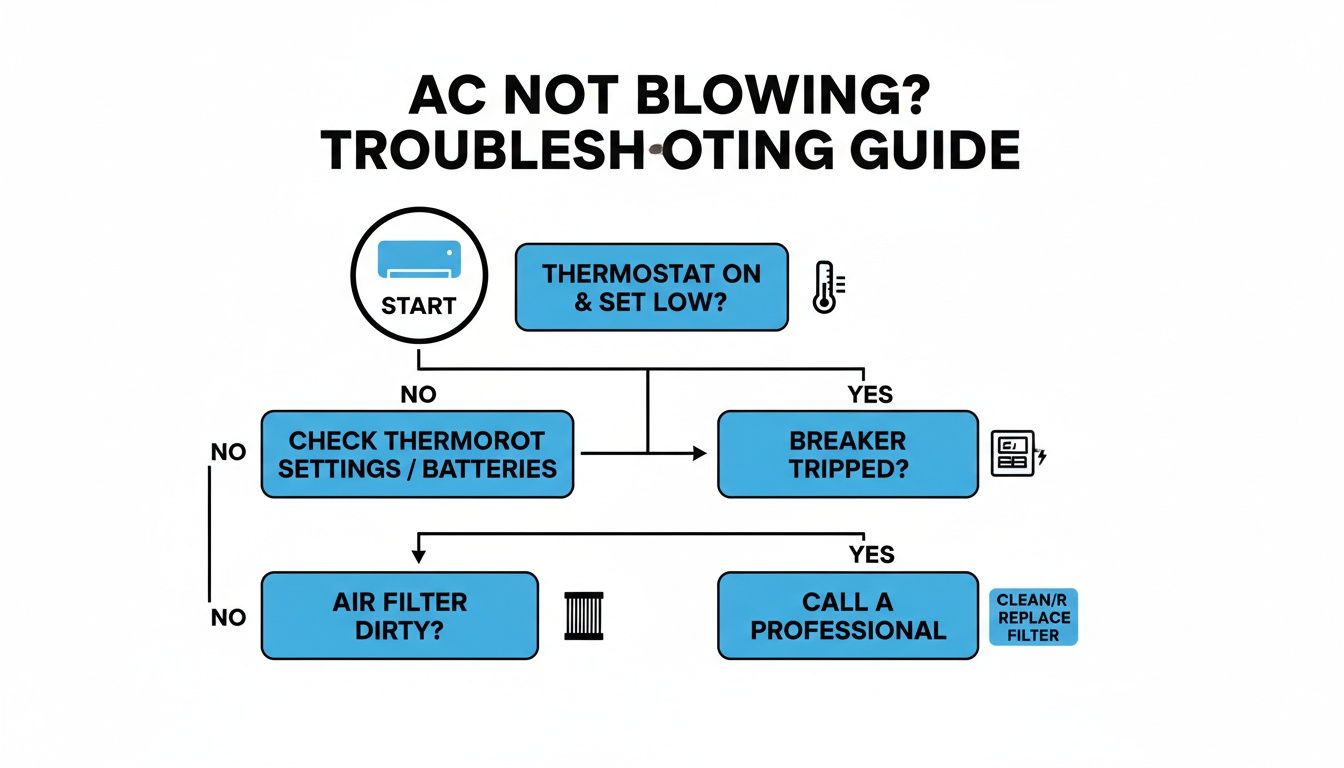
As the flowchart shows, checking the thermostat, breaker, and filter are the foundational first steps before you should suspect a more complex issue. While these checks are straightforward for home systems, troubleshooting mobile units can have its own unique challenges. For a great resource on that, check out this detailed RV air conditioner troubleshooting guide.
For a broader look at common residential AC issues, you might also find our general guide on how to troubleshoot AC problems helpful.
Investigating Common Airflow Blockages and Blower Issues
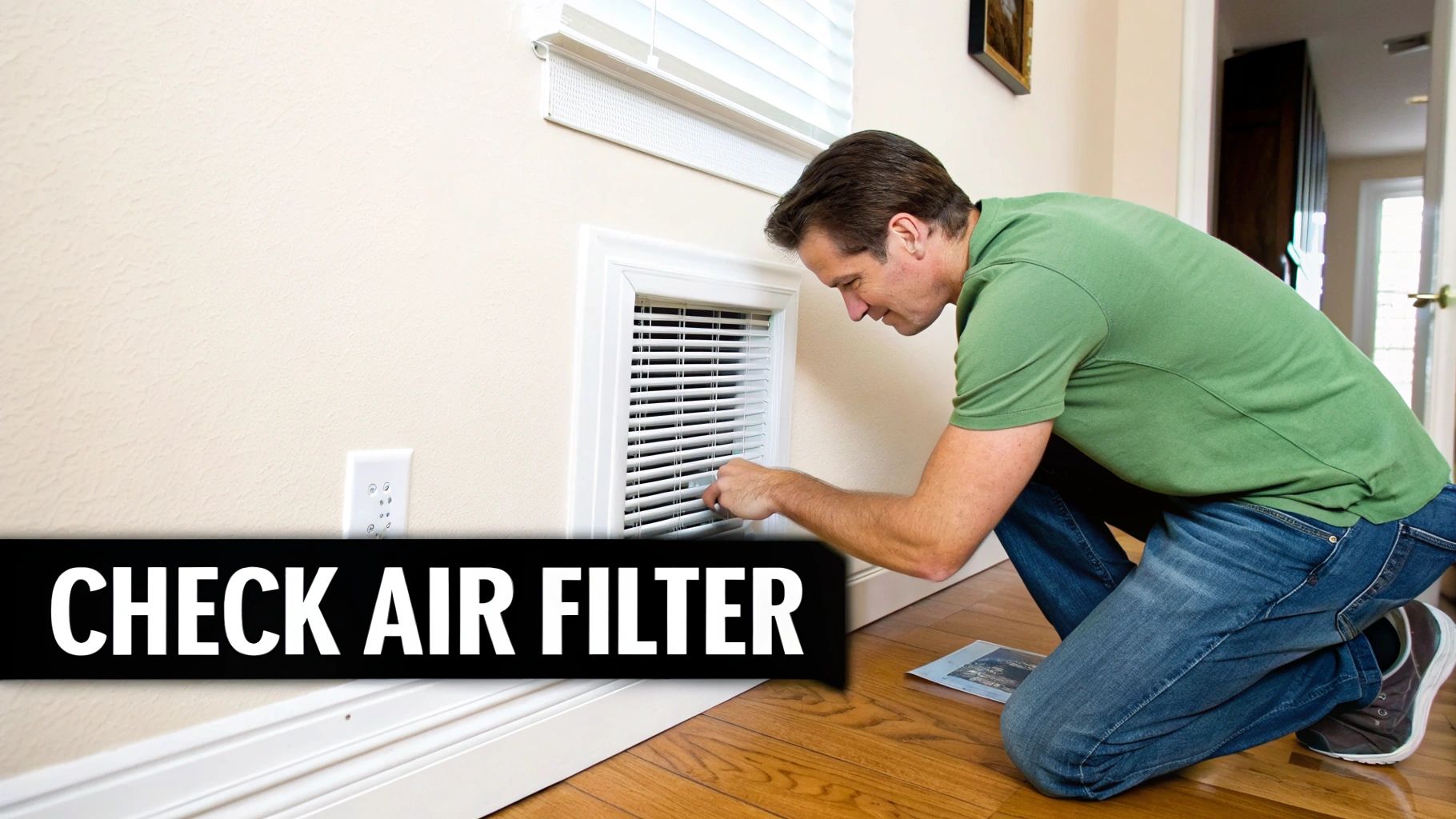
So, you've checked the thermostat and the circuit breaker, but your vents are still silent. Now it's time to dig a little deeper into some of the most common reasons an air conditioner is not blowing any air.
These next potential culprits are usually found inside your air handler, which is the indoor part of your AC system. The key here is that you can often diagnose the problem just by listening and looking, without ever needing to open a panel or touch any wiring.
Your AC’s blower is what physically moves the cool air through your ductwork. If something is wrong with it, you won't feel a breeze, even if the outdoor unit sounds like it's working perfectly. Let's walk through a few things you can look and listen for to pinpoint the problem.
Is Your Blower Motor Making Strange Noises?
The blower motor is the powerhouse of your home’s air circulation. When it gives out, the lack of airflow is often paired with some pretty distinct sounds coming from your indoor unit.
Get close to your air handler (it's usually in a closet, the attic, or a basement) and just listen. Do you hear a loud humming or buzzing? That’s a classic sign the motor is getting power but can't spin up. It's trying to work, but something is holding it back.
A loud, persistent hum without any air moving is almost always the sign of a failed run capacitor. Think of the capacitor as a small battery that gives the blower motor the initial kick it needs to get started. When it dies, the motor just sits there and hums.
Replacing a capacitor is a job strictly for a licensed technician due to the high voltage involved. But by identifying that sound, you can give a professional a huge head start, which saves you time and money on the diagnostic visit.
The Problem with a Clogged Condensate Drain Line
Sometimes, your AC stops blowing air for a reason that has nothing to do with the motor itself. Instead, it’s a clever safety feature designed to prevent catastrophic water damage.
As your system cools the air, it pulls out humidity, which turns into water. This condensation is supposed to flow outside through a simple PVC pipe: the condensate drain line. But over time, that line can get clogged with algae and sludge.
When the line clogs, water backs up into a drain pan inside the unit. Nearly all modern systems have a small safety device called a float switch that detects this rising water. To stop your ceiling or floors from being ruined, the switch cuts power to the entire indoor unit, shutting it down completely.
You might notice a few things:
The system dies suddenly. One minute it's running fine, the next it’s off.
The thermostat display goes blank. The float switch often cuts all power to the air handler, which includes the thermostat.
You see water pooling around the indoor unit.
Just last summer, we got a call from a homeowner in Tucson whose system had completely shut off. They were worried it was a major component failure. A quick check revealed a simple algae clog in the drain line right where it exited the house. We cleared it in about 15 minutes, and the AC kicked right back on, a huge relief and a much smaller bill than they were expecting.
Blocked Ducts and Vents
Occasionally, the blower is running just fine, but the air has nowhere to go. If too many vents are closed or if furniture is pushed up against your main return air grilles, it can choke off the airflow so much that it feels like nothing is blowing at all.
This doesn't just make you uncomfortable; it puts a massive strain on your equipment. Your HVAC system needs to "breathe" by circulating a balanced amount of air. Blockages can cause other issues, like a frozen evaporator coil.
Take a quick walk around your house. Make sure all your supply vents are open and that nothing is covering the big return vents. If you want to learn more about keeping your ductwork in top shape, check out our ultimate guide to HVAC duct inspection.
As we push into the hotter months, the stress on our AC systems is only going to grow. Experts predict that rising global temperatures will cause a massive 697 terawatt-hour increase in demand for space cooling by 2030. That's a huge burden on our equipment, making it more important than ever to catch small problems like blockages before they turn into major failures.
Frozen Coils and Refrigerant Leaks: What You Need to Know
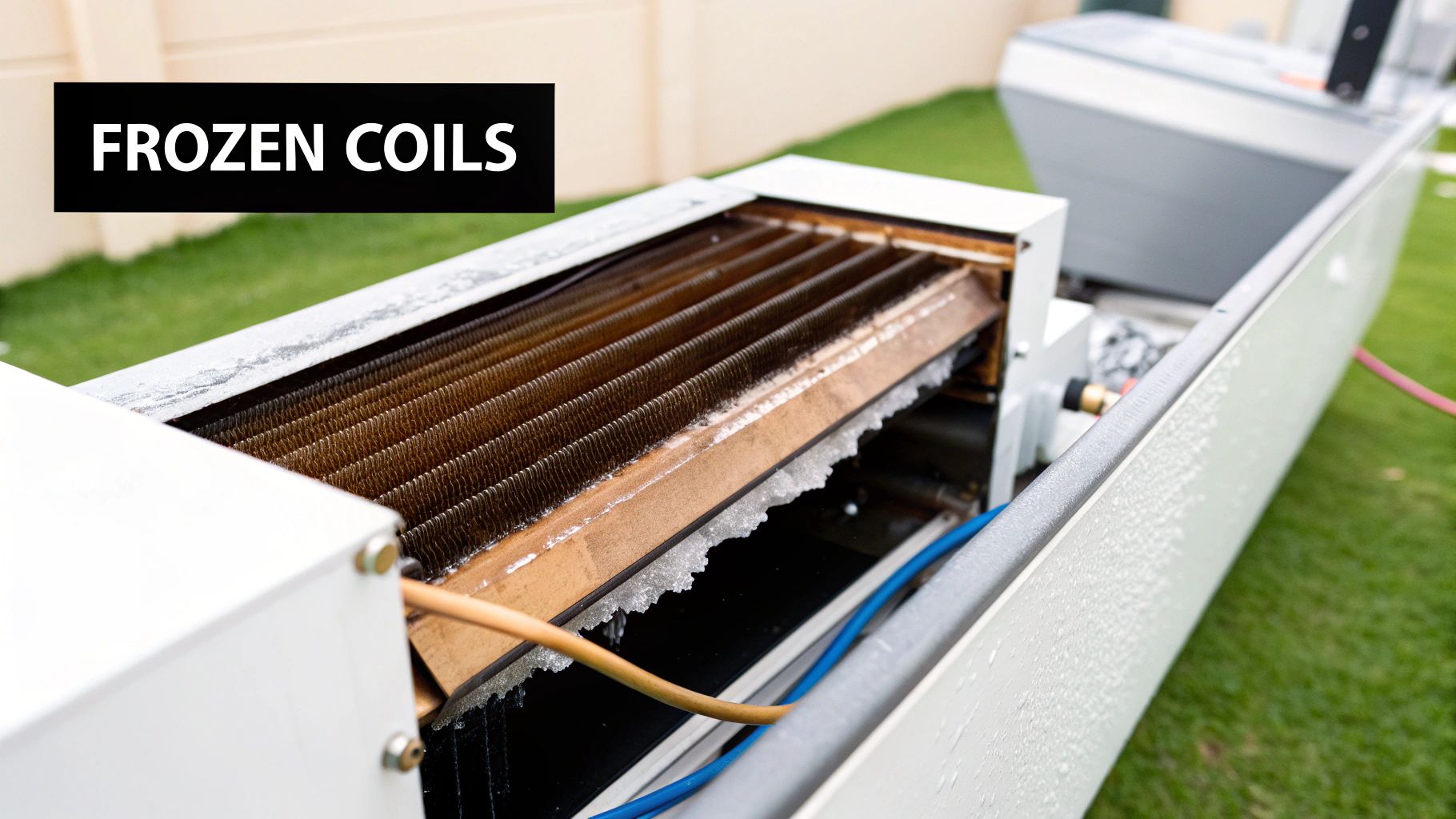
When you see a layer of frost, or worse, a solid block of ice, on your air conditioner’s indoor coils, you know something is wrong. That’s a major red flag. A frozen evaporator coil is one of the most common reasons your air conditioner is not blowing any air, because the ice literally blocks the path for air to move through.
It might seem strange for an AC to get too cold, but this ice is actually a symptom of a deeper problem, never a normal part of the cooling process. Most of the time, the culprit is either severely restricted airflow or low refrigerant. Both of these issues throw off the delicate balance of temperature and pressure that your system relies on to work correctly.
Simply shutting the AC off and letting it melt is only a temporary fix. The coils will just freeze right back up until you address what’s causing it in the first place, continuing a cycle of poor performance and putting serious strain on your equipment.
How to Safely Thaw a Frozen Evaporator Coil
If you find your coils are frozen, you need to let them thaw out completely before you can do anything else. The process is simple but requires a bit of patience. Rushing it can cause damage, and the goal is to melt the ice safely without creating a mess inside your home.
Here’s the right way to do it:
Turn the Cooling Off: First things first, go to your thermostat and switch the system from “Cool” to “Off.” This stops the cooling cycle and keeps the compressor from running, which is critical to prevent more damage.
Switch the Fan to “On”: Next, change the fan setting from “Auto” to “On.” This will force the blower to constantly run, circulating room-temperature air over the frozen coils and speeding up the melting process significantly.
Wait Patiently: Depending on how thick the ice is, this could take a few hours or even a full day. It’s a good idea to place some towels around the indoor unit to soak up any water as the ice melts. Whatever you do, don't try to chip or scrape the ice off. The coils and fins are extremely delicate and easy to bend or puncture.
Once all the ice has melted and the coils are just wet, you can switch your system back to its normal settings. But remember, you’ve only treated the symptom. The next step is to figure out what caused the freeze-up.
Why Refrigerant Leaks Are a Serious Problem
While a simple dirty filter can cause frozen coils, another, more serious possibility is a refrigerant leak. Your air conditioner is a closed-loop system, which means the refrigerant should never be "used up" or run low. If the level is low, there’s a leak somewhere.
Refrigerant is the lifeblood of your AC: it’s the substance that absorbs heat from your indoor air and carries it outside. When the refrigerant level drops, the pressure inside the evaporator coils plummets, causing them to become intensely cold and freeze any condensation that forms on them.
A refrigerant leak is definitely not a DIY fix.
Environmental and Health Risks: Refrigerant is a federally regulated chemical. It’s harmful to the environment and requires special training and certification to handle safely.
Specialized Tools Are a Must: Licensed technicians use specific equipment to find the exact source of the leak, repair the damaged line, and recharge the system to the manufacturer’s precise specifications.
Risk of Catastrophic Compressor Damage: Running an AC with low refrigerant puts immense strain on the compressor, which happens to be the most expensive part of your entire system. Pushing it can lead to total compressor failure.
If you’ve thawed your coils and put in a fresh filter but the ice comes back quickly, a refrigerant leak is the most likely culprit. At that point, you need to stop running the unit and call a certified technician right away. To learn more, our guide explains in detail why an AC unit freezes. Just melting the ice is kicking the can down the road, and the underlying problem will only get worse.
Knowing When to Call a Professional HVAC Technician
While many issues behind an air conditioner not blowing can be fixed with a few simple checks, the most important part of any DIY troubleshooting is knowing your limits. There’s a big difference between changing an air filter and attempting to fix complex electrical or refrigerant systems. Trying to cross that line can be dangerous, void your warranty, and easily turn a small, fixable problem into an expensive catastrophe.
The whole point of this guide is to empower you with useful knowledge, not to make you a certified technician overnight. Honestly, recognizing the signs that a job is best left to a professional is a skill in itself. It’s what protects you, your family, and the significant investment you've made in your home’s comfort system.
When you even suspect a deeper issue, the smartest and safest move is always to call for expert help.
Clear Signs You Need a Certified Technician
Some symptoms immediately take the problem out of the DIY arena. If you spot any of the following, it’s time to put down the tools and pick up the phone. These issues often involve high-voltage components, federally regulated substances, and complex parts that require specialized training and tools to handle safely.
Loud Humming or Buzzing from the Blower: Like we mentioned earlier, a distinct humming sound from your indoor unit without any air actually moving is a classic sign of a failed run capacitor or a seized blower motor. Capacitors can hold a powerful electrical charge even when the power is off, making them extremely dangerous for anyone without proper training.
A Hissing Sound or Oily Residue: These are dead giveaways of a refrigerant leak. Since refrigerant is a federally regulated substance that’s absolutely essential for cooling, only a licensed and certified technician can legally and safely handle it.
Frequently Tripping Circuit Breaker: If you reset the breaker only for it to trip again right away, you have an underlying electrical fault. This could be a short in the wiring or a sign that a major component like the compressor is failing and drawing too much power. Continuously resetting it is a serious fire hazard.
A crucial takeaway here is that some repairs seem simple on the surface but carry hidden risks. A prime example is replacing a capacitor. We once had a client who, after watching an online video, attempted the repair himself. He accidentally shorted the new capacitor, which sent a surge of power that fried the main control board, turning a $250 repair into a $1,200 one.
The Risks of DIY Electrical and Refrigerant Work
Attempting to fix complex issues when your air conditioner is not blowing can have serious consequences. Beyond the immediate safety risks of electrical shock or chemical exposure, you could cause irreversible damage to your system. The compressor, for instance, is the heart of your AC, and damaging it often means you’re looking at replacing the entire unit.
On top of that, most manufacturer warranties become void if an unlicensed person performs repairs. This means a problem that might have been covered could suddenly cost you thousands out of pocket. For situations that feel urgent, our emergency air conditioning repair guide can help you understand what steps to take while waiting for a professional to arrive.https://www.covenantairesolutions.com/post/emergency-air-conditioning-repair-guide-for-homeowners
In an era of rising temperatures, a broken AC is more than just an inconvenience; it can be a genuine health risk. Globally, extreme heat was linked to roughly 489,000 deaths annually between 2000 and 2019. For Tucson residents facing our intense summer heat, getting a repair done quickly and correctly is a matter of well-being.
When you call a professional from Covenant Aire Solutions, you’re ensuring the job gets done safely, correctly, and in a way that protects your warranty and your family.
How Preventive Maintenance Keeps Your Air Conditioner Working
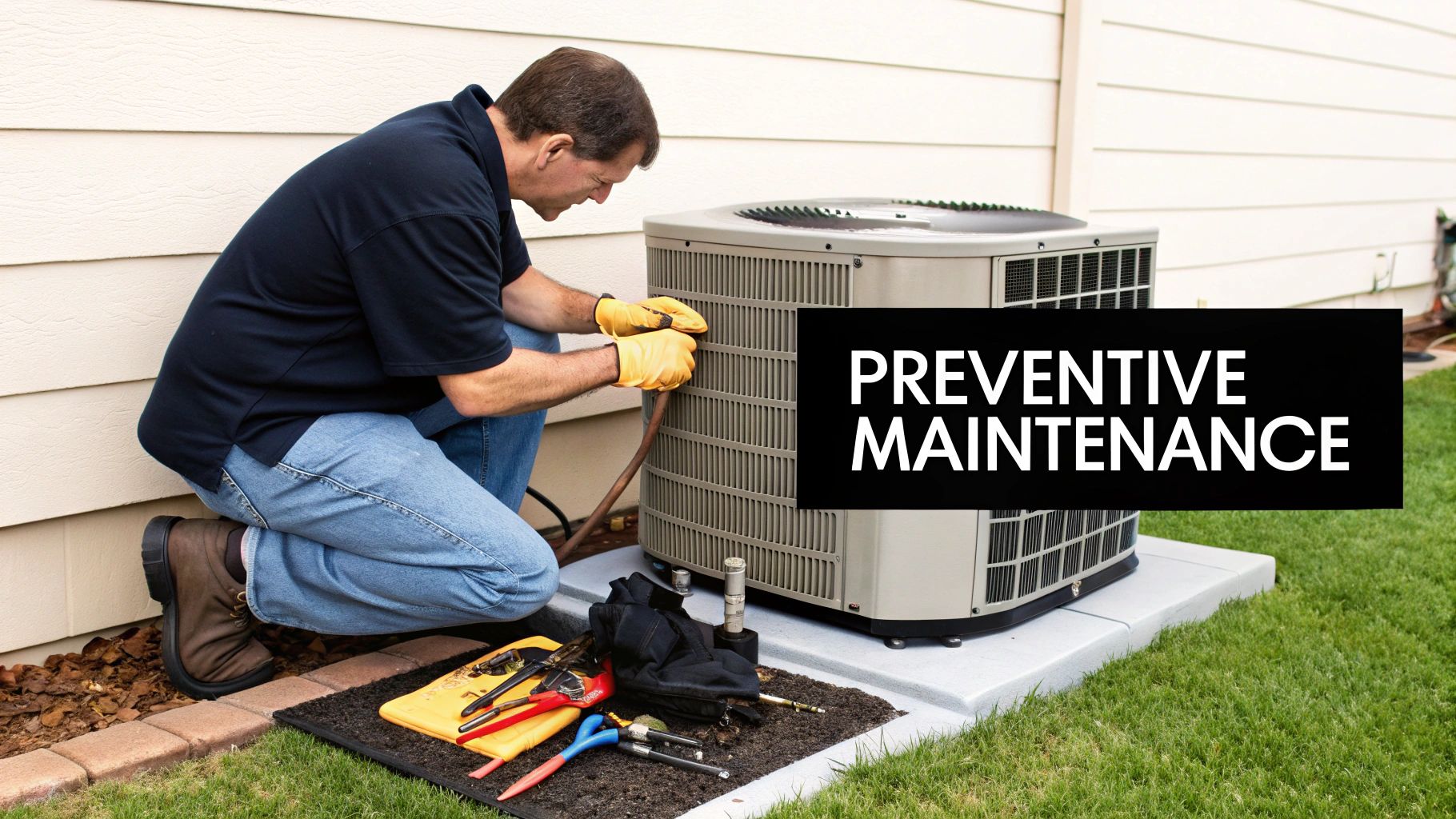
Let's be honest, the best way to deal with an air conditioner not blowing is to make sure it never happens in the first place. While knowing how to troubleshoot is great, proactive care is the real secret to a cooling system you can rely on, especially on those brutal summer days.
Preventive maintenance isn't just another service, it's a strategy. Think of your HVAC system like your car. You wouldn’t dream of driving it for years without an oil change or tire rotation, right? The same logic applies here. Regular, professional tune-ups are a smart investment in your home's comfort and your system's long-term health. They prevent the vast majority of those sudden, frustrating breakdowns.
What a Professional Tune-Up Includes
A real maintenance visit from a certified technician is much more than a quick glance. It’s a deep dive into your system, a meticulous inspection designed to spot potential problems before they leave you sweating. A technician will methodically check every single critical component.
Here's a glimpse of what that looks like:
Cleaning Coils: Both the indoor evaporator and outdoor condenser coils get a thorough cleaning. This is absolutely critical for maximum heat transfer, which is the core of the cooling process.
Checking Refrigerant Levels: The tech will verify that your refrigerant levels are exactly where the manufacturer says they should be. Even a slight undercharge can tank your system's efficiency.
Testing Electrical Connections: All the capacitors, relays, and wiring are inspected and tightened. Loose or failing electrical parts are one of the most common reasons for a sudden breakdown.
Clearing Drain Lines: We flush the condensate drain line to get rid of any sludge or algae buildup. This prevents clogs that can trigger a safety shut-off and, even worse, cause water damage inside your home.
These simple, twice-a-year check-ups are your best defense. A technician can spot a failing capacitor or a tiny refrigerant leak long before it causes your air conditioner not blowing on a 105-degree afternoon. For a more detailed breakdown, our HVAC preventative maintenance checklist walks you through the whole process.
The Long-Term Benefits of a Maintenance Plan
Signing up for a preventive maintenance plan is genuinely one of the smartest moves a homeowner can make. It flips the script on AC care, turning it from a reactive, emergency expense into a predictable, budget-friendly investment that pays for itself.
The real value of maintenance isn't just about dodging repairs. It's about optimizing performance, extending the life of your equipment, and buying yourself some serious peace of mind. A well-maintained system just works better, costs less to run, and lasts longer. Simple as that.
The advantages go way beyond just preventing breakdowns. Consistent professional care delivers real, tangible benefits you'll see in your home and feel in your wallet.
Improved Energy EfficiencyA clean, finely-tuned system doesn't have to fight to cool your home. According to the Department of Energy, routine maintenance can boost your AC's efficiency by up to 15%. That's a direct impact on your energy consumption.
Lower Utility BillsWhen your system runs more efficiently, it uses less power. Over a long, scorching Tucson summer, those savings add up fast, often covering the cost of the maintenance plan itself.
Extended Equipment LifespanYour average air conditioner should last about 10-15 years, but neglect can easily cut that short. Regular tune-ups reduce the wear and tear on crucial parts like the compressor and fan motors, helping your system reach its full service life, or maybe even push past it. And while you're focused on your AC, thinking about other home improvements like white tile roofing that helps keep your house cool can also take a massive load off your system, helping it run more efficiently for even longer.
Airflow Problem FAQs
Even after running through some basic checks, it's completely normal to still have questions when your AC isn't cooperating. HVAC systems can be tricky, so we've put together answers to some of the most common questions our techs hear from Tucson homeowners.
Our goal is to give you clear, straightforward information so you can understand what might be happening and what to do next. A little knowledge goes a long way in turning a stressful breakdown into a manageable fix.
Why Is My Outside Unit Running But No Air Is Coming Through the Vents?
This is probably the most common call we get. You can hear the big unit outside humming away, but inside, there’s nothing but silence from your vents. When this happens, the problem is almost always inside with your air handler.
There are a few usual suspects:
A Seriously Clogged Air Filter: If the filter is so packed with dust that air can't get through, the blower motor simply can't do its job.
A Frozen Evaporator Coil: Often caused by a dirty filter or low refrigerant, the indoor coil can turn into a solid block of ice, physically blocking any air from passing.
A Failed Blower Motor or Capacitor: The motor itself might have given up, or the small capacitor that gives it the kick-start it needs has failed. You might hear a faint humming sound coming from the indoor unit if this is the case.
Your first move should be to check the air filter. If it looks okay, try turning the AC to "Off" at the thermostat but leave the fan set to "On." This can help melt any ice on the coils. If neither of those works, the blower motor likely needs a professional's touch.
What’s the Typical Cost to Fix an AC Not Blowing Air?
The cost to fix an air conditioner that's not blowing can really vary because it all comes down to why it's not blowing. Some fixes are surprisingly affordable, while others involve replacing a major component.
Here’s a rough idea of what you might expect:
DIY Air Filter Replacement: This is the best-case scenario. A new filter will only set you back $20 to $40.
Blower Motor Capacitor Replacement: If a technician finds a bad capacitor, the repair cost is typically between $150 and $450.
Blower Motor Replacement: If the whole motor is shot, it's a bigger job. You could be looking at a cost anywhere from $500 to over $1,500, depending on your system's model and how difficult it is to access.
A professional diagnosis is the only way to get an accurate quote. A certified technician can pinpoint the exact failure and give you a clear, upfront price for the repair, so there are no surprises.
Should I Turn Off My AC If It’s Not Blowing Air?
Yes, absolutely. Turn the system completely off at the thermostat right away. If you let the outdoor unit keep running while the indoor fan is dead, you risk causing a chain reaction of damage that will be far more expensive to fix.
When the compressor runs without indoor airflow, the evaporator coils will quickly freeze into a solid block of ice. This puts a massive amount of strain on the compressor, the heart of your entire system and its most expensive part. A damaged compressor often means the whole system needs to be replaced.
Play it safe and switch your thermostat to "Off." It’s a simple step that protects your equipment from further harm while you figure out the next steps or wait for a technician to arrive.
If you’ve gone through these checks and your air conditioner is not blowing, it’s time to call in a professional. Don’t risk more damage or another uncomfortable day. The certified experts at Covenant Aire Solutions are here to help 24/7. Schedule your service call today and let us get your home comfortable again, fast.