
Carbon Monoxide From Air Conditioning Explained
- Nov 11, 2025
- 9 min read
Let's clear the air right away: a standard, all-electric air conditioner cannot produce carbon monoxide on its own. That’s the good news. These systems work by moving heat, not by burning fuel, so they simply don't create CO as a byproduct of their operation.
The real concern, however, is a bit more indirect and involves the bigger picture: the entire HVAC system your AC is a part of.
Understanding Your AC and CO Risks

It's completely understandable why so many homeowners worry about carbon monoxide coming from their air conditioning. But the danger isn't where you might think. Your AC unit is an electrically powered appliance, much like your refrigerator. It cools your home by transferring heat from inside to outside, a process that involves absolutely no combustion.
The potential for danger creeps in because your AC shares critical components, like ductwork and a blower fan, with your furnace. In many homes, that furnace is a fuel-burning appliance.
The Real Connection Between Your AC and CO
The link between your AC and CO is one of circulation, not creation. Think of it this way: if your furnace develops a serious problem, like a cracked heat exchanger, it can leak deadly carbon monoxide gas directly into your home's air supply.
If you want to get a better handle on this critical part, we have a helpful guide explaining what a heat exchanger in an HVAC system does.
When your air conditioner kicks on, its powerful fan starts pushing air through the ducts. The fan doesn't know the difference between clean air and poisoned air. It just does its job, and in this scenario, it unknowingly blasts that toxic CO into every single room of your house.
The air conditioner becomes an unwilling accomplice, distributing a danger it did not create. Its job is to move air, and it does so efficiently, whether that air is safe or hazardous.
To help clarify which appliances are the real culprits, here’s a quick breakdown of common household sources and how they relate to CO risk.
Household Carbon Monoxide Sources Direct vs Indirect
Appliance | Direct CO Risk | Primary Energy Source |
|---|---|---|
Gas Furnace | High | Natural Gas / Propane |
Gas Water Heater | High | Natural Gas / Propane |
Fireplace | High | Wood / Natural Gas |
Gas Stove/Oven | Moderate | Natural Gas / Propane |
Electric Air Conditioner | None | Electricity |
Electric Water Heater | None | Electricity |
Electric Stove/Oven | None | Electricity |
As you can see, the direct risk always comes from appliances that burn some kind of fuel. Your purely electric AC unit simply doesn't fall into that category. The key is ensuring the fuel-burning appliances in your home are always in safe working order.
How Carbon Monoxide Is Actually Created
To get why your air conditioner isn't the villain in the carbon monoxide story, it helps to understand how this dangerous gas gets made in the first place. The process is a lot simpler than you might think.
Picture a campfire that isn’t getting enough air. Instead of bright, clean flames, it just smolders and puts out thick, nasty smoke. That smoke is a big red flag that something's wrong with the fire.
Carbon monoxide (CO) is born from a very similar process called incomplete combustion. When fuels like natural gas, propane, oil, or wood burn properly, they combine completely with oxygen. The only things left over are harmless carbon dioxide and a little water vapor.
But when there isn't enough oxygen to go around for a clean burn, the process gets cut short. This is what creates carbon monoxide: a gas you can't see, smell, or taste, but one that's highly toxic.
The Real Household Culprits
This is exactly why your focus should shift away from your all-electric AC and onto the fuel-burning appliances in your home. These are the devices that actually use combustion and can become CO sources if they start to malfunction.
Common sources include:
Gas Furnaces: A cracked heat exchanger or a blocked flue is a classic recipe for incomplete combustion, which can then leak CO right into your airstream.
Gas Water Heaters: If these units have poor ventilation or burner problems, they can start producing dangerous levels of carbon monoxide.
Fireplaces and Wood Stoves: A chimney that's blocked or doesn't have enough draft can trap CO inside your home instead of safely sending it outside.
Gas Stoves and Dryers: It's less common, but improper installation or a lack of maintenance can also turn these everyday appliances into potential hazards.
The core issue is never really the appliance itself. It's always a malfunction that messes up the delicate balance of fuel and oxygen needed for a clean burn. This is why regular professional maintenance isn't just about efficiency; it's about keeping your family safe.
Understanding what actually causes CO is the first step in home safety. To dive a bit deeper, you can learn more about what causes carbon monoxide poisoning in our detailed guide. Once you recognize that the real danger lies with fuel-burning appliances, you can take the right steps to protect your home.
How Your HVAC System Spreads CO Leaks
So, while your air conditioner itself is innocent of creating carbon monoxide, it can absolutely become an unwilling accomplice in spreading it. The best way to think about it is that your AC is part of a larger, interconnected network, your HVAC system, which acts like the circulatory system for your home's air.
The danger almost always starts with a fuel-burning appliance, and the most common culprit is the gas furnace. A frequent point of failure is a cracked heat exchanger, which is basically the wall separating the toxic combustion gases from the clean air you're supposed to breathe. When that wall cracks, deadly CO gas can seep directly into the air that's about to be heated or cooled.
Your AC as an Unwitting Delivery System
Once CO has slipped into the airstream, your AC's powerful blower fan takes over. It has one simple job: move air through the ductwork. The fan can't tell the difference between clean air and poisoned air, so it just does its job, efficiently circulating the toxic gas to every single room connected to the system.
This infographic breaks down the simple but dangerous process of how carbon monoxide is created.
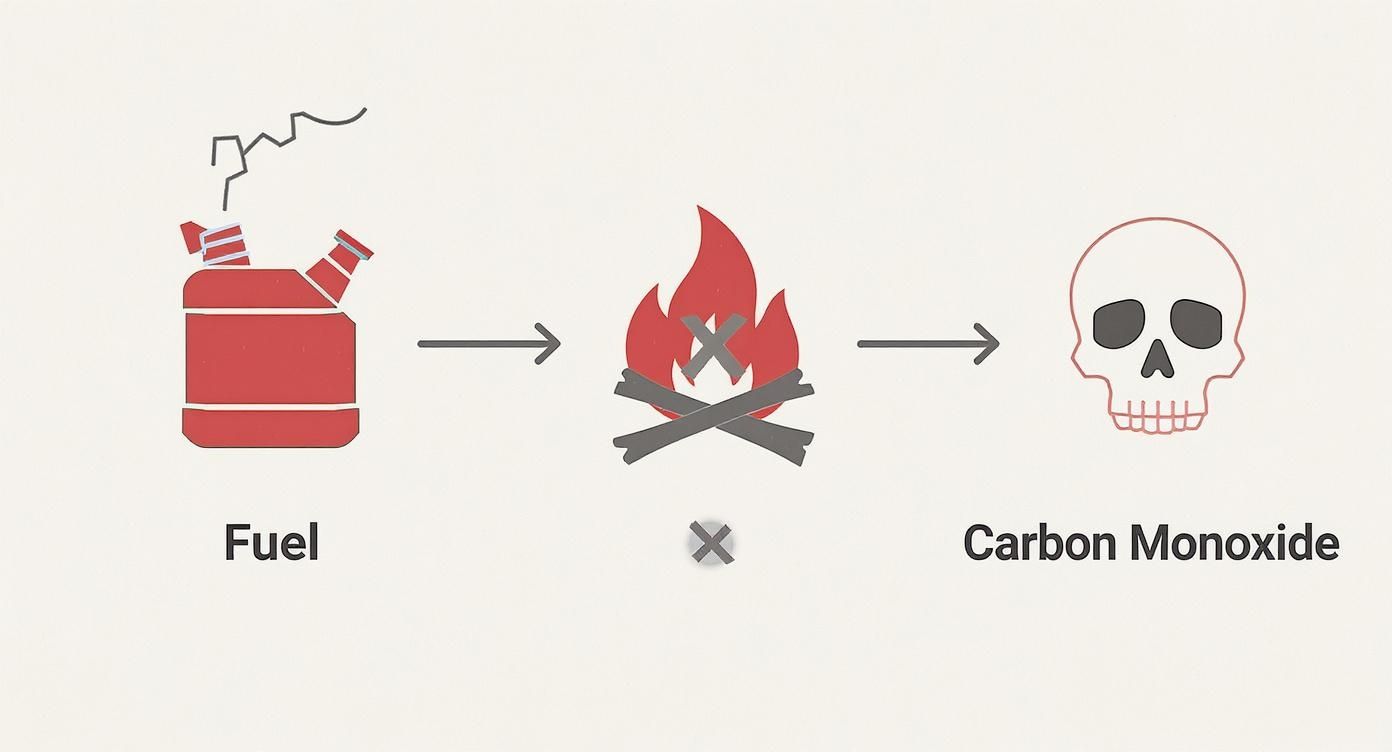
This process really highlights why a problem in one appliance can quickly become a whole-home emergency. Another common scenario involves blocked exhaust flues or vents. If the CO can't get out, it gets trapped inside and can eventually be pulled into the HVAC system's return air vents. This is exactly why a thorough HVAC duct inspection is so critical for spotting potential entry points for dangerous contaminants.
The scale of this issue is pretty sobering. According to a 2022 study, the heating and cooling sector is responsible for 61% of carbon monoxide emissions in the EU, with residential homes being the largest contributors. This data drives home the point that the very devices we use for climate control are major sources of CO. You can dig into more of these findings from the Joint Research Centre on their official site.
Your central air system is designed for comfort and efficiency, but that same efficiency can turn against you if there's a carbon monoxide leak anywhere in the network. A small furnace crack becomes a whole-home problem in minutes.
Recognizing The Silent Warning Signs
Carbon monoxide is notoriously dangerous because you can't see, smell, or taste it, earning it the grim nickname "the silent killer." The initial physical symptoms of CO poisoning are tragically easy to mistake for a common illness like the flu, which is why recognizing them is so critical.
Early warning signs often include a dull headache, general weakness, dizziness, and nausea or vomiting. As exposure continues, symptoms can worsen to include confusion, blurred vision, and eventual loss of consciousness. It's a serious threat: according to the CDC, over 400 people in the U.S. die from unintentional CO poisoning every year.
Clues Inside Your Home
Beyond how you feel, your home itself might offer subtle clues that something is wrong with a fuel-burning appliance. Paying attention to these signs can provide a critical early warning.
You should be on the lookout for:
Streaks of soot or black stains around your furnace or other fuel-burning appliances.
A pilot light on your furnace or water heater that repeatedly blows out or has a flickering, yellow flame instead of a steady blue one.
Excessive, unexplained moisture or condensation forming on the inside of windows.
A stuffy or stale air feeling throughout the house, even when the HVAC system is running.
These visual cues can point to incomplete combustion, a primary cause of carbon monoxide from heating systems. Improving your home’s air is crucial; you can learn more about professional solutions by exploring indoor air quality testing in Tucson.
A key differentiator between CO poisoning and the flu is how symptoms behave. If your "flu" symptoms seem to improve when you leave the house but return once you're back home, it is a major red flag for a potential carbon monoxide leak.
Because the early symptoms can be so similar, it's easy to dismiss them. But a few key differences can help you tell them apart when every second counts.
Symptom Checker Carbon Monoxide Poisoning vs The Flu
Symptom | Carbon Monoxide Poisoning | Common Flu |
|---|---|---|
Fever | No fever is present. | A fever is a common symptom. |
Body Aches | Generally not a symptom. | Aches and pains are very common. |
Symptom Onset | Multiple people feel ill at the same time. | Sickness usually spreads over days. |
Pets | Pets may also become sick. | Pets are not affected by the human flu. |
If you notice any of these differences, especially if multiple people or pets in the house suddenly feel unwell, don't wait. Get everyone outside into fresh air immediately and call 911.
Your Essential Home CO Safety Checklist
Knowing the risks is one thing, but taking action is what really keeps your family safe from carbon monoxide. Even though an AC unit itself isn't a source of CO, having a solid safety plan is non-negotiable for any home with fuel-burning appliances.
This simple checklist covers the essential steps you need to take to secure your home.
The single most important thing you can do is install carbon monoxide detectors. They are your first, and best, line of defense against this invisible threat.
Think of a CO detector as a smoke alarm for a different kind of danger. It's the only way to get an early warning about a problem you can't see, smell, or taste before it becomes a tragedy.
For the best possible protection, here’s where to put them:
Install at least one detector on every level of your home, including the basement.
Place another detector within 10-15 feet of every sleeping area so the alarm is sure to wake you up at night.
Make it a habit to test every detector monthly and swap out the batteries at least once a year.
Proactive Maintenance and Awareness
Beyond just having detectors, the best strategy is to prevent CO leaks from ever happening in the first place. This is where regular, professional maintenance becomes so critical for identifying hazards like a cracked heat exchanger before it fails.
Following a good HVAC preventative maintenance checklist helps make sure your furnace and the rest of your system operate safely and efficiently all year long. You might also want to schedule expert air quality tests to get a complete picture of your home's unseen hazards, including CO.
Finally, do a quick check outside and make sure the vents for your furnace, water heater, and dryer are clear of obstructions like snow, leaves, or debris. Proper ventilation is absolutely essential for these appliances to run safely and stop CO from building up inside your home. A few simple steps can truly make all the difference.
Answering Your Top Questions
Even when you know the basics, a few specific questions always pop up when talking about carbon monoxide and air conditioners. Let's clear up some of the most common ones to give you complete peace of mind.
Can a Window Air Conditioner Produce Carbon Monoxide?
Nope, a standard window AC unit can't create carbon monoxide on its own. Just like central air systems, these units run on electricity. They don't burn any fuel, so there's no combustion process to generate CO.
They work simply by moving heat from inside your room to the outdoors. The only way one could be involved, and this is a huge stretch, is if you installed it in a way that accidentally blocked the exhaust vent of a nearby appliance that does burn fuel.
Does the Refrigerant in My AC Contain Carbon Monoxide?
This is another common misconception, but the answer is a clear no. The refrigerant in your air conditioner, whether it's a modern type like R-410A or an older Freon, is a specialized chemical designed purely for transferring heat. It contains zero carbon monoxide.
Now, a major refrigerant leak isn't harmless, especially in a small, unventilated space. It can displace oxygen and make you feel dizzy or short of breath. But it will not cause carbon monoxide poisoning.
The key takeaway is that CO poisoning and refrigerant exposure are two entirely separate and unrelated health risks. Understanding this difference helps you pinpoint the real problem if you ever feel unwell in your home.
What Should I Do if My CO Detector Alarms While the AC is Running?
If your CO detector goes off, you need to act immediately, no matter what's running in your house. The source of the CO is irrelevant in that moment; your safety is all that matters.
Follow these steps without hesitation:
Evacuate immediately: Get everyone out of the house and into fresh air. Don't forget your pets.
Call for help: Once you're safely outside, call 911 or your local fire department.
Do not re-enter: Stay outside. Wait until emergency responders have given the all-clear.
It's possible your AC's blower fan is actually making a dangerous situation worse by spreading the gas from a different source, like a faulty furnace or water heater. For an even more robust safety net, an air quality testing kit can help you keep tabs on various potential pollutants in your home's air.
At Covenant Aire Solutions, your safety and comfort are our highest priorities. If you have any concerns about your HVAC system's performance or want to schedule a professional inspection to ensure your home is safe from carbon monoxide, our certified technicians are ready to help. Visit us at https://www.covenantairesolutions.com to book your service today.