
Is an AC Maintenance Plan Worth It?
Updated: Aug 5, 2025
Let's be honest, most of us only think about our air conditioner when it stops working. And it almost always happens on the hottest day of the year, right? This reactive approach usually leads to frantic calls for emergency service, uncomfortable waits, and surprisingly high repair bills.
An AC maintenance plan completely flips that script. It’s a service agreement that turns a potential crisis into a predictable, managed task. For a regular fee, a certified pro will inspect, clean, and tune up your unit to catch problems before they start. It's an absolute game-changer during a sweltering Arizona summer.
Why an AC Maintenance Plan Is Your Best Bet
Think of it like a routine health checkup for your home's hardest-working appliance. You go to the doctor for preventive care to stay healthy, right? An AC plan does the same for your cooling system, catching and fixing small issues before they snowball into catastrophic failures. It’s not just another expense; it’s a strategic investment in reliability and comfort.
The Core Value of Prevention
So, is a maintenance plan really worth it? For the vast majority of homeowners, the answer is a resounding yes. It’s the single most effective way to protect your AC investment. A well-maintained system doesn't have to struggle to cool your home, which translates directly into lower energy bills every single month.
The real value of an AC maintenance plan lies in shifting from a costly, reactive repair cycle to a predictable, preventive one. This proactive approach saves money over time and, more importantly, provides invaluable peace of mind.
On top of that, these plans are crucial for extending the life of your unit. A new air conditioner is a huge financial commitment, and consistent upkeep can add years to its service life, pushing that major replacement cost further down the road.
To help you see the value more clearly, here’s a quick breakdown of what you typically get with a maintenance plan.
AC Maintenance Plan at a Glance
Key Feature | What It Means for You |
|---|---|
Scheduled Tune-Ups | Your system gets professional checkups (usually twice a year) to keep it running at peak performance. |
Priority Service | You get to jump to the front of the line for repairs, which is critical during a heatwave. |
Repair Discounts | You’ll save money on both parts and labor if your system does need a repair. |
Waived Fees | Say goodbye to trip charges or diagnostic fees that non-members have to pay. |
Longer System Lifespan | Regular care prevents wear and tear, helping your expensive AC unit last for years longer. |
Lower Energy Bills | An efficient, clean system uses less electricity to cool your home, saving you money monthly. |
In short, a plan is about much more than just avoiding breakdowns; it's about making your system work smarter, not harder.
More Than Just Maintenance
Beyond the technical tune-ups, these plans are packed with perks that make life easier. You can explore the top 8 benefits of HVAC maintenance for Tucson homes in 2025 to see a full breakdown, but some of the best perks include:
Priority Service: When a heatwave hits and service calls flood in, members often get pushed to the front of the line.
Discounted Repairs: If a part does fail, you'll typically get a nice discount on both the labor and the materials.
Waived Fees: Many companies will waive their standard diagnostic or trip fees for their plan members.
Ultimately, understanding the overarching benefits of preventive maintenance contracts for HVAC systems is the first step. An AC maintenance plan isn't about spending more money; it's about protecting your home, your budget, and your family's comfort from the predictable stress of a summer breakdown. It’s about buying peace of mind.
What a Technician Actually Does During a Tune-Up
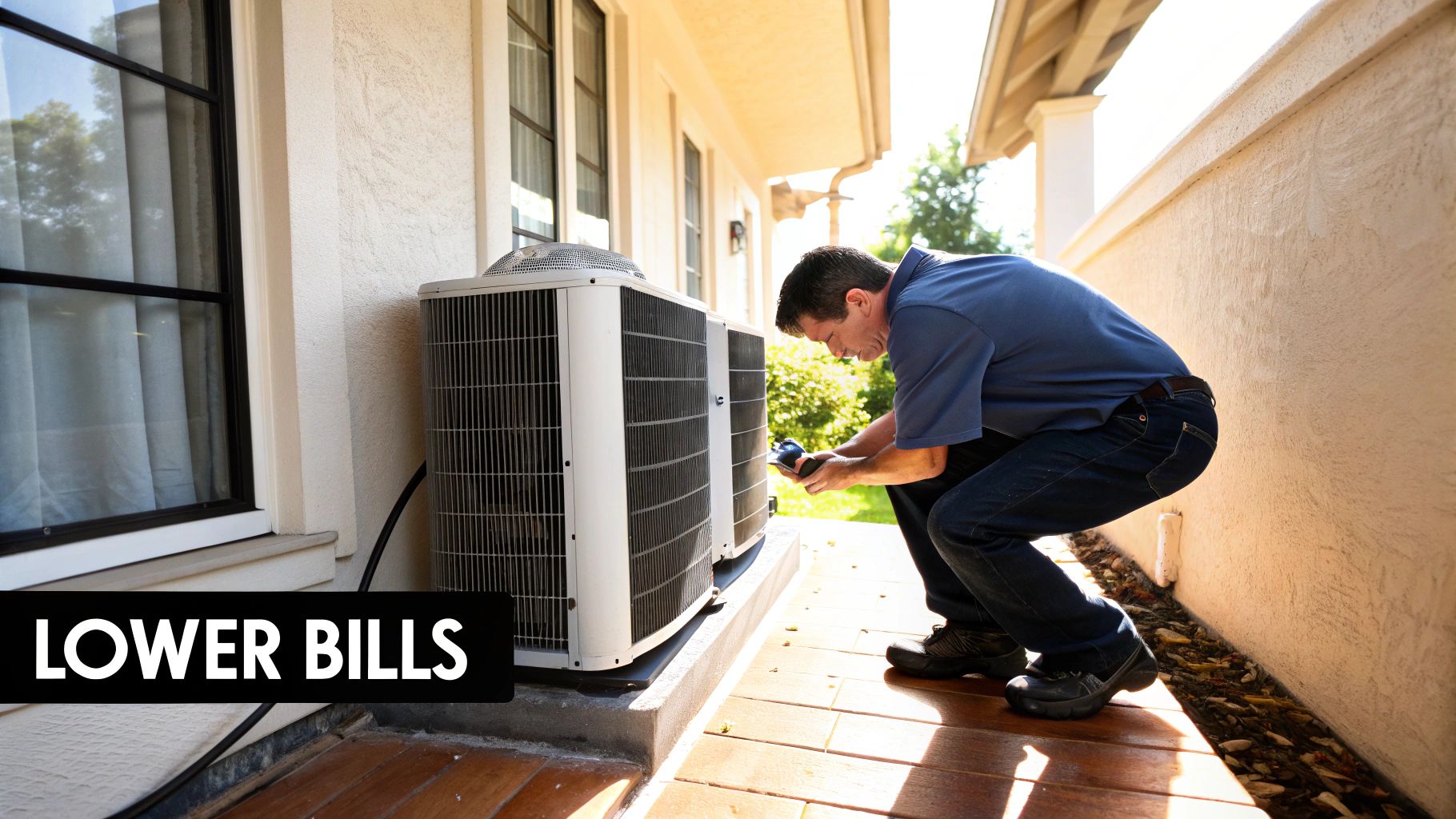
When you sign up for an AC maintenance plan, you’re not just buying a vague promise of performance. You’re paying for a specific, detailed service from a trained professional. It helps to pull back the curtain and see what a technician actually does, turning that abstract cost into a tangible, high-value process. Think of it like a multi-point inspection for your car, but for the machine that keeps your home livable.
A tune-up is a meticulous process focused on cleaning, inspecting, and calibrating your air conditioner’s essential parts. Each step is designed to boost efficiency, ensure safety, and extend its lifespan. This isn't a quick glance; it’s a systematic check to get your AC ready for a brutal summer.
Cleaning Critical Coils for Maximum Efficiency
One of the most important jobs is cleaning the two sets of coils: the evaporator coil inside and the condenser coil outside. These coils are like your AC's lungs; they need to breathe freely to work. Over time, they get caked with a nasty mix of dust, pollen, and grime that acts like an insulating blanket.
This layer of dirt forces your system to work much harder to absorb and release heat, which drives up your energy bills. A technician uses specialized, gentle cleaners to remove all that buildup, restoring the coils’ ability to transfer heat. This single action can cause a noticeable drop in your cooling costs.
Ensuring Proper Refrigerant Levels
Refrigerant is the lifeblood of your air conditioner. It’s the substance that circulates through the system, absorbing heat from inside your house and dumping it outdoors. If your system has the wrong amount of refrigerant, too little or too much, it will struggle to cool your home and can even suffer serious damage.
A technician will meticulously check the refrigerant pressure and compare it to the manufacturer’s exact specifications. If they spot a leak, they can find and fix it before it causes a major failure, like a fried compressor. Just topping off a low system without fixing the leak is a band-aid solution; a true pro gets to the root cause.
A common myth is that AC systems "use up" refrigerant like a car uses gas. They don't. A drop in refrigerant levels is almost always a sign of a leak, which needs a professional fix to prevent long-term damage and poor performance.
Inspecting All Electrical Components
Your AC is a powerful electrical appliance, full of connections, capacitors, and contactors. Vibrations can loosen wires over time, and intense heat can make components wear out. These issues aren't just a breakdown waiting to happen, they're a serious safety risk.
During a tune-up, the technician will:
Tighten all electrical connections: This prevents dangerous electrical arcing and keeps the power supply stable.
Test capacitors: These little parts provide the jolt of energy needed to start the motors. A weak capacitor means a motor will struggle to start, or won’t start at all.
Inspect contactors: These are the switches that control electricity flow. If they’re pitted or worn, the AC might run erratically or not at all.
Clearing the Condensate Drain Line
As your AC cools your home, it also pulls humidity out of the air. This moisture collects on the evaporator coil and drains away through a condensate line. This line is a prime spot for clogs from algae, mold, and sludge, especially in humid climates.
A clogged drain can cause water to back up and spill, leading to serious water damage to your ceilings, walls, or floors. Technicians use special tools to flush the line completely, making sure water flows freely and preventing a costly mess. It’s a simple but critical part of any maintenance plan. You can see how this fits into the bigger picture in our 2025 air conditioner tune-up checklist.
These methodical checks are the reason preventive maintenance is so valuable. Just keeping up with filter changes can cut utility bills by 5-15%. A detailed tune-up makes sure every part of your system works in harmony, delivering cool air efficiently and reliably when you need it most.
The Real Financial Savings of Proactive AC Care
Let’s be honest, an AC maintenance plan can feel like just another expense. But when you really dig into the numbers, it’s not a cost, it’s a financial shield. Think of it as a small, predictable investment that protects you from huge, unexpected bills down the road.
This isn't about some vague promise of "saving money." We're talking about tangible, measurable benefits that show up right on your bank statement. Let's break down the four key ways proactive care puts real money back in your pocket.
Lowering Your Monthly Energy Bills
First things first, a well-cared-for air conditioner is a cheaper air conditioner to run. It's like driving a car that’s overdue for an oil change with underinflated tires. Sure, it’ll get you from A to B, but it’s guzzling gas the whole way.
Your AC is no different. When its filters are clogged, its coils are caked in grime, and its refrigerant levels are off, it has to fight to do its job. That struggle means it runs longer and harder, which shows up as a higher number on your monthly electric bill. A simple tune-up gets it back to factory-fresh efficiency, leading to lower bills every single month.
Avoiding High-Priced Emergency Repairs
AC units have a knack for breaking down at the worst possible moments, usually in the middle of a brutal heatwave when every technician is booked solid. An emergency call isn't just about the part; you're paying a premium for after-hours service.
Here's a real-world example: a failed capacitor is a common problem that can bring your AC to a dead stop. On a regular weekday, that fix might run you a few hundred dollars. On a sweltering Saturday night? That same repair could easily cost double.
An AC maintenance plan costs, on average, less than a single emergency service call. By preventing these unexpected and expensive breakdowns, the plan effectively pays for itself, often in the first year.
This financial buffer is more important than ever. With growing demand, annual spending on HVAC repair is set to blow past USD 10 billion, with the market expanding by 7.4% each year.
Extending Your AC Unit's Lifespan
Buying a new air conditioner is one of the biggest investments you'll make in your home, easily running into thousands of dollars. An AC maintenance plan is the single most effective way to protect that investment and put off a full replacement for as long as possible.
Regular service is like an anti-aging routine for your equipment. Technicians lubricate moving parts to cut down on friction, tighten electrical connections to prevent shorts, and clean core components to stop them from overheating. Each small step adds up, helping your system hum along for years past its expected lifespan. Pushing back a $7,000 replacement by even two or three years is a massive financial win.
Of course, when that day does come, knowing your payment options is a huge help. Exploring HVAC financing options can ease the burden on your budget and make the transition much smoother.
Maintaining Your Manufacturer’s Warranty
Here’s a detail many homeowners miss: your manufacturer’s warranty isn’t unconditional. Most warranties for major parts and labor require you to show proof of regular, professional maintenance. If a critical component like the compressor gives out and you have no service records, the manufacturer can deny the claim.
That could leave you holding a repair bill for thousands of dollars. Your AC maintenance plan provides the documented service history you need to keep your warranty valid, acting as an essential insurance policy. This is just one of many smart strategies for reducing operational costs around the home that provides a major financial safety net.
Comparing AC Maintenance Plan Costs and Tiers
When you start looking into an AC maintenance plan, you'll find that not all service agreements are built the same. HVAC companies typically offer a few different packages, usually laid out in a tiered system. It’s a lot like choosing a car wash package: you can go for the basic rinse, the wash-and-wax, or the full interior-and-exterior detailing.
The same idea applies here. Getting a handle on these tiers is key to comparing plans not just by their price tag, but by the actual value they bring to the table for your specific situation. Let’s break down the common pricing structures and service levels you’re likely to see.
Decoding Basic, Mid-Level, and Premium Plans
Most companies sort their plans into three buckets: basic, mid-range, and premium. The names might vary, but what’s included is usually pretty consistent. A basic plan is your entry-level ticket, designed to cover just the essentials.
Stepping up to a mid-range plan throws in more value and convenience, while a premium plan is all about comprehensive coverage and total peace of mind. The real trick is matching the plan’s perks to your system’s age, your budget, and how much you’re willing to leave to chance. Here’s a look at what each tier usually offers.
The Foundational Basic Tier
A basic AC maintenance plan is the most budget-friendly choice, zeroing in on the core preventative tasks. It's a fantastic starting point, especially for homeowners with newer systems that are still protected by the manufacturer's warranty.
Here’s what a basic plan typically gets you:
One Annual Tune-Up: This covers the essential cleaning and inspection that keeps your system humming along efficiently.
Safety Checks: A technician will run through fundamental safety inspections on key electrical and mechanical components.
A Small Repair Discount: You’ll likely get a modest discount, often around 10%, on any future repairs you might need.
This tier ensures your system receives the minimum professional TLC needed to stay efficient and keep your warranty valid. It’s a solid, no-frills option for proactive homeowners.
This image helps visualize how maintenance tasks are typically scheduled over a year.
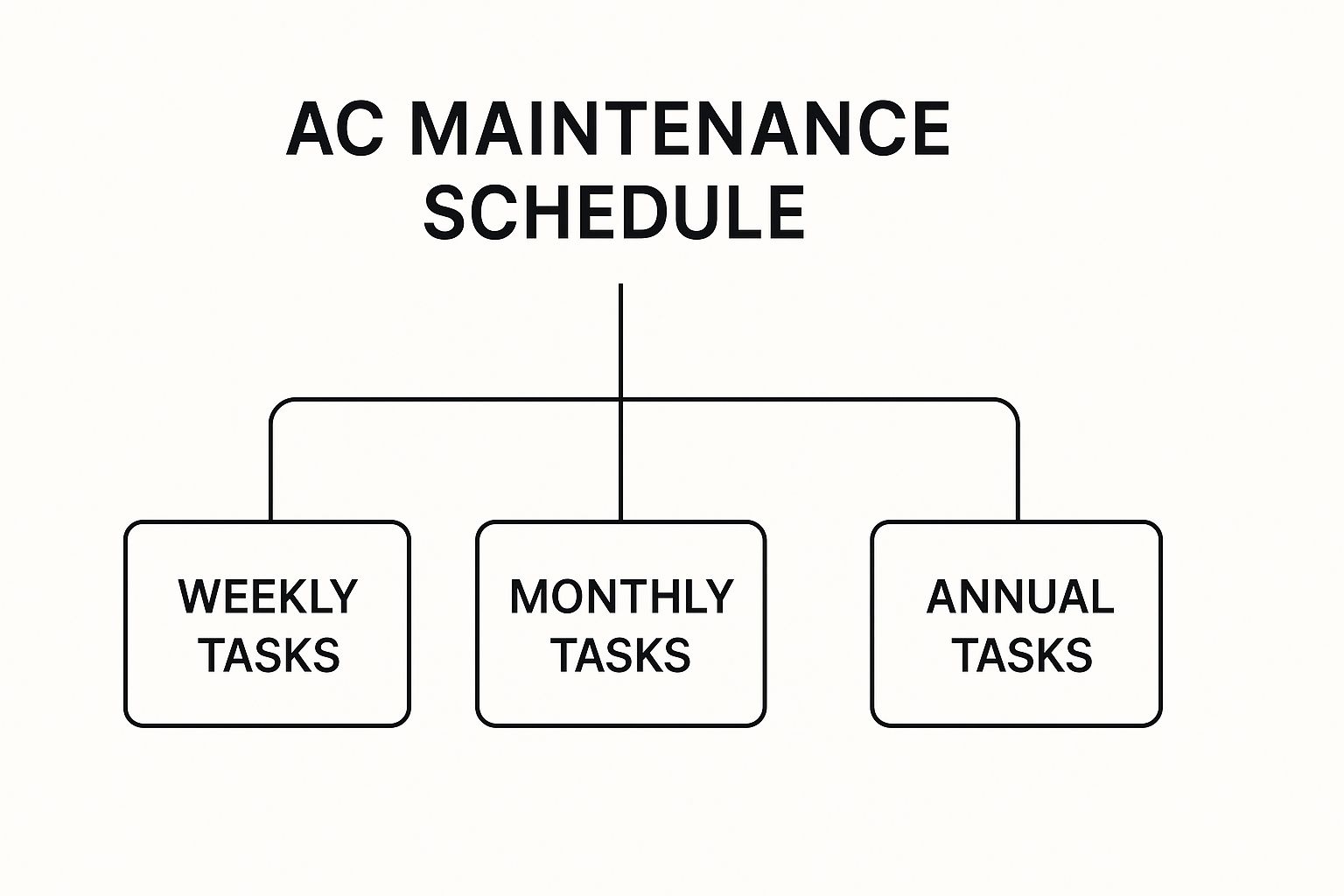
As you can see, while you handle the simple weekly or monthly tasks, the critical annual service is best left to the pros under a maintenance plan.
Stepping Up to a Mid-Range Plan
The mid-range tier is often the crowd favorite, hitting that sweet spot between preventative care and valuable perks. This level is a great fit for homeowners whose systems are a few years old and past the initial labor warranty period.
On top of everything from the basic tier, a mid-range plan usually adds:
Higher Repair Discounts: The discount on parts and labor gets a nice bump, typically to 15-20%.
Waived Diagnostic Fees: The company will often waive the standard trip or diagnostic fee if you need a repair call, which can save you $75-$150 right off the bat.
Priority Service: This is a big one. You get to jump to the front of the line for repair calls, a huge relief during a sweltering summer heatwave when everyone else is waiting.
This plan offers a much stronger financial safety net and a dose of convenience, making it a smart investment for most households.
The All-Inclusive Premium Plan
A premium AC maintenance plan is the top-shelf option, engineered for maximum protection and worry-free ownership. This tier is a perfect match for older systems that are more likely to have issues or for any homeowner who just wants to eliminate as much risk as possible.
A premium plan is about more than just maintenance; it’s a comprehensive service agreement that minimizes out-of-pocket expenses and guarantees the fastest possible response when things go wrong.
Premium plans bundle all the benefits of the lower tiers and then pile on significant upgrades. You can often expect perks like no overtime charges for after-hours emergencies. Some plans even include the cost of certain common replacement parts, like capacitors or contactors, which can fail without warning. The peace of mind that comes with this level of coverage is its biggest selling point.
Comparing AC Maintenance Plan Tiers
To make things clearer, let’s look at how these plans stack up side-by-side. Think of this as a quick-glance guide to help you see what you get at each level.
Feature | Basic Plan | Mid-Range Plan | Premium Plan |
|---|---|---|---|
Annual Tune-Ups | 1 Per Year | 1-2 Per Year | 2 Per Year (Heating/Cooling) |
Repair Discount | 10% | 15-20% | 20%+ or parts included |
Diagnostic Fee | Standard Fee | Waived | Waived |
Priority Service | Standard | Yes | Yes (Highest Priority) |
Emergency Service | Standard Hours | Standard Hours | No Overtime Fees |
Parts Coverage | None | None | Some Common Parts Included |
As you can see, the value grows significantly as you move up the tiers. The right choice depends entirely on your system's age, your budget, and how much you value the convenience and financial protection offered by the more comprehensive plans.
How to Choose the Right Plan and Provider
Picking the right AC maintenance plan isn’t just about finding the cheapest deal. It’s about making a smart, confident decision that protects your home’s comfort. With the right game plan, you can find a provider and a plan that deliver real security and value, not just a convincing sales pitch. This guide will walk you through vetting providers and picking a plan that truly works for you.
First things first, you need to look at your own situation. The perfect plan for a shiny new air conditioner is worlds away from what a 15-year-old unit on its last legs needs. Think about these key factors before you even start looking up HVAC companies.
Assess Your Home's Specific Needs
Every home has its own quirks, and your maintenance needs will be just as unique. Take a minute to size up your system and environment, as this will point you in the right direction.
Age and Condition of Your Unit: A brand-new AC might only need a basic plan to keep its warranty active. An older system, on the other hand, gets a huge boost from a beefier plan that includes repair discounts and priority service.
Local Climate Demands: Here in Tucson, your AC is working overtime for a huge chunk of the year. That kind of high-demand environment makes consistent, quality maintenance absolutely critical to head off surprise breakdowns.
Your Personal Budget: Figure out what you’re comfortable spending each year. Just remember to weigh the cost of the plan against what you’d pay for a single emergency repair out of pocket.
Once you have a solid idea of what you need, you’re ready to start checking out providers.
Vet Your HVAC Provider Thoroughly
The company you choose is every bit as important as the plan itself. The global air conditioning market is a massive USD 136.7 billion industry, with over 23,500 companies all wanting your business. To cut through that noise, you need a solid checklist to tell the real pros from the rest. You can discover more insights about the air conditioning market to see just how crowded the field is.
A great maintenance plan from a bad company is worthless. Your goal is to find a trustworthy provider first, then select the plan that matches your needs.
Here are the must-ask questions for any HVAC company before you even think about signing on the dotted line:
1. Are You Licensed, Bonded, and Insured? This one is completely non-negotiable. Ask for proof. Licensing means they meet state requirements, bonding protects you if they don't finish the job, and insurance covers any accidental damage to your property.
2. What Are Your Emergency Service Response Times? When your AC gives up the ghost in the middle of July, you need help, and fast. Ask them how they prioritize plan members and what their typical response time is for emergency calls during the busy season.
3. What Do Your Online Reviews Say? Check out reviews on Google, Yelp, and the Better Business Bureau. Don't get too hung up on a few negative reviews; what matters more is how the company responds. Professional and quick responses are a great sign.
4. What Is Excluded from the Plan? This is just as crucial as what’s included. You need absolute clarity on what isn't covered. Are certain parts, after-hours labor costs, or refrigerant top-offs excluded? The last thing you want is a surprise on your bill.
Having a structured approach to care is everything, and our guide on your essential HVAC maintenance schedule can help you understand what a quality service really looks like. By arming yourself with this information, you can confidently choose a provider and an AC maintenance plan that gives you true value and the peace of mind you deserve.
Common Questions About AC Service Plans
Even after seeing all the benefits, it's completely normal to have a few lingering questions before signing up for an AC maintenance plan. This is a smart investment in your home, and feeling confident in your decision is the most important part of the process.
We've pulled together some of the most common questions we hear from homeowners just like you. Our goal is to give you clear, straightforward answers to clear up any final hesitations, so you can make a choice that protects your cooling system for years to come.
Is an AC Maintenance Plan Really Worth the Money?
For the vast majority of homeowners, the answer is a resounding yes. It helps to think of the annual fee not as a cost, but as an investment in preventing much bigger, more stressful expenses down the road.
Honestly, the price of a basic plan is often less than you'd pay for a single emergency repair call, especially on a sweltering summer weekend. A plan saves you money in multiple ways: by keeping your system efficient, it lowers your monthly energy bills, and it helps your AC unit last longer, pushing back a multi-thousand-dollar replacement. Over its life, a good plan almost always pays for itself through savings and priceless peace of mind.
What Is the Difference Between a Plan and a Home Warranty?
This is a really important distinction, and it's one that trips a lot of people up. The key difference comes down to being proactive versus reactive.
An AC maintenance plan is proactive; its whole purpose is to keep your air conditioner from breaking down in the first place through regular, scheduled tune-ups. A home warranty is reactive; it's a service contract that helps cover repair costs after your system has already failed.
In fact, the two often work hand-in-hand. Many home warranty companies actually require you to show proof of regular professional maintenance before they’ll approve a claim for an AC repair. A maintenance plan gives you that service history, while the warranty acts as a safety net for major, unexpected failures.
How Often Should My AC Be Serviced?
The industry standard for an air conditioner is one professional service per year, and the ideal time is in the spring. This timing is strategic, it ensures your system is clean, fine-tuned, and ready to handle the intense workload of summer before the heat really kicks in.
Now, if you have a heat pump that handles both heating and cooling, then two services per year are recommended. This usually means one visit in the spring for cooling and another in the fall to prepare for heating season. Most service plans are structured around these annual or bi-annual visits.
Can I Just Do the AC Maintenance Myself?
While every homeowner should absolutely tackle some basic tasks, a professional tune-up goes much, much deeper. You should definitely be changing your air filters regularly (maybe once a month during peak season) and keeping the area around your outdoor unit clear of leaves and debris.
But a certified technician handles tasks that require specialized tools, safety protocols, and deep training. They can safely work with refrigerant, test complex electrical parts like capacitors, and give a deep clean to internal components like the evaporator coils and blower wheel. For more on what you can handle yourself, check out our guide on air conditioning basics for homeowners.
Trying to do these advanced tasks on your own isn't just risky, it can be downright dangerous, cause even bigger problems, and could even void your system’s manufacturer warranty.
Ready to protect your home's comfort and your wallet? The expert technicians at Covenant Aire Solutions are here to help. Our maintenance plans are designed to keep your system running at peak efficiency, preventing costly breakdowns and giving you the peace of mind you deserve. Visit us at https://www.covenantairesolutions.com to find the perfect plan for your home today.