
Life expectancy of a Heat Pump: Tips to Maximize Longevity
So, what's the real story on how long a heat pump should last? You can generally expect a modern heat pump to give you 15 to 20 years of solid performance. But think of that number as a benchmark, not a guarantee written in stone.

Understanding Your Heat Pump's Lifespan
A heat pump's lifespan is a lot like a car's. The manufacturer gives you an estimated mileage, but how long that car actually stays on the road depends on your driving habits, the road conditions, and whether you're keeping up with oil changes. It's the same deal with your heat pump. A handful of key factors will determine if your system makes it to the 20-year mark or bows out early.
Everything starts with the quality of the installation. You could have the best, most expensive model on the market, but if it's not installed correctly, it's going to struggle from day one. That leads to poor efficiency and a much shorter life. Just as crucial is consistent, professional maintenance; it’s like a regular checkup that catches small issues before they snowball into major, expensive failures.
Key Variables at Play
Your local climate also has a huge say in the matter. A heat pump in a mild, temperate area is going to have a much easier life than one battling the blistering Arizona summer heat or the brutal winters up north. Those extremes force the system to work much harder all year long, which naturally leads to more wear and tear.
A well-maintained heat pump is more than just a piece of equipment; it's a long-term investment in your home's comfort and energy efficiency. Homeowner diligence is the single most powerful factor in maximizing that investment.
Ultimately, you have a surprising amount of control over how long your unit lasts. To get a better sense of how this compares to other types of equipment, you can learn more about the average lifespan of an HVAC system in our related article.
Industry experts, like those at ServiceTitan.com, agree that a properly cared-for heat pump is a durable and reliable choice for home comfort. By focusing on quality installation and consistent upkeep, you can push its operational life toward the higher end of that 15 to 20-year range.
To give you a clearer picture, here’s a quick summary of what you can expect and the main variables we’ll be digging into.
Heat Pump Lifespan at a Glance
This table breaks down the average lifespan you can expect from a heat pump and highlights the most important factors that can either shorten or extend its working life.
Factor | Impact on Lifespan | Typical Lifespan Range |
|---|---|---|
Professional Installation | High | 15-20+ Years |
Regular Maintenance | High | 15-20+ Years |
Harsh Climate | Moderate to High | 10-15 Years |
Mild Climate | Low | 18-20+ Years |
Improper Sizing | High | 8-12 Years |
As you can see, factors like installation and maintenance aren't just minor details, they're the foundation for a long-lasting and efficient system.
Key Factors That Influence Heat Pump Longevity
Thinking a heat pump's lifespan is a fixed number is like assuming every car will last for exactly 100,000 miles. It just doesn't work that way. Some cars sail past 200,000 miles with basic care, while others seem to fall apart much sooner. The difference comes down to a few critical variables that decide whether your system enjoys a long, efficient life or suffers a premature decline.
While you can't control the weather, you have a surprising amount of influence over the two most important factors: the quality of the initial installation and the consistency of its maintenance. These two elements are the absolute foundation of a durable system, directly impacting its performance and how long it will ultimately last.
This infographic gives a great high-level view of the major elements that shape a heat pump's operational life.
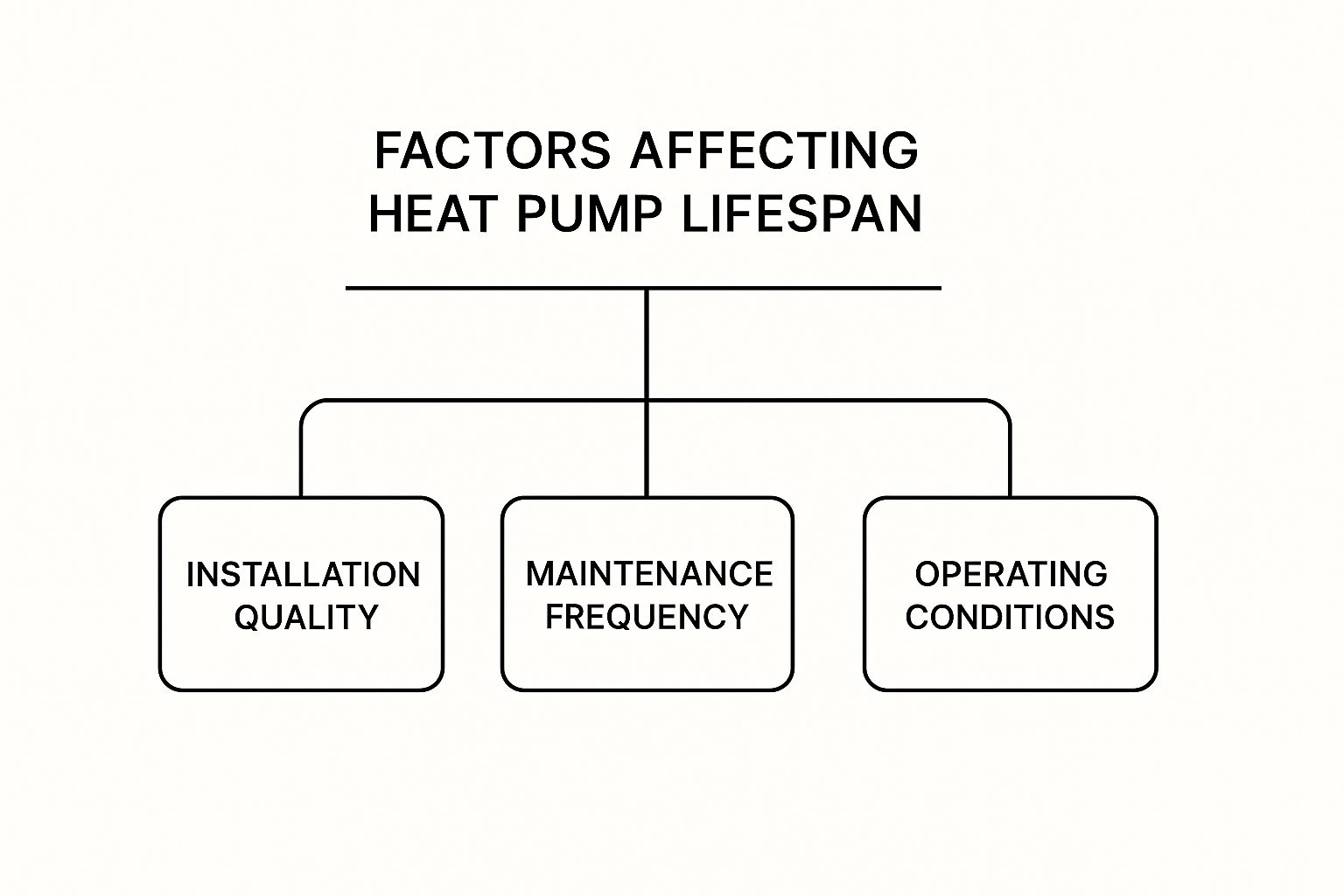
As you can see, a professional installation, diligent maintenance, and the environment where the unit operates are the three pillars of heat pump longevity. Let's break those down.
The table below offers a quick look at how these different factors can either extend or shorten your heat pump's operational life.
Impact of Key Factors on Heat Pump Lifespan
Factor | Positive Influence (Extends Life) | Negative Influence (Shortens Life) |
|---|---|---|
Installation Quality | Professional, certified installation ensures optimal refrigerant charge, airflow, and electrical connections. | DIY or poor installation leads to immediate inefficiency and component strain. |
Unit Sizing | Correctly sized unit runs smooth, efficient cycles, minimizing wear. | Oversized units short-cycle; undersized units run constantly, stressing the compressor. |
Maintenance | Regular professional tune-ups and filter changes keep the system running like new. | Neglected maintenance causes dirt buildup, component wear, and eventual failure. |
Climate | Mild climates with moderate temperatures place minimal stress on the system. | Extreme heat or cold forces the unit to work overtime, accelerating wear and tear. |
User Habits | Setting moderate, consistent temperatures reduces system workload. | Frequent, drastic temperature changes force the system to work harder. |
Ultimately, investing in professional installation and consistent upkeep gives you the best shot at a long and trouble-free service life from your heat pump, even in a demanding climate.
The Critical Role of Professional Installation
A flawless installation is the single most important day in your heat pump's life. Seriously. You can buy the best, most expensive unit on the market, but if it's installed poorly, it will never perform as it should. This leads to inefficiency and constant strain that wears down components far too quickly.
A professional installation ensures every little detail is handled correctly, from charging the refrigerant lines to securing the electrical connections. In fact, data shows that an improper installation can slash a system's performance by up to 30%, compromising both its efficiency and its lifespan from day one. Regular upkeep is what keeps those energy savings going and pushes your heat pump's life toward that 15 to 20-year mark.
A certified technician makes sure the unit is perfectly matched to your home's unique needs, preventing a whole host of issues that can dramatically shorten its life. This brings us right to our next point: sizing.
Why Correct Sizing Is Non-Negotiable
A heat pump that’s too big or too small for your home is just destined for problems. An oversized unit will short-cycle, which is the HVAC equivalent of constantly starting and stopping your car in heavy traffic. It blasts your home with conditioned air, satisfies the thermostat way too fast, and then shuts off, only to repeat the whole process a few minutes later.
This constant starting and stopping creates excessive wear and tear on the compressor, which is the heart of your system and its most expensive component. On the flip side, an undersized unit will run almost constantly, desperately struggling to keep up with your home's heating and cooling demands. This relentless operation also leads to premature failure. If you want to dive deeper, you can check out our guide on calculating the right HVAC size for your home.
Climate and Environmental Demands
It’s no surprise that where you live plays a huge role in your heat pump's longevity. A unit humming along in a moderate climate like coastal California will experience far less stress than one battling the scorching summers of Tucson or the frigid winters of Minnesota.
Extreme temperatures force the system to work much harder and for much longer, accelerating the wear on all its mechanical parts.
Think of it this way: a system in a harsh climate is like a marathon runner, constantly pushing its limits. A system in a mild climate is more like a casual jogger, experiencing far less strain over its lifetime.
While you can't just pick up and move, understanding your climate's impact highlights why it's so important to choose a durable, high-quality brand and stick to a strict maintenance schedule. This consistent care is your best defense against the elements.
A Practical Maintenance Plan to Extend Its Life
Getting the most out of your heat pump’s lifespan doesn’t just happen. It’s the direct result of consistent, proactive care. Think of it like a car: a small investment in regular oil changes and tune-ups is what prevents catastrophic engine failure down the road.
The best strategy for helping your system run efficiently for 15 to 20 years, or even longer, is a simple maintenance plan. This approach combines easy tasks you can handle yourself with an annual professional service call, creating a powerful defense against premature wear and tear.
Simple Steps for Every Homeowner
You don’t have to be an HVAC expert to play a huge role in your heat pump's health. These straightforward tasks, when done regularly, make a massive difference in performance and longevity.
Change the Air Filter Religiously: A clogged filter is the number one cause of system strain. It chokes the airflow, forcing the unit to work overtime. This leads to higher energy bills and puts unnecessary stress on critical components. Check it monthly and plan to replace it every 1 to 3 months.
Keep the Outdoor Unit Clear: Your outdoor condenser needs room to breathe. Make it a habit to clear away leaves, grass clippings, branches, and anything else that collects around the unit. You want at least two feet of clearance on all sides for proper airflow.
Visually Inspect the Unit: Once a month, just take a quick walk around the outdoor unit. Look for any visible damage to the fins or panels. Listen for any weird noises, rattles, squeals, or hums, that weren't there before. Catching these little things early can stop them from turning into big, expensive problems.
These simple habits are your first line of defense, but they're most effective when paired with some expert oversight.
The Professional Tune-Up Checklist
While homeowner maintenance is vital, an annual professional tune-up is non-negotiable if you want to maximize your heat pump's lifespan. A certified technician has the tools and expertise to inspect, clean, and calibrate parts of the system that are well beyond the scope of a DIY check.
An annual professional tune-up is like a comprehensive health physical for your heat pump. It identifies underlying issues, optimizes performance for the upcoming season, and directly contributes to a longer, more reliable operational life.
A thorough professional service should always include several key actions to get every part of your system in top shape.
Inspecting and Cleaning Coils: Dirty evaporator and condenser coils can’t transfer heat effectively, forcing your system to run longer and harder to do its job.
Checking Refrigerant Levels: An incorrect refrigerant charge, either too high or too low, can severely damage the compressor, which is the heart of your entire system.
Testing Electrical Connections: A pro will tighten all electrical connections and measure voltage and current to ensure everything is running safely and efficiently.
Lubricating Moving Parts: Proper lubrication cuts down on friction and wear on motors and fans, which is key to extending their functional life.
For homeowners in Tucson and the surrounding areas, we've put together a detailed overview of what a comprehensive service includes in our guide to professional heat pump maintenance.
Professional maintenance by qualified HVAC contractors is a key component of a practical maintenance plan. For those interested in the broader business aspects of this industry, you can learn about the various financial tools and support available to these essential service providers by exploring resources on financing for HVAC contractors.
Warning Signs Your Heat Pump Is Failing
Even a heat pump that's been babied with regular maintenance will eventually start showing its age. The key is catching those early warning signs before a small hiccup snowballs into a full-blown system meltdown.
Think of these symptoms as your heat pump’s way of asking for help. Paying attention gives you the chance to schedule a repair on your terms, instead of being forced into an emergency replacement during a brutal Tucson summer.
Spotting trouble early doesn't just save you from discomfort; it can prevent more expensive, widespread damage. All you have to do is pay attention to how your system sounds, feels, and performs. The signals are often subtle at first but get louder as parts wear down.
Unusual Noises and Sounds
One of the most obvious red flags is a sudden change in the sounds your heat pump makes. You're familiar with its normal operating hum, so any new, alarming noises are a clear sign that something is wrong under the hood.
A loud grinding or metallic scraping noise, for instance, usually points to a serious mechanical failure, like worn-out motor bearings. It’s the system’s equivalent of a grinding gear in your car; it needs immediate attention.
Likewise, a high-pitched squealing could mean a belt is failing or a motor desperately needs lubrication. Don't just turn up the TV to drown these sounds out; they’re clues that critical components are under serious stress.
Just like a strange rattle in your car, an unusual noise from your heat pump is a direct signal of mechanical distress. Ignoring it can turn a small, fixable issue into a catastrophic component failure.
Figuring out what these sounds might mean helps you describe the problem clearly to a technician. For more help diagnosing HVAC issues, take a look at our ultimate AC troubleshooting guide to fix your cooling issues fast.
Performance and Efficiency Decline
Beyond strange noises, a noticeable drop in performance is a huge indicator that your heat pump is on its last legs. If you notice your home just isn't as comfortable as it used to be, or the system seems to run constantly without hitting the temperature on the thermostat, that's a problem.
Here are a few common performance issues to keep an eye on:
Weak Airflow: Does the air coming from your vents feel weak or barely there? This could be caused by anything from a hopelessly clogged filter to a dying blower motor, and it's crippling your system's ability to move conditioned air.
Constant Cycling: Is your heat pump turning on and off more often than it used to? This "short-cycling" puts a ton of extra wear on the compressor and can point to issues like a refrigerant leak or an electrical fault.
Unexpectedly High Energy Bills: A sudden, unexplained spike in your utility bills is often the very first sign of declining efficiency. Your heat pump is having to work much harder, and burn more electricity, to do the same job it used to do easily.
Knowing When to Repair or Replace Your Unit
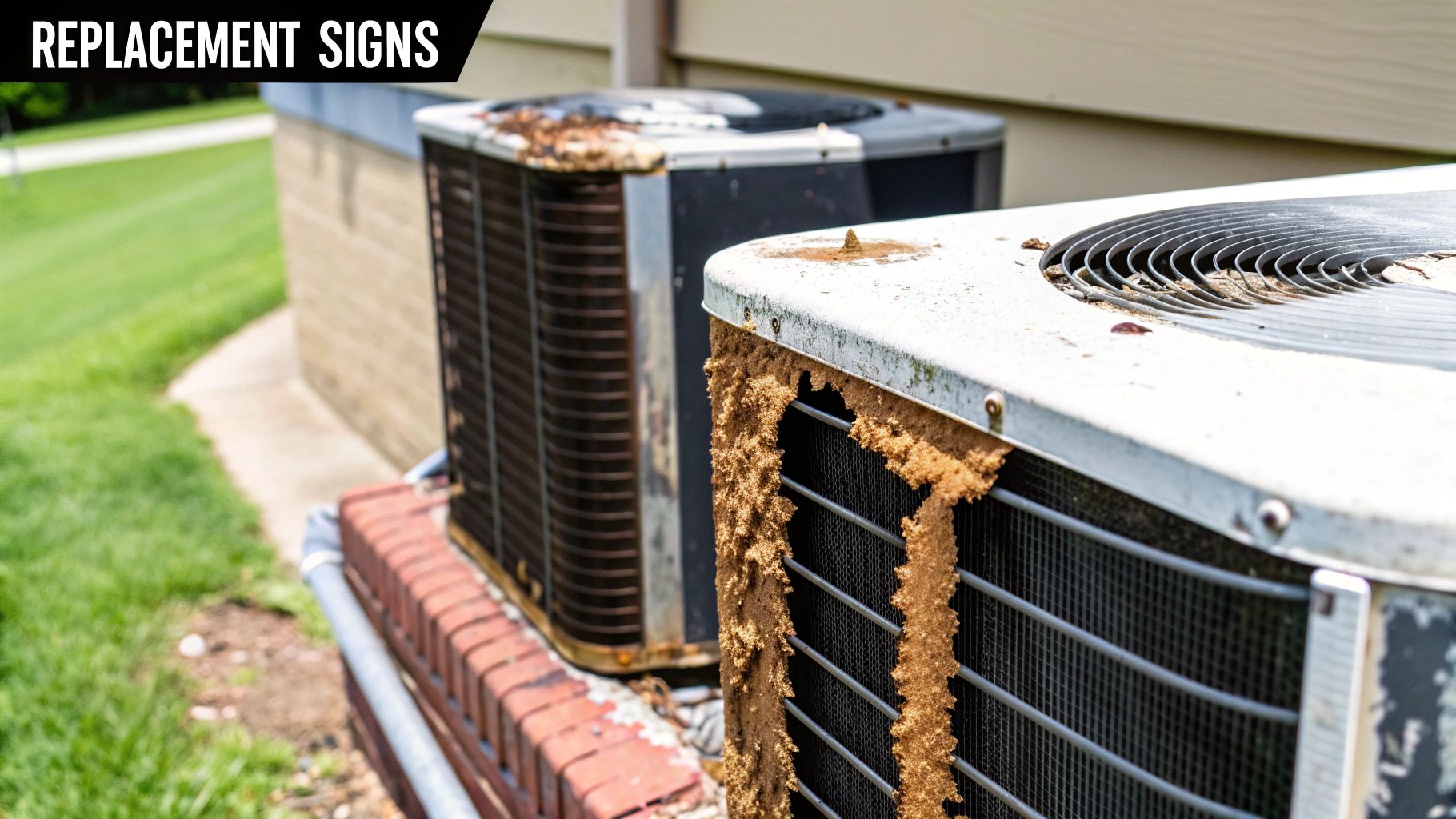
It’s a moment every homeowner dreads: getting a steep repair quote for an aging heat pump. That sinking feeling immediately sparks a tough question: do you sink more money into the old unit, or is it smarter to put that cash toward a new, more efficient system?
Striking the right balance between the short-term hit to your wallet and long-term savings is key. Luckily, there’s a handy guideline the pros use to get a quick gut check.
It’s called the ‘5,000 Rule,’ and it’s a great way to get a clear financial benchmark. Just multiply your heat pump’s age (in years) by the estimated repair cost.
If that number climbs over $5,000, replacement starts to look like the more sensible financial move.
For example, say you have an 11-year-old unit and get a $500 repair quote. Multiplying those gives you $5,500. According to the rule, it’s probably time to start shopping for a new system. This simple math helps you avoid throwing good money after bad, especially when a unit is already getting on in years.
Key Factors Beyond the Math
While the 5,000 Rule is a fantastic starting point, it's not the only thing to consider. Your unit's age is a huge piece of the puzzle. If your heat pump is already past the 12-year mark, even a seemingly moderate repair might be a bad investment. Why? Because other components are likely not far from failing themselves.
Think about these other critical points before making a final call:
Frequency of Repairs: Have you had a technician out multiple times in the last couple of years? A pattern of breakdowns is a huge red flag that your system is becoming unreliable and more expensive failures are probably just around the corner.
Declining Efficiency: Are your energy bills creeping up month after month? That’s a classic sign your unit is losing its efficiency and working way harder than it should. A new high-efficiency model can deliver serious long-term savings, helping to offset the upfront cost.
Outdated Technology: Heat pump technology has come a long way in the last decade. The market is booming, projected to hit USD 134.8 billion by 2030, because demand for hyper-efficient tech is soaring. These advancements mean today’s units offer far better performance and durability. You can learn more about these market trends and technological improvements on PrecedenceResearch.com.
Ultimately, deciding whether to repair or replace is a major decision. By looking at the unit's age, its repair history, and how it's performing day-to-day, you can make a smart choice that keeps your home comfortable and your budget in check. For a more detailed breakdown, take a look at our guide on whether it is time to replace your HVAC system or repair your AC.
Frequently Asked Questions About Heat Pump Lifespans
Even after breaking down all the factors, you might still have a few questions rolling around in your head. Let's tackle some of the most common ones we hear from homeowners to help you feel more confident about managing your system.
Can a Heat Pump Really Last 30 Years?
While it’s not something you should count on, it is possible for a top-of-the-line heat pump to hit the 30-year mark. But this is the exception, not the rule. For a unit to achieve that kind of incredible lifespan, you'd need a perfect storm of ideal conditions.
We’re talking about a flawless professional installation, a mild climate that doesn’t push the system to its limits, and a strict, unbroken record of annual maintenance from the day it was installed. For the vast majority of systems out there, the realistic life expectancy of a heat pump is going to land squarely in the 15 to 20-year range.
Why Do Heat Pumps in Moderate Climates Last Longer?
It really just boils down to wear and tear. Think of a heat pump in a place like coastal California as a "casual jogger": it runs smoothly without constant, intense strain. It doesn't have to cycle on and off as frequently, and its run times are much shorter.
Now, picture a unit in a location with brutal summer heat or freezing winters. That system is a "marathon runner," constantly pushing its limits just to keep the house comfortable. That relentless workload puts a huge amount of stress on the compressor, fans, and other vital parts, which naturally leads to a shorter operational life.
The less stress a system endures, the longer its components will last. Climate is one of the biggest sources of operational stress, making location a major factor in heat pump longevity.
This is exactly why staying on top of maintenance is so critical in harsh climates. It’s your best line of defense against the accelerated aging that extreme weather causes.
Is It Worth Repairing a 15-Year-Old Heat Pump?
This is often a tough judgment call. At 15 years, your system is already at or very near the end of its expected service life. A small, inexpensive fix might get you through another season, but pouring significant money into a major repair, anything over a few hundred dollars, is usually not a smart financial move.
Before you make a decision, think about these key points:
Declining Efficiency: Even if it’s "working," a 15-year-old unit is nowhere near as efficient as a modern one. You're already paying more on your energy bills every single month.
Impending Failures: When one major component fails on an old system, it's often a sign that others are right behind it. You could easily be looking at another expensive repair bill in the near future.
Technology Advancements: New heat pumps are a world away from older models. They offer much better performance, run more quietly, and come with smart features that can seriously improve your home's comfort.
In almost every scenario, putting that repair money toward a new, high-efficiency system is the better long-term decision for your wallet and your comfort.
If you're facing tough questions about your aging heat pump, the expert team at Covenant Aire Solutions can provide an honest assessment and clear options. Whether it’s a reliable repair or a high-efficiency replacement, we’re here to help you make the best choice for your Tucson home. Visit us online to schedule your consultation today.