
What Is a Furnace Heat Exchanger and Why It Matters
A furnace heat exchanger is the sealed, metal heart of your furnace, responsible for safely transferring heat from the roaring combustion process into the air that warms your home. Think of it as your furnace’s engine; it generates all the warmth without ever letting dangerous exhaust fumes mix with the air you breathe.
Your Furnace Heat Exchanger Explained Simply
To really get a handle on how your furnace works, you have to start with its most important part: the heat exchanger. This component is the unsung hero of your heating system, working behind the scenes every single time your thermostat calls for heat. It's the critical barrier that keeps your family safe while making your home cozy.
Its core job is simple but absolutely vital. It holds the hot, toxic gases produced by the furnace's burners and transfers their heat to the air your blower fan pushes through the system. This process, known as indirect heat transfer, is what guarantees the air warming your rooms stays clean and completely separate from combustion byproducts like carbon monoxide.
The Role of the Heat Exchanger
Picture a hot, sealed metal box. Inside this box, burning fuel creates intense heat. On the outside of that box, a fan blows cool air from your home across its surface. The metal heats up and passes that warmth to the air, which is then sent through your ducts. All the while, the dangerous fumes inside the box are safely vented outside your house.
That's precisely what a furnace heat exchanger is. This brilliant design principle has roots stretching all the way back to the Industrial Revolution, when early inventors developed shell and tube systems to make steam engines more efficient. The basic concept of separating two substances while transferring heat between them laid the groundwork for the safe and effective furnaces we rely on today in Tucson.
At its core, the furnace heat exchanger is a safety device. Its primary job is to keep the byproducts of combustion completely isolated from your home’s breathable air supply, making it the single most important component for safe furnace operation.
For homeowners, understanding this part is key to spotting potential problems and appreciating why regular maintenance is so important. The integrity of the heat exchanger directly impacts both your furnace's performance and your family's well-being. To get a deeper look at its function, check out our guide on how a heat exchanger works and its different types.
To make it even clearer, here's a quick breakdown of its most important attributes.
Quick Guide to Your Furnace Heat Exchanger
This table sums up the heat exchanger's main job, what it's made of, and why it's so critical for your safety.
Component Aspect | Key Details |
|---|---|
Primary Function | To transfer heat from burning fuel to the air circulated in your home. |
Safety Role | Acts as a critical barrier, keeping toxic combustion gases out of your air supply. |
Common Materials | Typically made from durable metals like stainless steel or aluminized steel. |
Location | Housed inside the furnace cabinet, directly above the burners. |
Keeping these key details in mind helps you understand just how crucial this single part is to the entire heating process.
How Your Furnace Safely Creates Warm Air
Now that we know the heat exchanger is the heart of safe heating, let's pull back the curtain and see how it actually works. The whole process is a beautifully simple chain of events that kicks off the moment you nudge your thermostat up, turning chilly winter air into the cozy warmth that fills your home. It’s a sequence designed from the ground up for both safety and efficiency.
Think of it like boiling a pot of water on the stove. The flame heats the metal pot, and the pot then heats the water inside it. The critical part? The flame and its exhaust never actually touch the water. Your furnace's heat exchanger works on that exact same principle of indirect heat transfer.
This separation is what keeps the air you breathe completely isolated from the toxic combustion gases, like carbon monoxide. It's the single most important safety feature that allows us to have a gas furnace inside our homes in the first place.
The Heating Process Step by Step
The journey from a cold room to a comfortable one only takes a few minutes, and it follows a very specific order. Each step triggers the next, creating a safe and reliable heating cycle that all starts with a simple signal.
Thermostat Call for Heat: Your thermostat senses the room temperature has dipped below your setting and sends an electrical signal to the furnace.
Ignition Sequence: The furnace's control board gets the message and begins the heating cycle. It opens the gas valve to feed fuel to the burners, and an ignitor sparks the flame.
Burners Heat the Exchanger: The powerful flames heat the metal walls of the heat exchanger. This metal chamber gets incredibly hot, very fast.
This diagram shows the straightforward path heat takes from the burner, into the heat exchanger, and finally, into your home's air.
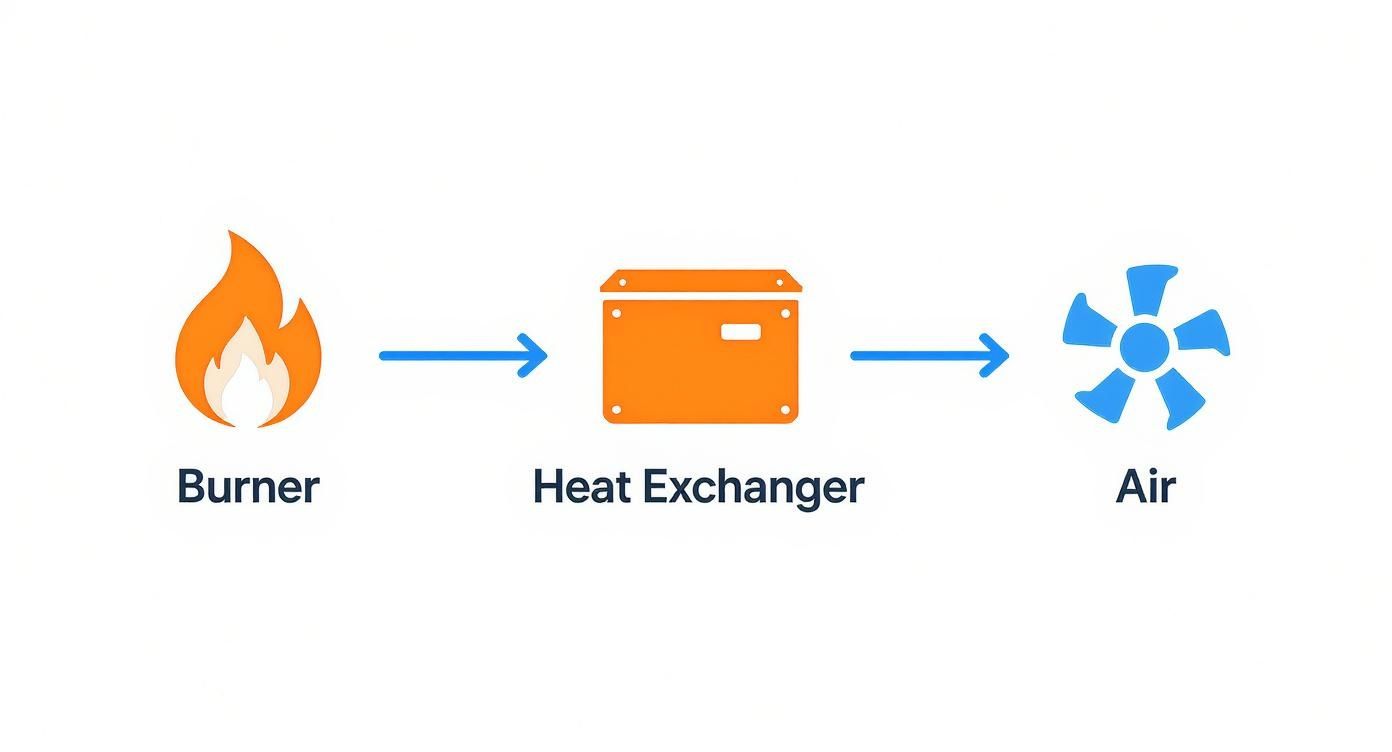
As you can see, the combustion gases and your breathable air are kept on completely separate paths. They never mix.
Blower Activates: After a brief pause that allows the heat exchanger to get hot enough, the furnace's blower motor kicks on, pulling cooler air from your home through the return air ducts.
Heat Transfer Occurs: The blower fan pushes this air over the hot exterior surface of the heat exchanger. As it passes over the hot metal, the air absorbs the heat and warms up instantly.
Warm Air Distribution: This newly heated air is then sent through your ductwork and out of the supply vents in each room, raising the temperature of your home.
Exhaust Venting: At the same time, all the dangerous byproducts from the burners, especially carbon monoxide, stay safely contained inside the heat exchanger. They are then pushed out of your house through a flue pipe.
This entire sequence repeats in cycles until your home reaches the temperature you set on the thermostat.
Primary and Secondary Heat Exchangers
Older, standard-efficiency furnaces generally have just one primary heat exchanger. It does the heavy lifting of transferring heat from the burners. The downside is that a lot of heat still escapes up the flue along with the hot exhaust gases.
Modern high-efficiency furnaces, often called condensing furnaces, are smarter. They're designed to wring out every last bit of that wasted heat by adding a secondary heat exchanger.
After the hot exhaust fumes travel through the primary heat exchanger, they’re sent to a secondary one. This second stage pulls even more heat from the gases, cooling them down so much that they condense into acidic water, which is safely drained away.
This two-stage process is what allows these furnaces to hit amazing efficiency numbers. Today's gas furnace heat exchangers can achieve efficiency ratings anywhere from 80% to as high as 98.5%. This evolution, often assisted by a draft inducer motor to control airflow, is a major reason for the 40-60% reduction in household heating emissions we've seen in recent decades.
By capturing more usable heat from the same amount of fuel, these advanced systems can seriously lower your utility bills and shrink your home's environmental footprint.
Warning Signs of a Cracked Heat Exchanger
Spotting a problem with your furnace's heat exchanger isn't just about performance; it's one of the most critical safety issues you can face as a homeowner. Even a hairline crack can compromise the barrier that keeps toxic combustion fumes safely away from the air your family breathes. We're going to walk through the subtle but serious warning signs so you know exactly what to look for.
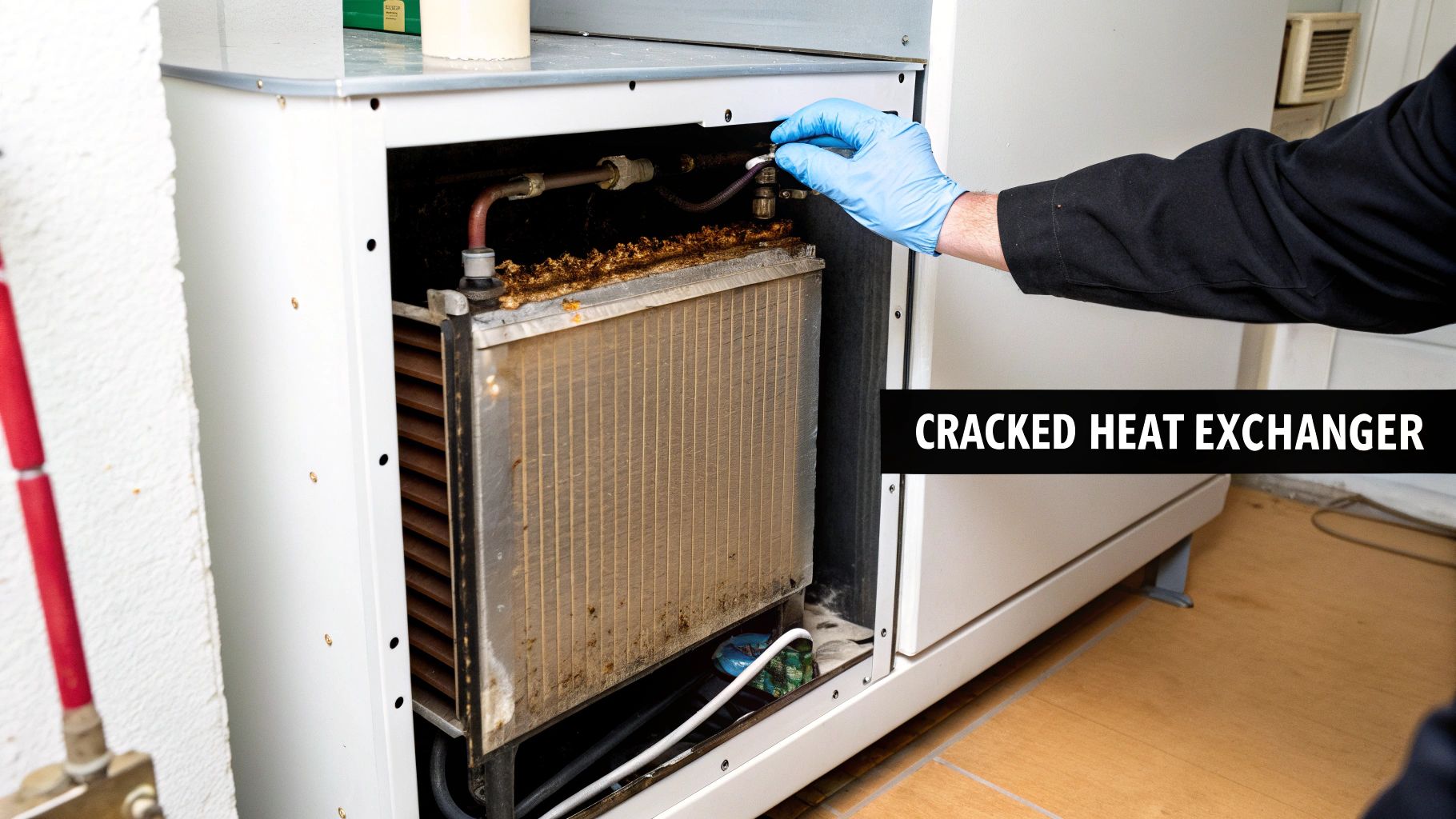
When that heat exchanger fails, dangerous byproducts like carbon monoxide can mix directly into your home's air supply. Learning to recognize the red flags is an essential part of keeping your home safe.
Unusual Smells and Soot Buildup
Often, the very first clue is something you smell. A strong, sharp odor, sometimes described as smelling like formaldehyde, is a major red flag for incomplete combustion. A crack in the heat exchanger messes with the precise air-to-fuel mixture inside the burner chamber, so the gas can't burn cleanly.
This inefficient process also creates soot, a fine black powder. You might find black streaks forming around your furnace vents or see a layer of soot collecting inside the furnace cabinet. That black powder is unburned carbon, and it's a dead giveaway that something is very wrong with the combustion process.
Changes in the Burner Flame
Take a look at your furnace's burner flames through the small observation window. They should always be a steady, consistent blue. If you see flames that are yellow, dancing around, or flickering wildly, it's a sign that the airflow inside the combustion chamber is off.
A crack allows air from your home's blower to get into the chamber, disturbing the flame. This isn't just an efficiency problem; it's a powerful visual clue that the component's seal has been broken.
Think of it like a candle flame in a drafty room. The steady, controlled burn is disrupted by outside air. In your furnace, that "draft" is coming from a crack where it shouldn't be, creating an unsafe and unstable flame.
Audible and Visual Furnace Distress Signals
Beyond smells and strange flames, a failing heat exchanger can create physical symptoms you can both see and hear. These are distress signals from your furnace that you should never ignore. While many homeowners might overlook these sounds, they are among the clear signs your furnace needs repair and professional attention.
Rattling or Banging Noises: As your furnace cycles on and off, the metal heat exchanger expands and contracts. A crack in that metal will cause popping, rattling, or banging sounds as the fractured edges pull apart and then slap back together.
Visible Cracks or Corrosion: During a professional tune-up, a technician might find visible stress cracks, rust spots, or other corrosion on the heat exchanger itself. These are clear signs of metal fatigue and an impending failure.
Water Pooling Near the Furnace: If you have a high-efficiency condensing furnace, a puddle of water on the floor can mean the secondary heat exchanger has failed. This part is built to handle corrosive condensate, and a leak means there's a serious internal breach.
It can be tough to know what's normal and what's a real warning sign. This simple comparison should help clear things up.
Normal Furnace Operation vs Cracked Heat Exchanger Warning Signs
This table helps illustrate the difference between safe furnace behavior and indicators of a potentially cracked heat exchanger.
Symptom | Normal Furnace Behavior | Potential Cracked Heat Exchanger Sign |
|---|---|---|
Furnace Flame | The flame is steady and blue. | The flame is yellow, flickering, or appears to dance. |
Operating Sounds | A low hum and the sound of air moving are typical. | Loud banging, popping, or rattling noises upon startup or shutdown. |
Visible Condition | Minimal dust on the exterior cabinet. | Soot buildup inside the furnace or black streaks around registers. |
Smell | You may notice a faint dusty smell when it first turns on for the season. | A persistent, strong, and unpleasant odor during operation. |
If you notice any of the signs in the right-hand column, the next step is crucial: turn your furnace off immediately and call a certified HVAC professional. These symptoms point to a serious safety hazard that requires an expert diagnosis right away.
Understanding Carbon Monoxide Risks From Your Furnace
While all the warning signs of a failing heat exchanger are serious, they really all point to one critical threat: carbon monoxide poisoning. This is exactly why it’s so important to understand the heat exchanger’s role as a non-negotiable safety barrier. When that barrier is broken, it's not just an equipment problem, it's a life-threatening emergency.
A crack or hole completely compromises the seal that’s meant to keep combustion gases safely contained and vented outside. This breach allows carbon monoxide (CO), an invisible, odorless gas created by burning fuel, to leak out and mix directly with the warm air your furnace circulates through your home's ductwork. Suddenly, every vent in every room becomes a potential entry point for this deadly gas.
Because you can't see, smell, or taste it, CO can build up to lethal levels without anyone even noticing until it's too late. The initial symptoms of CO poisoning are tragically easy to mistake for the flu, including headaches, nausea, dizziness, and confusion.
The Silent Danger of a CO Leak
What makes carbon monoxide so dangerous is how it hijacks your body. When you inhale CO, its molecules bind to your red blood cells more than 200 times more effectively than oxygen can. This process literally starves your vital organs, especially your brain and heart, of the oxygen they need to function.
Even low-level exposure over a long period can cause serious, lasting health issues. High concentrations, on the other hand, can lead to incapacitation and death within minutes. This is why a cracked furnace heat exchanger is considered one of the most urgent emergencies a homeowner can face. The very system designed to keep your family warm becomes a direct threat to their safety. To learn more, check out our detailed guide on what causes carbon monoxide poisoning in a home.
Immediate Steps to Take for a Suspected CO Leak
If your carbon monoxide detector goes off or if anyone in your home suddenly develops flu-like symptoms while the heat is on, you need to act immediately. Don't waste time trying to find the source of the problem yourself.
Your family’s well-being is the only thing that matters. Follow these steps without a moment's hesitation:
Evacuate Immediately: Get everyone, including pets, out of the house and into the fresh air right away.
Call for Emergency Help: Once you're in a safe location outside, call 911 or your local fire department. They have the proper equipment to test for CO and will let you know when it’s safe to go back inside.
Do Not Re-enter: Stay outside until emergency responders have given you the official all-clear. Just opening a few windows isn't enough to clear out a dangerous concentration of CO.
Contact an HVAC Professional: After the immediate danger is over, call a certified HVAC company. Do not use your furnace again until a qualified technician has inspected, repaired, or replaced it.
These steps are non-negotiable and could be the difference between life and death. Always treat a CO alarm as a real emergency until a professional tells you otherwise.
A properly functioning carbon monoxide detector is your first and most important line of defense against poisoning. It is an essential home safety device that provides an early warning when the invisible becomes a threat.
The Critical Role of CO Detectors
The absolute best way to protect your family from a CO leak is with working carbon monoxide detectors. These devices are affordable, simple to install, and absolutely essential for any home that has fuel-burning appliances like a gas furnace, water heater, or fireplace.
For the best protection, follow these simple placement and maintenance guidelines:
Install on Every Level: You should have at least one CO detector on each floor of your home, paying special attention to areas near bedrooms.
Check Placement: Install detectors on a wall about five feet off the ground or on the ceiling. Keep them away from corners or vents where drafts could interfere with their readings.
Test Regularly: Get in the habit of testing your detectors once a month by pressing the "test" button.
Replace Batteries: Change the batteries at least once a year. A good time to do this is when you change your clocks for daylight saving time.
Mind the Expiration Date: CO detectors don't last forever. The sensors wear out. Replace the entire unit based on the manufacturer's instructions, which is typically every 5-7 years.
Lifespan, Maintenance, and Replacement Costs
Now that we’ve covered the serious risks of a cracked heat exchanger, the practical questions come next. How long can you really expect this part to last? And what’s the damage to your wallet when it finally fails? It all boils down to a mix of maintenance, age, and a big financial decision: repair the part or replace the entire furnace?
A well-maintained furnace heat exchanger should give you 15 to 20 years of service. But that’s not set in stone. Several factors can shorten that lifespan, which is why proactive care is so important for every Tucson homeowner.
The single best thing you can do to get the most life out of your heat exchanger is to schedule regular professional maintenance. Annual inspections give a technician the chance to clean components, check for proper combustion, and spot the early signs of stress or corrosion long before they turn into a dangerous crack.
Factors That Influence Heat Exchanger Lifespan
Just like any major appliance, how you treat your furnace matters. A few key habits can make a huge difference in how long your heat exchanger holds up against the intense cycle of heating and cooling.
Regular Maintenance: Skipping annual tune-ups allows dirt and soot to build up. This buildup can make the heat exchanger overheat, weakening the metal over time.
Proper Airflow: Clogged air filters are enemy number one. Restricted airflow makes the whole system run longer and hotter, putting a ton of stress on the heat exchanger.
Correct Sizing: A furnace that’s too big for your home will turn on and off constantly, a process called "short-cycling." This rapid expansion and contraction of the metal causes accelerated wear and tear, leading to premature failure.
Repair vs. Replacement: The Financial Reality
When a technician confirms you have a cracked heat exchanger, you’re at a crossroads. Do you repair it, or do you replace the entire furnace? While a repair might sound cheaper at first glance, replacing the whole unit is almost always the smarter and safer move, especially if your furnace is over 10 years old.
Here’s why: replacing just the heat exchanger is a massive, labor-intensive job. It involves a technician taking apart most of the furnace just to get to the component. Because of this, the labor costs alone can be staggering, often making up the bulk of the total bill.
For an older furnace, sinking a lot of money into replacing a single major part just doesn't make financial sense. You're essentially putting a brand-new, expensive component into a system where other parts, like the blower motor or control board, are also nearing the end of their lives.
Tucson Cost Estimates: What to Expect
To give you a clearer picture, here are some realistic cost ranges for homeowners in the Tucson area. Remember, these are just estimates. The final price can change based on your specific furnace model, its efficiency rating, and how complex the installation is.
Service | Estimated Cost Range (Tusson, AZ) | Key Considerations |
|---|---|---|
Heat Exchanger Replacement (Part Only) | $1,500 – $2,500+ | The high cost is mostly labor. This rarely makes sense for furnaces over a decade old. |
New Furnace Installation (Full Replacement) | $4,000 – $7,500+ | This includes the new furnace and all installation labor. It comes with a full warranty, higher efficiency, and total peace of mind. |
Choosing a full replacement gets you a brand-new, energy-efficient system with a comprehensive manufacturer's warranty. The long-term savings on your energy bills and the reliability of a new unit often provide much better value than the initial cost savings of a repair. The decision on when to replace your furnace should always factor in its age, recent repair history, and overall performance.
Why You Need a Professional for Heat Exchanger Issues
When it comes to your furnace's heat exchanger, the most important thing to know is when to step back and call in an expert. A can-do attitude is fantastic for many home projects, but this isn't one of them. Diagnosing or attempting to fix a heat exchanger is a job that should only be handled by a licensed HVAC professional. The risks are just too high.
The biggest danger is exposure to carbon monoxide and natural gas leaks. A trained technician has specialized equipment, like combustion analyzers and boroscopes, that allows them to see inside the heat exchanger and spot tiny cracks that are completely invisible to the naked eye. Trying to find one yourself is a dangerous guessing game, and getting it wrong can have devastating consequences for your family.
When to Make the Call Immediately
Some situations aren't just suggestions; they are absolute emergencies that demand an immediate call to a certified technician. Your family’s safety depends on taking these red flags seriously and acting fast.
Get in touch with a trusted HVAC service like Covenant Aire Solutions right away if you notice any of the following:
Your Carbon Monoxide Detector Goes Off: This is a top-priority emergency. Get everyone out of the house first, then call 911 and an HVAC professional immediately.
You Spot Obvious Warning Signs: See a flickering, yellow burner flame instead of a steady blue one? Smell something strange or hear loud banging sounds coming from the furnace? Shut the system down and schedule an inspection.
It's Time for Your Annual Safety Check: The best way to deal with a problem is to catch it before it becomes a crisis. A yearly furnace tune-up is the single most reliable way to confirm your heat exchanger is in safe, working condition.
Peace of mind is priceless. Knowing for certain that your furnace is operating safely is a non-negotiable part of owning a home. Professional expertise is the only way to guarantee your system is protecting your home, not putting it in danger.
The Value of Professional Expertise
Hiring a pro is about so much more than just a quick fix. It's about getting the assurance that your furnace will run safely and efficiently for the long haul. A certified technician can accurately diagnose the problem, walk you through clear options for repair or replacement, and do the job correctly to bring your system back to safe operating standards.
For homeowners here in the Tucson area, that expertise protects your home, your family, and your investment in your comfort. One simple call is all it takes to make sure your heating system remains a source of warmth, not a source of worry.
Answering Your Top Questions About Furnace Heat Exchangers
Even with a good grasp of how a heat exchanger works, it's natural for homeowners to have a few lingering questions. Let's tackle some of the most common concerns we hear from folks in the Tucson area so you can feel confident about your furnace's safety and upkeep.
Can a Cracked Heat Exchanger Be Repaired?
This is a question we get a lot, and the answer is an emphatic "no." A cracked heat exchanger should never, ever be repaired. While welding a crack might seem like a quick fix, it actually creates a weak point in the metal. That spot is almost guaranteed to fail again under the constant stress of heating and cooling.
Beyond the practical risks, furnace manufacturers and safety codes are crystal clear: repairing this component is strictly forbidden. The only safe and proper solution is a complete replacement of the heat exchanger assembly or, in many cases, the entire furnace unit.
How Often Should My Furnace Heat Exchanger Be Inspected?
You should have your furnace heat exchanger professionally inspected at least once a year. This check is a non-negotiable part of any comprehensive furnace tune-up, which is best done in the fall before you really need your heat.
During this service, a certified HVAC technician uses specialized cameras and tools to get a close look inside, checking for cracks, corrosion, and dangerous soot buildup. Annual inspections are hands-down the best way to catch a small issue before it becomes a major safety hazard.
Think of an annual inspection as a preventative health screening for your furnace. It provides peace of mind by confirming that the most critical safety component is intact and functioning correctly, protecting your home and family from the risk of carbon monoxide exposure.
Does Homeowners Insurance Cover a Cracked Heat Exchanger?
In most situations, homeowners insurance does not cover a cracked heat exchanger. Why? Because insurance policies are designed to cover sudden, accidental damage, think a tree falling on your house or a fire.
A crack in a heat exchanger is almost always the result of normal wear and tear, age, or a lack of routine maintenance. Since this is considered a gradual breakdown, the cost of replacement typically falls on the homeowner. It's always smart to double-check your specific policy, but you should plan for this kind of repair as a standard cost of owning a home.
If you have more questions or you're worried about your furnace, don't put it off. Contact the certified experts at Covenant Aire Solutions for a professional safety inspection and honest advice you can trust. Schedule your service today.