
What Is a Zone control System? A Homeowner's Guide
Ever found yourself perfectly comfortable in the living room, only to walk upstairs into a sauna? Or maybe you're constantly fighting over the thermostat because one person is freezing while the other is sweating. This is the classic headache of a traditional, one-size-fits-all HVAC system. It treats your entire home like one giant room, blasting conditioned air everywhere, whether you're using the space or not.
A zone control system completely flips that script. Think of it like adding light switches to every room instead of having a single master switch for the whole house. A zoned system divides your home into distinct areas, each controlled by its own dedicated thermostat. This means you can finally heat or cool only the rooms you're actually using.
Rethinking Whole-Home Comfort
The old "all-or-nothing" approach of a single thermostat is incredibly inefficient. It's like trying to water your entire lawn with one giant sprinkler; some spots get soaked while others stay dry. A zone control system is a much smarter, more targeted way to manage your home’s climate.
By treating different areas of your home as unique spaces, you can stop wasting energy on empty rooms and direct comfort exactly where it's needed most. This targeted control is the key to both personalized comfort and significant energy savings.
We can see how these two approaches stack up with a quick comparison.
Traditional HVAC vs Zoned HVAC System at a Glance
This table offers a quick comparison of the key differences between a standard, single-zone HVAC system and a modern zone control system.
Feature | Traditional HVAC System | Zone Control System |
|---|---|---|
Thermostat Control | One thermostat for the entire house | Multiple thermostats for individual zones |
Temperature Consistency | Often leads to hot and cold spots | Consistent, customized temperature in each zone |
Energy Efficiency | Lower efficiency; cools/heats unoccupied rooms | Higher efficiency; conditions only the rooms in use |
Personalized Comfort | Limited; one setting for everyone | High; each zone can have a different temperature |
Operating Cost | Can lead to higher utility bills | Reduces energy waste, leading to lower bills |
Ultimately, the choice comes down to how you live in your home. A traditional system gets the job done, but a zoned system adapts to your lifestyle.
How Zoning Eliminates Temperature Battles
So, how does this work in a real Tucson home? Imagine your house is split into logical zones based on how you use each space and its location.
Common zones often include:
Upstairs Bedrooms: Heat naturally rises, making the second story much warmer in our summer months. Zoning lets you send extra cool air upstairs without turning the downstairs into an icebox.
Main Living Area: The kitchen and family room are high-traffic hubs that might need different temperature settings than bedrooms or quiet spaces.
Home Office or Guest Room: Why pay to cool a room that's empty most of the week? With zoning, you can keep it at an energy-saving temperature until you need it.
Finished Basements or Arizona Rooms: These spaces have totally different heating and cooling needs from the rest of the house.
With a dedicated thermostat in each of these zones, you can finally put an end to the family thermostat wars. The person who runs hot can have their cool office, while the rest of the family stays comfortable in the living room.
This is a huge step up from what's covered in most general guides to air conditioning basics for homeowners. A zoned system is a sophisticated upgrade that truly aligns your energy consumption with your lifestyle, making sure not a single bit of conditioned air goes to waste.
How a Zoned HVAC System Actually Works
To really get what a zone control system is, it helps to see how all the pieces work together. Think of it less like a single machine and more like a smart, coordinated team. The whole process is a seamless conversation between three main components, each with a specific job.
This teamwork is what gives you that perfect temperature control, room by room.
The Brains, The Messengers, and The Traffic Cops
A zoned system’s magic comes from three core parts working in perfect sync. Each one plays a critical role in sending conditioned air exactly where you tell it to go.
The Control Panel: This is the central command center, the brains of the operation. It takes in all the signals from the thermostats and tells your main HVAC unit when to kick on or shut off. It’s also in charge of telling the dampers when to open or close based on what each zone needs.
Zone Thermostats: These are the messengers. You'll have one of these in every zone you create, letting you set a unique temperature for that specific area. When a room gets too hot or cold, its thermostat sends a signal straight to the control panel.
Automated Dampers: These are the traffic cops of your ductwork. They are small plates installed right inside your air ducts. The control panel orders them to open up and let air flow into a zone or to close off and block air from rooms that are already at the right temperature.
This straightforward, effective setup is why the market for zone control equipment, currently valued at $5.34 billion, is expected to keep growing. As more homeowners look for smarter ways to manage comfort, this technology is quickly becoming a must-have for efficient home climate control.
Putting It All Together: A Real-World Scenario
Let's walk through a simple, everyday example. Picture a hot Tucson afternoon. Your upstairs bedroom is starting to feel like an oven, but the downstairs living room is perfectly comfortable.
The thermostat in your upstairs bedroom zone senses the temperature has climbed past your set point.
It sends a "call for cool" signal to the central control panel.
The control panel immediately tells your air conditioner to turn on.
At the same time, it signals the automated damper for the upstairs zone to open, while making sure the dampers for the downstairs zone stay shut.
Cool air is channeled directly to your bedroom, bringing the temperature down without making the rest of the house feel like a freezer.
This is a huge improvement over traditional systems, which operate on an "all or nothing" basis. The image below shows exactly that: a single thermostat trying to manage the temperature for the entire house at once.
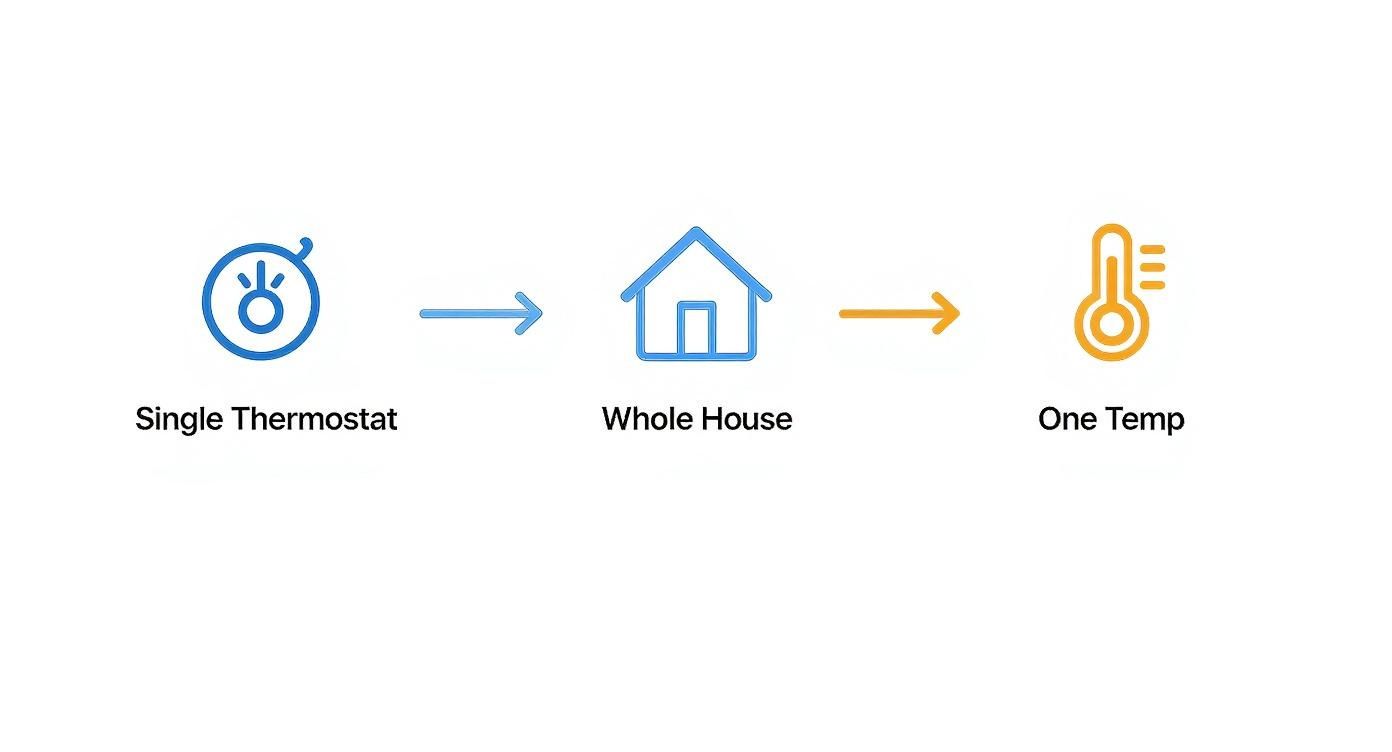
As you can see, that single thermostat forces one temperature setting on every room, regardless of where it's actually needed. The dampers are the key players that allow zoned systems to deliver targeted comfort. You can learn more about how they fit into the bigger picture in our homeowner’s guide to the parts of ductwork.
Once your bedroom is cool and comfortable, its thermostat signals the panel again. The panel then closes the damper and, if no other zones are calling for air, shuts down the A/C. Simple, smart, and efficient.
The Real Payoffs of a Zoned HVAC System
Switching to a zoned system is about more than just convenience; it fundamentally changes how you live in your home. It’s a serious upgrade that makes your HVAC system smarter and more efficient, with advantages that go way beyond simple temperature tweaks. You'll feel the difference every day, and you'll see it on your utility bills.
Let's break down the three biggest benefits that make this upgrade a game-changer for so many homeowners.
Unmatched Customized Comfort
The most immediate win? No more thermostat wars. We’ve all been there: with a traditional system, one thermostat tries to please everyone, and it rarely succeeds. A zoned setup puts an end to that debate for good.
Each zone gets its own dedicated thermostat, giving you pinpoint control over different parts of your house. This is how you finally get rid of those stubborn hot and cold spots that drive you crazy. Now, the upstairs bedrooms can stay perfectly cool during a Tucson summer without turning the downstairs living room into an icebox.
A zoned system lets you dial in the perfect temperature for every single room. Whether it's a sun-drenched home office that's always too hot or a basement that stays naturally cool, you can set the ideal climate for each space independently, making sure everyone is comfortable.
This level of control is a massive leap forward. To take it even further, you might be interested in our guide on the benefits of smart thermostats in 2025, which are the perfect partners for a zoned system.
Dramatically Improved Energy Efficiency
Beyond the creature comforts, a zoned system is really about being smart with your energy. A standard HVAC system is incredibly wasteful, blasting conditioned air into your entire home, including rooms you haven't set foot in all day. It's like leaving every single light on in the house when you're only using one room.
Zoning stops that waste cold. By sending conditioned air only to the areas that actually need it, your HVAC unit doesn't have to work nearly as hard or run as long to do its job.
Think about these real-world scenarios:
During the Day: You can keep your home office at a comfortable 72°F while letting the empty bedrooms stay warmer, saving energy.
At Night: Cool down just the occupied bedrooms and let the rest of the house settle at a more energy-conscious temperature.
For Unused Rooms: That guest room or bonus room you rarely use? It can be kept at a minimal setting, saving you money all year long.
This targeted approach means your system uses far less energy to keep you comfortable where it counts.
Significant Savings on Utility Bills
When you boost energy efficiency, you cut your monthly utility bills. It’s that simple. When you stop paying to heat and cool empty rooms, the savings add up fast.
Yes, there's an upfront investment, but for many homeowners, the long-term return makes a zoned system a savvy financial move. This technology is a huge part of the push toward smarter, more efficient homes.
Building automation, with zone control as a key feature, is a massive driver in the smart infrastructure market. The global building automation and controls market, valued at USD 100.14 billion, is projected to more than double by 2033, and the HVAC control segment is growing at a CAGR of 10.2%. This surge shows just how high the demand is for energy-saving solutions like zoning. You can read the full research on building automation trends to see where this market is headed.
Understanding the Costs and Considerations
While the dream of personalized comfort and lower energy bills is exciting, it's smart to go into a zoned system upgrade with a clear-eyed view of the investment and practical details. A zone control system is a major home improvement, and knowing the full picture helps you make a decision that feels right for both your home and your wallet.
There's no getting around it: the biggest hurdle is the upfront installation cost. It makes sense, right? Installing multiple thermostats, a central brain for the system, and a network of automated dampers is naturally more complex than swapping out a single thermostat. That initial investment is higher, but it's crucial to weigh it against the real, long-term savings you'll see on your utility bills month after month.
Is Your Current HVAC System Compatible?
Another huge piece of the puzzle is whether your existing HVAC equipment can even play nicely with a zoned setup. Not every furnace or air conditioner is ready to be retrofitted for zoning, and this is especially true for older models. The process sometimes requires modifications to your main unit or your ductwork to make sure it can handle the changing airflow as different dampers open and close.
This is where an expert assessment is non-negotiable. A professional needs to take a look to determine if your current setup is a good candidate. Skipping this step is just asking for future performance headaches and an inefficient system.
The goal is to create a seamless integration, not to force a new technology onto an unprepared system. A professional evaluation will confirm if your ductwork is properly sized and if your HVAC unit can adapt to the changing demands of a multi-zone setup.
For many homeowners, the cost is the main concern, and that’s perfectly understandable. The good news is there are ways to make this upgrade more affordable. You can explore a variety of HVAC financing options that help you manage the initial investment without blowing up your budget.
System Complexity and Long Term Maintenance
Finally, it’s worth being aware of the added complexity. While modern zone control panels are designed to be incredibly user-friendly, the system itself simply has more moving parts than a traditional HVAC setup. Think about it: you have damper motors, wiring, and the control panel itself. Each of these adds a potential point of maintenance over the system's life.
This makes regular check-ups even more important to keep everything running like a well-oiled machine. Choosing a reliable HVAC partner for both the installation and the ongoing maintenance is the best way to ensure your system delivers the peak performance and longevity you expect. It’s all about protecting your investment for years to come.
So, you’ve weighed the pros and cons, crunched the numbers, and now you’re asking the million-dollar question: is a zone control system actually a good fit for your home? While just about any house can benefit from smarter climate control, some layouts are practically screaming for it.
If you can spot these characteristics in your own home, you're likely a prime candidate for a more targeted, efficient, and comfortable HVAC solution.
Take a minute to think about your home's unique quirks. Does it have areas that feel like they're in different climate zones? If the answer is yes, you're probably fighting a losing battle, and wasting energy, with a single, overworked thermostat.
Common Home Layouts That Benefit Most
Certain home designs are notorious for temperature imbalances. If your property fits any of these descriptions, zoning could be a game-changer.
Multi-Story Homes: This is the classic scenario. We all know heat rises, which means in Tucson, your second floor can feel like an oven while the downstairs is perfectly comfortable. Zoning lets you direct more cool air upstairs without turning the ground floor into an icebox.
Homes with Large Windows: Those beautiful, sun-drenched rooms with big windows? They’re also little greenhouses. A dedicated zone can work against that intense solar heat, keeping the room usable even on the brightest days.
Sprawling Ranch-Style Houses: In a long, stretched-out floor plan, the rooms at the far ends of the house are often the last to get conditioned air. This leads to those frustrating hot and cold spots that never seem to go away.
Properties with Finished Basements or Bonus Rooms: Spaces like a finished basement or a room over the garage have completely different insulation and sun exposure. They need their own set of rules for heating and cooling, separate from the rest of the house.
A zone control system tackles these architectural challenges head-on. It stops trying to apply a one-size-fits-all solution to a house with diverse needs and instead gives each area the independent attention it deserves.
How Zoning Manages Different Environments
A zoned system is built from the ground up to handle these distinct environments. For example, you could set up a "living zone" for your main family area to stay comfortable all day, while the "upstairs bedroom zone" gets the lion's share of the cooling at night.
This approach isn't just about comfort; it's about aligning your energy consumption with your actual lifestyle. Why cool rooms no one is using?
For homes with particularly stubborn hot spots, other technologies might also be a great solution. To get a better feel for how different systems provide targeted cooling, you can learn more about how a mini-split AC system works in our detailed guide.
Ultimately, it all comes down to your home’s specific layout. Here at Covenant Aire Solutions, our team specializes in diagnosing these exact kinds of challenges. We can help you figure out if zoning is the right move and design a custom setup that finally delivers the consistent comfort and energy savings you've been looking for.
Have Questions? We Have Answers.
Even after seeing how a zone control system can completely change the comfort level in your home, it's natural to have a few practical questions. Let's tackle some of the most common things we hear from Tucson homeowners, giving you direct, clear answers to help you feel confident about this upgrade.
Getting these details sorted out helps you see the flexibility and real-world benefits of owning a zoned HVAC system.
How Many Zones Can My Home Actually Have?
This is where the customization really shines. The number of zones you can have is incredibly flexible and really comes down to your home's layout and how you live in it. A pretty standard setup might have two or three zones, think upstairs, downstairs, and the main living area.
But for larger homes or ones with unique layouts, a system can be designed with eight or more zones. The whole point is to group rooms with similar heating and cooling needs together. For instance, that home office that gets blasted by the afternoon sun could be its own zone, while the cooler, north-facing bedrooms could be grouped into another.
Can I Add Zoning to My Existing HVAC System?
Yes, and this is a huge plus! In most situations, we can absolutely retrofit a zone control system onto your current HVAC setup. It's one of the most popular ways our clients upgrade their comfort without having to replace their entire furnace and air conditioner.
That said, a professional evaluation is a must. We need to make sure your current equipment and, most importantly, your ductwork are up to the task.
A successful retrofit all comes down to your ductwork's ability to handle the changing airflow as dampers open and close. An expert will check this to make sure the system runs safely and gives you the efficiency you're paying for.
Do Zoned Systems Need More Maintenance?
A zoned system does have more moving parts than a standard one; you've got dampers, motors, and a central control panel. So, while it doesn't necessarily mean "more" maintenance in terms of frequency, it does mean your regular HVAC tune-ups need to be a bit more thorough.
During a tune-up, a good technician will inspect all the zoning components. Making sure the dampers are moving freely and the control panel is communicating properly is the key to protecting your investment and ensuring years of trouble-free comfort.
Ready to see if a zone control system is the right move for your home? The team at Covenant Aire Solutions offers expert consultations to help you design a system that delivers perfect comfort and real energy savings. Contact us today to learn more and get a personalized estimate.