
Why Is My Air Conditioning Unit Not Blowing Cold Air
- Dec 8, 2025
- 13 min read
Nothing is more frustrating than feeling warm air coming from your vents when you’re expecting a blast of cold, especially during a Tucson summer. It’s an immediate cause for concern, but before you pick up the phone to call for a repair, take a deep breath. Often, the culprit is something surprisingly simple.
Running through a few basic checks yourself can sometimes solve the problem in minutes. This quick troubleshooting guide will walk you through the most common and easily fixed issues.
Your First Steps When the AC Stops Blowing Cold
When that cool air turns lukewarm, your first instinct might be to panic about a huge repair bill. But in my experience, the problem is frequently a minor one that homeowners can safely diagnose and fix on their own.
By ruling out these simple things first, you can save yourself a lot of time and the cost of a service call. It helps you either fix it on the spot or know for sure that it's time to bring in a professional.
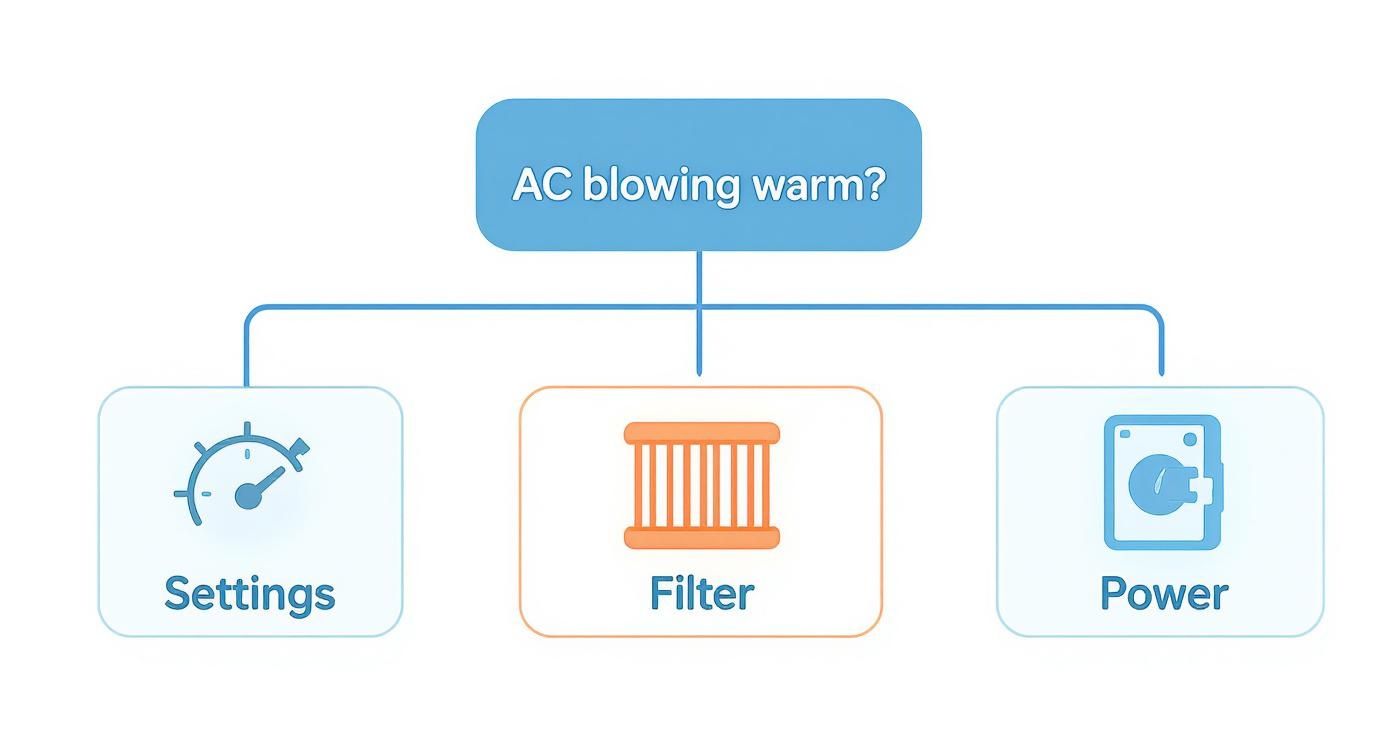
Check the Easiest Fixes First
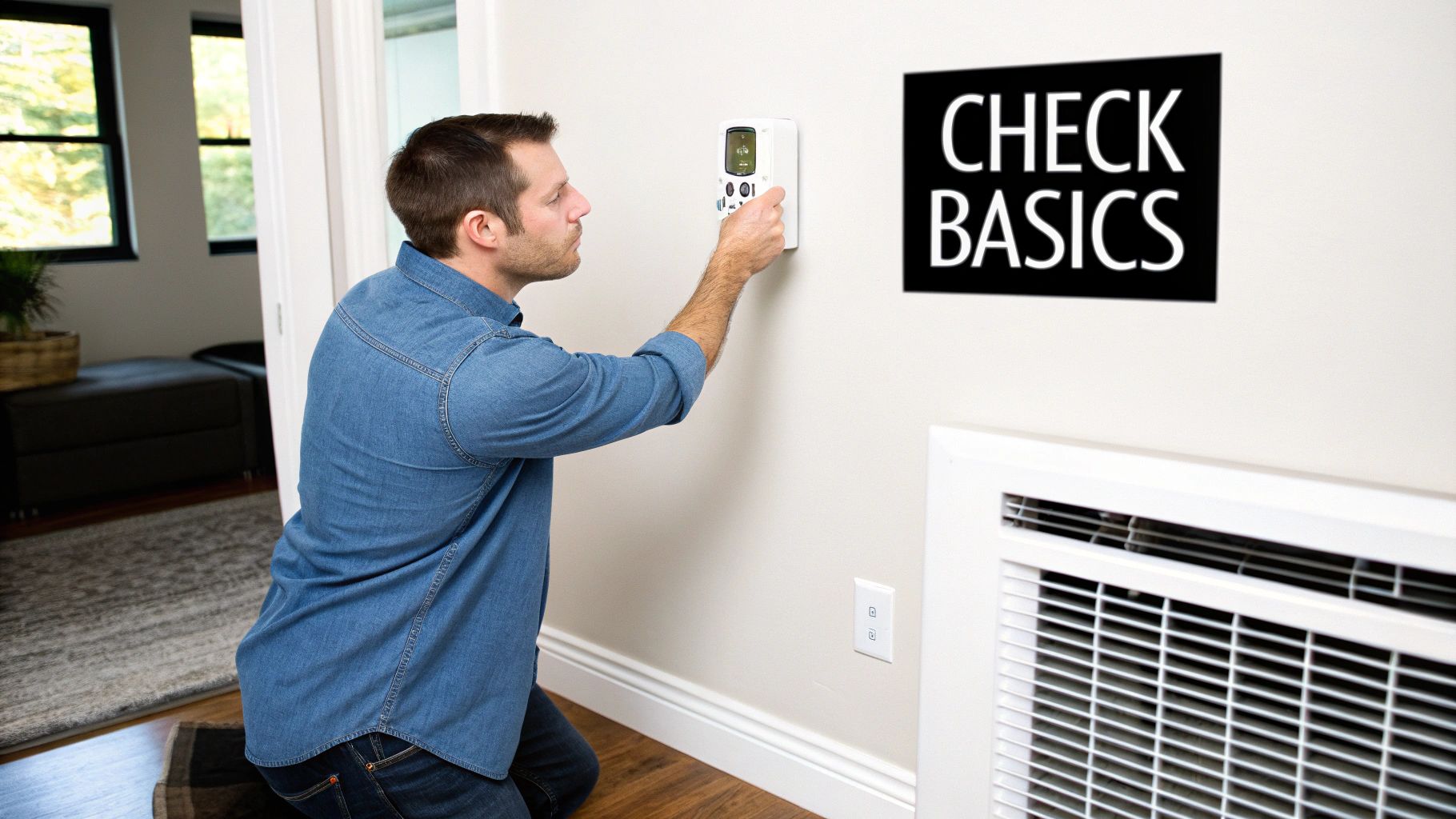
Always start with the basics. It’s amazing how many service calls we get where the solution is right there on the wall. A simple oversight is often the root cause of the discomfort.
Here’s what to look at first:
Thermostat Settings: Double-check that your thermostat is set to "COOL" mode. It's easy for it to get accidentally switched to "FAN" or "HEAT," which will only circulate room-temperature air without actually cooling it. Also, make sure the temperature is set a few degrees lower than the current room temperature.
Dirty Air Filter: A clogged air filter is probably the single most common reason for an AC to stop cooling properly. It chokes off the airflow, forcing the system to struggle and preventing that cold air from getting into your home. Pull your filter out and hold it up to the light; if you can’t see light through it, it’s time for a new one.
To help you get started, here's a quick checklist you can run through before making any calls.
Immediate DIY Troubleshooting Checklist
Check Area | What to Look For | Simple Solution |
|---|---|---|
Thermostat | Incorrect setting (e.g., "HEAT" or "FAN") | Ensure it's set to "COOL" and the desired temperature is below the current room temp. |
Air Filter | Visible dirt, dust, or debris clogging the filter | Replace the filter with a new one of the correct size. |
Circuit Breaker | A breaker switch in the "OFF" or middle position | Flip the breaker completely off, then back on to reset it. |
Outdoor Unit | Debris (leaves, grass, dirt) blocking the condenser | Turn off the unit at the breaker and gently rinse the fins with a hose. |
Running through these steps can often resolve the issue without needing professional help. If you've checked these items and the problem persists, it's time to look a little deeper.
Investigate Power Supply Issues
If your thermostat settings are correct and you've got a clean filter, the next logical step is to make sure the unit is actually getting power. An electrical issue can shut down the cooling components entirely, even if the indoor fan is still running.
Head to your home's main electrical panel and look for a tripped circuit breaker. Your AC system is a high-power appliance and can sometimes trip a breaker, especially on the hottest days when it's working overtime. If a breaker is tripped, flip it all the way to the "OFF" position before switching it back "ON" to reset it.
For a more detailed walkthrough of these first steps, you can check out our other guide on quick fixes for a non-working air conditioner.
How to Inspect Your Outdoor Condenser Unit
Alright, if you’ve checked the basics inside and everything looks good, it's time to head outdoors and have a look at the condenser unit. This is that big metal box, usually on the side of your house, that does all the heavy lifting of dumping the heat your AC pulls out of your home.
Because it lives outside, it’s constantly battling Tucson’s dust, monsoon storms, and overgrown landscaping. Not surprisingly, it’s one of the most common spots for trouble when your air conditioner stops blowing cold.
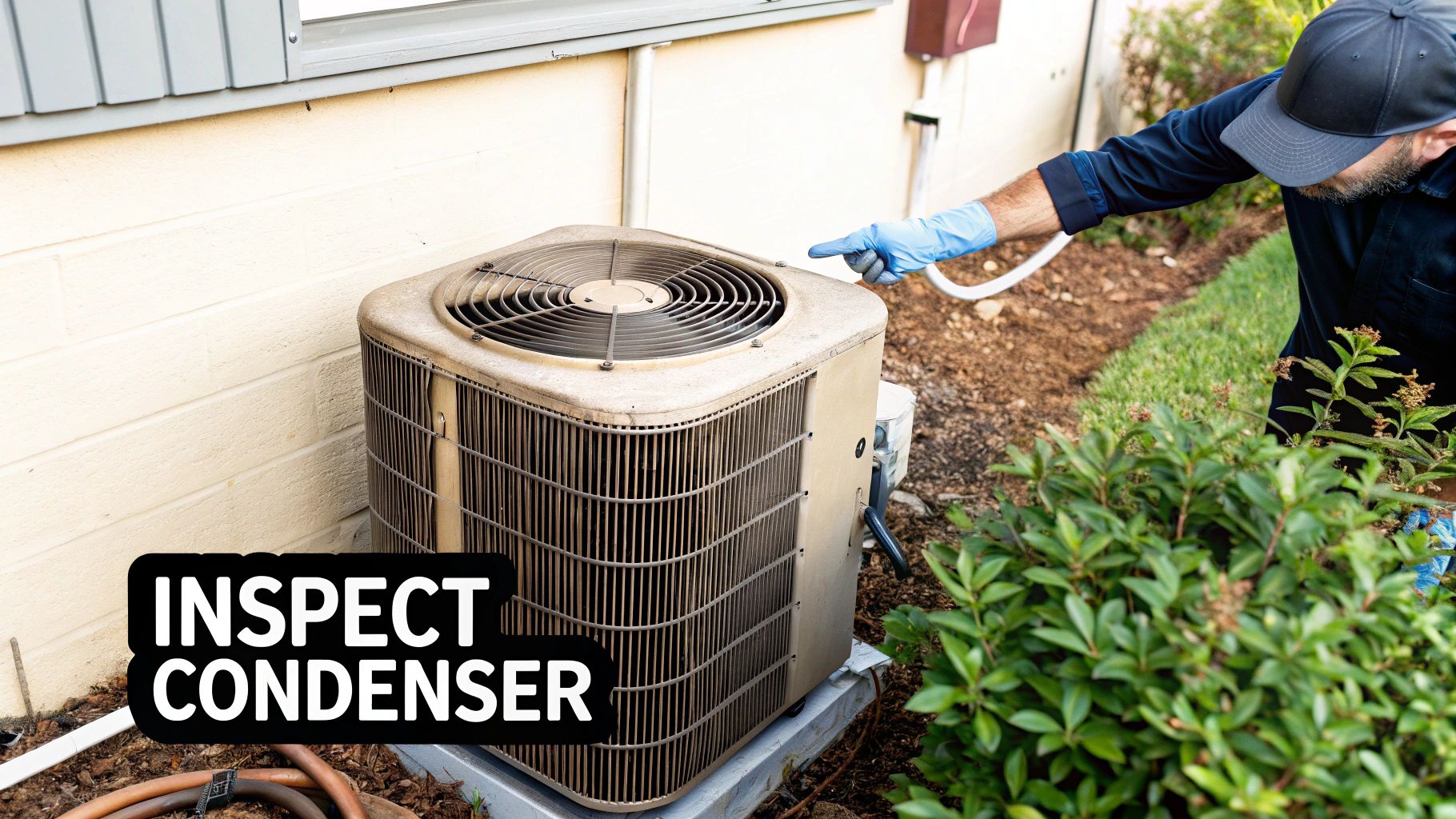
Before you touch anything, let's talk about safety. Turn off all power to the unit. I can't stress this enough. You'll need to flip the breaker in your main electrical panel and then use the outdoor shutoff box, which is usually a small metal box mounted to the house right next to the condenser.
Look for Airflow Obstructions
Your condenser needs space; it has to breathe. Those metal fins along the sides are designed to pull in massive amounts of air to cool down the refrigerant inside. If anything is blocking that airflow, the unit can’t get rid of heat, and your AC’s cooling power plummets.
Walk around the entire unit and make sure you have at least a two-foot clear perimeter. It’s amazing what can build up over time. Keep an eye out for:
Bushes, palo verdes, or tall weeds that have crept too close.
Yard tools, kids' toys, or patio furniture leaned up against it.
A thick blanket of fallen leaves, grass clippings, or other yard debris.
Think of it like this: a blocked condenser is trying to run a marathon in 100-degree heat while wearing a winter coat. It’s going to overheat and underperform. Just clearing this space can sometimes make a world of difference.
Clean the Condenser Coils
Get a little closer and look at the metal fins, the coils, that wrap around the unit. They are magnets for dust, pollen, and all sorts of grime. That layer of dirt acts like insulation, trapping heat and forcing your system to work much harder for much less cool air.
If you can see a visible layer of dirt, you can give it a gentle cleaning. Just grab a regular garden hose with a spray nozzle and rinse the fins from the top down. Never use a high-pressure washer. Those aluminum fins are delicate and will bend easily, which is a much bigger problem to fix. A gentle shower is all it needs.
If you want to get a better handle on how this part of your AC works, take a look at our guide on what a condenser unit is.
Check the Condenser Fan
With the power still off, your last check is the fan. Peer down through the grate on top of the unit. You're looking for anything that could stop the blades from spinning freely, like twigs, leaves, or even a small animal's nest.
Once you’ve cleaned the coils and cleared away any obstructions, you can go ahead and restore power at both the breaker and the shutoff box. If your AC is still pushing out warm air after all this, the issue is likely something deeper inside the system.
Recognizing the Signs of a Refrigerant Leak
So you’ve checked the thermostat, swapped out the filter, and cleared away debris from the outside unit, but your AC is still blowing warm air. At this point, it’s time to start thinking about a more serious issue, and one of the most common culprits is a refrigerant leak.
Think of refrigerant as the lifeblood of your air conditioner. It’s a special compound that constantly cycles through the system’s coils, absorbing the heat from inside your house and dumping it outside. When the refrigerant level gets low, your AC loses its ability to cool. Simple as that.
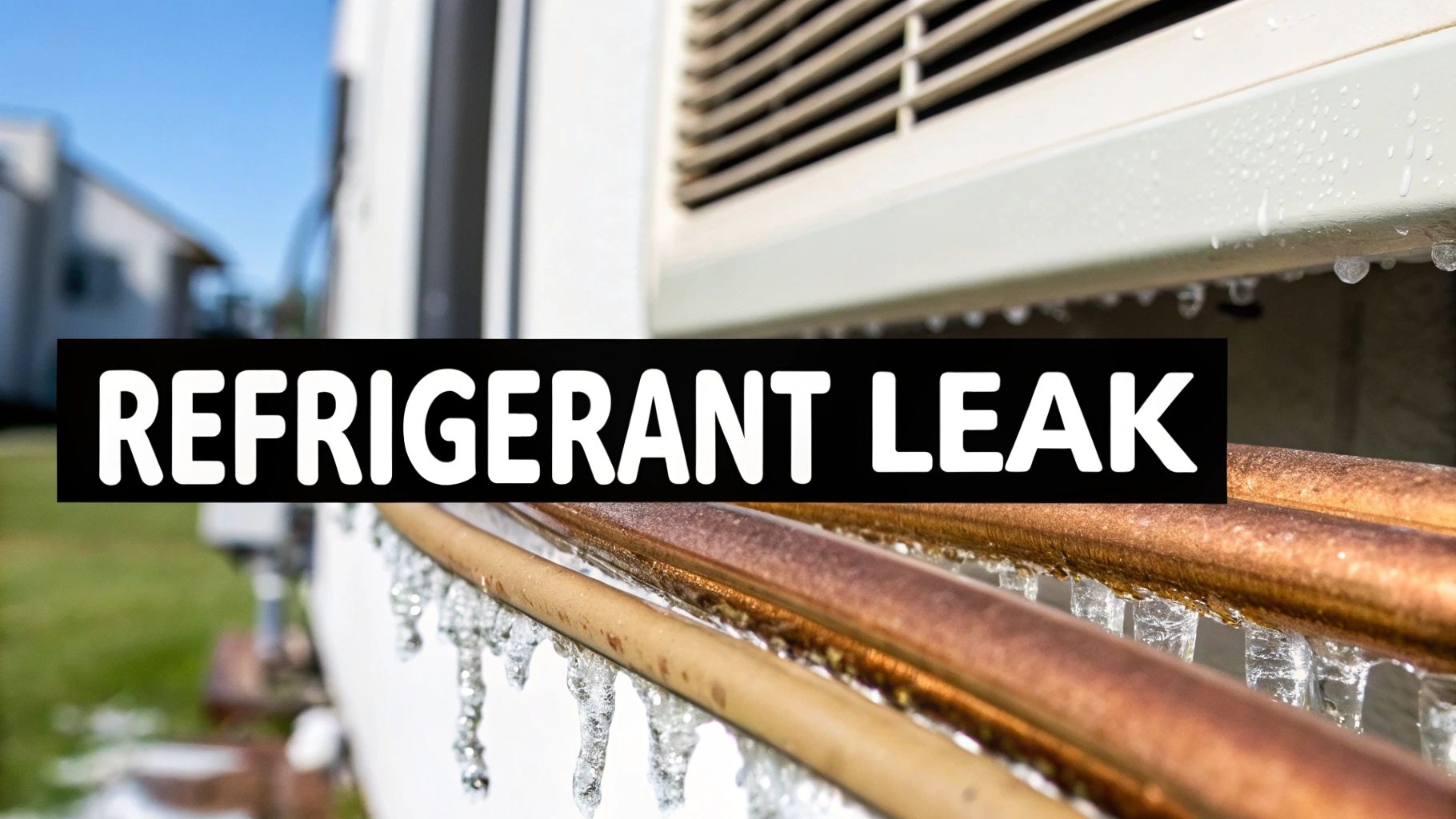
Common Indicators of a Leak
You can’t see the refrigerant gas itself, but a leak often leaves behind some pretty clear clues. You just have to know what to look, and listen, for. Catching these signs early can save you from a much bigger headache, like a burned-out compressor.
Here are the key things to watch for:
Unusual Noises: Do you hear a faint hissing or bubbling sound coming from either your indoor or outdoor unit? That’s often the sound of refrigerant escaping the lines.
Ice Buildup: Frost or ice forming on the copper refrigerant lines near your outdoor condenser is a classic sign of low refrigerant. It seems backward, but without enough refrigerant, the evaporator coils get way too cold and freeze over.
Longer Cooling Cycles: Is your AC running nonstop but your house never seems to get cool? That’s a tell-tale sign your system is struggling to do its job, often because of a refrigerant shortage.
A common misconception is that air conditioners "use up" refrigerant like a car uses gas. In reality, refrigerant operates in a closed loop. If it's low, it means there is a leak that must be repaired.
Why "Topping Off" Is Not a Real Solution
Simply adding more refrigerant, a practice sometimes called “recharging” or “topping off,” is just a band-aid fix. Without patching the leak, that new refrigerant is going to escape, and you'll be right back where you started in a few weeks or months. It’s an ineffective approach that’s also harmful to the environment.
Refrigerant leaks are a global concern, which is why the air conditioning market, valued at USD 184.1 billion in 2025, is shifting toward more eco-friendly options. According to air conditioning market research on ResearchNester.com, refrigerant depletion is one of the most frequent reasons AC units fail to cool properly.
The only real, long-term solution is to fix the leak itself. If you've spotted any of the signs I mentioned, it’s time to bring in a licensed HVAC professional. A pro has the specialized tools to pinpoint the source of the leak, repair it properly, and then add the correct amount of refrigerant to get your system back to peak performance.
If you're curious about the different types of refrigerants used today, you can learn more about what refrigerant replaces R22 in our complete guide.
So, you’ve checked the simple stuff, and your AC is still blowing warm air. Now we’re getting into the more serious culprits. The issue might not be a simple fix like a dirty filter, but something deeper within the system's core, specifically its electrical components or the compressor itself.
These are the kinds of problems that absolutely require a professional. We're talking about high-voltage parts and complex machinery, but knowing the warning signs is your first line of defense. Your job is to recognize the symptoms; our job is to safely handle the repair.
Signs Of A Faulty Capacitor
One of the most frequent electrical failures we see out in the field is a bad capacitor. Think of the capacitor as a small battery that gives the compressor and fan motors the initial jolt of energy they need to get going. When it fails, the motors just can't start, even if they're getting power.
Keep an ear and eye out for these classic signs:
A humming or buzzing noise: You might hear your outdoor unit making a sound like it's trying to start, but the fan blades never actually start spinning.
The fan won’t start: The unit hums, but the fan is completely still. Sometimes, you might see the blades try to turn slowly before giving up.
Clicking, then silence: The system makes a distinct "click" as it tries to turn on, but nothing happens afterward.
A failed capacitor is a clear signal that a key part has worn out. While it's a relatively quick fix for a trained technician, never attempt this yourself. Capacitors can hold a dangerous electrical charge even when the power is off.
Symptoms Of A Failing Compressor
If the capacitor checks out, the next major component to suspect is the compressor. The compressor is truly the heart of your air conditioner; it’s responsible for pressurizing the refrigerant and pumping it through the system. If it fails, your AC loses its ability to cool completely.
Compressor failure is a huge deal in the HVAC world. In fact, the global AC compressor market is projected to be worth USD 30 billion by 2025. This shows just how vital this single component is to your system's cooling power. You can learn more about the growing AC compressor market on FutureMarketInsights.com.
Watch for these troubling symptoms:
Loud, jarring noises: A compressor on its last legs often makes loud clanking, banging, or rumbling sounds while it runs. It's not a subtle noise.
The circuit breaker keeps tripping: A dying compressor draws way more power than it should, which will frequently trip the breaker in your electrical panel.
Warm air from the vents: If everything else seems to be working, the fans are spinning, the thermostat is on, but the air is still warm, the compressor likely isn't circulating refrigerant correctly.
A compressor is a sealed component, which means it can't really be "repaired." It almost always requires a full replacement. To get a better idea of what that job entails, take a look at our complete homeowner's guide to replacing an HVAC compressor.
If you spot any of these serious signs, the right move is to shut your system down completely and call a certified technician right away.
Proactive Maintenance to Keep Your AC Cooling Efficiently
The best way to deal with an AC that isn't blowing cold air is to make sure it never gets to that point in the first place. Instead of scrambling for a repair during a brutal Tucson heatwave, a little proactive care can keep your system humming along smoothly and efficiently all year.
Many of these preventative tasks are simple habits you can work into your regular home routine. You don’t need to be an HVAC expert to do them, but they make a massive difference in your AC's performance and how long it lasts. Staying on top of maintenance is the secret to avoiding those expensive, unexpected repair bills.
Simple Homeowner Maintenance Habits
Building a few easy checks into your monthly and seasonal chores is your first and best line of defense against AC failure. These tasks are straightforward and mostly focus on keeping air moving freely through the system, something that's absolutely critical for effective cooling.
Here are the essential habits every homeowner should adopt:
Change Your Air Filter Regularly: This is, without a doubt, the easiest and most important thing you can do. A clogged filter chokes the airflow, forcing your system to work overtime and dramatically reducing its cooling power. Check it every month and plan on replacing it at least every 90 days. During our dusty monsoon seasons, you'll probably need to change it more often.
Keep the Outdoor Unit Clear: Your outdoor condenser unit needs room to breathe, think at least two feet of clear space on all sides. Make it a habit to trim back any nearby bushes and clear away leaves, grass clippings, or other debris that can pile up and block airflow, which can cause the unit to overheat.
Inspect the Condensate Drain Line: This little pipe is responsible for draining moisture away from your indoor unit. If it gets clogged, water can back up, potentially causing serious water damage and triggering an automatic shutdown of your system. Just take a peek at the outlet every so often to make sure water is dripping out as it should.
It's always cheaper to prevent a problem than to fix one. According to the Department of Energy, simple routine maintenance can slash your AC’s energy use by up to 15%. That means lower utility bills and a longer life for your system.
The Value of Annual Professional Tune-Ups
While your own maintenance efforts are vital, they simply can't replace the trained eye of a professional. Think of an annual tune-up as an investment in your comfort and your system's future. When a certified technician inspects your unit, they go far beyond basic cleaning.
A pro can spot issues that are invisible to the average homeowner, things like worn-out electrical contacts, a capacitor that’s about to fail, or slightly low refrigerant levels that point to a tiny, hidden leak.
Catching these problems early stops them from snowballing into a full-blown system breakdown on the hottest day of the year. Our technicians perform a comprehensive inspection; you can see everything we cover in our 2025 air conditioner tune-up checklist.
Keeping your AC in shape is a key part of overall home care. To make sure your entire home is running as it should, check out these essential home maintenance tips for more valuable advice. By staying ahead of maintenance, you ensure your home stays a comfortable sanctuary, no matter what the Arizona weather throws at you.
Common Questions About AC Cooling Problems
When your air conditioner decides to take an unscheduled break, especially here in Tucson, you're bound to have questions. You’ve run through the basic checks, but you might still be scratching your head about why these things happen. Let's tackle some of the most common questions we hear from homeowners.
Getting a handle on these details helps demystify what’s going on with your system. It puts you in a better position to make a smart, informed decision without the stress.
Why Is My AC Running but Not Cooling the House?
This is probably the most maddening AC problem out there. The system is humming along, you can feel air coming out of the vents, but the thermostat just keeps creeping up. This tells you that while the indoor fan is working just fine, a critical part of the cooling process has failed.
We usually see this point to one of three culprits:
Dirty Condenser Coils: Your outdoor unit is essentially the heat dump for your home. If its coils are caked in dirt and dust, it can't release that heat effectively. The refrigerant never gets cool enough to do its job inside.
Low Refrigerant: A leak has allowed the system's refrigerant, its lifeblood, to escape. The system can still circulate air, but there's not enough refrigerant to actually chill it.
Failed Compressor: Think of the compressor as the heart of your AC. If it’s not pumping refrigerant through the system, the whole cooling cycle grinds to a halt, even if the fans keep spinning.
The big takeaway here is that "running" doesn't automatically mean "cooling." If the AC has been running for an hour and your home isn't getting any cooler, shut it down to prevent further damage and give a professional a call.
How Long Should I Wait After Resetting the Breaker?
Finding and flipping a tripped breaker is a solid first troubleshooting step. But don't expect instant results. Once you flip that breaker back to the "on" position, give it about 15 to 30 minutes.
This pause gives the unit's internal electronics a moment to reset and allows the system to power up and begin a proper cooling cycle. If you're still getting lukewarm air after that time, or if the breaker trips again, you're looking at a deeper electrical problem. Don’t get into a battle with a breaker that keeps tripping; it's a safety device telling you something is wrong.
When your own troubleshooting doesn't cut it, finding the right professional is key. These tips for finding the right plumber or heating engineer can be a great resource.
Can a Clogged Filter Really Stop Cold Air?
It seems almost too simple, but the answer is a resounding yes. A clogged air filter can absolutely sabotage your AC's ability to cool your home. It works by severely choking off the flow of warm air from your house into the system.
When the unit can't pull in enough air to cool, a couple of bad things happen. For one, the evaporator coils can get so cold that they freeze into a solid block of ice, which stops airflow completely. Secondly, with no warm air to absorb heat from, there’s nothing to cool down and send back into your rooms. You're left with weak, wimpy airflow and a system that's working itself to death without actually doing its job. It is, without a doubt, the most common, and most preventable, cause of cooling problems we see.
If your air conditioning unit is not blowing cold and you've hit the end of your DIY rope, don't sweat it. The certified experts at Covenant Aire Solutions are ready to diagnose and fix the problem quickly and efficiently. For honest service and reliable AC repair in the Tucson area, contact us today.
Learn more about our services at https://www.covenantairesolutions.com.