
Why Is My Furnace Cycling On and Off and How Do I Fix It
- Dec 7, 2025
- 14 min read
You hear the familiar click of your furnace kicking on, a welcome sound on a chilly day. But just a few minutes later, it clicks off. Then, a little while later, it kicks on again... and off again.
If this frustrating stop-and-start pattern sounds familiar, your furnace is short cycling. It’s more than just an annoyance; it’s a bright red flag that something is wrong with your heating system. This isn't just killing your home's cozy vibe, it's an efficiency nightmare that puts a ton of unnecessary strain on your equipment.
What Furnace Short Cycling Really Means for Your Home
A furnace in good health operates in long, steady cycles, typically running for 10 to 15 minutes at a time to bring your home up to temperature evenly. Short cycling is the exact opposite. It’s a symptom, not the problem itself, signaling an underlying issue that’s forcing your system into a stressful, inefficient pattern.
This constant on-again, off-again sequence prevents your furnace from doing its job correctly. Instead of efficiently heating your space, it struggles, guzzles more fuel than it should, and wears out its most important parts much faster than normal.
The Impact on Your System and Bills
Ignoring a short-cycling furnace is a recipe for trouble. The issue hammers your system's efficiency and puts excessive wear and tear on its most critical components. Even high-efficiency furnaces, which typically boast an Annual Fuel Utilization Efficiency (AFUE) rating between 80% and 95%, can see their performance undermined. Experts estimate that frequent cycling could lead to energy losses of up to 10% compared to a system running smooth, optimal cycles.
That inefficiency shows up right where it hurts: your utility bills and the lifespan of your furnace. Think of it like starting your car, driving it a single block, and then shutting it off, over and over again. It’s way harder on the engine than a continuous drive. Your furnace experiences similar damage from:
Increased Wear and Tear: Key parts like the ignition system and blower motor are stressed with every single startup.
Higher Energy Costs: Each cycle demands a surge of energy to get going, making this stop-and-start routine far from economical.
Reduced Comfort: Your home never quite reaches a stable, comfortable temperature, leaving you with annoying hot and cold spots.
What Causes a Furnace to Short Cycle
The root causes can be anything from a simple DIY fix to a complex mechanical failure requiring a pro. One of the most common culprits is an overheating heat exchanger, often triggered by restricted airflow.
A malfunctioning heat exchanger isn't just a performance issue; it's a serious safety hazard that requires immediate attention. To understand why this component is so critical, check out our guide on what a furnace heat exchanger is and why it matters.
Figuring out why your furnace is short cycling is the most important first step. Once you nail down the cause, you're on your way to restoring your furnace's health, keeping your family comfortable, and getting those energy bills back under control.
Common Short Cycling Causes at a Glance
To give you a quick overview, here are some of the most frequent reasons a furnace short cycles. This table breaks down what might be happening, how hard it is to fix yourself, and what could happen if you let the problem linger.
Cause | DIY Fix Difficulty | Potential Impact if Ignored |
|---|---|---|
Dirty Air Filter | Easy | Reduced efficiency, system overheating, component damage |
Thermostat Issues | Easy to Moderate | Inaccurate temperature readings, constant cycling, discomfort |
Blocked Vents/Registers | Easy | Poor airflow, overheating, uneven heating |
Oversized Furnace | Professional Fix | Wasted energy, excessive wear and tear, humidity issues |
Overheating | Professional Fix | Cracked heat exchanger, carbon monoxide risk, total system failure |
Ignition/Flame Sensor Problem | Professional Fix | Furnace won't stay lit, gas safety risk, no heat |
This table is a starting point, but remember that furnace issues can be complex. If a simple fix doesn't solve the problem, it's always safest to call in an experienced HVAC technician.
Simple DIY Checks to Stop Furnace Short Cycling
Before you pick up the phone to call for a pro, there are a handful of simple checks you can do yourself. I've seen it countless times: a homeowner is convinced their furnace is on its last legs, only to discover the root cause was something they could have fixed in under five minutes.
These first-response steps are always your best starting point for getting the heat back on track and restoring some peace and quiet to your home.
The number one culprit, and the easiest fix by far, is a dirty furnace air filter. Think of a clogged filter as a blocked artery for your heating system. It chokes off the airflow, forcing your furnace to work way harder than it should. This extra strain causes it to overheat, and as a safety measure, it shuts itself down. Sound familiar?
If your filter looks more gray than white or is visibly caked with dust, it’s long past time for a new one. Most filters need to be changed every one to three months, but if you have pets or smokers in the house, you might need to swap them out even more often. A clean filter is truly the foundation of a healthy, happy HVAC system.
Inspect Your Thermostat and Its Surroundings
Your thermostat is the brain of the entire operation, so any little hiccup with it can send confusing signals to your furnace. You’d be surprised how often the problem is simply its location. Is it sitting in a beam of direct sunlight? Is it near a drafty window or right above a lamp that's always on?
These things can give the thermostat a false temperature reading. That lamp underneath it can easily trick it into thinking the room is already warm, causing it to shut the furnace off way too soon. Before you do anything else, just take a look around for these simple environmental factors. While you're at it, make sure the thermostat has fresh batteries and is correctly set to "heat."
Sometimes the fan setting can also cause confusion. If you're not sure whether your thermostat fan should be on or auto, it’s worth a read to ensure your settings are optimized.
Key Takeaway: Your thermostat's accuracy is only as good as its environment. Removing external heat or cold sources is a critical troubleshooting step that costs nothing but can solve a major headache.
Clear the Path for Airflow
Proper airflow is completely non-negotiable for a furnace to run correctly. If the warm air your furnace is pumping out has nowhere to go, it backs up into the system. This build-up triggers the high-limit switch, a safety feature, and shuts everything down. This is an incredibly common reason for a furnace to cycle on and off.
Take a quick walk through your home and do these checks:
Open All Vents: Are all the supply registers (the vents blowing warm air) open? Are any of them blocked?
Check for Blockages: Look for furniture, rugs, or even drapes that might be covering either the supply vents or the larger return air vents.
Inspect the Outdoor Vent: For many systems, the outdoor exhaust vent can get clogged with snow, leaves, or even an animal's nest, which will disrupt the furnace's cycle.
This simple visual flowchart can help you quickly decide if your furnace's behavior is a real problem.
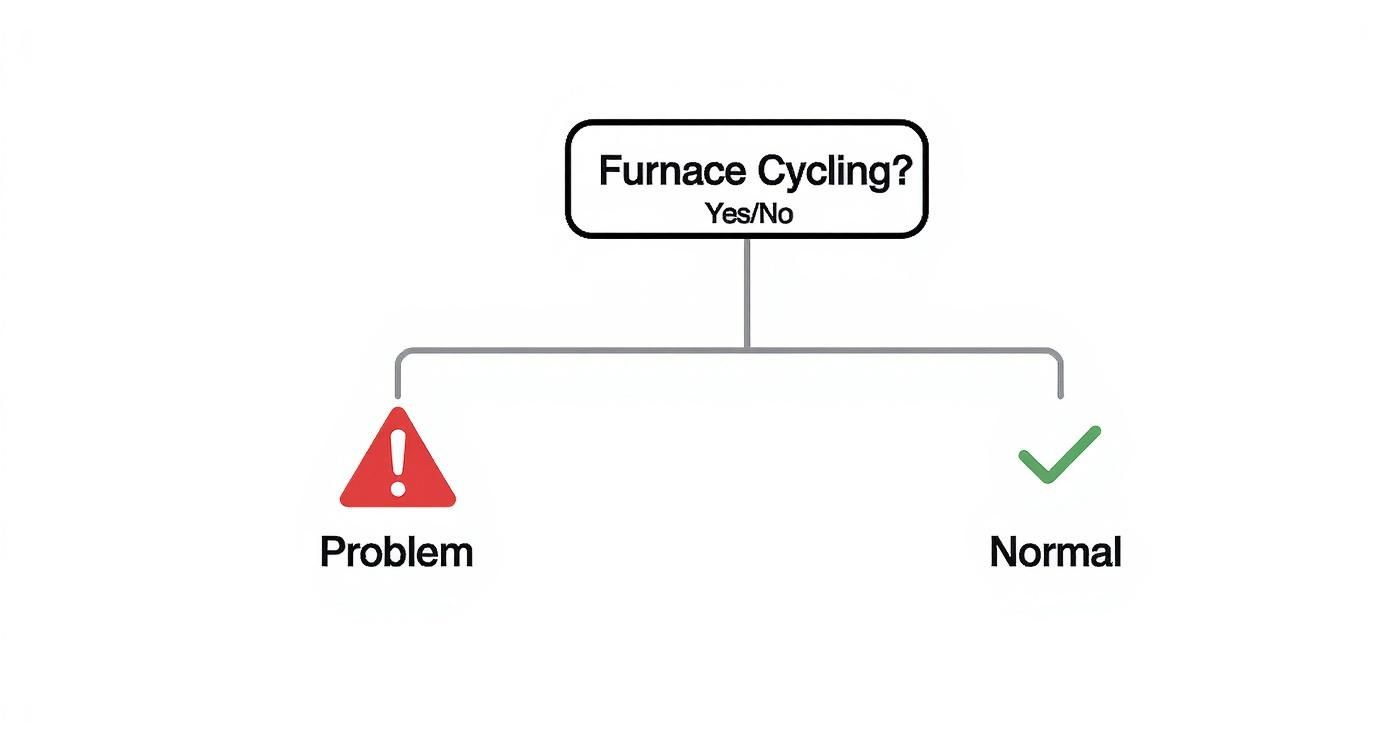
The flowchart makes it pretty clear: if your furnace is cycling frequently, it's a definite sign that something needs attention to prevent bigger, more expensive problems down the road.
Finally, take a quick peek at your home's circuit breaker panel. On occasion, a tripped breaker can cut power to the furnace intermittently, which can look a lot like short cycling. It can be helpful to understand a bit about miniature circuit breaker technology so you can safely tell if a simple electrical issue is the culprit. If you see a breaker that's tripped, you can try resetting it once. If it trips again, don't touch it. That's a clear sign to call an expert immediately.
Recognizing Deeper Furnace System Problems
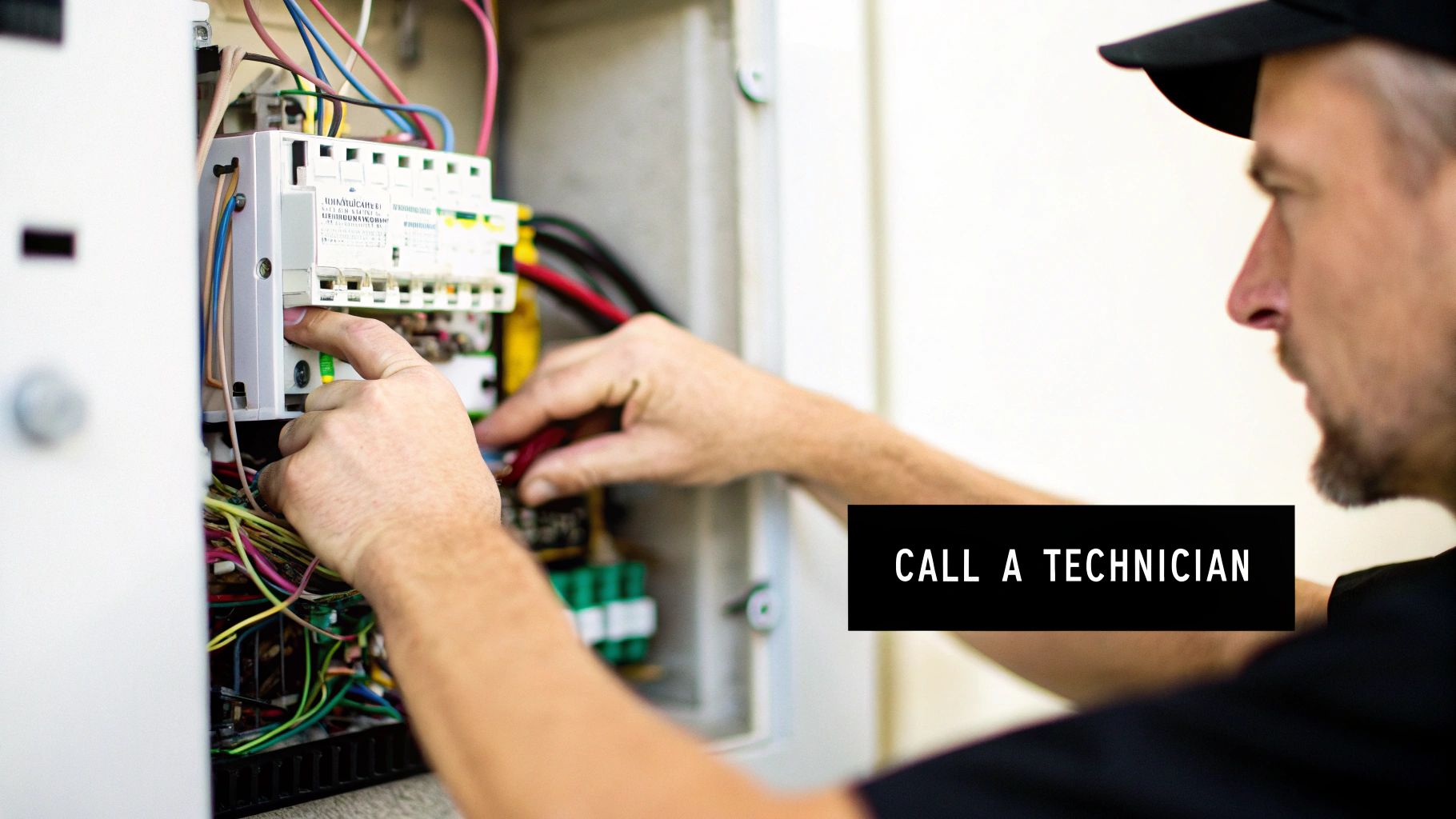
So you’ve changed the filter and made sure all the vents are open, but your furnace is still kicking on and off every few minutes. When the simple fixes don’t work, it's a clear sign that the issue is buried deeper within one of the furnace's core components.
Ignoring these symptoms is more than just an annoyance; it can lead to some seriously expensive repairs and even compromise your family's safety. At this point, we're moving past routine maintenance and into the territory of actual mechanical and electrical failures. These aren't DIY fixes, as messing with them can be dangerous and could void your system's warranty.
Overheating and the High-Limit Switch
One of the most common culprits behind short cycling is an overheating furnace. Your system has a built-in safety feature called a high-limit switch. Its only job is to shut the furnace down if things get dangerously hot, protecting the heat exchanger from damage and preventing a fire hazard.
When airflow gets blocked, usually by that dirty filter or a closed-off vent, heat can't escape the unit properly. It builds up fast, and the high-limit switch does exactly what it's supposed to do: it cuts the power. After the furnace cools down a bit, it will try to start up again, only for the cycle to repeat itself. That's the on-and-off pattern you're hearing.
Signs of a Failing Flame Sensor
Another frequent offender is the flame sensor. This is a small, thin metal rod that acts as a critical safety check. It has to physically "see" a flame to confirm the burners have ignited properly before it allows the gas valve to stay open. No flame means no gas, preventing a dangerous leak.
Over time, this little sensor gets coated with soot and carbon. A dirty sensor can’t detect the flame, even when it’s burning perfectly. The furnace's control board gets a "no flame" signal and immediately shuts off the gas just a few seconds after the furnace kicks on.
Important Safety Note: If your furnace fires up and then shuts down almost immediately, within just a few seconds, a dirty flame sensor is the likely cause. While cleaning it is technically possible, it's a delicate component that's easy to damage. A professional diagnosis is always the safest bet.
The Furnace Control Board: The Brain of the System
The control board is the central nervous system of your entire furnace. It's the "brain" that tells every other part what to do and when, from starting the ignition sequence to turning on the blower motor.
If the board starts to fail, due to bad wiring, loose connections, or a fried component, it can send all sorts of erratic signals. This can easily cause short cycling, where the furnace starts a heating cycle correctly but then gets a premature shutdown signal from the faulty board. Diagnosing this requires professional tools and expertise in electrical systems.
Ignition and Gas Supply Issues
Any problem related to the gas supply or the ignition system is a serious matter that demands immediate professional attention. For instance, low gas pressure from the utility line can force the furnace to work harder than it should, causing it to overheat and shut down.
A failing inducer motor can also be the source of the problem. This component is responsible for pulling combustion gases through the heat exchanger and venting them outside. If it's not working correctly, a pressure switch won't allow the furnace to ignite. You can learn more by reading a quick guide on what a furnace inducer motor does. These are absolutely not DIY repairs; anything involving gas or combustion should be handled by a licensed technician to ensure your system is operating safely and up to code.
The Real Costs of Ignoring a Short Cycling Furnace
A furnace that kicks on and off every few minutes might just seem like an odd quirk, but trust me, it’s a symptom of a much bigger problem. Ignoring it is one of the costliest mistakes a homeowner can make, hitting you in both your wallet and your peace of mind.
Think of it like starting your car and immediately shutting it off over and over. That kind of stress is brutal on the engine. The same thing is happening inside your furnace. Every time it fires up, it puts a heavy strain on the blower motor, ignition system, and control board, the most expensive parts to replace. They're built for long, steady runs, not a constant series of jarring stops and starts. This is a fast track to premature failure.
The Financial Drain of Inefficiency
A short cycling furnace is an energy hog. That constant stop-and-start routine burns way more fuel than a smooth, consistent heating cycle. It’s not a small difference, either. Since your HVAC system already accounts for over 50% of your home's energy use, this kind of problem can slash your furnace’s efficiency by as much as 30%.
That wasted energy translates directly to higher utility bills, potentially adding hundreds of dollars to your annual costs. Addressing the root cause is a direct investment in your financial well-being. If you're already seeing a spike, it’s worth looking into other common causes of high electricity bills and how to fix them.
Once your furnace is running smoothly, exploring broader strategies to lower your utility bill can help you lock in those savings and achieve more predictable monthly costs.
The Hidden Safety Risks
While the financial hit is frustrating, the potential safety issues are what really concern us as HVAC professionals. The constant overheating and rapid cooling from short cycling puts immense stress on the heat exchanger. This is the metal wall that keeps the toxic combustion gases separate from the clean air circulating through your home.
Over time, that stress can cause the metal to fatigue and develop cracks. A cracked heat exchanger isn't just a component failure; it’s a serious safety emergency that can leak deadly, odorless carbon monoxide (CO) directly into your home.
Here’s why you can’t afford to wait:
Carbon Monoxide Poisoning: CO is impossible to detect without a working detector. It can cause severe illness or even death before anyone realizes there's a problem.
Fire Hazard: Any furnace that's malfunctioning and struggling to operate correctly poses an increased risk of fire.
Complete System Failure: Pushing a compromised system to its limits can lead to a total breakdown, leaving you without heat right when you need it most.
Fixing a cycling furnace isn't just about saving money or staying warm, it's about protecting your home and your family. The risk of a cracked heat exchanger is the number one reason to address this problem immediately. What starts as an annoying sound can quickly escalate into a genuine danger if left unchecked.
How Proactive Maintenance Stops Future Problems
The best way to deal with a furnace that keeps turning on and off is to prevent it from happening in the first place. Instead of reacting to expensive breakdowns and stressful safety alerts, proactive care keeps your system humming along smoothly and efficiently. This approach ultimately saves you money, extends the life of your equipment, and gives you invaluable peace of mind.
A little attention throughout the year really does go a long way. Simple habits, like consistently checking your air filter and keeping the area around your furnace clear, can prevent the very airflow issues that so often lead to overheating and short cycling.
Your Seasonal Maintenance Checklist
Staying ahead of furnace problems doesn't require a toolbox or technical expertise, just a consistent routine. By adding a few simple tasks to your seasonal home care, you can tackle the most common causes of furnace trouble before they ever get a chance to start.
Here’s a practical checklist you can follow:
Filter First, Always: Get in the habit of checking your furnace filter monthly. Plan on replacing it every 1-3 months, maybe even more often if you have pets. This is easily the single most important task you can do for your furnace.
Keep It Clear: Your furnace needs to breathe. Make sure the area around your indoor unit has at least two to three feet of clearance. Storing boxes or other clutter too close can restrict air intake and even create a fire hazard.
Check Your Vents and Registers: Do a quick walk-through of your home each season. Look for furniture, rugs, or drapes that might be blocking supply or return air vents and move them out of the way.
Outdoor Unit Inspection: If your system has an outdoor component, keep it free of leaves, snow, and debris. It's also a good idea to trim back any encroaching shrubs or plants to maintain proper airflow.
This simple checklist is the foundation of a healthy HVAC system. For a deeper dive, check out our complete HVAC preventative maintenance checklist for more tips to keep everything in top shape.
The Value of a Professional Tune-Up
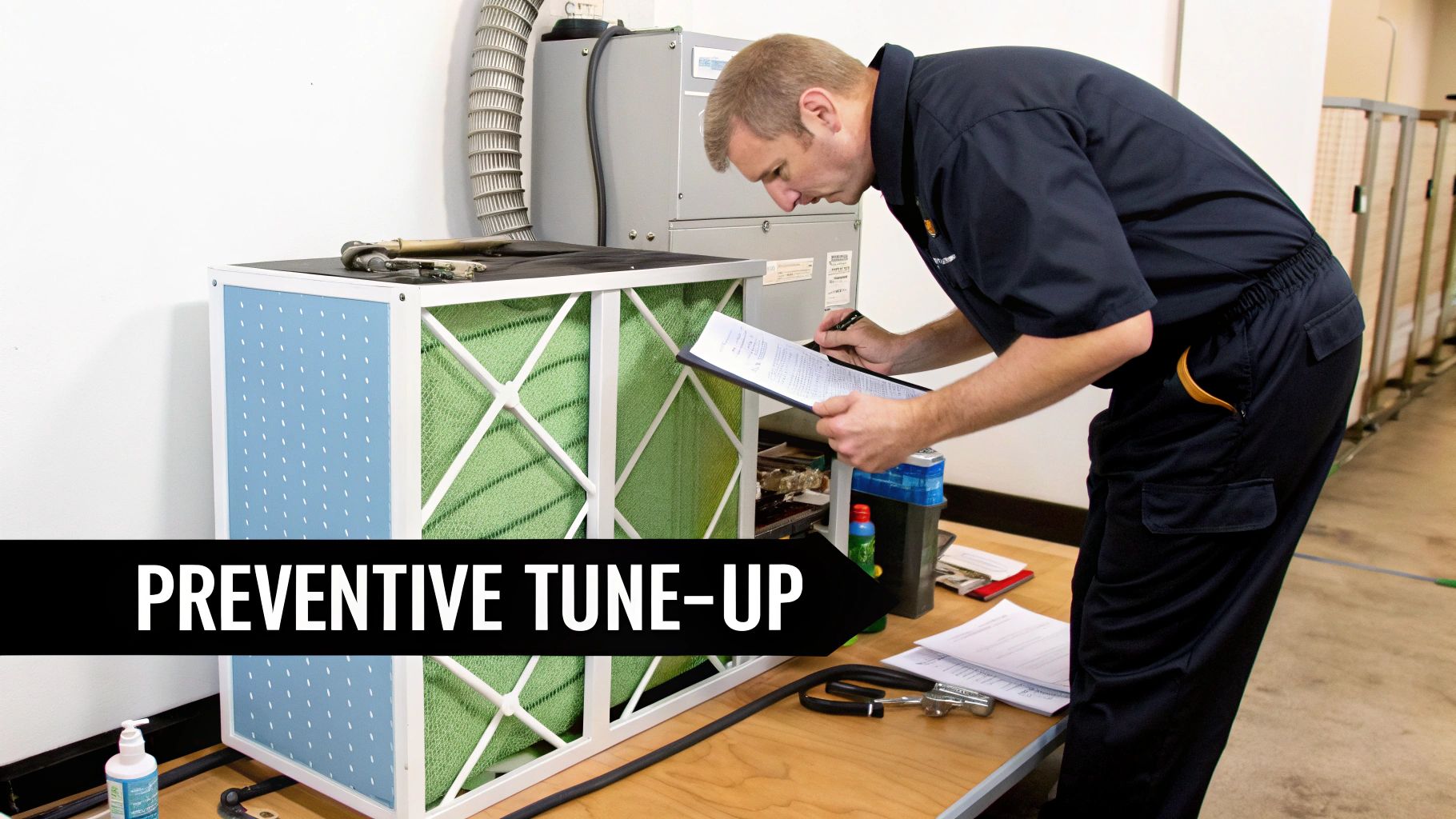
While your own maintenance efforts are crucial, they can't replace the expert eye of a certified HVAC technician. Think of an annual professional tune-up as an investment that pays for itself by catching small issues before they snowball into major failures. It's a deep clean and a thorough safety inspection all rolled into one.
During a tune-up, a technician does far more than just look things over. They perform critical services that directly prevent short cycling. For instance, they'll clean the flame sensor to ensure proper ignition, tighten electrical connections to head off control board errors, and check the gas pressure to ensure safe, efficient combustion.
It's easy to forget, but heating and cooling are responsible for about half of all final energy use globally. A furnace that constantly cycles on and off makes this inefficiency much worse, as every startup requires a jolt of power. Innovations like smart thermostats have helped cut down on cycling, leading to energy savings of up to 20-25% for some households. Keeping your furnace professionally tuned for peak performance is a huge part of that equation.
Got Questions About Your Furnace Cycle? We've Got Answers
After digging into what causes a furnace to act up, you probably still have a few questions rolling around. Homeowners ask us these things all the time when they're trying to get a handle on what's normal and what's a real problem. Let's clear up some of the most common ones.
The first step is always figuring out what a healthy furnace cycle even looks like. If your furnace kicks on and then shuts off after just a minute or two, that’s a pretty clear sign something is wrong. But what's the goal? Knowing the ideal run time gives you a solid baseline.
How Long Should a Furnace Run in a Normal Cycle?
On a chilly day, a properly working furnace should run for about 10 to 15 minutes per cycle. You can expect it to do this two or three times an hour to keep your home comfortable. This run time is the sweet spot: it's long enough to heat your space evenly without overworking the system's components.
Of course, this isn't set in stone. When a true winter cold snap hits, your furnace will naturally need to run longer to keep up. The real tell-tale sign of trouble is a sudden change. If you go from long, steady cycles to a bunch of short, choppy ones, your furnace is short-cycling and needs a closer look.
Can an Oversized Furnace Cause Short Cycling?
Absolutely. In fact, it's one of the most frequent culprits we find when diagnosing short-cycling issues. A furnace that's too big for your home is like trying to use a fire hose to water a potted plant, it's just way too much power for the job.
It will blast your home with a huge amount of heat, hitting the thermostat's set temperature in just a few minutes, and then immediately shut down. Because this happens so fast, the system never gets to complete a full, proper heating cycle. The result? You get annoying temperature swings, wasted energy, and a furnace that's aging way too fast from the constant starting and stopping. The only way to avoid this is with a professional "load calculation" to make sure the furnace is the perfect size for your home.
A correctly sized furnace is the foundation of an efficient heating system. An oversized unit will short cycle from day one, leading to years of high energy bills and premature component failure.
Is Furnace Short Cycling an Emergency?
Sometimes, yes. But it really depends on what's causing it. A simple clogged filter isn't an emergency, but short-cycling can also be a symptom of something far more serious, like a cracked heat exchanger that could be leaking carbon monoxide into your home.
How you should react depends entirely on the other signs you're noticing:
This is an immediate emergency: If you smell gas, your carbon monoxide detector goes off, or you have any reason to suspect a CO leak, get everyone out of the house immediately. Don't touch any light switches or electronics on your way out. Once you're safely outside, call 911 and then your utility company.
This requires an urgent professional call: If you've tried the simple DIY fixes (like changing the filter) and the furnace is still short-cycling, it's time to call in a pro. The problem needs to be diagnosed and fixed quickly to prevent more expensive damage to your system.
If you're dealing with furnace problems or just want to make sure your system is running safely and efficiently, don't put it off until it breaks down completely. The certified technicians at Covenant Aire Solutions are ready to diagnose and solve the problem, keeping your home comfortable and safe. Schedule your service today at https://www.covenantairesolutions.com.