
Why Is Your AC Leaking Water Outside? Fix It Quickly
Don't panic if you see a bit of water near your outdoor AC unit. On hot, humid days, it's often just a normal part of the cooling process. Think of it as your AC sweating while it works hard. This condensation is typically a sign that everything is running smoothly.
However, if that small drip turns into a significant, persistent puddle, it's time to pay attention. This usually points to a fixable issue, like a clogged drain line or frozen components inside, that needs to be addressed before it becomes a bigger headache.
Understanding Why Your AC Leaks Water
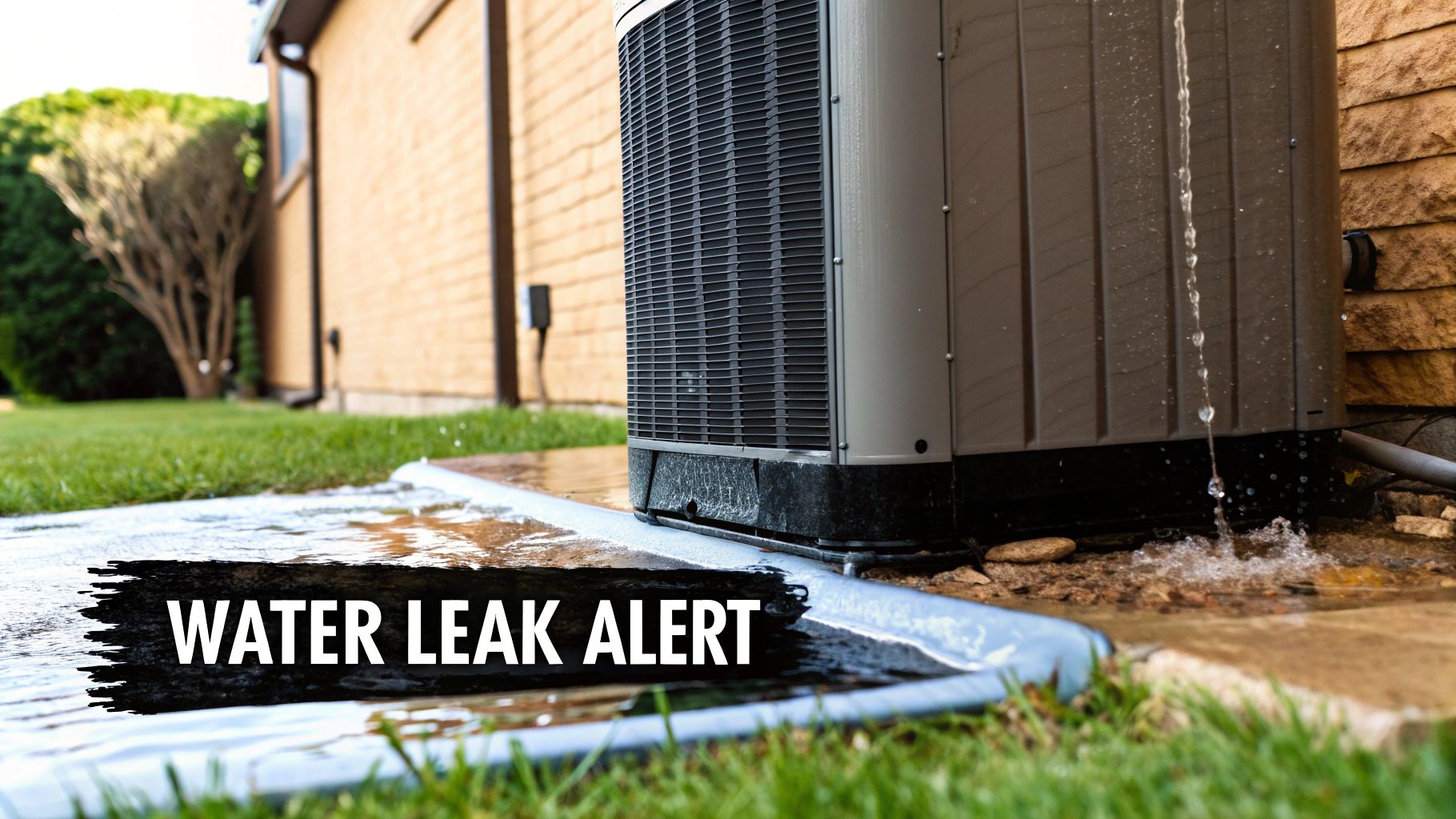
Spotting a pool of water under your air conditioner can be alarming, but it rarely signals an expensive disaster. More often than not, it's a manageable problem. Remember, your AC's job isn't just cooling the air; it's also pulling humidity out of your home, and all that moisture has to go somewhere.
This dehumidifying process creates condensation on the indoor evaporator coil. The water drips into a drain pan and then flows through a condensate drain line to the outside. When everything is working as it should, you’ll notice a slow, steady drip near your outdoor unit, which is totally normal.
Common Causes for Exterior Leaks
So, what turns that normal drip into a problematic puddle? A few common issues are usually the culprits, and understanding them can help you figure out what's going on.
Clogged Condensate Drain Line: This is the big one. Algae, dirt, and other gunk can build up and create a blockage in the drain pipe. When that happens, water has nowhere to go but back up and overflow.
Dirty Air Filter: If your filter is clogged, it chokes the airflow over the evaporator coil. This can cause the coil to get too cold and freeze up. When all that ice eventually melts, the sudden gush of water overwhelms the drain pan.
Improper Installation: If the outdoor unit isn't perfectly level, water can't drain correctly from the internal components. Instead of flowing out, it pools up and eventually leaks out where it shouldn't.
Believe it or not, issues with condensate drainage are incredibly common. They're one of the top reasons people call for HVAC service. In fact, a staggering 90% of service visits for air conditioners are related to water leaks, often caused by overworked systems or simple clogs. You can get more details on how your system works in our guide to air conditioning basics for homeowners.
A small amount of water from the condensate line is perfectly normal. It’s the large, persistent puddles that indicate a clog or another issue that needs immediate investigation to prevent further damage.
To help you troubleshoot, here’s a quick table that connects the dots between what you're seeing and what might be wrong.
Quick Guide to Outdoor AC Leaks
Symptom | Most Likely Cause | Next Step |
|---|---|---|
Small, occasional dripping | Normal condensation process | No action needed. This is a good sign! |
Large, consistent puddle | Clogged condensate drain line | Turn off the AC and inspect the drain line. |
Puddle + AC not cooling well | Dirty air filter causing a frozen coil | Check and replace your air filter. |
Water pooling at the unit's base | Improper leveling or installation | Use a level to check the unit's position. |
This table should give you a solid starting point. If the problem persists after you’ve checked the basics, it’s probably time to bring in a professional to take a closer look.
So you've spotted water pooling around your outdoor AC unit. Now comes the big question: is it just doing its job, or is it a cry for help? Figuring out the difference between normal condensation and a real problem is the first step, and it'll give you the confidence to know whether you can relax or need to roll up your sleeves.
On any hot, muggy day, your air conditioner is working overtime to pull humidity out of your home's air. That moisture has to go somewhere, right? It collects on the chilly evaporator coil inside, then gets funneled outside through a PVC pipe, which we call the condensate drain line. Seeing a small, steady drip from this pipe is actually a good sign; it means your AC is working perfectly.
Signs of Healthy Condensation
Think of it like this: a small wet spot on the concrete right under that little drain pipe after a humid afternoon is just business as usual. It's simply all the moisture your system has wrung out of your indoor air. You'll probably see more of it when the system has been running for a long time.
Here's what's considered normal:
Location: The water is dripping only from the end of the white or black PVC drain pipe.
Volume: It's a slow, consistent drip or a small puddle that doesn't stick around for too long.
Timing: You notice it most during hot, humid weather when the AC is running nonstop.
If that sounds like what you're seeing, you can breathe a sigh of relief. Your system is just doing what it was designed to do.
Red Flags That Signal a Real Problem
Things get a little more serious when the water starts acting differently. The real issue often comes down to how and where that water is showing up. If your ac is leaking water outside in a way that seems excessive or is coming from the wrong place, that’s a clear signal something has gone wrong with the drainage process.
A problem leak just looks different. For example, if the entire concrete slab under your unit is soaked, or worse, you see water seeping from the metal housing itself, it's time to play detective.
The key thing to remember is that water should only come out of the designated condensate drain line. If you see water anywhere else, leaking from the seams of the unit's cabinet or forming a large, swampy pool, it points to a blockage or a more serious issue.
Here are the main warning signs you need to watch for:
A Large, Persistent Puddle: A big pool of standing water that just won't evaporate is a classic sign of a clog or overflow. It usually means the drain line is blocked, forcing all that water to back up and spill out wherever it can.
Water Leaking from the Unit Housing: If you see water seeping from the sides or bottom of the metal cabinet, that's a big deal. It could mean the internal drain pan has overflowed or, in some cases, has cracked.
Visible Ice or Frost: Noticing ice on the unit, especially on the refrigerant lines or coils, is a major red flag. When that ice eventually melts, it's going to release a sudden flood of water that the drain system can't possibly handle, leading to a significant leak.
How to Fix Common Causes of an Outdoor AC Leak
When you see your AC is leaking water outside, it's easy to assume the worst. But more often than not, it’s not a sign of a looming disaster. Most of the time, the fix is pretty straightforward, something you can handle with a little bit of know-how and some basic tools. By tackling the most common culprits yourself, you can often save some money and get your system back to normal in no time.
This infographic breaks down the simple DIY steps you can take to address common AC leaks, keeping safety and effectiveness in mind.
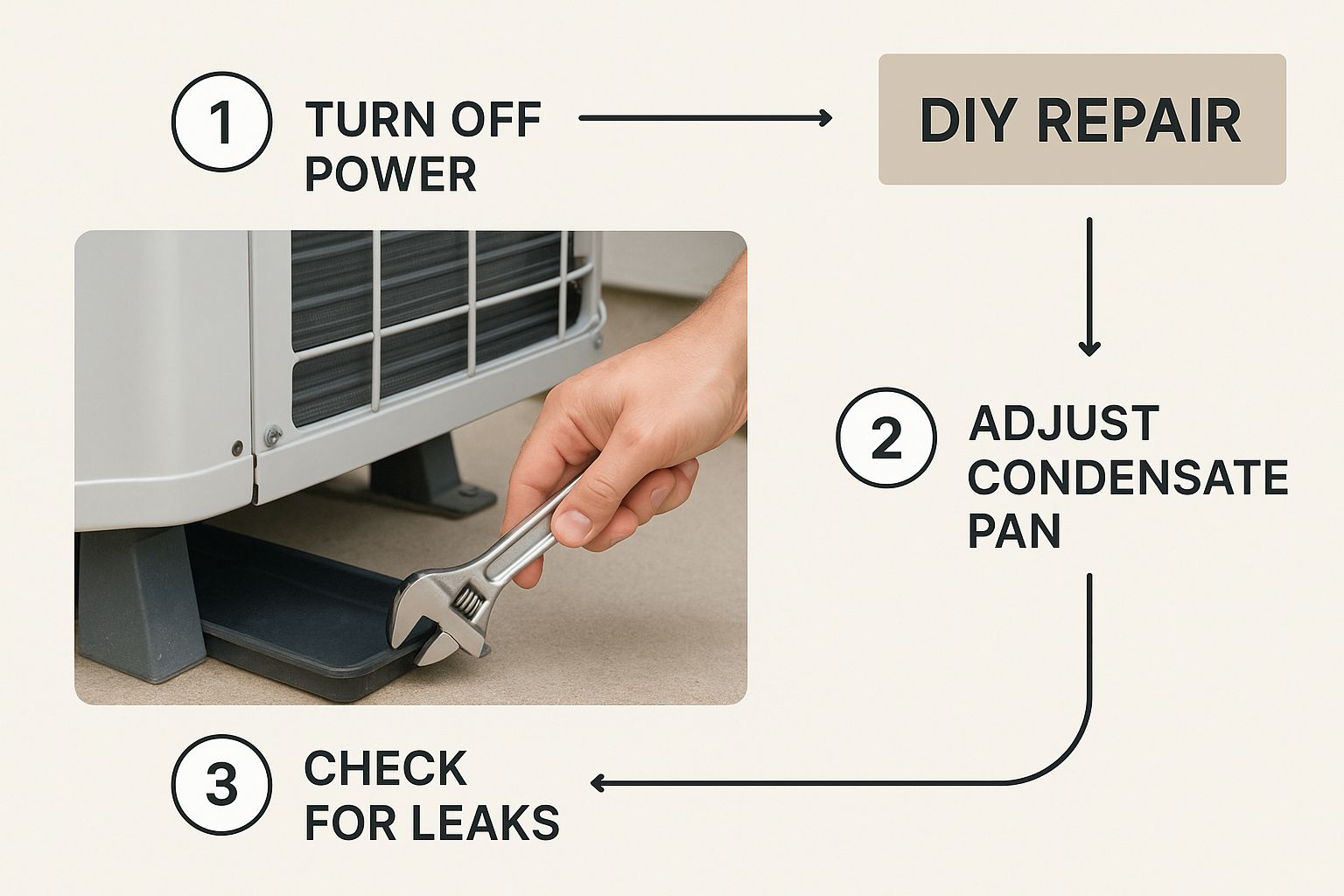
As you can see, fixing a leak often comes down to simple maintenance like clearing a line or checking a pan. It really reinforces that many of these issues are well within a homeowner's reach.
Tackle a Clogged Condensate Drain Line
The single most frequent cause of an outdoor AC leak is a blocked condensate drain line. This is the PVC pipe that's responsible for carrying moisture away from your indoor unit. Over time, it can get clogged with algae, dirt, and other gunk, causing water to back up and spill over.
To fix this, you’ll first need to find the drain line. It's usually a white or black PVC pipe running from your indoor air handler to the outside of your house, often near the outdoor condenser unit. Once you find the end of it, a wet/dry vacuum is your best friend for clearing the blockage.
Here’s how to do it safely:
Power Down Your AC: First thing's first, always turn off the power to your entire HVAC system at the circuit breaker. This is a crucial safety step you should never, ever skip.
Attach the Vacuum: Secure the nozzle of your wet/dry vacuum to the end of the condensate drain pipe. You might need to use your hand or a rag to create a good, tight seal.
Clear the Blockage: Fire up the vacuum and let it run for a minute or two. The suction should be powerful enough to pull out whatever gunk is causing the clog.
Check Your Work: After you're done, restore the power and run your AC. If you did it right, you should see water flowing freely from the pipe again.
For a more detailed walkthrough, you might want to check out our guide on how to clean an AC condensate drain line like a pro.
A clogged drain line is like a dam in a river; that water has to go somewhere. By clearing the path, you restore the natural flow and prevent a flood where it doesn't belong.
Check and Replace a Dirty Air Filter
It might not seem related, but a dirty air filter is another top suspect when your AC is leaking water outside. When a filter gets clogged, it chokes off the airflow over the evaporator coil. This causes the coil's temperature to plummet and freeze over. When your system eventually cycles off, all that ice melts at once, completely overwhelming the drain pan and leading to a serious leak.
Thankfully, the fix is simple and something that should be part of your regular home maintenance.
Turn Off the Power: Again, safety first. Shut off your AC at the breaker box before you start.
Locate and Remove the Filter: Find the filter compartment on your indoor air handler and slide out the old, dirty filter.
Install the New Filter: Pop in a new, clean filter of the correct size. Just make sure the arrows on the filter frame point in the direction of the airflow, usually toward the furnace or air handler itself.
Swapping out your air filter every 1-3 months is one of the easiest and most effective things you can do to prevent leaks and keep your system running efficiently.
Inspect the Condensate Drain Pan
If the drain line is clear and your filter is fresh, the last thing to check is the condensate drain pan itself. This pan sits right under the indoor evaporator coil to catch condensation. Over time, older metal pans can rust and develop cracks, or plastic pans might become brittle and break.
Grab a flashlight and take a close look for any visible cracks, holes, or signs of rust. If you find any damage, this is one of those repairs that usually requires a professional touch. Replacing a drain pan can be tricky, and an improper installation will just lead to more leaks down the road. It’s a small-scale example of a bigger problem; water leakage is a massive infrastructure challenge worldwide. The amount of treated water lost daily could fill tens of thousands of pools, which really highlights how critical good drainage systems are. You can learn more about global water management challenges in this detailed report.
Spotting a Refrigerant Leak vs a Water Leak
Finding a puddle under your AC unit can be alarming, but don't panic just yet. The first thing you need to figure out is what exactly you're looking at. While an ac is leaking water outside is usually just a simple drainage problem you can often fix yourself, a refrigerant leak is a whole different beast. It's a serious issue that needs a professional, fast.
The key is knowing they look, feel, and act completely differently. A water leak is just what it sounds like: H2O from normal condensation. It will be clear, have no smell, and evaporate like any other puddle. A refrigerant leak, on the other hand, is a chemical substance. It almost always leaves behind a greasy, oily residue, often found around the unit's copper lines or fittings.
Key Differences to Look For
You might also hear a faint but distinct hissing or bubbling sound coming from the unit. That’s a dead giveaway that refrigerant is escaping under high pressure. Another huge clue is a sudden, sharp drop in your AC's cooling power. One day it's working fine, the next it just can't seem to keep your home cool no matter how low you set it.
Refrigerant is the absolute lifeblood of your cooling system. A leak doesn't just stop your AC from working; it poses real safety and environmental risks. Never, ever try to handle a suspected refrigerant leak on your own.
To make it even clearer, I've put together a simple table to help you tell the two apart at a glance.
Water Leak vs Refrigerant Leak Signs
Figuring out what's dripping from your AC is the first critical step. Is it harmless condensation or a hazardous chemical? This table breaks down the signs to look for.
Symptom | Water Leak | Refrigerant Leak |
|---|---|---|
Texture & Appearance | Clear and watery | Greasy, oily residue |
Sound | Usually silent | A hissing or bubbling noise |
Cooling Performance | Unaffected | Significant drop in cooling |
Location | Dripping from the PVC drain line | Near copper lines and fittings |
Knowing which you're dealing with helps you take the right next step and accurately describe the problem when you call a technician.
This distinction is critical because refrigerant leaks are more than just a mechanical problem. The leakage of hydrofluorocarbon (HFC) refrigerants is a major environmental concern. Studies have shown that residential AC units leak an average of 6-7.7% of their total refrigerant charge every year. This loss wrecks your AC's efficiency and pumps potent greenhouse gases straight into the atmosphere.
If you think your AC is leaking something that isn't water, it's crucial to understand why these chemicals require professional handling. You can learn more in our guide on what refrigerant replaces R22.
Knowing When to Call an HVAC Professional

While many causes of an AC leaking water outside are simple enough to tackle yourself, it's just as important to know when a problem is out of your league. Trying to handle complex repairs without the right training or tools can turn a small issue into a costly disaster. More importantly, it can pose serious safety risks.
Knowing your limits is key. Simple jobs like changing a filter or vacuuming a drain line are generally safe for most homeowners. But when you start seeing signs of more complex electrical or mechanical failures, it’s time to put the tools down and pick up the phone.
Red Flags That Demand an Expert
Some symptoms are clear indicators that you're dealing with something beyond a simple clog. If you notice any of the following, your safest bet is to call a certified HVAC technician right away. Don't hesitate, as these issues can escalate quickly.
Here are the definite signs you need a pro:
Significant Ice Buildup: A thick layer of ice on your evaporator coils or refrigerant lines points to a deeper issue, like low refrigerant or a severe airflow blockage.
Oily Residue: As we've mentioned, that greasy substance around fittings or lines is a telltale sign of a refrigerant leak. This is hazardous material and requires professional handling.
Constant Circuit Breaker Trips: If your AC unit repeatedly trips the breaker, it’s signaling a serious electrical problem. This could be a failing compressor or bad wiring, both of which are major fire hazards and not something to experiment with.
Loud, Unusual Noises: Banging, grinding, or screeching sounds often mean mechanical parts like the motor or compressor are failing.
Attempting to fix major electrical or refrigerant-related problems can lead to personal injury, void your system's warranty, and result in far more expensive damage than the original issue.
The Risks of DIY Overreach
The appeal of saving a few bucks on a service call is strong, I get it. But the potential cost of a failed DIY repair is much, much higher. A minor mistake could damage sensitive components, leaving you with a bill that far exceeds what a simple professional visit would have cost. For instance, incorrectly handling refrigerant can cause severe burns and is illegal without proper certification.
When severe outdoor AC leaks lead to bigger problems, homeowners often worry about potential damage to their home's foundation. It's important to understand how your policy might handle such serious concerns. You can find valuable information on homeowners insurance coverage for foundation repair due to water damage to better prepare for a worst-case scenario.
When you're faced with a persistent leak or any of the red flags we covered, investing in a professional diagnosis is the smartest move. If you need reliable and expert help, consider scheduling a professional AC repair to ensure the job is done safely and correctly.
Common Questions About AC Leaks
Even after you've pinpointed the problem, a few questions might still be nagging you. When your ac is leaking water outside, you want to feel confident you know exactly what’s happening. Let's clear up some of the most common concerns homeowners have after finding a leak.
Is More Water Normal When It Is Very Hot Outside
Yes, absolutely. On those scorching hot, humid days, your air conditioner is working overtime to pull moisture out of the air, and all that moisture has to go somewhere. Seeing a steady, noticeable drip from the condensate line is actually a good sign because it means your unit is doing its job.
The real red flag is the difference between a drip and a puddle. A constant drip is totally fine. A large, spreading pool of water collecting at the base of the unit, on the other hand, still points to a drainage problem that needs your attention.
Think of it this way: a hardworking person sweats more, and so does a hardworking AC. The problem isn't the sweat itself, but if it can't drain away properly, it creates a mess.
Can a Clogged Filter Really Cause My AC to Leak
You bet. It's one of the most frequent, and overlooked, causes of AC leaks. When an air filter gets clogged with dust and debris, it chokes off the airflow moving across the evaporator coil. This causes the coil's temperature to plummet below freezing.
Before you know it, ice builds up all over the coil. When your AC unit cycles off, all that ice melts at once, sending a sudden gush of water into the drain pan. This flood of water is often too much for the pan to handle, causing it to overflow and create a major leak. Changing your filter regularly is hands-down the cheapest and easiest preventative maintenance you can do.
For more simple DIY fixes that can save you a service call, check out these top AC troubleshooting tips to fix your air conditioner fast.
How Much Does It Usually Cost to Fix a Leaking AC
The cost to fix a leaking AC can swing wildly depending on what’s causing it.
DIY Fixes: Simple things like swapping out a dirty air filter or using a shop vac to clear a minor clog in the drain line will usually set you back less than $25.
Professional Service Call: If you need a pro to come out and professionally flush a stubborn clog, you're typically looking at a bill between $75 and $250.
More Serious Repairs: For more complicated issues, like a refrigerant leak or a cracked drain pan, the repair costs can easily climb into the hundreds of dollars.
If an AC leak has already caused some damage to your property, you'll probably wonder how to handle the repairs. It's a good idea to understand the common insurance questions regarding water damage from resources that specialize in restoration. Knowing your options is always a good thing.
Your best defense is always going to be preventative maintenance. Swap out your air filter every one to three months. Every few months, pour a cup of distilled vinegar down the condensate drain line to stop algae and gunk from growing. And finally, get a professional tune-up once a year. This proactive approach catches the small stuff before it turns into an expensive, watery disaster.
If you're dealing with a leak that just won't quit or you'd rather have an expert take a look, Covenant Aire Solutions is here to help. Our certified technicians can quickly get to the bottom of the problem and give you a reliable, upfront quote for the repair. Don't let a small leak turn into a major headache; visit covenantairesolutions.com to schedule your service today.