
AC Short Cycle: Causes, Fixes, & Pro Help
It's 9 p.m. in mid-July, the Tucson air still feels heavy, and your thermostat says 82°F. The AC starts with a click, blows for three or four minutes, then shuts down. A few minutes later, it starts again. The compressor outside hums briefly, stops, and repeats the pattern long after everyone has gone to bed.
That behavior is called AC short cycling. It can begin with something simple, such as a clogged filter, but it can also point to low refrigerant, a thermostat problem, an electrical fault, or equipment that was oversized for the home from the day it was installed. The practical job is to separate the homeowner checks from the problems that require a trained diagnosis.
What AC Short Cycling Looks Like in a Tucson Home
A brief cycle by itself does not confirm a failure. If the indoor temperature is already near the thermostat setting, or the outdoor heat load changes, the system may shut off sooner than usual. The warning sign is a repeating pattern while the home still needs steady cooling: the unit starts, runs briefly, stops, and soon starts again.
Industry guidance commonly treats runtimes under three to five minutes as abnormal, while healthy systems cycle about three to five times per hour. HVAC short-cycling guidance identifies the pattern as a reliability and efficiency concern, not merely an irritating sound. Track the timing for several cycles, because one unusually short run tells you less than a repeated pattern.
The clues you can hear and feel
Homeowners often notice these signs before they know the term:
Brief air bursts: Vents blow cool air at first, then the air feels less cool before the room reaches a comfortable temperature.
Frequent indoor clicks: The thermostat or air handler clicks each time the cooling call begins and ends.
A restless outdoor unit: The compressor hums, runs briefly, and winds down, then repeats the sequence.
Uneven comfort: One room may feel acceptable while a closed bedroom remains warm or damp.
A changed electric bill: Repeated starts can increase energy use even when the thermostat setting stays the same.
Tucson's hot, dry climate can make the problem easy to misread. A short-running unit may cool the air around the thermostat without running long enough to remove moisture effectively. That can leave parts of the home feeling clammy, especially if the equipment is oversized. Carrier's explanation of AC short cycling ties oversized equipment to fast thermostat satisfaction and weaker humidity control.
The sound points to a symptom, not a diagnosis. A dirty filter or blocked airflow may be within a homeowner's safe inspection routine, while low refrigerant, electrical faults, or a poor load match require professional testing. Covenant Aire Solutions can help determine whether the pattern comes from a simple maintenance issue, a deeper equipment problem, or capacity that does not match the home.
How a Healthy Cooling Cycle Is Supposed to Work
On a hot Tucson afternoon, the thermostat senses that the room has risen above its setting and sends a cooling request. The compressor and indoor blower start, refrigerant moves through the system, and warm indoor air passes over the evaporator coil. The unit then keeps cooling at a steady pace until the thermostat reaches its target and ends the call.
On a 105°F Tucson afternoon, a healthy system often runs 15 to 20 minutes per cycle. Treat that as a typical range, not a guarantee. The actual pattern depends on insulation, sunlight through windows, people and appliances in the home, duct performance, equipment condition, and the thermostat setting. The useful sign is sustained operation rather than rapid restarting.
A cooling system works like a calm, steady heartbeat. The compressor and blower need time to move heat outside and allow the coil to collect and drain moisture. A short-cycling unit starts and stops before completing that work, much like a heartbeat that repeatedly speeds up and stalls.
For a practical explanation of the compressor, evaporator, condenser, and airflow sequence, review how an AC works.
Indicator | Normal Cycle | Short Cycling |
|---|---|---|
Runtime | A sustained run that matches the home's cooling demand | A brief run followed by an early shutdown |
Starts per hour | A steady pattern that suits the equipment and conditions | More frequent starts than the system's usual rhythm |
Coil operation | Enough time for cooling and moisture removal | Too little time for effective moisture removal |
Indoor comfort | More even temperatures and better humidity control | Possible clamminess, uneven rooms, or temperature swings |
Mechanical demand | Fewer compressor starts | Repeated starts that stress electrical and compressor components |
The main difference appears in three areas. Dehumidification falls because indoor air does not stay on the cold coil long enough for moisture to condense and drain. Latent heat removal suffers, so the thermostat may show a cooler reading while people still feel uncomfortable. Electrical components experience cumulative stress, especially the contactor and capacitor that help control and start the compressor.
Equipment size also matters. A unit with more capacity than the home needs can satisfy the thermostat quickly, even though rooms and surfaces have not cooled evenly. In Tucson, intense outdoor heat adds demand, but the right system still needs a suitable load match and enough airflow to complete each run.
Each short cycle points to a different interruption in this sequence. A filter can restrict airflow, a refrigerant fault can alter coil conditions, a thermostat can end the call too soon, and an electrical problem can cut power unexpectedly. Simple checks may identify an obvious maintenance issue, while load matching, refrigerant, and electrical testing belong with a qualified technician. Covenant Aire Solutions can evaluate the pattern and recommend maintenance or repair based on the home and equipment.
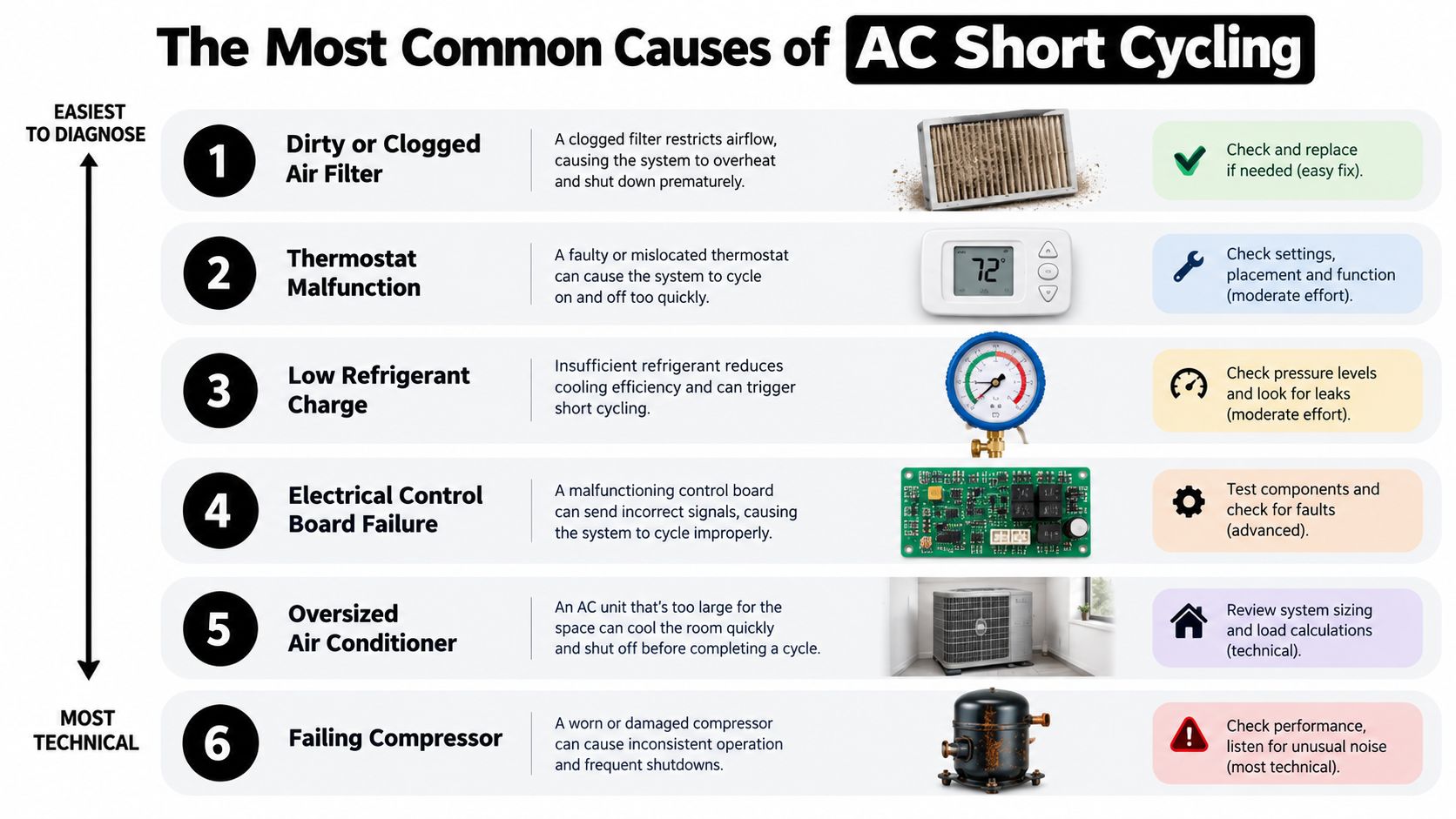
The Most Common Causes of AC Short Cycling
Start with the causes you can observe, then move toward problems that require instruments and technical training. A short cycle is a symptom, not a diagnosis.
1. Restricted airflow from a filter or vents
A dirty or clogged filter makes the blower work against resistance. Reduced airflow can make the evaporator coil too cold, allowing ice to form and triggering a protective shutdown. In a Tucson bedroom with a closed supply vent, blocked return grille, furniture over a vent, or leaking duct connection, the system may also fail to move enough air through the home.
This is the homeowner-friendly category. Inspect the filter, open supply and return vents, and move obstructions. Don't keep running the system if you see ice, because the frozen coil can hide a deeper airflow or refrigerant issue.
2. Thermostat location or control trouble
A thermostat near a sunny window, supply vent, doorway, or heat-producing appliance may read a local temperature rather than the room's true condition. It can satisfy the cooling call too early or send erratic signals if its sensor or batteries are failing.
You can check the setting and location. Recalibration, replacement, wiring, and relocation belong with a technician. If the thermostat itself seems unreliable, this thermostat troubleshooting guide provides useful background before service.
3. Low refrigerant or a leak
Refrigerant doesn't get consumed during normal operation. A low charge usually means there's a leak or another fault that needs investigation. Low suction pressure can make the coil or suction line ice up, reduce cooling performance, and activate a safety control that stops the compressor.
Don't attach gauges or add refrigerant yourself. A licensed technician needs to locate the leak, repair it, and charge the system correctly.
4. Oversized equipment
An oversized AC delivers more sensible cooling than the home's load requires. The thermostat reaches its setting quickly, perhaps after only a few minutes, while the rest of the house hasn't received enough dehumidification. The result is a system that appears powerful but leaves the home damp and starts the compressor too often. Trane's short-cycling explanation recommends comparing installed capacity with a proper load calculation rather than assuming a larger unit is better.
5. Electrical and safety faults
A failing capacitor, weak contactor, faulty control board, or pressure switch can interrupt the compressor before the thermostat has finished its job. These failures may look like a filter problem from inside the house because both produce the same start, stop, restart pattern. For compressor-related warning signs, see this guide to AC compressor failure.
The safe dividing line is simple: filters, vents, thermostat settings, and visible debris are reasonable checks. Refrigerant, capacitors, contactors, pressure switches, wiring, and compressor testing require a qualified professional.
Safe Diagnostic Checks You Can Run Before Calling a Technician
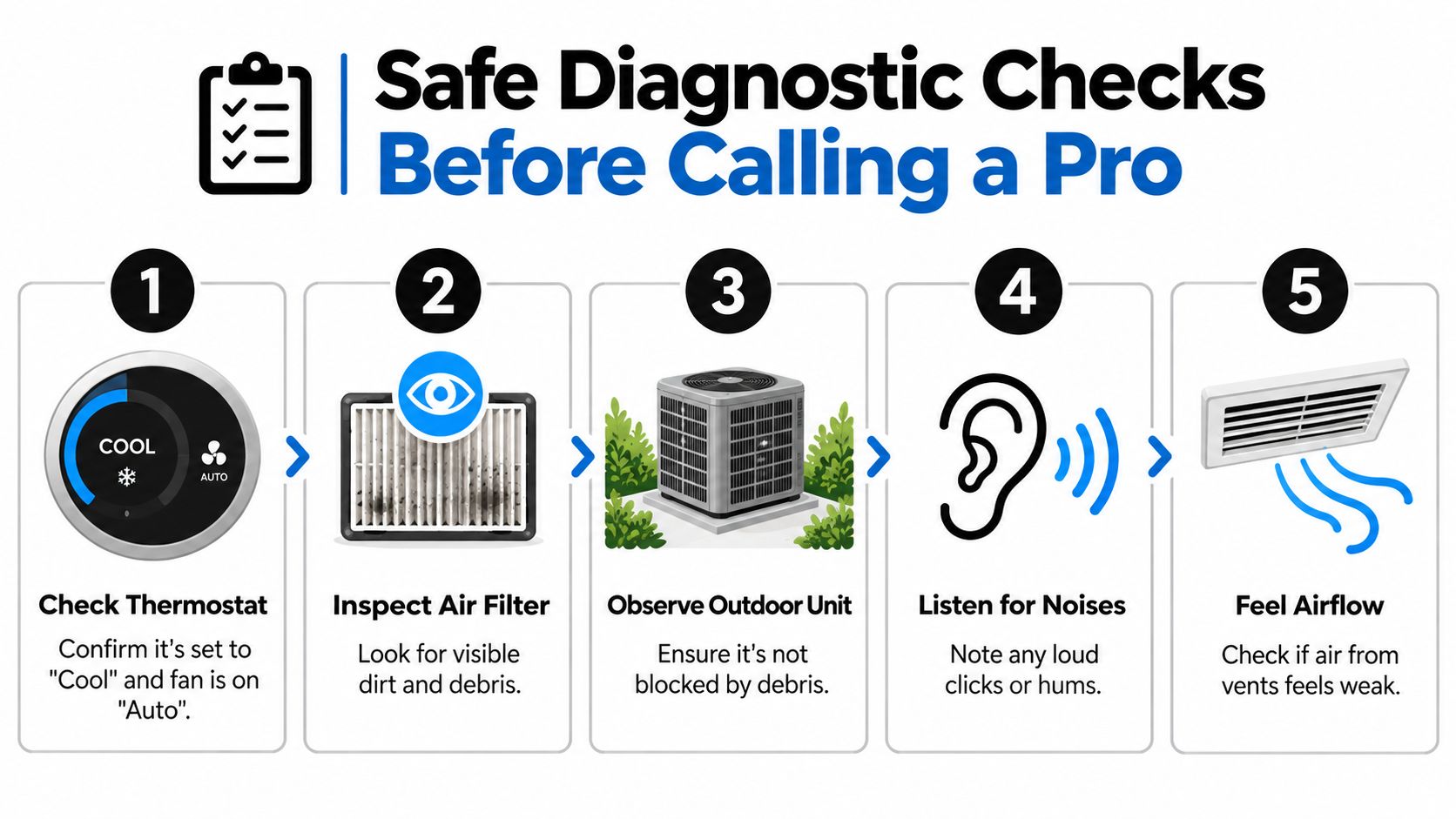
A calm walkaround can rule out the easy causes and give the technician better information. It won't replace a load calculation, refrigerant test, or electrical diagnosis, but it can prevent a needless service call for a filter that has turned gray and matted.
Start at the thermostat
Confirm that the mode is set to Cool and the fan is set to Auto, not On. Set the temperature at least five degrees below the current room temperature so the system has a clear request for cooling. If the thermostat uses batteries, replace them when the display is weak, blank, or behaving inconsistently.
Write down what happens after the call begins. Note the start time, shutdown time, whether the air feels cool, and how soon the unit restarts. A simple phone note is enough.
Check airflow indoors
Turn the system off before removing the filter. Look for a dusty, darkened, or visibly matted surface, then install the correct replacement in the airflow direction shown by the arrow. Walk through the house and make sure supply vents and return grilles aren't closed, covered by furniture, or blocked by rugs.
Weak airflow, ice on the refrigerant line, or water near the indoor unit is a stop sign. Turn the system off and call for service rather than repeatedly testing it.
Observe the outdoor unit from a safe distance
Look for leaves, dust, brush, and monsoon debris around the condenser. Shut power off at the appropriate breaker before gently rinsing visible debris from the outdoor coil with a garden hose. Use light water pressure, don't pry open panels, and don't touch the capacitor, wiring, or disconnect components.
Stand clear while the system operates. A steady airflow and quiet hum are less concerning than rapid clicking, a loud electrical buzz, a compressor that hums without starting, or repeated shutdowns.
Stop point: Refrigerant gauges, capacitor discharge, burnt wiring, and breakers that trip repeatedly belong to a licensed technician.
Use the following walkaround as a quick checklist, then share your observations rather than guessing at the repair.
This short video offers a visual reference for basic AC troubleshooting:
Repair Options and Realistic Cost Ranges
A technician should identify the cause before recommending a part. The invoice depends on equipment type, access, warranty coverage, refrigerant requirements, and whether the short cycling is a symptom of a larger sizing problem. Ask whether the diagnostic fee is credited toward approved repair work, and request the findings in writing.
The table below gives qualitative budget tiers rather than invented dollar figures. Actual Tucson pricing must come from the contractor after inspection.
Likely Repair | Typical Cost Range | Symptom It Addresses |
|---|---|---|
Thermostat recalibration or replacement | Lower repair tier | Early shutdown, inaccurate readings, erratic cooling calls |
Filter replacement or airflow correction | Lower repair tier | Weak airflow, dirty filter, blocked vents, possible coil icing |
Coil or condenser cleaning | Lower to moderate repair tier | Dirt-related overheating and restricted heat transfer |
Capacitor or contactor replacement | Moderate repair tier | Humming, clicking, failed starts, or intermittent compressor operation |
Refrigerant leak search and repair | Higher repair tier | Ice, weak cooling, low suction pressure, repeated safety shutdowns |
Coil repair or replacement | Higher repair tier | Persistent refrigerant loss traced to a leaking coil |
Fan motor or compressor replacement | Highest repair tier | Motor failure, overheating, or a compressor that won't start or stay running |
A diagnostic fee is separate from the repair itself in many service arrangements. The technician may measure airflow and static pressure, test capacitors and contactors, inspect coils, evaluate refrigerant conditions, and compare installed capacity with the home's load. Those steps matter because replacing a capacitor won't solve short cycling caused by an oversized unit.
For additional context on how repair pricing is usually organized, review this AC repair cost guide. Equipment age and manufacturer warranty can shift the decision. A covered compressor may produce a very different out-of-pocket result from an older system with several failing components.
Be cautious about a “recharge only” recommendation when the charge is low. If a leak remains, adding refrigerant may quiet the symptom temporarily without correcting the cause.
Why Ignoring Short Cycling Costs You More Over Time
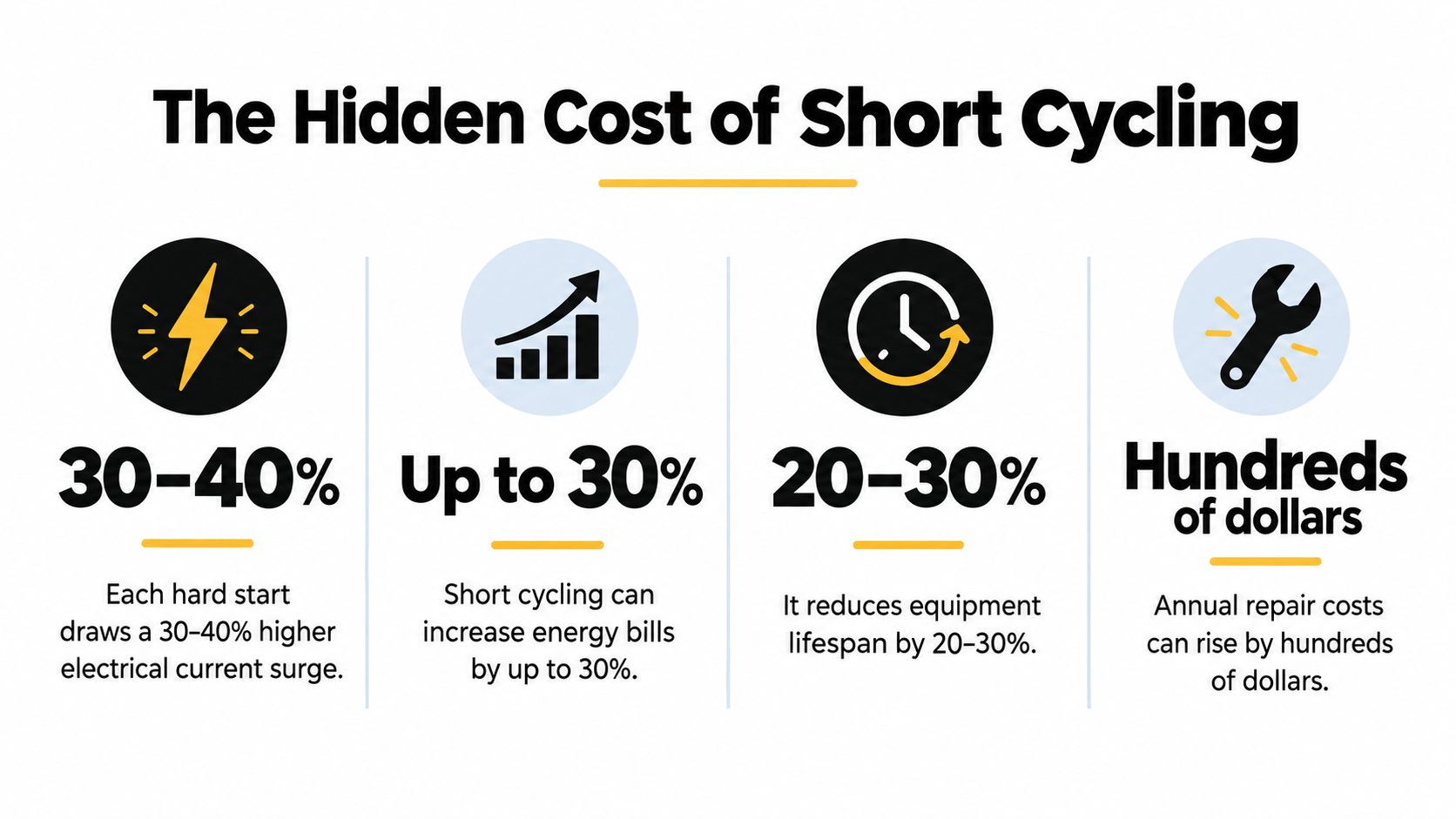
In a Tucson home, short cycling can look harmless because cool air still reaches the rooms. The hidden cost comes from repeated restarts. Each start places electrical and mechanical strain on the compressor and its controls, much like repeatedly turning a car engine on and off instead of letting it run steadily.
One industry reference estimates about 40% higher energy consumption for short cycling than for a properly operating unit. It also reports that 73% of premature compressor failures are associated with short cycling, refrigerant problems, or inadequate airflow. These figures are discussed in HVAC short-cycling reliability guidance. They are directional, not a prediction of what every Tucson homeowner will pay.
Energy use is only one part of the bill. A separate HVAC explanation places the possible increase at 20 to 30%, with an estimate of 2,160 to 3,240 kWh per year for a typical U.S. home. Actual results vary with equipment, climate, and the cause of the cycling. This energy-cost discussion also explains that safety switches, refrigerant faults, electrical problems, and frozen coils may produce the same symptom.
The expensive part isn't always obvious
Every hard start asks the compressor to overcome electrical and mechanical resistance. A weak capacitor can make that start harder, while a dirty condenser can raise operating temperature. In Tucson's intense summer heat, that added strain leaves less room for a system already working near its limit.
The repair may begin with airflow or control work, yet continued cycling can eventually put the compressor at risk. Covenant Aire Solutions can help separate a simple homeowner correction from a deeper load-matching or electrical fault. A repeated click every few minutes is an early warning, giving you time to address the cause before peak cooling demand.
Preventative Maintenance Habits That Stop Short Cycling
Tucson maintenance works best when it follows the desert cooling calendar rather than a vague annual reminder. Dust, extreme heat, and monsoon debris can affect airflow and outdoor heat rejection, so each season calls for a different look at the system.
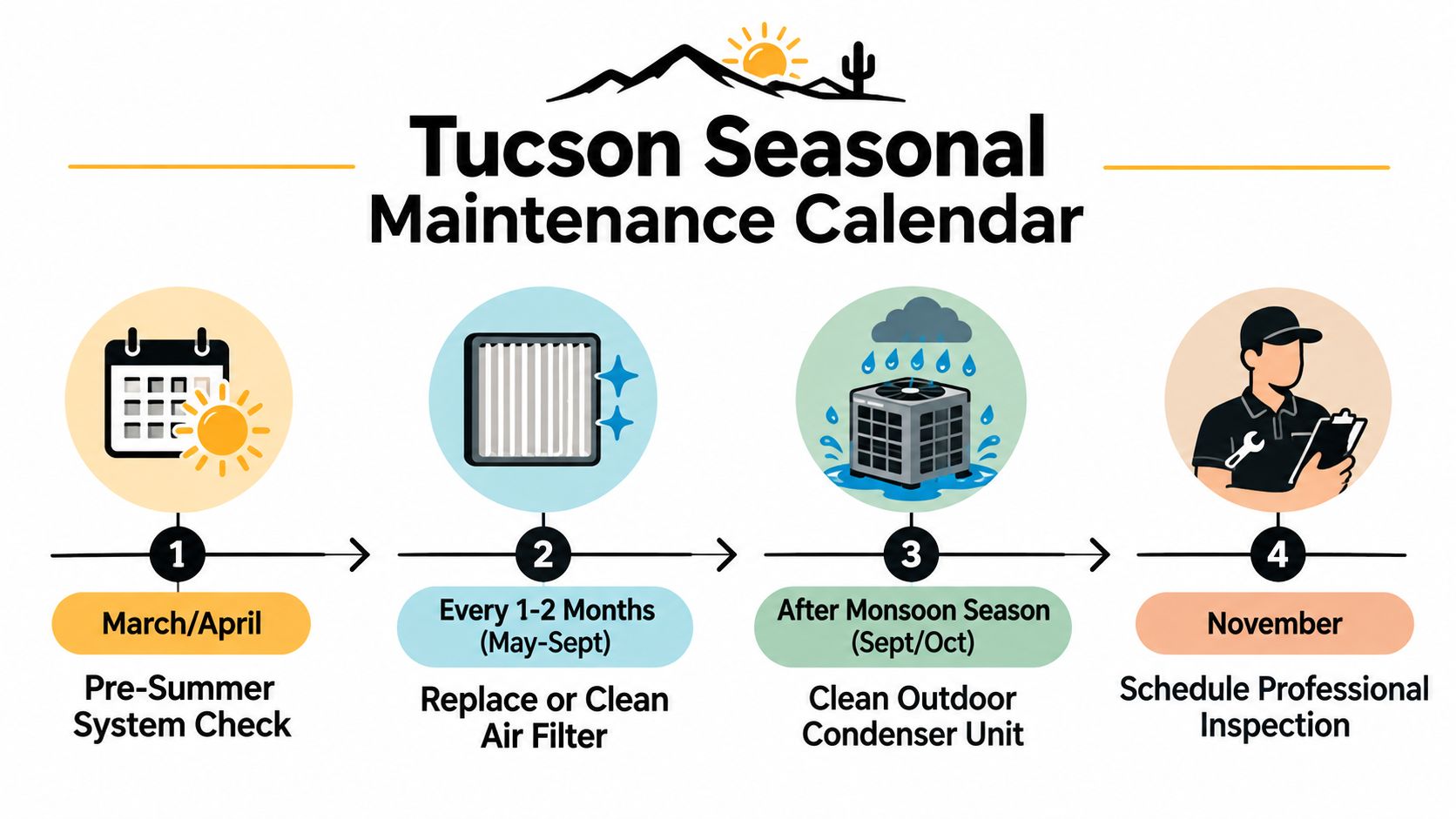
A practical Tucson schedule
March or April: Arrange a pre-summer system check before sustained cooling demand arrives. Ask the technician to inspect airflow, coils, electrical controls, refrigerant condition, condensate drainage, and thermostat operation.
May through September: Check the filter monthly during peak use and replace it when it looks loaded. The correct interval depends on the filter and household conditions, so visual inspection is more useful than following a rigid calendar.
Late September or October: Inspect and clean the outdoor condenser after monsoon activity has carried dust, leaves, and plant material around the unit.
November: Consider a professional inspection while demand is lower, especially if the system displayed unusual cycling during summer.
Keep roughly two feet of clearance around the outdoor unit, as recommended in the maintenance guidance supplied for this topic. Trim vegetation, remove loose debris, and rinse the coil gently with a hose after shutting off power at the breaker. Don't use a pressure washer, and don't bend the delicate fins.
Small indoor tasks with a real payoff
Flush the condensate drain with a diluted vinegar solution if your equipment manufacturer permits that method, and watch for slow drainage or water near the indoor unit. Replace thermostat batteries every six months if your model uses them. Keep return grilles open and clear so the blower can move the air the system was designed to handle.
Shade can also reduce the heat reaching a home, although trees must be planned carefully around foundations, rooflines, and equipment access. For a broader landscaping perspective, see this resource on planting trees to save energy.
Homeowners who prefer scheduled care can consider Covenant Aire Solutions maintenance plans, which include biannual check-ups, priority service, and documented inspections. Details about seasonal service are available in this guide to seasonal AC maintenance. A documented visit can help identify developing airflow, refrigerant, or load-matching concerns before they become repeated short cycles.
When to Call Covenant Aire Solutions for Help
Call for same-day service when the AC cannot keep the home safe or when the symptom points to an immediate hazard. That includes indoor temperatures above 82°F with vulnerable household members, visible refrigerant leaks, repeated breaker trips, burning odors, or a compressor that hums but never starts.
Turn the system off if you smell burning, see damaged wiring, or hear repeated electrical clicking from the outdoor unit. Don't keep resetting a breaker that trips again. A breaker is interrupting power for a reason, and repeated resets can turn an electrical fault into equipment damage or a safety event.
Use duration as a decision rule
If you've replaced a dirty filter, opened blocked vents, confirmed the thermostat settings, and cleared safe outdoor debris, observe the system rather than repeatedly forcing it to run. Short cycling that continues for more than a day after those checks needs a professional evaluation of airflow, refrigerant conditions, electrical controls, and equipment sizing.
A technician should arrive with useful observations. Record when the compressor starts, how long it runs, whether the supply air stays cool, whether ice appears, and whether the thermostat reaches its setting. A short log can help distinguish a thermostat-control issue from a pressure or compressor problem.
Covenant Aire Solutions serves Tucson-area homeowners with scheduled appointments, maintenance-plan priority response, and 24/7 emergency dispatch during monsoon heat waves and the July through September peak season. The company can evaluate cycle length, airflow, refrigerant-related conditions, electrical components, and load matching rather than treating every case as a dirty-filter problem.
Professional diagnosis protects the compressor, restores an appropriate operating rhythm, and helps preserve manufacturer warranty requirements. If the system keeps clicking on and off, especially during Tucson heat, making the call early gives you more choices than waiting for a complete shutdown.
If your Tucson AC is short cycling, Covenant Aire Solutions can inspect the airflow, controls, refrigerant conditions, electrical components, and equipment sizing behind the symptom. Visit Covenant Aire Solutions to request service or learn about maintenance plans that include scheduled check-ups and priority support.