
Heating Smells Like Burning Causes and Safety Steps
You turn the heat on during one of Tucson's first chilly mornings, wait for warm air, and then catch that unmistakable burning smell drifting through the vents. That moment makes most homeowners stop in place. Is it just dust, or is something wrong?
In many homes, the answer depends on timing, smell type, and whether it comes back. A faint dusty odor on the first run of the season often has a simple explanation. A sharper plastic or electrical smell, or an odor that returns again and again, deserves a very different response.
Tucson adds its own twist to this. Our heating systems can sit idle for long stretches while dust builds up during cooling season, and that can make first-startup smells more common than people expect. At the same time, dry conditions, clogged filters, blocked returns, and debris near the unit can blur the line between harmless startup odor and a real overheating problem.
Why Your Heating Smells Like Burning When You First Turn It On
A lot of homeowners find this article at almost the exact same moment. The thermostat just got bumped from cool to heat, the blower starts, and within a minute the house smells like something is burning. You might walk room to room trying to figure out whether it's the heater, the kitchen, a baseboard unit, or something near a vent.
In Tucson, that first cold snap often arrives after months of air conditioning season. During all that downtime, dust settles where you can't see it. Then the heater wakes up, gets hot fast, and the smell moves through the ductwork before you've had time to decide whether to worry.
That's why the smell feels so unsettling. It spreads through the whole house, so the source can seem bigger than it really is. If you've been meaning to cut down on indoor buildup, simple dust removal from your home can help reduce what gets pulled into the system and circulated later.
What confuses people most
The biggest point of confusion is that some burning smells are expected, and others are red flags. Homeowners often hear one rule, “a burning smell is normal the first time,” and then apply it too broadly. Or they hear the opposite rule, “turn it off immediately,” and end up panicking over a brief dusty odor that clears on its own.
Practical rule: The first question isn't just “Do I smell something burning?” It's “What does it smell like, and how long does it last?”
A faint dusty smell during the first startup is very different from an acrid wiring smell, visible smoke, or an odor that shows up on the second and third cycles. The goal is to sort those situations calmly, not guess.
What you need to decide
Most homeowners only need three answers:
Wait and monitor: Is this the short-lived startup smell that fades?
Check a few simple things: Could airflow, a filter, or a nearby item be the cause?
Shut it down and get help: Does the smell point to overheating, wiring, or gas?
That decision gets much easier once you understand what normal dust burn off smells like.
Understanding Normal Dust Burn Off and How Long It Should Last
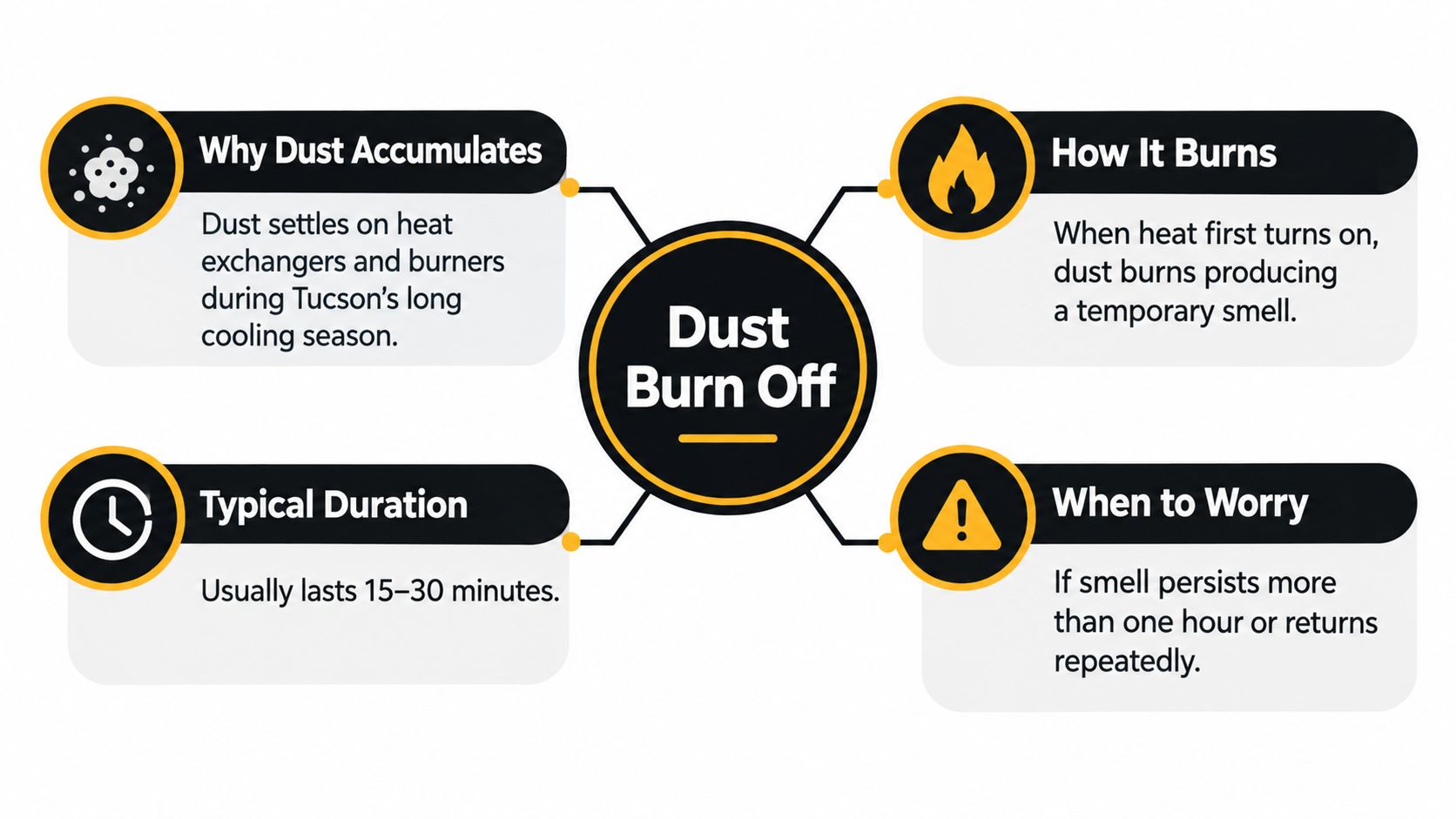
A heater can smell alarming even when it's doing something routine. The most common first-startup cause is simple: dust settled on hot internal parts during months of inactivity.
If a heater smells like burning only at first startup after months of inactivity, the most common technical cause is dust burnoff on the heat exchanger, burners, and blower components; this odor usually fades within minutes to about an hour as settled particulates are oxidized and exhausted through the vents, according to Paschal's heater smell explanation.
If dust sits on a heating element you haven't used in a while, the first warm-up creates an odor as that dust burns away. Your heating system can do the same thing, just on a whole-house scale.
Why Tucson homes notice this so often
In Tucson, heaters may sit untouched while your cooling system does the heavy lifting. Dust can settle on burners, the heat exchanger area, and blower parts over that long off-season. When heat returns, all of that buildup gets exposed to high temperature at once.
A dirty filter can add to the problem by letting more particles circulate or by making the system run hotter than it should. If you haven't checked yours in a while, this guide to air filter replacement frequency is a useful place to start.
The timing clue matters most
Duration is the clearest clue a homeowner can use. A short-lived dusty smell that fades as the system runs is generally consistent with normal startup burn off. An odor that hangs around, repeats after the system has already warmed up, or gets stronger instead of weaker points somewhere else.
Here's a simple way to approach it:
Smell pattern | What it usually suggests |
|---|---|
Brief dusty odor on first startup | Normal dust burn off |
Smell fades as heater keeps running | Startup residue clearing out |
Smell returns on later cycles | More than simple first-use dust |
Smell grows stronger with time | Overheating or another fault |
Dust burn off is usually a timing issue, not just a smell issue. If it behaves like a short startup event, that's reassuring. If it behaves like a repeating problem, pay attention.
What normal usually feels like
Normal startup dust odor is usually:
Faint and dusty: More like hot dust than melting plastic
Early in the cycle: It starts soon after the heater kicks on
Temporary: It tapers off rather than intensifies
People get into trouble when they assume “burning smell” is one category. It isn't. The nose test gets more useful when you pair it with the clock.
Common Causes Behind a Burning Smell From Your Heating System
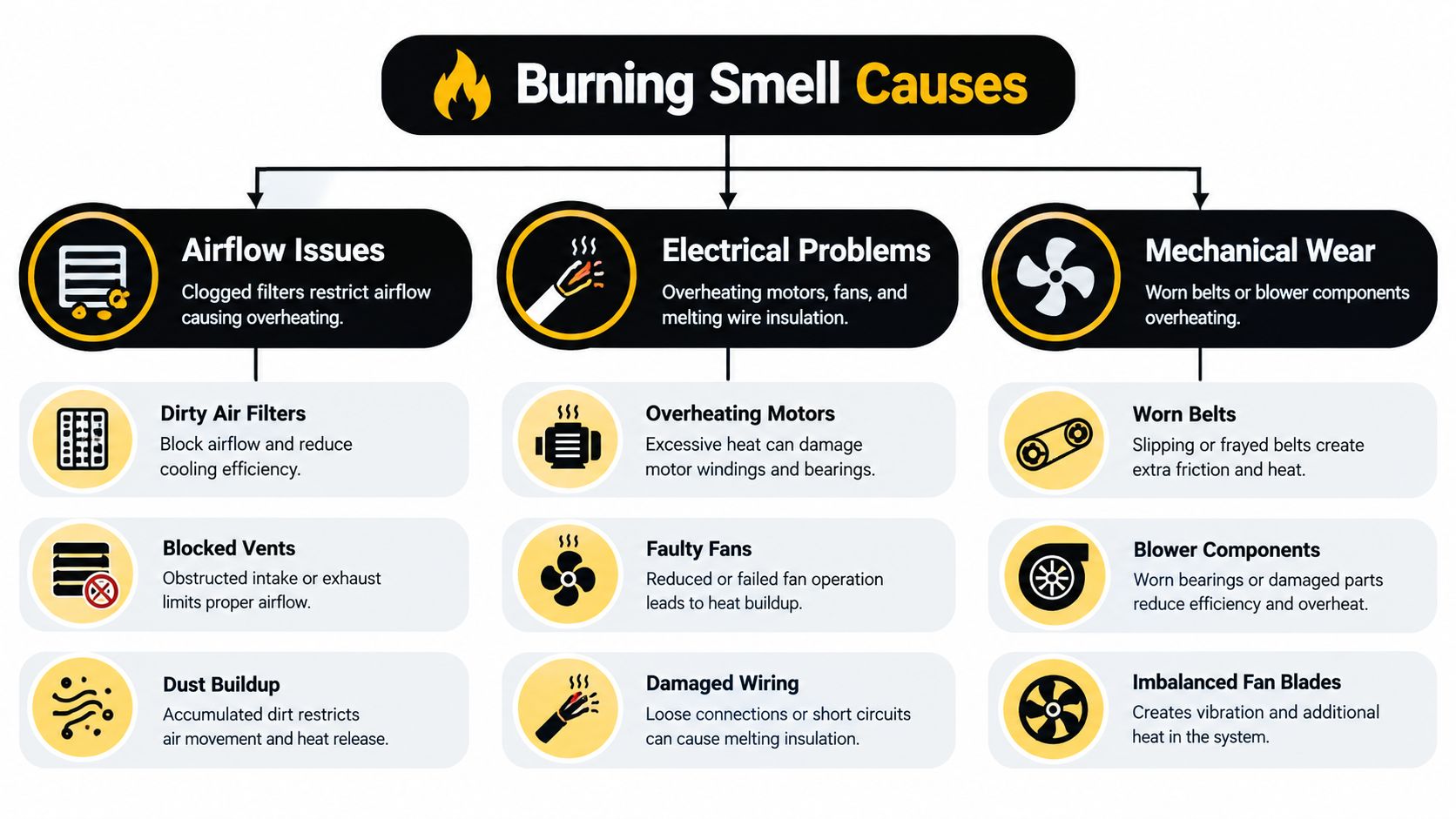
Once you move past normal startup dust, the next step is source tracing. Heating smells like burning can come from airflow problems, electrical trouble, worn mechanical parts, or even something in the house that only seems HVAC-related.
If the burning smell is strong, acrid, plastic-like, metallic, or keeps returning after the first startup period, it is not treated as normal dust burn-off and can signal overheating components, restricted airflow, melting wire insulation, or another mechanical or electrical fault that should prompt the system to be shut off and inspected, as outlined in Home Repair Atlas's furnace odor guide.
Airflow problems
A heating system needs steady airflow to carry heat away safely. When a filter is clogged, supply vents are closed off, or return grilles are blocked by furniture, the system can run hotter than intended.
That overheating can create a smell that homeowners describe as dusty at first, then sharper or hotter later. It's one reason a smell that comes back after filter changes or repeated cycles deserves attention, even if the first whiff seemed harmless.
Common airflow-related clues include:
The smell shows up after a few minutes: The system may be heating up beyond normal startup conditions
Some rooms feel weak on airflow: Blocked vents or returns may be part of the problem
The filter looks loaded with dust: Restricted airflow can push temperatures higher
Electrical smells
Electrical burning odors are different from dust. They're often described as acrid, plastic-like, hot insulation, or “something synthetic is cooking.” That smell profile raises concern because it can point to wiring insulation, a motor issue, or an overheating component.
You don't need to open the unit to notice the difference. Dust smells dry and stale. Electrical odors tend to smell sharper and less natural, almost chemical.
A smell that reminds you of hot plastic, hot electronics, or scorched wiring is not one to “wait out.”
Mechanical wear and debris
Not every burning smell is electrical. Mechanical friction or debris can also be the culprit. Blower components, fan assemblies, or accumulated dirt around moving parts can create localized heat and odor.
Sometimes the source isn't inside the furnace cabinet at all. Items stored too close to the unit, dust on a baseboard heater, or debris near a vent can create a smell that travels through the house and gets blamed on the central system.
Here's a quick smell-to-source guide:
Smell description | Possible direction to investigate |
|---|---|
Dry, dusty, first run only | Dust burn off |
Hot plastic or wiring | Electrical fault or overheating insulation |
Metallic or acrid | Motor or component overheating |
Smoky odor near one room | Nearby item, vent, or non-furnace source |
If you want another plain-language comparison of these patterns, Bear Valley Plumbing & Heating diagnosis help does a good job showing how smell character can point you toward the likely category.
For safety context, it also helps to understand the bigger risk picture around heating equipment and indoor air. This overview of furnace and carbon monoxide concerns gives that issue more detail without assuming every odor is a carbon monoxide event.
Immediate Safety Actions to Take When You Notice the Smell
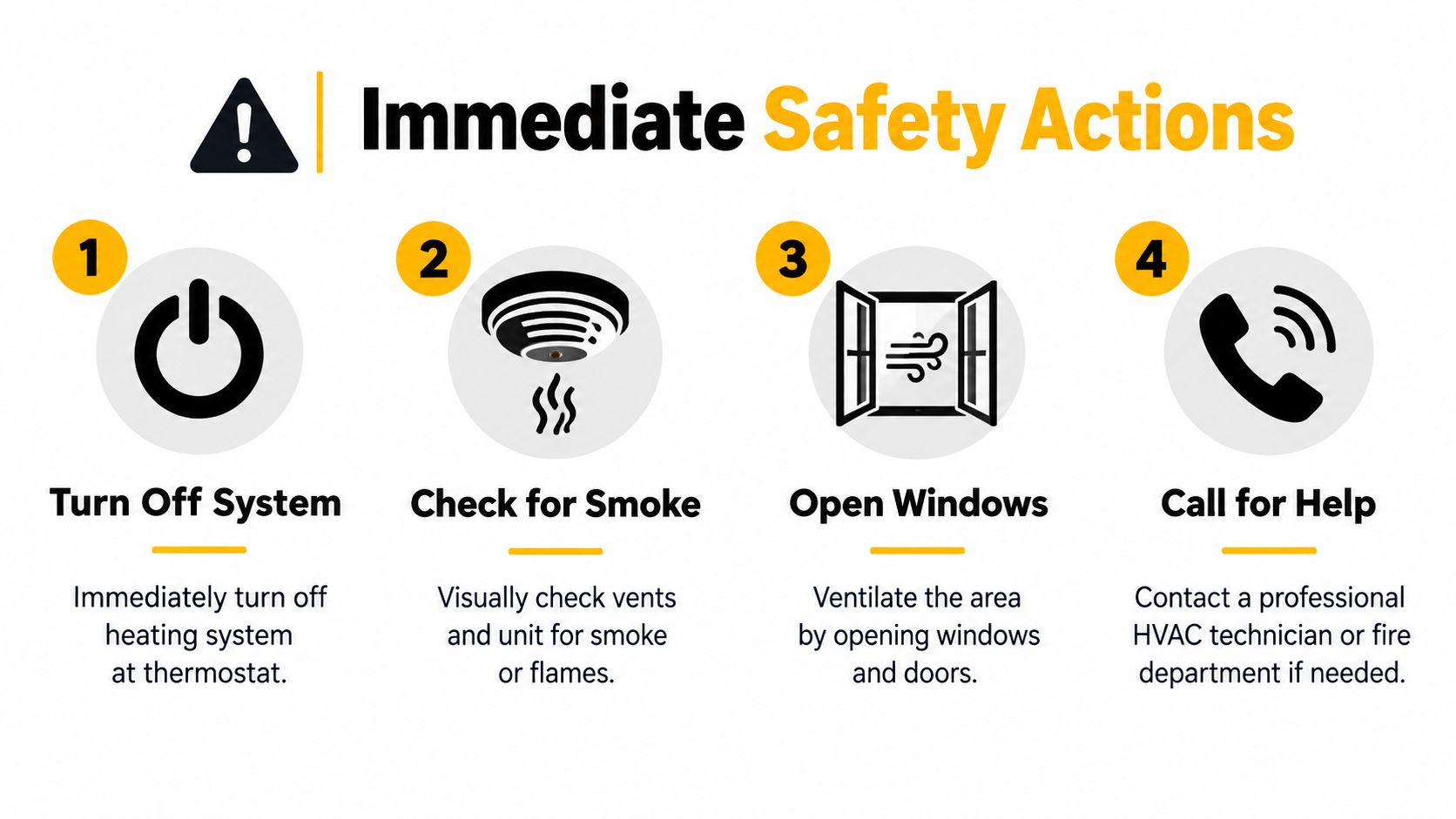
When the smell hits, don't jump straight to panic, and don't ignore it either. The safest response is a short sequence: stop the system if the odor seems unusual, check for obvious danger, ventilate, and decide whether the situation is stable or escalating.
Burning smells from heating equipment matter because heating systems are a major source of carbon monoxide risk in the home: the CDC reports more than 400 unintentional non-fire carbon monoxide deaths annually in the United States and over 100,000 emergency room visits, while the Consumer Product Safety Commission has identified heating systems as the second-leading cause of these deaths, with most occurring between November and February, according to this carbon monoxide and furnace smell summary.
First five minutes
Start with the simplest safe actions:
Turn the thermostat off if the odor is strong, unfamiliar, or clearly not simple dust.
Look for smoke or haze near vents, the furnace area, or the air handler.
Notice the smell type. Dusty is one category. Plastic, electrical, metallic, or smoky is another.
Open windows and doors if it's safe to do so, so the house can air out while you assess.
If you're unsure whether the situation crosses into urgent territory, this guide on what counts as an HVAC emergency can help you make a calmer call.
Signs you shouldn't wait on
Some clues push this out of the “observe it for a bit” category:
Visible smoke: Shut the system down and get help
Acrid electrical odor: Treat it as possible overheating or wiring trouble
Repeated breaker trips: Don't keep restarting the unit
Physical symptoms in people: Headache, dizziness, or nausea should never be ignored
If the smell is getting stronger while the system runs, the system is giving you useful information. Listen to it.
If you suspect gas
A sulfur or rotten-egg smell is a separate category from ordinary burning odors. That points to a gas leak warning, not normal heater operation. In that case, don't flip switches, don't test appliances, and don't try to investigate closely. Leave the home and call for help from outside.
Simple Troubleshooting Steps Tucson Homeowners Can Try Safely
Once the immediate safety check is done and there's no sign of active emergency, homeowner troubleshooting can help narrow the issue without taking apart the equipment. The key is to stay in the safe zone, meaning filters, vents, visible surroundings, and timing notes, not wiring or internal panels.
A practical gap in many heater smell articles is this middle ground: repeated odor on the second or third heating cycle, especially after a long off-season or after filter replacement, can signal accumulated debris, airflow restriction, or a component overheating rather than simple dust, as explained in Mountain Home Utah's discussion of recurring startup odors.
Safe checks that actually help
Start with the items most likely to affect airflow and odor:
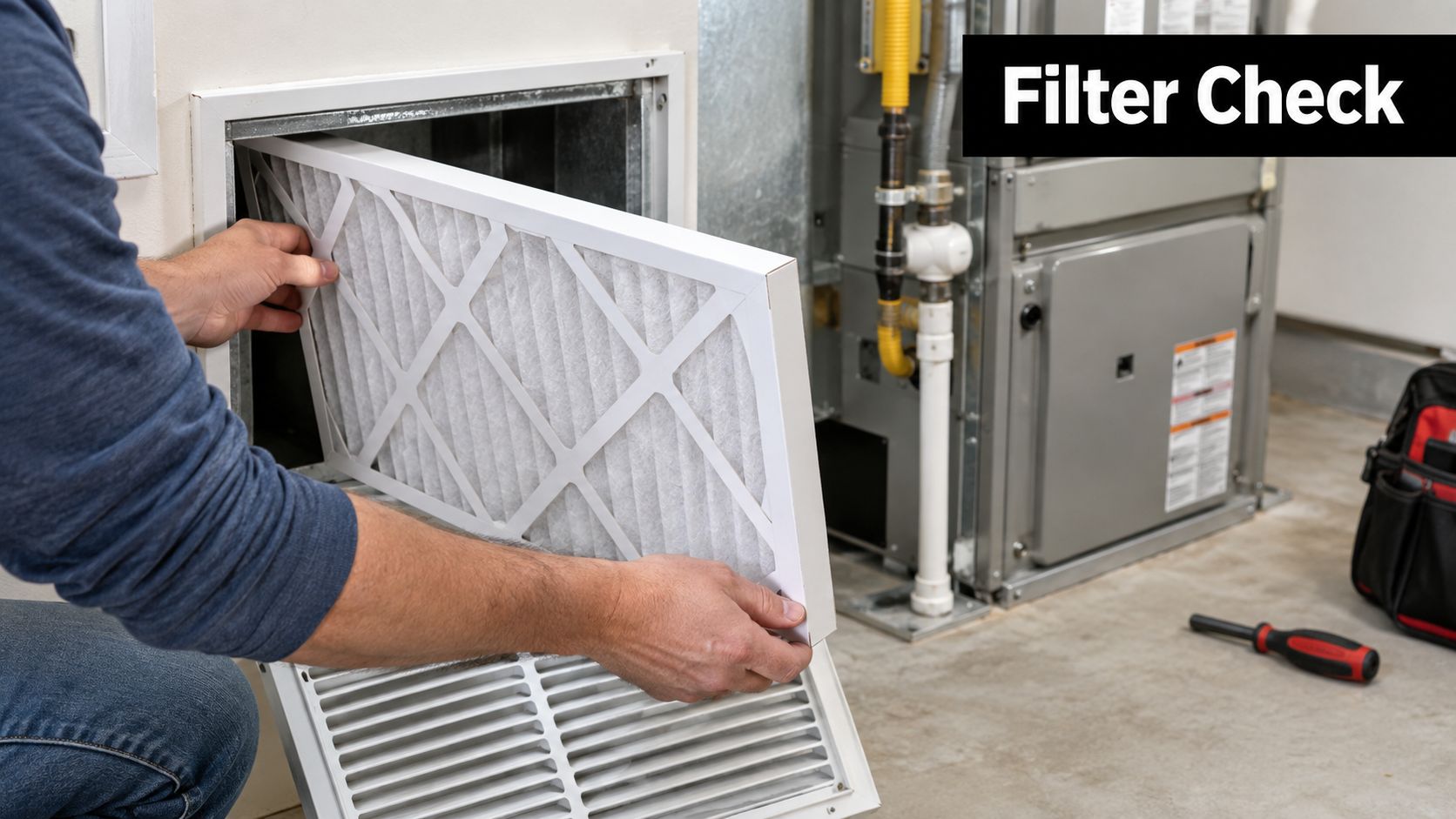
Inspect the filter: If it looks packed with dust, replace it with the correct size and type for your system.
Check supply vents: Make sure rugs, furniture, and closed registers aren't reducing airflow.
Check return grilles: A blocked return can make the system strain even when the supply side looks fine.
Look around the unit: Storage boxes, paint supplies, paper goods, and debris too close to the heater can create heat-related odors.
These are simple checks, but they often explain why the smell didn't behave like a one-time startup event.
Use a timing log
Don't underestimate how helpful basic notes can be. A technician can diagnose faster when you can describe the smell pattern clearly.
Write down:
What to note | Why it helps |
|---|---|
First cycle or later cycle | Separates startup dust from recurring issues |
Dusty, plastic, metallic, or smoky | Points toward likely cause category |
Fades, stays steady, or worsens | Shows whether the problem is self-clearing or escalating |
One room or whole house | Helps identify local versus system-wide source |
What not to do
A lot of damage happens when homeowners go one step too far. Don't open electrical compartments, don't bypass safety switches, and don't keep restarting the system just to “see if it happens again” when the smell already seems wrong.
That's also where one service option like Covenant Aire Solutions can fit in. If basic checks rule out the filter and obvious blockages, a professional can inspect the blower, wiring, heat exchanger area, and airflow conditions without guessing.
Homeowner boundary: If your next step would require tools, panel removal, or contact with wiring, it's no longer a DIY troubleshooting step.
When to Call a Professional for a Persistent Burning Odor
Some situations are reasonable to monitor briefly. Others need a service call, and a few need immediate exit from the house. The trick is not treating all three as the same.
Watch and monitor versus call now
A brief dusty smell on the first startup, with no smoke and no return on later cycles, usually falls into the monitor category. You stay alert, but you don't assume the worst.
A smell that returns after the system has already run, changes into something plastic-like or metallic, or shows up along with weak airflow belongs in the professional inspection category. At that point, the question isn't whether the odor exists. It's why heat or friction is building where it shouldn't.
Use this simple comparison:
Monitor briefly: Faint dusty odor, first seasonal startup, fades out
Schedule service promptly: Odor returns on later cycles, airflow seems off, smell character changes
Treat as urgent: Smoke, electrical burning smell, repeated tripped breakers, or suspected gas leak
The gas leak exception
A rotten-egg or sulfur odor is a gas-leak warning sign, not a normal heater smell, and safety guidance says to leave the house immediately, avoid using anything that could create a spark, and call 911 or the gas utility from outside, according to this heater odor safety guidance.
That's one of the few situations where you shouldn't stay inside trying to narrow it down.
What a technician will usually look at
When a persistent burning odor gets inspected, the visit usually focuses on likely heat and airflow sources:
Airflow path: Filter fit, return restrictions, blocked vents
Blower section: Motor stress, dirt accumulation, overheating signs
Wiring and insulation: Evidence of scorching or melting
Heating components: Areas where dust, debris, or abnormal heat has collected
When you call, describe the smell in household terms. “Dusty and faded after one cycle” means something different from “sharp like hot plastic and it came back tonight.” That description saves time and helps the tech start in the right place.
Prevention and Maintenance Tips to Avoid Future Burning Smells
The easiest way to avoid that uneasy first-night smell is to treat heating season like a planned transition, not a surprise. Tucson homeowners do better when they build a simple fall routine: check the filter, clear vents and returns, remove stored items near the unit, and run the heater early enough to notice any odor before you really need it.
A common, non-emergency reason a heating system smells like burning is dust accumulation on the heat exchanger or burners after months of inactivity, and that odor usually clears after about 30 minutes to a few hours of operation; guidance from major HVAC manufacturers says this brief start-up smell is normal, but a smell that persists longer or becomes plastic- or wiring-like should prompt the system to be turned off and inspected, as noted in Carrier's furnace burning smell guidance.
A Tucson maintenance rhythm that works
The homeowners who deal with fewer odor surprises usually stick to a few habits:
Before cool weather arrives: Test heat before the first cold night
During the season: Replace dirty filters and keep airflow paths open
Around the equipment: Don't let storage creep into the furnace or air handler area
On a routine basis: Schedule professional maintenance so internal dust, wear, and overheating clues don't get missed
If you want a cleaner annual routine, a preventive maintenance schedule helps turn these tasks into a repeatable habit instead of a last-minute scramble.
The bigger payoff
Prevention doesn't just reduce smells. It also makes it easier to trust what your system is telling you. When the filter is clean, the area is clear, and the unit has been checked, a new odor stands out faster and is easier to take seriously.
That's what most homeowners really want, confidence. Not perfect mechanical knowledge, just a clear sense of when a smell is harmless, when it needs a quick check, and when it's time to shut the system down.
If your heating smells like burning and you want a trained set of eyes on it, Covenant Aire Solutions can inspect the system, check airflow and electrical components, and help determine whether you're dealing with normal startup dust or a persistent fault. For Tucson-area heating service, maintenance, and odor-related troubleshooting, visit Covenant Aire Solutions.