
How Long Does HVAC Maintenance Take and What to Expect
A routine HVAC maintenance visit for one system usually takes 60 to 90 minutes, and servicing both a furnace and an air conditioner in one appointment usually takes 1.5 to 2.5 hours. That means a proper tune-up is an hour-scale visit, not a 15-minute glance at the unit.
If you're sitting at home in Tucson waiting for a tech, that time window matters. You want to know whether you can squeeze the appointment between meetings, whether the dog needs to stay crated longer, and whether the technician is doing real maintenance or just moving fast. In most homes, the answer comes down to what equipment you have, how accessible it is, and whether the system is clean and behaving normally when the visit starts.
A good tune-up has a rhythm to it. The technician checks controls, opens panels, inspects electrical parts, looks at airflow, cleans what needs cleaning, and verifies the system is performing the way it should. The timing isn't random, and it isn't padding. It reflects the fact that a real preventive visit covers more than one quick visual check.
How Long HVAC Maintenance Usually Takes at Home
On a normal residential call, the homeowner opens the door expecting a short service stop. Then the appointment stretches into the better part of an hour, sometimes more. That's usually a good sign, not a bad one.
For a single residential system, a widely used benchmark is 60 to 90 minutes per unit for routine maintenance, while a combined furnace and AC visit typically runs 1.5 to 2.5 hours total, according to residential HVAC maintenance timing guidance. Another industry-facing benchmark places a proper professional visit at 45 to 75 minutes per unit, with many sources rounding that to 60 to 90 minutes for a full tune-up, and 90 to 150 minutes for combined home systems, as outlined in Jobber's HVAC maintenance checklist guide.
In Tucson homes, I usually think about the visit the same way homeowners do: how much of the morning or afternoon this is going to take, and whether the system setup is simple or awkward. A hall closet air handler with easy filter access moves faster than an attic unit with tight clearance and heavy dust buildup. An outdoor condenser packed with windblown debris is also going to slow things down compared with a unit that's been kept clear.
A thorough tune-up takes time because the technician isn't just looking at the machine, they're checking how the system operates under real conditions.
There's also a difference between a real maintenance appointment and a rushed stop. Professional tune-ups are commonly described as a one- to two-hour appointment, with exact length depending on condition, accessibility, and how thorough the inspection is, as noted by HVAC.com's tune-up overview. That's the expectation homeowners should use when booking.
What that time includes at a high level
A standard preventive visit usually covers:
System controls: Thermostat operation, startup, shutdown, and safety sequence
Airflow basics: Filter condition, blower performance, visible vent issues
Cleaning tasks: Coils, drain path, cabinet debris, and outdoor unit condition
Electrical checks: Connections, contactors, capacitors, and major components
Performance testing: Temperatures, pressures, amp draw, and operating behavior
The details vary by equipment, but the takeaway is simple: if you're asking how long does HVAC maintenance take, expect a real appointment, not a doorstep check.
What Happens During a Typical Maintenance Visit
The easiest way to understand the time is to walk through the job in the order a technician usually does it. In most homes, the visit unfolds in blocks, not one continuous blur.
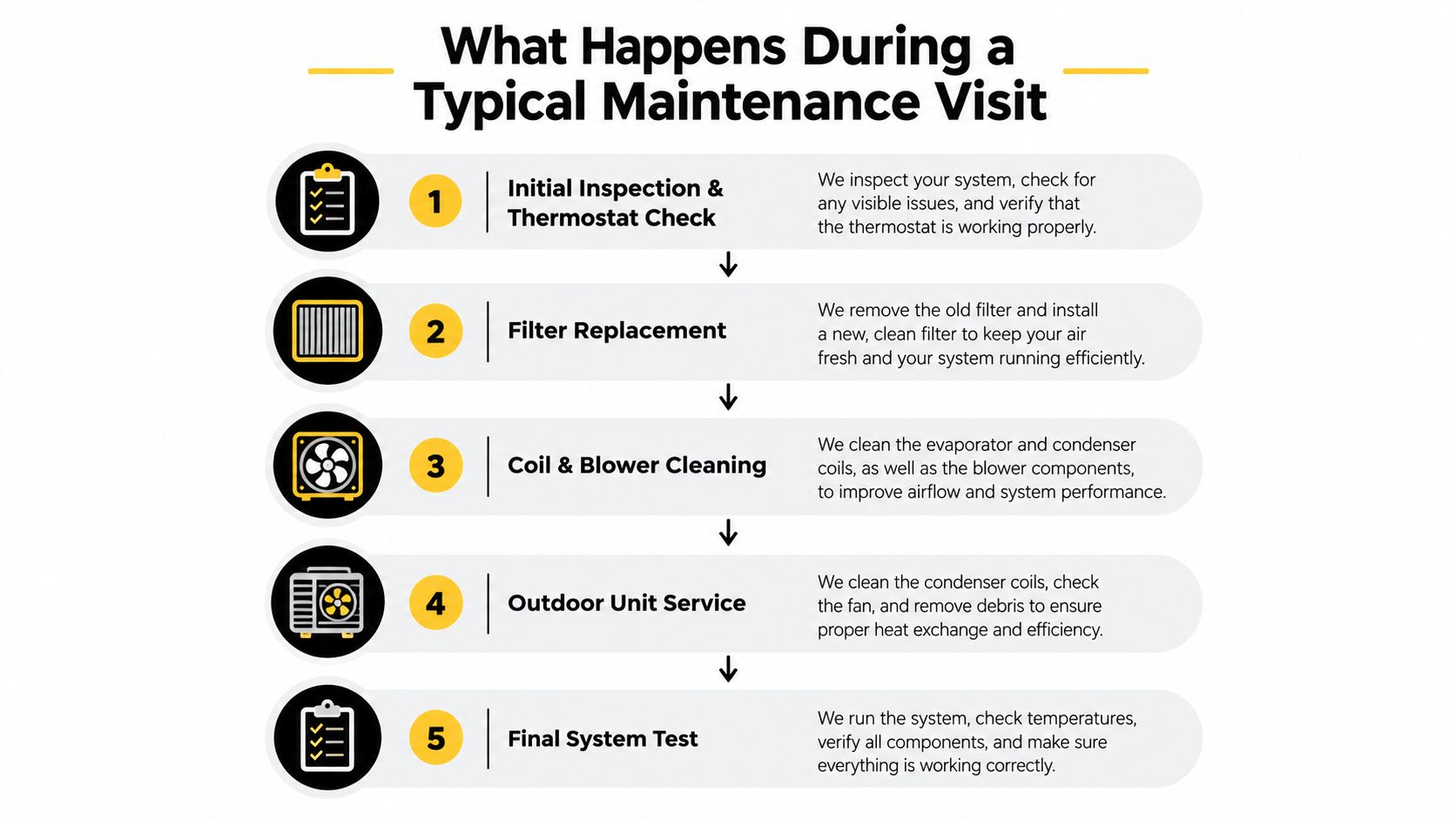
Start-up and initial inspection
The first few minutes are about getting oriented. The tech confirms what equipment is being serviced, asks about any comfort complaints, checks thermostat operation, and starts inspecting the indoor and outdoor equipment.
Typical time: about 10 to 15 minutes
This part matters because homeowners often notice symptoms that don't show up immediately on gauges. Maybe one bedroom runs warm in late afternoon sun, or the system short cycles during monsoon humidity. Those details shape the rest of the visit.
The EPA's HVAC checklist materials also make it clear that maintenance goes beyond a quick look at parts. Their checklist includes items tied to airflow and comfort, such as drafts, obstructed airflow, stagnant air, overcrowding, and poor thermostat location, which you can see in the EPA HVAC inspection checklist.
Filter, airflow path, and indoor components
Next comes the basic airflow side of the system. That usually means checking the filter, opening the air handler or furnace compartment, inspecting the blower area, and looking for obvious buildup or drain issues.
Typical time: about 10 to 20 minutes
If the filter is heavily loaded, airflow readings and coil temperatures can be misleading until that issue is addressed. In Arizona homes, dust load is often the quiet culprit. A system can still cool the house and still be working harder than it should.
For homeowners who want a more detailed look at what a tune-up usually covers, this HVAC system tune-up guide is a useful reference.
Practical rule: The tech should spend enough time indoors to inspect the parts you don't see every day. If the indoor cabinet never gets opened, it wasn't much of a tune-up.
A typical flow looks like this:
Thermostat check Confirm settings, call for cooling or heating, and verify the system responds correctly.
Filter review Replace or inspect the filter, confirm sizing, and note whether airflow has been restricted.
Drain and cabinet inspection Check condensate path, look for sludge or blockage, and inspect for water marks or corrosion.
Coil cleaning, outdoor service, and electrical checks
Once the basic airflow path is reviewed, attention shifts to the components that carry the mechanical load. Indoors, that may include evaporator access if the setup allows practical inspection. Outdoors, the condenser gets cleaned and inspected, and electrical parts get checked under operation.
Typical time: about 20 to 30 minutes
A lot of the appointment goes here, and it should. Cleaning condenser fins, checking fan condition, tightening accessible electrical connections, and testing capacitors or contactors takes actual hands-on time. In Tucson, rooftop or side-yard placement can add a few minutes by itself, especially when the unit is hemmed in by gravel, walls, or overgrown shrubs.
Here is the task-by-task view many homeowners want:
Task | Typical Time | What Technician Does |
|---|---|---|
Initial inspection and thermostat check | 10 to 15 minutes | Confirms complaint history, checks thermostat response, inspects indoor and outdoor units |
Filter and airflow review | 10 to 20 minutes | Inspects or replaces filter, opens cabinet, checks blower area and visible airflow restrictions |
Coil and condensate service | 10 to 20 minutes | Cleans accessible coil surfaces, checks drain line, removes debris and buildup |
Electrical and safety checks | 10 to 15 minutes | Tests key electrical components, inspects wiring condition, verifies controls and safeties |
Refrigerant and performance testing | 10 to 20 minutes | Checks operating readings, temperature split, pressures where appropriate, and system behavior |
Final run test and wrap-up | 5 to 10 minutes | Verifies operation, notes findings, and explains next steps to the homeowner |
The visual below gives a quick walk-through of the same workflow.
Final testing and homeowner walk-through
The last block is where a good tech earns trust. After cleaning and checks are done, the system gets run again, temperatures and operation are confirmed, and the homeowner gets a plain-English summary.
Typical time: about 5 to 10 minutes
This shouldn't be a mystery dump full of jargon. You should hear what was cleaned, what was tested, what looks normal, and what may need attention later.
A maintenance visit isn't finished when the panels go back on. It's finished when the system has been tested and the homeowner understands what shape it's in.
Factors That Can Make Your Appointment Shorter or Longer
No two homes land at exactly the same visit length. The range exists for a reason.
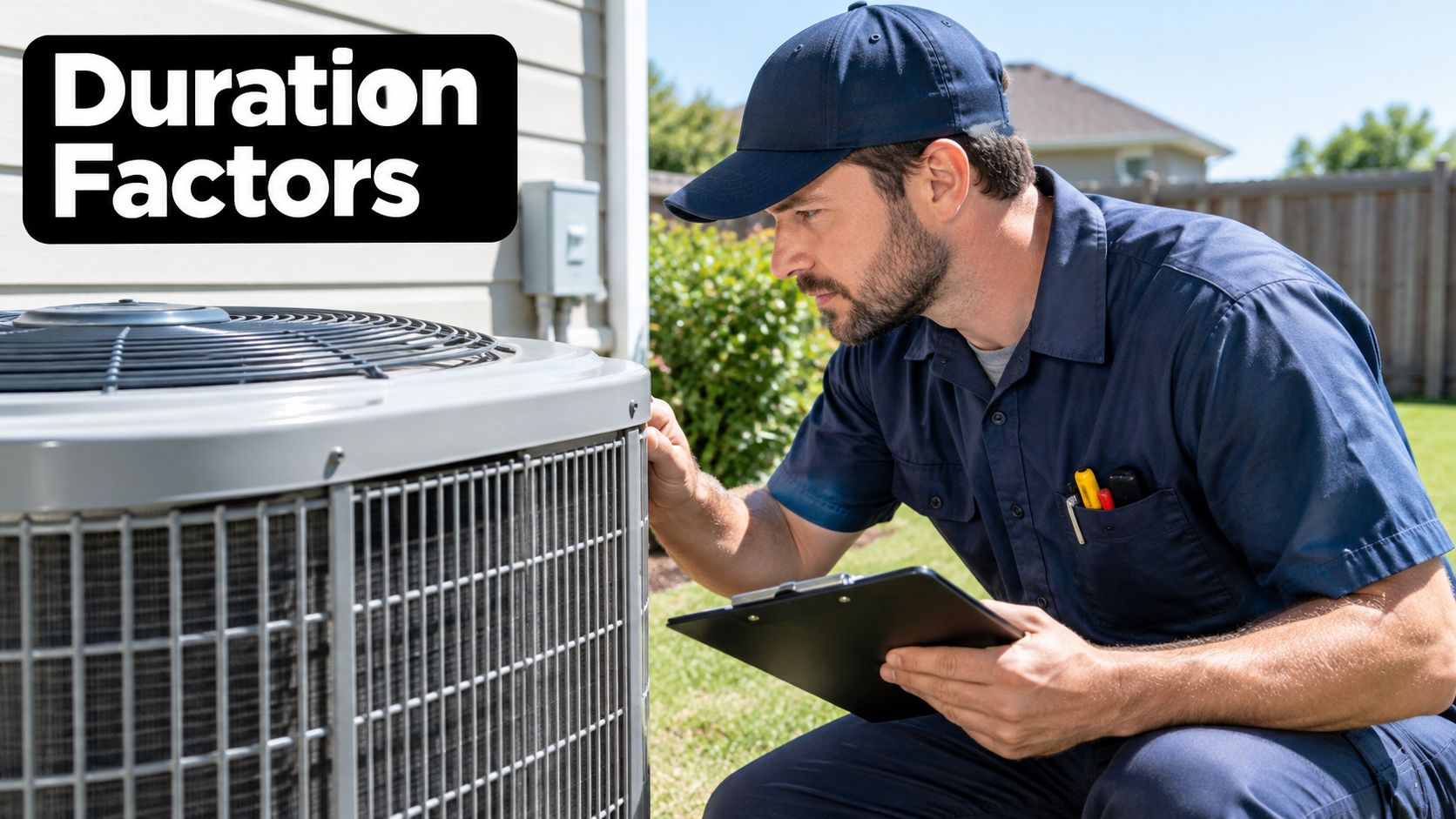
The home itself changes the clock
The fastest visits happen in homes with easy equipment access, clean filters, and no active comfort complaints. The slower ones usually involve attic units with cramped service space, neglected outdoor coils, or systems that show signs of electrical wear, drainage trouble, or airflow imbalance.
Age matters too, but not in a simple old-equals-slow way. Some older systems are straightforward and well maintained. Some newer systems take longer because the technician has to work through access panels, communicating controls, or installation issues that were never corrected.
A smart question to ask when booking is whether your setup sounds routine or likely to need extra diagnostic time. If your system has been making noise, icing up, tripping breakers, or leaving rooms uneven, you're no longer in pure maintenance territory. You're partly in diagnostic territory, and that changes the visit. Homeowners dealing with those symptoms often benefit from reading about HVAC system diagnostics before the appointment.
One system versus multiple systems
A single split system is one thing. A home with separate upstairs and downstairs equipment is another. Even when both systems are healthy, each one still needs its own inspection, testing, and service sequence.
This is also where people sometimes compare home service with commercial timing and get confused. Commercial preventive maintenance can range from 1 to 4 hours per unit depending on equipment size, with rooftop units closer to 1 to 2 hours and larger systems with air handlers, VAV boxes, or chillers taking 3 to 4+ hours, according to commercial maintenance timing guidance. That doesn't mean your house should take that long. It just shows why "how long does HVAC maintenance take" has different answers at different scales.
What gets found during the visit
The appointment grows when the technician uncovers something that can't be ignored. Common examples include:
Drain problems: Water backing up, sludge in the line, or signs of past overflow
Electrical wear: Weak capacitors, pitted contactors, overheated wire ends
Airflow restrictions: Matted filters, dirty blower sections, blocked return paths
Access obstacles: Stored boxes, locked gates, roof access, or hard-to-reach attic hatches
If the technician finds a real issue, extra time is usually protecting you from a bigger repair later, not slowing the job down for no reason.
How to Prepare Your Home for a Faster Smoother Visit
Homeowners can absolutely help the visit go faster, and none of it requires cutting corners. The goal is simple: remove obstacles so the technician spends time on the system, not on setup.
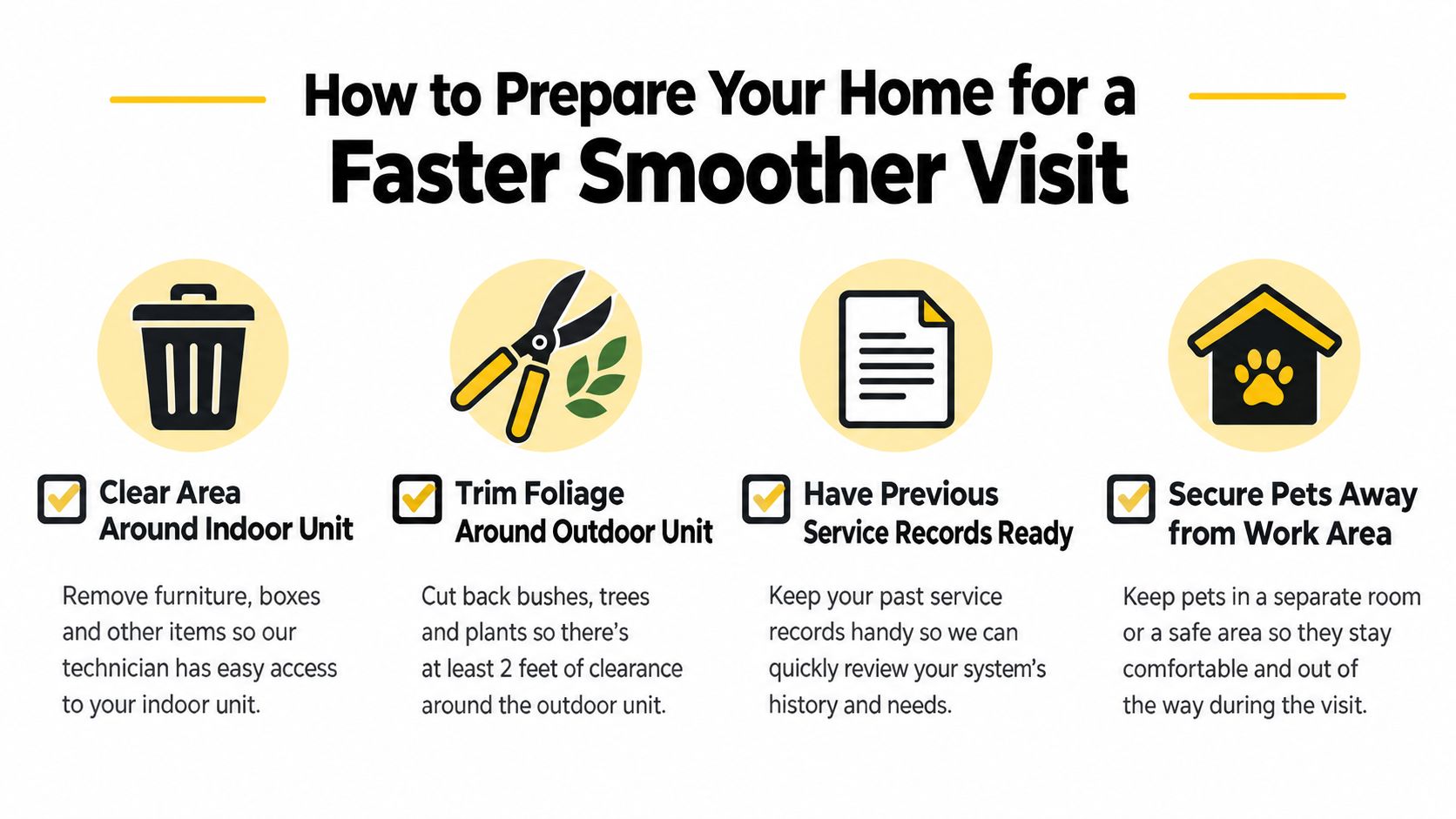
What to do before the truck arrives
A little prep makes a big difference in Tucson homes, especially when the indoor unit is in a closet, garage corner, or attic access point with stored items around it.
Clear the indoor work area: Move boxes, laundry baskets, or shelving items away from the furnace or air handler. The technician needs room to remove panels and set tools down safely.
Open up the outdoor unit: Trim back plants, move patio items, and make sure gates open cleanly. Condenser service goes much faster when the unit isn't boxed in.
Secure pets early: Even friendly dogs can turn a straightforward maintenance call into a stop-and-start visit.
Write down symptoms: Hot rooms, odd smells, short cycling, or rattling noises are easier to address when the details are ready at the start.
Small details that save real time
Two simple things save a surprising amount of friction. First, know your filter size or have the current filter package nearby. Second, have any recent service notes handy if another company or technician was there recently.
If you're not sure how often to stay on top of filters in desert conditions, this guide on air filter replacement frequency helps homeowners line that up with actual home conditions.
A short prep checklist works well the morning of service:
Thermostat access: Make sure the tech can reach and test it without moving furniture or decorations.
Attic or closet access: Clear the hatch, closet floor, or pull-down ladder area.
Parking and gate notes: If your home has access quirks, mention them when confirming the appointment.
Recent changes: Tell the tech if you've noticed weak airflow, a recent power outage, or unusually dusty rooms.
The fastest maintenance visits don't happen because the technician rushes. They happen because the home is ready and the system is easy to access.
Why Regular Maintenance Is Worth the Time
A lot of homeowners hear "an hour or two" and immediately weigh it against work, errands, or family logistics. That's fair. But routine maintenance usually costs less time than dealing with a breakdown during a Tucson heat spike.

The time investment lines up with the season
Industry guidance commonly recommends twice-yearly professional maintenance, once in spring before cooling season and once in fall before heating season, as described in this HVAC maintenance schedule overview. That's why so many maintenance plans are built around seasonal service instead of one annual visit.
That cadence makes practical sense in Arizona. Your cooling equipment carries the heavy load through long hot stretches, and your heating side still needs attention before the colder season arrives. A short planned visit twice a year is easier on the household than reactive service when comfort is already gone.
What homeowners actually gain
The benefits aren't abstract. You get a system that's been checked for airflow problems, dirt buildup, drainage issues, and weak electrical components before they turn into urgent calls.
That usually means:
More consistent comfort: Rooms stay closer to the temperatures you expect
Less strain on the equipment: Clean airflow paths and properly operating components don't have to fight through avoidable restrictions
Better indoor air support: Filters, coils, and airflow all affect what moves through the home
Earlier problem spotting: Small concerns tend to show up during maintenance, before they become inconvenient failures
For homeowners weighing the value, this article on whether an AC tune-up is worth it adds useful perspective.
Planning Your Next Tune-Up With Confidence
By the time most homeowners ask how long does HVAC maintenance take, they're really asking two things: how much of my day this will use, and whether it's worth scheduling before the weather turns. In most Tucson homes, if the system is accessible and you're booking standard preventive service, think in terms of a real appointment window rather than a quick stop.
When you call, ask what the visit includes, whether the quoted time is for one system or both, and what happens if the technician finds something that needs deeper testing. Those questions usually tell you whether you're getting a careful maintenance visit or something too thin to be useful. If you want a planning reference that leans more toward larger properties, this HVAC maintenance schedule for facility managers offers a helpful view of how maintenance timing changes when equipment and service scope scale up.
For homeowners who like to stay ahead of the season, a written preventive maintenance schedule helps keep spring and fall service from getting pushed into peak demand weeks.
One practical note on service options: Covenant Aire Solutions offers biannual maintenance plans, which fit the common spring-and-fall rhythm many Arizona homeowners use for preventive care.
If your system has been running fine, schedule before the first serious heat or cold arrives. If it's already showing symptoms, book with the expectation that the visit may need part maintenance, part diagnosis.
If you're due for service in Tucson or the surrounding area, Covenant Aire Solutions handles preventive HVAC tune-ups, seasonal system checks, and follow-up repairs when a maintenance visit uncovers a real issue. If you want a practical assessment of how long your appointment should take and what's included, visit Covenant Aire Solutions.