
AC Unit Running But Not Cooling House A Practical Arizona Guide
- Jan 16
- 14 min read
It’s a frustrating feeling we all know. You hear the familiar hum of the air conditioner kick on during a blistering Tucson afternoon, but instead of relief, the air just keeps getting warmer. When your AC runs without actually cooling your home, it’s a clear sign that something in the cooling cycle has gone wrong.
Thankfully, the problem often boils down to just a handful of common issues. Some are simple enough for a quick DIY check, while others are red flags that you need a professional’s touch. Let's walk through the likely culprits so you can figure out what's happening with your system.
Airflow And Obstructions
More often than not, the root cause is the simplest one: restricted airflow. Think of your AC as a breathing organism; it has to pull in warm indoor air and push out heat. If that process gets choked off, the cooling stops cold.
A Dirty Air Filter: This is the number one offender, without a doubt. A clogged filter suffocates your system, blocking air from getting in. This leads to warmer air from your vents and can even cause other parts, like your evaporator coils, to freeze solid.
A Blocked Outdoor Unit: Your outdoor condenser unit’s entire job is to expel heat. If it’s smothered in leaves, caked with dust, or crowded by overgrown bushes, it simply can't do its job. The heat gets trapped and ends up right back inside your house.
One of the most common side effects of poor airflow is frozen coils. When the air can't move freely, ice can build up on the indoor evaporator coils, creating a literal block of ice that stops the cooling process. Our friends at Purified Air Duct Cleaning have a great guide on what causes AC coils to freeze and how to fix it.
System And Component Failures
If you've ruled out simple blockages, the issue might be a mechanical or electrical failure. These problems almost always require a trained eye to diagnose and repair safely.
A staggering 88% of American households depend on air conditioning. Here in Arizona, where our cooling degree days often top 4,000 annually, problems like dirty filters and low refrigerant lead to a 25% spike in HVAC service calls during peak heatwaves.
Low refrigerant is a classic example. It usually means there's a leak somewhere in the system, and without this essential substance, your AC can't absorb heat from your home. This is definitely not a DIY fix. Another major failure point is a frozen evaporator coil, which can happen for several reasons beyond just a dirty filter. For a deeper dive into this specific problem, check out our detailed guide on what causes AC coils to freeze in Arizona homes.
To help you narrow things down, here's a quick checklist of the most common issues we see.
Quick Diagnostic Checklist For AC Cooling Failures
This table summarizes the usual suspects when your AC stops cooling, helping you decide if it's something you can check yourself or if it's time to bring in the pros.
Potential Cause | Key Symptom | DIY Check or Pro Call? |
|---|---|---|
Dirty Air Filter | Weak airflow from vents; warmer air. | DIY Check. Easy to inspect and replace. |
Incorrect Thermostat | AC not turning on at the right temp or cycling oddly. | DIY Check. Verify settings are correct first. |
Blocked Outdoor Unit | Unit runs constantly but the house doesn't cool. | DIY Check. Safely clear debris around the unit. |
Frozen Evaporator Coils | No air from vents, or you see ice on the unit. | Pro Call. A symptom of a deeper issue. |
Low Refrigerant | Hissing sounds; house never gets cool. | Pro Call. Requires a certified technician to handle refrigerant. |
Compressor Failure | Loud, unusual noises from the outdoor unit. | Pro Call. This is a major, complex repair. |
Remember, this is just a starting point. While some issues have a simple fix, others are symptoms of a larger problem that needs a professional diagnosis to prevent further damage.
Practical DIY Checks Every Homeowner Should Perform
When your AC is humming along but your house is still hot, it’s easy to jump to the worst-case scenario. But before you panic and assume a massive repair bill is coming, take a breath. There are a handful of simple, safe checks you can do yourself that often pinpoint, and sometimes even fix, the most common culprits.
Let's start with the brain of the operation: your thermostat. You'd be surprised how often the fix is this simple. First, make sure it’s actually set to “Cool” and not “Fan” or “Heat.” Then, double-check that the target temperature is set lower than the current temperature in the room. If it's not, the AC has no reason to kick on.
If the settings look good, pop the cover off and check the batteries. Many digital thermostats get flaky or stop talking to the AC unit altogether when the batteries are low. A quick swap can sometimes bring everything back to life instantly.
Inspect Your Air Filter for Blockages
If I had to bet on the single most common reason for an AC to underperform, my money would be on a clogged air filter. Think of it as your system's lungs; if it can't breathe, it can't work.
When that filter gets packed with dust and debris, it literally suffocates the system, starving it of the airflow it needs. This not only keeps your home warm but also puts a huge amount of strain on the AC’s components. Left unchecked, it can lead to bigger problems, like a frozen evaporator coil.
Finding the filter is usually easy; it’s in a slot near your indoor air handler or inside a large return air vent in a wall or ceiling. Slide it out. Can you see light through it? If not, it's way past due for a change. A new filter is cheap, but the difference it makes is huge.
Pro Tip: I tell all my Arizona clients to set a calendar reminder to check their filter every single month, especially during our dusty seasons. It’s the easiest and most effective maintenance you can do.
This flowchart is a great way to visualize the diagnostic path, starting with the simple stuff before you start worrying about more complex issues.
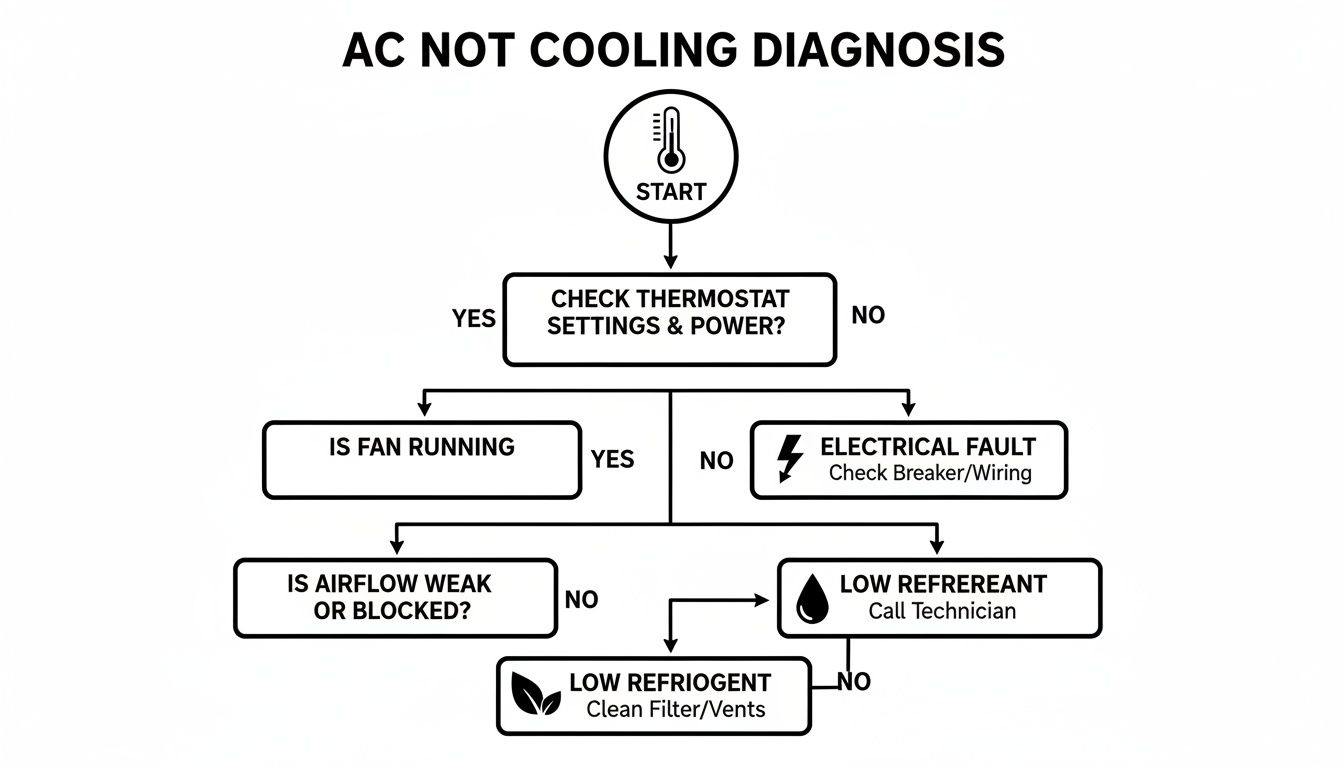
As you can see, tackling airflow issues is one of the first things on the list. A dirty filter or a clogged condensate drain line can snowball into bigger problems if you ignore them. Keeping that drain line clear is critical, and we’ve got a straightforward guide on how to clean your condensate drain line right here.
Clear Your Outdoor Condenser Unit
Your outdoor unit, the condenser, has one big job: to dump all the heat it pulled from inside your house. If anything gets in the way of that process, the heat stays trapped, and your system’s cooling power plummets.
Over time, that big metal box can get choked out by a few common offenders:
Leaves and Yard Debris: Wind and lawnmowers can plaster grass clippings, leaves, and twigs against the fins, blocking them up.
Overgrown Landscaping: Bushes and plants might look nice, but if they're too close, they're smothering your unit. You need to maintain at least two feet of clear space all the way around it.
Dust and Dirt: Here in Arizona, that fine dust builds up on the delicate metal fins, creating an insulating blanket that traps heat right where you don’t want it.
Safety first: Before you do anything, shut off the power to the outdoor unit. There should be a disconnect box on the wall nearby, or you can use your home's main circuit breaker. Once the power is off, you can clear away any large debris by hand. Then, just grab a garden hose and gently rinse the fins from the top down. No need for a pressure washer, a gentle spray is all it takes.
Digging Into Deeper System-Level AC Problems
So, you’ve checked the thermostat, swapped out the filter, and even hosed down the outdoor unit, but your home is still uncomfortably warm. If those simple fixes didn't do the trick, it’s a sign that the problem is probably hiding deeper inside the system.
Recognizing the signs of a more serious issue is key. It helps you understand when to stop troubleshooting on your own and why calling in a professional is the right next move before a small problem turns into a major, expensive headache.
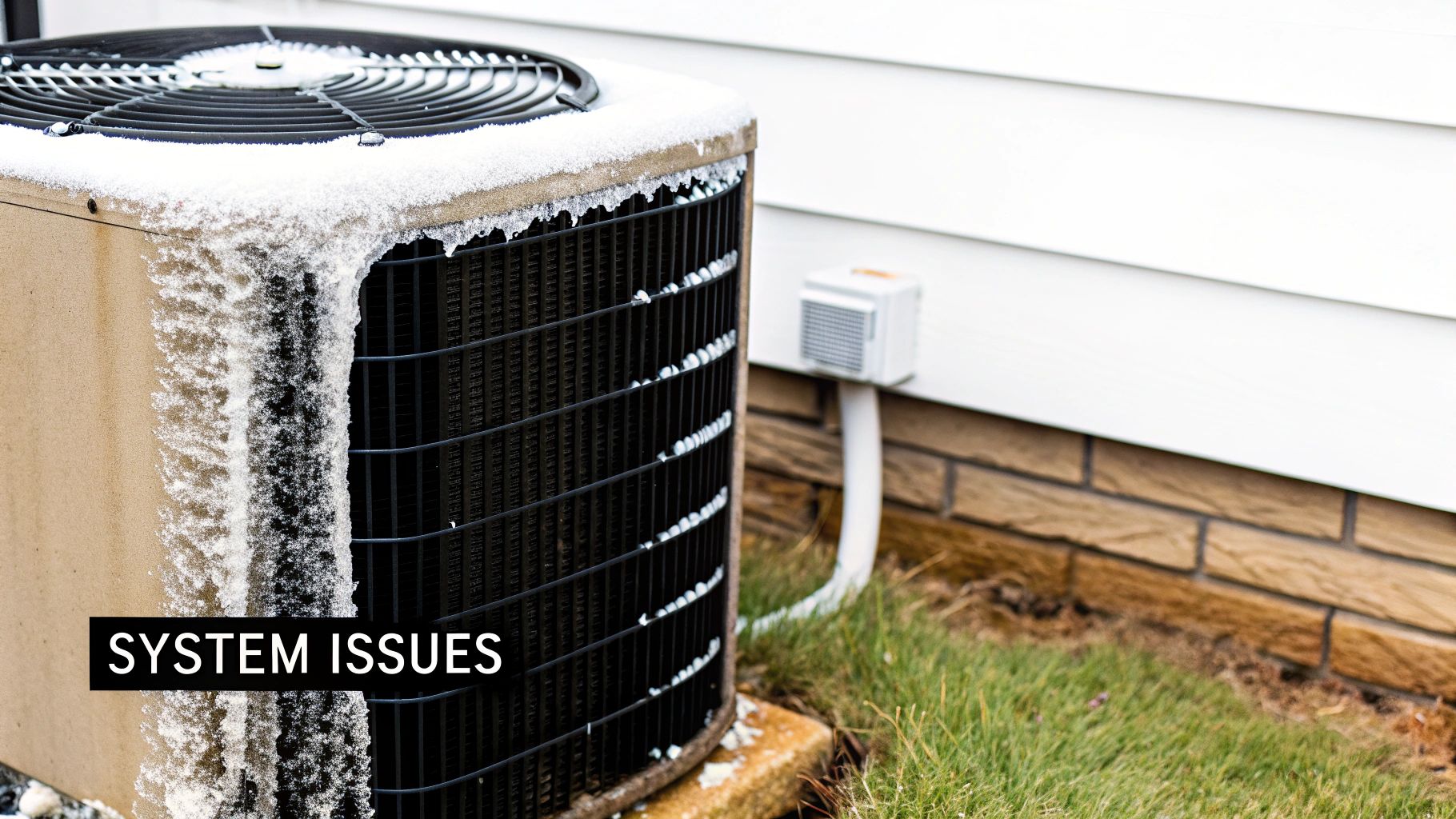
Sometimes, the easy checks just aren't enough. When you're dealing with underlying mechanical or electrical failures, letting the AC continue to run can cause much more severe damage. Knowing what to look for can save you from a massive repair bill down the road.
The Problem With Frozen Evaporator Coils
One of the most unmistakable signs of a serious problem is a frozen evaporator coil. This part is tucked away inside your indoor air handler, and its whole job is to pull heat out of your home’s air. It’s supposed to be cold, sure, but it should never be covered in ice.
Visible ice buildup on the coil or the refrigerant lines connected to it is a huge red flag. This ice acts like a thick blanket, completely blocking the coil from absorbing any heat. The result? You’ll probably feel barely any air coming out of your vents, and what little does come out might even feel warm.
A frozen coil is almost always just a symptom of a bigger issue, like:
Low Refrigerant: A leak somewhere in the system causes the pressure to drop, which in turn makes the coil’s surface temperature plummet below freezing.
Severe Airflow Blockage: This goes beyond a dirty filter. A grimy coil or a failing blower motor can literally starve the system of the air it needs to function correctly.
A frozen evaporator coil doesn’t just stop your AC from cooling. It puts an incredible amount of strain on the compressor, the heart of your system and its most expensive component. Letting the AC run in this condition is a recipe for catastrophic failure.
If you see ice, turn off the cooling function on your thermostat right away but leave the fan running to help the ice thaw out. Don't be fooled, though; the underlying problem that caused the freeze-up is still there and needs a professional diagnosis. To get a better sense of what's involved, check out our detailed guide on evaporator coil replacement in Tucson.
Dirty Condenser Coils: A Heat Trap
Your outdoor unit has a critical job: releasing all the heat it pulled from inside your house. Here in Arizona, it’s no surprise that the condenser coils can get caked in a thick layer of dust and debris, which acts like an insulating blanket.
This grime forces your system to work much, much harder to get rid of that heat. The immediate consequences are poor cooling and sky-high energy bills.
Dirty condenser coils are a major villain in our climate. In fact, this single issue is behind 25% of all summer service calls and can slash a system's efficiency by a whopping 30%. In a dusty area like Tucson, this can easily add $150-$250 to your monthly cooling costs.
Critical Signs You Need an HVAC Technician Immediately
While you can handle some minor AC hiccups yourself, certain symptoms are absolute red flags. These aren't just annoyances; they're urgent warnings that a serious, and potentially dangerous, problem is brewing inside your system.
Ignoring these signs is a gamble. You could be looking at a catastrophic system failure or, worse, creating a genuine safety hazard for your family. It's time to stop troubleshooting and call a pro.
Identifying Dangerous Refrigerant Leaks
One of the most critical issues is a potential refrigerant leak. Think of refrigerant as the lifeblood of your air conditioner. If it's escaping, your system's health is in serious jeopardy.
You can often spot a leak with your ears and eyes. A distinct hissing or bubbling sound coming from the refrigerant lines or the AC unit itself is a classic giveaway. Another tell-tale sign is finding a greasy, oily substance on or around the AC components.
This isn't just about poor performance; it's a severe mechanical and environmental problem. Low refrigerant forces the compressor, the heart of your AC, to work overtime under extreme pressure, which can quickly lead to burnout.
Research from the Kleinman Center for Energy Policy highlights just how damaging this is. Low refrigerant, often from leaks that account for 47% of HFC use in buildings, can slash a compressor's lifespan by 30%. It also spikes energy use by up to 25%, which could tack on $400 to the average Tucson homeowner's annual bills.
If you even suspect a leak, shut the system off immediately and call us. Handling refrigerant requires special training and equipment. This is absolutely not a DIY job.
Spotting Serious Electrical Malfunctions
Just as urgent are the signs of an electrical fault in your AC system. These issues pose a significant fire risk and should never, ever be taken lightly. Pay close attention to any strange electrical behavior in your home when the AC is running.
Here are the key warning signs of an electrical emergency:
Loud Buzzing or Clicking Noises: A constant, loud buzz or repeated clicking from either the indoor or outdoor unit often points to a failing electrical part, like a contactor or relay.
Frequently Tripping Breaker: If your AC trips the circuit breaker every time it tries to start, there's an electrical overload. Don't just keep resetting it, that's a serious warning sign.
Dimming Lights: Do the lights in your house flicker or dim noticeably when the AC kicks on? This can mean the compressor is drawing way too much current, signaling a major electrical strain.
Trying to diagnose or fix these problems without extensive training is extremely dangerous. For your own safety, you need to call a professional for an immediate inspection. Our team is equipped to handle these emergencies, and you can find more tips in our emergency air conditioning repair guide for homeowners.
What To Expect When You Call For Professional AC Repair
When you've tried all the DIY tricks and your AC is still blowing warm air, it's time to call in the pros. But what should that experience actually look like? Knowing what to expect from a quality HVAC company gives you the confidence to know you're making the right call and not getting taken for a ride.
First off, a true professional respects your time and your home. The technician should arrive on schedule, look professional in a company uniform, and most importantly, be ready to listen. They shouldn’t just start tearing things apart; they should ask you what you've been seeing, hearing, and feeling with your system. You know your home best, and your observations are the first clues in solving the puzzle.
The Diagnostic and Consultation Process
After getting the rundown from you, the technician will dive into a thorough diagnostic inspection. This isn't a quick glance; it's a detailed investigation. They'll be checking everything from the thermostat settings and electrical connections to the state of your indoor and outdoor units and measuring refrigerant pressures. This is a fact-finding mission, not a sales pitch.
Once they've pinpointed the root cause, the conversation shifts. A great technician won't just tell you what's broken; they'll take a consultative approach. They should clearly explain what they found, show you the problem if possible, and walk you through why it’s causing your AC to fail. This discussion should feel educational, not like a high-pressure sales tactic.
A huge sign of a trustworthy technician is their willingness to teach you. They'll explain the "why" behind the problem, not just tell you that you need an expensive part. You should walk away feeling empowered to make an informed decision, not cornered into one.
Before any work starts, you should be given a clear, upfront price for the repair options. This commitment to no surprise fees is the hallmark of an honest, customer-focused company. You need to know exactly what the job will cost, parts and labor included, so you can give the green light with total confidence.
What A Top-Notch Service Call Includes
Fixing the immediate problem is just part of the job. A quality service call is also about ensuring your system is safe and reliable for the long haul. Any technician working in your home should be certified and insured, which protects you and guarantees the work is done to proper industry standards.
A top-tier company also gets that AC units don't stick to a 9-to-5 schedule, especially not in the brutal Arizona heat. That’s why you should look for a provider that offers 24/7 emergency availability. And because a major repair can be an unexpected hit to the budget, flexible financing options can make a stressful situation much more manageable.
To give you a better idea of what to budget for, we’ve put together a table of common repair costs you might see here in the Tucson area.
A Look at Estimated AC Repair Costs in Tucson
Unexpected AC repairs can be stressful, but understanding the potential costs can help you prepare. This table breaks down the typical price ranges for some of the most common AC issues we see, giving you a transparent look at what to expect.
Common AC Repair | Typical Cost Range | Factors Affecting Price |
|---|---|---|
Capacitor Replacement | $150 – $450 | Capacitor size and how easy it is to access the unit. |
Refrigerant Leak Repair & Recharge | $400 – $1,500+ | The location and severity of the leak, plus the type of refrigerant your system uses. |
Condenser Fan Motor Replacement | $450 – $900 | Whether it’s an OEM (original) vs. universal motor and the labor involved. |
Evaporator Coil Cleaning | $200 – $600 | Depends heavily on how dirty the coil is and the difficulty of accessing it. |
Remember, these are just estimates. The final cost will depend on your specific system and the exact nature of the problem.
Ultimately, the goal of a professional service call is to leave you with more than just a quick fix. It should provide a reliable, long-term solution that restores your comfort and gives you the peace of mind that the job was done right.
How Preventative Maintenance Keeps Your AC Cooling Reliably
Let’s be honest, the absolute best way to deal with an AC that’s running but not cooling is to make sure it never happens in the first place. Instead of scrambling for a fix in the middle of a sweltering Arizona summer, you can get ahead of the problem with proactive maintenance. Think of it as a small investment in your home's reliability, one that saves you from major discomfort and surprise emergency repair bills down the road.
A regular tune-up goes so much deeper than just swapping out an air filter. It’s a comprehensive health check for your entire system, designed to spot and fix the exact issues that lead to cooling failures. When it comes to keeping your AC running strong, this is single-handedly the most effective thing you can do.

What a Comprehensive Tune-Up Includes
When a certified technician visits for a maintenance call, they’re not just glancing things over. It’s a meticulous process designed to restore your unit to peak condition and catch problems before they spiral out of control.
You can expect a pro to tackle several critical tasks, including:
Cleaning Coils: Both the indoor evaporator and outdoor condenser coils get a thorough cleaning. Removing all that built-up dust and grime is absolutely essential for proper heat transfer.
Verifying Refrigerant Levels: A technician will check the refrigerant pressures to make sure they match the manufacturer’s specs. This is how we catch potential leaks early on.
Testing Electrical Components: All capacitors, relays, and connections get tested to confirm they’re functioning safely. This simple step prevents a lot of sudden electrical failures.
Calibrating the Thermostat: We’ll check your thermostat for accuracy to ensure it’s sending the right signals to your HVAC system.
Inspecting the Blower Motor: The motor and fan assembly are inspected for wear and tear to guarantee you’re getting strong, consistent airflow.
Preventative maintenance isn’t just about dodging breakdowns; it’s about optimizing performance. A well-maintained system can be up to 15% more energy-efficient, which means lower monthly utility bills and a much longer life for your equipment.
The Tangible Benefits of Proactive Care
Scheduling regular maintenance pays off in more ways than one, giving you both better performance and serious peace of mind. The most immediate win is better energy efficiency. When your system is clean and all its parts are working in harmony, it doesn't have to strain to cool your home. That translates directly to lower electricity bills.
That reduced strain also helps your system last longer. Just like a car, an AC unit that gets regular care will run for years longer than one that's neglected. On top of that, maintenance actively improves your indoor air quality by clearing dust, mold, and other contaminants out of the system. For a complete rundown, our HVAC preventative maintenance checklist has some more great tips.
And don't forget, improving your home's overall thermal efficiency gives your AC a big helping hand. Looking into effective ways to block heat from windows can seriously reduce your system's workload. At the end of the day, preventative maintenance is your best defense against the dreaded scenario where the AC unit is running but not cooling the house.