
What Causes AC Coils to Freeze in Arizona Homes
Walking outside on a blistering Arizona day only to find your air conditioner covered in a sheet of ice is more than a little confusing; it’s alarming. When this happens, the answer to what causes AC coils to freeze almost always boils back to two main culprits: restricted airflow or low refrigerant.
It’s a classic case of your system not being able to “breathe” correctly. If your AC can't pull in enough warm air or doesn't have the right amount of refrigerant, it simply can’t absorb heat the way it's supposed to. When that happens, the moisture in the air flash-freezes right onto the evaporator coil.
Uncovering the Mystery of a Frozen Air Conditioner
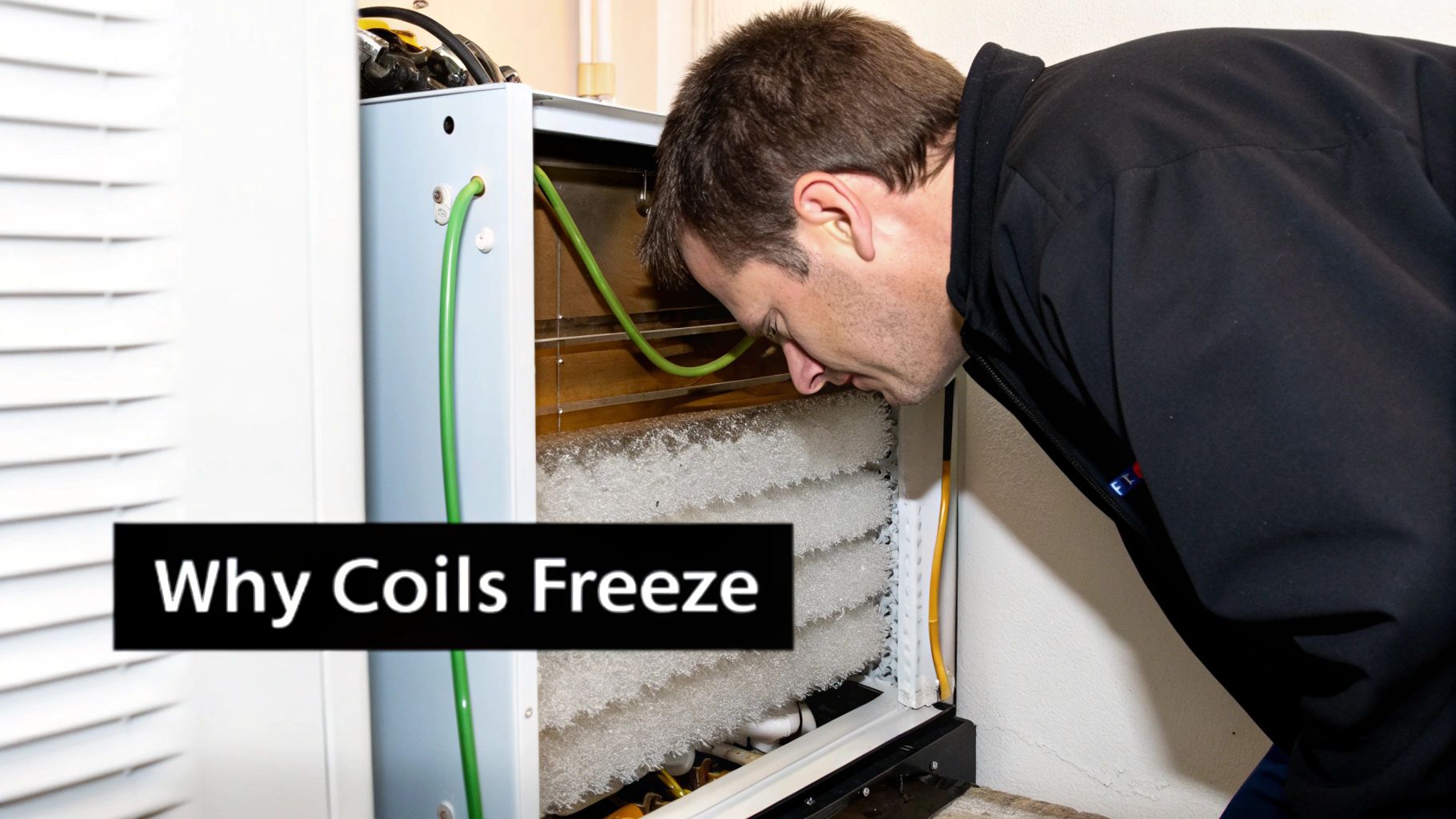
Here's how it's supposed to work: when your air conditioner kicks on, the indoor evaporator coil gets incredibly cold. The system's blower fan then pulls the warm, humid air from inside your house across these frigid coils. This does two things at once: it chills the air and pulls out the moisture.
But this entire process hinges on a delicate balance. The coil needs to be just cold enough to cool the air, but not so cold that the condensation on its surface turns into a block of ice. When something throws that balance off, you get a freeze-up.
Think of it like trying to breathe through a clogged straw. If your AC system's airflow is blocked, it can't "inhale" enough warm air from your home. Without that warm air transferring its heat to the coils, their temperature plummets below 32°F, and ice starts forming fast.
Common Causes of a Frozen AC Coil at a Glance
To make it simple, here’s a quick rundown of the usual suspects behind a frozen AC coil. While there are a few possibilities, you'll notice they all trace back to airflow or refrigerant issues.
Primary Cause | What's Happening | Common Fix |
|---|---|---|
Dirty Air Filter | The filter is so clogged it's choking the system, preventing warm air from reaching the coil. | Replace the air filter immediately. |
Blocked Vents/Registers | Furniture, rugs, or closed vents are physically blocking the flow of air. | Clear all obstructions from vents and ensure they are open. |
Low Refrigerant | A leak has caused refrigerant levels to drop, making the coils unnaturally cold. | A technician needs to find and repair the leak, then recharge the system. |
Dirty Evaporator Coil | A layer of dirt and grime on the coil acts like an insulator, preventing heat transfer. | Professional coil cleaning is required to restore proper function. |
Blower Fan Problems | The fan isn't moving enough air due to a mechanical or electrical failure. | This requires a professional diagnosis and repair of the blower motor or fan. |
These are the most common scenarios we see in the field, but the key takeaway is that ice is always a symptom of a deeper problem.
A frozen AC coil isn't just an inconvenience; it's a clear signal that your HVAC system is struggling with either poor airflow or a refrigerant problem. Ignoring it can lead to compressor failure, one of the most expensive repairs your system can have.
This guide will walk you through exactly what causes AC coils to freeze, how to spot the specific issue with your unit, and what you can do to fix it. To get a better handle on how your whole system operates, check out our guide on air conditioning basics for homeowners.
How Poor Airflow Causes Your AC to Freeze
Of all the reasons an air conditioner might turn into a block of ice, one culprit stands out as the most common: restricted airflow.
Think of your AC system like a living, breathing thing. It needs a steady supply of warm indoor air to do its cooling magic. When that flow is choked off, the entire cooling process breaks down.
The evaporator coil inside your AC unit is designed to absorb heat from the air passing over it. This exchange is a delicate balancing act. The coil gets incredibly cold, and as warm air moves across its fins, heat is transferred from the air to the refrigerant inside the coil. This leaves you with cool, comfortable air.
But what happens when not enough warm air reaches the coil? The coil stays frigid, but without enough heat to absorb, its temperature drops like a rock. It quickly falls below the freezing point of water (32°F), and the condensation that naturally forms on its surface instantly turns to ice. This is the core of what causes AC coils to freeze in most situations.
The Dirty Air Filter Dilemma
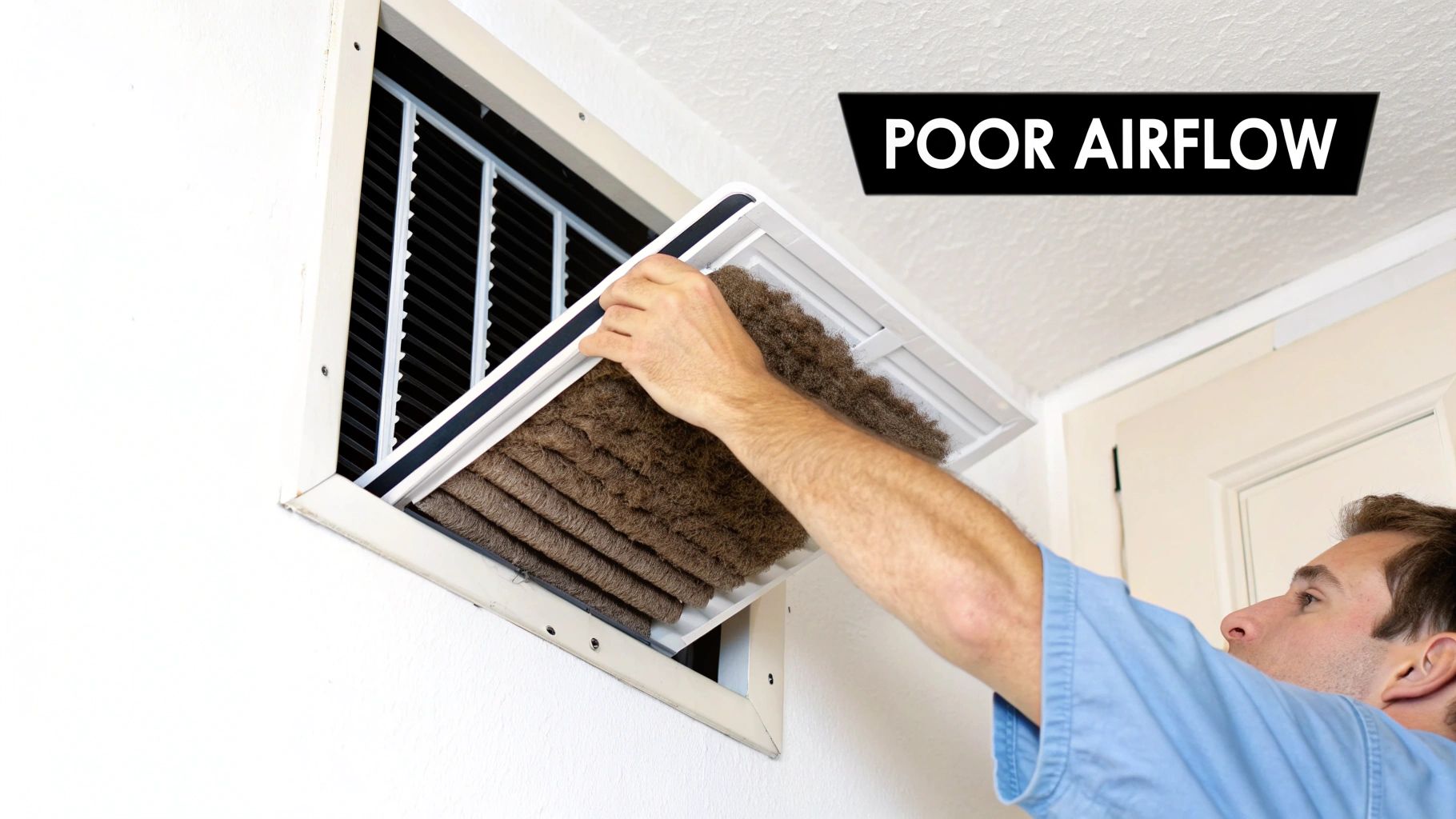
The single most frequent cause of restricted airflow is a dirty, clogged air filter. Your filter's job is to trap dust, pet dander, and other gunk before it can get into your HVAC system. Over time, this filter becomes saturated with debris, effectively creating a barrier that suffocates your system.
A severely clogged filter dramatically reduces the volume of air the blower fan can pull through. It's like trying to drink a thick milkshake through a tiny coffee stirrer: you'll put in a ton of effort, but very little gets through.
This lack of airflow starves the evaporator coil of the warm air it needs, leading directly to a freeze-up. For homeowners in dusty climates like ours in Tucson, regular filter checks aren't just recommended; they're essential.
Blocked and Closed Air Vents
Another common airflow issue stems from blocked or closed vents and registers. It might seem harmless to close the vents in an unused room to save a little energy, but doing this can throw off the delicate pressure balance your entire HVAC system was designed for. Closing too many vents creates backpressure, making it harder for the blower to circulate air effectively.
Similarly, everyday items can become unintentional airflow blockers.
Furniture Placement: A big couch pushed up against a return air vent can completely cut off the system's air supply.
Rugs and Carpets: Area rugs can easily cover floor vents, obstructing the path for conditioned air.
Clutter: Piles of boxes, toys, or other items stored near return grilles can have the same suffocating effect.
Remember this simple rule: Your AC system needs to both "inhale" and "exhale" freely. Blocked return vents prevent it from inhaling warm air, while blocked supply vents hinder its ability to exhale cool air. Both problems contribute to system strain and potential freezing.
It’s a great habit to walk through your home every so often and make sure all vents are open and clear of any obstructions.
The Ailing Blower Motor
The blower motor and its fan are the heart of your HVAC system's air circulation. This powerful component is responsible for pulling air from your home through the return vents, pushing it across the evaporator coil, and then distributing the newly cooled air through your supply ducts.
If the blower motor fails or its performance degrades, airflow grinds to a halt.
Several issues can plague a blower motor:
Mechanical Failure: Worn-out bearings or a broken belt can cause the fan to stop spinning entirely.
Electrical Problems: A faulty capacitor or bad wiring can prevent the motor from starting or running at the correct speed.
Heavy Grime: A fan cage caked with dirt and dust can become unbalanced and struggle to move air efficiently.
When the blower isn't moving enough air, the result is the same as with a clogged filter; the evaporator coil doesn't get the heat it needs and begins to freeze. If you suspect a problem with your blower, like weak airflow from your vents, you might find some useful quick troubleshooting tips for an AC unit not blowing hard. However, blower motor issues almost always require professional diagnosis and repair.
Low Refrigerant: The AC's Icy Lifeblood Problem
If a blocked airway is one major culprit behind a frozen AC, the other prime suspect is low refrigerant. Think of refrigerant as the lifeblood of your air conditioning system. It’s a specialized chemical compound that endlessly circulates through the coils, pulling heat out of your indoor air and dumping it outside.
Imagine the refrigerant is like a super-efficient sponge made to soak up heat. When your system has the right amount, that sponge works perfectly. It absorbs just enough warmth to cool the air down without getting too cold itself. It’s a delicate dance of pressure and temperature.
But when your system starts losing its lifeblood, usually because of a leak, that perfect balance is shattered.
How a Leak Leads to an Ice Block
A low refrigerant level, what we in the industry call an "undercharged" system, creates a sudden drop in pressure inside the evaporator coil. This is where a little high school physics kicks in: when the pressure of a gas drops, its temperature plummets right along with it.
All of a sudden, the refrigerant cycling through your coil is way, way colder than it was ever designed to be. As warm, humid air from your living room blows across these now intensely frigid coils, the moisture in the air doesn’t just condense into water; it flash-freezes on contact.
The real problem with low refrigerant isn't the missing liquid itself. It's the drastic pressure drop that supercools the evaporator coil, turning normal condensation into a solid block of ice that brings the whole cooling process to a screeching halt.
Once ice starts to form, it kicks off a vicious cycle. The frost acts like an insulator, making it even harder for the coils to absorb heat. This causes the coils to get even colder, which in turn creates more ice. In no time, your entire evaporator coil is encased in a thick frosty shell.
Telltale Signs of a Refrigerant Problem
A refrigerant leak isn't always a dramatic, obvious event. But your AC will give you some clear hints that it's running low. Catching these signs early can save you from a complete system meltdown.
Look out for these common symptoms:
Hissing or Bubbling Sounds: Any strange hissing from the refrigerant lines is a classic sign of gas escaping a leak.
Constant Running, No Cooling: Is your AC running nonstop but the house never seems to get cool? It's a huge red flag that it doesn't have enough refrigerant to do its job.
Warm Air from Vents: If the air blowing out feels lukewarm at best, the system simply lacks the cooling power it needs.
Spiking Energy Bills: An undercharged system has to work overtime to try and cool your home, and you'll see that extra effort reflected in your monthly electric bill.
Low refrigerant is a serious issue. It's the second leading cause of evaporator coil freeze-ups, responsible for roughly 25-35% of all cases we see. Once the refrigerant level, or "charge," drops below the manufacturer's specified amount, the system can no longer regulate its own temperature. You can read more on the findings around frozen evaporator coils at RahnIndustries.com.
Why This Is Absolutely Not a DIY Fix
It's easy to think you can just "top off" the refrigerant like you would with oil in your car, but this is one area where you need to put the tools down. Your AC's refrigerant is in a closed-loop system; if it’s low, it means there’s a leak. Adding more refrigerant without finding and fixing that leak is like pouring water into a bucket with a hole in it, a complete waste.
Even more importantly, handling refrigerant is highly regulated by the EPA. It requires special certification, tools, and knowledge. Refrigerants are hazardous materials, and it's illegal to release them into the atmosphere. Plus, systems use different types of refrigerants that are not interchangeable. To get a better handle on this, check out our guide on what refrigerant replaces R22.
If you suspect a refrigerant leak, the only right answer is to call a certified professional from Covenant Aire Solutions. Our technicians have the specialized equipment to locate the leak, repair it properly, and recharge the system to the precise factory specifications. This is the only way to restore your AC's performance and stop it from freezing up again.
Other Culprits Behind a Frozen AC System
While low refrigerant and restricted airflow are the usual suspects, they aren't the only things that can turn your evaporator coil into a solid block of ice. Answering the question "what causes AC coils to freeze" sometimes means looking at a few less common, but equally frustrating, problems.
These other issues can easily be mistaken for airflow or refrigerant troubles, which can make figuring out the real problem a bit tricky. Let's dig into what else might be going on.
Dirty Evaporator Coils
Over time, all that dust, pollen, and pet dander that your air filter is supposed to catch can find its way to the evaporator coils. If you forget to change your filter for a while, those coils can get caked in a layer of grime.
Think of this buildup like a thick, insulating blanket. Just like a blanket traps your body heat, this layer of dirt stops the coil from properly absorbing heat from your home's air. The end result is the same as a clogged filter: the coil gets way too cold, and any moisture on it freezes solid.
A dirty coil can slash your system's efficiency by more than 20%, forcing it to run much longer and harder to cool your home. It’s no wonder professional coil cleaning is a key part of any good HVAC maintenance service.
Your evaporator coil needs to "breathe in" the heat from your indoor air to work correctly. When it's covered in dirt, it can't, causing its temperature to drop and leading straight to a freeze-up.
Mechanical and Electrical Failures
Your air conditioner is a pretty complex piece of machinery. With so many moving parts, things can just wear out or break down over time. When a mechanical or electrical component fails, it throws the whole system out of balance and can easily lead to frozen coils.
A Faulty Blower Fan: Even if your filter is spotless, a dying blower motor won't be able to push enough air over the coils. Things like worn-out bearings or a bad capacitor can make the fan spin too slowly, or not at all.
Thermostat Malfunctions: The thermostat is the brain of your entire HVAC system. If its sensor is off or it's not calibrated correctly, it might fail to tell the compressor when to shut off. The system just keeps running and running, eventually overcooling the coils until they freeze over.
These aren't the kind of problems you want to tackle yourself. They require a trained technician to safely diagnose which part has failed and get it replaced.
Environmental Conditions
Finally, believe it or not, the weather outside and the conditions inside your home can be a factor. Your AC is engineered to work best within a certain temperature range, and operating it outside those limits is asking for trouble.
Running your air conditioner when it's cool outside, especially below 60°F, is a classic recipe for a freeze-up. Your system's internal pressures are set for hot weather. On a cool night, these pressures can drop too low, which in turn makes the evaporator coil get excessively cold and freeze.
This is why it's always better to just open your windows on those cooler Arizona evenings instead of cranking the AC. Running the system when it doesn't need to be on not only wastes a ton of energy but also puts a lot of unnecessary strain on it, risking a freeze-up that could cause even bigger headaches down the road.
Your Step-by-Step Action Plan for a Frozen AC
Finding your AC coils encased in a block of ice is definitely a startling sight, but don't panic. A few simple, safe steps can prevent serious damage while helping you get to the bottom of the issue. How you react right now is key to protecting your system's most expensive component: the compressor.
This action plan will walk you through safely handling a frozen unit and performing some basic checks. The mission is simple: first, thaw the system completely, and then figure out if this is an easy fix or something that needs a professional’s touch.
First Steps: Turn It Off and Let It Thaw
The absolute first thing you need to do is turn your air conditioning system completely OFF at the thermostat. If you keep running the AC with that ice buildup, you risk destroying the compressor, and trust me, that's a repair bill you do not want to see.
Once you’ve shut down the cooling, flip your thermostat’s fan setting to 'ON'. This stops the refrigeration cycle but keeps the indoor blower running. Why? Because circulating room-temperature air across the evaporator coil is the safest and most reliable way to melt the ice.
Now comes the hard part: be patient. This isn't going to happen in a few minutes. Depending on how thick the ice is, it could take anywhere from a few hours to an entire day for the coils to completely defrost. Rushing this will only cause more headaches.
Next: Perform Safe Homeowner Diagnostics
While the system is thawing out, you can play detective and investigate the usual suspects behind a frozen AC. These simple checks can often solve the problem without you ever needing to pick up the phone.
Check the Air Filter: A clogged air filter is the number one cause of restricted airflow, which is a direct path to a frozen coil. Pull your filter out and hold it up to a light. If you can’t see the light shine through, it’s long overdue for a replacement.
Inspect All Vents and Registers: Take a walk through your house and make sure every single supply and return air vent is open and totally clear. Look for furniture, rugs, or drapes that might have been pushed over them.
Look for Obvious Blockages: A backed-up condensate drain line can sometimes contribute to moisture problems right around the coil. If you see standing water in the drain pan, you likely have a clog. You can find out more by checking out our guide on how to unclog a condensate drain line.
This decision tree helps visualize some of the other potential causes, like dirty coils or mechanical failures, that might be the culprit.
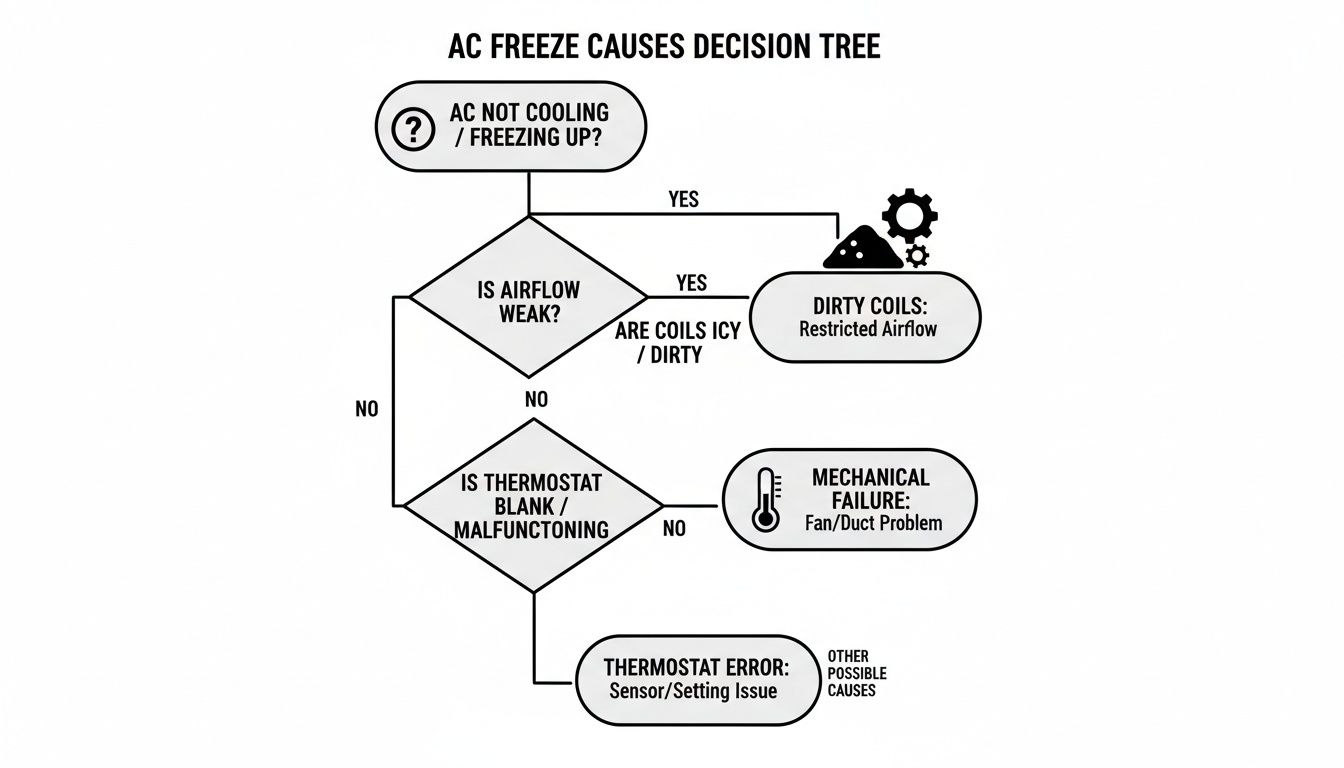
As the chart shows, if simple airflow problems aren't the cause, the issue probably lies deeper within the system's mechanical or electrical components.
If you’ve swapped out a dirty filter and cleared all your vents, there’s a good chance you’ve solved it. Once the coil is completely thawed and dry, you can try turning the AC back on. But if those coils start icing over again, that’s your sign of a bigger problem, like a refrigerant leak or a failing blower motor.
At that point, turn the system off immediately to prevent further damage and give the professionals at Covenant Aire Solutions a call. We'll get to the root of the problem and get your home cool again.
Preventive Maintenance: Your Best Defense Against Freezing
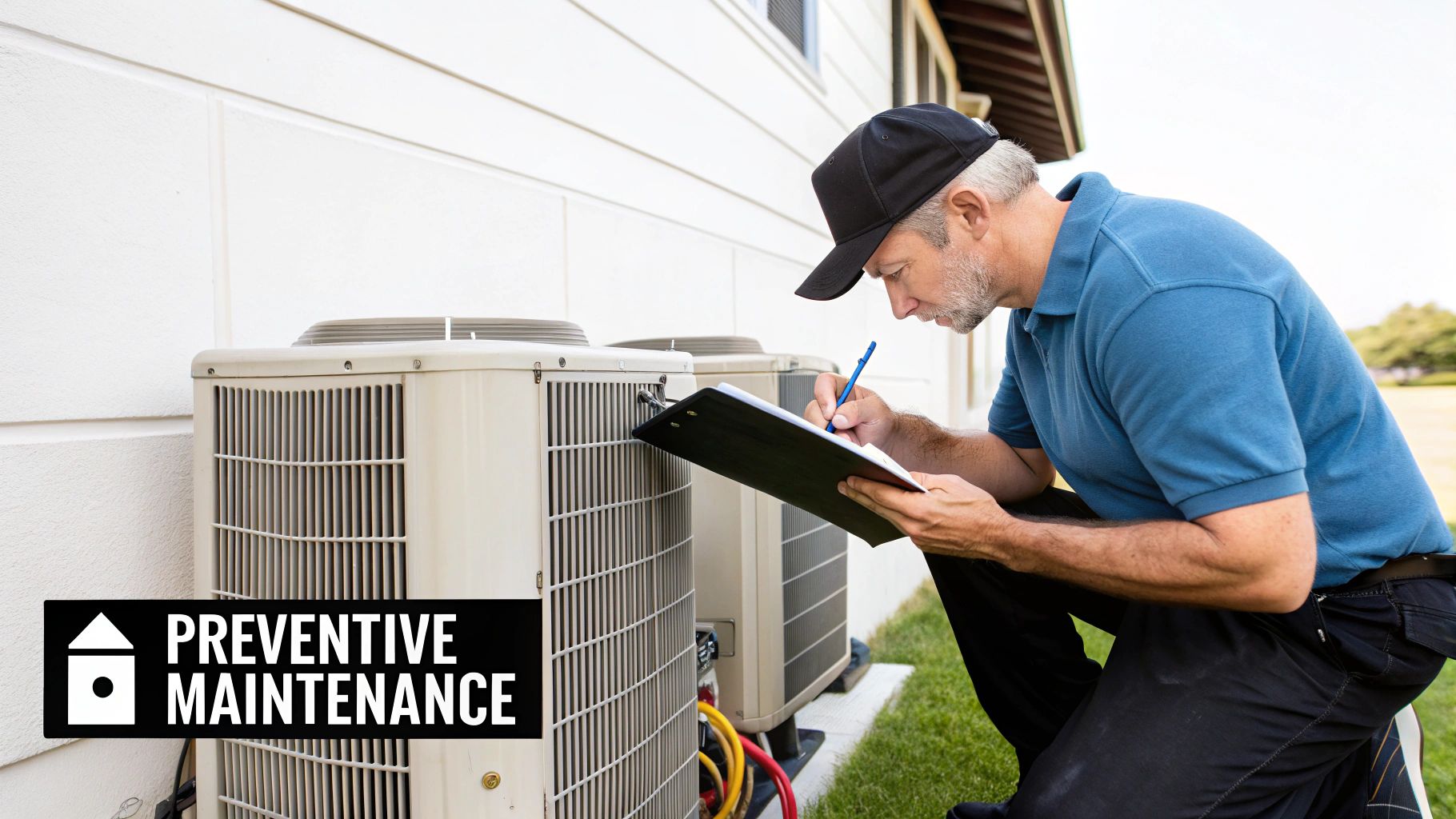
After you’ve dealt with a frozen AC, the very next question should be, "How do I stop this from ever happening again?" The single best answer is proactive, professional maintenance. It's time to stop thinking of this as just another expense and see it for what it truly is: a crucial investment in your system’s health and your own peace of mind.
This is especially true here in the demanding Tucson climate, where our air conditioners are pushed to their absolute limits for months on end. Regular check-ups are what keep your system running at peak efficiency, extend its lifespan, and give you the reliability you count on during those scorching summer days.
What a Professional Tune-Up Includes
A comprehensive maintenance visit from a certified technician is designed to hunt down and fix all the common culprits behind freezing coils. It’s a thorough deep-clean and inspection that keeps your HVAC system in prime fighting shape.
During a typical visit, our technician will roll up their sleeves and get to work on several key tasks:
Evaporator and Condenser Coil Cleaning: We professionally clean both sets of coils, getting rid of that insulating blanket of grime that kills heat transfer and can directly cause a freeze-up.
Refrigerant Level Inspection: Your system's refrigerant charge is checked to make sure it matches the manufacturer’s exact specifications. If it’s low, we find and fix the leak; that's the only way to stop the problem for good.
Blower Motor and Fan Inspection: The technician will inspect the blower motor, fan blades, and housing to ensure they are clean and spinning freely, guaranteeing strong, consistent airflow through your home.
Condensate Drain Cleaning: We'll clear out any gunk or blockages from the condensate line. This stops water from backing up and causing moisture issues right where you don't want them: around the evaporator coil.
Think of preventive maintenance as a wellness check for your AC. It allows a professional to catch and correct minor issues, like a slightly dirty coil or a developing refrigerant leak, before they escalate into a system-crippling freeze.
The Value of Maintenance Plans
For homeowners who want consistent, worry-free comfort, our maintenance plans are the perfect solution. These plans ensure your system gets biannual check-ups, helping you avoid the stress and sticker shock of emergency repairs in the middle of a heatwave. For property managers looking to protect their investments, understanding the scope of professional apartment maintenance services can also provide a framework for proactive care.
Ultimately, staying one step ahead of the causes of a frozen AC protects your investment and ensures your home stays the cool sanctuary it’s supposed to be. For more steps you can take yourself, check out our HVAC preventative maintenance checklist for a detailed guide.
Frequently Asked Questions About Frozen AC Coils
Even after you've shut the system down and the ice has started to melt, you probably still have a few questions swirling around. Let's tackle some of the most common ones we hear from homeowners in your situation.
How Long Does It Take for AC Coils to Thaw Completely?
This really depends on how thick that ice buildup is and the temperature inside your home. A light, frosty coating might be gone in just 1 to 3 hours. But if you're looking at a solid block of ice encasing the whole coil, you could be waiting up to 24 hours for it to melt completely.
Want to speed things up safely? The best trick is to turn the AC off at the thermostat but switch the fan setting to "ON." This gets room-temperature air moving across the fins, letting it thaw out naturally without shocking the system or causing any damage.
Is It Safe to Run My AC if the Coils Are Frozen?
Absolutely not. Running your air conditioner with frozen coils is one of the worst things you can do for its health. That ice acts like a wall, completely blocking airflow and throwing the whole refrigerant cycle out of whack.
This puts a massive amount of stress on the compressor, the heart of your entire system and its most expensive part.
Forcing the compressor to work against a frozen system can cause it to overheat and fail for good. A compressor replacement is often so expensive that it makes more sense to replace the whole unit. Always, always turn the system off immediately if you see ice.
Can a Frozen AC Coil Cause Water Damage?
You bet it can. A frozen coil poses a serious water damage risk to your home. When that huge chunk of ice finally melts, it often releases way more water than your system's condensate drain pan was ever designed to handle.
That overflow can easily spill into your air handler, soak the surrounding insulation, and even leak down through your ceiling or warp the flooring below. This is another huge reason why it’s so critical to understand what causes AC coils to freeze in the first place; catching it early protects not just your HVAC unit, but your home itself.
How Often Should I Change My Air Filter in Arizona?
Here in dusty Arizona, your air filter is your number one line of defense against all sorts of HVAC problems, including freeze-ups. For the standard 1-inch fiberglass filters, you should plan on changing them every 30 days, no exceptions.
If you've upgraded to a more robust, pleated filter, you can probably stretch that to 60 or 90 days. That said, during our intense summer monsoon season or if you have furry friends at home, it’s always safest to check it monthly. Keeping that airflow strong is the key to preventing a freeze.
If you've thawed your unit but the problem keeps coming back, don't risk causing permanent damage. The certified technicians at Covenant Aire Solutions can pinpoint the root cause, whether it's a tricky refrigerant leak or a failing part, and get your home comfortable again, safely and efficiently. Contact us today for expert service you can trust.