
a/c unit not blowing hard? Quick troubleshooting tips
When the air coming from your vents feels more like a lazy sigh than a powerful gust, you know something's wrong. A weak, disappointing trickle of cool air is one of the most common complaints we hear, and it’s a clear signal that your AC system is struggling. Most of the time, the culprit is restricted airflow, often caused by something as simple as a clogged air filter or a blocked vent.
Getting to the bottom of it quickly not only brings back the comfort you're looking for but can also save you from a much bigger, more expensive repair down the road.
Why Your AC Airflow Feels Weak
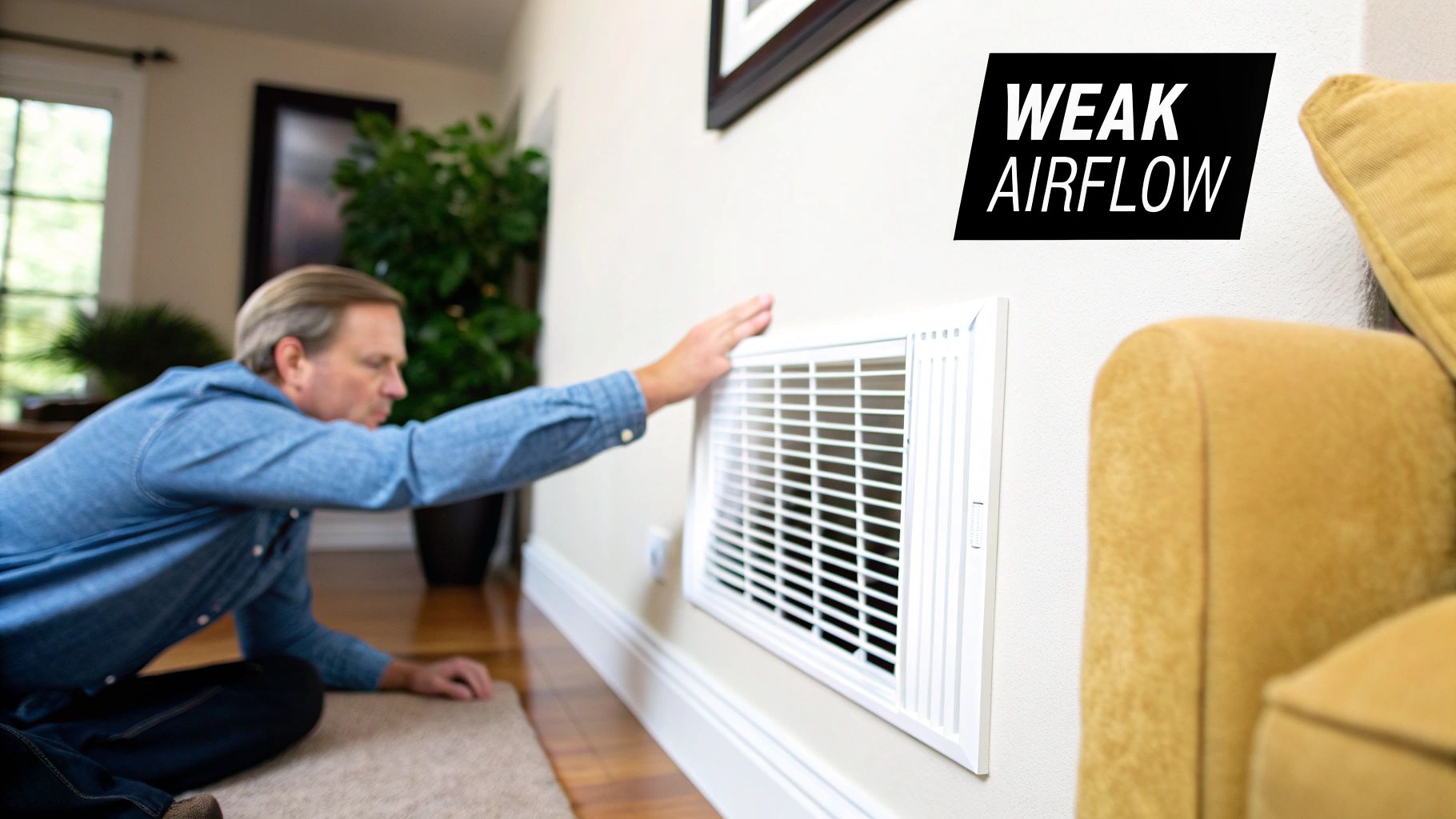
A healthy, happy air conditioner should be pushing a steady, strong stream of cool air from every single vent. When that flow weakens, it's more than just an annoyance; it's a symptom. An underlying problem is forcing your system to work much harder than it was designed to.
That extra strain shows up on your energy bills, creates hot and cold spots around the house, and can eventually lead to a complete system breakdown. Figuring out what’s causing the weak airflow is the first and most important step toward a real solution.
Common Symptoms of Poor Airflow
You'll probably notice more than just a weak breeze. Keep an ear and eye out for these other tell-tale signs that point directly to an airflow problem:
Uneven Temperatures: Some rooms feel great, but others stay stuffy and warm. This is a classic sign that air isn't being distributed properly.
Constant AC Operation: Your system seems to run nonstop but never actually hits the temperature you set on the thermostat.
Strange Noises: You might hear whistling or straining sounds from the vents or the indoor unit as it struggles to pull in enough air.
Increased Dust: If you suddenly see more dust around your home, your air filter might be so full it can’t trap particles anymore.
What Is Restricting Your Airflow
Your AC is basically a closed-loop system that needs to "breathe" to work right. To get a better handle on the problem, it helps to understand the basics of how an aircon works. Air is pulled in, cooled, and then pushed back out.
When anything gets in the way of that breathing process, from the point air enters the system to where it exits your vents, the result is weak airflow. Think of it like trying to breathe through a clogged straw. You have to work a lot harder, but you get very little result.
We're going to walk through the most common culprits, starting with the easy DIY fixes and moving on to the more complex issues that need a professional touch. For a more comprehensive look at AC problems, you can also check out our guide on how to fix common cooling issues fast.
Quick Diagnosis for Weak AC Airflow
Feeling overwhelmed by the possibilities? Don't be. Most airflow issues come down to a handful of common problems. This table breaks them down to help you pinpoint the likely cause.
Problem Area | Common Cause | Difficulty Level | Recommended Action |
|---|---|---|---|
Air Filter | Clogged with dust & debris | DIY | Replace the filter immediately. Check monthly. |
Vents & Registers | Blocked by furniture or closed louvers | DIY | Check all vents; move obstructions. |
Evaporator Coils | Iced over or covered in dirt | Professional | Turn off AC to thaw. Call a technician to clean. |
Blower Fan | Malfunctioning motor or capacitor | Professional | Requires electrical diagnosis and repair. |
Ductwork | Leaks, blockages, or collapsed sections | Professional | Needs inspection and sealing by an HVAC pro. |
Refrigerant | Low levels due to a leak | Professional | Requires a certified technician to find and fix the leak. |
This table should give you a solid starting point. If the fix is in the "DIY" column, give it a shot. If it's labeled "Professional," it's best to give us a call to avoid causing more damage or risking injury.
Simple DIY Fixes to Restore Strong Airflow
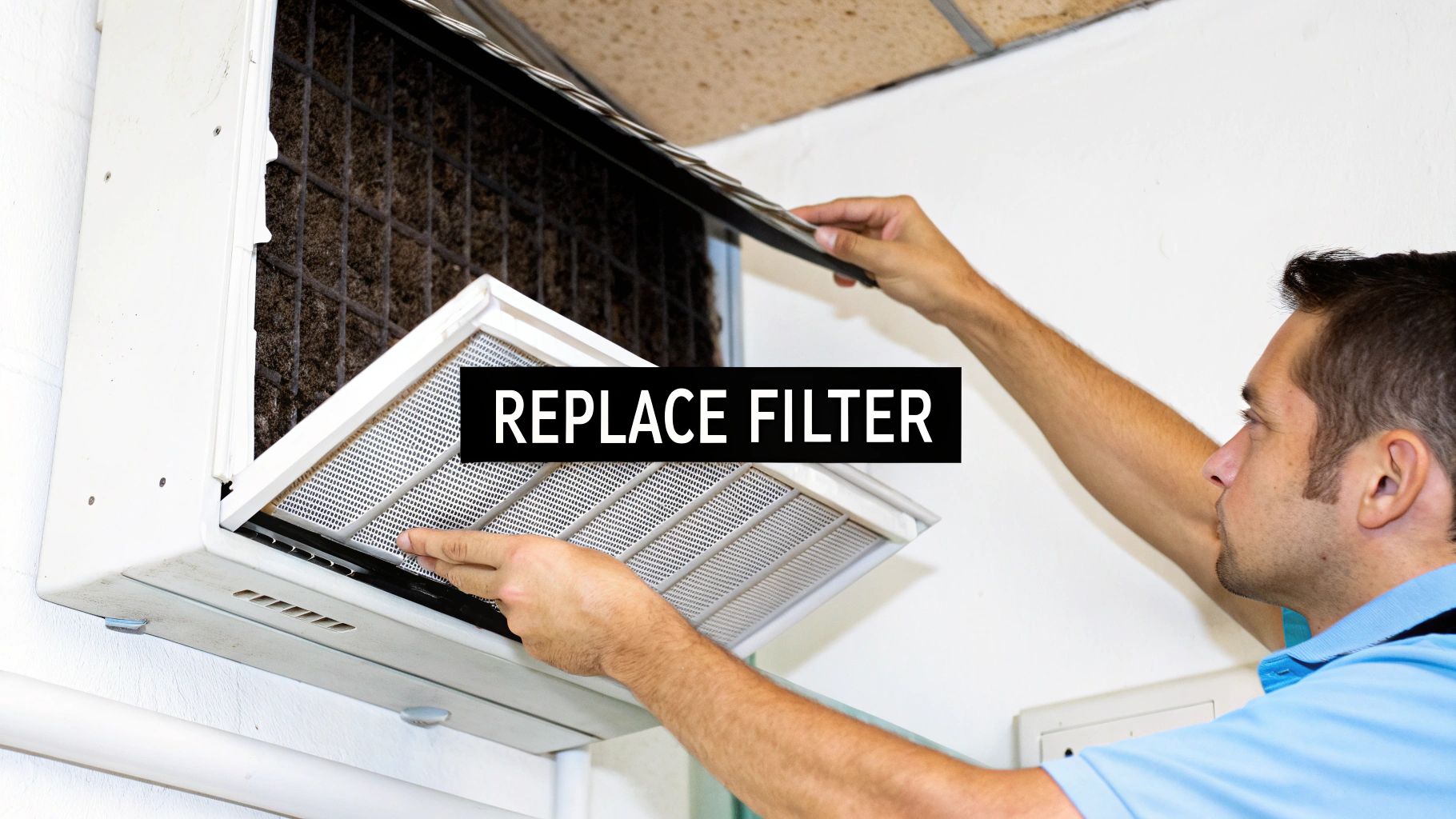
When your AC unit isn't blowing as hard as it used to, it’s usually a sign of a few common, easily fixable issues. Before you even think about picking up the phone for a service call, you can often solve the problem yourself in just a few minutes and get that powerful, cool breeze back.
These simple troubleshooting steps hit the most frequent culprits that choke your system’s airflow. We’ll start with the biggest offender and walk through a few other common blockages you can clear on your own.
Start with the Air Filter
Hands down, the single most common reason for weak airflow is a dirty, clogged air filter. Just think of it as your AC’s lungs: if it can’t breathe in, it can’t breathe out. When that filter gets packed with dust and debris, it forces the blower motor to strain, which dramatically cuts down the amount of air that can get through.
Over time, this not only kills your airflow but also drives up energy bills and can cause bigger problems, like a frozen evaporator coil.
Here’s what to do:
Find the Filter: It's usually located right in the return air duct or tucked inside the indoor air handler cabinet.
Do a Quick Visual Check: Hold the filter up to a light. If you can't see the light shining through it, it’s definitely time for a replacement.
Stick to a Schedule: Even if it looks relatively clean, don't wait. Standard 1-inch filters should be replaced every 30 to 90 days, depending on if you have pets, deal with allergies, or live in a dusty area.
A clogged air filter is the root cause of an estimated 70-80% of service calls related to poor cooling. This one simple check can save you a whole lot of money and frustration.
Inspect Your Vents and Registers
Okay, so your filter is clean. The next move is to take a quick walk through your home. You need to check every single supply vent (where the cool air blows out) and every return vent (where air gets pulled back in).
It sounds almost too simple, but you'd be surprised how often a piece of furniture, a thick rug, or even a stray toy is the only thing standing between you and strong airflow. Make sure all the vent louvers are fully open and that nothing is blocking them.
Clear the Outdoor Condenser Unit
Your air conditioner's outdoor unit, known as the condenser, also needs to breathe. Its whole job is to push the heat that was pulled from your home out into the open air, and the metal fins surrounding the unit are critical for that process.
But over the seasons, those fins can get absolutely caked with:
Grass clippings from mowing the lawn
Fallen leaves and small twigs
Cottonwood fluff in the spring
A general layer of dirt and dust
All that gunk acts like a thick blanket, trapping heat inside and forcing your entire system to work overtime. That inefficiency often shows up inside as weaker airflow. For a more detailed guide on how to do this safely, check out our post on cleaning AC unit components.
Digging Deeper: The Blower Motor and Fan
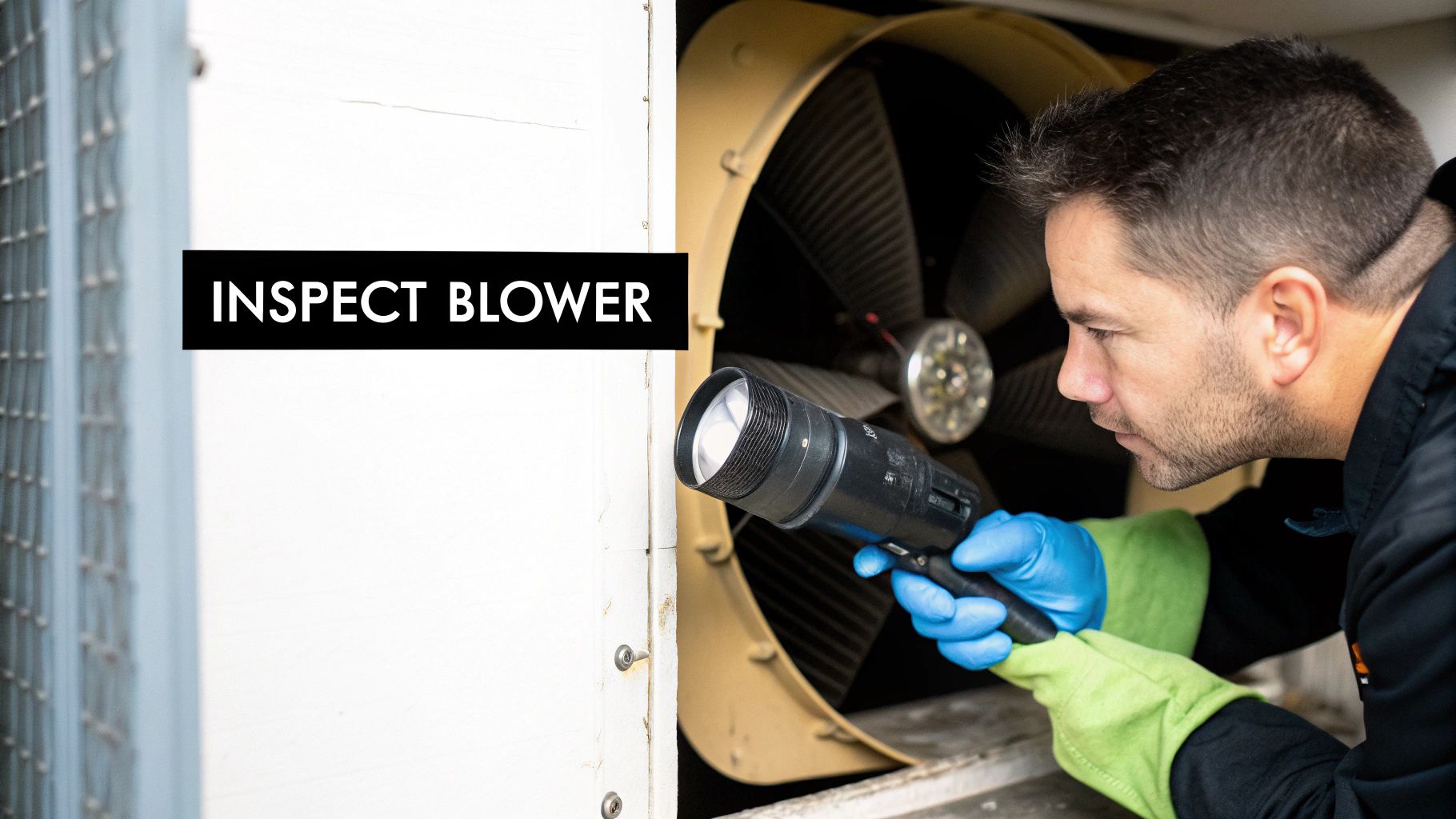
So, you’ve swapped out the filter and made sure your vents are wide open, but the airflow is still weak. What’s next? It's time to consider a problem deeper inside your system, most likely with the blower motor and fan.
Think of the blower assembly as the lungs of your HVAC system. This powerful motor is what actually grabs the chilled air from your AC and pushes it through the maze of ductwork to every room in your house.
When that blower isn't working right, it doesn't matter how cold the air is; it just won't get where it needs to go. While most blower issues are a job for a pro, you can absolutely listen for the warning signs yourself, which helps you know what you’re dealing with before you pick up the phone.
It Might Just Be the Capacitor
Before you assume the whole motor is shot, let's talk about its tiny but essential sidekick: the capacitor. A capacitor is basically a small battery that gives the blower motor a strong jolt of electricity to get it started and maintain the right speed.
Over time, these little components wear out and can't hold a charge like they used to. A weak or failing capacitor might give the motor just enough juice to start spinning, but not enough to get up to full speed. This creates a sluggish fan and weak airflow that feels almost exactly like a clogged filter.
Replacing a capacitor is a fast and relatively inexpensive fix for a trained technician, but it's a definite no-go for DIY. Capacitors hold a powerful electrical charge even when the power is off, and touching one improperly can result in a serious shock.
Your Ears Are a Great Diagnostic Tool
Sometimes, the best way to figure out what's wrong is just to listen. A healthy blower runs with a steady, low hum. When things start going wrong, the sounds it makes will change dramatically.
Get close to your indoor unit and listen for any of these tell-tale noises:
A high-pitched squeal: This is the classic sound of worn-out bearings inside the motor. It’s a clear sign the motor is on its last legs.
Loud grinding or rattling: This is more alarming. It could mean something has broken loose inside the blower assembly, like a fan blade scraping against the metal housing.
A constant buzz or hum with no air movement: This is a big one. It means the motor is getting power and trying to start but can't. The culprit is often a dead capacitor or a completely seized motor.
Safety First: If you hear any of these noises, especially grinding or a loud buzz, shut your AC system off at the circuit breaker immediately. Trying to run a motor that's in distress can cause it to burn out completely or create a dangerous electrical situation.
Check the Fan Blades for Gunk
Another sneaky culprit that can choke your airflow is a filthy blower fan. The fan inside your air handler looks like a hamster wheel, often called a "squirrel cage," and it's covered in dozens of curved blades designed to scoop and move a ton of air.
Over the years, these blades can get caked with a thick blanket of dust, grime, and even mold. This buildup causes two problems. First, it changes the aerodynamic shape of the blades, making them way less effective at moving air. Second, that extra weight throws the fan off-balance, creating vibrations that destroy the motor's bearings over time.
To get a better picture of how all these pieces fit and work together, check out our handy guide on the essential parts of a central AC system.
Investigating Frozen Coils and Refrigerant Leaks
Alright, so you've checked the easy stuff and the blower fan seems to be doing its job. Now we need to look at a more serious issue that could be hiding inside your AC system. A common culprit when your AC isn't blowing hard is a frozen evaporator coil, I mean a solid block of ice that physically chokes off all airflow.
When we see a frozen coil, it almost always points back to one thing: a refrigerant leak.
Refrigerant is the lifeblood of your air conditioner; it’s the magic stuff that pulls heat out of your home. If the level gets low from a leak, the pressure inside the evaporator coils plummets. This drastic drop in pressure causes the moisture that normally just condenses on the coils to freeze solid, building up layer by layer until the whole thing is encased in ice.
How to Spot a Frozen Coil Problem
You don’t have to be a pro to see the warning signs of a refrigerant leak and frozen coils. The evidence is usually pretty obvious once you know where to look.
Visible Ice or Frost: Take a look at your indoor air handler. You might spot a layer of frost or even thick ice building up on the copper lines running into the unit.
Puddles of Water: As that ice melts when the AC cycles off, it can easily overwhelm the drain pan and leave puddles of water on the floor around your indoor unit.
Hissing or Bubbling Noises: A faint but distinct hissing sound near the AC unit is a classic sign of refrigerant escaping from a leak.
A quick word of advice: Simply adding more refrigerant is never the right solution. That’s like putting air in a tire with a nail in it; it’s a temporary fix that completely ignores the real problem and just wastes your money. The leak has to be found and professionally repaired first.
Why Refrigerant Leaks Need a Professional Fix
Refrigerant, which you might know by brand names like Freon, is a chemical that requires certified technicians to handle safely and legally. Finding a tiny, slow leak in a complex system of coils and lines is tough work; it takes specialized electronic leak detectors and years of hands-on experience. Trust me, this isn't a DIY job.
Low refrigerant is especially brutal on the compressor, the heart of your AC system. It has to work much harder to circulate what little coolant is left, which leads to overheating and eventual failure. To give you an idea of the scale, the air conditioning compressor market was valued at USD 30.0 billion and is projected to hit USD 48.9 billion by 2035, and component failures like this are a huge driver of repair costs for homeowners. You can read more about how critical these parts are on futuremarketinsights.com.
Ultimately, a frozen coil is a clear cry for help from your AC. We go into more detail on this in our guide explaining why an AC unit freezes. If you suspect a leak, the best thing you can do is turn your system off completely to let it thaw and call Covenant Aire Solutions right away.
When to Call a Professional for AC Repair
While there’s a lot you can tackle on your own, knowing your limits is probably the smartest thing you can do for your AC system. Sometimes, a DIY fix can turn a small problem into an expensive nightmare or even pose a serious safety risk.
If you’ve run through the basics, changed the filter, cleared the vents, and your A/C is still not blowing hard, it’s probably time to bring in an expert. Certain issues are just not negotiable; they require the specialized tools, training, and certifications of a pro.
Clear Signs You Need an Expert
It's crucial to spot the symptoms that point to a deeper, more complicated problem. If you run into any of these, your next move should be calling Covenant Aire Solutions.
Suspected Refrigerant Leaks: See ice building up on your coils? Hear a faint hissing sound? That’s a classic sign of a refrigerant leak. Handling refrigerant requires an EPA certification and specialized recovery equipment. This is absolutely not a DIY job.
Electrical Issues: Problems with the blower motor, capacitor, or control board involve high voltage. A motor that hums but won't kick on, a distinct burning smell, or a breaker that keeps tripping are all red flags for an electrical fault. For your safety, let a professional diagnose this to avoid the risk of shock or fire.
Persistent Problems: You've done everything right, new filter, clear vents, but the airflow is still weak. At this point, the root cause is likely internal. It could be anything from failing motor bearings to a major blockage deep inside your ductwork that you just can't reach.
This quick flowchart can help you decide what to do next if you're troubleshooting weak airflow.
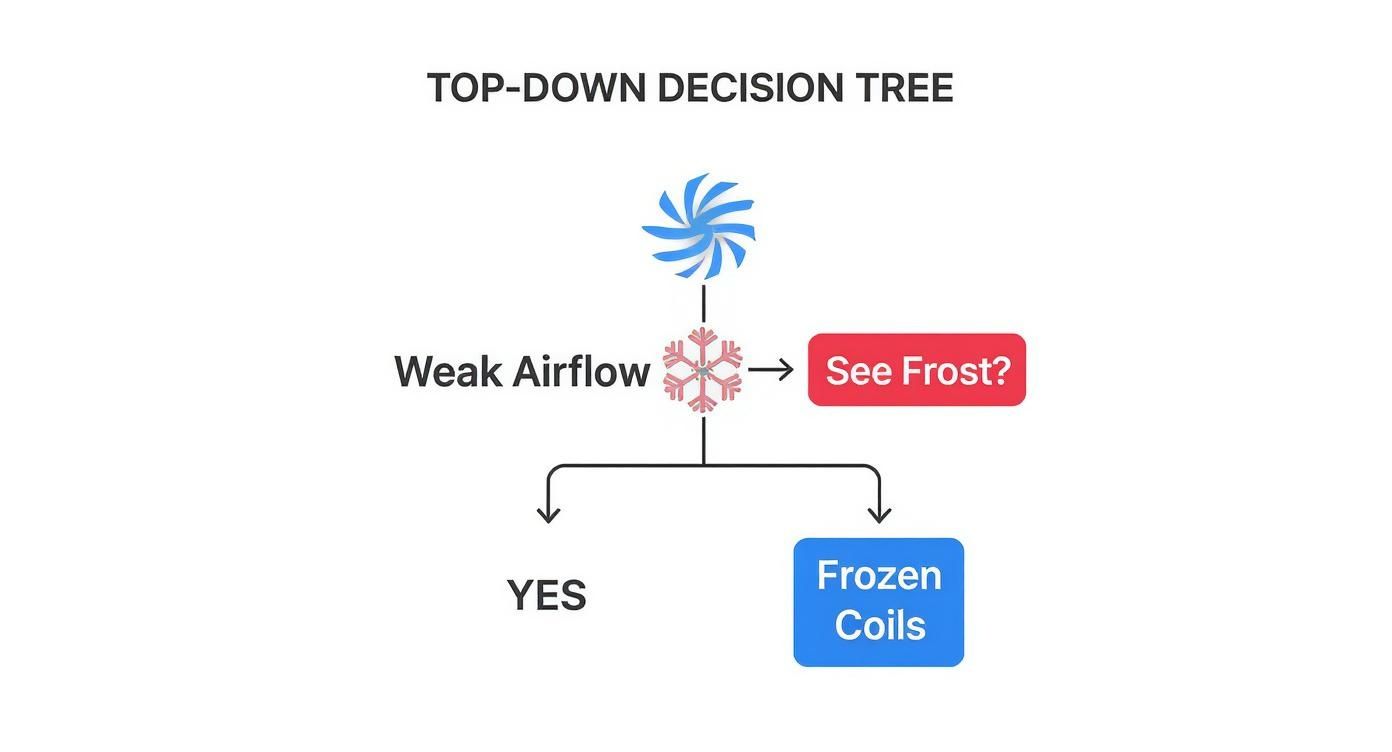
As you can see, the moment you spot frost, the path leads straight to calling a professional. That ice is a symptom of a bigger issue that needs an expert eye.
Understanding Professional Repair Costs
We get it; calling a technician can be intimidating, especially when you're worried about the bill. But here's the thing: professional service guarantees an accurate diagnosis and a lasting repair, which often saves you money in the long run.
A professional diagnosis prevents you from spending money on parts you don't need. An expert can pinpoint whether it's a $150 capacitor replacement or a more significant motor repair, saving you time and frustration.
The table below breaks down some common repairs to give you a better idea of what to expect when comparing DIY costs to professional service.
DIY vs Professional Repair Cost Estimates
Repair Type | Typical DIY Cost | Estimated Professional Cost | Recommendation |
|---|---|---|---|
Air Filter Replacement | $10 - $40 | $75 - $150 (part of maintenance call) | DIY. This is a simple and essential homeowner task. |
Capacitor Replacement | $20 - $50 (part only) | $125 - $250 | Professional. High voltage makes this risky for DIYers. |
Blower Motor Repair | N/A | $450 - $1,500 | Professional. A complex job requiring specialized tools. |
Refrigerant Leak Repair | N/A | $200 - $1,600+ | Professional Only. Legally requires EPA certification. |
Duct Leak Sealing | $50 - $150 (tape/mastic) | $300 - $1,000+ | DIY for accessible leaks; Professional for whole-system sealing. |
As you can see, while you can save a few bucks on simple tasks, the more complex and dangerous jobs are best left to the trained technicians at Covenant Aire Solutions.
Knowing when to ask for help is key. If you find yourself with an AC emergency, our emergency air conditioning repair guide for homeowners has some useful tips on what to do while you wait for a technician. An accurate diagnosis and a safe, effective repair will keep your system running efficiently for years to come.
Common Questions About Weak AC Airflow
When your A/C isn't blowing as hard as it used to, a lot of questions pop up. It's a common problem, and we hear these same concerns from homeowners all the time. Let's walk through the practical side of weak airflow and get you some straightforward answers.
Can a Dirty Filter Really Cause This?
Absolutely. In fact, a severely clogged air filter is the number one reason we see for weak airflow. It's the simplest explanation and, thankfully, the easiest fix.
Think of it this way: your blower motor is trying to pull air through a thick, dirty blanket. It just can't get enough, so the amount of air coming out of your vents is drastically reduced. In some cases, this can get so bad that the indoor evaporator coil freezes into a solid block of ice, stopping airflow almost completely. This is precisely why changing your filter every 1 to 3 months is the most important thing you can do for your system's health.
Is Warm Air the Same Problem?
Not usually. While the two can sometimes be related, warm air blowing from your vents typically points to a completely different set of issues. If the fan sounds like it’s blowing at full speed but the air just isn't cold, the problem is almost certainly with the cooling components themselves, not an airflow blockage.
This scenario often means you're dealing with a refrigerant leak or a problem with the compressor. While a dirty filter can eventually lead to poor cooling, if the airflow itself feels strong, it's time to have a pro inspect the refrigerant system.
A good rule of thumb: When airflow is strong but the air is warm, the problem is in the cooling cycle. When the air is cool but the flow is weak, you're likely dealing with an obstruction somewhere in the system. Knowing the difference helps you zero in on the real culprit.
How Do I Know if It Is My Ducts?
Ductwork issues have some classic tell-tale signs. If you feel a powerful blast of air from some vents but just a weak sigh from others, the problem is very likely in your ducts. This points to an issue with air distribution rather than air creation.
Look for other clues that point to your ductwork:
You have rooms that are always way hotter or colder than the rest of the house.
You see a puff of excessive dust from the registers when the system first kicks on.
You hear strange rattling or whistling noises coming from inside the walls or ceiling.
You can easily check for obvious blockages right at the vent covers yourself. But diagnosing a crushed, disconnected, or leaking duct hidden away in an attic or crawlspace is a job that really needs a professional inspection.
If you've checked the basics and your AC is still underperforming, it’s time to call in an expert. The technicians at Covenant Aire Solutions have the right tools and years of experience to find the root cause quickly and get your home comfortable again. Don't let weak airflow ruin your summer; visit us online to schedule your service call today.