
Parts of Central AC System: A Quick Guide
Your central AC system might seem like magic, but it's really just a clever machine with several key parts all working in concert. We can basically break it down into an outdoor unit, an indoor unit, and all the connections that tie them together. The biggest surprise for most homeowners? Your air conditioner doesn't actually create cold air. Its real job is to grab the heat from inside your house and dump it outside, leaving you with that cool, comfortable feeling.
How Your Central AC System Really Works
Think of your central AC as your home's own circulatory system. But instead of blood, it's pumping a special fluid called refrigerant. This refrigerant is the key; it absorbs the heat from your indoor air and carries it to the outdoor unit to be released. This continuous cycle of heat exchange is what keeps your home cool, and understanding the role each component plays makes the whole process a lot less mysterious.
This technology is more widespread than you might realize. In fact, the residential sector makes up a whopping 46.1% of the entire central AC market, a clear sign of the growing demand for effective home cooling. This isn't slowing down, either; the global market is projected to hit USD 65.2 billion by 2034, proving just how essential these systems are to modern life.
At its core, your AC is just a heat mover. It uses refrigerant to absorb the thermal energy from your living space and transfer it outdoors. That's the secret.
The Key Players in Your Home's Comfort
To really get how your home stays cool, you need to meet the main actors in this process. Your AC system is a team, and if one part isn't pulling its weight, the whole operation can grind to a halt. For a more detailed look at the fundamentals, check out our guide on what central air is for homeowners.
Here are the primary components we're about to break down:
The Outdoor Unit: Home to the compressor and condenser coil, this is where all that captured indoor heat gets released.
The Indoor Unit: This unit contains the evaporator coil and air handler, which are responsible for grabbing the heat and circulating the newly cooled air.
Connecting Components: This group includes everything that ties the system together, like the thermostat, refrigerant lines, and the ductwork that delivers cool air to every room.
Think of this guide as your roadmap. Before we dive into the nitty-gritty of each part, the table below gives you a quick-reference look at the main components and what they do.
Key Components of Your Central AC System at a Glance
Here’s a simple table to help you quickly identify the main parts of your air conditioning system and understand their core purpose.
Component | Location | Primary Function |
|---|---|---|
Compressor | Outdoor Unit | Pressurizes refrigerant, acting as the "heart" of the system. |
Condenser Coil | Outdoor Unit | Releases collected heat from the refrigerant into the outside air. |
Evaporator Coil | Indoor Unit | Absorbs heat and moisture from your home's indoor air. |
Expansion Device | Near Evaporator Coil | Regulates refrigerant flow into the evaporator coil. |
Refrigerant Lines | Connecting Units | A set of copper tubes that carry refrigerant between units. |
Air Handler/Blower | Indoor Unit | Pushes conditioned air through the ductwork and into your home. |
Thermostat | Interior Wall | The "brain" of the system; tells the AC when to turn on and off. |
This table provides a high-level overview, but there’s a lot more to each component. Now, let's explore how each one contributes to keeping your home comfortable.
The Outdoor Unit: Your System's Heat Exhaust
When you picture a central AC system, that big, humming box outside your house is probably the first thing that comes to mind. That's the condensing unit, and it’s ground zero for the most intense part of the cooling process. Its entire job is to be a heat exhaust: taking all the warmth it pulled from inside your home and dumping it outdoors.
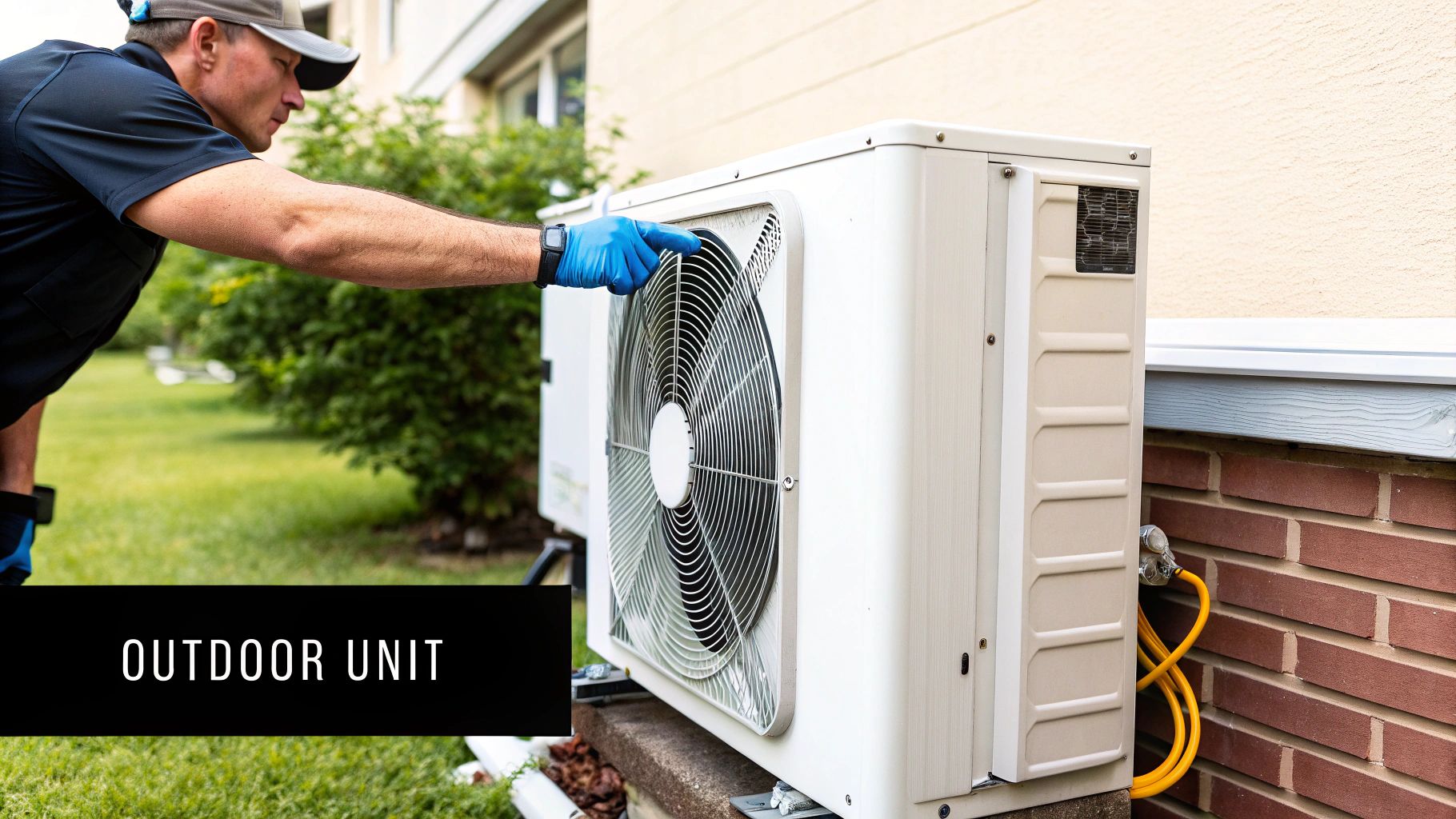
This single unit houses two absolute powerhouses of your AC system: the compressor and the condenser coil. They work as a team to manage the refrigerant and get rid of heat, making that sweet, cool indoor air possible. Without this workhorse chugging away outside, all that heat would be trapped inside your house.
The Compressor: The Powerful Heart of the System
Tucked inside the outdoor unit, the compressor is the engine driving the whole cooling cycle. Think of it as the heart of your AC, pumping refrigerant through the system's "veins" and "arteries." Its job is simple but incredibly powerful: it squeezes the refrigerant gas.
This compression process isn't all that different from how a bicycle pump gets hot when you use it. By putting the refrigerant under immense pressure, the compressor sends its temperature and pressure skyrocketing. This step is non-negotiable; it's what preps the refrigerant to dump its heat load outside.
You can tell how vital this component is just by looking at the numbers. The global market for air conditioning compressors was valued at USD 30 billion and is on track to hit USD 48.9 billion by 2035, a 63% jump. That kind of growth shows just how much we rely on solid compressor technology for efficient cooling. You can learn more about what's driving the air conditioning compressor market.
The Condenser Coil and Fan: The Radiator for Your Home
Once the compressor has done its job creating a hot, high-pressure gas, that refrigerant zips over to the condenser coil. This is a network of tubing, usually shielded by thin metal fins, designed to create as much surface area as possible. In essence, it works just like the radiator in your car.
A massive fan inside the outdoor unit pulls the outside air through those fins and over the coil. This constant airflow whisks heat away from the refrigerant, letting it escape into the atmosphere. As it sheds its heat, the refrigerant condenses from a gas back into a much cooler liquid, now ready to head back inside and soak up more of your home's heat.
The outdoor unit’s sole purpose is heat dissipation. If air can't flow freely across the condenser coil, the entire system’s efficiency tanks, forcing it to work harder and guzzle more energy.
For the whole system to run smoothly, that airflow can't be blocked. This brings us to a super important maintenance tip every homeowner should know.
Keep it Clear: Make sure there's at least two feet of open space around the entire outdoor unit. Trim back any bushes, tall grass, or weeds that might get in the way.
Remove Debris: Regularly clear away fallen leaves, grass clippings, and anything else that can get sucked into the unit and clog up the condenser coil's fins.
Avoid Obstructions: Never put anything on top of your unit or build a fence or shed too close. This can trap hot air right next to the unit, causing it to overheat.
Taking proper care of this unit is non-negotiable for a healthy AC. For an even deeper dive, check out our guide on what a condenser unit is. When you keep this heat exhaust clear, you're making sure your AC can breathe properly and keep you cool all summer long.
The Indoor Unit: The Source of Cool Air
While the outdoor unit is busy dumping heat outside, the real magic happens inside your home. The indoor unit is where your system absorbs all that unwanted heat from the air and sends refreshingly cool air back out. It’s the source of that blissful comfort you feel on a scorching hot day, usually working quietly from a closet, attic, or basement.
This indoor unit is made up of a trio of essential parts working in perfect harmony: the evaporator coil, the air handler, and a small but mighty device called an expansion valve. Think of them as the heart of your cooling system, making sure every room gets a steady supply of conditioned air.
The Evaporator Coil: The Heat Sponge
The star of the indoor show is definitely the evaporator coil. The best way to think of it is as a super-chilled sponge designed specifically for heat. After the refrigerant has been cooled in the outdoor unit, it flows into this coil as a cold, low-pressure liquid, ready to soak up a massive amount of warmth from your home's air.
It's a simple but brilliant process. The air handler's blower fan pulls warm, humid air from your living spaces and pushes it through the cold fins of the evaporator coil. Just like a cold glass of sweet tea “sweats” on a humid day, the coil absorbs both heat and moisture from the air, causing its temperature to drop dramatically. It’s this one-two punch of cooling and dehumidifying that makes the air feel so crisp and comfortable.
The Air Handler: The Lungs of Your Home
Working right alongside the evaporator coil is the air handler, which basically acts as the lungs of your entire HVAC system. It’s usually a large metal cabinet that houses the blower motor and fan responsible for moving all the air. Its job is to manage the entire airflow cycle.
The air handler does two key things:
It pulls in warm air: It sucks air out of your rooms through return ducts.
It pushes out cool air: Once the air has been chilled by the evaporator coil, the air handler blows it back into your home through the supply ducts.
This constant circulation is what keeps the temperature consistent from room to room. Air handler technology is always improving, too, with modern units becoming much smarter and more efficient. In fact, inverter technology, which allows components like the air handler to adjust their speed instead of just being on or off, now makes up 51.2% of the central air conditioning market. You can explore more about the growth of the air conditioning systems market to see how these advancements are shaping the industry.
The Expansion Valve: The Pressure Regulator
Just before the refrigerant gets to the evaporator coil, it has to go through one last change. This is the job of the expansion valve (sometimes called a thermal expansion valve or TXV). It's a small but absolutely critical device that acts as a gatekeeper, carefully controlling how much refrigerant enters the coil.
The expansion valve creates a sudden pressure drop, causing the liquid refrigerant to rapidly expand and flash into a frigid, low-pressure mist. This preps it to absorb the maximum amount of heat as it travels through the evaporator.
Without this precise control, the system just wouldn't cool properly. The valve makes sure the evaporator coil doesn't get flooded with too much refrigerant, which could cause it to freeze up and lead to some serious damage. While the evaporator coil is all about removing heat, its close cousin in heating systems is the heat exchanger. You can learn more about how that works by reading our guide explaining what a heat exchanger is and how it works.
How All the AC Parts Work Together
The big indoor and outdoor units might be the stars of your central AC system, but they can't do the job alone. A whole supporting cast of components works behind the scenes to connect everything, making sure the entire operation runs like a well-oiled machine. These parts are like the system's nervous system and circulatory pathways, turning separate pieces of equipment into a unified comfort solution.
Think of the refrigerant lines as the arteries and veins of your AC. These insulated copper tubes have one critical job: moving the refrigerant between the indoor and outdoor units. One line carries the cool, liquid refrigerant inside to the evaporator coil, and the other carries the hot, gassy refrigerant back outside to the condenser coil. This completes the loop that’s essential for cooling your home.
The Brains and Veins of the Operation
While refrigerant lines are moving the good stuff, other components are managing the system's logic and dealing with the byproducts. The thermostat acts as the command center, and parts like drain lines and filters handle the necessary cleanup to keep everything running efficiently and safely. These supporting parts are just as critical as the main units.
For instance, the thermostat is the undisputed brain of the whole operation. This little device on your wall is constantly monitoring your home's temperature. When things get warmer than your set point, it sends a signal telling the AC to kick on. Once your home is cool enough, it signals the system to shut off, saving energy and keeping you from turning your living room into an icebox.
The visual below gives you a simple look at how warm air gets turned into cool air by the indoor unit, a process that starts and stops with a signal from your thermostat.
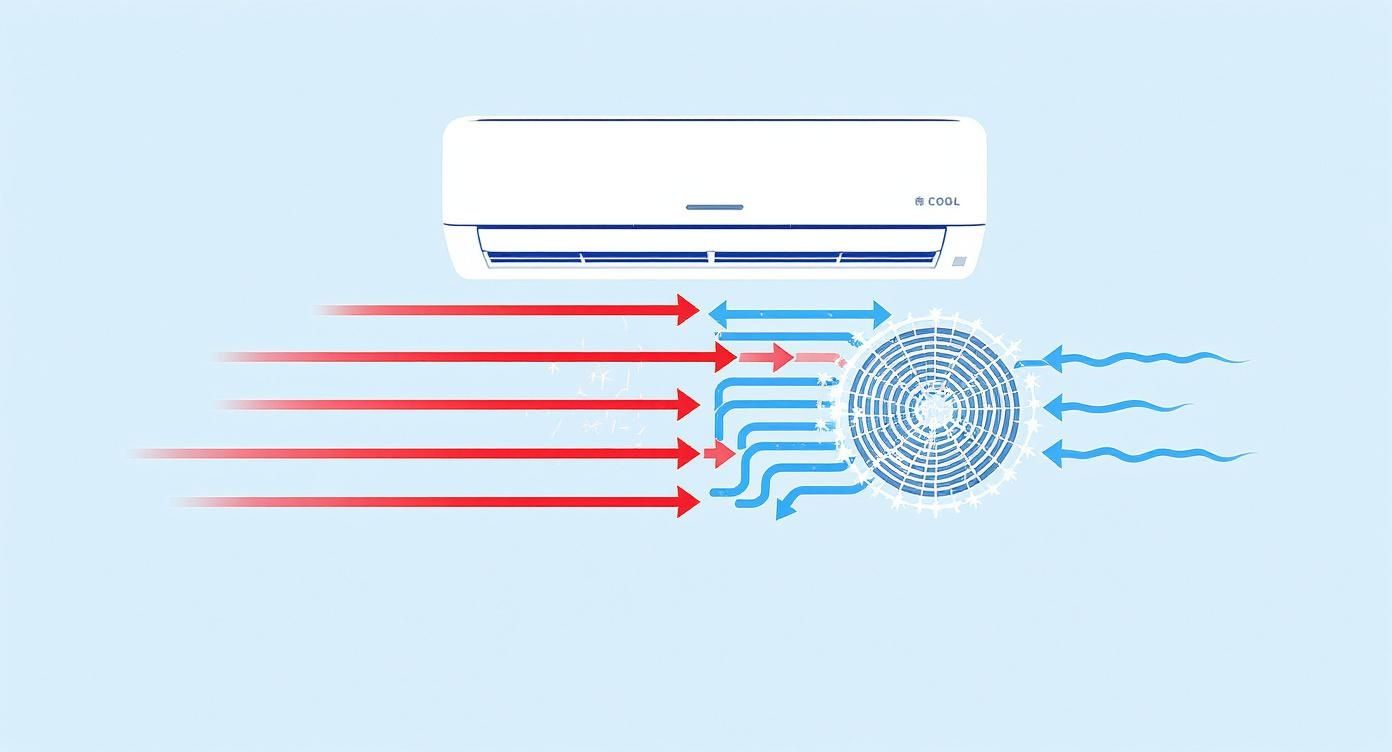
This graphic really breaks down the heat exchange process, showing how the evaporator coil is the point of transfer, absorbing heat and leaving behind that refreshingly cool air we all crave.
Managing Moisture and Debris
As the evaporator coil works its magic cooling the air, it also pulls a ton of moisture out through condensation, just like a cold glass of sweet tea on a humid day. All that water has to go somewhere, and that's the job of the condensate drain line. This simple pipe safely carries the collected water out of your home, which is crucial for preventing water damage and mold growth inside your air handler.
Finally, we have the humble air filter. Its job is simple but profoundly important: it traps dust, pollen, pet dander, and other gunk in the air before it gets pulled into your HVAC system. A clean filter does two huge things for you:
Protects the System: It stops debris from building up on the sensitive evaporator coil and blower motor. A clog here can kill your efficiency and lead to some expensive damage.
Improves Air Quality: It prevents all those contaminants from being blown right back into your home, helping you and your family breathe cleaner, healthier air.
A clogged air filter is one of the most common, and easily preventable, causes of AC failure. It forces the system to work way harder just to pull in air, which leads to higher energy bills, poor cooling, and a whole lot of unnecessary strain on core components.
Understanding how all these parts work together in a split system is the key to appreciating the comfort in your home. For a deeper dive, you might be interested in our guide on what a split system HVAC is and how it works for your home. From the thermostat's command to the filter's protection, every single part has a job to do to create a cool, comfortable living space.
A Practical Guide to AC Component Maintenance
Knowing the names of all the parts inside your central AC system is one thing, but understanding how to keep them running smoothly is where the real savings happen. Your air conditioner is a hardworking machine, and just like your car, it gives you little hints when something isn't quite right.
When you learn to spot these early warning signs and handle some basic upkeep, you can stop small issues from snowballing into expensive, system-wide meltdowns.
Think of it this way: proactive maintenance is the key to getting the most out of your investment, extending your system's lifespan, and keeping it efficient. Many common frustrations, like strange noises or disappointingly weak airflow, can often be traced back to a single component that just needs a little TLC. This guide will help you play detective, figure out what's going on, and decide if it's a quick fix or time to call in the pros.
Troubleshooting Your System Component by Component
Each part of your central AC has its own unique way of telling you it's in trouble. A rattling sound coming from the big outdoor unit points to a completely different problem than a musty smell wafting from your vents. The trick is to connect the symptom to the source.
For example, a dirty air filter is probably the easiest and cheapest DIY fix in the entire HVAC world. But it can solve a surprising number of problems, from weak airflow all the way to a frozen evaporator coil.
Likewise, taking five minutes to clear leaves and debris from around your outdoor unit is a zero-cost task that dramatically helps your condenser release heat. That simple action improves efficiency and saves you money on your energy bills.
To help you get started, we've put together a handy troubleshooting table. It breaks down the most common signs of trouble for each major component, gives you a simple maintenance tip you can try yourself, and lets you know when a problem is serious enough to require an expert.
AC Component Troubleshooting and Maintenance Guide
Component | Signs of Trouble | DIY Maintenance Tip | When to Call a Pro |
|---|---|---|---|
Air Filter | Weak airflow; musty odors; system runs constantly. | Replace or clean the filter every 1-3 months. | If issues persist after filter changes. |
Condenser Coil | AC struggles to cool; unit overheats or cycles off. | Gently spray coils with a hose to remove dirt and debris. | If coils are heavily bent or damaged. |
Evaporator Coil | Poor cooling; ice buildup on refrigerant lines. | Ensure the air filter is clean to maintain proper airflow. | For professional coil cleaning or ice removal. |
Condensate Drain | Water pooling near the indoor unit; musty smells. | Flush the line with a vinegar solution to clear clogs. | For persistent clogs or water damage. |
Thermostat | Inaccurate readings; system won't turn on or off. | Check and replace the batteries; verify settings. | For wiring issues or a faulty unit. |
While simple tasks like changing filters are perfect for homeowners, issues involving refrigerant or electrical components are never a DIY job. Safety and system integrity must always come first.
For more complex repairs or even just routine check-ups that go beyond these basic tips, you'll need a pro. The process of finding a reputable HVAC service can feel overwhelming, but looking for companies with a professional, informative online presence is a good start; it often reflects their commitment to quality and customer education.
And if you suspect a clog in your condensate line is the culprit behind a water leak, our guide offers detailed steps on how to clean an AC condensate drain line like a pro. By taking these small, preventative steps, you invest in the long-term health of all the parts of your central AC system, ensuring you stay cool and comfortable for years to come.
Common Questions About Central AC Parts
Once you've got a handle on all the individual pieces of your central AC, you'll naturally start having some practical questions. Things about performance, how long everything will last, and what you should be doing to take care of it all. Knowing the answers helps you make smarter, more confident decisions about your home's most important comfort appliance.
We're going to tackle some of the most common questions homeowners have. Our goal is to give you clear, direct information that builds on what we've already covered, so you have the practical knowledge you need to plan for your system's future.
How Long Do Central AC Parts Usually Last?
Think of your central AC's components like the parts of a car, some just wear out faster than others. With proper annual maintenance, a well-cared-for system can give you a solid 10 to 15 years of service. But the lifespan of individual parts can vary quite a bit.
Capacitors and Contactors: These electrical parts live in the outdoor unit and take a beating from constant use and the elements. Expect them to be replaced every 3 to 5 years.
Compressor: This is the heart of your system. It's a major component built to last, often for the entire lifespan of the unit. A compressor failure is a big deal and a major repair.
Blower Motor: Tucked away in the indoor air handler, this part can last anywhere from 10 to 20 years. Its longevity really depends on one thing: keeping your air filters clean to avoid putting extra strain on it.
The single best thing you can do to get the most life out of every component is to schedule regular professional tune-ups. This lets a technician catch wear and tear before it turns into a total system breakdown.
An investment in routine maintenance is really an investment in longevity. A yearly check-up allows a technician to spot failing capacitors, clean vital coils, and ensure refrigerant levels are correct, extending the life of all parts of a central AC system.
Is It Better to Repair a Part or Replace the Whole Unit?
This is the big question every homeowner eventually faces, and the answer usually comes down to simple math. A good rule of thumb we use in the field is the "5,000 rule." Just multiply the age of your unit by the estimated repair cost.
If that number is over $5,000, replacement is almost always the more financially sound choice in the long run.
For example, if you're looking at a $600 repair on a 12-year-old unit, the math is 600 x 12 = 7,200. That number strongly suggests it’s time to invest in a new, more efficient system instead of pouring more money into aging technology.
Another major factor? If your system still uses the phased-out R-22 refrigerant, any significant repair that involves the refrigerant will be incredibly expensive, making replacement a much wiser choice.
When you're facing a tough repair-or-replace decision, you need advice you can trust. The certified technicians at Covenant Aire Solutions provide honest assessments and clear, upfront pricing to help you make the best choice for your home and budget. Contact us today for a professional consultation.