
What is a Split System HVAC and How Does it Work for Your Home
Chances are, if your home stays comfortable year-round, you have a split system HVAC to thank. But what does that term actually mean? In simple terms, it's a climate control system that's 'split' into two main units: one that lives outside your home and one that works its magic inside. This design is the secret sauce behind the quiet, efficient performance that makes it a top choice for most modern homes.
Decoding Your Home's Climate Control
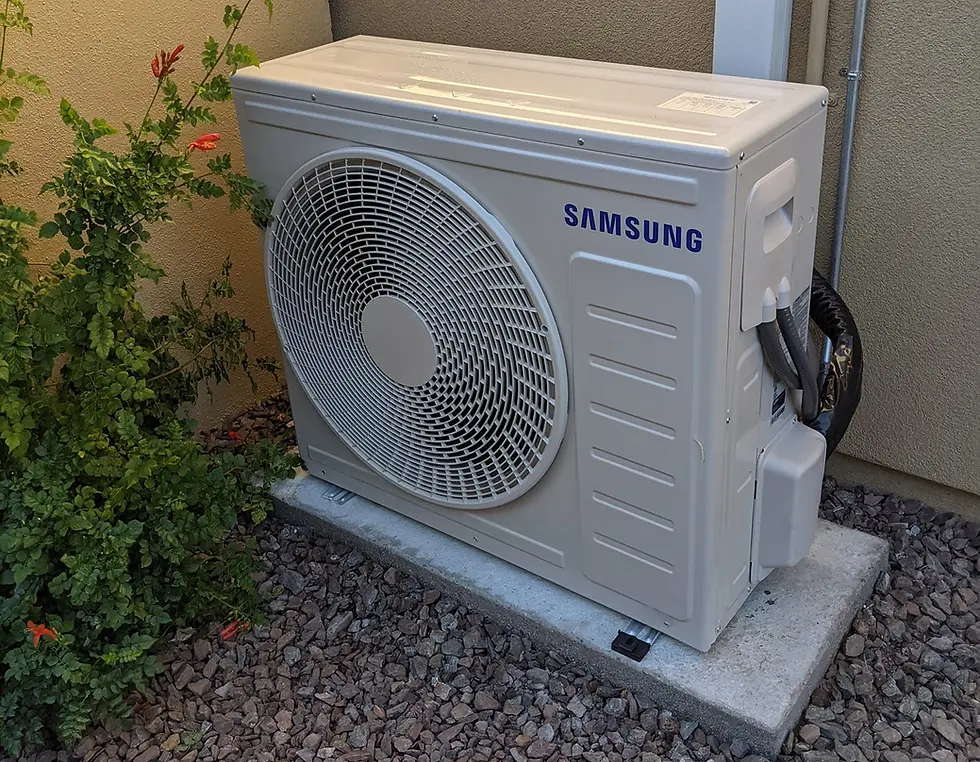
Think of a split system like a tag team working around the clock for your comfort. The outdoor unit is the workhorse; it handles all the heavy lifting and noisy operations. Meanwhile, the indoor unit is the quiet partner, responsible for gently circulating all that conditioned air through your living spaces.
This clever separation is what makes the whole setup so effective and is the key reason it's one of the most popular climate solutions out there. Grasping what a split system HVAC is helps you appreciate how it juggles both your comfort and your energy bills so well.
This two-part configuration allows the loud components, like the compressor and condenser fan, to be placed outside, which significantly reduces indoor noise levels and improves your home's peacefulness.
At its core, the entire system is built around one simple concept: moving heat. In the summer, it pulls heat from inside your home and dumps it outside. In the winter, a system equipped with a heat pump just reverses that process. It's a foundational principle of modern climate control.
For a deeper look into the mechanics, you can explore more about air conditioning basics for homeowners to build on this knowledge. In the next section, we’ll break down exactly how each part contributes to this cycle.
Split System HVAC at a Glance
To give you a quick summary, here are the essential characteristics of a split system HVAC. This table breaks down the core concepts into an easy-to-read format.
Characteristic | Description |
|---|---|
Configuration | 'Split' into two primary units: an indoor air handler and an outdoor condenser/compressor. |
Functionality | Provides both heating (often with a furnace or heat pump) and cooling. |
Noise Level | Operates quietly indoors because the loudest components are located outside the home. |
Energy Efficiency | Generally offers high energy efficiency, especially newer models with high SEER ratings. |
Common Use | The most prevalent type of HVAC system found in residential homes. |
Installation | Requires professional installation to connect the two units via refrigerant lines. |
This at-a-glance view helps clarify why split systems are such a go-to choice for homeowners seeking a balance of performance, quiet operation, and efficiency.
Deconstructing a Split System: The Key Components
To really get what a split system HVAC is all about, you have to meet the key players that make it tick. It helps to think of it like a small, highly specialized team, where each member has a critical job in keeping your home's climate just right. The whole setup is a beautiful example of cooperative engineering, with every part working in perfect harmony.
The most obvious piece of the puzzle is the outdoor unit. This is the powerhouse of the whole operation, housing two vital components: the compressor and the condenser. The compressor is the heart of the system, pumping refrigerant through the lines. Meanwhile, the condenser coil and fan work together to release the heat that's been pulled out of your house.
The Indoor and Connecting Parts
Next up is the indoor unit, which is in charge of circulating all that conditioned air. Inside this unit, you'll find the evaporator coil and a blower fan. When you're running the A/C, warm air from inside your home gets pulled across the chilled evaporator coil. This coil absorbs the heat, which is then sent packing by the refrigerant.
The refrigerant lines are the circulatory system connecting these two main units. These copper tubes carry a special fluid back and forth, a heat transfer agent that's a pro at absorbing heat in one spot and letting it go in another. If you want to dive deeper into how these coils work their magic, check out our guide on the role of the heat exchanger in HVAC systems.
And finally, you have the thermostat, the brains of the entire operation. It keeps a constant eye on your home's temperature and tells the system exactly when to kick on or shut off to keep you comfortable.
The real magic of a split system lies in the synergy between these components. The outdoor unit handles all the heavy lifting and noise, while the indoor unit quietly distributes the air, creating a peaceful and comfortable environment inside.
This clever design is a big reason for its popularity. In 2024, the global market for split HVAC systems was valued at around USD $48.7 billion, and it's projected to more than double by 2033. That's a clear sign of how much homeowners trust this technology. You can read more about split HVAC system market growth on grandviewresearch.com. This explosive growth really highlights the global shift toward more energy-efficient ways to control our climate.
How Split Systems Heat and Cool Your Home
So, what exactly is a split system HVAC doing when you flip it on? Let's walk through the process on a hot summer day. It all starts inside when the indoor unit's fan draws the warm, humid air from your living space into the system. This is the first step in a constant cycle designed to pull heat out of your home.
As that air flows over the chilly evaporator coil, the refrigerant inside acts like a heat sponge, soaking up all the thermal energy. The air, now cool and much less humid, is then pushed back into your rooms, dropping the temperature and making things comfortable.
This simple infographic gives you a great visual of how the refrigerant continuously flows between the indoor and outdoor units to move that heat around.
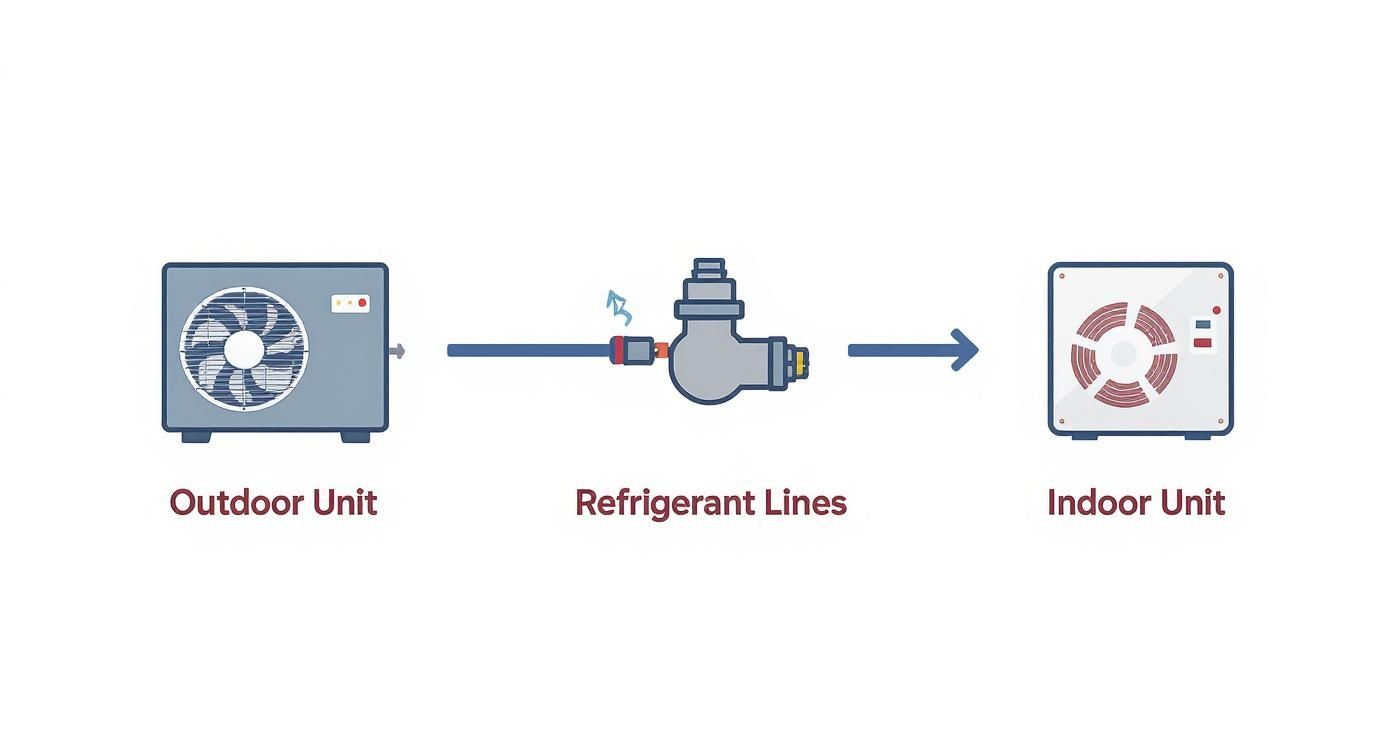
As you can see, the whole point is to use these separate components in different places to achieve one goal: moving heat from where you don't want it (inside) to where it doesn't matter (outside).
The Heating and Cooling Cycle
Once the refrigerant has absorbed that indoor heat, it travels through copper tubing to the outdoor unit. This is where the compressor gets to work, pressurizing the refrigerant and making it even hotter. The condenser coil and its fan then release all that captured heat into the outside air.
At its core, it’s all about heat transfer. Your A/C doesn't actually "create" cold; it just relocates the heat from inside your house to the great outdoors, leaving cooler air behind.
Now cool again, the refrigerant cycles back to the indoor unit, ready to pick up another load of heat. This loop runs over and over until your thermostat signals that your home has reached the perfect temperature.
In the winter, a split system with a heat pump can pull off a clever reversal of this entire process. Instead of pushing heat out, it finds warmth in the outdoor air (even when it feels cold to us) and brings it inside to heat your home. If you're curious about this impressive tech, you can dive deeper into what a heat pump is and how it provides efficient heating. This dual capability is what makes split systems with heat pumps such a popular, all-in-one choice for year-round comfort.
Exploring Different Types of Split Systems
When you hear "split system," it's easy to think of a single type of HVAC, but they aren't a one-size-fits-all solution. There are really two main players in the game: the traditional central systems most of us grew up with and the increasingly popular ductless mini-splits. Picking the right one really boils down to your home's layout and what you're trying to achieve comfort-wise.
The system you’ll find in the majority of American homes is the central split system. This is the workhorse setup that uses one big indoor unit, usually tucked away in a closet, attic, or basement. This unit connects to a whole network of ducts that snake through your walls and ceilings, delivering conditioned air to just about every room through vents. It's the go-to for consistent, whole-home heating and cooling.
Flexible Ductless Mini-Splits
On the flip side, ductless mini-split systems are all about flexibility. Instead of one indoor unit and a web of ducts, these systems connect a single outdoor unit to one or more indoor air handlers. These "heads" are mounted directly on the walls or ceilings of the rooms you want to cool or heat.
This design is a game-changer because it allows for zoned temperature control. You can literally set different temperatures for different parts of your house. If you want to dig deeper into the nuts and bolts, you can learn more about how a mini-split AC system works in our guide.
This room-by-room approach makes them a fantastic solution for a few common scenarios:
Older homes that were built without ductwork.
New additions, converted garages, or finished attics.
That one stubborn room that's always too hot or too cold.
Anyone who just wants total control over the comfort in each space.
The buzz around ductless technology isn't just hype; it points to a real shift toward more adaptable and efficient climate control. The global market for these systems is expected to hit a massive $31.31 billion by 2032. This growth, which you can read more about on coherentmarketinsights.com, is largely thanks to how well they fit into older buildings and homes where space is tight. It’s clear they are becoming a major part of modern home comfort.
Central Split System vs Ductless Mini-Split
Choosing between a central system and a ductless mini-split can feel like a big decision. Both are fantastic options, but they serve different needs. To make it a little easier, here’s a quick side-by-side comparison to help you see which one might be the better fit for your home.
Feature | Central Split System | Ductless Mini-Split |
|---|---|---|
Installation | Requires a network of ducts. Best for new builds or homes with existing ductwork. | No ducts needed. Less invasive installation, ideal for retrofitting. |
Zoning Control | Limited zoning, typically cools or heats the entire house uniformly. | Excellent zoning. Each indoor unit has its own thermostat for room-by-room control. |
Energy Efficiency | Can lose up to 30% of energy through duct leaks. | Highly efficient. No energy loss from ducts. |
Upfront Cost | Generally lower if ductwork is already in place. | Higher upfront cost per unit, but can be cheaper if only cooling a few rooms. |
Aesthetics | Mostly hidden, with only small vents visible in rooms. | Indoor units are mounted on walls or ceilings and are visible. |
Best For | Whole-home, uniform temperature control in homes with ductwork. | Homes without ducts, room additions, or for customized temperature zones. |
Ultimately, the best choice depends on your specific situation. If you have ductwork and want simple, even cooling for your whole house, a central system is a reliable choice. But if you value flexibility, efficiency, and zoned control, a ductless mini-split is tough to beat.
Key Benefits of Installing a Split System
So, what is a split system HVAC actually going to do for your home? The advantages go far beyond just heating and cooling your space. The benefit everyone talks about first is energy efficiency.
By design, splitting the indoor and outdoor components lets each part do its job better. This means the system doesn't have to work as hard, and use as much power, to keep you comfortable. That efficiency shows up where it matters most: your monthly utility bills.
Another huge perk is how quiet they are. The compressor and fan are the loudest parts of any AC system, and with a split system, they live outside. All you hear indoors is a barely-there hum.
The core appeal of a split system lies in its ability to deliver powerful climate control without disrupting the quiet comfort of your home. It’s a perfect blend of high performance and low intrusion.
This technology has become the go-to choice for modern homes across the globe, thanks to its blend of efficiency and quiet operation. It's even predicted that over 40% of new residential HVAC installations in North America and Europe will be ductless mini-splits by 2025, a major shift in how we think about home comfort.
Flexibility and Healthier Air
Split systems also offer incredible flexibility when it comes to installation. You can go for a whole-house solution with central air or get targeted, room-by-room control with mini-splits. There's a setup that fits just about any home's needs.
If you're weighing your options, our guide on ductless vs central air systems can help you decide what’s best for your Arizona home.
Finally, these systems can actively improve your indoor air quality. As air circulates through the indoor unit, built-in filters go to work capturing dust, pollen, and other airborne irritants. This creates a healthier, more breathable space for you and your family.
To give your system a helping hand, you can also add simple, effective items like insulated and thermal curtains to keep temperatures stable all year long.
Common Questions About Split System HVAC
Putting a new HVAC system in your home is a big investment, so it’s completely normal to have a few questions. Getting a handle on the key details, from what it costs to how long it will last, helps you feel confident you're making the right call for your home.
One of the first things on everyone's mind is the price tag. A new split system installation can vary quite a bit, typically running anywhere from $3,000 to over $10,000. Several things will push that number up or down, like the system's size (or tonnage), its energy efficiency rating (SEER), and how complicated the installation job is at your specific property.
Lifespan and Why Professional Installation Matters
"How long is this thing going to last?" That's another question we hear all the time. A well-cared-for split system HVAC should give you a solid 15 to 20 years of service. The key here is "well-cared-for." Simple, regular maintenance, like keeping the coils clean and making sure refrigerant levels are correct, is what gets you to that 20-year mark and sometimes even beyond. If you let it go, you're just asking for a shorter lifespan and expensive repair bills down the road.
This brings us to a really critical point: installation. The idea of a DIY install might sound like a great way to save some cash, but with HVAC systems, it's a huge gamble. Getting a pro to handle it is non-negotiable for a few big reasons:
Safety First: Technicians are trained to deal with high-voltage wiring and chemical refrigerants. It's not something you want to mess with without the right knowledge.
Peak Performance: A proper installation means the system runs exactly as it was designed to, at its highest efficiency. That translates directly into lower energy bills for you.
Warranty Protection: Just about every manufacturer will void the warranty if the system isn't installed by a licensed professional. It’s that important.
An improperly installed unit is a recipe for disaster. It can lead to constant breakdowns, poor efficiency, and a much shorter lifespan. Hiring a certified technician is how you protect your investment and make sure everything runs right from day one.
When it's all said and done, understanding what a split system HVAC is really about means looking at these practical details. The initial cost, the expected lifespan, and the absolute need for a professional setup are all part of the big picture. Getting these questions answered gives you the clarity you need to budget, plan, and enjoy reliable comfort in your home for years to come.
For expert installation and maintenance of your split system HVAC in Tucson and the surrounding areas, trust the certified professionals at Covenant Aire Solutions. Visit our website to schedule a consultation and ensure your home's comfort is in the best hands.