
Ac Blowing Hot Air: Quick Diagnosis and Fixes (ac blowing hot air)
- Feb 9
- 13 min read
Nothing ruins a perfectly good day faster than your air conditioner deciding to pump out hot air instead of that sweet, cool relief you're craving. It’s a classic Arizona problem, and it can stem from all sorts of issues, from simple oversights to serious mechanical failures.
Before you jump to the worst-case scenario (and the associated repair bill), it's worth running through a quick mental checklist. More often than not, the culprit is a simple communication breakdown between you and your HVAC system. A few basic checks can often solve the problem without you ever needing to pick up the phone.
When your AC starts blowing hot air, don't panic. Start with the easiest potential causes first. This logical approach helps you rule out the quick fixes before you start worrying about the complicated stuff.
First Steps in Diagnosing the Problem
Think of it like a detective story for your house. Your first clues are always the most obvious ones. This simple decision tree is a great starting point for any homeowner trying to figure out what's gone wrong.
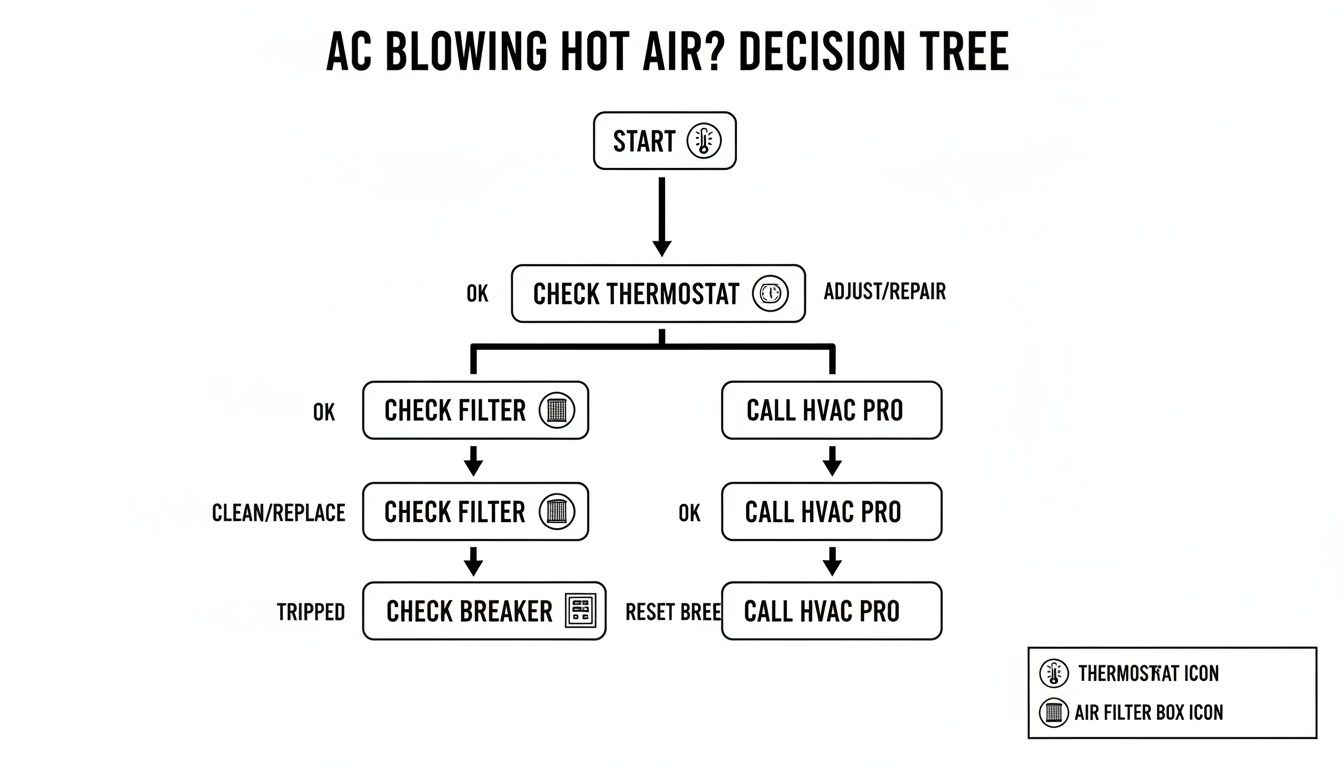
This visual guide walks you through the first three essential checks: the thermostat, the air filter, and the circuit breaker. Following this sequence ensures you cover the most common, and most easily fixable, issues right away.
To make it even easier, here’s a quick rundown of what you should be looking for.
Quick DIY AC Troubleshooting Checklist
This table summarizes the initial checks every homeowner should perform before calling a professional when their AC is blowing warm air.
Check | What to Look For | Potential Fix |
|---|---|---|
Thermostat | Is it set to "Cool"? Is the temperature set below the current room temp? | Adjust settings. Replace batteries if the screen is blank. |
Air Filter | Is it visibly clogged with dust, dirt, or pet hair? | Replace the filter. A clogged filter suffocates your system. |
Circuit Breaker | Is the breaker for the AC or Air Handler in the "Off" or middle position? | Flip it firmly to "Off," then back to "On." |
Outdoor Unit | Can you hear it running? Is the fan spinning? Is it blocked by debris? | Clear away any leaves, branches, or obstructions. |
These simple steps can often get your cool air flowing again. If they don't, it might point to a deeper issue.
Why a Functional AC Is a Health Priority
Here in Tucson, where summer temperatures can get downright dangerous, a broken AC is more than just an inconvenience; it's a serious health concern. An air conditioner blowing hot air means your home's primary defense against brutal heat waves has failed.
It’s a stark reality, but research shows that air conditioning has slashed heat-related deaths in the U.S. by 75% since 1960. When a unit goes down, that protection vanishes.
The most common reasons for an AC to malfunction are often related to airflow and power. A dirty filter can restrict airflow so severely that the system's coils freeze, which ironically stops it from cooling. You can discover more in our guide to the evaporator coil ac unit.
Simple Fixes You Can Do Yourself
When your AC starts pumping out warm air on a hot day, it’s easy to assume the worst, and a massive repair bill. But before you panic, take a deep breath. I’ve seen it countless times in the field: the fix is often surprisingly simple, something any homeowner can handle in minutes without special tools.
Let's walk through a few of the most common culprits. A few quick checks can often save you a service call and get that cool air flowing again.
Check the Air Filter First
Honestly, the first place I always look is the air filter. A dirty, clogged filter is the number one cause of cooling problems. Think of it like trying to breathe through a thick blanket; it completely suffocates your HVAC system.
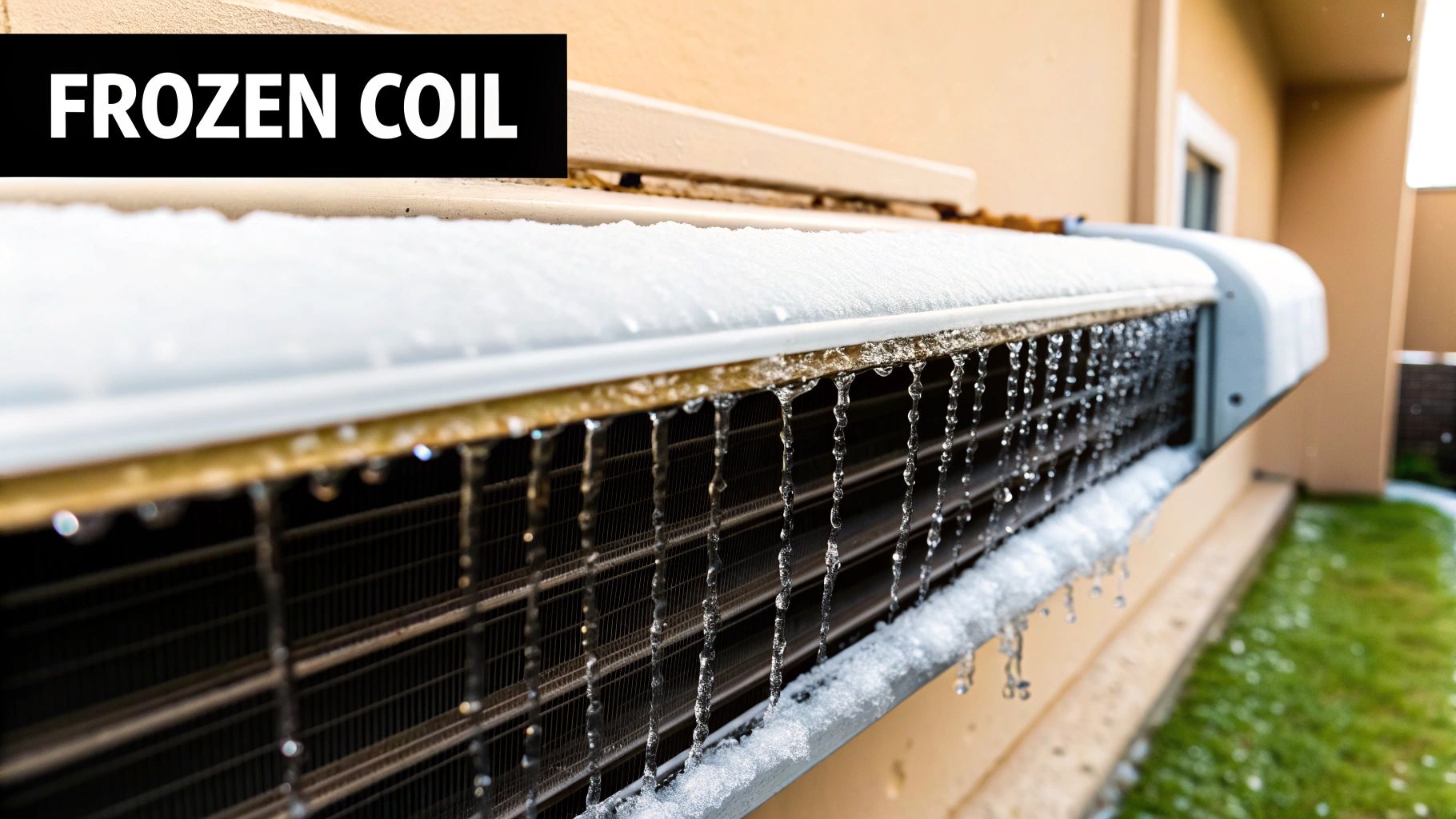
This restricted airflow can cause the indoor evaporator coils to get too cold and literally freeze over into a block of ice. Once that happens, no air can pass through, and your system can't cool a thing.
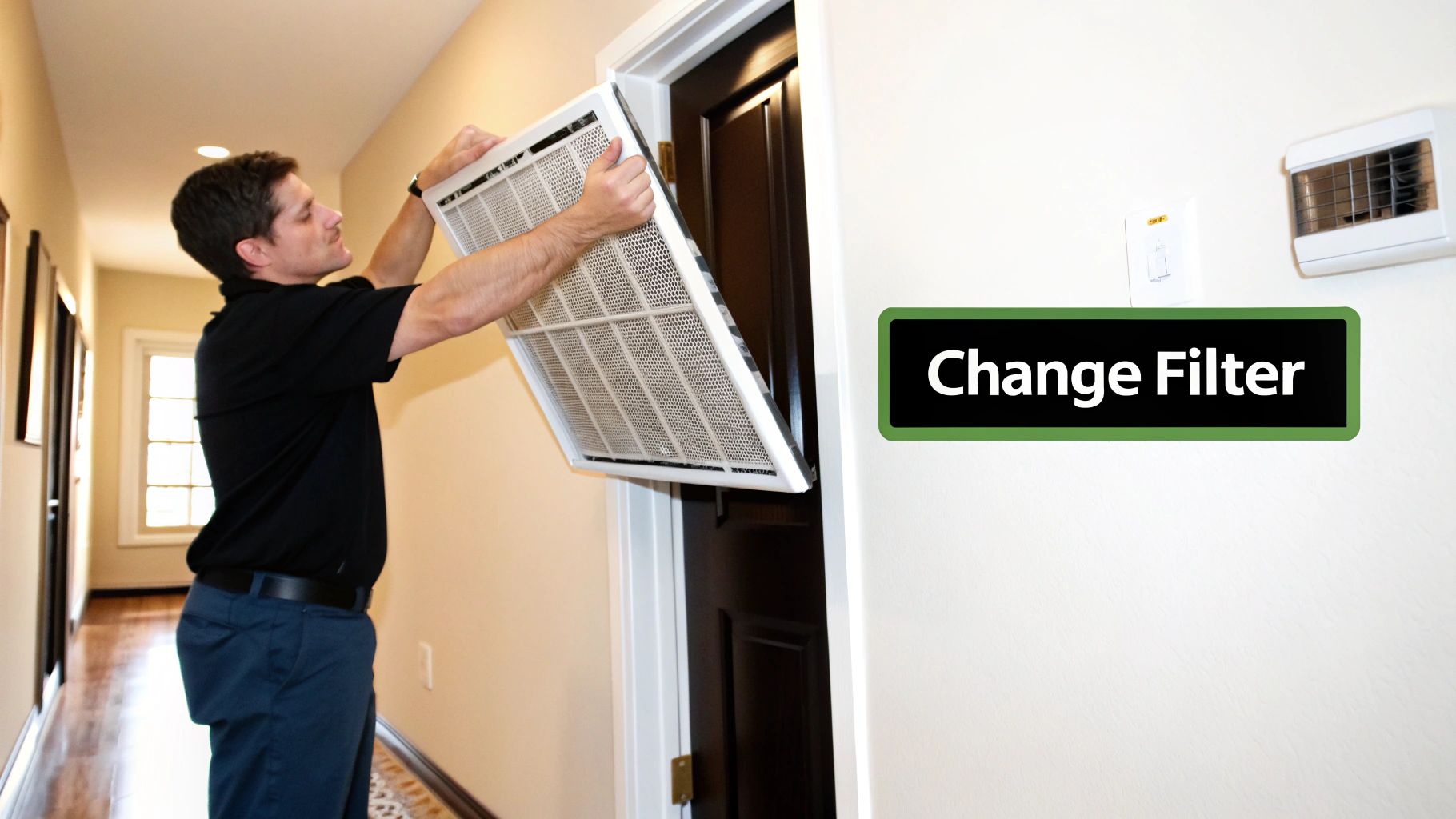
Replacing it is a breeze. Just find the filter slot on your indoor unit, slide out the old one (you’ll probably be shocked at how dirty it is), and pop in a new one of the right size. If it's been more than a month or two, this is very likely your problem.
Inspect Your Outdoor Unit
Alright, if the filter looks good, head outside to the condenser unit. That’s the big metal box with the fan on top that’s responsible for dumping all the heat from inside your house. If that unit can't breathe, your system can't cool.
Take a walk around it and look for anything blocking airflow. Over time, all sorts of things can build up:
Yard Debris: Grass clippings, leaves, and twigs are notorious for getting sucked up against the metal fins.
Overgrown Landscaping: Weeds, bushes, or low-hanging branches can grow too close and smother the unit.
Random Obstructions: Things like tarps, kids' toys, or patio furniture can get left too close and block crucial ventilation.
Safety First: Before you touch anything, you absolutely must turn off the power to the outdoor unit. You can do this at two spots: the main circuit breaker inside your house and the outdoor shutoff box, which is usually a small metal box mounted to the wall near the condenser. Always cut the power before you start cleaning.
Once the power is off, you can gently clear away any obvious debris. A regular garden hose (never a pressure washer!) is perfect for rinsing dirt and grime off the fins. For a more detailed guide, check out our post on how to clean condenser coils to get it running like new.
Double-Check Your Thermostat
It might sound too simple to be true, but sometimes the problem isn't mechanical at all; it's just a setting. A quick thermostat check is the easiest thing you can do and solves more "no cool" calls than you'd think.
Take a close look at your thermostat's screen.
Make sure it’s switched to “Cool,” not “Heat” or just “Fan.” Then, confirm the temperature is set lower than the current room temperature. If it's set to 78°F and the room is already 75°F, the AC won't kick on. Lastly, if the screen is blank, the batteries might be dead. Most digital models have a small panel that pops open so you can swap them out.
Digging Deeper: Identifying More Complex AC Problems
Alright, so you’ve checked the thermostat, the breaker is on, and the filter is clean, but your AC is still pumping out warm air. Now it’s time to play detective. You don’t need an HVAC license to spot the bigger clues; you just need to know what to look and listen for.
When the simple stuff doesn't pan out, the problem usually points to one of three culprits: frozen evaporator coils, a refrigerant leak, or a failing electrical component. These are more serious issues, but thankfully, they often give off pretty clear warning signs.
Signs of Frozen Evaporator Coils
One of the most common issues we see is a frozen evaporator coil. This is the part of your indoor unit that absorbs heat from the air. When it turns into a block of ice, air can't pass through it to get cooled, and you end up with warm air blowing out of your vents. It's a classic case of the system working against itself.
You’ll probably notice the airflow from your vents feels weak, or you might even find water puddling around your indoor air handler. If you peek inside the access panel, you could see the coils completely encased in ice. This is almost always caused by restricted airflow (like from a seriously clogged filter) or low refrigerant.
Quick Tip: If you find a frozen coil, turn the cooling function off at your thermostat but keep the fan set to ON. This will help thaw the ice. But remember, this is just a temporary fix; the underlying problem that caused it to freeze in the first place still needs to be addressed.
Telltale Clues of a Refrigerant Leak
Your AC is a sealed system that uses a chemical called refrigerant to transfer heat from inside your home to the outside. If the level is low, it’s almost always because there’s a leak somewhere. A system that's low on refrigerant just can't cool your home effectively.
Keep an eye (and an ear) out for these telltale signs:
Hissing or Bubbling Sounds: Listen closely near your outdoor unit. A faint hissing or bubbling noise from the copper lines is a dead giveaway that refrigerant gas is escaping.
Oily Residue: Refrigerant is mixed with a special lubricant oil. If you see a greasy substance on the lines or fittings, that’s a sure sign of a leak.
Ice on the Outdoor Copper Lines: It might seem backward, but a lack of refrigerant can cause the copper lines connected to your outdoor unit to freeze over, even on the hottest days.
A refrigerant leak isn't just bad for your comfort; it's tough on your wallet and the environment. A leak can spike your energy bills by 20-30% as the system struggles to keep up. It’s a problem that needs a professional’s touch, and quickly.
Listening for Electrical Component Failure
Sometimes the problem isn't mechanical, it's electrical. Strange noises coming from your outdoor unit often point to a failing capacitor or compressor, the heart and soul of your AC system.
A bad capacitor, which gives the fan motor and compressor the jolt they need to start, might make a distinct clicking or humming sound. You might also see the outdoor fan struggle to get going or spin much slower than usual.
If the compressor itself is on its last legs, you're more likely to hear a loud buzzing, grinding, or clanking noise. These are serious sounds that mean it’s time to shut the system down and call a pro immediately. To learn more, check out our article on why your AC compressor switches on and off.
Knowing When to Call an HVAC Professional
Look, I'm all for homeowners tackling issues themselves. Many AC problems really are simple DIY fixes. But there comes a point where you have to know your limits. Pushing too far when your AC is blowing hot air can turn a repairable issue into an expensive system replacement, or worse, a serious safety hazard.
Knowing when to put the tools down and pick up the phone is just as important as knowing how to change your air filter. When you run into the red flags we're about to cover, it’s time to stop what you're doing and let a certified technician take the reins.
Refrigerant Leaks Are a Job for Pros
If you even suspect a refrigerant leak, this is a non-negotiable, stop-everything-and-call-a-pro situation. Handling refrigerant without the right credentials isn't just dangerous; it's illegal.
Here’s exactly why this is a hands-off problem:
Specialized Tools: We use specific gauges and electronic leak detectors to pinpoint the source of a leak and measure refrigerant levels with precision. It's not something you can eyeball.
EPA Certification: It is illegal for anyone without an EPA 608 certification to handle or purchase refrigerant. Period.
Health and Environmental Risks: Refrigerant is a hazardous chemical. It can cause skin burns and respiratory damage, and releasing it into the atmosphere harms the environment.
Just adding more refrigerant without fixing the leak is like putting a band-aid on a gaping wound; it's not a fix. A certified technician will find the leak, repair it properly, and then recharge the system to the manufacturer’s exact specifications.
Electrical Problems Pose a Serious Risk
When the clues start pointing to an electrical component like a capacitor or the compressor, the risk of severe electric shock becomes very real. Your HVAC system runs on high-voltage electricity, and one wrong move can have devastating consequences.
Any sign of electrical failure is a massive red flag. A faulty capacitor or a failing compressor requires a trained technician to diagnose and replace it safely. When a problem goes beyond simple DIY fixes like flipping a breaker, it's time to seek professional help from dedicated HVAC companies.
A buzzing or humming sound coming from your outdoor unit is a classic sign of a failing capacitor. If you ignore it, you risk a cascade of failures that can burn out the far more expensive compressor motor.
Mechanical Failures Need Expert Diagnosis
Beyond leaks and electrical faults, loud, persistent noises are your system’s way of screaming for help. Grinding, squealing, or metallic clanking sounds mean internal mechanical parts are failing. These are noises you should never ignore or try to fix yourself.
These sounds often point to worn-out bearings in the fan motor or a problem with the compressor itself. Continuing to run the unit can turn a manageable repair into a complete system failure, forcing a much costlier replacement. For a deeper dive into what to do in these situations, check out our emergency air conditioning repair guide for homeowners.
The safest and most cost-effective decision you can make is to shut the system down completely and call for professional help.
How to Prevent Future AC Breakdowns
The absolute best way to handle an AC blowing hot air is to stop it from happening in the first place. When you live in a climate like Arizona's, proactive care isn't just a good idea; it's your best defense against a sudden, miserable breakdown. A little prevention now saves a ton of stress and money later on.
Think of your HVAC system like your car. You wouldn't skip oil changes and just wait for the engine to seize, right? Ignoring your AC until it breaks is a recipe for an expensive emergency call on the hottest day of the year.
The Value of Professional Tune-Ups
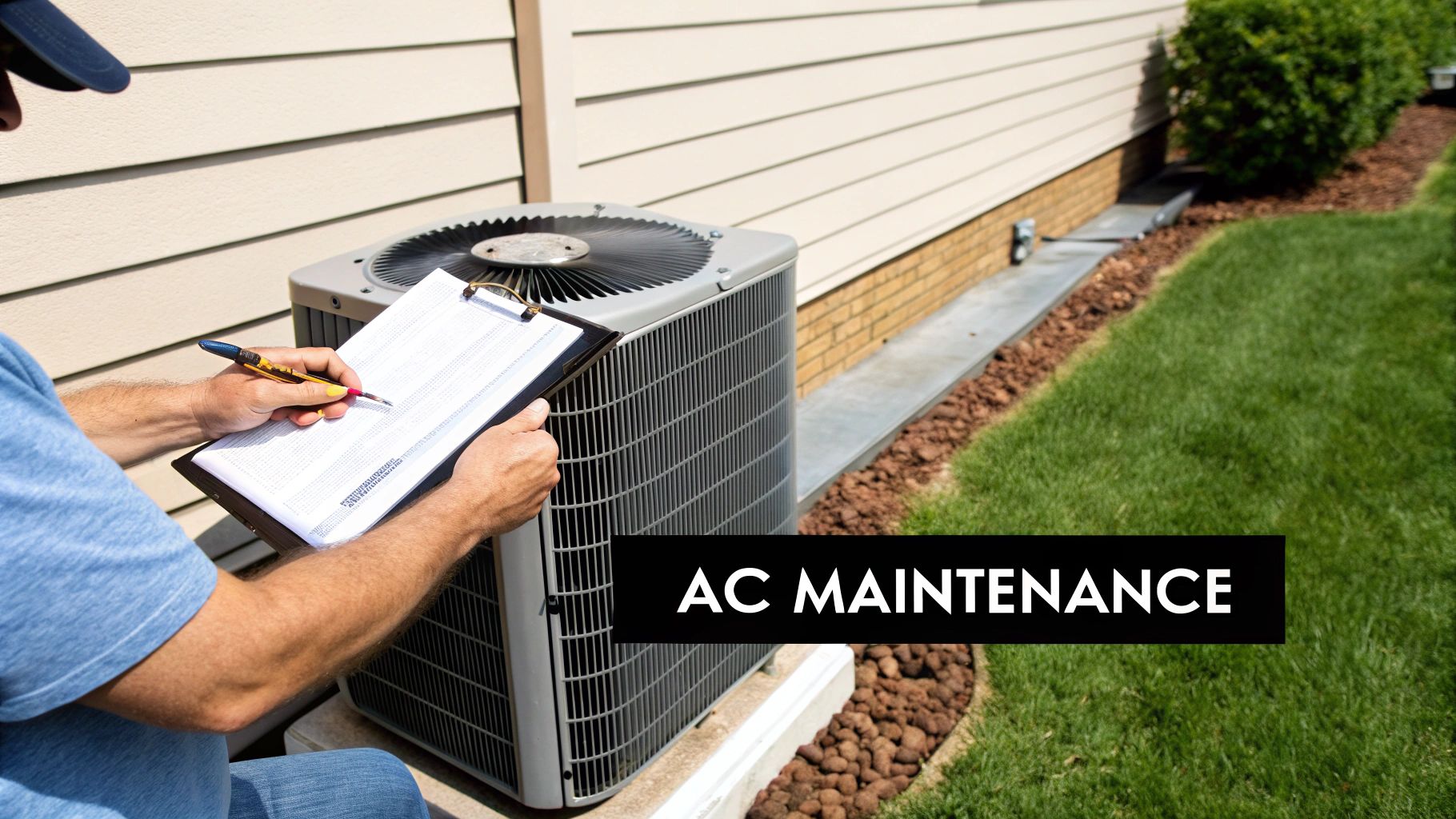
Honestly, scheduling professional maintenance is one of the smartest investments a homeowner can make. During a tune-up, a certified technician has the trained eye to spot little things, a weakening capacitor, a slightly grimy coil, before they snowball into a total system failure.
This preventative approach also keeps your system running at its best, which has a direct impact on your energy bills. An AC that’s blowing hot air is a sure sign it's working way too hard and guzzling electricity. It's a global issue, too. In 2022, air conditioners worldwide used an incredible 2,100 TWh of electricity, and inefficient units are a huge part of that waste. Here in the U.S., households that skip regular maintenance can see their cooling costs jump by 20-50%.
For homeowners here in Arizona, that translates to real money. Regular biannual checks can boost your system's efficiency by 15-25%. That's a noticeable bite out of your summer utility bills.
Catching these problems early not only saves you from a sweltering house but also extends the life of your unit, ensuring it’s ready to handle our intense summer heat without giving up.
Your Homeowner Maintenance Checklist
Between professional visits, there are a few simple things you can do to keep your system healthy. Making these small tasks a regular habit is the key to preventing most of the common issues that cause an AC to blow hot air.
Here are a few practical steps you can take:
Change Your Filter Religiously: Seriously, set a recurring reminder on your phone for every 30-60 days. A clean filter is the absolute foundation of good airflow and system health.
Keep the Outdoor Unit Clear: Get in the habit of glancing at your condenser unit after you mow the lawn or after a storm rolls through. You want to see at least two feet of clear space all the way around it for proper ventilation.
Listen to Your System: You know what your AC sounds like. If you hear a new grinding, hissing, or buzzing noise, that's often the first warning sign that something's not right.
Check Your Condensate Line: Every so often, pour a cup of distilled vinegar down the condensate drain line. This helps prevent algae and mold from building up, which can cause clogs and nasty water damage.
For a broader look at home upkeep, using a seasonal home maintenance checklist can be a great way to make sure all your home's critical systems, including your AC, get the attention they need.
These simple actions, combined with professional tune-ups, create a powerful strategy for keeping your home cool and avoiding breakdowns. To help you stay on top of it, we’ve even put together our own detailed guide. Check out our 2025 air conditioner tune-up checklist. At the end of the day, a well-maintained AC is a reliable AC.
Common AC Questions Answered
When your air conditioner decides to take an unscheduled break, you've got questions. We've got answers. Over the years, we've heard just about every concern homeowners have when their AC starts acting up.
Let’s dive into some of the most frequent questions we get, especially when the air coming out of the vents isn't cold anymore.
We get it; when your home is getting hotter by the minute, you need clear answers, and you need them fast.
How Often Should I Change My Air Filter In A Dusty Climate?
In a dusty environment like we have here in Arizona, you need to be militant about your air filter. Check it every month, without fail. As a general rule, plan to replace it every 30 to 90 days.
If you have pets shedding dander, family members with allergies, or you're living near a construction zone, just change it monthly. It’s the single best thing you can do to protect your system from overworking itself and to drastically improve your home's air quality.
Can I Add Refrigerant To My AC Unit Myself?
Absolutely not. Refrigerant is a hazardous material that requires an EPA certification and specialized equipment to handle safely and legally. This is not a DIY job.
Besides, your AC is a sealed system. If it’s low on refrigerant, that means you have a leak somewhere. A licensed technician needs to find that leak and repair it before recharging the system. Just topping it off is like putting a band-aid on a leaky pipe; it’s a temporary, ineffective fix that ignores the real problem.
An AC blowing hot air because it's low on refrigerant is a sure sign of a system breach. A professional repair is crucial, not just for your comfort but to prevent environmental harm and further damage to your compressor.
Why Is My AC Running But Not Cooling My Home?
If you can hear the system running but the air from your vents is room temperature or warm, you're likely dealing with one of a few common culprits. The most frequent offenders are:
A clogged air filter that’s starving the system of airflow.
A dirty outdoor unit that can't release heat properly.
Low refrigerant levels because of a leak.
A more serious cause could be a failing compressor. You can start by checking the filter and making sure your outdoor unit is clean and clear of debris. If both of those look good, it's definitely time to bring in a professional for a proper diagnosis.
Should I Repair Or Replace My Old Air Conditioner?
This is the big one. Deciding whether to sink more money into an old unit or invest in a new one is a major financial decision. It really comes down to the unit's age, the estimated repair cost, and its overall energy efficiency.
We often use a helpful guideline called the 5,000 rule. To use it, you just multiply the unit's age in years by the estimated repair cost.
For example: You have a 12-year-old unit and the repair is estimated at $500.
The math: 12 (age) x 500 (cost) = 6,000.
If that number comes out to more than 5,000, replacement is almost always the more economical choice in the long run. A trusted HVAC pro can walk you through a clear assessment of both options to help you make an informed decision for your budget.
Don't let a struggling AC ruin your day. If you're tired of troubleshooting and just want cool, comfortable air, the certified experts at Covenant Aire Solutions are ready to help, 24/7. Contact us today for honest, reliable service you can trust. https://www.covenantairesolutions.com