
Heat Exchanger AC A Complete Guide to Home Cooling Efficiency
At its core, a heat exchanger is the part of your AC system that's in charge of moving heat from one place to another. It’s the silent workhorse that makes both cooling and heating possible, ensuring your home feels cool in the summer and warm in the winter.
What Is the Heat Exchanger in Your AC
To get a good handle on what a heat exchanger does, think about your car's radiator. The radiator’s job is simple: pull heat away from the hot engine coolant and push it out into the air. This keeps the engine from overheating.
Your AC's heat exchanger operates on the very same principle; it's a master of thermal transfer. Its main job is to grab heat energy from your indoor air and dump it outside. Without it, your air conditioner would just be a noisy fan, blowing the same stuffy, warm air all over your house.
The Two Personalities of an AC Heat Exchanger
In a typical central air system, you don't just have one heat exchanger; you have two. They're usually called coils, and each one has a specific, opposite role in the cooling process. To really get how your system works, you need to understand both.
These two coils work together in a closed loop, using refrigerant as the "messenger" that carries heat between them.
The Evaporator Coil (The Heat Absorber): This coil is tucked away inside your home, usually inside the air handler or furnace cabinet. It acts like a cold sponge, soaking up heat and humidity from the air being pulled from your rooms.
The Condenser Coil (The Heat Releaser): You'll find this one in your outdoor unit. Once the refrigerant has absorbed all that indoor heat, it travels to the condenser coil to release it into the outside air, completing the cycle.
If you want to see how these parts fit into the bigger picture, you can check out our guide on the parts of a central AC. It’s this two-part system that makes modern air conditioning so effective.
Why It's the Unsung Hero of Home Comfort
How well this heat transfer happens directly impacts your comfort and your energy bills. If either the evaporator or condenser coil is dirty or damaged, the whole system has to work harder and run longer just to keep your home cool.
A properly functioning heat exchanger is the foundation of an efficient HVAC system. It is the bridge that connects the cooling mechanics to the air you feel, turning raw power into tangible comfort.
This simple but brilliant device is truly the unsung hero working behind the scenes to keep you comfortable.
How a Heat Exchanger AC Cools Your Home
Every time your air conditioner hums to life on a sweltering Arizona day, it kicks off a fascinating, continuous cycle of heat transfer. This process, orchestrated by the heat exchanger coils, is what transforms your warm, stuffy house into a cool sanctuary. It all revolves around a special fluid called refrigerant and its journey between the great indoors and the sun-baked outdoors.
The cooling process begins inside your home at the evaporator coil. Think of this component as a powerful heat sponge. As your system’s fan pulls warm indoor air across the coil's chilly surface, the cold refrigerant inside absorbs the heat energy from the air, much like a cold drink absorbs warmth on a hot day.
Simultaneously, the evaporator coil tackles another key element of comfort: humidity. As the warm air cools, moisture condenses on the coil's surface and is drained away. This dual action of cooling and dehumidifying is precisely why an air conditioner's cool air feels so crisp and refreshing, not just cold.
The Refrigerant's Journey Outside
After soaking up all that indoor heat, the now-warm, gaseous refrigerant travels through copper tubing to your outdoor unit. This is where the second half of the heat exchanger team, the condenser coil, takes over. Its job is the exact opposite of the evaporator coil; it has to release all that captured heat.
A compressor in the outdoor unit pressurizes the refrigerant, making it even hotter. A large fan then blows outdoor air across the condenser coil's fins, forcing the heat out of the refrigerant and into the surrounding air. As it sheds its heat, the refrigerant cools down and turns back into a liquid, ready to repeat the entire journey.
This visual shows the basic flow of heat from your indoor air, through the coils, and out of your home.
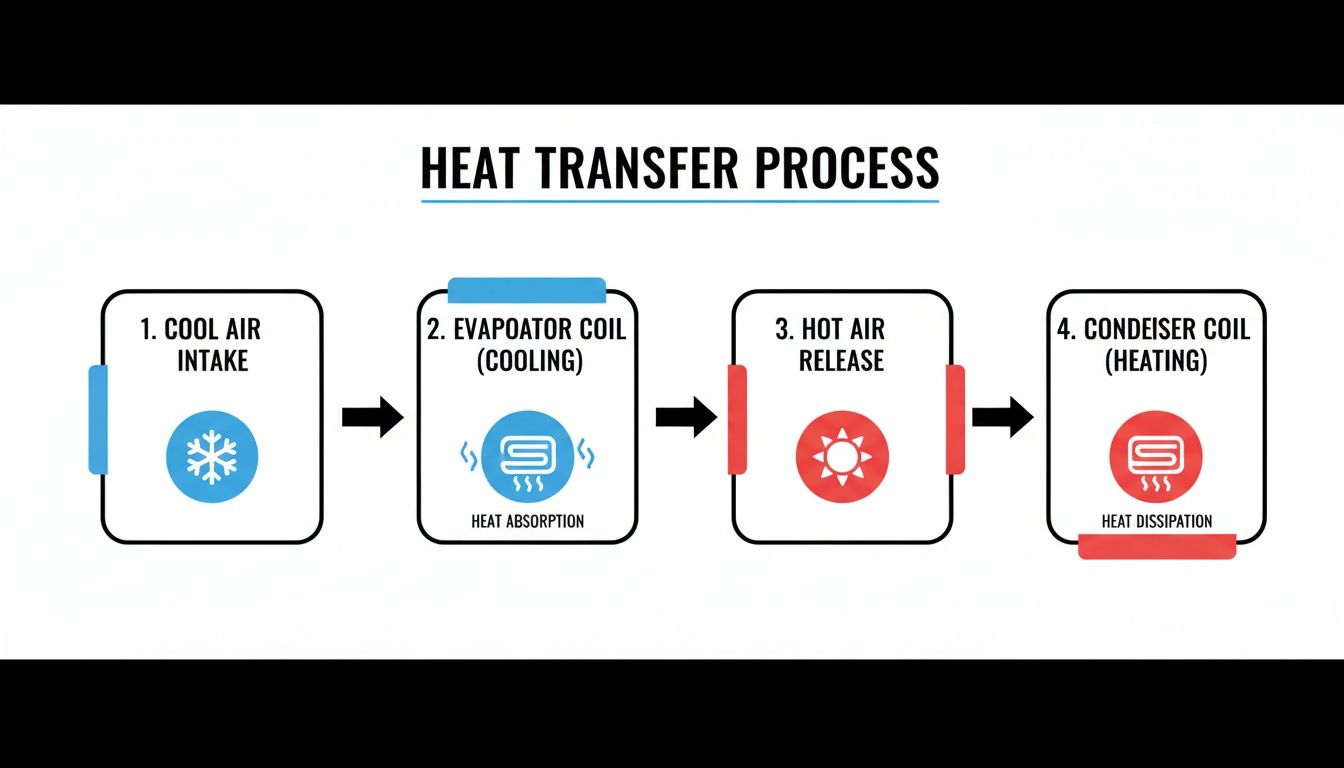
As the diagram shows, the evaporator coil absorbs heat inside your house, and the condenser coil expels it outside, leaving you with cool, comfortable air.
Comparing the Two Key Coils
To truly understand the science behind your AC, it helps to see the distinct roles of the evaporator and condenser coils side-by-side. Their partnership is what makes the magic of cooling happen. For an even deeper look into the indoor unit, you might be interested in our homeowner's guide to the evaporator coil AC unit.
This constant, efficient movement of heat is why air-cooled heat exchangers are so vital in residential HVAC systems. In fact, air-cooled heat exchangers represent a particularly dynamic segment within the broader market. Research shows that air-cooled units are projected to expand at a notable 6.6% compound annual growth rate from 2026 to 2031, reflecting their importance in homes and businesses everywhere.
Below is a simple breakdown comparing the two primary components of a heat exchanger AC system during the cooling cycle.
AC Heat Exchanger Coils At a Glance
Component | Location | Primary Function in Cooling Mode | What Happens to Refrigerant |
|---|---|---|---|
Evaporator Coil | Indoors (in the air handler) | Absorbs heat and humidity from indoor air | Changes from a cold liquid to a cool gas |
Condenser Coil | Outdoors (in the AC unit) | Releases captured heat into the outside air | Changes from a hot gas back to a warm liquid |
Understanding this fundamental process empowers you as a homeowner. When you know how the system is supposed to work, you are better equipped to notice when something is wrong, ensuring you can maintain a cool and comfortable home all year long.
Warning Signs of a Failing AC Heat Exchanger
Like any part of your HVAC system that works around the clock, heat exchangers can eventually wear down. Catching the early warning signs is the best way to stop a small problem from turning into a huge, costly mess, especially during Arizona's blistering summer heat. By simply paying attention to how your system looks, sounds, and feels, you can spot trouble before it leaves you sweating.
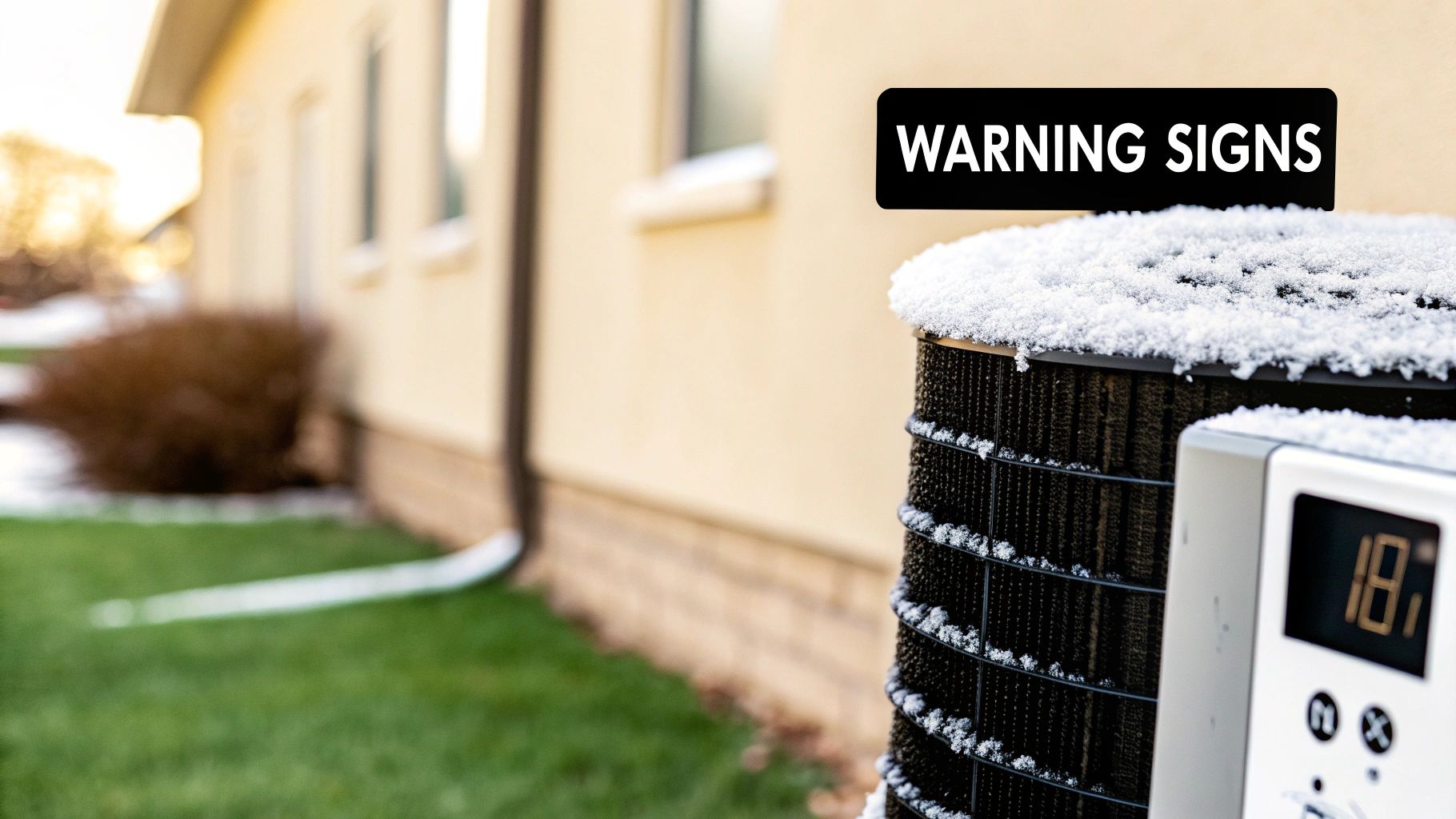
A lot of the symptoms from a failing heat exchanger ac system start out subtle, but they get much more obvious as the problem gets worse. If you ignore them, you're not just risking your comfort; you could be looking at serious damage to your entire HVAC unit.
Symptoms in Your Air Conditioner Coils
When the evaporator or condenser coils start to struggle, your air conditioner will give you some pretty clear distress signals. These signs almost always point back to an issue with heat transfer, which is the coil's one and only job.
One of the most common red flags is weak or insufficient cooling. If your AC seems to run all the time but your house never quite gets down to the temperature on the thermostat, the coils might be caked in dirt or damaged. This prevents them from properly absorbing or releasing heat. That often leads to another classic symptom: the air coming from your vents feels lukewarm, or even a little warm.
You might also spot a frozen indoor unit. This happens when the evaporator coil gets too dirty or is low on refrigerant. It gets so cold that any moisture in the air freezes right onto its surface. That layer of ice acts like an insulator, completely blocking airflow and bringing the cooling process to a screeching halt.
Another big one is strange noises coming from your AC units. Keep an ear out for these sounds:
Hissing Sounds: This almost always means there's a refrigerant leak in one of the coils or the lines connecting them. A leak doesn't just hurt your cooling power; it can wreck your compressor.
Banging or Clanking: While not as common for coils, loud mechanical noises could mean a fan blade is loose and smacking against the coil, causing physical damage.
If your system is having a hard time keeping up, our guide to troubleshooting an AC not cooling your home has more detailed steps you can try.
The Dangers of a Cracked Furnace Heat Exchanger
While a failing AC coil is mostly an issue of comfort and efficiency, a problem with your furnace’s heat exchanger is a serious safety hazard. The heat exchanger in a gas furnace is what contains the entire combustion process, keeping dangerous byproducts like carbon monoxide safely away from the air that blows through your home.
If this metal chamber gets a crack, even a tiny one, it can let deadly carbon monoxide (CO) leak directly into your home's air supply. Since CO is completely colorless and odorless, you'd never know it was there without a working CO detector.
A cracked furnace heat exchanger is not a repairable part; it is a critical safety failure that requires immediate professional attention and, in nearly all cases, replacement of the unit to protect your family.
The signs of a cracked furnace heat exchanger are usually less about performance and more about visible signs that something is wrong with the combustion. You might notice soot or black residue building up around your furnace vents, which is a tell-tale sign that fuel isn't burning cleanly. An odd smell, sometimes described as being similar to formaldehyde, can also point to a cracked chamber.
Because the risks are so high, even the slightest suspicion of a damaged furnace heat exchanger means you should immediately call a certified HVAC professional. Technicians have specialized tools to check for cracks and make absolutely sure your system is safe to operate.
Common Causes of Heat Exchanger Failure
Knowing why a heat exchanger fails is the first real step toward preventing a pricey and frustrating breakdown. Think of it like a car engine; it needs clean oil and air to run right. In the same way, your HVAC system’s coils need proper care to do their job of moving heat. Most failures don’t just happen overnight; they’re the result of gradual wear and tear that you can often get ahead of with some proactive maintenance.
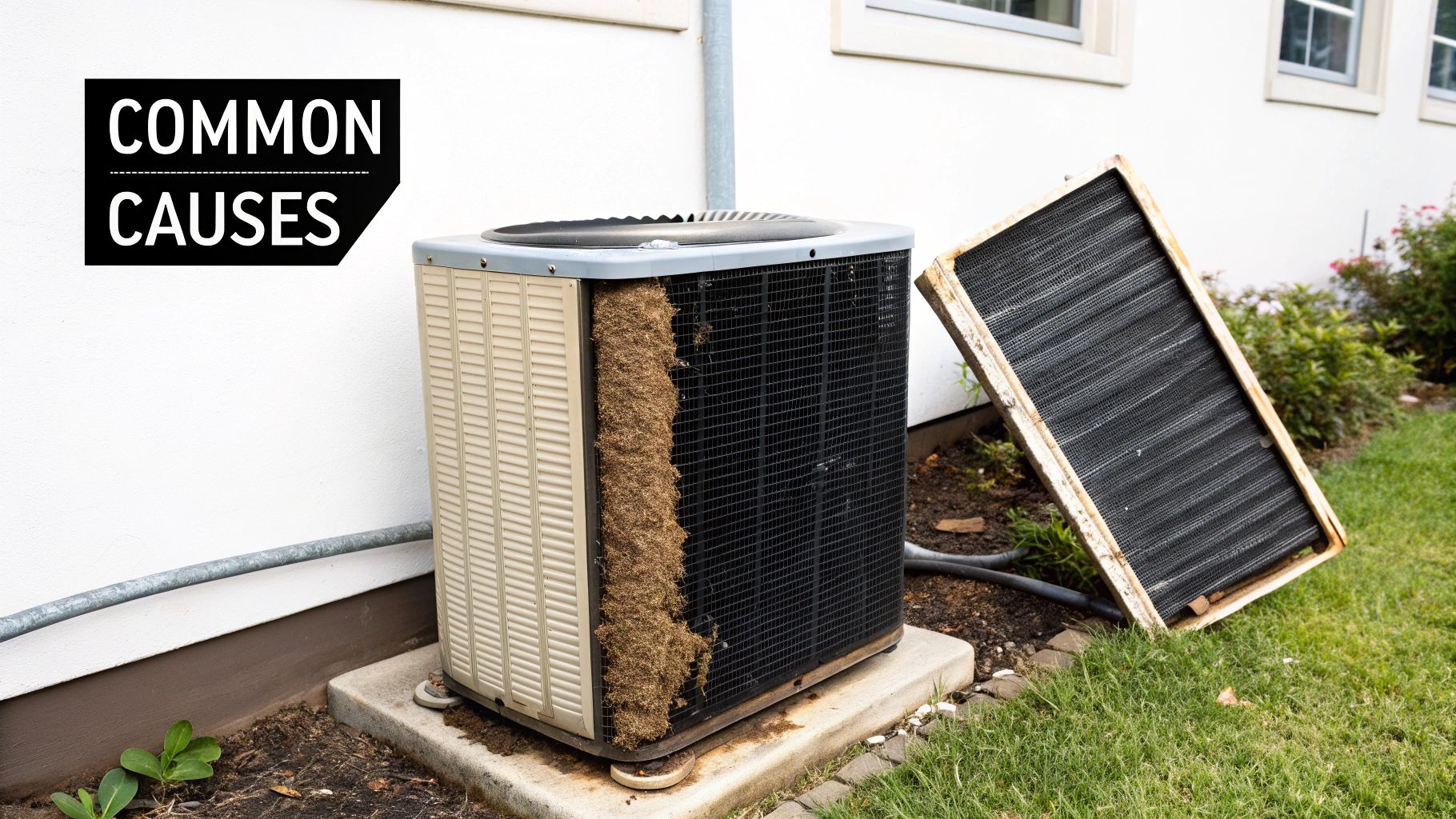
From corrosive chemicals inside your home to dirt and debris outside, a few key culprits are usually behind a damaged or inefficient heat exchanger. Let's dig into the most common issues and what you can do to protect your investment.
Overheating and System Strain
One of the biggest killers of heat exchangers, especially in furnaces, is overheating. This happens when the system generates more heat than it can get rid of, causing the metal parts to expand and contract way more than they’re supposed to. Over time, all that stress leads to cracks and fractures.
The number one cause of overheating? A dirty, clogged air filter. When that filter is packed with dust, your system’s blower motor has to fight to pull air through. This struggle drives up the internal temperature and puts a massive strain on the whole unit.
A clean, regularly changed air filter is your best defense against overheating. Forgetting this simple task is like forcing your HVAC system to run a marathon every day, drastically cutting the life of critical parts like the heat exchanger.
Swapping out your air filter every 30-90 days is a tiny chore that makes a huge difference in your system’s health. This one habit ensures the proper airflow needed to prevent heat exchanger failure.
Corrosion and Chemical Breakdown
Corrosion is the silent enemy of your AC coils. Over the years, exposure to moisture, chemicals, and airborne pollutants can literally eat away at the delicate metal fins and tubing on both your indoor and outdoor coils. This process is often sped up by a few specific factors.
Indoor Pollutants: Volatile organic compounds (VOCs) from things like household cleaners, air fresheners, and even new carpets can create a corrosive atmosphere that slowly eats away at the indoor coil.
Outdoor Elements: Your outdoor unit is constantly battling rain, dust, lawn chemicals, and even pet urine. All of these can cause the metal to break down and spring refrigerant leaks.
Formicary Corrosion: This is a sneaky type of corrosion that creates microscopic pinhole leaks in copper tubing, often triggered by a chemical reaction with pollutants in the air.
Keeping both the indoor and outdoor units clean is absolutely essential. You can learn more about why professional cleaning matters in our guide on expertly cleaning air conditioning coils for better efficiency.
Physical Damage and Vibrations
Your heat exchanger coils are also susceptible to good old-fashioned physical damage. The thin aluminum fins on your outdoor unit can be easily bent or crushed by hail, falling tree branches, or a lawnmower getting a little too close. When those fins are damaged, airflow is restricted, and the coil’s ability to release heat drops dramatically.
On top of that, the constant vibration from the system running can weaken the brazed joints where refrigerant lines connect to the coils. After years of shaking, tiny cracks can form, causing slow refrigerant leaks that sap your system’s cooling power and can ultimately wreck the compressor.
The industry itself recognizes how important these components are. The global heat exchanger market is on track to hit between USD 32.96 billion and USD 49.91 billion by 2033, largely because of the growing focus on efficient temperature management in HVAC systems. You can find more details on this expanding market and its drivers on grandviewresearch.com. This trend just goes to show why homeowners are getting serious about maintenance to keep their systems running at their best.
When your technician tells you the heat exchanger is failing, you’ve hit a major fork in the road. Is this something you can patch up with a straightforward repair, or is it a sign that your entire HVAC system is on its last legs? This is one of the biggest decisions a homeowner has to make about their heating and cooling system, and it’s all about balancing the immediate hit to your wallet against long-term reliability and efficiency.
Getting it right means taking a hard, honest look at a few key factors.
First things first: you absolutely need a professional diagnosis. A certified technician can tell you exactly how bad the damage is. A small, fixable refrigerant leak in an AC coil is one thing. A giant crack running through your furnace's heat exchanger? That’s a whole different, and much more dangerous, ballgame.
Key Factors Influencing Your Decision
A few different variables come into play when you’re weighing repair against replacement. Think of each one as a piece of a puzzle. When you put them all together, you’ll have a much clearer picture of the smartest, safest, and most financially sound decision for your home.
System Age
This is the big one. Most central air conditioners and furnaces have a realistic lifespan of about 15-20 years, especially here in Arizona where they work overtime. If your unit is already past the 10-year mark and a major component like this fails, sinking a bunch of money into a repair is often just throwing good money after bad. It's usually the first of many expensive problems headed your way.
Repair Cost
The repair bill itself is the next major consideration. We often talk about the 50% rule in the industry. It's simple: if the cost to fix the heat exchanger is more than half the cost of a brand-new, high-efficiency system, replacement is almost always the better financial move. It just doesn't make sense to pour that much cash into an aging unit that’s likely to fail again somewhere else down the line.
The Non-Negotiable Rule for Cracked Furnace Heat Exchangers
When we’re talking about a furnace, the decision gets a lot simpler and a whole lot more serious. A cracked furnace heat exchanger is a massive safety hazard because it can leak carbon monoxide, a colorless, odorless gas, directly into your home.
Because of the extreme danger of carbon monoxide poisoning, a cracked furnace heat exchanger is never repaired. The only safe solution is a complete replacement of the heat exchanger component or, more practically for older units, the entire furnace.
There is no "patch" or "quick fix" that is safe. The moment that chamber is cracked, the barrier separating toxic combustion gases from the air you breathe is gone. Your family's safety is the absolute top priority, and trying to repair a crack is a risk no professional would ever take.
Comparing Your Options Visually
To make this choice a little easier, it helps to see the arguments for both sides laid out clearly. Take a look at the table below and see where your specific situation fits. Getting a handle on your options is a huge part of the process, and you can get even more insights from our guide on when to replace your air conditioner.
A side-by-side comparison can really help clarify which path makes the most sense for you.
Decision Guide: Repairing vs. Replacing Your Heat Exchanger
Consideration | Favors Repair | Favors Replacement |
|---|---|---|
System Age | The unit is less than 10 years old and has been well-maintained. | The unit is over 12-15 years old and nearing the end of its typical lifespan. |
Repair Cost | The repair costs less than 50% of a new system's price. | The repair is expensive, approaching or exceeding half the cost of a new unit. |
Warranty | The heat exchanger is still covered under the manufacturer's warranty. | The warranty has expired, leaving you to cover the full cost of parts and labor. |
System Efficiency | Your current system is relatively efficient with a good SEER rating. | Your unit is inefficient, and a new system offers significant energy savings. |
Extent of Damage | The damage is a minor, fixable leak in an AC coil. | The furnace heat exchanger is cracked, or the AC coil has extensive corrosion. |
Future Reliability | This is the first major repair the system has needed. | The system has required multiple repairs over the last few years. |
Ultimately, the best path forward comes from having solid, expert advice. A professional from Covenant Aire Solutions can give you an honest, transparent assessment with clear pricing for both scenarios. That way, you can make an informed choice based not on guesswork, but on expert analysis and what works best for your budget and long-term goals.
When to Call in a Professional for Your HVAC System
Knowing the signs of a failing heat exchanger is one thing, but acting on them is what really protects your home and family. When you start noticing symptoms like weak airflow, strange hissing sounds, or an AC that just can’t seem to keep up, that’s your cue. It’s a clear signal that professional expertise isn’t just a good idea; it’s necessary.
Ignoring these warnings can quickly snowball into much more expensive damage. Worse, in the case of a furnace, it can create some serious safety risks for your family.
This is exactly where having a trusted HVAC partner makes all the difference. Trying to DIY a fix on something as complex as a heat exchanger can easily do more harm than good. A certified and insured technician brings specialized tools and the diagnostic training needed to pinpoint the real problem, making sure the right solution is put in place the first time around.
Why an Expert Diagnosis Is So Important
Choosing the right professional is critical, especially with the kind of heat we get here in Arizona. You need a team that truly gets the unique strain our weather puts on an HVAC system day in and day out. An expert technician gives you more than just a repair; they provide peace of mind. That means upfront pricing, clear explanations of what’s going on, and solutions that are focused on your home’s long-term health and efficiency.
When it comes to your whole HVAC system, from the AC heat exchanger to the furnace, it’s vital to work with a reputable pro. You can explore their comprehensive services to see what it means to have your system in expert hands.
A professional assessment is the single most important step you can take when you suspect a heat exchanger issue. It takes all the guesswork out of the equation and ensures any decision you make, whether it’s a repair or a full replacement, is based on solid facts and what’s safest for your home.
Ultimately, your family's comfort and safety are just too important to leave to chance. By recognizing the warning signs and scheduling a professional inspection right away, you’re making a smart, proactive choice to protect your investment. You're ensuring your system is ready to handle whatever the Arizona climate decides to throw its way.
When you need an honest evaluation and service you can rely on, give Covenant Aire Solutions a call to get the expert help you deserve.
Frequently Asked Questions
Even after going through the basics, it's totally normal to have a few more questions about your AC's heat exchanger. Getting solid, no-nonsense answers helps you make smarter decisions about your HVAC system and know what to expect down the road. Here are some of the most common questions we get from homeowners right here in Arizona.
How Long Should An AC Heat Exchanger Last?
A well-cared-for heat exchanger ac unit, specifically the coils, can easily last the entire lifespan of the system, which is usually somewhere in the ballpark of 15 to 20 years. But let's be honest, Arizona's climate is tough. The constant dust and the fact that our ACs run almost non-stop can definitely speed up that wear-and-tear process.
It's a similar story for furnaces. Their heat exchangers have a long lifespan, but those annual inspections are non-negotiable. Over time, tiny cracks can form, and that’s a serious safety hazard you don't want to mess with. The single best thing you can do to get the most life out of your system is to stick to a consistent professional maintenance schedule.
Can I Clean My AC Heat Exchanger Coils Myself?
While a little light housekeeping is fine for homeowners, deep cleaning the coils is a job best left to a pro. You can certainly take a garden hose on a gentle setting and rinse off the outdoor condenser unit to clear away loose cottonwood fluff, leaves, and dust.
But be careful: trying to deep clean with harsh chemicals or a high-pressure washer can cause a lot more harm than good. The thin aluminum fins on those coils are incredibly delicate. One wrong move and you can bend them, which chokes off airflow and tanks your system's efficiency.
A certified technician from Covenant Aire has the right tools, the proper cleaning solutions, and the know-how to get both your indoor and outdoor coils spotless without causing any damage. That’s how you guarantee your AC is running at its absolute best.
What Is The Average Cost To Replace An AC Heat Exchanger?
The cost to replace an AC heat exchanger can swing pretty widely. The final bill really depends on which part needs replacing (the indoor evaporator coil or the outdoor condenser coil), the brand and size of your system, and of course, local labor rates. Generally, you can expect a coil replacement to run anywhere from $800 to over $2,800.
For a furnace heat exchanger, the price tag is often in a similar range. Here’s a critical piece of advice: if your unit is older and out of warranty, it often makes more financial sense to replace the entire air conditioner or furnace. When a major component like the heat exchanger fails, it’s usually a sign that other parts are on their last legs, making a full system replacement a much smarter investment for the long haul.
If you're dealing with problems with your heat exchanger ac system or just want to make sure it's ready to handle another scorching Arizona season, don't leave it to chance. Trust the certified pros at Covenant Aire Solutions for an honest diagnosis and expert service every time. Contact us today to schedule an inspection and keep your home safe, cool, and comfortable.