
Why Your AC Compressor Switches On And Off And How to Fix It
If your AC compressor switches on and off every few minutes, you’re dealing with a classic case of short cycling. It’s a frustrating and surprisingly common problem, but it’s more than just an annoyance. Think of it as a clear distress signal from your HVAC system: something is wrong, and it needs your attention before a small issue becomes a big, expensive one.
Understanding Why Your AC Compressor Switches On And Off
An air conditioner that's constantly kicking on and off isn't working correctly, especially here in the Tucson heat. A healthy AC should run for long, steady periods to cool your home efficiently. Short cycling is like trying to drive in stop-and-go traffic; all that starting and stopping puts a ton of stress on the compressor, which is the heart of your entire system.
This jerky, inefficient operation does two things, neither of them good. First, it fails to properly cool and dehumidify your home. Second, it jacks up your energy bills. The compressor draws a massive surge of power every single time it starts, so frequent startups mean you're paying for a lot of wasted electricity.
Worst of all, that repeated strain can lead to a complete burnout of the compressor, easily one of the most expensive parts to replace in an AC unit.
So, What Exactly Is Short Cycling?
What do we mean by "short" cycles? A healthy AC in a home like yours will typically run for 10 to 20 minutes at a time, maybe cycling two or three times an hour on a moderately hot day.
Short cycling, on the other hand, is when those run times dip below 10 minutes. If your unit is kicking on for five minutes, shutting off, then firing back up a few minutes later, that’s the textbook definition. It's not completing its job.
Key Takeaway: Short cycling is a symptom, not the root problem. It’s your AC’s way of screaming that something is forcing it to shut down prematurely before it can finish a normal cooling cycle.
Common Causes Behind the Problem
The good news is that the reasons your AC compressor switches on and off range from incredibly simple fixes to more complex mechanical failures. Pinpointing the culprit is the first step toward getting your system running smoothly again.
Here’s a quick look at the usual suspects before we dive into the details. This table can help you narrow down what might be going on with your system.
Common Causes Of AC Short Cycling At A Glance
Potential Cause | Common Symptoms | DIY Fix or Professional Help? |
|---|---|---|
Clogged Air Filter | Reduced airflow from vents; unit struggles to cool. | DIY Fix: Easiest fix. Check and replace if dirty. |
Blocked Outdoor Unit | Unit runs for a few minutes then shuts off; seems to overheat. | DIY Fix: Clear debris, weeds, and obstructions. |
Low Refrigerant | Ice on the copper lines; hissing sounds; lukewarm air. | Professional Help: Indicates a leak that a tech must find and fix. |
Oversized AC Unit | Home feels cool but clammy; runs in very short bursts. | Professional Help: Requires an HVAC pro to diagnose and propose solutions. |
Now that you have an idea of what could be wrong, let's walk through how to check these issues one by one, starting with the simple things you can inspect yourself before making a call. Here are some of the most common reasons we see for short cycling:
A Clogged Air Filter: This is, without a doubt, the #1 cause we run into. It’s also the easiest to fix. A filthy filter chokes the system, restricting airflow and causing it to either overheat or freeze up and shut down as a safety measure.
Blocked Outdoor Unit: Your outside condenser unit is designed to dump heat outside. If it’s smothered in leaves, overgrown weeds, or dirt, it can’t do its job. The trapped heat builds up, and the system shuts down to prevent damage.
Low Refrigerant Levels: If your system is low on refrigerant, it means there’s a leak somewhere. This leak prevents the AC from cooling effectively, and built-in safety sensors will shut the compressor down to protect it from running without proper refrigerant pressure.
An Oversized AC Unit: It sounds counterintuitive, but bigger isn't always better. If an AC is too powerful for your home, it blasts the space with cold air too quickly. It satisfies the thermostat before it has a chance to properly dehumidify the air, leading to those short, frequent cycles and a clammy feeling.
In this guide, we'll walk through troubleshooting each of these, starting with the DIY checks you can perform right now.
Your Practical DIY Troubleshooting Checklist
When your AC compressor switches on and off every few minutes, it’s easy to jump to the worst-case scenario. But before you call for a service visit, there are a handful of simple, safe checks you can do yourself. This isn't about becoming an HVAC tech overnight; it's about smart diagnosis.
Often, the cause is something surprisingly minor that’s just masquerading as a major system failure. Following these steps can help you pinpoint the easy fixes or, at the very least, gather some valuable intel for your technician.
Just remember, safety always comes first. Before you touch a single component, you need to cut the power.
Start With The Power Off
Always begin by shutting off all power to your HVAC system. You’ll find two key shutoffs: one at your home's main circuit breaker panel and another at the outdoor disconnect box, which is the small metal box usually mounted to the wall near your condenser.
Flip the breaker to the “OFF” position. This is a non-negotiable safety step that protects you from the high-voltage components inside the unit. Once you're certain the power is off, you can safely get to work.
Check The Thermostat Settings First
Sometimes, the simplest answer is the right one. A wonky thermostat setting can perfectly mimic a serious system fault, and it’s a quick check that could save you a headache.
Take a look at your thermostat. Is it actually set to “Cool”? Is the target temperature a few degrees below the current room temperature? If the settings look right but the screen is blank, the batteries might just be dead. It happens more than you’d think.
If fresh batteries don’t bring it back to life, the thermostat itself might be the culprit. A faulty unit can send confusing signals to your AC, causing that frustrating on-and-off cycle.
Inspect The Air Filter For Blockages
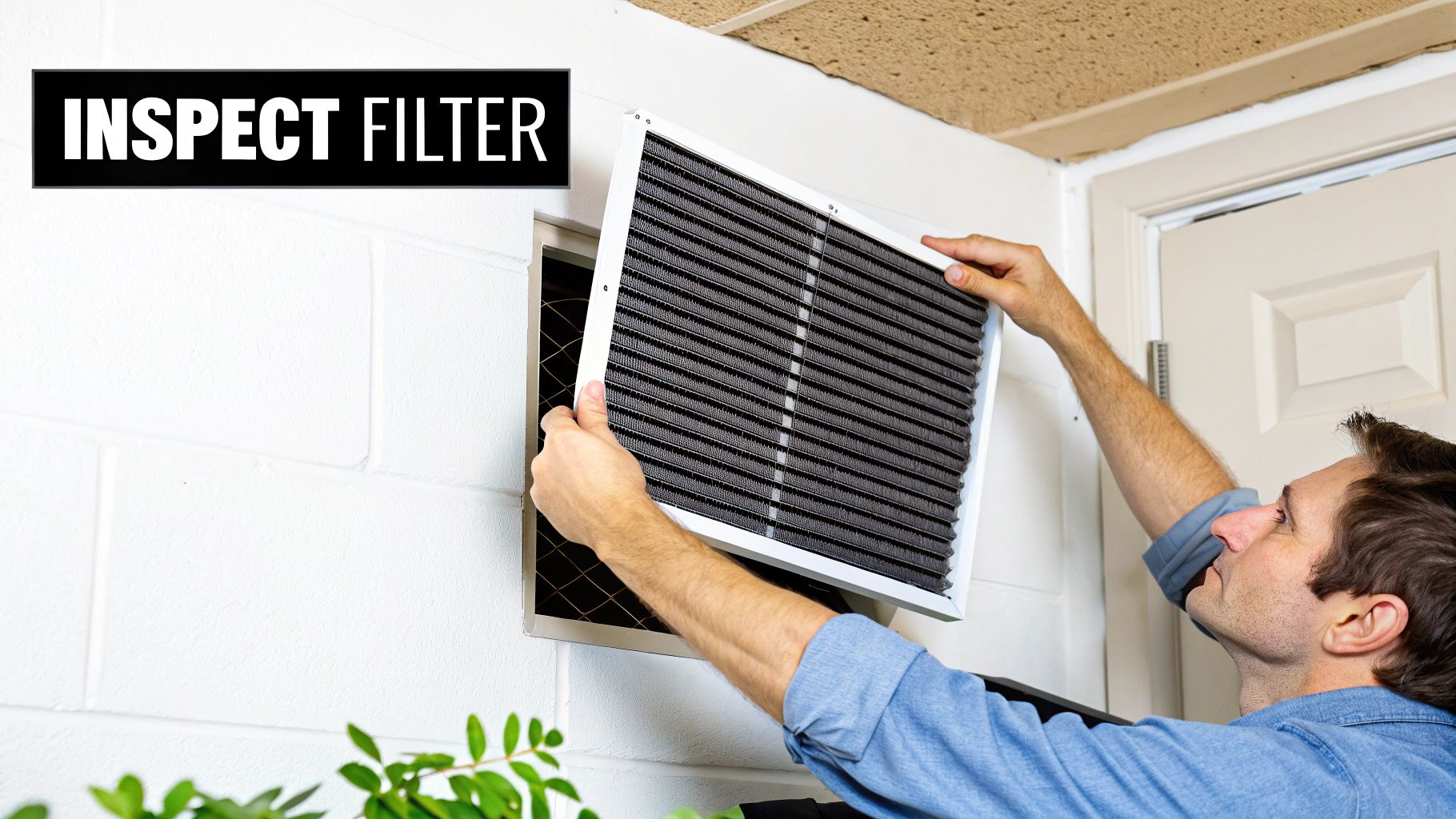
Alright, now for the number one cause of short cycling: a clogged air filter. This single, inexpensive part is responsible for an incredible amount of AC issues. Its job is to trap dust and debris, but when it gets full, it basically suffocates your system.
A dirty filter chokes off the airflow across the indoor evaporator coils. When that happens, the coils get way too cold and start to freeze over. A sensor detects this ice buildup and shuts down the compressor to prevent damage, hence the short cycling.
Here’s how to check it:
Find the filter slot. It's usually located in your indoor air handler or inside a large return air vent on a wall or ceiling.
Slide the filter out. Hold it up to a light. If you can't see light through it and it's covered in a thick gray blanket of dust, it’s toast.
Replace it if it's dirty. A new filter is cheap and can make a world of difference. Here in Tucson, with all our dust, we tell homeowners to check their filter every 30 days.
Clear The Outdoor Condenser Unit
Next, let’s head outside to the condenser unit. That's the big metal box with the fan on top that pushes all the heat from inside your house out into the Arizona air. For it to do its job, it has to be able to breathe.
Over time, things like dust, leaves, grass clippings from the lawnmower, and weeds can pile up against the unit, blocking the delicate metal fins on the sides. This debris acts like an insulating blanket, trapping heat and forcing your compressor to work way too hard. The system will overheat, shut itself down to cool off, and then try to start up again a few minutes later.
Pro Tip: Make sure you have at least two feet of clear space around all sides of your condenser. You can gently rinse the fins with a garden hose, never a pressure washer, to clean off any caked-on dirt. If you can, spray from the inside out to push the debris away from the unit.
Look For Signs Of Ice On Refrigerant Lines
While you’re outside, inspect the two copper pipes running from the condenser into your house. The larger of the two pipes should have black foam insulation around it. If you see any ice or frost building up on this line, that's a red flag.
Ice on the refrigerant line usually points to one of two problems: restricted airflow (which you already handled by checking the filter) or low refrigerant. Low refrigerant means you have a leak somewhere. As the refrigerant level drops, the pressure inside the system plummets, causing the evaporator coil to freeze solid. That frost can then travel all the way down the line to the outdoor unit.
If you spot ice, turn the AC system off completely at the thermostat but leave the fan running (switch it to “Fan On”). This will help thaw out the ice. A frozen system needs to be completely thawed before a technician can properly diagnose what caused it to freeze in the first place. For more tips on common problems, our ultimate AC troubleshooting guide has some extra insights.
If you've gone through these checks and the problem persists, it’s a strong sign the issue is more complex and it's time to call in a professional.
The Hidden Costs of an AC That Won't Stop Clicking On and Off
When your AC compressor is constantly switching on and off, that clicking sound is more than just a minor annoyance; it's the sound of money being wasted. Every single time your compressor kicks on, it yanks a massive surge of electricity from the grid, far more than it uses while running smoothly.
Think of it like driving a car in heavy city traffic versus cruising on the highway. All that starting and stopping burns way more fuel and puts a ton of extra strain on the engine. Your AC system is no different, and this stop-and-go action is inflating your monthly energy bills and killing your equipment.
How Short Cycling Hits Your Wallet and Your AC Unit
The two biggest punches short cycling throws are skyrocketing energy use and premature system failure. Those frequent power surges are incredibly inefficient. Your AC is designed to hit its peak efficiency during long, sustained run times, not in a series of short, frantic bursts.
Even worse, all this stress is especially brutal on the compressor, which happens to be the most critical and expensive part of your entire air conditioning system. The mechanical strain from constant startups grinds down its internal parts, sending it to an early grave.
A short-cycling AC can quickly turn a small problem into a full-blown catastrophe. Ignoring it doesn't just cost you more on your TEP bill each month; it dramatically raises the odds of a complete system breakdown, usually on the hottest day of the year.
Breaking Down the Financial Damage
The costs pile up in ways that aren't always obvious. Short cycling is a two-pronged attack on your finances: the immediate spike in your monthly bills and the long-term cost of a major repair.
Higher Energy Bills: A healthy AC in Tucson should run for about 15-20 minutes at a time, cycling maybe two or three times an hour. A short-cycling unit might only run for 10 minutes but start up six times an hour. Because the compressor’s startup draw can be 3 to 6 times higher than its normal running current, you’re essentially doubling the number of high-energy events, which means more wasted power.
Accelerated Compressor Wear: The compressor is the heart of your AC, and it simply wasn't built for this kind of abuse. The repetitive strain causes it to overheat and leads to mechanical failure, forcing you into a costly replacement far sooner than you should have to.
Reduced System Lifespan: The damage doesn't stop at the compressor. Other critical parts, like capacitors and contactors, also wear out much faster under the constant stress of short cycling. This can trigger a cascade of failures throughout the rest of the system.
Ignoring the signs that your AC compressor switches on and off too often is a serious gamble. What might be a simple fix today could easily snowball into a major system failure that costs thousands. If you think your compressor is already on its last legs, it's a good idea to know what you're in for. Check out our in-depth guide on AC compressor replacement costs for more information.
Ultimately, getting short cycling sorted out isn't just about being comfortable; it's a smart financial move. A quick diagnosis can save you from the hidden costs that are quietly adding up every time your unit clicks on, protecting both your budget and your sanity during a long Tucson summer.
Knowing When To Call An HVAC Professional In Tucson
Going through the DIY checklist is a fantastic starting point. But let's be realistic, some AC problems are strictly for the pros. If you’ve swapped out the filter, hosed down the condenser coils, and the ac compressor switches on and off just as much as before, it’s time to put down the tools and pick up the phone.
Trying to tackle complex electrical or refrigerant issues yourself isn't just risky; it can be downright dangerous. You could also turn a manageable repair into a catastrophic failure, forcing a full system replacement. Knowing your limits is the smartest thing you can do for your AC and your wallet.
Red Flags That Demand Professional Attention
Certain symptoms are non-negotiable signs that you need a certified HVAC technician. These issues go far beyond basic maintenance and involve parts that require specialized tools, training, and certifications to handle safely and legally.
Here are the critical red flags to watch for:
Persistent Short Cycling: If your initial checks didn't stop the constant on-and-off cycling, the culprit is almost certainly internal. It could be anything from a faulty capacitor to a failing compressor motor, both jobs for a professional.
Electrical Buzzing or Humming: Any strange noises like buzzing, humming, or sharp clicking from your units often point to an electrical issue. This could be a failing contactor or capacitor, which can hold a dangerous electrical charge even with the power off.
Visible Ice Buildup: As we touched on earlier, ice on your refrigerant lines is a classic sign of low refrigerant. Only an EPA-certified technician is legally allowed to handle refrigerant, track down the leak, repair it, and recharge the system correctly.
Lukewarm Air from Vents: When short cycling is paired with air that just isn't cold, it’s a huge red flag for a refrigerant or compressor problem. This is a common issue, and you can learn more about what causes your AC to not blow cold air in our detailed guide.
Ignoring these signs won't make them disappear. Here in Tucson, a struggling AC unit can fail completely right when you need it most.
The Dangers of DIY Electrical and Refrigerant Work
It’s tempting to try and save a few bucks with a DIY repair, but the risks are massive. Your HVAC system is packed with high-voltage components and pressurized refrigerant, making it a hazardous environment for anyone without the right training.
Expert Warning: A system’s capacitor can hold a powerful electrical charge long after you’ve shut off the breaker. Mishandling it can result in severe electrical shock. Similarly, refrigerant can cause frostbite on contact and is harmful to the environment if released.
A professional technician has the diagnostic tools to pinpoint the exact cause of the failure, ensuring the right part is fixed or replaced the first time. They can safely handle electrical components and legally manage refrigerant, protecting you, your home, and your equipment.
This decision tree helps visualize how short cycling harms your system and why getting a professional involved is often the necessary next step.
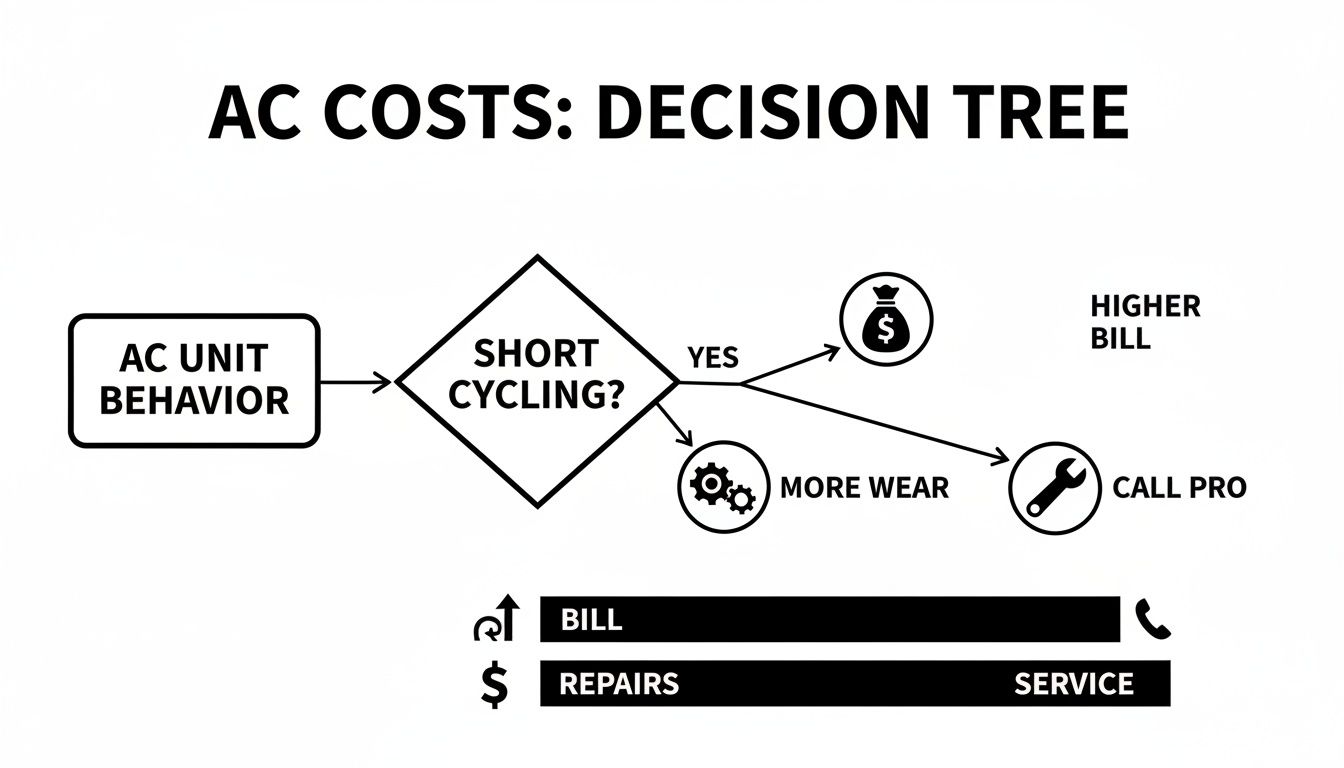
The key takeaway is that letting your system short cycle leads directly to higher bills and accelerated wear and tear. A service call is an investment in your AC's longevity.
Use this table to quickly decide if your AC issue is a simple fix you can handle or if it's time to call a qualified HVAC technician.
DIY Vs Professional HVAC Repair Tasks
Symptom | Safe DIY Check | When To Call A Professional |
|---|---|---|
AC won't turn on | Check thermostat settings and breaker | After confirming power, if it still won’t start |
Reduced airflow | Check/replace air filter and clear vents | If filter is clean and airflow is still weak |
Short cycling | Check air filter and clear condenser unit | If the problem continues after basic checks |
Ice on refrigerant lines | Turn off the system to thaw | For leak detection and refrigerant recharge |
Unusual noises | Clear debris from the outdoor unit | For any buzzing, grinding, or squealing noises |
Warm air blowing | Check thermostat settings | If settings are correct but air is not cold |
Ultimately, if a simple fix doesn’t resolve the issue within a few minutes, it’s safer and more cost-effective in the long run to have an expert take a look.
Is an Oversized AC the Real Problem?
Sometimes, the root cause of short cycling isn't a broken part but an installation mistake from years ago. An oversized AC unit is a surprisingly common problem where the system installed is simply too powerful for the house.
It blasts your home with cold air so fast that it satisfies the thermostat and shuts off before it gets a chance to do its other important job: dehumidifying the air. The result is a house that feels cool but also damp and clammy, and an AC that runs in short, inefficient bursts.
This isn’t something you can diagnose or fix on your own. It requires a professional load calculation to confirm. A technician can assess your home's specific needs and recommend solutions, which might involve modifying ductwork or, in some cases, replacing the unit with one that’s sized correctly.
How to Stop AC Problems Before They Start
The best way to deal with a short cycling AC is to make sure it never happens to begin with. Here in Tucson, being proactive with your HVAC maintenance isn't just a smart move; it's essential for getting through our summers. A system that’s looked after is much less likely to develop the issues that cause an AC compressor to switch on and off over and over.
This all starts with the simplest, most important task you can do: changing the air filter. In our dusty desert climate, filters clog up way faster than in other parts of the country. When that filter gets dirty, it chokes off the airflow, which is one of the biggest culprits behind short cycling.
Tucson Pro Tip: Forget the three-month replacement schedule on the package. You need to check your air filter every 30 days. If it looks gray and caked with dust, it’s done. Swap it out.
Your Annual Professional Tune-Up
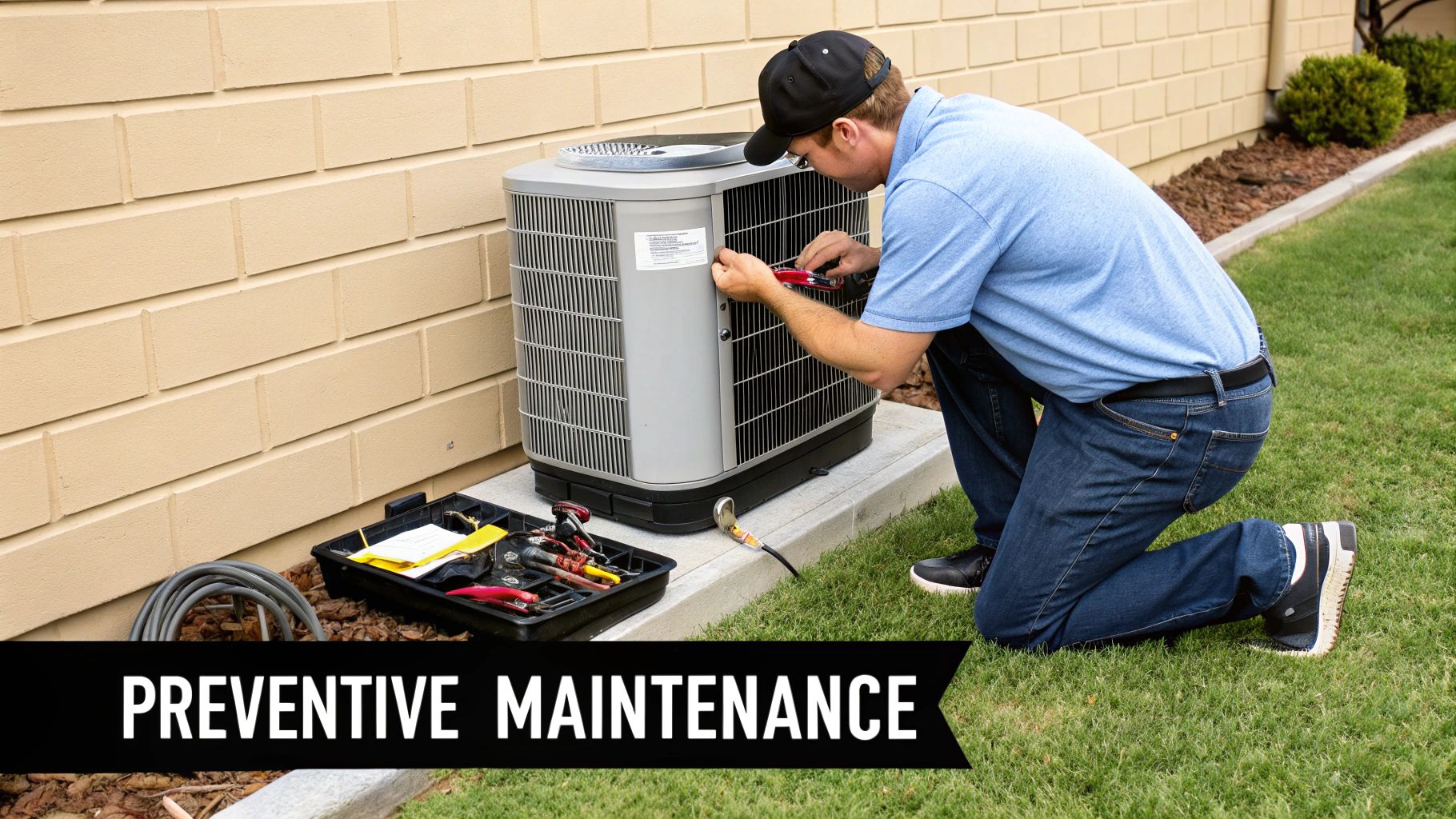
While changing your filter is your first line of defense, nothing beats a yearly professional tune-up. The best time to schedule this is in the spring, right before the serious heat arrives. A certified technician can spot and fix small issues before they blow up into expensive, middle-of-the-night emergencies.
Think of a professional tune-up as a comprehensive health check for your AC. A technician will dig deep into your system to head off the common causes of short cycling.
Key services during this visit typically include:
Cleaning Condenser and Evaporator Coils: Grimy coils can’t release or absorb heat properly. This makes the system work way too hard, causing it to overheat and shut down.
Checking Refrigerant Levels: The tech will measure the refrigerant pressure to make sure it’s exactly where the manufacturer says it should be. If it’s low, that’s a red flag for a leak that needs to be found and fixed.
Inspecting Electrical Components: Every capacitor, relay, and wire gets tested to ensure they’re working correctly. This prevents the kind of electrical hiccups that lead to erratic behavior.
This yearly visit is truly the best investment you can make for your system’s lifespan and efficiency. For a closer look at what’s involved and how often your specific unit needs care, check out our expert tips on how often you should service your air conditioner.
Simple Habits Between Professional Visits
Your job isn't done after a filter change and a tune-up. A few simple habits can make a huge difference in keeping your system running smoothly and preventing breakdowns all season long.
First, give your outdoor condenser unit some breathing room. Make sure you have at least two feet of clear space around the entire unit. That means trimming back bushes, pulling weeds, and moving anything that might block airflow, like trash cans or pool toys.
Second, do a quick walkthrough of your home and make sure all your air vents, both supply and return, are open and not blocked by furniture, rugs, or anything else. Obstructing vents throws off the system's airflow balance, putting a strain on components that can lead to short cycling. Consistent care doesn't just prevent problems; it also makes your system more efficient and lowers those energy bills.
Your Top Questions About AC Short Cycling
When your AC starts acting up, a flood of questions usually follows. If your AC compressor is switching on and off every few minutes, you're probably wondering how serious it is, what's causing it, and what it might cost to fix. We've put together some straightforward answers based on our years of experience here in Tucson to give you some clarity.
This is the kind of stuff we talk about with homeowners every day. The goal is to reinforce what you've learned in this guide and help you feel confident about what to do next.
Is It Normal For An AC Compressor To Turn On And Off Every Few Minutes?
Absolutely not. That’s the textbook definition of short cycling, and it’s a clear signal that something is wrong with your system. A healthy air conditioner, especially one battling the Tucson heat, should run for a solid 10 to 20 minutes at a time. That's how it properly cools and, just as importantly, dehumidifies your home.
This constant starting and stopping puts a ton of extra wear and tear on the compressor. Even worse, it’s a huge energy hog, since the startup phase of a cooling cycle is when your AC draws the most power.
Can A Dirty Air Filter Really Cause My AC To Short Cycle?
Yes, and it’s one of the most common, and thankfully, easiest to fix, causes we see. A clogged filter is like trying to breathe through a pinched straw. It chokes the airflow, causing the indoor evaporator coils to get way too cold and eventually freeze up.
That ice triggers a safety switch that shuts the compressor down to prevent serious damage. Once the ice thaws a bit, the system tries to kick back on, and you're stuck in that frustrating on-again, off-again loop.
Our Pro Tip: Checking your air filter monthly is the single best piece of preventative maintenance you can do. In a dusty climate like ours, it’s not just a recommendation; it’s a necessity.
How Much Does It Cost To Fix An AC That Is Short Cycling?
The cost really depends on what’s causing the problem. It could be a cheap, five-minute fix or something that requires a more significant investment.
Here’s a realistic breakdown of what you might be looking at:
New Air Filter: A simple DIY job that'll cost you less than $20.
Faulty Thermostat: Having a pro replace it usually runs between $150 and $400.
Refrigerant Leak Repair: This is where it gets more complex. A repair can range from $300 to over $1,500, depending on where the leak is and how bad it is.
Failed Compressor: This is the worst-case scenario, often caused by letting short cycling go on for too long. A compressor replacement can easily cost $1,800 or more.
This huge price range is exactly why catching the issue early is so critical. It can keep a small problem from turning into a budget-busting repair.
Should My AC Short Cycle More On Very Hot Days?
Nope, it should do the complete opposite. On those brutal Tucson summer days, your air conditioner should be running in longer, more sustained cycles to keep up with the intense heat. If it starts short cycling more when the temperature climbs, that’s a red flag that the system is overwhelmed.
This usually points to an issue preventing it from getting rid of heat effectively, like a dirty outdoor coil or low refrigerant levels, problems that only get worse under pressure.
If your AC is short cycling and the basic troubleshooting hasn't helped, don't wait for the problem to escalate into a full-blown breakdown. The expert team at Covenant Aire Solutions is ready to diagnose and fix the issue quickly and professionally. Contact us today to schedule a service visit and get your home comfortable again.