
How often should you service your air conditioner: expert maintenance tips
For most homeowners, the simple answer is to get your air conditioner serviced at least once a year. Think of it as a spring check-up before the summer heat really hits.
However, if you have a heat pump that pulls double duty for heating and cooling, or you live somewhere with long, punishing summers, twice-yearly service is the way to go. This ensures your system can handle the constant workload without breaking down when you need it most.
Establishing Your Ideal AC Service Schedule

Figuring out the right service frequency for your AC isn't a one-size-fits-all deal. It's a lot like maintaining your car; a daily commuter racking up miles in harsh weather needs more attention than a weekend cruiser. Your AC operates on the same principle, with its needs shaped by how hard it works, your local climate, and the type of system you have.
For many folks, a single professional tune-up each year is plenty to keep things running smoothly. This yearly visit gets your unit ready for the intense workload of summer, letting a technician catch small issues before they snowball into expensive, mid-July emergencies.
But in climates where the AC runs almost nonstop for months, one service just isn't enough. That kind of constant strain requires a more proactive approach to keep it from failing under pressure.
Recommended AC Service Frequency at a Glance
To make things easier, here's a quick reference table. Just find the description that best matches your home's setup to get a clear idea of the right service schedule for you.
System Type | Climate / Usage Level | Recommended Service Frequency |
|---|---|---|
Central Air Conditioner | Mild to Moderate Climate | Once Per Year (Spring) |
Central Air Conditioner | Hot Climate / Heavy Use | Twice Per Year (Spring & Fall) |
Heat Pump (Cooling & Heating) | Any Climate | Twice Per Year (Spring & Fall) |
This simple guide provides a solid starting point for most homes, ensuring your system gets the care it needs to perform reliably year after year.
Why Consistent Maintenance Matters
Sticking to a regular service schedule does more than just prevent breakdowns. It's what keeps your system running at its best. Most HVAC manufacturers actually require at least one professional visit per year to keep the warranty valid.
Unfortunately, industry data shows that only about 42–43% of homeowners follow this advice, leaving huge benefits on the table. A well-maintained unit can lead to 5–20% in annual energy savings and last up to 15 years, far longer than a neglected system. To see what a comprehensive plan looks like, check out our guide on your essential HVAC maintenance schedule.
The U.S. Department of Energy confirms that planned maintenance is one of the most effective ways to reduce energy consumption, improve system longevity, and ensure your air conditioner operates at its full potential.
Ultimately, investing in regular service is the smartest way to protect your comfort, your wallet, and one of your home’s most important appliances.
Factors That Shape Your AC Maintenance Schedule
While the "once-a-year" rule is a solid starting point, it’s not the final word for every homeowner. Think of your air conditioner like a car; a vehicle that sees heavy daily use in a tough climate needs more frequent oil changes than one that only enjoys weekend drives. The same logic applies to your AC, and a few key factors might mean you need a more personalized service schedule.
So, how often should you really service your air conditioner? To answer that, we need to look past the calendar and consider the unique demands placed on your specific system. These influences will tell you if a standard annual tune-up is enough or if your unit needs a little more attention to stay healthy.
Your System's Age and Condition
An older air conditioning unit is a lot like a classic car: it has a lot of miles on it and requires more care to stay reliable. As components age, they naturally become more susceptible to wear and tear, which makes them less efficient and more more likely to fail when you need them most.
An AC unit in its first few years will likely perform just fine with a single annual inspection. However, once a system is 10 years or older, it can benefit immensely from biannual service. These more frequent check-ups give a technician the chance to spot aging parts, like worn-out capacitors or a struggling fan motor, before they cause a total breakdown on the hottest day of the year. You can learn more about how age impacts your system in our homeowner's guide on how long AC units last.
The Type of HVAC System You Own
Not all HVAC systems are created equal, and their maintenance needs reflect that. A standard central air conditioner has a relatively straightforward job: cool your home during the warm months. For these systems, an annual spring service is usually perfect.
A heat pump, on the other hand, is a different animal entirely. This versatile system works year-round, pulling double duty to provide cool air in the summer and warm air in the winter. Because it never gets a season off, a heat pump racks up twice the runtime and wear.
A heat pump's dual function means it's doing two full seasons' worth of work every single year. Skipping its fall tune-up is like skipping every other oil change on your car; the accumulated strain will eventually lead to premature failure.
For this reason, biannual service is non-negotiable for heat pumps. A spring visit gets it ready for cooling, while a fall visit ensures it’s prepared for heating, addressing the strain from a long summer and preventing problems when the temperature drops.
Local Climate and Usage Patterns
Where you live has a massive impact on your AC's workload. If you're in a mild region with short summers, your air conditioner might only run for a few months, seeing relatively light use. In that scenario, a single annual service is perfectly adequate.
But here in Tucson, Arizona, it’s a whole different story. Our ACs run a grueling marathon, operating almost continuously for a huge chunk of the year. This intense, prolonged usage accelerates wear on every single component, from the compressor down to the smallest electrical connection. In a high-demand climate like ours, biannual maintenance becomes a necessity, not a luxury. In fact, preventive maintenance in hot markets has been shown to reduce breakdown events by 31–75%.
Manufacturer Warranty Requirements
Finally, there’s a very practical reason for regular service: your manufacturer's warranty. Most HVAC manufacturers state that their warranty coverage is only valid if the system receives regular, documented maintenance from a licensed professional.
Skipping a tune-up could give the manufacturer grounds to deny a warranty claim if a major part fails. That could leave you on the hook for a repair bill that might have otherwise been covered. Scheduling annual or biannual service isn't just about performance; it's a critical step in protecting your investment and keeping your warranty intact. Always check your warranty documents for the specific maintenance requirements for your unit.
The True Value of Regular AC Maintenance
Knowing how often to service your air conditioner is one thing, but truly understanding why it’s so important is what turns maintenance from a chore into a smart investment for your home. It’s easy to look at AC service as just another expense. The reality, though, is that consistent, professional care gives back in real ways, protecting your comfort, your health, and your wallet.
Think of an AC tune-up like changing the oil in your car. You don't wait for the engine to start smoking; you do the small, preventive tasks to keep it running smoothly for the long haul. Regular AC maintenance is exactly the same. It’s all about preventing those catastrophic breakdowns and making sure your system is ready to perform when you need it most.
Boost Efficiency and Lower Energy Bills
A clean, well-maintained air conditioner is an efficient one. Over time, dust and grime build up on critical parts like the evaporator and condenser coils. This buildup acts like an unwanted blanket of insulation, forcing your system to work much harder to cool your home.
All that extra effort translates directly to higher energy bills. When a technician comes out to thoroughly clean the coils, lubricate moving parts, and check the system’s calibration, its efficiency is restored. The result? A system that uses less electricity to give you the same level of cooling, which means noticeable savings on your monthly utility bills.
According to the Department of Energy, proper HVAC maintenance can lead to 5–20% in annual energy savings. This simple step doesn't just lower your costs; it reduces your home's overall energy footprint.
Extend the Lifespan of Your AC Unit
One of the biggest payoffs of routine service is a longer life for your equipment. An air conditioner is a major investment. Neglecting it is like driving a car without ever checking the tires or fluids, a premature breakdown is almost a guarantee.
During a tune-up, a technician can spot and fix minor issues, like a worn-out capacitor or a fraying belt, before they cascade into major damage to expensive parts like the compressor. By catching these small problems early, you prevent the cumulative stress that cuts a system's life short. A well-maintained AC can reliably cool your home for 15 years or more, while a neglected one might give out in less than a decade.
Improve Your Home's Indoor Air Quality
Your HVAC system does more than just cool the air; it circulates it through every room in your house. If the system is dirty, it can become a breeding ground for dust, pollen, mold, and other allergens. These contaminants then get blown right into your living space, which can be a nightmare for anyone with allergies or respiratory issues.
A professional service includes a deep cleaning of the system’s interior. This process removes the buildup of pollutants, making sure the air your family breathes is cleaner and healthier. If you want to dive deeper into how this all connects, you can explore the top benefits of HVAC maintenance for Tucson homes in our detailed guide.
Prevent Costly and Unexpected Breakdowns
There’s never a good time for an AC to fail, but it almost always seems to happen during the worst heat wave of the summer. That's when your system is under the most strain. Regular maintenance is your best defense against those inconvenient and often expensive emergency repairs.
The numbers don't lie. Market studies have shown that preventive maintenance is incredibly effective at stopping problems before they start. In fact, it can reduce unplanned service calls and system downtime by a remarkable 31–50%. This proactive approach not only saves you from the misery of a sweltering home but also helps you dodge the premium costs that come with emergency service calls.
Warning Signs Your AC Needs Help Now

While routine tune-ups are your best defense against surprises, sometimes your air conditioner will flat-out tell you it’s in trouble. Think of these signals as your system’s check engine light; ignoring them is a surefire way to turn a minor fix into a major, expensive failure.
Learning to spot these distress calls helps you act fast. You can call for professional help before you're stuck sweating through a summer heatwave. These symptoms are your AC's way of asking for help, and listening can save you a lot of hassle and money.
Strange Noises and Unusual Odors
Your AC should be a background hum, not the main event. If it starts making new or loud noises, that’s your first major clue something is wrong.
Keep an ear out for these sounds:
Grinding or Squealing: This is a serious mechanical cry for help, often pointing to a failing motor bearing or a worn-out belt.
Clanking or Banging: These jarring sounds usually mean a part has come loose, like a fan blade or the compressor, and is now hitting other components.
Constant Clicking: A single click when the system turns on or off is normal. But if it’s clicking repeatedly, you could have an electrical control issue.
Bad smells are just as urgent. A musty odor usually signals mold or mildew growth from excess moisture hiding in your unit or ductwork. A burning smell, however, is an emergency. It could be an overheating motor or fried wiring, and you should shut the system down immediately.
Declining Performance and Efficiency
Even a quiet AC can be struggling. A gradual drop in performance is a huge red flag that your system isn't keeping up. You might notice your house just doesn’t feel as cool as it used to, or that some rooms are stubbornly warmer than others.
Weak or warm air blowing from the vents is another classic sign of trouble. This often points to problems like a refrigerant leak, a failing compressor, or simply blocked airflow from a filthy filter or clogged coils.
Another common problem is short-cycling, where the AC kicks on and off every few minutes without finishing a full cooling cycle. This puts immense strain on the system and does a terrible job of dehumidifying your home, leaving you with that sticky, clammy feeling.
A sudden, unexplained jump in your monthly energy bill is one of the surest signs of a problem. When your AC has to work overtime to do its job, its energy use goes through the roof, and your wallet feels it first.
If your AC is showing any of these symptoms, it's time to call in a pro. Your system is a complex machine, and trying to diagnose these issues without the right tools can easily make things worse. A qualified technician can pinpoint the real problem and get your system, and your comfort, back on track.
To help you get a better idea of what might be going on, we've put together a quick diagnostic table.
Common AC Problems and Their Potential Causes
Symptom / Warning Sign | What It Could Mean | Recommended Action |
|---|---|---|
AC won't turn on | Tripped circuit breaker, thermostat issue, or internal wiring failure. | Check your breaker box first. If that's not it, call a professional for an electrical diagnosis. |
Weak or no airflow | Clogged air filter, blocked vents, or a failing blower motor. | Replace your air filter. If airflow is still weak, schedule a service call to inspect the motor and ductwork. |
Grinding or squealing noises | Worn-out motor bearings or a damaged belt. | Shut the system down immediately to prevent further damage and call for emergency AC service. |
Musty or foul odors | Mold or mildew in the ductwork or a clogged drain line. | This requires a professional cleaning and inspection to ensure all microbial growth is removed safely. |
System is short-cycling | Refrigerant leak, oversized unit, or a malfunctioning thermostat. | This issue puts major stress on your compressor. A technician needs to diagnose the root cause. |
Water leaking from the unit | Clogged condensate drain line or a refrigerant leak causing ice buildup. | Turn off the AC to prevent water damage and call for service. |
This table is a great starting point, but remember that many issues can have overlapping symptoms. The safest and most effective way to solve the problem is to have an experienced technician from Covenant Aire Solutions take a look. We can diagnose the issue correctly and get your home cool again.
What Happens During a Professional AC Tune-Up
Deciding how often you need an AC service is the first step, but what actually happens when the technician shows up? It's easy to wonder what goes on during that appointment. This isn't just a quick filter change; it's a comprehensive, systematic check-up designed to get your system running safely, efficiently, and reliably.
Think of it like a full physical for your air conditioner. The technician’s goal is to find any hidden problems, clear out a season's worth of dust and grime, and make sure every single part is working together perfectly. This process shows you exactly where the real value in professional maintenance lies.
The Initial Inspection and System Calibration
The first thing a good technician does is listen. They'll ask if you've noticed any odd noises, weak airflow, or other quirks. After that, they’ll start with the thermostat, checking its calibration to make sure it’s reading your home’s temperature correctly and sending the right signals to the AC.
If a thermostat is even slightly off, it can make your system run too long or not long enough, leaving you uncomfortable and wasting money. The tech will test its functions, tighten any loose wiring, and confirm it's communicating perfectly with the main unit. This simple check is the foundation for everything else.
Next, it's time to inspect the electrical components. This is a critical safety step that includes:
Tightening Connections: Loose wires are a serious fire hazard and can fry sensitive parts of your system.
Checking Capacitors and Relays: These components give the compressor and fans the "kick" they need to start. Testing them prevents motors from struggling or failing when you need them most.
Measuring Voltage and Amperage: The tech confirms that the motors are drawing the right amount of power, which is a key sign of their overall health.
This electrical checkup is essential for preventing surprise breakdowns and making sure your unit operates safely.
Deep Cleaning for Maximum Efficiency
One of the most valuable parts of any tune-up is the deep cleaning. Your AC has two sets of coils, the indoor evaporator coil and the outdoor condenser coil, that are absolutely vital for exchanging heat. Over time, they get completely caked in dust, pollen, leaves, and other gunk.
This buildup acts like an insulating blanket, forcing your system to work way harder to cool your home. A technician uses special cleaners to wash the coils, restoring their ability to transfer heat. Just cleaning the coils can boost your system’s efficiency by 5–15% almost instantly.
Think of dirty AC coils like a car's radiator clogged with mud. The engine has to work overtime just to stay cool, burning more fuel and risking a total breakdown. A professional coil cleaning provides a similar, immediate performance boost for your AC.
The technician will also clear out the condensate drain line. This little pipe carries moisture away from your indoor unit, but it’s a prime spot for algae and sludge to build up. A clog can cause water to back up into your home, leading to property damage. Flushing this line is a simple but crucial task that prevents a messy and expensive headache.
Mechanical Checks and Final Adjustments
With the system clean and the electricals secured, the focus shifts to the mechanical parts. The technician will lubricate all moving components, like fan motors, to cut down on friction and prevent them from wearing out too soon. They'll also inspect the blower parts, making sure they are clean and adjusted for optimal airflow.
The last major step is checking the refrigerant levels. A common myth is that refrigerant gets "used up" like fuel, but it doesn't. If the levels are low, it means you have a leak. A technician will measure the pressure to make sure it’s within the manufacturer's specs. If it's low, they'll find and fix the leak before adding more refrigerant. Running an AC with low refrigerant can destroy the compressor, the most expensive component in the entire unit.
For a complete overview of what to expect, take a look at our 2025 air conditioner tune-up checklist, which breaks down these steps in even greater detail.
Choosing a Maintenance Plan That Fits Your Needs
Knowing why and when to service your air conditioner is half the battle. Now it's time to put that knowledge to work by choosing the smartest, most budget-friendly way to guarantee consistent care: a preventive maintenance plan.
Think of it as a subscription for your home's comfort. It automates the entire process and gives you incredible peace of mind, ensuring your system is ready long before the extreme weather hits.
A maintenance plan from Covenant Aire Solutions is designed to take all the guesswork out of the equation. Instead of you having to remember to call and schedule a tune-up, the responsibility is on us. We handle the scheduling to make sure your system is primed and ready, whether it’s for a scorching summer or a chilly winter night.
This proactive approach flips the script on AC care. It moves it from a reactive, emergency-based headache to a predictable, manageable part of your home budget. It is simply the best way to protect both your comfort and your investment.
Selecting the Right Plan for Your Home
Figuring out which plan is right for you is actually pretty straightforward once you know what your system needs. If you have a newer central AC in a home that sees average use, an annual plan is usually the perfect fit. This single, in-depth spring visit gets your unit completely ready for summer, ensuring it runs efficiently when you need it most.
But for any system that works a bit harder, a more robust plan is a must. This usually includes:
Older Systems: Air conditioners over ten years old really benefit from biannual check-ups. This helps our techs catch age-related issues before they turn into a full-blown breakdown.
Heat Pumps: Because they pull double duty for both heating and cooling all year long, heat pumps absolutely require service twice a year, once in the spring and once in the fall.
High-Usage Homes: If your AC runs practically nonstop during Tucson's long, brutal summers, a biannual plan gives it the extra support it needs to handle that intense workload.
This flowchart can help you visualize the best schedule for your specific setup.
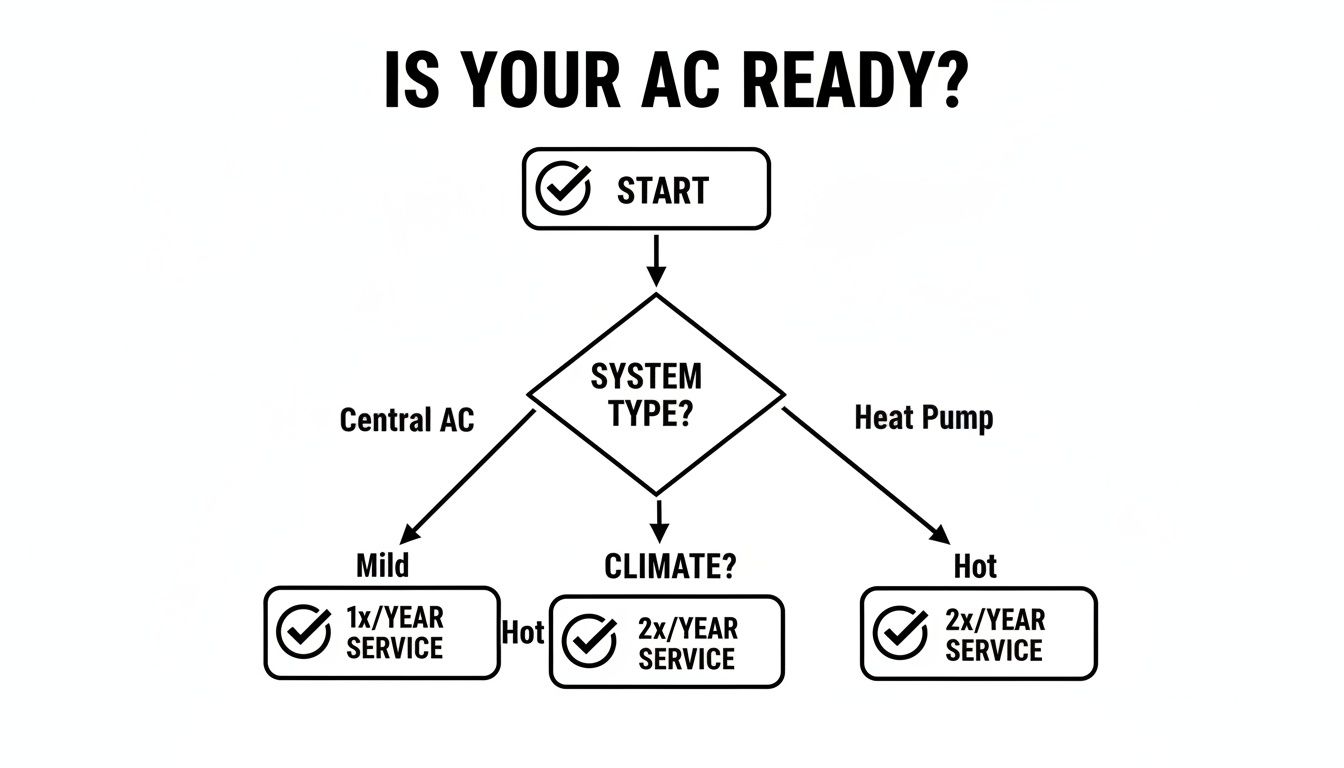
The takeaway here is simple: the more your system runs throughout the year, the more professional attention it needs to stay in peak fighting form.
The Financial and Practical Benefits
The real value of a maintenance agreement goes way beyond just scheduled tune-ups. It’s an investment that pays you back in more ways than one. Our maintenance plan members get exclusive perks designed to save money and eliminate stress.
A maintenance plan is your VIP pass to better service. You get priority scheduling, which means if your AC breaks down during a heatwave, you go to the front of the line.
On top of that, our members enjoy valuable discounts on any necessary repairs, parts, and even new system installations. These savings can add up fast, often making the plan pay for itself. The question of how often should you service your air conditioner becomes much easier to answer when a plan handles all the logistics for you.
To dig a little deeper into the specific advantages, check out our article that explores if an AC maintenance plan is worth it.
At the end of the day, a maintenance plan is the smartest way to ensure your system’s longevity, efficiency, and reliability, all while protecting your budget from nasty, unexpected surprises.
We Answer Your Most Common AC Service Questions
Even when you know why regular AC service is important, it's natural to have a few more questions pop up. Homeowners we talk to are often curious about the line between DIY tasks and professional work, or what really happens if they decide to skip a tune-up just once.
To help you feel completely confident in caring for your system, we’re tackling the most common questions we hear out in the field. Think of this as clearing the air on AC maintenance.
Can I Service My Own Air Conditioner?
While we absolutely encourage homeowners to handle the basics, like swapping out your air filters every 1-3 months or keeping the area around your outdoor unit clear of leaves and debris, the technical work is a job for the pros. Your AC is a seriously complex piece of equipment, packed with high-voltage electrical components and pressurized refrigerant.
Trying to check refrigerant levels, deep clean internal coils, or inspect wiring without professional training and specialized tools is just plain dangerous. You could risk personal injury, cause thousands in damages, or even void your manufacturer's warranty. A professional tune-up is the only way to be sure everything is operating safely and at its best.
What Happens if I Skip Annual AC Service?
Look, skipping a single service appointment probably won’t cause your system to immediately burst into flames. But it's the first step down a slippery slope of neglect. When you miss a tune-up, you’re giving dirt and grime a free pass to build up on critical parts like the evaporator coils and blower motor.
This buildup forces your system to work much harder and less efficiently. Skipping even one year can lead to a noticeable drop in performance and a slow creep upwards in your energy bills. Over time, that extra strain causes premature wear and tear, shortening your unit’s lifespan and dramatically increasing the odds of a total breakdown on the hottest day of the year.
Is AC Maintenance Covered by My Warranty?
This is a big point of confusion for many homeowners, and it’s a critical one to understand. Your homeowner's insurance policy is designed for unexpected disasters like a fire or storm; it won't cover routine maintenance. However, the separate manufacturer's warranty that came with your AC unit is another story entirely.
Most HVAC manufacturers explicitly require proof of annual professional maintenance to keep their parts warranty valid. If a major, expensive component like the compressor fails, they have the legal right to deny your claim if you can't show them the service records. This makes regular maintenance an absolute must for protecting your investment and avoiding a massive, unexpected repair bill down the road.
Don't leave your comfort to chance. The expert team at Covenant Aire Solutions is ready to provide the professional, reliable maintenance your system needs to run flawlessly all year long. Schedule your AC tune-up today by visiting https://www.covenantairesolutions.com.