
How Long Do AC Units Last A Homeowner's Guide
It’s one of the first questions on any homeowner's mind when facing a big-ticket purchase: "how long do AC units last?" You're making a significant investment, after all. A well-maintained central air conditioner should give you 15 to 20 years of service, but that number isn't set in stone.
Factors like the type of system you have, how you use it, and our brutal Arizona climate can swing that timeline dramatically. Understanding these variables is the key to getting the most out of your unit and keeping your home comfortable for years to come.
The Average Lifespan Of An AC Unit
Knowing what to expect from your air conditioning system helps you plan for the future. Nobody wants to deal with an unexpected breakdown in the middle of a July heatwave and the costly emergency replacement that follows.
While averages are a great starting point, the specific type of unit you own is the biggest factor right out of the gate. Think of it this way: a central AC unit is like a car kept safely in a garage, protected from the worst of the elements. A window unit, on the other hand, is like a car parked on the street; it's constantly exposed to sun, rain, and dust, which naturally shortens its life.
Lifespan By AC System Type
Different AC systems are built with varying levels of durability and face different kinds of operational stress. Here’s a quick breakdown of what you can generally expect from the most common residential systems.
AC System Type | Average Lifespan |
|---|---|
Central Air Conditioners | 15-20 years |
Ductless Mini-Splits | 15-20 years |
Heat Pumps | Around 15 years |
Window AC Units | 5-8 years |
As you can see, central air conditioners and ductless mini-splits lead the pack, often lasting between 15 and 20 years with proper care. Heat pumps, which pull double duty for heating and cooling, typically last around 15 years. In stark contrast, the much shorter 5 to 8-year lifespan of window units reflects their constant exposure and less robust construction.
The chart below gives you a clear visual of how these systems stack up.
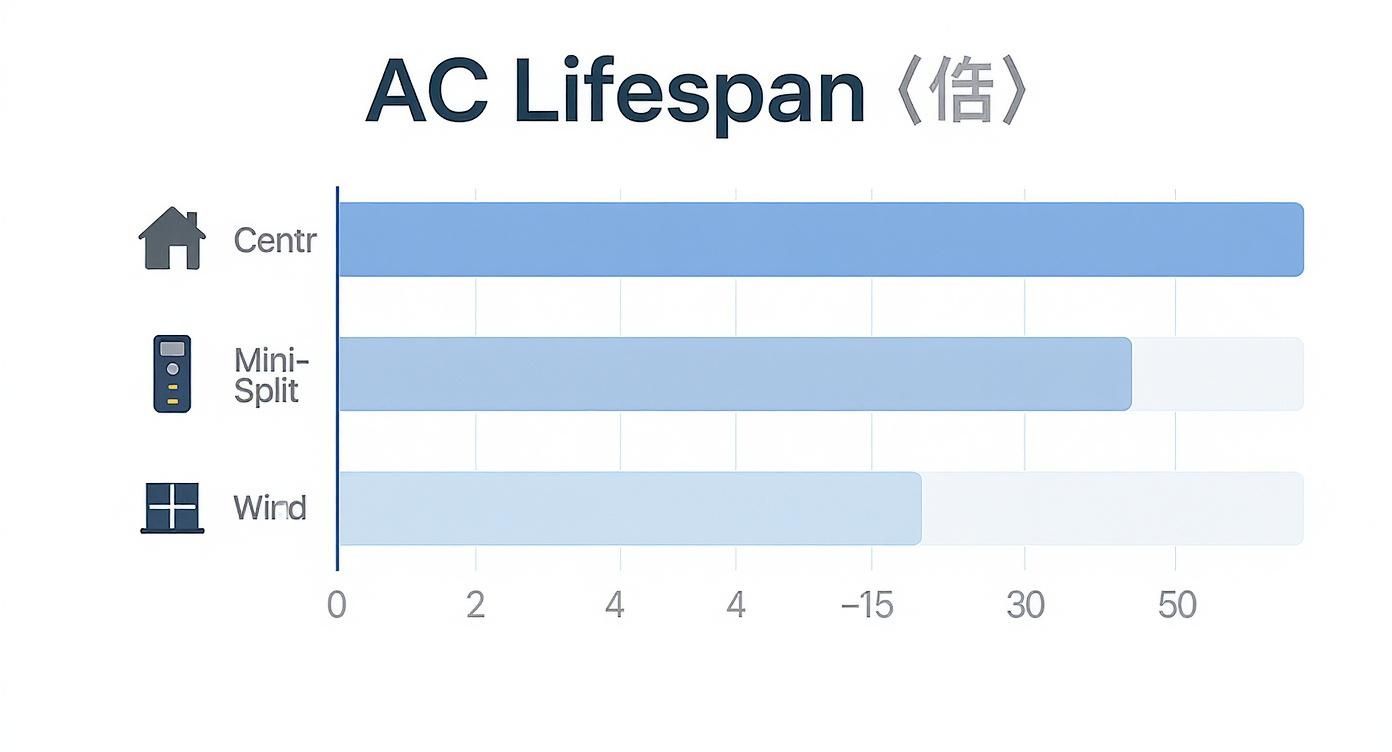
The data makes it pretty clear: investing in a central or mini-split system usually gets you a significantly longer service life than a standard window unit.
Key Takeaway: While a central AC unit can last up to two decades, its journey to that milestone depends entirely on the quality of the installation, consistent maintenance, and how you use it. Neglecting these areas can easily cut its lifespan in half.
For a deeper dive into the complete system, you might be interested in our guide on the average lifespan of an entire HVAC system. This broader perspective helps you understand how all the components of your home's climate control work together over time.
Key Factors That Influence AC Longevity
That 15 to 20 year average lifespan is a nice starting point, but it's far from the whole story. What really makes the difference between an AC unit that gracefully hits its twentieth birthday and one that gives out after just eight years? Several critical factors are at play, turning that average into more of a moving target.
It helps to think of it like the fuel efficiency rating on a new car. The sticker might say 30 miles per gallon, but we all know your real-world mileage depends on how you drive, road conditions, and whether you ever bother with an oil change. It's the exact same idea with your air conditioner; its longevity is directly tied to its environment and the care it gets.
The Impact Of Installation Quality
The road to a long-lasting AC begins on day one: installation. Getting it installed by a pro isn't just a suggestion; it's the foundation for the system's entire life. A botched installation is like building a house on a shaky foundation, it’s just destined for problems right from the start.
An improperly installed unit can be plagued by issues that cause it to wear out prematurely. We often see problems like incorrect refrigerant levels, leaky ductwork, and poor airflow, all of which force the system to work way harder than it should. This constant strain on critical parts like the compressor and fan motors can easily shave years off its expected lifespan.
Beyond that, the size of the unit is a huge deal. An undersized unit will run constantly, fighting a losing battle to cool your home and burning itself out in the process. On the flip side, an oversized unit will switch on and off too frequently, a problem called short-cycling, which puts a different kind of stress on the system and never properly dehumidifies your home. You can check out our detailed guide to air conditioning unit sizing to see why getting this right is so important for both lifespan and efficiency.
Arizona's Demanding Climate
Nowhere is the environment a bigger factor than right here in Arizona. Our intense desert climate puts an extraordinary amount of stress on air conditioning systems. While an AC in a milder part of the country gets a nice long break during spring and fall, our units in Tucson are often running full-tilt for months on end under extreme heat.
This relentless workload dramatically accelerates the aging process for every single component. The constant exposure to triple-digit temperatures, combined with fine desert dust clogging things up, puts an incredible strain on the entire system.
In fact, the harsh Arizona climate can slash the average lifespan of an AC unit from the national average of 15-20 years down to just 8-12 years. The system simply has to work harder and longer, leading to much faster wear and tear.
This is exactly why proactive care isn't a luxury in Arizona; it's a necessity if you want your system to survive.
Your Daily Usage Habits
How you use your air conditioner every day also plays a massive role in its longevity. Cranking the thermostat down to 68°F on a scorching 110°F day forces the unit to run continuously without a single break. It’s basically the same as redlining your car's engine for hours straight.
A smarter, more strategic approach can make a world of difference.
Smart Thermostats: Using a programmable or smart thermostat is a game-changer, letting you ease the workload on your AC when you're away from home or asleep.
Reasonable Settings: Keeping the temperature at a more moderate 78°F significantly reduces the constant strain on the system.
Supporting Players: Simple things like using ceiling fans to help circulate air and closing your blinds to block the intense solar heat help your AC cool more efficiently without having to work nearly as hard.
These small tweaks to your daily habits can collectively add years to your unit's life just by reducing its overall workload.
The Power Of Proactive Maintenance
Finally, and most importantly, we have to talk about your commitment to regular maintenance. This is, without a doubt, the single most powerful tool you have to protect your investment. Neglecting maintenance is like never changing the oil in your car: the system will eventually break down, and when it does, it’s going to be a catastrophic and expensive failure.
A well-maintained central air conditioner can run smoothly for 15 to 20 years, but older, neglected systems are notorious for their inefficiency and frequent breakdowns. Regular tune-ups, which include cleaning coils, changing filters, and checking refrigerant levels, can put off those big, costly repairs and extend your unit’s life, especially here in Arizona where the operational stress is so high. You can learn more about how maintenance impacts AC longevity from Carrier.com.
Thinking of maintenance not as a cost but as an investment is key. It ensures your unit runs as efficiently as possible for as long as possible, saving you from the headache of a premature replacement and the misery of a mid-summer breakdown.
Warning Signs Your AC Is Nearing the End
Is your AC just having a bad day, or is it trying to tell you something more serious? Knowing the difference can save you from a sweaty, mid-summer emergency. Air conditioners rarely just give up without a fight; they send out clues that they're struggling. Learning to read these signs is the key to making a smart decision before you're forced into one.
Many homeowners only think about replacement when the cold air stops flowing entirely. But listening for those early whispers of decline helps you plan ahead, avoiding the stress and premium pricing that comes with an unexpected breakdown. Think of it as preventative care for your home: you're catching the symptoms before the system flatlines.
Strange Noises And Unpleasant Smells
One of the first things you'll probably notice is a change in your AC's normal operating sounds. A healthy system produces a consistent, low hum. When that soundtrack changes, it's often a sign that internal parts are wearing out.
Listen closely for these new sounds, because they can point to specific problems:
Grinding or Squealing: This is a big one. It often points to a serious mechanical failure, like a bad motor bearing. If you hear this, shut the unit down and call a pro immediately. Letting it run could cause catastrophic damage.
Banging or Clanking: Loud banging could mean a part inside the compressor, like a piston pin, has come loose. This is a critical problem and often means the compressor is on its last legs.
Buzzing or Clicking: Electrical issues are usually the culprit here. Frequent clicking when the unit starts or stops can also point to a failing relay or a faulty thermostat.
Your nose can also pick up on trouble. A musty, dirty-sock smell blowing from your vents is a major red flag for moisture buildup and mold growth in your unit or ductwork. Even worse, a burning smell could mean you have an electrical problem, like an overheated motor or fried wiring.
Declining Performance And Efficiency
Another telltale sign is when your AC just can't keep up with the Arizona heat anymore. You might notice your house doesn't get as cool as it used to, even when the thermostat setting hasn't changed. This drop in cooling power means the system is running longer and working much harder to do a job that used to be easy.
A sudden, unexplained spike in your energy bills is one of the clearest signs your AC is losing its efficiency battle. As you explore ways to reduce electricity bills, don't forget to evaluate your AC's health as a potential cause.
This dip in performance often brings other symptoms along with it. You might notice weak airflow from the vents or that some rooms are much hotter than others. These issues often suggest a weakening compressor or leaks in your ductwork, both common problems in older systems.
Frequent And Costly Repairs
Maybe the most obvious sign of all is when you're on a first-name basis with your HVAC technician. If you find yourself scheduling repairs more than once a year, your system is likely in a downward spiral. An older unit, especially one over 10-12 years old here in Arizona, is simply more prone to breaking down.
Think of it like an old car; at some point, you stop fixing it and start saving for a new one. Constantly pouring money into an aging unit just delays the inevitable. Eventually, putting that repair money toward a new, reliable, and more efficient system becomes the much smarter long-term investment.
Understanding these signals gives you the power to act before a complete system failure ruins your summer. For a deeper dive, check out our detailed article on the key signs you should replace your air conditioner.
Repair or Replace: Deciding When It’s Worth It
When your aging air conditioner starts acting up, you’re faced with a tough financial question: do you pay for another repair or invest in a full replacement? This decision can feel overwhelming, especially with the threat of another Tucson summer right around the corner.
The answer often comes down to a simple cost-benefit analysis. Continuing to pour money into an old, inefficient unit is a lot like keeping a vintage car that needs constant, expensive trips to the mechanic. At some point, investing in a new, reliable, and more energy-efficient model just makes more financial sense and offers far greater peace of mind.
The first step is understanding the costs involved. The price of a new AC system here in the Tucson area depends on several factors, including the unit's size (tonnage), its energy efficiency rating (SEER), and the brand you choose. You have to weigh that upfront cost against the mounting price of frequent repairs and higher energy bills from an outdated system.
A Simple Rule For a Tough Decision
To make this choice a little easier, many homeowners and HVAC pros use a handy guideline known as the “5,000 Rule.” This straightforward calculation can cut through the complexity and give you a clear, data-driven answer.
The formula is simple: take your AC unit's age in years and multiply it by the estimated cost of the current repair. If that number is greater than $5,000, replacement is almost always the smarter financial move.
Let's walk through an example. Imagine your 12-year-old air conditioner needs a repair that costs $450.
Calculation: 12 years × $450 = $5,400
Conclusion: Since $5,400 is greater than $5,000, the rule suggests that replacing the unit is a better investment than sinking more money into an aging system that's likely to fail again soon.
This rule works because it balances the immediate repair cost against the unit's remaining expected lifespan. Pouring significant money into a system that is already past its prime is often a losing game, as other components are likely to fail next.
Comparing the Costs of a New AC System
While the 5,000 Rule is a great starting point, you also need to look at the total cost of a new system. In the Tucson area, a new AC installation can range from a few thousand dollars to over $10,000, depending on the specifics of your home and the system you pick.
Key factors that influence the final price include:
Unit Size (Tonnage): Larger homes require more powerful (and more expensive) units to cool them effectively.
Efficiency Rating (SEER): Higher SEER units cost more upfront but deliver significant long-term savings on your monthly energy bills.
Brand and Features: Premium brands or systems with advanced features like variable-speed compressors will naturally have a higher price tag.
Ductwork Modifications: If your existing ductwork needs repairs or adjustments to accommodate the new system, this will add to the overall installation cost.
Making the right choice between repairing and replacing is a critical decision for your home and budget. For a more detailed breakdown, check out our guide on whether it is time to replace your HVAC system or repair your AC. This resource provides extra insights to help you weigh the pros and cons and make a confident, informed decision that will keep your home cool and comfortable for years to come.
How Proactive Maintenance Maximizes AC Lifespan
Thinking your air conditioner will last forever without regular maintenance is like expecting a car to run for twenty years without a single oil change. It’s just not going to happen. Especially here in Tucson, proactive care isn’t just a good idea, it’s the single most important thing you can do to get the most out of your system. A well-maintained AC runs smoother, uses less power, and is far less likely to die on you in the middle of a brutal July afternoon.
Getting that long, reliable service life really comes down to two things: simple tasks you can tackle yourself and the essential tune-ups that are best left to a pro. If you embrace both, you're setting yourself up for years of cool, comfortable living.
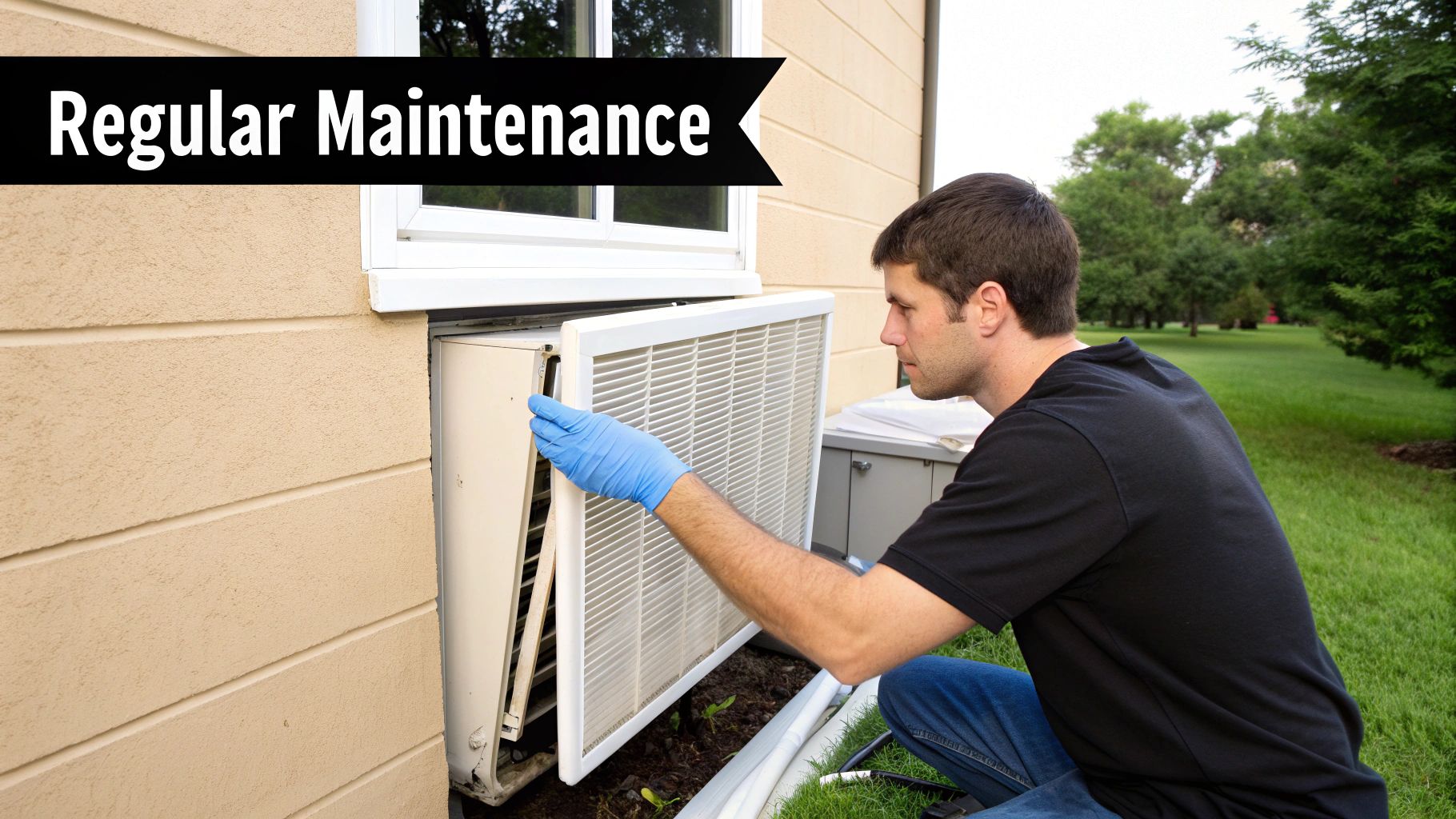
Simple DIY Tasks for a Healthier AC
You don’t have to be an HVAC technician to make a real difference. These easy homeowner tasks are your first line of defense against premature wear and tear. They’re quick, they’re simple, and they work.
Change Your Air Filters Regularly: This is, without a doubt, the most critical DIY job. A clogged filter chokes the airflow, forcing your entire system to work overtime just to keep up. In dusty Arizona, you need to check your filter every month and plan on replacing it at least every 1-3 months.
Keep the Outdoor Unit Clear: Your outdoor condenser unit has to breathe to work properly. Make sure there’s at least a two-foot clearance all the way around it. Trim back bushes, pull weeds, and clear away any leaves or dirt that builds up on the fins.
Check Your Thermostat Settings: Pop open your thermostat and make sure it has fresh batteries. Set it to "cool" and "auto," not "on." The "auto" setting lets the fan run only when it’s actually cooling, which saves a ton of wear and tear on the motor.
These small habits prevent the kind of unnecessary strain that can easily shave years off your AC’s lifespan. Our complete guide has even more tips on how to maintain your HVAC system with a full checklist.
Why Professional Tune-Ups Are Non-Negotiable
While your DIY checks are a great start, they can’t replace the deep, diagnostic work of a professional tune-up. Think of an annual service call from a certified tech as a complete physical for your air conditioner. They can spot small issues long before they turn into expensive, middle-of-the-night emergencies. This is the secret to maximizing how long AC units last.
The impact of proper upkeep is huge. The Air-Conditioning, Heating, and Refrigeration Institute (AHRI) notes that professionally installed and maintained central AC systems can last 12 to 15 years or even longer. With almost 90% of U.S. homes relying on air conditioning, this kind of care is absolutely essential.
A professional tune-up is so much more than a quick cleaning. If you're curious what goes into a professional service, this definitive HVAC maintenance plan for contractors offers a good look into the routines that keep an AC running for the long haul.
A comprehensive professional service should always include:
Checking Refrigerant Levels: Low refrigerant is a red flag for a leak. It makes the system work inefficiently and can quickly lead to serious component damage.
Cleaning Condenser and Evaporator Coils: Dirty coils can't transfer heat effectively. This puts a massive strain on the compressor, the heart of your AC system.
Inspecting Electrical Connections: A technician will tighten connections and measure voltage to head off electrical failures, which are one of the most common causes of breakdowns.
Lubricating Moving Parts: Properly lubricated motors and bearings reduce friction, stopping parts from grinding themselves down and wearing out too soon.
This kind of professional oversight ensures your system isn't just running, but running at its absolute best. It’s a smart investment that pays for itself with better efficiency, fewer surprise repair bills, and a much longer life for your air conditioner.
Common Questions About AC Unit Lifespan
Even after you get a handle on the basics of AC longevity, some practical questions always pop up. Getting straight answers to these common concerns is the key to making a confident, informed decision when your system is on the line. Let’s walk through a few of the questions we hear most often from homeowners.
Does a Higher SEER Rating Mean a Longer Lifespan?
That’s a great question, and it gets right to the heart of how efficiency and durability are connected. While a higher SEER (Seasonal Energy Efficiency Ratio) rating is technically just a measure of energy use, it almost always points to a longer-lasting unit. Why? Because the components used in high-SEER systems are simply built better.
Think of it like comparing a standard sedan to a high-performance luxury car. The high-efficiency AC unit is that finely tuned engine. It runs smoother and puts far less stress on its internal parts. That reduced strain, combined with superior components like variable-speed compressors, means it's built for the long haul, assuming you keep up with maintenance, of course.
Can I Replace Only the Outdoor AC Unit?
It’s tempting to think you can save a few bucks by just swapping out the outdoor condenser, but this is one shortcut that almost always backfires. Modern air conditioning systems are engineered as matched sets. The indoor and outdoor units are designed from the ground up to work together in perfect harmony.
Mismatching a new outdoor unit with an old indoor one creates a clunky, unbalanced system. This move will slash your efficiency, put a ton of strain on the new compressor, and, here's the kicker, it will immediately void the manufacturer's warranty on that expensive new equipment you just bought.
When Is the Best Time of Year to Replace an AC in Arizona?
Timing is everything, especially in a place like Tucson where a working AC is non-negotiable. Planning your AC replacement can save you a ton of money and stress. The absolute best time to schedule an installation is during the milder "shoulder seasons," think fall or early spring.
There are a few big reasons why this strategy works so well:
Easier Scheduling: HVAC techs aren't scrambling from one emergency call to the next, so you'll have your pick of appointment times.
Potential Savings: With lower demand, you're much more likely to find better deals on both the equipment and the installation labor.
No Emergency Pressure: The most important part? You avoid the absolute panic of a mid-July breakdown. You get to choose the right system for your home without being forced into a rushed decision.
A little bit of planning goes a long way. It guarantees a smooth, stress-free process and sets you up for a cool, comfortable summer without the drama.
When you're ready to explore your options for a new, efficient air conditioning system or need expert advice on your current one, the team at Covenant Aire Solutions is here to help. Learn more about our professional AC services and schedule a consultation today.