
How to Clean Condensate Drain Line: Easy Steps to Clear Clogs
Sure, a clogged AC drain line is a messy hassle, but cleaning it out is pretty straightforward. You'll basically turn off the power, find the line, and use a shop vac on the outside end to pull out whatever's blocking it up. After that, a good flush from the inside access point with a mix of distilled vinegar and water will clear out any leftover gunk and help keep it from growing back.
Why a Clean Condensate Drain Line Is Non-Negotiable
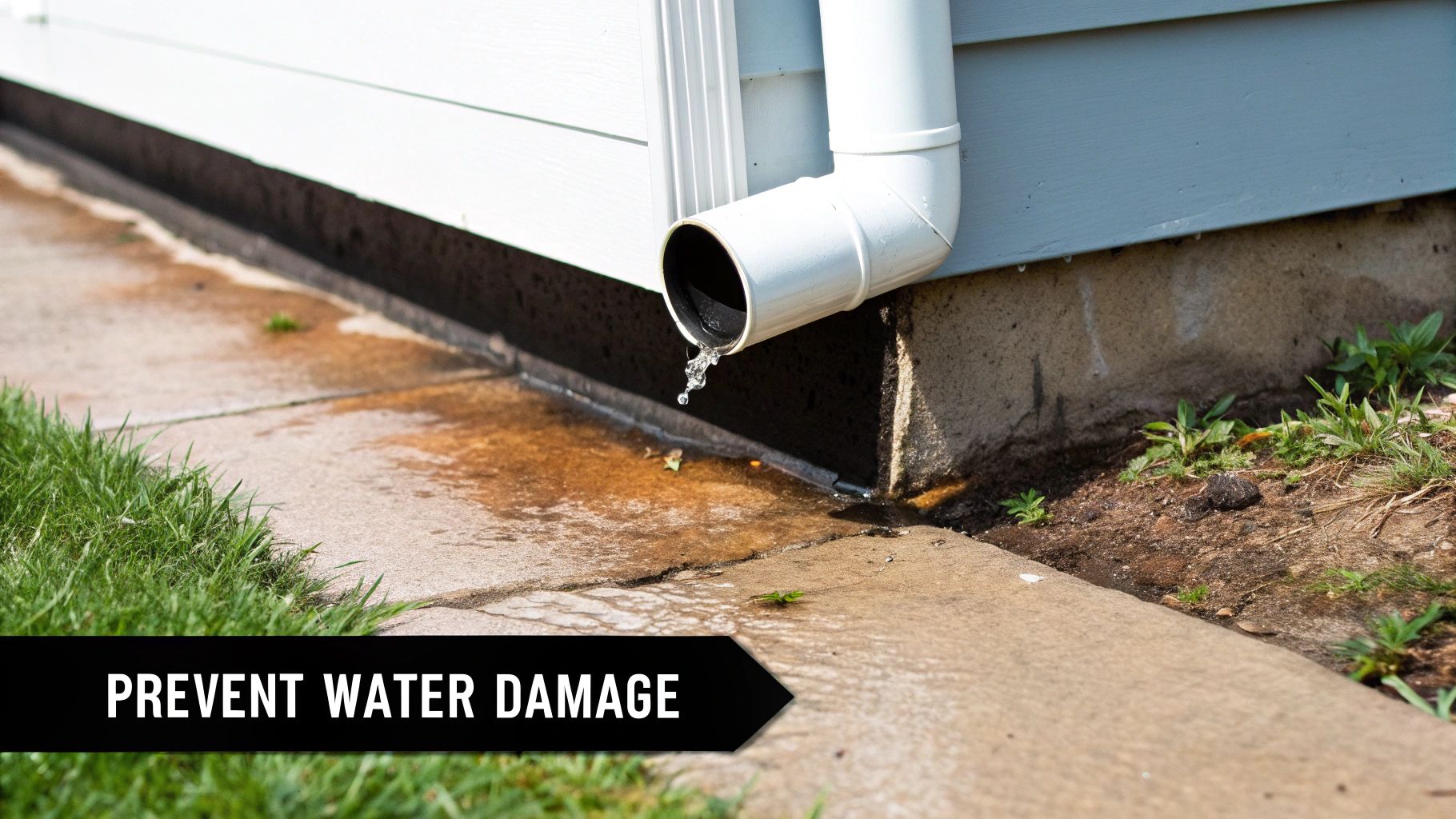
See that little PVC pipe sticking out from your indoor AC unit? It's one of the most important parts of your whole HVAC system, but it’s also one of the most ignored. Every single day, especially during our brutal Tucson summers, it quietly drains gallons of water away from your house.
But when it gets clogged up with dust, algae, and that lovely pink sludge, the water has nowhere to go. And where does it go? Back inside your home. This can lead to some seriously expensive water damage, that unmistakable musty smell, and even a complete system shutdown right when you need it most.
The Hidden Workhorse of Your AC
To really get why this little pipe matters so much, it helps to understand the basics of how your air conditioning system works. Think of it like a cold glass of sweet tea on a hot day. As your AC cools the air, it pulls moisture out of it: condensation. This water drips into a drain pan and then flows outside through the condensate line.
You'd be shocked at how much water we're talking about. A standard HVAC system can produce anywhere from 5 to 20 gallons of water a day. Here in Tucson, with our 110°F+ days, you can bet your system is pushing that 20-gallon limit.
Let's do some quick math. Over a typical 150-day cooling season in Arizona, your AC could be responsible for managing as much as 3,000 gallons of water. A tiny clog can turn into a huge headache, fast.
The Impact of a Clogged Drain Line
A clogged drain line isn't just a minor issue; it's a direct threat to your home and your comfort. Here’s a quick look at the real-world consequences of neglecting this simple maintenance task.
Problem | What It Means for Your Home |
|---|---|
Water Damage | Water stains on ceilings or walls near your air handler. Can lead to ruined drywall, warped wood floors, and damaged insulation. |
Mold & Mildew | That nasty, musty smell circulating through your vents. The clog creates a perfect breeding ground for mold, which can affect air quality. |
System Shutdown | Your AC unit suddenly stops working. Most modern systems have a safety switch that shuts everything off to prevent a major flood. |
Pest Infestation | Standing water is an open invitation for pests like mosquitoes, roaches, and rodents looking for a water source. |
This table just scratches the surface. A simple clog can spiral into major repair bills if it's not dealt with.
When that mix of dust and constant moisture sits in the dark pipe, it creates a perfect home for mold, mildew, and other biological gunk. Eventually, it forms a stubborn, slimy blockage that brings everything to a halt.
If this happens, you’ll start to see some tell-tale signs:
Water Stains: The most obvious clue. If you see discoloration on the ceiling or wall near your indoor unit, you’ve got an overflowing drain pan.
Musty Smells: That mildewy odor blowing from your vents means there's growth in the line, and your AC is spreading it through the house.
A Silent AC: If your system just shuts off, it’s likely the safety float switch doing its job. It detects the high water level in the drain pan and cuts the power to prevent a flood, leaving you hot and bothered.
A sudden leak can be pretty alarming, but knowing what to do right away is half the battle. We've put together a guide with immediate steps you can take; check it out for a quick diagnosis and fix for an air conditioner condensation leak.
Ignoring these warnings is just asking for trouble. What starts as a simple cleaning job can quickly morph into a major repair bill. Keeping that drain line clear isn't just a good idea; it’s non-negotiable for a healthy and efficient HVAC system.
Alright, before you can get that condensate line cleaned out, you’ve got to know where to look and have the right gear on hand. Think of this as your pre-flight checklist. Getting everything sorted now will make the whole job go a lot smoother and safer.
The good news? You won’t need any specialized HVAC tools. Most of what you'll need is probably already sitting in your garage or under the kitchen sink.
First things first, you need to find the two ends of the condensate drain system: where it starts inside your home and where it ends outside.
Locating the Key Components
Your hunt begins at the indoor air handler. This is the big metal box that’s part of your central AC system, usually tucked away in a closet, the attic, or garage. It’s the heart of the operation where all that cool air is made and, you guessed it, where condensation collects.
If you want a full tour of what’s what, our guide on the parts of a central air conditioner unit is a great place to start.
Once you’ve found the air handler, scan the area for a white or clear PVC pipe coming out of it. That’s your condensate drain line. You’re looking for a specific piece, a T-shaped vent pipe with a cap you can unscrew or pull off. This is your access port, sometimes called a clean-out tee. It's your entry point for flushing the line.
Next, you'll need to find where that pipe exits your house. Head outside and do a quick walk around the perimeter, paying close attention to the area near your outdoor condenser unit. You’re looking for a small PVC pipe, usually about ¾-inch wide, sticking out of the wall near the foundation. This is the termination point, where all that water is supposed to drain away.
Your Essential Tool and Supply Kit
Now that you know where both ends of the drain line are, it’s time to gather your supplies. Getting everything you need in one spot now saves you from running back and forth later, which is how a simple task turns into a major headache.
Here’s your go-to list to get the job done right:
A Wet/Dry Vacuum: This is your best friend for pulling the clog out. A regular household vacuum just won't cut it and you'll end up with a waterlogged, ruined machine.
A Funnel: This makes it easy to pour your cleaning solution into that small access port without making a mess. A turkey baster works in a pinch, too.
Old Rags or Towels: Definitely keep these nearby. You'll want them for wiping down the pipe and catching any spills around the indoor unit.
Protective Gloves: It's just a good idea. You’ll be dealing with some pretty unpleasant gunk and cleaning solutions.
Believe it or not, the best and safest cleaning solution is probably already in your kitchen pantry: distilled white vinegar. It has just enough acidity to kill off algae and dissolve grime without being harsh enough to damage your PVC pipes.
With these simple items ready and a clear plan of attack, you’re all set to tackle that clog. Next up, we’ll get hands-on and put these tools to work.
Clearing the Clog: A Practical How-To Guide
Alright, let's get our hands dirty. You've found the drain line and gathered your tools, so you're ready to tackle that clog head-on. We're going to use the most effective method available to homeowners: a wet/dry vacuum. This is the same trick the pros use because it pulls the blockage out instead of trying to jam it further down the pipe.
After we clear the clog, we’ll follow up with a sanitizing flush using a simple vinegar solution. This one-two punch not only gets rid of the existing gunk but also helps keep it from coming back so quickly.
Using a Wet/Dry Vacuum for Maximum Effect
The whole point here is to create a powerful suction that yanks the entire clog, sludge and all, right out of the pipe. Just holding the vacuum hose up to the drain opening won't cut it; you need an airtight seal to generate enough force.
First, head outside to where your drain line terminates. It’s that little PVC pipe sticking out near your foundation. Before you do anything else, grab one of your old rags and give the outside of the pipe a good wipe-down to get rid of any dirt or moisture. A clean surface is key for the next step.
Once the pipe is clean and dry, press the end of your wet/dry vacuum hose firmly against the opening. Now, use your free hand or even some duct tape to seal the gap between the hose and the pipe. You want it as airtight as you can possibly get it.
This quick flowchart breaks down the initial discovery process, from locating the air handler to gathering your essential tools.Getting these steps right ensures you're fully prepared before you start cleaning, making the whole process much smoother.
With a good seal established, switch on the vacuum and let it run for about one to two minutes. You should hear a satisfying slurp as water, algae, and whatever else is in there gets pulled into the vacuum canister. When you turn it off, take a peek inside the vacuum to see what you've removed. It’s usually pretty gross, but that’s a great sign that you got the job done.
The Essential Follow-Up Flush
Clearing the main blockage is a huge win, but we're not quite done. There’s almost certainly some residual slime still clinging to the inside walls of the pipe. A thorough flush will wash away any leftover debris and sanitize the line to slow down future growth.
For this part, you'll head back inside to your air handler and find the access port: that T-shaped vent with the cap on it.
Mix Your Solution: Put together a simple but powerful cleaning mixture. Pour about one cup of distilled white vinegar into a measuring cup. Vinegar is a fantastic natural cleaner that kills mold and algae without being harsh on your PVC pipes.
Pour It In: Unscrew or pull the cap off the access port. Using your funnel, slowly pour the vinegar into the line. Take your time to avoid spills; this is where those old rags come in handy to protect the floor around your unit.
Let It Sit: Once the vinegar is in, let it sit for at least 30 minutes. This waiting period is critical. It gives the vinegar’s acetic acid time to work its magic and break down any stubborn buildup the vacuum might have missed.
Pro Tip: Never, ever use bleach to clean your condensate drain line. While it's a great disinfectant, it can degrade PVC piping over time, leading to cracks and leaks. More importantly, if there are any other cleaning chemicals in the line, mixing them with bleach can create dangerous chlorine gas. Stick with vinegar, it's safer and highly effective.
Verifying a Clear Line
After letting the vinegar do its thing, the final step is to make sure the line is completely clear. You'll want to flush it with fresh water to push out the vinegar and any particles it loosened up.
Slowly pour about a quart of clean water into the same access port. Then, walk back outside to the termination point and watch for the water to flow out. You’re looking for a steady, unobstructed stream. If you see that, congratulations! You've successfully learned how to clean your condensate drain line.
If the water backs up or only trickles out, the clog might be more stubborn than you thought. In that case, you could try repeating the vacuuming process. If that still doesn't work, the blockage might be too deep or severe for a standard DIY approach.
This kind of routine maintenance doesn't just solve immediate problems; it's a key part of your system's overall health. Keeping all components clean ensures better performance and efficiency. For more on this, check out our homeowner's guide to cleaning essential AC unit components. Regular upkeep of the whole system, including the drain line, is the best way to prevent surprise breakdowns, especially during a brutal Tucson heatwave. Finally, don't forget to screw the cap back onto the access port and flip the power back on at the breaker.
Smart Strategies for Preventing Future Clogs

While clearing a stubborn clog feels like a win, the real victory is making sure one never forms in the first place. A proactive approach saves you from the headache of emergency cleanups and the stress of potential water damage. It’s all about shifting to a simple, regular maintenance routine to keep that drain line flowing freely.
This means you stop just reacting to problems and start preventing them. The good news? You don't need a lot of time or fancy products to stop slime and algae before they get a foothold.
Establishing a Simple Maintenance Schedule
Consistency is your best friend when fighting drain line clogs. By setting up a repeatable schedule, you take the guesswork out of the equation and turn maintenance into a simple habit. This is especially important during Tucson's brutal cooling season when your AC is working overtime.
A quick flush every other month is a fantastic starting point. During the peak summer heat in July and August, you might even bump that up to a monthly flush just to be safe.
Here’s a simple routine that gets the job done:
Pick a Reminder Day: Choose a day that’s easy to remember, like the first Saturday of every other month. Set a calendar alert!
Perform a Vinegar Flush: Pour one cup of distilled white vinegar down the indoor access port, the same way you would after clearing a clog.
Let It Sit: Give the vinegar at least 30 minutes to work its magic and dissolve any gunk that's just starting to form.
Follow with Water: Finish by flushing the line with about a quart of warm water. This clears out the vinegar and any loosened debris.
This whole process takes less than an hour but can prevent the vast majority of clog-related emergencies. It’s a cornerstone of any solid AC maintenance plan, and it's something we always emphasize in our professional tune-ups. You can see how it fits into the bigger picture in our 2025 Air Conditioner Tune-Up Checklist found here: https://www.covenantairesolutions.com/post/2025-air-conditioner-tune-up-checklist-8-easy-tips.
Choosing the Right Cleaning Solution
When it comes to preventative cleaning, not all solutions are created equal. Using the wrong agent can actually do more harm than good, potentially damaging your system’s components over time.
Distilled white vinegar is hands-down the safest and most recommended option for routine DIY maintenance. It’s great at killing algae and mold but gentle enough that it won't corrode your PVC pipes or the metal parts in your drain pan.
For those looking for a set-it-and-forget-it solution, there are some other great options out there designed specifically for HVAC systems.
Enzyme-Based Tablets: You just drop these small tablets into the drain pan. They dissolve slowly over time, releasing enzymes that break down slime and stop organic growth in its tracks.
Liquid Enzyme Treatments: These work just like the tablets but in liquid form. You pour them into the drain pan or line, and they provide continuous cleaning action.
These commercial products are excellent for long-term prevention, though a regular vinegar flush is still a highly effective and budget-friendly alternative.
Choosing Your Cleaning Solution
Deciding what to use can feel overwhelming, but it's pretty straightforward. Here’s a quick breakdown to help you pick the right agent for your system.
Cleaning Agent | Best For | Pros | Cons / Cautions |
|---|---|---|---|
Distilled White Vinegar | Routine DIY maintenance | Safe for PVC & metal, affordable, effective against mold/algae | Slower acting, requires regular application |
Enzyme Tablets/Liquids | Long-term, low-effort prevention | Set-and-forget, non-corrosive, targets organic buildup | Higher initial cost than vinegar |
Household Bleach | NOT RECOMMENDED | Powerful disinfectant | Highly corrosive to PVC pipes and metal components |
Baking Soda & Vinegar | Clearing minor, existing clogs | Foaming action helps dislodge light blockages | Less effective for prevention, can leave residue |
Ultimately, sticking with vinegar or an enzyme-based product is your safest bet for keeping your system healthy and avoiding accidental damage.
A critical takeaway is to always avoid using bleach. While it’s a powerful germ-killer, bleach can degrade PVC plastic, making it brittle and prone to cracking. If it spills, it can also cause serious corrosion on your evaporator coils and drain pan, a much more expensive problem to fix than a simple clog.
Beyond just preventing condensate clogs, it’s smart to think about general drain hygiene to deter pests. You can learn some effective methods to prevent drain infestations in commercial spaces that also apply at home.
When to Put Down the Tools and Call a Professional
Knowing your limits is a key part of any successful home maintenance project. While a routine condensate line cleaning is something most homeowners can handle, some clogs are just too stubborn for DIY methods. Being able to recognize when you're in over your head is crucial for protecting your HVAC system, and your home, from some pretty serious damage.
There are definitely clear signals that it’s time to step back and let a pro take over. For example, if you've tried the wet/dry vac method and water still isn’t flowing, the clog is probably either deep in the line or so compacted that your vacuum just doesn't have the power. Don't be tempted to get more aggressive here; this is a hard stop and a clear sign to call for help.
Telltale Signs of a Serious Problem
Beyond a failed DIY attempt, there are a few urgent symptoms that scream "professional needed!" These aren’t just little annoyances; they are your HVAC system’s warning lights, and you need to pay attention.
Keep an eye out for these critical signs:
Visible Water Leaking: If you see water pooling around your indoor air handler or notice new water stains on the ceiling below it, the drain pan is overflowing. This means the clog has created a complete blockage, and you’re dealing with active water damage.
Your AC System Shuts Down: Many modern AC units have a safety float switch in the drain pan for this very reason. When water levels get too high, the switch automatically kills power to the whole system to prevent a major flood. If your AC suddenly cuts off, a severe clog is a likely culprit.
Persistent Musty Odors After Cleaning: You’ve flushed the line, but a strong, musty smell is still circulating through your vents. This usually points to significant mold or mildew growth deep within the system that a simple cleaning can't touch.
These problems almost always point to a blockage that's more severe than a simple slime buildup. It could be anything from a collapsed pipe to debris left over from construction.
The Advanced Tools a Professional Brings
When our technicians from Covenant Aire Solutions show up, we're not just bringing a bigger shop-vac. We come equipped with specialized tools designed to tackle the toughest blockages safely and effectively. We don’t just clear the clog; we figure out what caused it in the first place to make sure it doesn’t come right back.
Industry data reveals that approximately 90 percent of central air conditioning emergency service calls are directly attributable to water leaks caused by condensation problems. For Tucson homeowners, this means the majority of unexpected HVAC emergencies and their associated fees stem from this single, often preventable, source. You can discover more insights about managing condensation on ACHRNews.com.
Our professional toolkit goes far beyond what's in a typical garage.
High-Pressure Nitrogen Tools: We can use pressurized nitrogen to blast through deep, compacted clogs without risking damage to your PVC pipes. It's incredibly effective for blockages a vacuum can't even reach.
Specialized Industrial Vacuums: The vacuums we use are far more powerful than consumer models. They create immense suction capable of pulling out even the most stubborn obstructions.
Flexible Drain Augers and Cameras: For the really tough cases, we can use a flexible auger to physically break up a blockage. We can even run a small camera through the line to get a firsthand look at its condition and pinpoint the exact location and cause of the problem.
Calling a professional isn’t admitting defeat; it’s making a smart call to protect your investment. A botched DIY job on a severe clog can easily lead to cracked pipes, thousands in water damage, or even the need for a full system replacement. If you find yourself facing an HVAC emergency, knowing what to do is critical. Our guide on what to do during an emergency air conditioning repair can walk you through the immediate steps until we arrive. Don't hesitate to call us at Covenant Aire Solutions; we have the right tools and expertise to get your system back up and running safely.
Got Questions? We've Got Answers
Even with the best guide, there are always a few lingering questions. Cleaning out your condensate line is one thing, but feeling confident about the details is another. We get it. That’s why we’ve put together this list of the most common questions we hear from homeowners right here in Tucson.
Think of this as your final check-in. We'll tackle everything from how often you should really be doing this, to weird gurgling noises, and the age-old debate about using bleach.
How Often Should I Really Be Cleaning My Drain Line?
Honestly, it depends on your home and our tough Tucson environment. For most of us, a quick preventative flush every three months during the cooling season is a great target. That’s usually spring through fall. If you have pets shedding fur or live in a particularly dusty area, you might want to bump that up to every other month.
A simple flush with distilled white vinegar is usually all it takes. This is a small task, less than an hour, that can prevent the vast majority of that nasty slime and algae from ever becoming a real headache.
Pro Tip: A good routine is to flush the line when you start cranking up the AC in spring, once more in the heat of mid-summer, and again in the fall before you switch over to heating. This keeps the line clear when it's working the hardest.
Is It Safe to Pour Bleach Down the Line?
This is probably the most important question we get, and the answer is a firm no, please don't use bleach. While it’s a powerful disinfectant, bleach is way too corrosive for your HVAC system. Over time, it can make PVC pipes brittle and cause them to crack.
Worse yet, if any bleach splashes onto the metal drain pan or your evaporator coils, it can cause serious corrosion. Trust us, a simple clog is a much easier, and cheaper, fix than replacing a rusted-out drain pan. Stick with distilled white vinegar or HVAC-specific enzyme tablets. They're safer and get the job done right.
My Indoor Unit Is Making a Gurgling Sound. What's That Mean?
If you're hearing a gurgling or bubbling sound, consider it an early warning sign. That noise is almost always caused by trapped air in the drain line, which means a partial clog is forming. Water is still managing to push through, but it's fighting past an obstruction, creating that distinct gurgle.
This is the perfect time to act. The clog is likely small enough to be easily cleared with a wet/dry vac and a good vinegar flush. If you ignore it, that gurgle will eventually turn into a full-blown blockage, and that's when you risk water overflowing and causing damage.
Can I Just Use a Plumber's Snake to Clear It?
We strongly advise against using a standard plumber’s drain snake on an AC condensate line. Those metal augers are built for tough, large-diameter plumbing pipes, not the thinner, more delicate PVC used for your HVAC system.
It's incredibly easy to puncture or crack the pipe with a metal snake, especially at the elbows and joints where the pipe is weakest. A wet/dry vacuum is the far safer tool because it pulls the clog out with suction rather than trying to force it through. If a vacuum can’t get the job done, it's a sign the clog is serious enough for a professional. A tech has specialized, flexible tools or can use pressurized nitrogen that won't risk damaging the line.
When the DIY approach isn't cutting it or you're dealing with a stubborn clog, the experts at Covenant Aire Solutions are here to help. Our certified technicians have the professional-grade tools and experience to clear any blockage safely, protecting your home and restoring your comfort in no time. For reliable, 24/7 service across the Tucson area, visit us online.