
Commercial HVAC Maintenance Contracts | Boost Efficiency & Save
Think of a commercial HVAC maintenance contract as more than just a service agreement. It's a strategic partnership designed to keep your building's heating, ventilation, and air conditioning systems running smoothly through scheduled, professional care. This isn't about fixing things when they break; it's about preventing costly breakdowns, boosting energy efficiency, and ultimately extending the life of your equipment.
In short, it’s a business continuity plan for your property's climate control.
Your HVAC Business Continuity Plan
Viewing a commercial HVAC maintenance contract as a recurring expense is missing the bigger picture. It's actually a strategic investment in the operational health of your facility. Instead of reacting to a catastrophic system failure that disrupts tenants, halts productivity, and leads to expensive emergency repairs, an agreement shifts your entire approach. You move from reactive problem-solving to proactive, scheduled care.
The idea is simple, much like a good health plan for your HVAC equipment. Just as we go for regular check-ups to catch health issues early, routine HVAC maintenance identifies and resolves minor problems before they can snowball into massive, costly failures. This structured approach protects your assets, makes your maintenance budget predictable, and takes significant operational risks off the table.
The Shift from Reactive to Proactive Care
Making this shift isn't just about convenience; it's a smart financial move. And it's a move more and more facility managers are making. The global HVAC maintenance services market was valued at around USD 78.54 billion in 2023 and is expected to climb to USD 116.57 billion by 2030. That growth says a lot. It shows a widespread recognition that consistent upkeep is key to energy efficiency and equipment longevity.
This proactive model is built on a few core principles:
Scheduled Inspections: Technicians visit on a planned basis to inspect, clean, and tune up every component of your system. Following an essential HVAC maintenance schedule ensures nothing gets overlooked.
Preventive Repairs: Worn parts are identified and replaced before they can trigger a system-wide failure.
Performance Optimization: Your system is calibrated to run at peak efficiency, which translates directly to lower energy consumption and reduced utility bills.
A well-designed maintenance agreement turns your HVAC system from a potential liability into a reliable asset. It guarantees tenant comfort, supports your operational goals, and delivers a clear return on investment by cutting costs and improving efficiency.
At its core, a commercial HVAC maintenance contract is a service agreement that clearly defines duties, response times, and costs. To really get a handle on how these work, it helps to read a comprehensive explanation of Service Level Agreements, as they often form the foundation of these contracts. Understanding that framework makes it clear how these agreements provide predictable results and protect your facility's bottom line.
The True Value of Proactive HVAC Care
So, why lock into a commercial HVAC maintenance contract? The answer isn't about convenience, it's about a strategic business decision that delivers real, measurable returns to your bottom line. Committing to proactive care is one of the smartest moves a facility manager can make.
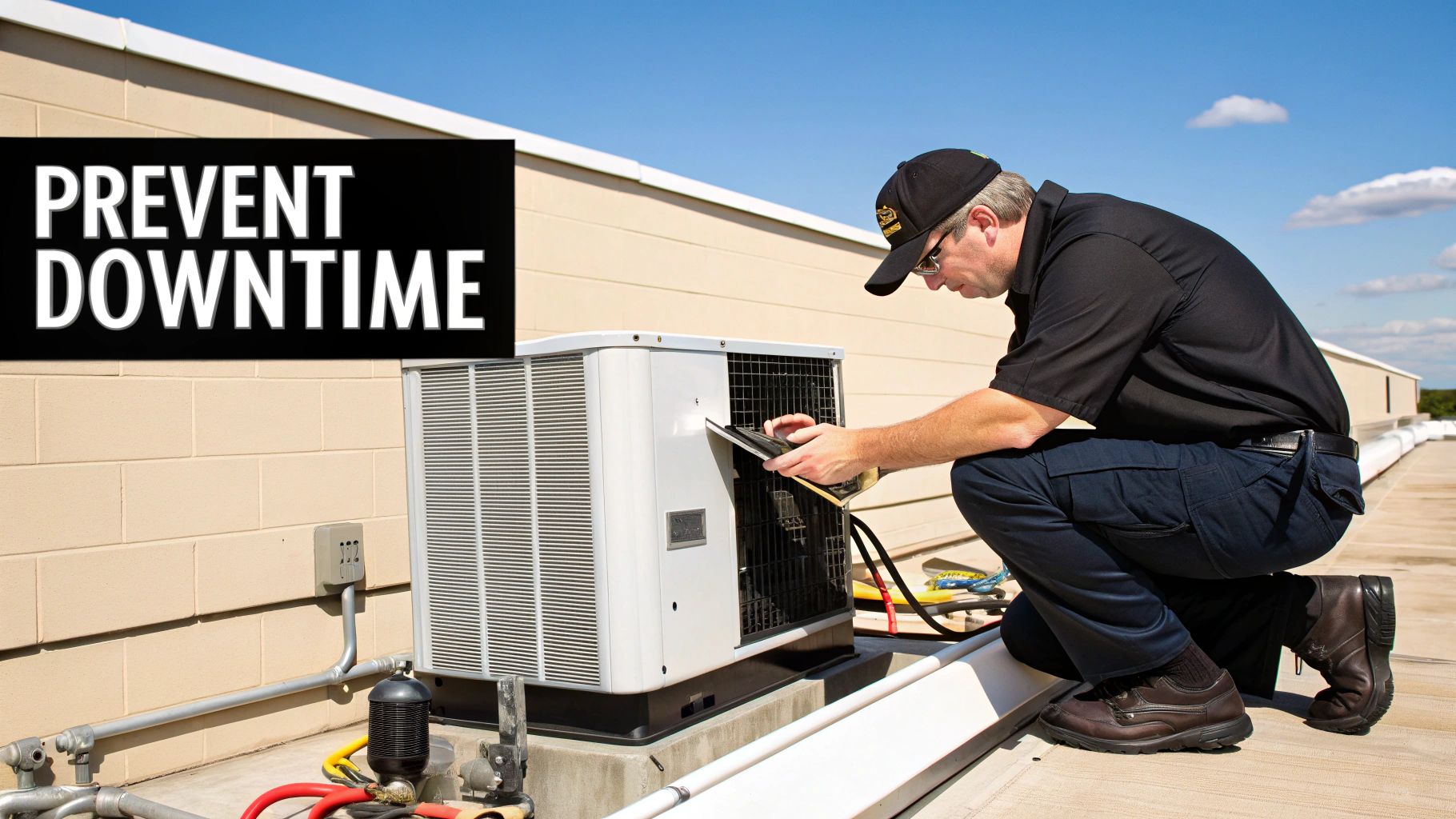
It’s all about getting ahead of problems instead of just reacting to them. To really get it, you need to be clear on the difference that comes from understanding proactive versus reactive maintenance. One approach is about planning and foresight; the other is about scrambling to fix things after they’ve already broken, usually at the worst possible moment.
Preventing Catastrophic Failures and Extending Lifespan
The most obvious win from a maintenance contract is dodging those massive, facility-halting breakdowns. Think of it like changing the oil in your company's vehicles. If you ignore it, you’re not saving money; you’re just waiting for the engine to seize up, leaving you with huge repair bills and vehicles out of commission. A neglected HVAC system is the exact same kind of ticking time bomb.
A small, easy-to-miss issue like a fraying fan belt can quickly spiral into a total motor burnout, knocking out the climate control for your entire building. Those emergency repair calls aren't just expensive; they come with premium after-hours labor rates. Regular check-ups catch these minor problems when they're still minor, turning a potential disaster into a quick, low-cost fix.
This consistent attention also dramatically extends the life of your equipment. An HVAC system is a major capital investment. Proactive service is how you protect it, pushing those huge replacement costs much further down the road.
Optimizing Energy Consumption and Reducing Costs
A poorly maintained HVAC system is an energy hog. It works harder, not smarter. When coils are dirty, filters are clogged, and refrigerant levels are off, the entire system has to burn more power just to keep up. That inefficiency hits you directly on your monthly utility bills.
A well-maintained commercial HVAC system can be up to 40% more efficient than a neglected one. That translates directly into substantial, year-round savings, often enough to completely cover the cost of the maintenance contract itself.
Scheduled tune-ups get your system running at peak performance. Technicians clean essential components, calibrate thermostats, and double-check every setting to make sure you're getting the most out of every dollar you spend on energy. This doesn't just lower your operating costs; it shrinks your facility's carbon footprint, too.
Improving Indoor Air Quality and Occupant Satisfaction
Never underestimate the connection between your building's air quality and the well-being of the people inside it. A well-kept HVAC system is your best defense against poor indoor air quality (IAQ). During regular service, technicians clean or swap out filters that trap dust, pollen, and other junk floating in the air.
They also inspect and clean ductwork and drain pans, which stops mold and bacteria from growing and getting circulated through your building. This focus on clean air pays off in several ways:
Increased Productivity: Studies show clean air improves focus and leads to fewer sick days for employees.
Enhanced Tenant Retention: For commercial landlords, a comfortable and healthy environment is a huge factor in keeping tenants happy and renewing their leases.
Healthier Environment: It simply creates a safer space for everyone, especially people with allergies or respiratory issues.
These principles apply everywhere, and you can see how the top benefits of HVAC maintenance scale up from residential to commercial settings.
Ensuring Regulatory Compliance and Safety
Finally, a scheduled service plan helps you stay on the right side of safety regulations and industry codes. HVAC systems, especially units with combustion parts, need regular inspections to prevent serious risks like carbon monoxide leaks.
A maintenance contract gives you a clear paper trail of professional service. This documentation is gold for insurance purposes and regulatory audits, proving you’ve done your due diligence to maintain a safe environment for your employees, customers, and tenants.
Comparing HVAC Service Contract Types
Not all commercial HVAC maintenance contracts are created equal. Trying to find the right one can feel a lot like picking a tool out of a toolbox; a one-size-fits-all approach just doesn't cut it for complex commercial buildings. The first step is to really understand the different kinds of agreements out there so you can line up your facility's needs with your budget.
Think of these contracts as existing on a spectrum. At one end, you have your basic, proactive check-ups. At the other, you’ve got all-inclusive coverage that’s more like a comprehensive insurance policy for your equipment. Your final choice will come down to your tolerance for risk, the age and condition of your systems, and how predictable you need your maintenance budget to be.
The image below breaks down the core pieces that make up a typical commercial HVAC maintenance contract, from the planned inspections to the unexpected repairs.
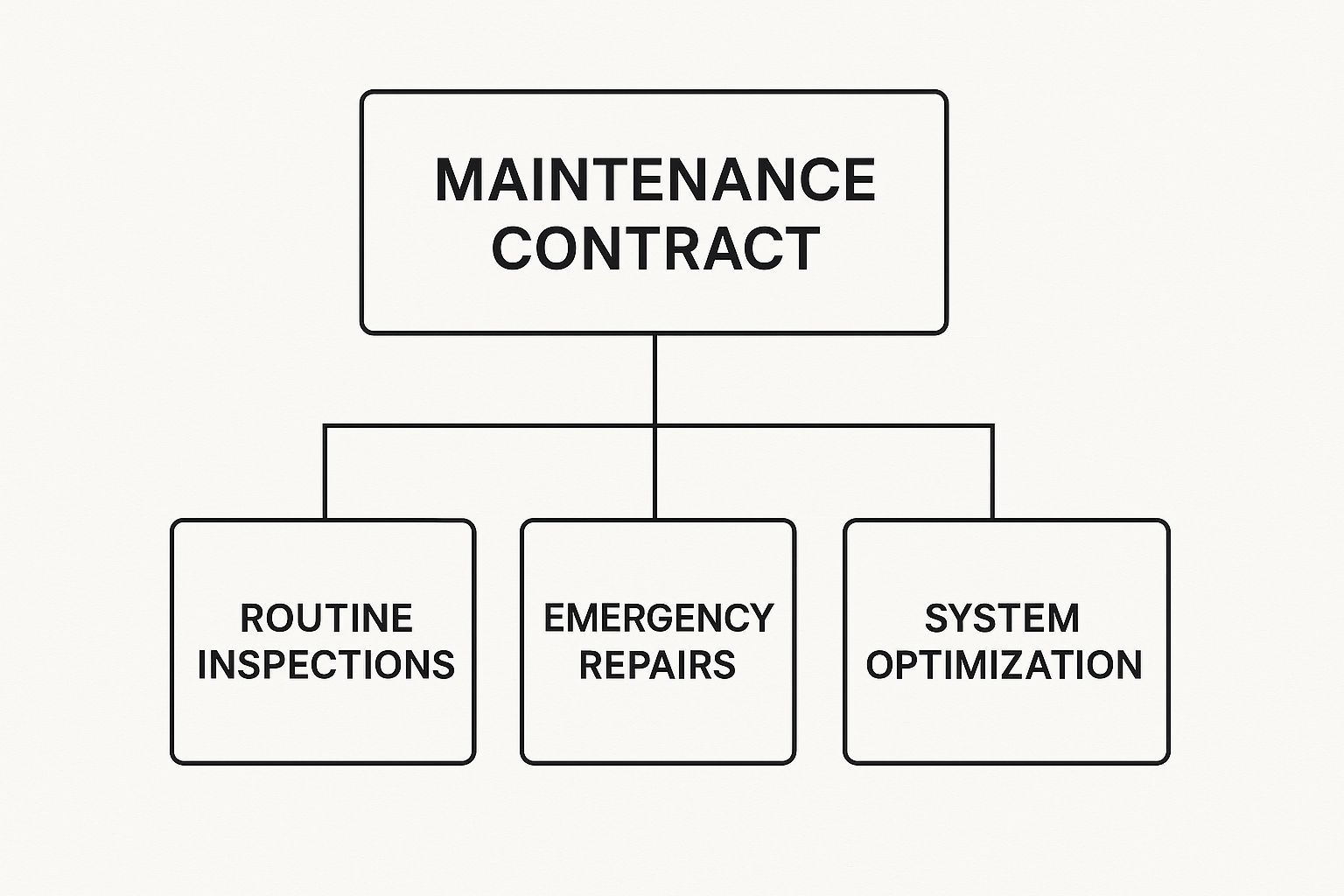
As you can see, a solid agreement finds the right balance between scheduled visits and being ready to jump on emergency repairs, all while optimizing your system's performance for the long haul. Let's dig into the most common contract types you'll come across.
Preventive Maintenance Agreements
A preventive maintenance agreement is the absolute foundation of any good HVAC care plan. Its main job is to handle scheduled inspections, cleanings, and the kind of basic upkeep that keeps your system humming along efficiently. The goal here is simple: catch small problems before they become big, expensive ones. It's like an annual physical for your equipment.
Under this plan, a technician will show up on a set schedule, usually quarterly or semi-annually, to run through a detailed checklist. This proactive approach is essential for good HVAC health.
These agreements almost always cover:
Routine Inspections: A deep dive into all the system's components.
Filter Changes: Swapping out old air filters to maintain healthy airflow and indoor air quality.
Cleaning: Wiping down coils, drain pans, and other key parts to keep efficiency high.
Lubrication: Oiling motors and other moving parts to cut down on wear and tear.
It's important to remember, though, that if the technician finds something that needs fixing, the parts and labor for that repair are usually billed separately. This makes it a fantastic, cost-effective option for newer systems that are unlikely to fail, but it's less ideal for older, more temperamental equipment.
Full-Service Contracts
If you're looking for the most comprehensive protection, a full-service contract is what you want. Sometimes called a full-coverage agreement, this plan includes everything from the preventive maintenance package but adds coverage for labor, parts, and those dreaded emergency service calls. It’s the closest thing you'll find to an all-inclusive insurance plan for your HVAC system.
This model is all about budget predictability. You pay one fixed fee, and the contractor takes on the financial risk for most potential breakdowns. For any facility manager who needs to stick to a strict budget without getting blindsided by surprise repair bills, this option is a lifesaver.
A full-service contract transforms your HVAC maintenance from a variable, unpredictable expense into a fixed, manageable operational cost. This stability is invaluable for long-term financial planning and asset management.
While these contracts come with a higher price tag upfront, they can save you a ton of money over time, especially if your facility has aging equipment or systems that are absolutely critical to your operations, like in a hospital or a data center. The peace of mind and financial security it provides are its biggest selling points.
Custom and Hybrid Contracts
Sometimes, a standard, off-the-shelf contract just won't work for a facility with unique needs. That's where custom contracts come in. These agreements are tailored to your specific situation, mixing and matching elements from both preventive and full-service models. This lets you build a plan that's a perfect fit for your equipment and operational demands.
For instance, a manufacturing plant might need highly specialized maintenance for its industrial chillers but only basic preventive care for its office air conditioning units. A custom plan can be structured to reflect that, which helps optimize costs by ensuring you aren't paying for full coverage you don't need.
This kind of flexibility makes it a great choice for:
Facilities with specialized equipment that requires non-standard service.
Buildings with a mix of old and new systems, where different levels of coverage make sense.
Organizations with unique operational hours that need service outside of a typical 9-to-5 schedule.
When it comes to picking the best commercial HVAC maintenance contract, there's no single right answer. It's all about finding the one that gives you the right level of service and financial protection for your unique circumstances.
To make the choice a bit clearer, let's break down these common contract types side-by-side.
Comparison of Commercial HVAC Contract Types
Contract Type | Scope of Work | Best For | Cost Structure |
|---|---|---|---|
Preventive Maintenance | Scheduled inspections, cleaning, filter changes, and lubrication. Repairs are billed separately. | Newer systems with low failure risk; budget-conscious facilities that can absorb occasional repair costs. | Lower, fixed fee for scheduled visits. Variable costs for any repairs needed. |
Full-Service | Includes all preventive tasks plus labor, parts, and emergency service for most repairs. | Aging or critical systems; facilities needing a predictable, fixed annual maintenance budget. | Higher, all-inclusive fixed fee that covers most potential expenses. |
Custom/Hybrid | A tailored mix of preventive and full-service elements based on specific equipment or facility needs. | Facilities with specialized equipment or a mix of system ages; unique operational requirements. | Varies widely. Can be a fixed fee with specific exclusions or a tiered pricing model. |
Ultimately, this table highlights the trade-offs between cost, coverage, and budget predictability. A simple preventive plan is great for reliable equipment, while a full-service agreement offers total peace of mind for more demanding or older systems. The custom route lets you build something that's just right for your unique facility.
Getting Into the Weeds: What Your HVAC Contract Really Says
A commercial HVAC maintenance contract is way more than a handshake deal. All the real value, and the potential pitfalls, are buried in the fine print. Signing on the dotted line without digging into the details is like trying to navigate a new city without a map; you’re bound to run into unexpected costs and service gaps. Taking the time to really understand every clause ensures what you think you're paying for is exactly what you get.
This isn't just good practice; it's essential in a booming market. The HVAC maintenance service world was valued at a massive USD 92.8 billion in 2024 and is expected to climb to USD 146.46 billion by 2032. As more facilities rely on these agreements to keep systems running and meet energy standards, getting total clarity is non-negotiable. You can learn more about these market trends on stellarmr.com.
Before you sign anything, treat that document like a pre-flight checklist. Every single clause needs to be clear, fair, and perfectly aligned with how your facility actually operates.
Scrutinizing the Scope of Work
The "Scope of Work" is the absolute heart and soul of your contract. This section should lay out, in painstaking detail, every single task the provider will handle during their visits. Any ambiguity here is a major red flag.
A vague promise like a "routine system check" just doesn't cut it. A solid contract will get specific, listing out actions like "inspect and clean condenser coils," "lubricate all moving parts," "test thermostat calibration," and "check refrigerant levels." This kind of detail heads off arguments down the road about what was or wasn't included.
A well-defined Scope of Work acts as a shared set of expectations. It protects both you and the provider by creating a clear, actionable list of responsibilities that leaves no room for misunderstanding.
Think of it this way: you wouldn't accept an invoice from your mechanic that just says "car repair." You'd demand an itemized list of parts and labor. Apply that same level of scrutiny to your HVAC contract to make sure you have total transparency.
Clarifying Emergency Service Protocols
When a key piece of equipment goes down on a sweltering holiday weekend, the exact definition of "emergency service" becomes incredibly important. Your contract needs to spell out the terms of emergency support with zero ambiguity.
Don't skim past these critical questions:
What is the guaranteed response time? The contract must specify how quickly a technician will be on-site after you place an emergency call. Is it within two, four, or six hours?
What are the hours of coverage? Be suspicious of fuzzy terms like "standard business hours." The contract should define the exact days and times. Is 24/7/365 coverage included, or does it cost extra?
Are there additional fees? Make sure you understand the pricing for after-hours, weekend, and holiday service calls. This will save you from sticker shock when you're already in a tough spot.
For instance, a contract defining business hours as 8 a.m. to 5 p.m., Monday through Friday, could stick you with premium charges for a breakdown at 5:30 p.m. on a Friday. You need absolute clarity here.
Understanding Exclusions and Termination Clauses
Just as important as knowing what’s covered is knowing what’s not. The "Exclusions" section is where you'll find the list of repairs, parts, or situations that fall outside the agreement. It's common to see things like major component failures (think compressor or heat exchanger replacements) or damage from external events like power surges or natural disasters.
Reading this section carefully helps you understand the boundaries of your coverage so you can budget for potential out-of-pocket costs. At the same time, the "Termination Clause" defines how you or the provider can end the partnership. Look for a reasonable notice period, like 30 or 60 days, and make sure there are no crazy penalties for ending the contract early if the service quality doesn't hold up. This clause is your escape hatch if things go south.
How to Select the Right HVAC Service Partner
Choosing a provider for your commercial HVAC maintenance contract is about more than just finding the lowest bidder. You're not just hiring someone to fix things; you’re selecting a long-term partner who will be responsible for one of your building's most critical and expensive assets.
Get this decision right, and you’ll have a reliable expert in your corner. Get it wrong, and you could be facing down costly disruptions, surprise expenses, and a whole lot of headaches. Think of it like hiring a key employee: you need to look past the sales pitch and really dig into their qualifications, track record, and how they operate.
Verifying Essential Credentials
Before you even start talking about contract details, there are some non-negotiables you need to check off. This initial screening is your first line of defense, quickly weeding out any unqualified providers and protecting your facility from some serious liability risks.
First up, licenses and insurance. A legitimate HVAC contractor must hold all the necessary state and local licenses to operate legally. You’ll also want to see proof of general liability and worker’s compensation insurance. This isn't just a piece of paper; it’s what protects you if an accident happens on your property.
Next, look for certifications that show they’ve gone the extra mile.
NATE Certification: North American Technician Excellence (NATE) is the gold standard in our industry. It confirms a technician knows their stuff in real-world situations, not just from a textbook. A company that invests in NATE-certified techs is a company that invests in quality.
Manufacturer Certifications: Does your facility run on Trane, Carrier, or another specific brand? A partner with certifications from that manufacturer will have specialized, in-depth knowledge of your exact systems, which can be a game-changer.
Assessing Technical Proficiency and Experience
Once you've confirmed the basics, it’s time to find out if they can actually handle a facility like yours. Being licensed and insured is one thing, but having proven success with your specific type of building is another. This is where you need to ask for proof.
Request references from other facility managers who run buildings of a similar size and purpose. The needs of a large office complex are completely different from a refrigerated warehouse or a healthcare clinic. Talking to their current clients gives you an unfiltered look at their reliability, communication style, and how they solve problems when things go wrong.
The ultimate measure of a good service partner is their ability to offer transparent insights and strategic recommendations, not just quick fixes. They should function as an extension of your facility management team, actively working to optimize performance and reduce long-term costs.
You should also ask about their team's experience with your specific equipment and what kind of diagnostic tools they use. A top-tier partner will be fluent in the language of your systems and use modern technology for accurate troubleshooting, a cornerstone of effective commercial HVAC preventative maintenance. This technical alignment means faster service and smarter recommendations. Using a good contractor management software can also help you track their efficiency and hold them accountable.
Evaluating Communication and Reporting Standards
Finally, a true partnership is built on clear, consistent communication. How a provider reports their findings, schedules visits, and makes recommendations is just as important as their technical skill.
Look for a company that provides detailed service reports after every single visit. These reports should clearly outline the work they performed, any issues they found, and practical suggestions for future improvements. This transparency is key to helping you make informed decisions and keeping a clean, clear record of your system’s health over time.
This is especially true as smart HVAC systems become more common. The global HVAC maintenance market is expected to jump from USD 150 billion in 2025 to roughly USD 260 billion by 2033, and a lot of that growth is driven by IoT tech that allows for remote monitoring and predictive maintenance. A forward-thinking partner will be on top of these trends, giving you better insights into your system's performance.
Investing in Your Facility's Future
When we boil it all down, a commercial HVAC maintenance contract isn't just another line item on your expense report. It's a strategic investment in the health, reliability, and long-term value of your entire facility. Making the shift from a reactive, "fix-it-when-it-breaks" mindset to proactive care is what separates the facilities that run smoothly from the ones that are always putting out fires.

This approach is about more than just maintenance; it's about asset protection. You're shielding your most critical equipment from premature failure, cutting down on energy waste, and guaranteeing a safe, comfortable space for everyone who walks through your doors. When you find the right contract and the right partner, you're essentially building predictability and stability right into your operations.
From Insight to Action
The big takeaway here is simple: proactive care is the only smart way to manage complex mechanical systems. It transforms a potential liability into a dependable asset that actively supports your business goals. By getting ahead of problems instead of just reacting to them, you stay in control of your budget and your building’s environment.
A well-structured maintenance agreement is a commitment to operational excellence. It ensures your systems support business continuity, enhance occupant well-being, and contribute positively to your bottom line.
Now is the perfect time to take a hard look at your current maintenance strategy. Use what you've learned in this guide to see where your existing plan stacks up and find those opportunities for improvement. The informed decision you make today will support your business's efficiency and success for years to come.
Taking the Next Steps
The path to a fully optimized facility starts with a single, clear step. When you prioritize scheduled maintenance, you're doing more than just preventing breakdowns; you're investing in a more efficient and profitable future.
To help you get the ball rolling, check out our guide on commercial HVAC preventive maintenance tips to save money. It’s packed with practical advice you can put into action right away. A proactive partnership empowers you to move forward with confidence, knowing your facility is in good hands.
A Few Common Questions
Even with all the details, you probably still have a few practical questions kicking around. It's completely normal. Let's tackle some of the most common things facility managers ask when they're getting ready to sign a commercial HVAC maintenance contract.
How Often Should a Commercial System Be Serviced?
This really depends on your building's specific situation: the age of your equipment, how hard you run it, and the environment it’s in. For the majority of commercial properties, semi-annual inspections are the sweet spot. Think one visit in the spring to prep for cooling and another in the fall to get ready for heating season.
But some places need a closer eye. A restaurant with a busy kitchen exhaust system or a manufacturing plant with a lot of dust in the air? Those facilities often benefit from quarterly visits to keep things from getting clogged up and to maintain peak efficiency. Your HVAC provider should be able to give you a solid recommendation after taking a look at your setup.
What Is Not Typically Covered in a Contract?
Knowing what isn't included is just as crucial as knowing what is. While every contract is different, most standard agreements won't cover a few key things:
Major Component Failures: Think catastrophic breakdowns of the big-ticket items like compressors, heat exchangers, or chiller barrels. These are usually outside the scope of a basic plan and are billed separately.
System Replacement: A maintenance contract is all about keeping your current system healthy, not replacing it when it reaches the end of its life.
Damage from External Factors: Things like vandalism, natural disasters, major power surges, or damage caused by another contractor are almost always excluded.
Always take a minute to read the "Exclusions" section of any proposal. It'll save you from any unwelcome surprises down the road.
The goal of a maintenance contract is proactive care and repair, not insurance against every possible scenario. Clarifying these boundaries upfront ensures a transparent and effective partnership with your service provider.
Is It Better to Pay for Service as Needed?
Paying for service only when something breaks might feel like you're saving money at first, but it almost always leads to higher costs and bigger headaches in the long run. When you operate this way, you’re in a reactive mode, only calling for help after a system has failed. That means you're stuck with expensive emergency fees and costly downtime.
A maintenance contract flips the script, moving you into a proactive model. Small problems get caught and fixed before they turn into major disasters, your energy efficiency stays high, and your equipment lasts longer. If you want to dig deeper into this, our article on whether an AC maintenance plan is worth it breaks it down with insights that apply just as well to commercial systems.
Can I Customize My Maintenance Agreement?
Absolutely. In fact, you should. Any reputable HVAC contractor knows that a cookie-cutter plan just doesn't work for most commercial buildings. A custom or hybrid contract is often the smartest way to go.
You can work directly with a provider to build an agreement that fits your exact equipment, operating hours, and budget. Maybe that means getting full-service coverage for your most critical systems while using a basic preventive plan for less essential units. This kind of flexibility is what ensures you're only paying for the protection you truly need and getting the most value out of your investment.
Ready to build a reliable maintenance strategy for your commercial property? The expert team at Covenant Aire Solutions designs customized commercial HVAC maintenance contracts that protect your assets and fit your budget. Contact us today to schedule a consultation and ensure your facility runs efficiently all year round.