
Fix: pilot light keeps going out on furnace, quick, safe fixes
When your furnace pilot light keeps going out, the most common troublemaker is a faulty or dirty thermocouple. It's a small but critical safety device. Other frequent culprits include strong drafts blowing the flame out or a clogged pilot orifice starving it of fuel.
Figuring out which one is causing your headache is the first step to getting a reliable fix.
Understanding Why Your Furnace Pilot Light Goes Out
A furnace pilot light has one essential job: to ignite the main burners whenever your thermostat calls for heat. Think of it as a tiny, constant flame standing guard, ready to spring into action. When this flame repeatedly goes out, your furnace can't do its job, leaving you in the cold.
This problem almost always points to a handful of specific issues, each with its own tell-tale signs.
Most often, if your pilot lights but immediately dies the second you let go of the control knob, the problem is almost certainly the thermocouple. This is a small metal rod that sits right in the pilot flame. It generates a tiny electrical current to signal that a flame is present, which keeps the gas valve open.
The Critical Role of the Thermocouple
When a furnace pilot light keeps going out, the issue is very often a worn-out thermocouple. This crucial safety component is constantly exposed to heat, and over time, that exposure takes its toll.
Safety experts at organizations like InterNACHI point out that thermocouples degrade from their constant exposure to the pilot's flame. This increases their electrical resistance and makes them less effective as a flame sensor. When a thermocouple fails, it can't tell the gas valve to stay open, or worse, it might fail in a way that allows gas to flow even after the pilot light is out, creating a dangerous situation.
A healthy pilot flame is your furnace's first line of defense. It should be a strong, steady blue flame. A weak, flickering, or mostly yellow flame is a clear warning sign of an underlying issue, like a dirty orifice or poor gas pressure.
Beyond the Usual Suspect
While a faulty thermocouple is the prime suspect in over 70% of cases, other factors can cause your pilot light to fail. Pinpointing the right one is key to a lasting solution.
Strong Drafts: Even a small draft from a poorly sealed furnace cover, a nearby window, or a powerful vent fan can be enough to blow out the pilot flame. It doesn't take much.
Dirty Pilot Orifice: The pilot orifice is a tiny opening that delivers gas to the pilot assembly. Over time, dust and debris can clog it up, restricting gas flow. This results in a weak, unstable flame that's easily extinguished.
Gas Pressure Problems: Inconsistent or low gas pressure from the main supply line can also prevent the pilot light from staying lit, though this is less common and would likely affect other gas appliances in your home.
Understanding these potential causes will prepare you for the troubleshooting steps ahead. And for those new to their heating system, it's also helpful to learn how to tell if your furnace is gas or electric in our guide.
To help you narrow down the issue quickly, here’s a look at the most common problems you might encounter.
Quick Diagnosis: Common Pilot Light Problems
Symptom | Likely Cause | Recommended Action |
|---|---|---|
Pilot lights but goes out as soon as you release the knob. | The thermocouple is likely faulty, dirty, or misaligned. | Clean or reposition the thermocouple. If that fails, it needs to be replaced. |
The pilot flame is weak, yellow, and/or flickers. | A clogged pilot orifice is starving the flame of fuel. | Turn off the gas and carefully clean the orifice with a fine wire or compressed air. |
Pilot light goes out randomly, especially when the main burners kick on. | Strong drafts are blowing the flame out. | Check for drafts from unsealed panels, vents, or nearby windows. Ensure the furnace cover is secure. |
The pilot light won't light at all, or the flame is very small. | Could be a gas supply issue or a severely clogged orifice. | Verify the gas valve to the furnace is open. If so, and cleaning doesn't help, check other gas appliances. |
This table should give you a solid starting point for diagnostics. Remember, working with gas appliances requires care and attention to safety. If you ever feel unsure, it's always best to call in a professional.
A Practical Guide to Safely Relighting Your Pilot
Before we can figure out why your furnace pilot light keeps going out, you first have to know how to relight it safely. Trying to troubleshoot the problem without following the proper relighting steps can be risky, so it’s worth taking a moment to get this part right.
The first and most important step is always safety. Find the main gas valve for your furnace and turn it to the OFF position. This is non-negotiable; it completely stops the flow of natural gas to the furnace.
Once the gas is off, you have to wait. Give it at least five to ten minutes. This allows any leftover gas that might have built up in the combustion chamber to clear out. It's a simple step, but one that homeowners often skip, which creates a serious safety hazard.
Finding and Lighting the Pilot Assembly
With the area clear, it's time to locate the pilot assembly. You're looking for a small metal box near the main burners, usually with a control knob that has "ON," "OFF," and "PILOT" settings. Most furnaces have a diagram right on the inside of the service panel door that will point you in the right direction.
The next steps depend on the age and model of your furnace.
Older Systems (Manual Ignition): These require a long-stemmed lighter or a match. You'll turn the gas knob to the "PILOT" position, then press and hold it down. This action manually opens the valve that feeds gas to the pilot tube. While you’re holding it, bring your lighter flame to the tip of the pilot tube until it ignites.
Newer Systems (Igniter Button): These are a bit easier. Just like the older models, turn the knob to "PILOT" and press and hold it down. While holding it, press the red or black igniter button. You should hear a distinct click as the igniter sparks and lights the pilot flame.
No matter which method you use, you must continue holding the pilot knob down for a full 60 seconds after the flame lights up. This is critical. It gives the thermocouple enough time to get hot and send a signal to the gas valve, telling it to stay open.
Releasing the pilot knob too soon is one of the most common mistakes people make, and it causes the flame to go out instantly. Be patient, give the thermocouple a full minute to heat up before you slowly let go of the knob.
After you release the knob, the pilot should stay lit on its own. If it does, you can now turn the knob from "PILOT" to the "ON" position. Your furnace should kick on as normal the next time the thermostat calls for heat.
So, what if it doesn't stay lit? The infographic below shows the three most common culprits.
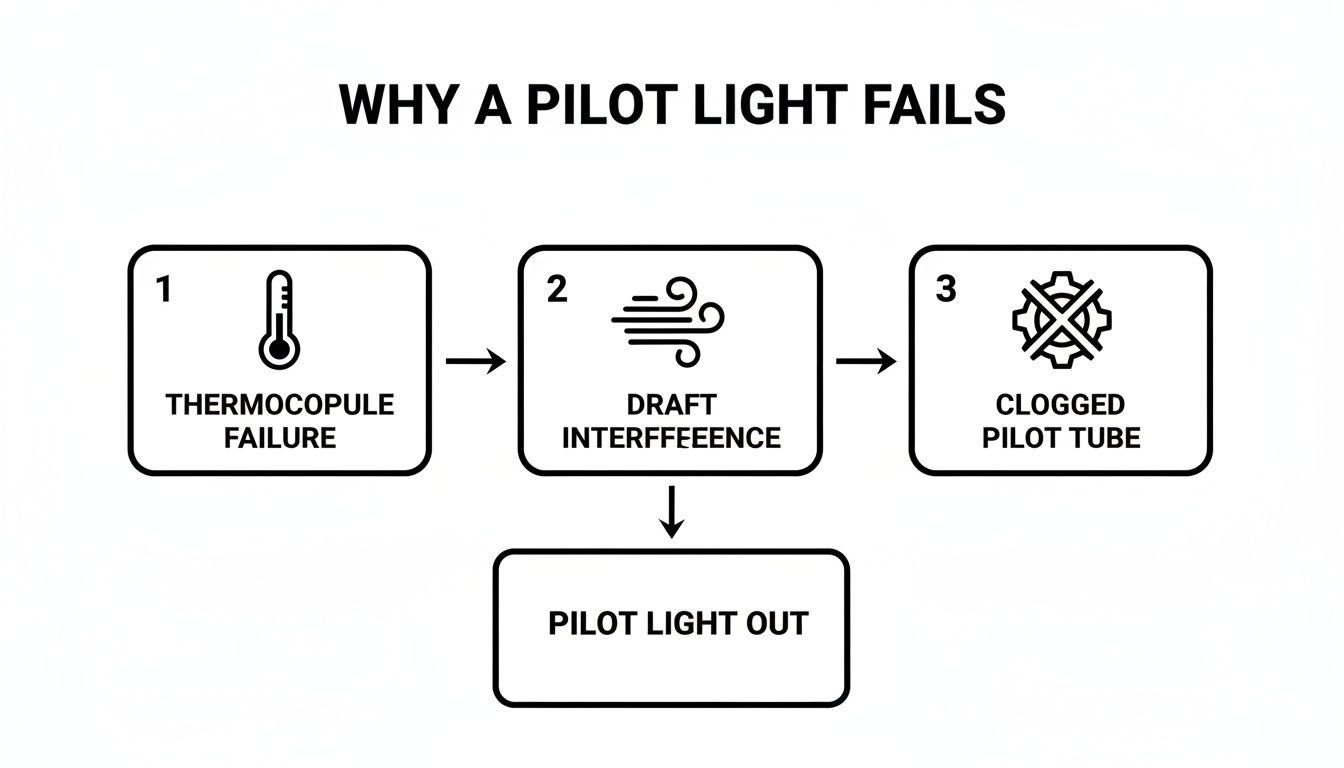
As you can see, a bad thermocouple, a strong draft, or a simple clog can be enough to interrupt your furnace’s operation. If you think drafts from blocked vents might be the problem, our guide on how to clean a furnace vent pipe offers some great tips.
How to Diagnose a Faulty Thermocouple
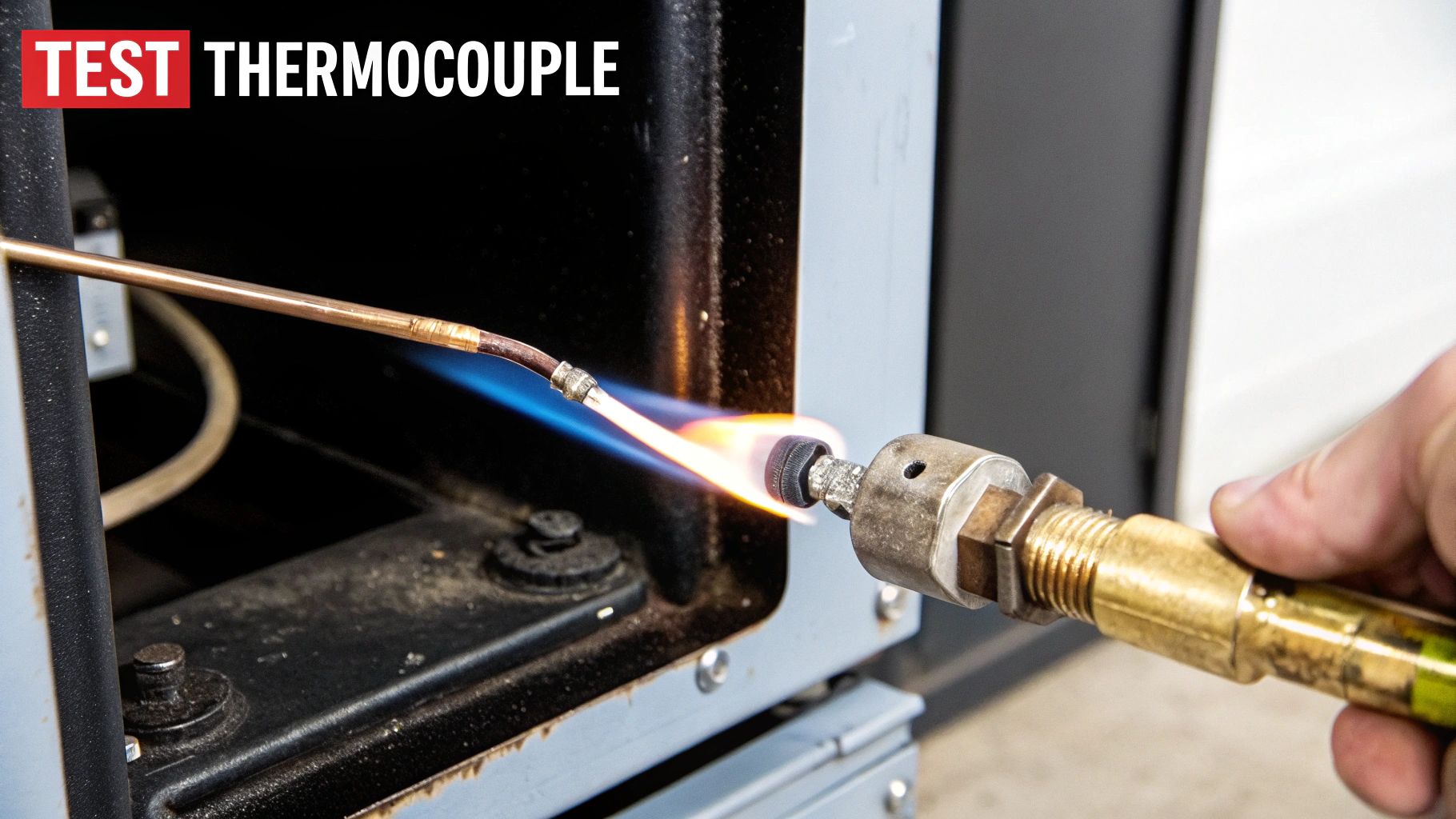
So, you went through the trouble of relighting the pilot, held the knob down for what feels like an eternity, and the second you let go... poof. The flame is gone. If this sounds familiar, you've just met the number one suspect behind a pilot that won't stay lit: a bad thermocouple.
This little sensor is, by far, the most common reason a pilot light keeps going out on a furnace. It’s a simple but brilliant safety device. When the pilot flame heats its metal tip, the thermocouple generates a tiny electrical current, usually around 25-30 millivolts. This small charge is just enough to tell the gas valve, "Hey, the pilot is lit, it's safe to stay open."
When the thermocouple goes bad, it stops producing that voltage. The gas valve's safety mechanism kicks in and shuts off the gas to prevent a dangerous leak. That's why the flame dies the instant you release the knob you were holding down.
Start With a Visual Inspection
Before you even think about grabbing tools, just take a look. A healthy pilot light is a crisp, steady blue flame. If you're seeing a lazy, yellow, or flickering flame, it’s probably not generating enough heat to do the job, even if the thermocouple itself is perfectly fine.
Flame Color: You want to see a strong blue flame. A yellow-tipped flame means it's not burning efficiently, likely due to a dirty pilot orifice that’s starving it for fuel.
Flame Contact: Make sure the flame is completely bathing the top 1/2 inch of the thermocouple's tip. If it's just barely touching the side, it won't get hot enough to create the necessary voltage.
If the flame looks weak, you need to address that first. After turning off the gas supply, you can often clear a clog in the pilot orifice with a thin needle or a quick blast of compressed air. Once you have a strong, blue flame, you can properly test the thermocouple.
Check the Thermocouple's Condition and Position
Next, get a close look at the thermocouple itself. Constant exposure to an open flame takes its toll, and you're looking for any obvious signs of wear and tear.
Here's what to check for:
Soot and Corrosion: A buildup of black soot can act like an insulator, preventing the thermocouple from getting hot enough. If it looks dirty, shut off the gas and gently clean the tip with a bit of fine-grit sandpaper or a wire brush until the copper is shiny again.
Physical Damage: Scan the copper line for any sharp kinks, cracks, or serious bends. Any damage can interrupt the electrical signal it's trying to send.
Proper Positioning: Sometimes, the thermocouple just gets bumped out of alignment. It needs to be right in the path of the pilot flame. You can often carefully bend it back into the sweet spot.
Secure Connection: Follow the copper line back to the main gas valve. Check that the nut connecting it is snug. It doesn't need to be cranked down hard, but a loose connection will cause the signal to fail.
If you've cleaned it, made sure it's sitting in a strong blue flame, and tightened the connection, and the pilot still goes out, the thermocouple has probably failed internally. At that point, the best move is to replace it.
What Else Could Be Causing the Pilot to Go Out?
So, you’ve checked the thermocouple and it seems to be in good shape. What now? While a faulty thermocouple is hands-down the most common reason a pilot light keeps going out on a furnace, it’s definitely not the only possibility. Often, the real culprit is something simpler that you can fix without needing to replace any parts.
A lot of the time, the problem is just a simple draft. That little pilot flame is steady, but it's not very strong. It’s surprising how little moving air it takes to snuff it out, leaving you in a frustrating cycle of relighting it over and over.
The Problem with Drafts and Airflow
Think of your pilot flame like a candle in a hallway. A door slamming shut at the other end can create enough of a draft to blow it out, and the same thing happens inside your furnace. These drafts can sneak in from a few places, and figuring out the source is the key to solving the problem.
Loose Furnace Panels: The most likely source is a cover panel that isn't seated properly. If that access door has even a small gap, it can create a cross-draft that extinguishes the flame, especially when the main blower fan kicks on with a whoosh of air.
Nearby Vents: Take a look around the furnace. Is there a supply or return air vent located close by? Air blasting out of your HVAC system can create just enough turbulence in the utility closet to cause problems for the pilot.
Inducer Motor Issues: On some furnaces, a draft inducer motor helps pull exhaust fumes out safely. If this motor is on the fritz, it can mess with the air pressure inside the furnace and disrupt the pilot flame’s stability. If you want to get a better handle on this part, you can check out what a furnace inducer motor does in our quick guide.
You can do a quick draft check yourself pretty easily. First, make sure every furnace panel is screwed on tight and sealed properly. Then, watch the pilot flame as the main furnace blower starts up. If it flickers like crazy or just dies, a draft is almost certainly your issue.
Starving the Flame: A Clogged Pilot Orifice
Another very common problem is a clogged pilot orifice, which is basically a fuel delivery issue. The orifice is the tiny pinhole that the gas flows through to create the pilot flame. Over the years, things like dust, sediment from the gas line, or even microscopic rust particles can build up and block this opening.
When the orifice gets clogged, it effectively starves the flame of the fuel it needs. You’ll notice the flame becomes weak, maybe turning yellow and looking lazy instead of the strong, crisp blue flame you want to see. A flame that weak often can't generate enough heat to keep the thermocouple properly energized, which tells the system to shut everything down.
Pro Tip: You can often clean a clogged pilot orifice yourself with a very fine wire or even a sewing needle. After you’ve shut the gas off completely, carefully poke the wire into the orifice to break up the gunk. A quick blast from a can of compressed air can also do the trick.
Less Common (But More Serious) Culprits
If you've ruled out drafts and clogs, you might be dealing with something more complex. Though it’s less frequent, a malfunctioning main gas valve can also be the cause. The internal mechanics of the valve can wear out, leading to improper pressure regulation or even getting stuck. This is absolutely not a DIY job and requires a professional technician to diagnose and replace safely.
By methodically checking for drafts and cleaning the pilot orifice, you can confidently rule out the most common causes beyond the thermocouple. This process helps you narrow down the problem and decide if it's a simple fix or if it's time to bring in an expert.
Smart Furnace Maintenance to Prevent Future Problems
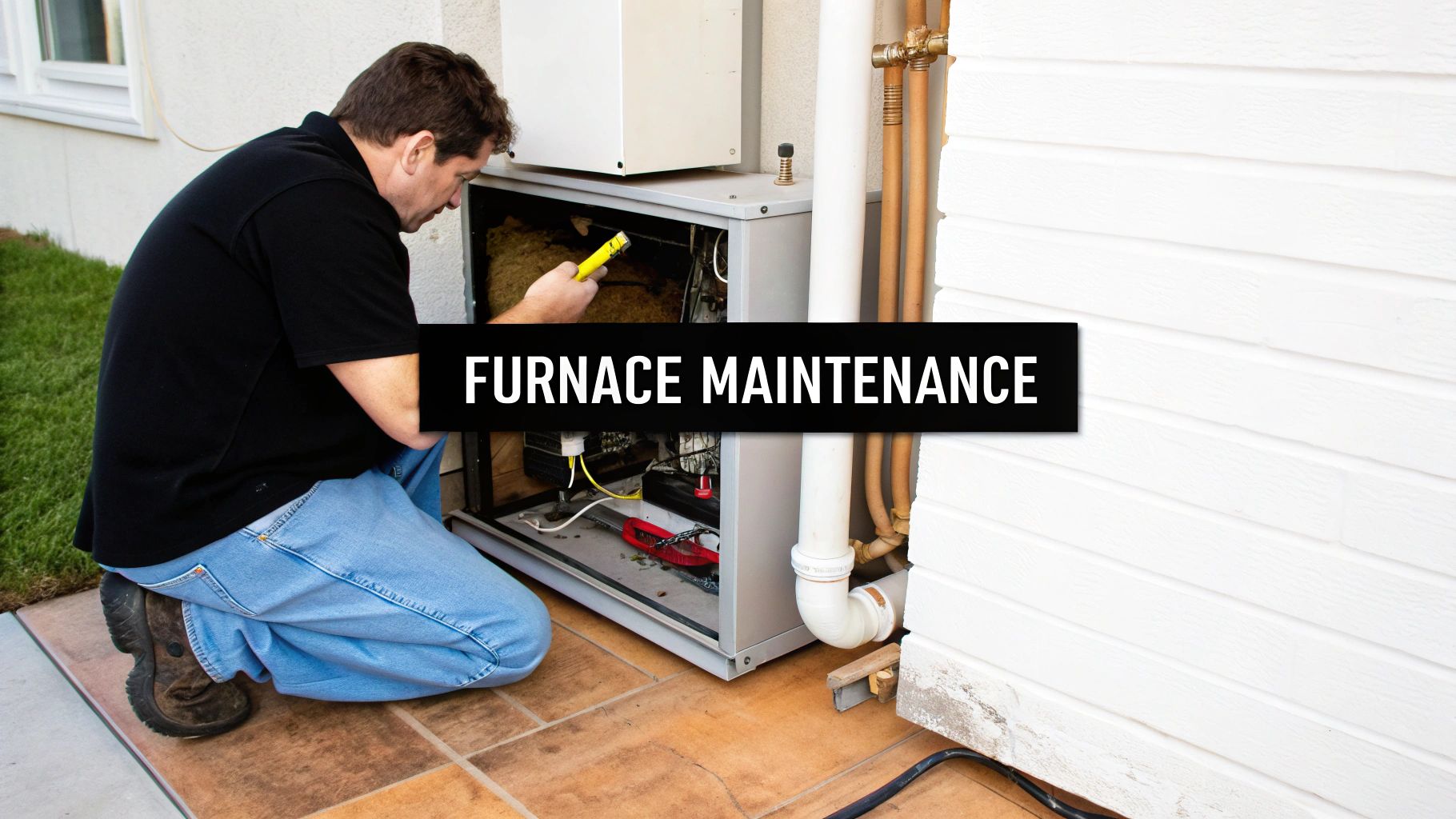
Fixing a pilot light is one thing, but making sure it doesn't fail in the first place is the real win. The most effective way to avoid being left in the cold when the temperatures drop is proactive furnace maintenance.
A few simple, preventative steps can save you the headache that comes when your pilot light keeps going out on your furnace. Many common pilot light problems, like clogs from dirt or drafts blowing out the flame, are things you can manage with a little attention. The goal here is simple: keep your system clean and sealed up tight so it can do its job.
Create a Simple Maintenance Checklist
Staying on top of your furnace’s health is so much easier when you have a plan. Honestly, a small investment of your time now can prevent a repair bill that’s 90% larger down the road. Try working these few key tasks into your regular home maintenance schedule.
Annual Professional Tune-Up: This is the one I can’t stress enough; it’s non-negotiable. A certified pro can spot issues you can’t see, perform a deep cleaning, and check critical things like gas pressure.
Keep the Area Clear: Your furnace needs space to breathe. Make sure you don't store boxes, laundry, or anything flammable within three feet of the unit. This isn't just about airflow; it’s a serious fire hazard.
Check and Seal Drafts: Do a quick inspection around your furnace every so often. If you find gaps around windows, doors, or where ductwork enters the utility room, seal them with caulk or weather stripping. A strong draft is all it takes to snuff out a pilot flame.
If you’re looking for more tips on smart maintenance practices, you might find some useful advice on AirConHeat's blog.
Cleaning the Pilot Assembly Yourself
While the deep cleaning is best left to a technician, there is some light maintenance you can do on the pilot assembly to keep things running smoothly between professional visits. This simple task is often all it takes to prevent that weak, yellow flame from developing.
First things first: shut off the gas and power to the furnace. Safety is always the top priority.
A can of compressed air is your best friend for this job. Use it to gently blow away any dust or debris that has settled on the pilot orifice and thermocouple. This simple action prevents the kind of buildup that leads to clogs and bad sensor readings.
Performing this small step once or twice a year can make a huge difference in your furnace's reliability. To see what’s included in a professional service, you can learn more about our gas furnace maintenance plans. Combining these easy DIY tasks with an annual inspection is truly the best defense against a heating emergency.
When to Stop DIY and Call a Professional
While many pilot light issues are simple enough for a confident homeowner to tackle, the most important part of any gas appliance repair is knowing your limits. We're dealing with natural gas here, and your family's safety is always the top priority. Certain signs are clear warnings that it's time to put down the tools and get a certified HVAC professional on the phone.
The biggest red flag, without a doubt, is the smell of gas. If you notice that distinct rotten egg or sulfur smell anywhere near your furnace, don't try to fix anything. Don't even try to relight the pilot. Your only move is to get everyone out of the house immediately. Once you're a safe distance away, call your gas company, and then give a professional like Covenant Aire Solutions a call for emergency service.
Recognizing Risky Situations
Beyond the immediate danger of a gas leak, other symptoms point to problems that are too complex or hazardous for a DIY approach. These issues usually involve the furnace's core components, where one wrong move can create a serious safety risk or lead to some very expensive damage.
Here are a few scenarios where calling in an expert is the only right move:
You Suspect a Faulty Gas Valve: If you've already checked the thermocouple, ruled out drafts, and cleared any clogs, the main gas valve itself might be the problem. This part controls all the gas flowing to your furnace, and trying to repair or replace it without proper training is extremely dangerous.
The Problem Is Random or Unclear: When the pilot light keeps going out on your furnace intermittently and you just can't nail down a consistent cause, you need a professional diagnostic. A technician has specialized tools, like a manometer, to check gas pressure and diagnose tricky electrical faults that aren't obvious.
You Feel Unsure or Uncomfortable: Honestly, if you feel out of your depth at any point, that’s the best reason to stop. There is absolutely no shame in calling for help; in fact, it’s the smartest and safest decision you can make.
Peace of mind is invaluable. An expert doesn't just fix the immediate problem; they perform a full safety check to ensure your furnace is operating correctly and won't become a risk down the road. This is especially true for older furnace systems, where years of wear and tear can hide multiple underlying issues.
Hiring a professional gets the job done correctly, safely, and quickly. It takes all the guesswork out of the equation and gives you confidence that your heat will be there when you need it most.
Common Questions About Furnace Pilot Lights
When your furnace starts acting up, you're bound to have questions. Let's tackle some of the most common things homeowners ask when that pilot light just won't stay lit.
How Much Does It Cost to Replace a Furnace Thermocouple?
Replacing a thermocouple is one of the more straightforward and affordable furnace repairs you'll encounter. The part itself isn't pricey, and for a pro, the job usually takes less than an hour.
Of course, the final cost can shift depending on where you live and which company you call. But a trustworthy HVAC professional will always give you a clear, upfront quote before they even pick up a tool, so you aren't blindsided by the final bill.
Is It Dangerous If My Pilot Light Keeps Going Out?
Yes, this is a situation you need to take seriously. A pilot light that repeatedly extinguishes is a big red flag. It often means a critical safety device, like the thermocouple, has failed.
Your furnace is designed to automatically shut off the gas when the flame goes out. However, if a component is malfunctioning, there's a risk of gas accumulating in your home.
If you ever smell gas, stop what you're doing. Do not try to relight the pilot or use any electronics. Leave your home immediately. Once you're a safe distance away, call your gas company's emergency line, and then call a certified HVAC professional for an emergency inspection.
Your family's safety is always the number one priority. For more on keeping your home safe, you can read our guide on how to detect carbon monoxide in your home.
Should My Pilot Light Be Blue or Yellow?
A healthy pilot flame should be a strong, steady blue, maybe with just a tiny bit of yellow at the very tip. If the flame is mostly yellow, looks weak, or is flickering all over the place, something is wrong.
This usually points to one of two issues:
A dirty pilot tube: Tiny bits of debris can clog the opening, messing with the gas flow and leading to an inefficient, weak burn.
An improper air-to-fuel mix: The system isn't getting the right amount of oxygen it needs for clean, complete combustion.
A lazy, yellow flame won't get the thermocouple hot enough to do its job, which is a classic reason a pilot light keeps going out. It's a clear signal that your furnace needs a professional tune-up to get it burning cleanly and safely again.
When the DIY troubleshooting is done and the problem persists, you need an expert you can count on. The certified technicians at Covenant Aire Solutions have the right tools and years of field experience to diagnose and fix your furnace problems safely and efficiently. Don't let a faulty pilot light leave you and your family in the cold; contact us for reliable, 24/7 service at https://www.covenantairesolutions.com.