
Protect Your Family: how to detect carbon monoxide in home
The best defense you have against carbon monoxide is a dedicated CO detector. In fact, you should have them installed on every level of your home and just outside sleeping areas. These alarms are the only truly reliable way to get an alert about this odorless, colorless gas, because our own senses are completely useless against it.
The Invisible Danger of Carbon monoxide at Home
Carbon monoxide (CO) is often called the "silent killer," and for good reason. It’s a toxic gas produced whenever common fuels, like natural gas, oil, wood, or propane, don’t burn completely. You can't see it, smell it, or taste it. This is what makes it so incredibly dangerous. A home can fill with CO, and the people inside might not realize what’s happening until it's far too late.
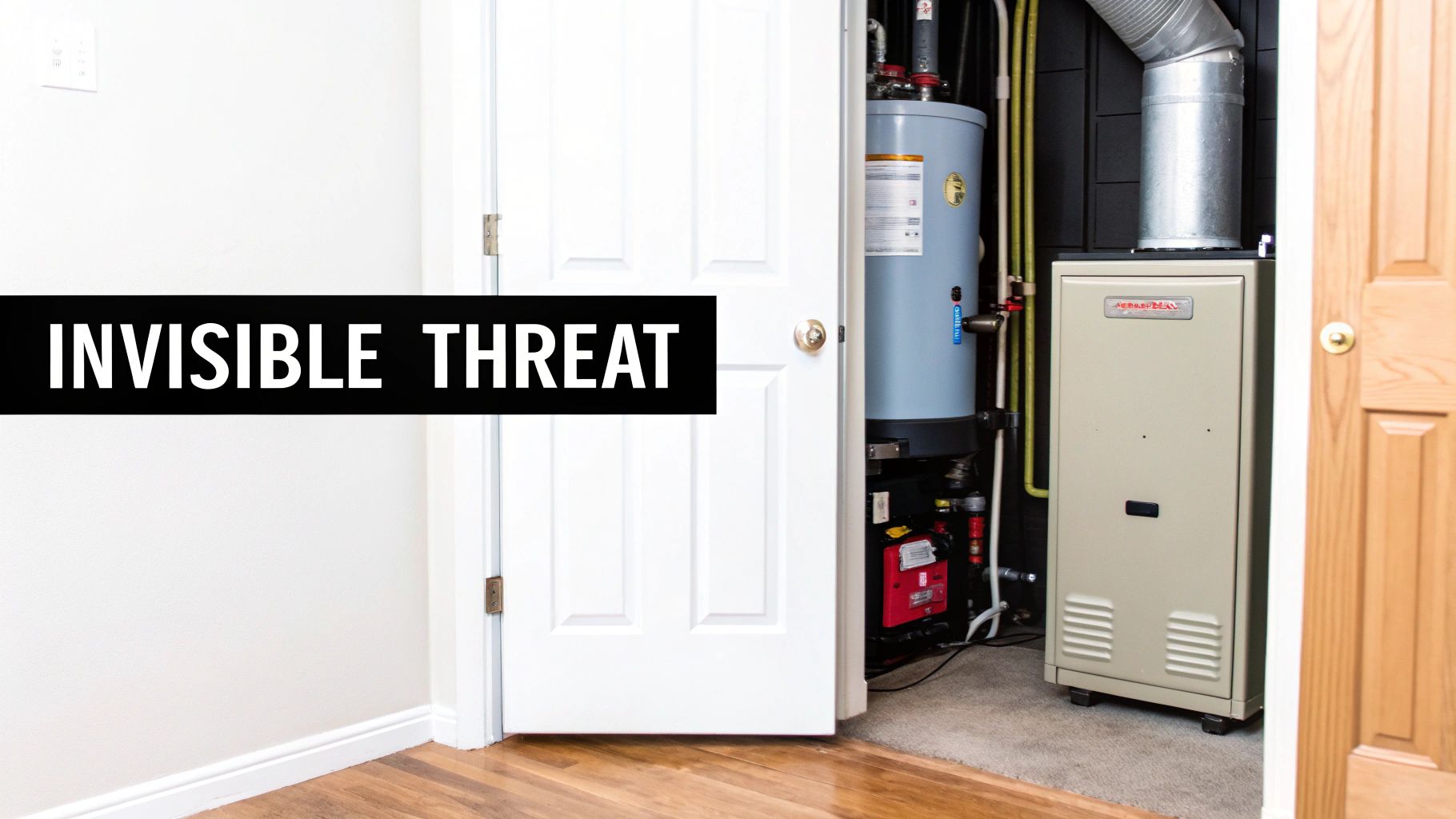
This isn't some rare, hypothetical threat; it's a serious global health problem. In 2021 alone, there were nearly 300,000 cases of acute CO poisoning worldwide. Here in the U.S., the numbers are just as sobering, with over 100,000 people heading to the emergency room each year from accidental exposure. What’s truly shocking is that over 76% of these incidents happen right where we should feel the safest: inside our own homes.
Common Sources of CO in Your Home
Many appliances we use every day can become a source of carbon monoxide if they are old, malfunctioning, poorly maintained, or not vented correctly. Knowing what to look for is the first step toward preventing a tragedy.
Here are the usual suspects:
Gas Furnaces and Boilers: A cracked heat exchanger or a blocked flue is a classic culprit, potentially pumping CO right into your home's ductwork.
Water Heaters: Gas-powered water heaters, particularly older ones, can produce CO if they aren't venting to the outside properly.
Fireplaces and Wood Stoves: If the chimney is blocked or the ventilation is poor, smoke and CO can easily back up into your living space.
Gas Stoves and Ovens: Never use a gas oven to heat a room. A malfunctioning stove can also create dangerous levels of CO.
Attached Garages: Running a car, lawnmower, or even a snowblower inside an attached garage, even with the door open, can let CO seep into the house.
The most critical takeaway here is that any device that burns fuel is a potential CO source. Getting regular professional maintenance isn't just about keeping things running efficiently; it's a non-negotiable safety measure for your family.
Why Your HVAC System is a Primary Concern
Of all the potential sources, your home’s heating system is one of the most common culprits behind CO leaks. When the temperature drops here in Tucson, your furnace is working overtime. A healthy, well-maintained unit will burn its fuel cleanly and push all the exhaust byproducts safely outside.
But problems like a dirty filter, a blocked vent, or a bad burner can throw that whole process off. This leads to incomplete combustion, the exact chemical reaction that creates carbon monoxide. Since the furnace is hooked directly into your home's air circulation system, it can spread that toxic gas quickly and silently to every single room. For a deeper look at how these systems can fail, you can learn more about what causes carbon monoxide poisoning in our detailed guide. This is exactly why getting an annual furnace inspection from a certified technician is an absolute must.
Recognizing the Early Warning Signs of a CO Leak
Carbon monoxide is often called the "silent killer" for a good reason: it's completely invisible and has no smell. You can't see it, taste it, or sniff it out. This means you have to rely on other clues to spot a potential leak, and knowing what to look for can be lifesaving.
The first signs of trouble often show up in your own body or as subtle changes around your home. The real danger is how easily these symptoms are mistaken for something else, like the flu or a stomach bug, especially during the colder months when everyone seems to be under the weather. That's why awareness is your single most important tool.
Physical Symptoms You Cannot Ignore
The initial physical signs of CO poisoning are incredibly sneaky because they feel so ordinary. You might just feel "off." It often starts with a dull, persistent headache that just won't quit, no matter what you take for it.
Here are a few other early symptoms that should set off alarm bells:
Sudden Dizziness or Lightheadedness: Feeling unsteady or like the room is spinning when you haven't done anything to cause it.
Nausea and Vomiting: A sudden-onset upset stomach can be a major red flag, especially if multiple people in the house start feeling sick around the same time.
Overwhelming Tiredness or Weakness: Feeling foggy, sluggish, or just completely drained for no reason.
Shortness of Breath and Chest Pain: This can feel like a tightness in your chest or difficulty catching your breath, even while you're resting.
Here’s the biggest tell-tale sign I’ve seen in my experience: if your symptoms get better when you leave the house and come back when you return, that’s a massive red flag. For instance, if the whole family feels sick all weekend but then feels fine after heading off to work and school on Monday morning, you need to suspect a problem at home.
Environmental Clues Around Your Home
Beyond how you feel, your house itself can give you hints that a fuel-burning appliance isn't working right. These clues often point to incomplete combustion, which is exactly what produces carbon monoxide in the first place.
Pay close attention to these visual warnings. An appliance that looks wrong is often running wrong. Ignoring these environmental signs means ignoring a direct warning that your safety systems might be failing.
Keep a sharp eye out for these specific signs:
Soot Stains or Streaks: Look for black or dark brown streaks on the walls or ceiling near your furnace, water heater, fireplace, or other fuel-burning appliances.
A "Lazy" Pilot Light Flame: The pilot light on a healthy gas appliance should be a crisp, steady blue. If you see a flame that's yellow, orange, or flickering wildly, it’s a clear sign of trouble.
Excessive Moisture or Condensation: Unexplained condensation building up on the inside of your windows could mean your appliances aren't venting properly.
Unusually Stuffy or Stale Air: If the air in your home just feels heavy and won't clear out, it could be another symptom of poor ventilation.
The risk of CO poisoning spikes in the colder months when our heating systems are working overtime. The statistics are sobering: a high percentage of people hospitalized for CO poisoning suffer long-term health problems, and tragically, between 30% to 40% of victims die before even reaching a hospital.
Even your HVAC system can provide clues. While less common, it's possible for certain dual-fuel systems to be a source, so it's good to understand the link between carbon monoxide from air conditioning units. And while we're focused on CO, being familiar with general gas leak detection is just smart home safety, helping you spot other invisible dangers before they become emergencies.
Selecting and Installing Your CO Detectors
While knowing the signs of a CO leak is a critical skill, your carbon monoxide detector is your family's most reliable and constant guardian. Think of it as an electronic nose that works 24/7 to find the silent threat you can't see, smell, or taste. Choosing the right detector and placing it correctly isn’t just a good idea; it’s one of the most important things you can do to keep your home safe.
When you start shopping, you’ll mostly find detectors with an electrochemical sensor. This technology is the industry standard for a reason: it’s incredibly accurate. It works by creating a tiny electrical current when it reacts with carbon monoxide; the more CO, the stronger the current, which eventually trips the alarm.
You might also see biomimetic sensors. These are pretty clever, using a special gel that changes color when it absorbs CO, similar to how our blood reacts. An internal light source detects the color change and sounds the alarm. Both types get the job done when it comes to alerting you to danger.
Choosing the Right Power Source for Your Home
Once you’ve got the technology sorted, the next big decision is the power source. This usually comes down to your home’s wiring, your budget, and what you find most convenient.
Hardwired Detectors: These are wired right into your home's electrical system, typically by a pro. Their main benefit is reliability, so no dead batteries to worry about. Almost all of them come with a battery backup just in case the power goes out.
Plug-In Detectors: Super simple. You just plug them into a standard wall outlet. Most also have a battery backup. The only catch is you need a free outlet in just the right spot, which isn't always easy to find.
Battery-Operated Detectors: These offer the most flexibility since you can mount them just about anywhere. The only downside is that you have to remember to change the batteries, usually once or twice a year. Mark it on your calendar!
Strategic Placement Is Everything
Where you put your CO detectors is just as crucial as which one you buy. The whole point is to get an early warning and be woken up if there's a leak while you're sleeping. Bad placement can make even the best detector useless.
The National Fire Protection Association (NFPA) has clear, life-saving guidelines. You absolutely need a CO detector on every level of your home, including the basement. It's also critical to place one outside each separate sleeping area, within 10 to 15 feet of bedroom doors, to make sure the alarm is loud enough to wake everyone.
This chart breaks down the connection between physical symptoms, environmental clues, and what to do next.
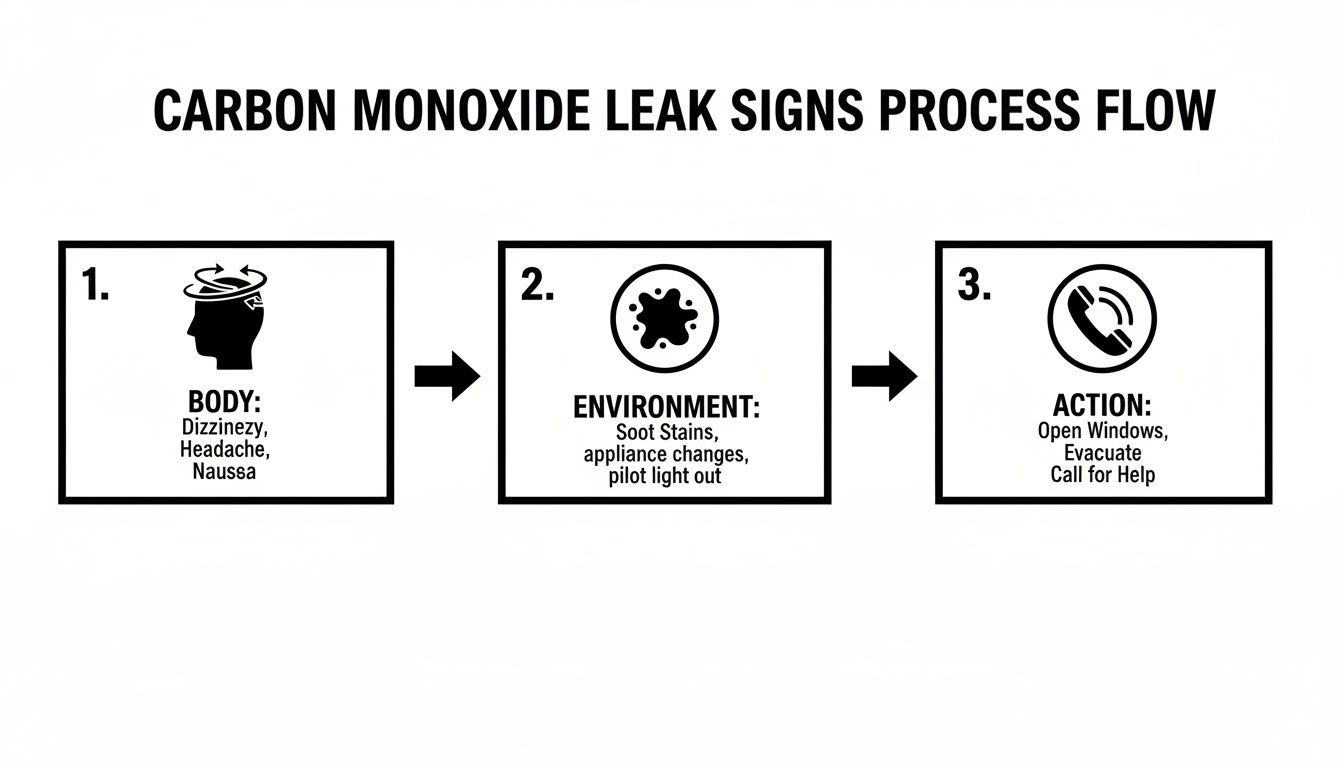
From feeling dizzy to noticing soot stains on the wall, it all leads to getting out and getting help.
Knowing where not to put a detector is just as important. Keep them out of kitchens, garages, and furnace rooms. To avoid false alarms, they should be at least 15 feet away from any fuel-burning appliances. You also want to keep them away from humid places like bathrooms and out of direct sunlight.
A common mistake I see is placing a CO detector right next to a window or an air vent. A constant draft can actually blow the carbon monoxide away from the sensor, giving you a false sense of security while dangerous levels build up somewhere else.
To make things easy, here’s a quick-glance table for proper placement.
CO Detector Placement Guide At a Glance
This table sums up the do's and don'ts for placing your CO detectors to ensure they can do their job effectively when you need them most.
Location | Placement Guideline | Reasoning |
|---|---|---|
Every Level | Install at least one detector on each floor, including the basement. | CO can originate from any level, and this ensures comprehensive coverage. |
Sleeping Areas | Place one within 15 feet of every bedroom door. | The alarm must be loud enough to wake you from sleep, when you are most vulnerable. |
Living Room | Consider an alarm if a fireplace or gas appliance is frequently used here. | Provides an earlier warning if a leak starts in a common gathering space. |
Near Garage | Place a detector in the room or hallway adjacent to an attached garage. | Prevents CO from a running car from seeping into the home undetected. |
Following these guidelines will give you a solid first line of defense against carbon monoxide poisoning in your home.
Understanding your home’s air quality is a key part of overall safety. For those interested in a broader perspective, you can find more information in your guide to an air quality home test kit. Beyond just detectors, a more comprehensive guide on how to test for carbon monoxide in your home offers additional tips. Ultimately, a combination of the right technology and smart placement creates the robust safety net every family deserves.
Keeping Your CO Detectors in Top Shape
Putting in a carbon monoxide detector is the right move, but it's only the first step. You can't just stick it on the wall and walk away. I always tell homeowners to think of it like the brakes on their car: you trust it to work in an emergency, but that trust has to be earned through regular checks. A detector you never touch is just giving you a false sense of security.
Making sure your alarm is ready to go when every second counts comes down to consistent maintenance. It’s not complicated, but it is something you have to do without fail. A few simple habits will keep your home’s early warning system in perfect working order.
Your Monthly Maintenance Checklist
A simple, repeatable routine is all it takes to make sure your detectors are reliable. Seriously, just a few minutes a month can keep your family safe from this invisible threat.
Here’s a quick rundown of what you should be doing:
Test the Alarm Monthly: Every detector has a "Test/Silence" button. Press it down and hold it until you hear the alarm blare. It should be loud and piercing. This quick test confirms the battery, the sensor, and the siren itself are all working. If you hear nothing, it's time to figure out why.
Keep It Clean: Dust and cobwebs are the enemy. They can clog the vents and block CO from ever reaching the sensor. Once a month, just give the cover a gentle wipe with a dry cloth or use your vacuum’s soft brush attachment to clear it out.
Check the Power Source: When you test a battery-powered unit, you're also making sure the battery has enough juice. For hardwired units, the test confirms the backup battery is ready to kick in if the power goes out.
It's a simple checklist, but it’s absolutely non-negotiable for home safety.
A great tip I share with homeowners is to tie their CO detector check to another monthly habit, like paying a specific bill or the first Saturday of the month. Linking it to an existing routine makes it almost automatic.
Battery and Detector Replacement Schedules
Even if you’re a pro at monthly testing, it won’t matter if the device itself is past its prime. Both the batteries and the actual detectors have a limited lifespan that you need to track.
For any units running on batteries, you should replace them at least once a year, even if they don't seem dead. A lot of people do this when they change their clocks for daylight saving time; it's an easy way to remember. Hardwired detectors have backup batteries that also need to be swapped out annually.
Don't Forget Your Detector's Expiration Date
This is the one that gets missed all the time: CO detectors do not last forever. The internal sensors that do the actual work of sniffing out carbon monoxide degrade over time and lose their ability to detect the gas accurately. Most detectors have a lifespan of 5 to 10 years.
So, how do you know when it's time? Take the detector off the wall or ceiling and look at the back. You'll find a label with the date of manufacture. Many newer models make it even easier and print a specific "Replace By" date right on the unit.
If your detector is past that date, replace it immediately. It doesn't matter if it still beeps when you test it. Popping a reminder in your phone or digital calendar for the replacement date is a simple habit that could save a life. This kind of proactive safety check fits perfectly with other home upkeep, and you can learn more by checking out your essential HVAC maintenance schedule to build a safer, more efficient home.
Your Emergency Plan for a Carbon Monoxide Alarm
The sudden, piercing shriek of a carbon monoxide alarm is a sound that demands immediate action, not panic. Knowing exactly what to do in that moment can make all the difference. When every second is critical for your family's safety, having a clear, practiced plan is the key to responding calmly and effectively.
This isn't a drill to take lightly. Recent data shows a disturbing increase in carbon monoxide poisoning fatalities. Provisional CDC data for 2022 reported 1,244 total deaths in the U.S. from CO poisoning, with a shocking 85.7% increase in accidental deaths since 2012.
A major contributor? The rising use of portable generators, which are now linked to 40% of CO deaths related to consumer products. These stats highlight a dangerous gap between modern risks and home safety practices, making a swift emergency response more crucial than ever. You can dig deeper into these alarming carbon monoxide poisoning trends on usafacts.org.
Your First Critical Actions
The second your CO detector sounds, you have to treat it as a confirmed, life-threatening leak. There is no time to investigate or second-guess the alarm. Your only priority is getting everyone to safety.
Follow these steps without a moment's hesitation:
Evacuate Immediately: Get everyone, and I mean everyone, including pets, out of the house right away. Don't stop to grab personal items or try to figure out where the sound is coming from.
Get to a Safe Distance: Once you're outside, move well away from the home. Head to a neighbor’s house or at least get across the street.
Call 911: From your safe spot, call 911 or your local fire department. Tell them your carbon monoxide alarm is going off and that you've evacuated.
Do Not Go Back Inside: Under absolutely no circumstances should you re-enter the house. Wait for emergency responders to arrive, investigate, and give you the official all-clear.
This structured response takes the guesswork out of a high-stress, high-stakes situation.
What Happens After the All-Clear
Once emergency services have determined the immediate danger is over, your job isn't quite done. They may have aired out your home and maybe even pinpointed the problem area, but finding and permanently fixing the root cause is the next vital step.
The all-clear from the fire department means the immediate threat is gone, but it does not mean the problem is solved. The faulty appliance that caused the leak is still there, and it will produce CO again the next time you use it.
This is your cue to call in a certified professional. A qualified HVAC technician has the specialized tools and experience to pinpoint the exact source of the carbon monoxide leak. They’ll do a thorough inspection of your fuel-burning appliances, check the ventilation systems, and look at your chimney flues.
Some of the most common culprits a technician will hunt for include:
A cracked heat exchanger in your furnace
A blocked flue or vent pipe for your water heater
Improperly functioning burners on a gas stove
Poor ventilation around a fireplace
Do not attempt to use any of your fuel-burning appliances until a professional has inspected them, made the necessary repairs, and confirmed your home is safe. If the issue is with your heating system, you can explore professional options for gas furnace repair to ensure the job is done right. Taking this final step is the only way to restore your peace of mind and secure your home against this invisible danger.
Got Questions About Carbon Monoxide Safety? You're Not Alone.
Even when you've got the best detectors and a clear emergency plan, questions about carbon monoxide are bound to pop up. That's a good thing. Getting clear answers is how you move from just reacting to threats to proactively keeping your family safe.
Let's dig into some of the most common questions we hear from homeowners about CO detection and prevention.
Why Is Professional HVAC Maintenance So Critical for Preventing CO Leaks?
Think of your annual HVAC service as a wellness checkup for the heart and lungs of your home. It's one of the single most effective ways to prevent a carbon monoxide problem before it ever starts. A certified technician does a lot more than just swap out a filter; they're on a mission to hunt down potential safety hazards.
During a professional tune-up, a technician inspects the very components that can fail and produce CO:
The Heat Exchanger: This is a major one. A technician will carefully inspect it for any cracks or rust: tiny fissures that are notorious for letting CO seep into your home's air supply.
The Burner and Flame: They'll check to make sure your furnace's fuel is burning cleanly and efficiently. A lazy, yellow, or orange flame is a classic red flag for incomplete combustion, which is what produces carbon monoxide.
The Flue and Ventilation System: Your technician will confirm that all the exhaust gases are being properly and safely vented outside. They'll look for any blockages from things like debris or even animal nests that could trap CO inside.
An annual inspection isn't just about making sure your furnace doesn't quit on the coldest night of the year. It's a fundamental safety check designed to catch potential carbon monoxide risks before they become life-threatening emergencies.
What Are These Different Beeping Sounds My CO Detector Is Making?
Your CO detector has its own language, and knowing what the different beeps mean is absolutely crucial for a fast, correct response. While you should always, always check the user manual for your specific model, most alarms follow a standard set of patterns established by Underwriters Laboratories (UL).
Here's a quick guide to the most common sounds you'll hear:
Four loud, rapid beeps, a pause, then four more beeps: This is the universal emergency signal. It means dangerous levels of carbon monoxide have been detected. Your only job is to get everyone out of the house immediately and call 911 from a safe location.
One chirp every 30 to 60 seconds: This is the low-battery warning. It’s not an emergency, but it's telling you to replace the batteries right away before your protection is compromised.
Five chirps every minute: This usually means the detector itself has reached its end of life. The internal sensor is no longer reliable. It's time to throw it out and replace the entire unit.
Never, ever ignore a sound coming from your CO detector. Every single beep is a call to action, whether it’s an urgent evacuation or a simple maintenance task.
How Often Should I Have a Technician Inspect My Furnace?
To keep your system running safely and efficiently, you need to have your furnace professionally inspected and serviced at least once a year.
The perfect time to schedule this is in the early fall, right before the Tucson nights start getting chilly and you're about to fire it up for the season. An annual tune-up gives a qualified technician the chance to clean critical components, test all the safety controls, and spot any wear and tear that could eventually lead to a carbon monoxide leak.
Skipping this yearly check-up is a gamble you don't want to take. Parts degrade over time, vents can get blocked, and a small, fixable issue can silently escalate into a major safety hazard. This is one appointment you want to keep on the calendar.
Your family’s safety and comfort are our top priorities. At Covenant Aire Solutions, our certified technicians provide thorough furnace inspections and maintenance to ensure your system is running safely and efficiently. If you have any concerns about carbon monoxide or are due for your annual service, don't wait. Contact Covenant Aire Solutions today to schedule your appointment and breathe easier knowing your home is protected.