
How Much Does HVAC Maintenance Cost? Your Complete Guide
So, how much does HVAC maintenance really cost? Let's get straight to it. A one-time tune-up will typically set you back somewhere between $175 and $350. If you opt for an annual service plan, you’re looking at a range of $120 to $500 for the year.
Those numbers give you a solid ballpark, but a few things can nudge the final price up or down.
Your Quick Answer to HVAC Maintenance Costs
Think of HVAC maintenance like a regular oil change for your car. It’s a small, predictable investment that helps you sidestep those massive, unexpected repair bills down the road. While the exact price tag varies, knowing the typical cost structures helps you budget and see the real value in being proactive. The whole point is to keep your system humming along smoothly, efficiently, and reliably, no matter the season.
Most homeowners go one of two routes: a single tune-up or a recurring annual plan. A one-off visit is great for an initial check-up, but a service plan usually delivers better long-term value and, frankly, more peace of mind.
To give you a faster answer, here's a quick breakdown of what you can generally expect to pay.
Quick Look HVAC Maintenance Cost Averages
Service Type | Average Cost Range |
|---|---|
One-Time Tune-Up (AC or Furnace) | $175 – $350 |
Basic Annual Maintenance Plan | $120 – $300 |
Comprehensive Annual Maintenance Plan | $300 – $500+ |
These figures represent national averages, but they provide a clear snapshot of the investment involved in keeping your home's comfort system in prime condition.
One-Time Visit vs. Annual Plan
A single maintenance visit is pretty straightforward. A technician comes out, does a full inspection and tune-up, and you pay a one-time fee. This is perfect if you've just moved into a new home or just want to make sure your system is ready for a brutal summer or surprise cold snap.
An annual maintenance plan, on the other hand, is more like a subscription. You pay a yearly fee that covers scheduled tune-ups, usually one for your AC in the spring and another for your furnace in the fall. These plans almost always come with extra perks like discounts on repairs and priority service when things go wrong.
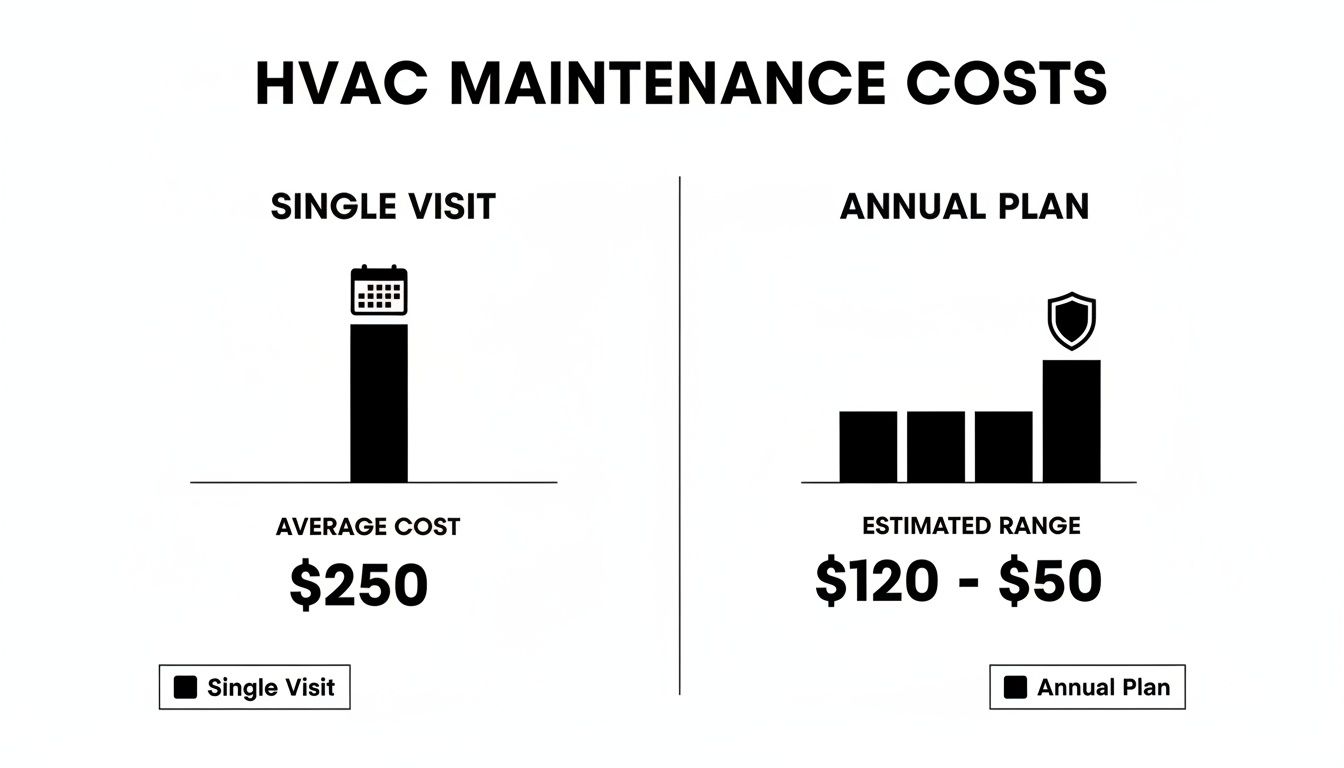
As you can see, even though a single visit has a clear upfront cost, an annual plan can bring down the price per visit and throw in some valuable extras.
Understanding the Numbers
That price isn't just pulled out of thin air; it’s based on real-world industry data covering labor, parts, and the cost of doing business. Across the United States, a single tune-up averages around $250, give or take. Annual maintenance contracts for homeowners generally land between $120 and $500 for basic coverage.
These costs are a small slice of a much bigger pie, as U.S. homeowners spend billions each year on HVAC repair and upkeep. You can dive deeper into these HVAC industry trends to get the full picture.
Your HVAC system is one of the most expensive and complex pieces of equipment in your home. Regular maintenance is the most effective way to protect this critical investment, ensuring it operates efficiently and lasts its full intended lifespan.
What Really Determines Your HVAC Maintenance Price
If you've ever found yourself scratching your head, wondering why there isn't one flat-rate price for HVAC maintenance, you're not alone. The truth is, several key variables come into play. It's a lot like servicing a car: a routine oil change for a new sedan is going to be priced very differently than a full diagnostic and tune-up for a vintage muscle car.
The same logic applies to your home's comfort system. The final price on your quote is a direct reflection of your equipment's specific needs. Getting a handle on these factors will give you the confidence to look at any estimate and know exactly what you’re paying for.
Your System Type and Size
The first major driver is the kind of HVAC system you have. Different setups have different levels of complexity, and that directly translates to the time and skill needed to service them properly.
Central Air Conditioners and Furnaces: These are the workhorses found in most homes. Maintenance is usually straightforward, but the unit's size (measured in tons) can nudge the price up or down.
Heat Pumps: Because these units pull double duty, heating and cooling your home, they work all year long. This means they often need more detailed checks on components like the reversing valve.
Ductless Mini-Splits: With one outdoor unit connected to multiple indoor heads, servicing each one adds to the total time and, naturally, the cost.
Geothermal Systems: These are highly complex and specialized systems. They demand technicians with specific training, which almost always means higher maintenance costs.
The Age and Condition of Your Equipment
Just like an older car, an aging HVAC system simply needs more attention to keep it running right. A unit that's been around for over a decade might have worn parts, hidden inefficiencies, or potential issues that a newer system just wouldn’t have yet.
A technician may need to spend extra time cleaning corroded parts, lubricating older motors, or chasing down those tricky intermittent problems. On the flip side, a well-maintained, newer system typically just needs a standard tune-up, which is usually less expensive.
An HVAC system that has been neglected for years will almost certainly cost more to service than one that has received regular annual check-ups. Catch-up maintenance often involves deeper cleaning and more intensive diagnostics.
The Scope of the Service
Not all tune-ups are created equal. The depth of the service checklist plays a huge role in the final price. A basic inspection is a world away from a comprehensive cleaning and calibration.
A standard tune-up typically covers tasks like checking thermostat settings, inspecting electrical connections, and cleaning the outdoor condenser unit. A more detailed service, however, might involve cleaning the indoor evaporator coils, checking ductwork for leaks, and performing a full combustion analysis on a gas furnace. The more detailed service costs more upfront but delivers far greater value in efficiency and longevity. Speaking of which, properly maintained ductwork is key to efficiency; you can check out our guide on the cost of air duct sealing to learn more.
Geographic Location and Labor Rates
It's a simple fact: where you live matters. Labor rates for skilled technicians can vary quite a bit from one city or state to another. Metropolitan areas with a higher cost of living will almost always have higher labor costs than more rural areas.
This regional price difference is a standard economic factor that affects all home services, not just HVAC. A company's own overhead, things like insurance, vehicle maintenance, and ongoing technician training, is also baked into the final price.
Evolving Regulations and Refrigerant Costs
Finally, big-picture market forces and government regulations can definitely influence how much HVAC maintenance costs. This isn't a small industry; the global HVAC service market is massive, projected to grow from over $92.8 billion to more than $140 billion by the early 2030s.
A key factor driving costs right now is the regulatory phase-out of older refrigerants like R-410A. As these are replaced by newer, more environmentally friendly alternatives, the cost of both the refrigerants and the equipment designed for them can go up. This shift can raise parts and labor costs, especially when servicing older systems that rely on the coolants being phased out. Industry reports often have great insights into these market shifts and their financial impact.
How Preventive Care Delivers Real ROI
It's easy to get bogged down in the question, "How much does HVAC maintenance cost?" The better question is, "What value does it deliver?" Regular maintenance isn't just another bill, it's a smart investment in your home's comfort and your financial health.
Think of it like getting routine oil changes for your car. You spend a little now to avoid a catastrophic and wallet-draining engine failure down the road. Proactive HVAC care works exactly the same way. It’s about turning a small, predictable annual cost into real, measurable savings that show up in your bank account through lower energy bills, dodged repair costs, and a much longer system lifespan.
Lowering Your Monthly Energy Bills
The first and most immediate return you'll see is on your utility bills. When an HVAC system is clean and all its parts are moving as they should, it doesn't have to fight to heat or cool your home. It simply uses less energy, and that translates directly to lower monthly bills.
A dirty filter, clogged coils, or poorly lubricated parts will force the system to strain, causing your energy consumption to spike. A simple tune-up takes care of these nagging issues, ensuring your unit runs at peak performance. This one small step can make a surprisingly big difference in your household budget.
A well-maintained HVAC system is an efficient one. By ensuring all components are clean and functioning correctly, you can significantly reduce the energy required to heat and cool your home, leading to direct savings on your monthly utility bills.
This isn't just wishful thinking; the numbers back it up. Government and technical studies have found that planned maintenance can slash energy use by 5% to 20% each year. On the flip side, neglecting your system can inflate its energy consumption by 30% or more, a huge and completely avoidable expense. You can dig into more HVAC maintenance statistics and their financial impact to see just how much is at stake.
Avoiding Budget-Breaking Emergency Repairs
The second pillar of HVAC maintenance ROI is simple: avoiding those unexpected, high-cost repairs. An emergency breakdown on the hottest day of summer isn't just uncomfortable; it's expensive. Emergency service calls almost always come with premium fees, and the repairs themselves can be a shock to your wallet.
During a routine tune-up, a skilled technician can spot the little things, a worn-out contactor, a frayed wire, before they snowball into a total system failure. Swapping out a minor part for a small fee is infinitely better than getting hit with a bill for a complete compressor replacement, which can easily run into the thousands.
This proactive approach saves you from the stress and financial panic of a sudden breakdown. Industry analysis confirms what we see every day: emergency repairs typically cost 50% to 100% more than scheduled service calls. Regular check-ups help you stay ahead of those costly surprises.
Extending Your System’s Lifespan
Finally, consistent maintenance is the single best thing you can do to get more years out of your HVAC equipment. A new HVAC system is a major home investment, often running from $5,000 to $15,000 or more. It just makes financial sense to protect that investment and make it last as long as possible.
Just like a car that gets regular tune-ups will run for many more miles, an HVAC system that receives annual care can easily outlast a neglected one by several years. Pushing back a full system replacement by even three to five years can save you thousands of dollars, far outweighing the modest annual cost of a maintenance plan. For a deeper look at the specific advantages, check out our article covering the top benefits of HVAC maintenance for Tucson homes.
What a Professional HVAC Tune-Up Actually Includes
When you schedule an HVAC tune-up, what are you really paying for? It's much more than just a quick once-over. You're investing in a meticulous inspection and service designed to keep your system running safely, efficiently, and reliably when you need it most.
Think of it like a comprehensive physical for your home's entire comfort system. A good technician isn’t just looking for problems they can see on the surface. They are methodically working through a checklist, examining every critical component to catch small issues before they snowball into major, expensive headaches.
Knowing exactly what a tune-up involves demystifies the service. It gives you a clear picture of the value you're receiving, helping you understand the difference between a thorough, professional job and a superficial glance. Let's break down what that looks like for both your cooling and heating systems.

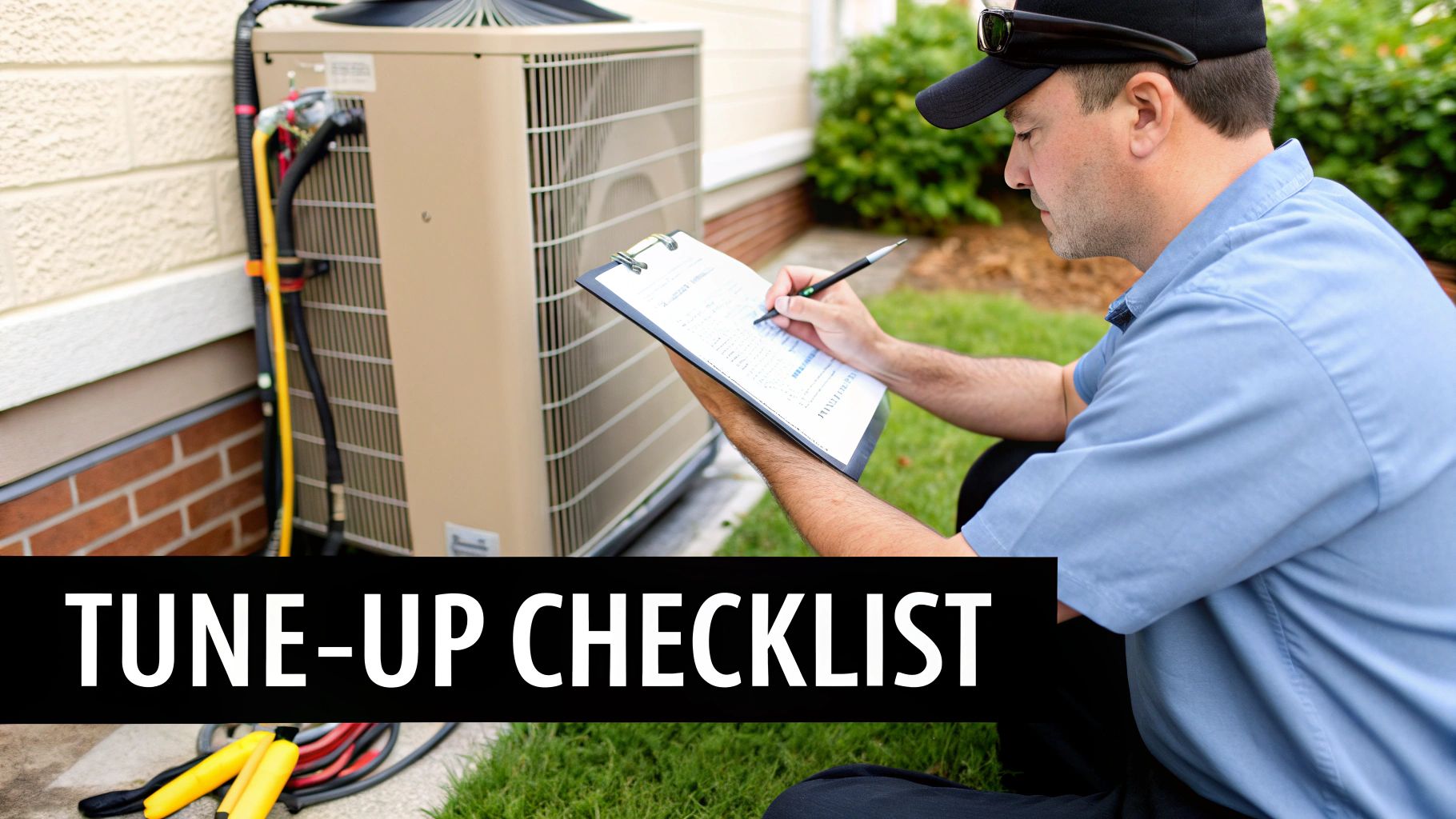
Air Conditioning Tune-Up Checklist
As the weather warms up, the focus shifts to getting your AC ready to handle the summer heat. A technician performs a series of crucial tasks to make sure your cooling performance is at its peak without wasting energy.
These steps are all about the components that take a beating during hot weather. From refrigerant levels to electrical connections, every check is a preventative measure against a breakdown on the hottest day of the year.
A professional AC tune-up typically includes:
Cleaning the Condenser Coils: Your outdoor unit's coils get caked with dirt, leaves, and grime, which traps heat and forces the system to work overtime. A deep clean is absolutely essential for efficiency.
Checking Refrigerant Levels: The tech will measure refrigerant levels to ensure they match the manufacturer's exact specifications. If they're too low, or even too high, it can wreck the compressor and kill your cooling power.
Inspecting and Clearing the Condensate Drain Line: A clogged drain line is a recipe for water damage and a system shutdown. We flush the line to make sure it’s free of algae, slime, and other blockages.
Testing Electrical Components: This involves inspecting and tightening all electrical connections, testing capacitors, and checking relays to head off common electrical failures.
For a deeper dive into the process, you can check out our 2025 air conditioner tune-up checklist and pick up a few easy tips for homeowners.
Furnace Tune-Up Checklist
Come fall, the maintenance script flips to your heating system. The top priorities here are ensuring safe operation and dependable performance before the first cold snap hits. This is especially critical for gas furnaces, where safety is non-negotiable.
Our technicians focus on the combustion process, all the safety controls, and proper airflow. Each step is a safeguard against potential dangers like carbon monoxide leaks and ensures your furnace is ready to run efficiently all winter.
A furnace is a fuel-burning appliance. Professional maintenance isn't just about efficiency or comfort, it's a critical safety inspection that verifies the integrity of components like the heat exchanger and tests the safety controls that protect your family.
Key tasks in a furnace tune-up include:
Inspecting the Heat Exchanger: The technician will carefully examine the heat exchanger for any cracks or signs of fatigue. A damaged heat exchanger can leak deadly carbon monoxide into your home, making this one of the most vital safety checks we perform.
Cleaning and Adjusting Burner Assembly: A clean, properly adjusted burner ensures efficient combustion. That means a clean flame that saves fuel and provides better heating.
Testing Safety Controls: We verify that all the safety shutoffs and limit switches are working perfectly to prevent overheating or other dangerous situations.
Checking the Blower Motor: The technician inspects the blower motor and its components, making sure it’s pushing the right amount of air for even heat distribution throughout your home.
Beyond the tune-up itself, don't overlook how specialized professional HVAC system cleaning services can further boost your system's performance and improve your home's indoor air quality.
Exploring Covenant Aire Maintenance Plans
Knowing that preventive care is a smart move is one thing. Finding a plan that makes protecting your system simple and affordable is the next step. We don't believe in a one-size-fits-all approach; a good maintenance plan should deliver real-world value that fits your specific needs. That’s our entire focus: delivering a partnership in your home’s comfort, not just a service.
Our plans are designed to take the stress and guesswork out of HVAC upkeep. We bundle all the essential services with perks that translate directly into savings and convenience for you. The bottom line is to make professional care accessible, ensuring your system performs at its best without emptying your wallet.
The Value Beyond the Tune-Up
The biannual tune-up is the heart of any good maintenance plan, but the real value is often found in the extras. These are the benefits that elevate a basic service into a true home comfort solution, saving you money and giving you peace of mind all year long.
Here are a few of the most impactful perks you’ll find in our plans:
Priority Scheduling: When your AC gives out during a scorching heatwave, waiting for days isn't an option. Our plan members go straight to the front of the line for emergency service.
Discounts on Repairs: If something does go wrong, you’ll get an exclusive discount on both parts and labor, which can seriously cushion the blow of an unexpected repair bill.
Waived Diagnostic Fees: We often waive the standard diagnostic or trip fees for our members, saving you money right from the moment our technician pulls up to your home.
These benefits directly answer how much HVAC maintenance costs by turning a fixed fee into an investment that actively cuts down your other potential expenses.
Protecting Your Manufacturer Warranty
Here’s a crucial benefit that’s easy to overlook: warranty protection. Most HVAC manufacturers actually require proof of regular, professional maintenance to keep your warranty valid. If you can't provide it, you could be stuck paying the full cost for a major part failure that should have been covered.
Enrolling in a maintenance plan is one of the simplest and most effective ways to safeguard your manufacturer's warranty. It provides documented proof of professional care, ensuring you remain compliant and protected against expensive, premature system failures.
This documentation is your evidence that you’ve held up your end of the bargain in caring for the equipment. Think of it as an essential layer of financial protection for one of your home's biggest investments. For a deeper look, check out our guide on whether an AC maintenance plan is worth it and see the numbers for yourself.
A Clear Comparison of Our Plans
We want to make your decision as easy as possible. That’s why we offer tiered plans, letting you pick the level of coverage that makes the most sense for your home and budget. Each tier builds on the last, offering more savings and convenience along the way.
Here’s a straightforward breakdown to help you compare the options at a glance.
Covenant Aire Maintenance Plan Comparison
Feature/Benefit | Basic Plan | Premium Plan | Ultimate Plan |
|---|---|---|---|
Biannual Tune-Ups | Included | Included | Included |
Repair Discount | 10% | 15% | 20% |
Priority Service | Yes | Yes | Yes |
Waived Diagnostic Fee | No | Yes | Yes |
Warranty Protection | Yes | Yes | Yes |
This transparent structure means you know exactly what you’re getting. It connects all the dots, giving you a clear, actionable solution for keeping your system running flawlessly season after season.
Smart Ways to Lower Your HVAC Costs
Beyond calling in the pros for a tune-up, you have more power over your heating and cooling bills than you might realize. A few simple habits and some savvy planning can make a real dent in what you spend on home comfort all year long.
Think of it this way: these practical steps put you back in control, turning proactive care into direct savings. Many of these are easy DIY tasks that stop tiny issues from snowballing into expensive emergencies. Pair these habits with smart scheduling, and you'll be managing your HVAC costs like an expert.
Easy DIY Tasks for Big Savings
You definitely don't need to be an HVAC technician to make a difference. These two simple actions are probably the most effective things you can do to lower your energy bills and prevent unnecessary wear and tear on your system.
Change Your Air Filters Regularly: This is the golden rule of HVAC maintenance for a reason. When a filter gets clogged with dust and debris, it chokes off the airflow. Your system has to work overtime just to push air through your home. This extra effort not only spikes your energy use but can also lead to serious problems like a frozen evaporator coil, a common culprit behind a pricey repair bill.
Keep Your Outdoor Unit Clear: Your outdoor condenser unit needs to breathe. Make sure it has at least two feet of clear space around it on all sides. Get in the habit of trimming back shrubs and weeds, cutting overhanging branches, and clearing away any leaves or debris that could get sucked in and block the coils.
Smart Consumer Strategies
How and when you book professional service can also save you money. A little bit of forward-thinking goes a long way toward getting a better price and avoiding those premium fees for emergency calls.
Small, consistent actions are the key to long-term savings. Changing a filter costs a few dollars and takes minutes, but it can prevent a repair that costs hundreds and save you even more on monthly energy bills.
To get the most value from professional maintenance, try these tips:
Schedule During the Off-Season: Don't wait for the first scorching heatwave to call for an AC tune-up. HVAC companies are swamped during extreme weather. If you schedule your maintenance during the milder spring or fall, their "shoulder seasons," you'll often find more flexible appointment times and sometimes even better pricing.
Ask About Bundling and Discounts: Many companies will offer a discount if you bundle services together. If you know you need both your furnace and air conditioner serviced, just ask about a package deal. It's an easy way to lower the overall how much HVAC maintenance costs.
Prioritize Consistent Care: Simply staying on a regular maintenance schedule helps you sidestep the much higher costs of emergency repairs or the "catch-up" maintenance needed for a long-neglected system.
These small steps empower you to take an active role in managing your home's comfort and your budget. For even more ways to keep your expenses in check, check out our in-depth guide on how to reduce air conditioning costs.
Common Questions About HVAC Maintenance Costs
As we wrap up, it’s natural to still have a few questions floating around. Thinking about how much HVAC maintenance costs brings up a few layers of details, so let's walk through some of the most common things homeowners ask. These quick answers should clear up any lingering uncertainties and help you feel confident about the best path forward for your home.
Is an Annual Maintenance Plan Truly Worth It?
Absolutely. I know it can feel like just another bill to pay, but an annual plan is genuinely one of the smartest financial decisions a homeowner can make for their property. The return you get on that investment comes from a few different places.
First off, a system that’s been properly tuned up just runs more efficiently, which means your monthly energy bills will be lower. Second, regular check-ups are fantastic for catching small issues before they snowball into catastrophic failures, helping you sidestep those budget-wrecking emergency repair calls. And finally, consistent care is proven to extend the lifespan of your equipment, which can push back the need for a costly full replacement by several years.
The modest annual fee for a maintenance plan is easily paid back through major long-term savings in energy use, avoided repairs, and delayed replacement costs. It’s about shifting your spending from reactive and expensive to proactive and predictable.
How Often Should My HVAC System Be Serviced?
The gold standard across the industry is to have your system serviced twice a year. This isn't just some arbitrary number; it’s timed perfectly to match your system's seasonal workload.
Cooling System: Get your tune-up scheduled in the spring. This preps your air conditioner to handle the intense summer heat without a hitch.
Heating System: Have a technician come out in the fall. This ensures your furnace or heat pump is primed and ready for winter's chill.
This twice-a-year schedule makes sure each major component is cleaned, inspected, and calibrated right before it’s about to work its hardest. It's simply the most effective way to prevent those frustrating mid-season breakdowns.
What Is the Difference Between Maintenance and a Repair?
This is a really important distinction to understand. The easiest way to think about it is like visiting your doctor for a routine check-up versus rushing to the emergency room.
A maintenance visit is all about being proactive and preventive. It’s a scheduled appointment where a technician performs a comprehensive inspection, cleaning, and tune-up to ensure everything is running at its absolute best. The whole point is to prevent problems from ever happening.
A repair call, on the other hand, is completely reactive. This is what happens when something has already broken or is clearly malfunctioning. The technician’s job is to diagnose a specific problem, like a bad capacitor or a refrigerant leak, and then fix it to get your system working again. Maintenance is about staying healthy; repair is about fixing an injury.
Ready to protect your home's comfort system with reliable, professional care? The expert team at Covenant Aire Solutions is here to help with transparent maintenance plans designed to save you money and provide peace of mind. Schedule your tune-up today and experience the difference.