
Stop Heater Cycling On And Off For Reliable Comfort
Frequent heater cycling on and off can quietly drive up your energy bills, and leave rooms feeling chilly one minute and too warm the next. A few quick checks around the furnace, especially the air filter and thermostat location, often bring those pesky on/off cycles under control in no time.
Quick Ways To Curb Short Cycling
Listen for heating cycles that last less than 5 minutes. Those rapid bursts almost always point to a clogged part or a sensor that’s reading wrong. With the right adjustments, you’ll restore steady warmth and dial down your heating costs.
Common Triggers And Simple Checks
Thermostat Misreads: Drafts or direct sunlight fool the sensor into thinking your home is warmer than it really is.
Dirty Air Filters: Dust, pet hair and debris choke airflow, causing the furnace to shut off prematurely.
Blocked Or Closed Vents: Imbalanced airflow makes the system overheat and cut out.
Oversized Furnace: A unit that’s too powerful fires up fast and then immediately shuts down.
This diagram shows airflow pathways and safety sensors inside a typical furnace. Once you know where each part lives, troubleshooting those frequent on/off cycles becomes a lot more straightforward.
Key Takeaway: Filters and vents work together to maintain proper temperature limits and prevent unnecessary shutdowns.
Identify Your Symptom
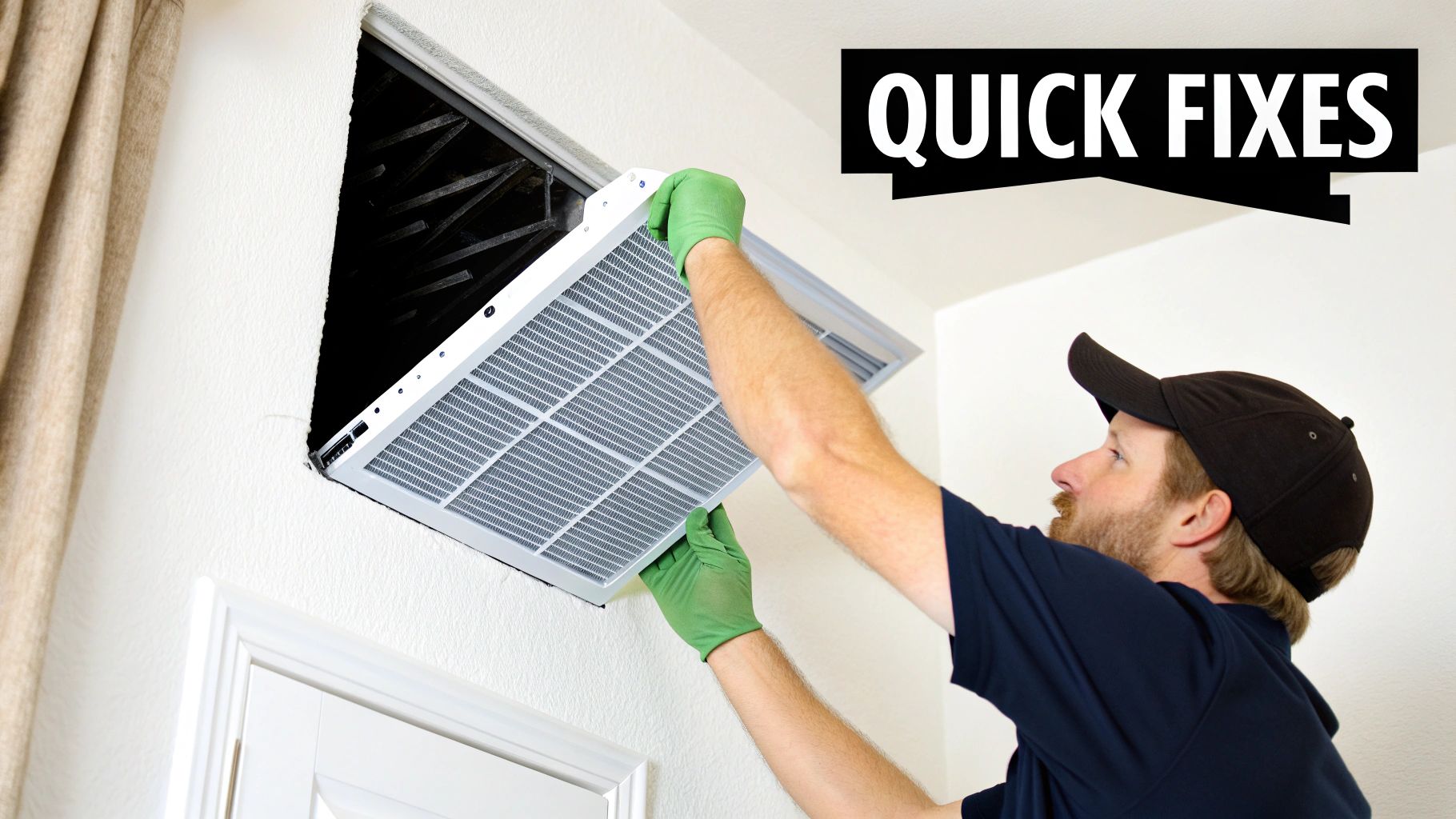
Match what you’re hearing or feeling to a fast, DIY fix you can do in under ten minutes.
Common Causes Symptoms And Quick ActionsHere’s a snapshot of the most frequent culprits, their telltale signs and the simple steps that often solve them on the spot.
Cause | Symptom | Quick Fix |
|---|---|---|
Dirty Air Filter | Weak airflow, rapid shutdown | Replace the filter in under 5 minutes |
Thermostat Miscalibration | False temperature readings | Recalibrate or move thermostat away from drafts |
Blocked Return Vent | Furnace overheats then stops | Remove obstructions and vacuum vent covers |
Improper Airflow Balance | Hot and cold pockets in rooms | Adjust vent dampers to balance airflow |
Oversized Furnace | Short heat cycles and high bills | Schedule a professional load calculation |
Once you’ve tried these quick actions, your heater’s on/off pattern should slow down noticeably. If the unit still struggles, it may be time to clean internal sensors or inspect your ductwork for hidden restrictions.
Fine-Tuning And Next Steps
For a deeper dive into optimizing your system, check out our guide on how to program thermostat to save money and boost efficiency. You’ll learn how to schedule temperature setbacks, control humidity and more.
When simple tweaks don’t do the trick, it’s wise to call in the experts. Covenant Aire Solutions in Tucson can handle sensor cleaning, duct inspections and airflow balancing to give you lasting comfort.
Finally, set a quarterly reminder to swap out filters and verify your thermostat’s placement. A little preventive maintenance now means fewer headaches, and lower bills, down the road.
Identifying Common Causes Of Heater Cycling
When your furnace keeps turning on and off in quick bursts, it’s more than just an annoyance. Short cycling not only makes your home feel unevenly heated, it also drives up your energy bills and accelerates wear and tear on critical components.
In most cases, you’ll find one or more of these sneaky culprits at play:
A thermostat tucked near a drafty window or heat source sending false calls for heat
A clogged air filter starving the system of airflow
Blocked or crushed ducts creating excessive pressure
Cold spots around vents tricking sensors into shutting down
Often, a simple look and feel test, checking for drafts at the thermostat or listening for odd noises at the vents, points you straight to the problem. I once moved a thermostat away from a fireplace alcove and instantly cut ten extra cycles each hour, slashing fuel consumption and stopping needless component wear.
Thermostat Miscalibration Effects
Grab a reliable thermometer and compare its reading to your thermostat. Anything off by more than 2°F means either recalibration or relocation is in order.
Older, nonprogrammable models tend to drift over time. A factory reset might bring them back in line, but when they’re consistently off, swapping in a modern unit often pays for itself.
Cause | Check | Fix |
|---|---|---|
Thermostat misreads | Compare to thermometer | Reposition or recalibrate |
Clogged filter | Measure pressure drop | Replace filter |
Filter And Duct Restrictions
Arizona’s fine dust is unforgiving. Let a filter clog and the furnace overheats, triggering its safety cut-off. Using a manometer, watch for a pressure drop exceeding 0.5 inches of water column, that’s your cue to change it.
Blocked returns also create hot and cold pockets in your home. Here’s what to look and listen for at the registers:
Rattling or whistling sounds
Noticeable cold spots near walls or ceilings
Low airflow readings on an anemometer
In one Tucson neighborhood, a homeowner discovered a stray vacuum hose pressed against a return vent. Clearing that blockage dropped the cycling rate from eight times an hour to just three, and shaved about 15% off monthly fuel costs.
Field data shows short cycling can hike fuel use by several percentage points and wear out combustion controls faster. Learn more from IRENA findings on heating cycles.
Check out our guide on improving airflow in our article Boosting Furnace Airflow And Comfort.
Key Takeaway: Tackling these root causes slashes wasted energy and extends the life of your equipment.
In Tucson’s dusty environment, filters clog quickly, replacing them monthly prevents repeated short cycles and keeps your furnace running smoothly. Measuring supply register temperature with an infrared thermometer also highlights airflow imbalances that trigger rapid on/off patterns. These simple checks uncover hidden restrictions and ensure your furnace completes full cycles. Then you can move on to troubleshooting controls and sensors.
DIY Troubleshooting And Repair Steps
Taming those unpredictable heater on/off bursts often starts with a handful of straightforward checks. You’ll need nothing more exotic than everyday tools and a bit of patience to restore consistent warmth, and lower your energy bills in the process.
Required Materials And Safety Tips
A thermometer and small level for calibrating the thermostat
Replacement air filter, gloves, and a vacuum for filter maintenance
Fine-grit sandpaper and soft brush to clean the flame sensor
Screwdriver and flashlight for inspecting the blower assembly
Before you begin, always shut off power at the breaker to avoid electrical shocks. Slip on gloves when handling metal components. Allocate about 5 to 30 minutes per task, you’ll work more accurately without rushing.
Calibrate Your Thermostat
First up, compare the thermostat’s display to a trusted thermometer placed nearby. If readings differ by more than 2°F, tweak the calibration setting or move the unit away from drafts or direct sunlight.
In one Tucson home, simply relocating the thermostat out of a sunny alcove slashed short cycling nearly in half.
Clean Or Replace Air Filter
A clogged filter chokes airflow and can trigger rapid cycling. Swapping in a fresh filter takes under five minutes. Slide the new piece into place, observe frame orientation and size rating, then vacuum around the slot to remove loose dust.
Tip: Mark each filter change on your calendar. Aim for every 1 to 3 months during peak heating season.
Inspect And Clean Flame Sensor
When the furnace shuts off just seconds after firing, the flame sensor might be to blame. Sarah’s unit was doing exactly that, until she powered down, removed the sensor, and spent twenty minutes sanding away carbon buildup. After reassembly, her heater held steady for 15-minute cycles.
Maintaining a clean flame sensor guards against those premature shutdowns and helps components last longer.
Cause | Percentage of Cycling Cases |
|---|---|
Thermostat Issues | 40% |
Clogged Filters | 35% |
Duct Restrictions | 25% |
Seasonal HVAC operation and cycling patterns could drive energy costs 10–22% higher under projected climate shifts. Learn more about energy consumption findings at the toolkit website toolkit.climate.gov.
Verify Blower Performance
Dust on the blower wheel or a loose belt can trigger frequent starts and stops. Shine your flashlight inside the cabinet, clear away debris, then test belt tension. A healthy blower spins smoothly. In one case, Mark adjusted two vents to balance duct pressure, and saw cycles drop from seven per hour to three.
Check out our guide on cleaning furnace coils in our article “A Homeowner’s Guide to Cleaning Furnace Coils” for deeper coil maintenance.
If your heater still stutters after these steps, it’s time to call in the pros. Covenant Aire Solutions in Tucson offers detailed diagnostics and repairs when DIY hits its limit.
Final Sequence And Common Mistakes
Work methodically: thermostat first, filter next, then flame sensor, and finish with the blower. You should start seeing solid 10 to 15-minute run cycles.
Avoid these pitfalls:
Skipping a step or rushing inspections
Missing hidden dust in vents, use a flashlight
Ignoring stubborn airflow issues after a filter swap
If dust remains in duct boots or coils, full cleaning is crucial for balanced airflow. Keep a simple checklist of your findings and service dates, over time it’ll make next season’s troubleshooting a breeze. And should you ever notice odd smells or warning codes, halt your DIY and call a professional immediately.
Safety And Preventive Maintenance Tips
Every winter, I get calls about heaters ping-ponging on and off. More often than not, the culprit is something simple, neglecting the basics. Spending a few minutes each season on preventive checks can save you from a frantic service call when the temperature drops.
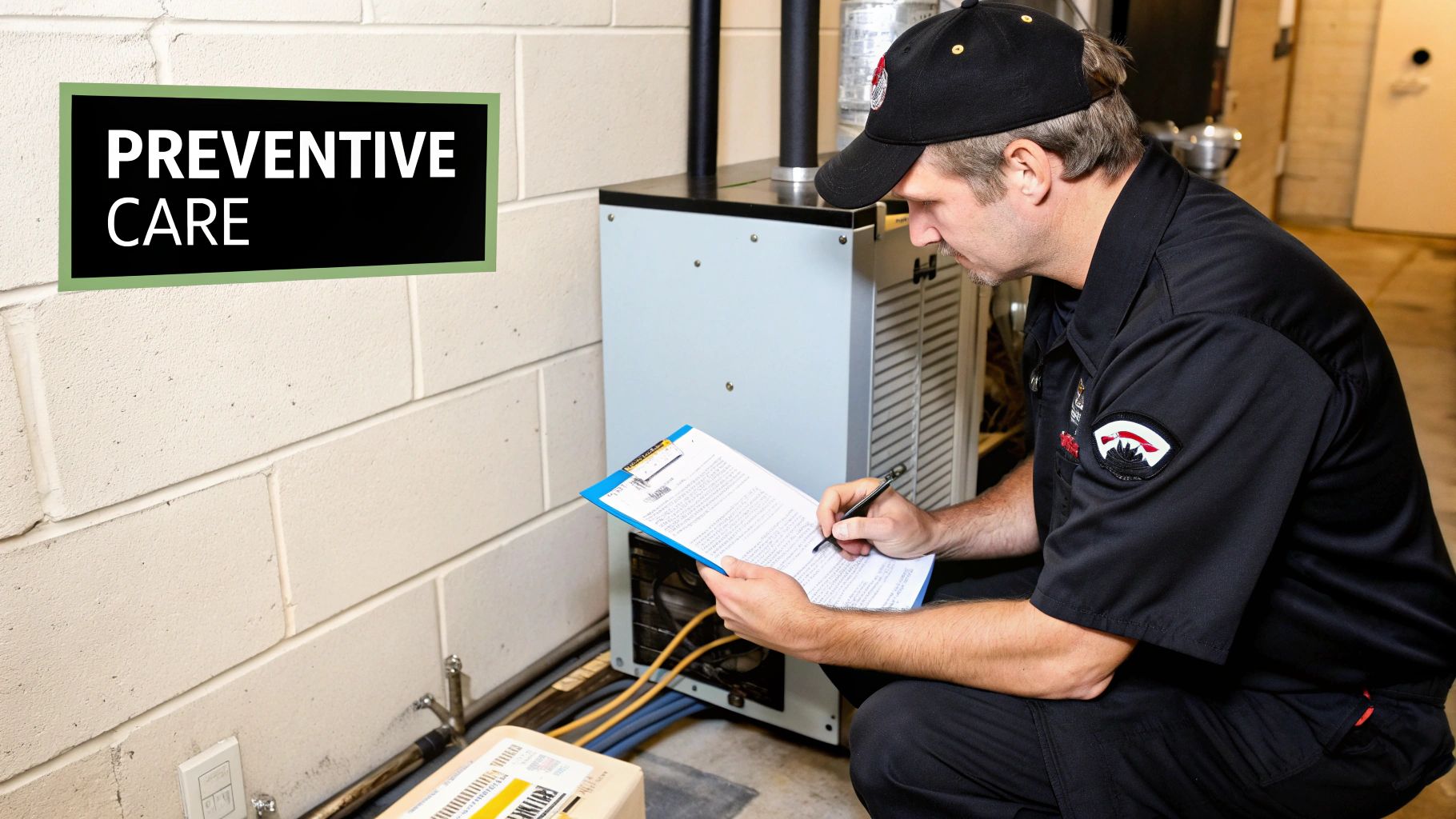
Change or inspect your air filter every 3 months. A clogged filter chokes airflow and will force your heater into short cycles.
• Replace filters quarterly to maintain proper airflow• Check ducts twice a year for leaks or accumulated dust• Book a professional combustion analysis before the coldest nights hit
Key Insight Regular vent and duct service cuts short cycling by up to 20%
Task | Frequency |
|---|---|
Replace Filter | 3 months |
Seal Ducts | 6 months |
Combustion Test | 1 year |
Combustion Analysis And Fan Maintenance
A thorough combustion test isn’t just about safety, it’s about making sure every ounce of fuel converts into heat. In my experience, measuring flame quality and tweaking gas pressure can add years to a furnace’s life.
When cleaning blower blades, follow these steps:
• Cut power and remove the access panel• Gently brush debris off the wheel and vacuum it away• Check belt tension and inspect motor mounts for wear
Also, setting a 2–4°F deadband on your thermostat stops it from cycling at the slightest temperature swing. It’s a small tweak with big rewards.
Warning Signs And Checklist
Watch out for any odd smells, especially that “rotten egg” scent, which could hint at flame rollout. Banging noises or a delayed ignition cycle also deserve immediate attention.
If you see error codes or your heater keeps tripping its safety switch, it’s time to pause your DIY fixes and call in the pros. Meanwhile, keep our ultimate 8-point furnace service checklist for 2025 handy for quick reference.
Routine checks in Tucson’s dusty air help you dodge surprise breakdowns and expensive repairs.
Heat Exchanger Inspection
Cracks in the heat exchanger are a carbon-monoxide hazard, and they can trigger erratic cycling without warning. Aim to inspect this critical component every six months.
• Ask your technician about dust shields designed for Tucson’s environment• Log any unusual flame patterns to speed up diagnostics• Use a programmable thermostat with a 2°F differential to smooth out cycles
Homeowners who adopt these tweaks often report consistent 10–15-minute run times, just right for comfort and efficiency.
Tip Keep vents clear of furniture and rugs to avoid airflow imbalances
Professional Support When Needed
Sometimes you’ll bump up against issues, like a failing pressure switch, that demand specialized tools. That’s when you call Covenant Aire Solutions. Our technicians offer 24/7 emergency response in Tucson and a full safety and efficiency audit, covering sensors, safety limits, airflow balance, and carbon monoxide checks.
When we arrive, here’s what we typically do:
• Note unusual flame patterns and record any fault codes• Run a full combustion and safety analysis• Balance airflow and test carbon monoxide levels
Maintenance Pays OffA little attention today means consistent warmth tomorrow.
Practice these tips all year long and enjoy a heater that behaves itself, even when the Arizona night brings a chill.
When To Contact Covenant Aire Solutions
Sometimes a furnace quirk is more than just a clogged filter or a misaligned vent. If you’re seeing persistent flame failure codes, hearing loud bangs when the burner fires up, or catching a strange sulfurous smell, it’s a clear sign that DIY fixes have run their course.
When the heat keeps turning on and off in under 3 minutes, even after you’ve cleaned filters and balanced vents, it’s time to pick up the phone. These issues often point to deeper sensor or pressure problems that only a trained technician can diagnose.
Flame sensor error codes that reappear after a thorough cleaning
Rattling bangs or high-pitched whistles inside the cabinet
Sulfur-like or burning odors during operation
Run times under 3 minutes despite adjustments
Our Covenant Aire Solutions team in Tucson arrives fully equipped with advanced manometers and combustion analyzers. We’ll inspect safety sensors, test pressure switches, and verify gas valve performance. In other words, we cut out the guesswork and zero in on the real issue.
Technicians also fine-tune airflow and check combustion efficiency, so you get a precise solution, not a temporary patch.
Advanced Diagnostics And Control Upgrades
Beyond the basics, Covenant Aire Solutions dives into next-level diagnostics using industry-standard tools. We trace hidden airflow imbalances and track down pressure leaks before recommending the right fix.
Sensor calibration and gas pressure tuning
Electronic control board inspection and firmware updates
Blower and ductflow balancing
Carbon monoxide safety checks
These targeted upgrades, like swapping in a high-precision thermostat with custom temperature deadbands or modernizing your control board, can cut short cycling by up to 25%.
Expert TipEarly professional intervention prevents up to 30% of emergency breakdowns in peak winter months.
When simple fixes keep falling short, let Covenant Aire Solutions handle the heavy lifting.
Check out our gas furnace repair services at Covenant Aire Solutions to schedule a service or emergency visit.
Learn more about gas furnace repair services here
Our Tucson team provides 24/7 support for unexpected breakdowns and rapid tune-ups.
Conclusion And Next Steps
You’ve got a solid understanding of why your heater keeps short cycling and the DIY checks that really work. Tackling these steps can bring back consistent warmth, cut down on wasted energy, and ease strain on your furnace’s moving parts.
To keep things humming along, swap or clean your air filter every few weeks, test your thermostat’s accuracy each quarter, and give your vents a quick once-over on a regular basis. A little attention now prevents those annoying cycling surprises later.
When basic tweaks don’t cure the problem, you’re at a crossroads: roll up your sleeves for deeper DIY fixes or call in the pros.
Clean sensors, inspect the blower assembly, or rebalance your ducts.
Book routine tune-ups with Covenant Aire Solutions in Tucson.
Upgrade to a precision thermostat that adds a helpful temperature deadband.
These moves tackle airflow sensor limits and dial in thermostat precision. Consistent maintenance teaches your system to avoid false start-stop signals.
Once you hit a wall, our skilled technicians step in with advanced tools and diagnostics. They fine-tune airflow balance, check pressure switches, and calibrate control boards to get your heater back on track.
Partner With Covenant Aire Solutions
Scheduling a visit means a thorough system audit, priority appointment slots, and transparent pricing up front. Plus, our 24/7 emergency support ensures you’re never left in the cold when your heater acts up.
Reach out online or call our Tucson hotline to book your service. Lock in a maintenance plan and unlock discounts on repairs and part replacements.
Key Takeaway: Consistent upkeep cuts short cycling by up to 20% and extends equipment life.
These next steps deliver steady warmth and lower bills all year long. Your heater will run smoother, quieter, and with far fewer interruptions.
Still worried about your heater flicking on and off? Book a comprehensive audit today. Visit Covenant Aire Solutions or call us for quick relief.
Get reliable warmth and peace of mind with us.
FAQ
Nobody enjoys a heater that turns on and off every few minutes. In this FAQ, we’ll explore why your furnace keeps cycling and offer practical fixes, from repositioning your thermostat to choosing the right filter.
Even a few degrees of outdoor swing can confuse the system, especially if the sensor sits in a draft or direct sunlight. Before anything else, double-check where that thermostat lives.
Key Insight: Proper calibration cuts rapid cycles by over 25%.
Why Cycling Happens At Mild Temperatures
When daytime highs and lows flirt around your setpoint, the burner may fire up only to shut down almost immediately. In one Tucson home, runs lasted just 6 minutes, until widening the deadband added valuable runtime.
Tiny Fluctuations: Small temperature swings trip safety cutoffs.
Short Bursts: Sensors can mistake a quick heat spike for system readiness.
Real-Life Fix: Expanding the deadband extended each heating cycle by about four minutes.
When Thermostat Placement Affects Run Time
A thermostat hung too close to a window or air vent will constantly misread the actual room temperature. That false reading turns your heater on and off in cycles lasting under 5 minutes.
Mount Level: Keep the thermostat square and secure on an interior wall.
Avoid Drafts: Steer clear of doors, windows, and direct sunlight for reliable readings.
How Filter Type Influences Airflow
High-efficiency filters do a great job trapping dust, but they can choke off airflow if you forget to swap them out. One homeowner switched to a pleated MERV 8 filter and stopped seeing cycles as short as 4 minutes, though it meant checking the filter every month.
Regular Replacement: A fresh filter cuts resistance and boosts run time.
Under stable conditions, most heating cycles should last 8 to 15 minutes.
What Constitutes Normal Cycling
Ideally, your furnace will run continuously for at least 8 minutes before shutting off. After that, expect a cooldown period of about 5 to 8 minutes as the system resets.
Balanced Airflow: Consistent delivery keeps temperature swings to a minimum.
Correct Deadband: A proper buffer around your setpoint prevents constant on/off behavior.
When To Contact A Technician
If your heater is still cycling in under 3 minutes, or you notice odd odors or safety alerts, it’s time to call in an expert. In Tucson, Covenant Aire Solutions can handle:
Precise calibration
Sensor diagnostics
Airflow balancing
Ready to put an end to erratic heating cycles? Schedule a professional tune-up today with Covenant Aire Solutions.