
Your Ultimate 8-Point Furnace Service Checklist for 2025
A reliable furnace is the heart of a warm and comfortable home, especially when desert temperatures drop. Yet, many homeowners and property managers overlook routine maintenance, leading to inefficiency, unexpected breakdowns, and even serious safety hazards. This comprehensive furnace service checklist is designed to demystify the maintenance process, empowering you with the knowledge to keep your heating system in peak condition. We will break down the eight most critical inspection points that every system needs, from simple filter changes to complex heat exchanger inspections.
This guide provides actionable steps to ensure your furnace operates safely and efficiently all season long. We will clearly distinguish between tasks you can safely handle yourself and those that require the expertise of a certified technician, like the professionals at Covenant Aire Solutions. Understanding these steps is fundamental to protecting your investment and ensuring your system's longevity. While our furnace service checklist provides detailed preventive steps, understanding the broader context of maintenance strategies, such as the principles of preventive maintenance, can further enhance your approach to ensuring furnace longevity and safety.
Furthermore, we will address the unique challenges faced by Arizona residents, offering specific tips for managing dust accumulation and navigating seasonal scheduling in Tucson and surrounding areas. By following this detailed checklist, you can proactively address potential issues, improve your home’s air quality, and enjoy consistent, reliable warmth when you need it most. Let's dive into the essential checks that will prepare your furnace for the heating season.
1. Furnace Filter Inspection and Replacement
The furnace filter is your system's first and most critical line of defense, acting as a gatekeeper that traps dust, pollen, pet dander, and other airborne particles. A key part of any professional furnace service checklist involves a thorough inspection of this component. A technician will assess whether the filter is merely dusty or completely clogged, a condition that can severely restrict airflow and strain your entire HVAC system.
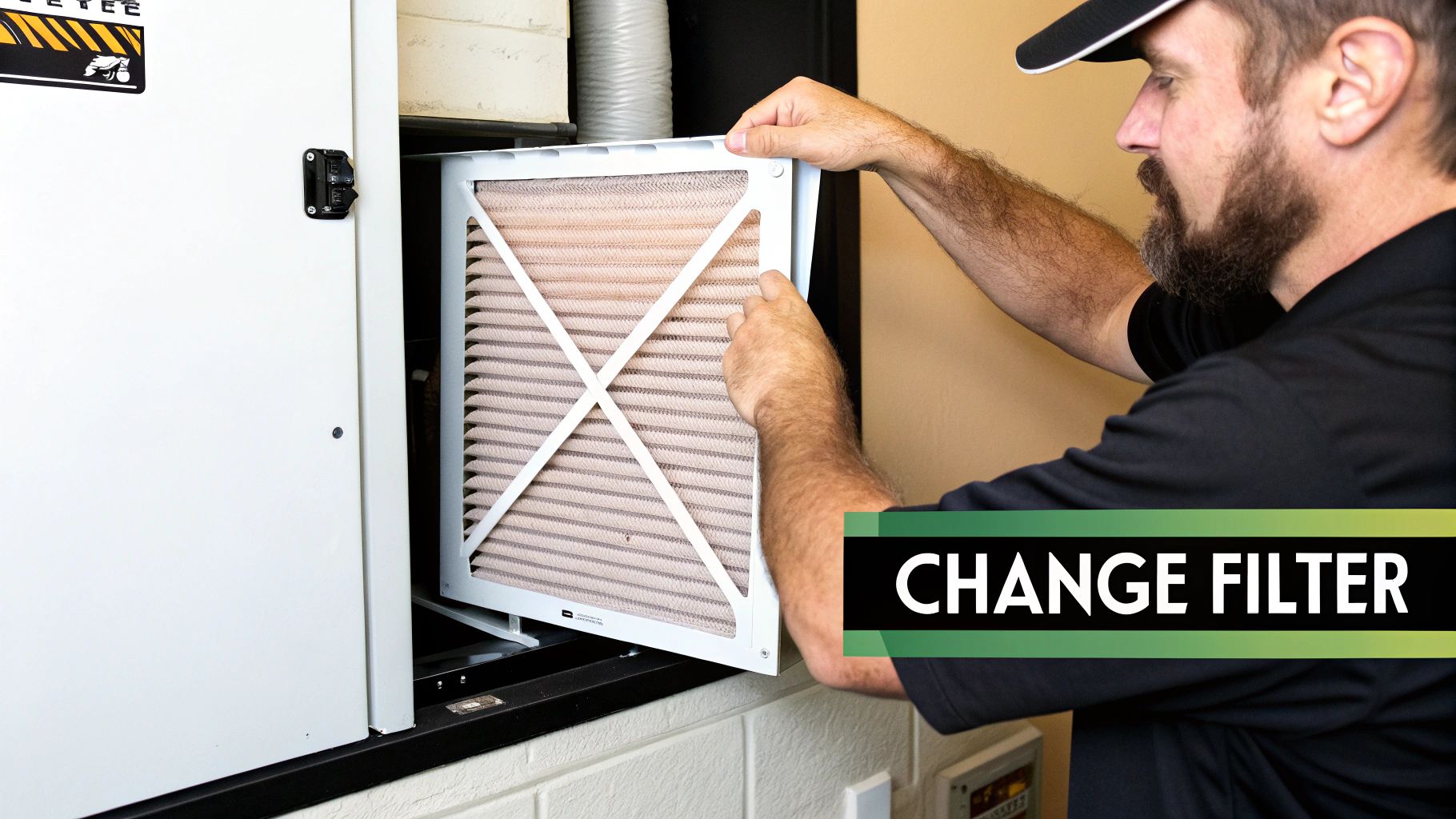
This simple step is non-negotiable for furnace health. When a filter becomes saturated with contaminants, the furnace must work harder to pull air through, leading to increased energy consumption and higher utility bills. Over time, this strain can cause premature wear on expensive components like the blower motor. In Arizona, where desert dust is a constant battle, regular filter changes are even more crucial for maintaining both system efficiency and indoor air quality.
Why It's a Top Priority
Ignoring the filter is like trying to breathe with a hand over your mouth; the system suffocates. A clean filter ensures optimal airflow, which directly impacts your home's comfort, your furnace's longevity, and your energy expenses. For those with allergies or respiratory sensitivities, a clean, high-quality filter can make a significant difference in a home's air quality.
Pro Tip: When a technician from Covenant Aire Solutions services your system, they don't just replace the filter. They also inspect the filter housing for any gaps or improper seals that could allow dirty air to bypass the filter entirely, defeating its purpose.
Actionable Tips for Homeowners
While a technician handles this during a tune-up, you can support your furnace's health between service calls with these simple habits:
Set a Monthly Reminder: Use your phone's calendar to create a recurring event to visually inspect your furnace filter each month.
Keep Spares Handy: Purchase a multi-pack of filters so you always have a clean one ready for a quick swap.
Upgrade Your MERV: Consider using a filter with a MERV (Minimum Efficiency Reporting Value) rating between 8 and 13 for superior filtration, but first, confirm your system can handle the denser material. You can learn more about choosing the best HVAC filters for allergies on covenantairesolutions.com to find the right fit for your needs.
Date Your Filter: Use a permanent marker to write the installation date directly on the filter's cardboard frame. This simple step eliminates guesswork about when it was last changed.
2. Thermostat Calibration and Testing
Your thermostat is the command center of your heating system, telling the furnace when to activate and when to rest. A crucial part of any professional furnace service checklist is testing this device's accuracy. A technician will verify that the thermostat correctly reads the ambient room temperature and communicates effectively with the furnace to maintain your desired comfort level. Even a slight miscalibration can lead to problems like short cycling, uneven heating, and significant energy waste.
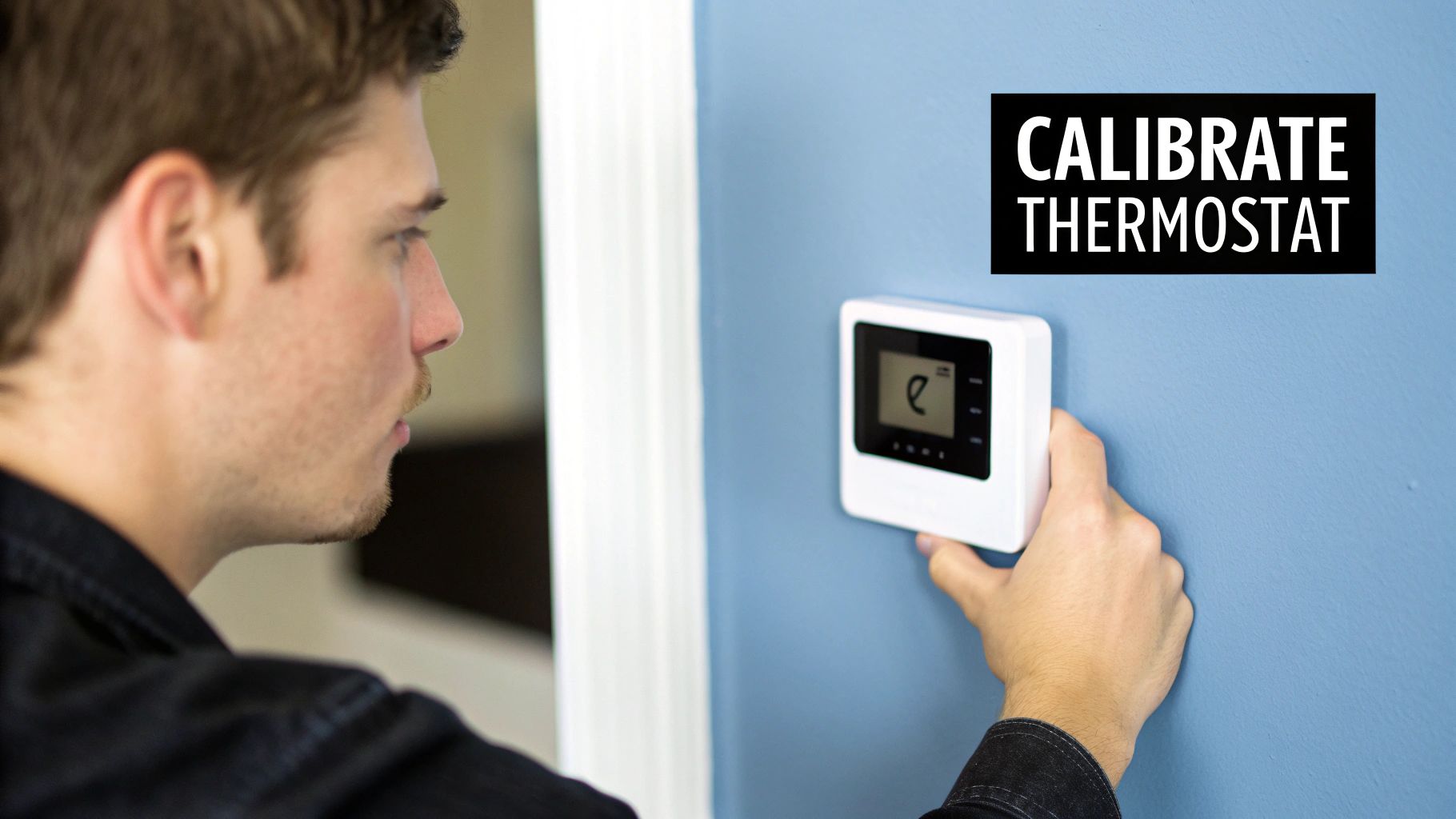
This check is essential for both efficiency and comfort. If your thermostat reads the room as being colder than it actually is, it will force your furnace to run longer than necessary, driving up your energy bills. Conversely, if it reads the room as warmer, it will shut off prematurely, leaving you feeling chilly. From modern smart thermostats like the Nest or Ecobee models to traditional mercury units in older homes, ensuring proper calibration is key to a well-functioning system.
Why It's a Top Priority
An inaccurate thermostat leads to a direct disconnect between your comfort expectations and your furnace's performance. It can make you think your furnace is failing when the real issue is just a communication error. Calibrating the thermostat ensures the entire system operates in harmony, responding precisely to your home's heating needs and preventing unnecessary strain on furnace components.
Pro Tip: During a service call, a Covenant Aire Solutions technician will not only test the thermostat's reading against a calibrated thermometer but also check the electrical connections and battery levels. This comprehensive approach ensures the entire control system is reliable for the season ahead.
Actionable Tips for Homeowners
While a technician handles precise calibration during a tune-up, you can ensure your thermostat functions optimally with these habits:
Check for Drafts: Ensure your thermostat isn't located near windows, doors, or directly in the path of a supply vent, as this can cause false temperature readings.
Test its Accuracy: Place a simple, reliable room thermometer next to your thermostat. After 15 minutes, compare the readings; if they differ by more than a couple of degrees, it may be time for a professional check.
Program for Savings: Setting your thermostat back 7-10°F for eight hours a day can save up to 10% annually on heating costs. To optimize your settings, you can discover easy tips to program your thermostat on covenantairesolutions.com and maximize your energy savings.
Change Batteries Annually: For digital, battery-powered models, make it a habit to replace the batteries once a year to prevent unexpected system shutdowns.
3. Pilot Light and Ignition System Inspection
The ignition system is the heart of your furnace, responsible for sparking the combustion process that generates heat. Whether your system uses a traditional standing pilot light or a modern electronic igniter, its proper function is non-negotiable for reliable operation. A critical part of any professional furnace service checklist is a detailed inspection of this component to ensure it can safely and effectively start your furnace every time.
Technicians carefully examine the entire ignition sequence. For older furnaces, they check that the standing pilot flame is a steady, strong blue color, not a weak, flickering yellow one. For modern systems, like Carrier furnaces with hot surface igniters or York units with direct spark ignition, they test the igniter's integrity and electrical response. A faulty ignition system can lead to a furnace that fails to start, intermittent heating, or a dangerous delayed ignition, making its inspection a vital safety and performance check.
Why It's a Top Priority
A malfunctioning ignition system is one of the most common reasons for a no-heat service call. If the pilot is out or the electronic igniter is cracked, your furnace simply cannot produce heat. Regular inspection catches failing components, like a dirty flame sensor or a weak igniter, before they leave you in the cold during a Tucson winter night. It is also a crucial safety measure to prevent unburned gas from accumulating.
Pro Tip: A Covenant Aire Solutions technician will not only test the ignition but will also clean the flame sensor. This small rod is a safety device that confirms a flame is present; if it's coated in residue, it can shut down your furnace even when the igniter is working perfectly.
Actionable Tips for Homeowners
While diagnosing ignition systems is a job for a professional, you can help ensure its longevity and reliability:
Keep the Area Clear: Ensure the area around your furnace is free of dust, debris, and flammable materials. Dust buildup can clog pilot orifices and coat sensitive electronic components.
Recognize Warning Signs: Pay attention to a furnace that clicks multiple times before igniting or a pilot light that frequently goes out. These are early indicators of a problem.
Safety First with Gas: If you ever smell natural gas or propane near your furnace, do not attempt to relight the pilot. Evacuate the home immediately and call your utility company and a certified HVAC professional.
Address Pilot Issues: A pilot light that keeps going out is a sign of an underlying issue, such as a faulty thermocouple or a draft problem. You can find out more about why a furnace pilot light keeps going out on covenantairesolutions.com to understand potential causes.
4. Heat Exchanger Inspection for Cracks and Corrosion
The heat exchanger is the heart of your furnace, a component where the heat from combustion is transferred to the air that circulates through your home. A crucial part of any professional furnace service checklist is a meticulous visual inspection of this vital part. A technician carefully searches for cracks, rust, corrosion, or any signs of deterioration that could compromise its integrity.
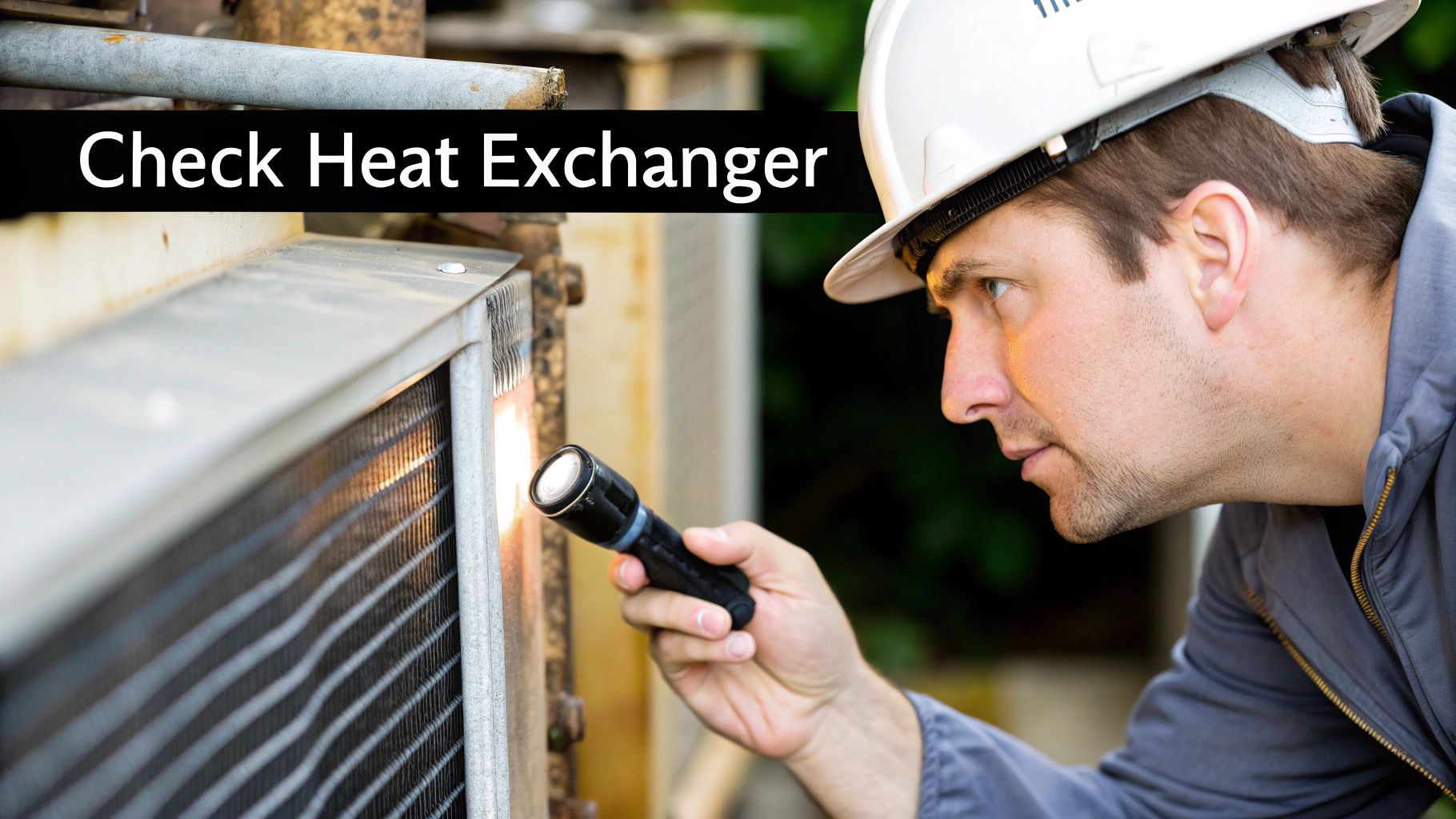
This inspection is arguably the most important safety check performed during a tune-up. A compromised heat exchanger can allow dangerous combustion gases, including deadly, odorless carbon monoxide (CO), to mix with your breathable household air. Examples of issues include stress cracks that form over years of expanding and contracting metal or severe corrosion caused by combustion byproducts in a poorly ventilated furnace area. These are not minor issues; they represent a serious health hazard that requires immediate attention.
Why It's a Top Priority
A cracked heat exchanger is an emergency situation. Unlike a dirty filter that impacts efficiency, a faulty heat exchanger poses a direct threat to the safety of everyone in the home. There is no acceptable level of risk when it comes to carbon monoxide. This inspection ensures the barrier between harmful flue gases and your family's air supply remains solid and secure.
Pro Tip: During an inspection, a Covenant Aire Solutions technician uses specialized tools like a borescope camera to see deep inside the heat exchanger's chambers, revealing tiny cracks that are invisible to the naked eye. This advanced diagnostic step provides definitive proof of the component's condition.
Actionable Tips for Homeowners
While inspecting the heat exchanger is a job for a qualified professional, you can take these steps to ensure your family’s safety:
Install CO Detectors: Place carbon monoxide detectors on every level of your home, especially near sleeping areas. Test them monthly and replace batteries annually.
Ensure Proper Ventilation: Keep the area around your furnace clear of clutter to ensure an adequate supply of combustion air. Never block vents in the furnace room.
Schedule Annual Inspections: Make a professional tune-up a non-negotiable annual event, especially for furnaces over 10 years old.
Plan for Replacement: If your furnace is approaching 15-20 years old and a technician notes concerns about the heat exchanger, start planning for a system replacement rather than a costly and temporary repair. You can explore what a furnace heat exchanger is and why it matters on covenantairesolutions.com to understand its critical role.
5. Burner and Combustion Inspection
The burners are the heart of your furnace, where fuel is ignited to generate the heat that warms your home. A crucial element of any professional furnace service checklist is the inspection of these burners and the overall combustion process. A technician will carefully examine the burner assembly, looking for signs of dirt, rust, or corrosion that can obstruct fuel flow and lead to inefficient or dangerous operation.
This step is vital for both safety and efficiency. Technicians check the flame's color and stability; a healthy flame should be steady and mostly blue. Yellow or orange flames often indicate incomplete combustion, a condition that wastes fuel and can produce dangerous levels of carbon monoxide. They will also verify gas pressure and flow to ensure the system is operating according to the manufacturer's specifications, preventing both underperformance and potential hazards.
Why It's a Top Priority
Improper combustion is not just an efficiency issue, it’s a serious safety risk. A dirty or malfunctioning burner can lead to the production of soot and carbon monoxide, a colorless, odorless gas that can be lethal. Ensuring the burners are clean and properly adjusted guarantees your furnace operates safely while converting the maximum amount of fuel into heat, keeping your energy bills in check.
Pro Tip: During a tune-up, a Covenant Aire Solutions technician not only cleans the burner orifices but also inspects the heat exchanger for any cracks or stress fractures. A compromised heat exchanger can allow combustion gases, including carbon monoxide, to mix with your home's heated air.
Actionable Tips for Homeowners
While burner adjustments require a licensed professional, you can stay vigilant and help maintain your system's safety between service calls:
Observe the Flame: If your furnace has an observation window, occasionally check the flame color when it's running. If you see flickering, weak, or predominantly yellow flames, it’s a clear sign to schedule a professional inspection.
Keep the Area Clear: Ensure the area around your furnace is free of dust, lint, and flammable materials like paint thinners or gasoline. These can be drawn into the combustion chamber and cause serious problems.
Schedule Annual Cleanings: Make professional burner cleaning a non-negotiable part of your yearly maintenance. In dusty Arizona environments, soot and debris can build up faster than in other climates.
Install CO Detectors: Have working carbon monoxide detectors installed on every level of your home, especially near sleeping areas. Test them monthly and replace the batteries regularly.
6. Blower Motor and Belt Inspection
The blower motor is the powerful heart of your furnace's distribution system, responsible for pushing the heated air from the furnace through your ductwork and into every room of your home. A professional furnace service checklist must include a detailed assessment of this motor and its components, as its failure renders the entire heating process useless. A technician will listen for unusual noises like rattling or grinding, check for excessive vibrations, and ensure the motor isn't overheating.
If the blower motor fails, the furnace may produce heat, but that warmth remains trapped inside the unit. This leads to a situation where the system is running and consuming energy, but your home stays cold. In older systems, the technician also inspects the drive belt that connects the motor to the fan, checking for cracks, fraying, or loss of tension. A squealing belt is often a clear warning sign of impending failure.
Why It's a Top Priority
A compromised blower motor not only fails to heat your home but can also become a significant energy drain and a potential safety risk if it overheats. Proper inspection ensures the air is circulated efficiently, maintaining consistent temperatures and preventing unnecessary strain that could lead to a complete system breakdown. Catching a worn belt or failing motor bearing early can prevent a costly no-heat emergency on a cold Tucson night.
Pro Tip: During a service call, a Covenant Aire Solutions technician will meticulously clean the blower wheel (or "squirrel cage"). Dust and debris buildup on the fan blades can throw the entire assembly off balance, causing vibrations that accelerate wear on the motor's bearings and reduce airflow.
Actionable Tips for Homeowners
While inspecting the motor itself is a job for a professional, you can help maintain its health and spot problems early:
Listen to Your System: Pay attention to new or unusual sounds when your furnace kicks on. Squealing, grinding, or loud humming noises warrant an immediate call to a professional.
Keep the Area Clear: Ensure the area around your furnace is free of dust, debris, and stored items. This helps maintain proper airflow to the motor compartment, preventing it from overheating.
Check Vents for Airflow: Periodically place your hand over different vents in your home while the heat is running. If you notice significantly weak or no airflow from a vent that was previously strong, it could indicate a blower issue.
Consider an Upgrade: If you have an older furnace with a standard PSC motor, ask your technician about the benefits of upgrading to a variable-speed ECM (Electronically Commutated Motor). They are quieter, more energy-efficient, and provide better year-round comfort.
7. Electrical Connections and Component Testing
A furnace is more than just a box that burns fuel; it's a sophisticated electrical appliance. A comprehensive furnace service checklist must include a detailed examination of its electrical nervous system, which includes circuits, relays, safety switches, and capacitors. A technician will methodically test voltage and amperage, inspect wire connections for tightness and signs of corrosion, and verify that all safety controls are functioning as designed.
Neglecting these components is a significant risk. A loose wire can cause intermittent failures that are difficult to diagnose, while a failing capacitor can prevent the blower motor from starting, leading to a system that overheats and shuts down. In Arizona's dry climate, dust can accumulate on electrical parts, potentially causing shorts or overheating. Faulty safety switches, such as the high-limit switch, could fail to shut the system off in a dangerous situation.
Why It's a Top Priority
Proper electrical function is the foundation of safe and reliable furnace operation. These components control the ignition sequence, manage airflow, and, most importantly, engage safety shutoffs to prevent overheating or fire hazards. A thorough electrical check ensures every part communicates correctly, preventing unexpected breakdowns and ensuring the system operates within its safe design parameters. Think of it as a health checkup for your furnace's brain and nervous system.
Pro Tip: During a service call, a Covenant Aire Solutions technician will test critical components like the run capacitor. A weak capacitor might still start the motor, but it will cause it to run inefficiently, consume more electricity, and burn out prematurely. Catching this early saves you from a costly motor replacement down the line.
Actionable Tips for Homeowners
While electrical testing is a job for trained professionals, you can help protect your system's electrical integrity between appointments:
Keep the Area Clean and Dry: Ensure the area around your furnace is free of moisture, which can cause corrosion on electrical terminals and circuit boards.
Listen for Electrical Noises: Pay attention to any unusual buzzing or clicking sounds coming from the furnace when it operates, as this can indicate a failing relay or contactor.
Note Intermittent Issues: If your furnace starts and stops randomly or struggles to ignite, mention this to your technician. These are classic symptoms of a loose connection or failing electrical part.
Schedule Annual Inspections: Make professional electrical testing a non-negotiable part of your yearly tune-up to catch potential failures before they leave you in the cold.
8. Ductwork Sealing and Airflow Verification
Your furnace can be the most efficient model on the market, but if your ductwork is compromised, a significant portion of that heated air will never reach its destination. The duct system is the circulatory system of your home's heating, and a crucial part of any professional furnace service checklist is verifying its integrity. Technicians inspect for leaks at seams, disconnected sections, and blockages that cripple heating efficiency and airflow balance.
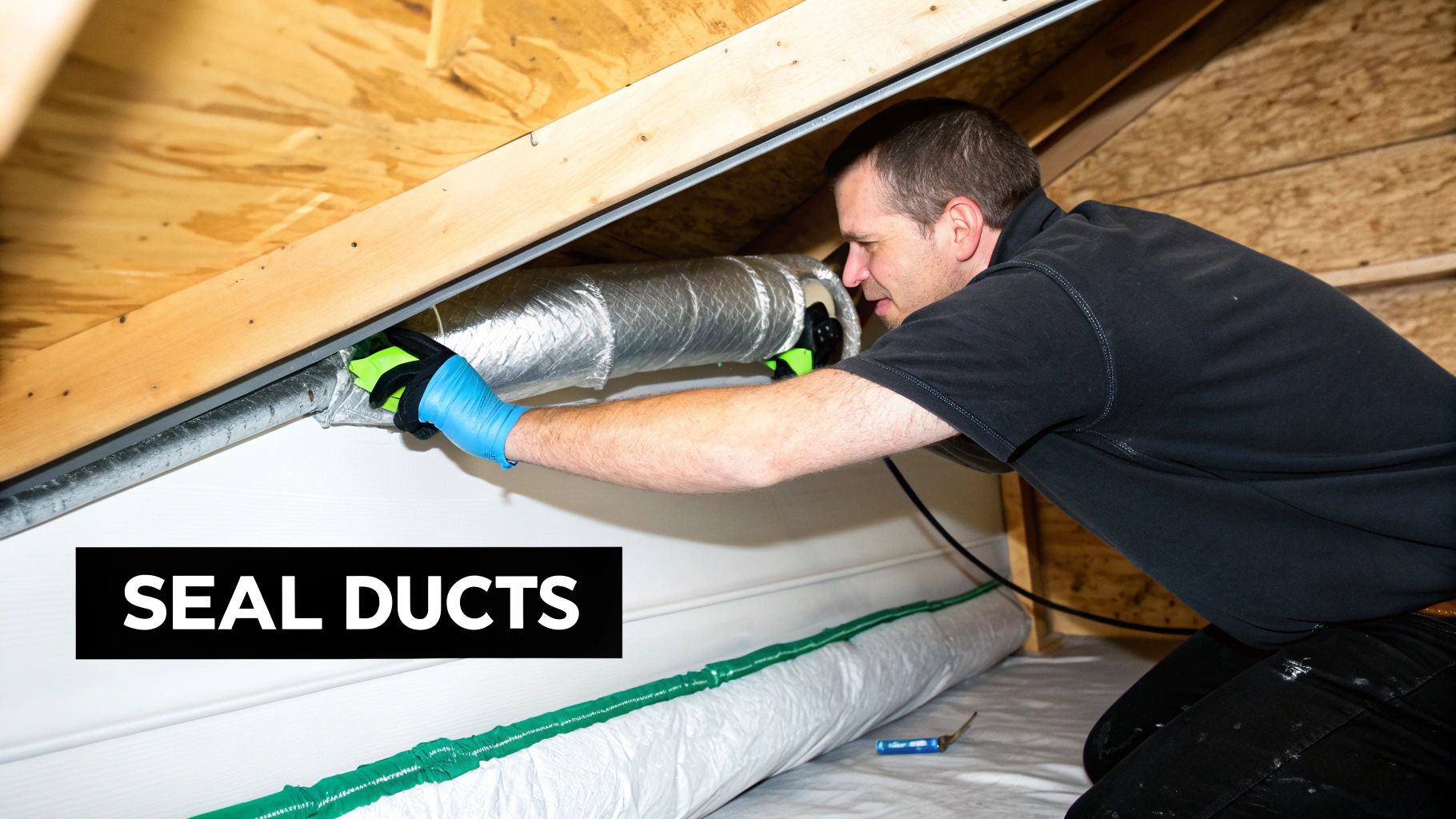
According to ENERGY STAR, the average home loses 20 to 30 percent of the air moving through its duct system to leaks, holes, and poor connections. This forces your furnace to run longer and work harder to achieve the temperature set on your thermostat, leading to wasted energy and noticeably higher utility bills. In Arizona homes, well-sealed ducts also prevent unconditioned, dusty air from attics or crawl spaces from being pulled into your living areas, improving overall indoor air quality.
Why It's a Top Priority
Neglecting your ductwork is like trying to carry water in a leaky bucket: much of the valuable contents are lost before you get where you are going. Properly sealed and balanced ducts ensure that every dollar you spend on heating translates directly into comfort. This verification prevents uneven heating, reduces strain on your furnace, and lowers energy consumption, making it a cornerstone of a comprehensive tune-up.
Pro Tip: During a service call, a Covenant Aire Solutions technician uses specialized tools to measure airflow and pressure. This helps them identify hidden leaks and ensure the system is balanced, so rooms aren't getting too much heat while others remain cold.
Actionable Tips for Homeowners
While comprehensive sealing is a job for a professional, homeowners can take several steps to maintain their duct system's health between service appointments:
Visually Inspect Exposed Ducts: Check any visible ductwork in your attic, basement, or crawl space for obvious gaps, tears, or loose connections.
Keep Vents and Registers Clear: Ensure that furniture, rugs, and other household items are not blocking supply or return air vents, as this can disrupt system balance.
Seal Accessible Leaks: For small, accessible gaps, use mastic sealant or metal-backed foil tape (not standard duct tape, which deteriorates quickly) to create a durable seal.
Check Room-to-Room Balance: Notice if some rooms are significantly warmer than others. This could indicate an airflow imbalance that might be partially corrected by adjusting dampers, if your system has them. You can also get a professional to provide a guide on how to seal air ducts on covenantairesolutions.com for a more in-depth approach.
8-Point Furnace Service Comparison
Service | Implementation Complexity 🔄 | Resource Requirements ⚡ | Expected Outcomes 📊 | Ideal Use Cases 💡 | Key Advantages ⭐ |
|---|---|---|---|---|---|
Furnace Filter Inspection and Replacement | Low: simple visual check or swap 🔄 | Low: $15–50 per filter; spare filters recommended ⚡ | Improved airflow, better IAQ, modest energy savings 📊 | Routine maintenance, allergy-prone homes, seasonal prep 💡 | Low cost, quick DIY or tech task; immediate impact ⭐ |
Thermostat Calibration and Testing | Low–Medium: basic tests; smart setup adds steps 🔄 | Low: thermometer, time; smart models need Wi‑Fi/config ⚡ | Consistent temps; ~10–15% energy savings with programming 📊 | Uneven temperatures, programmable/smart thermostat users 💡 | Improves comfort and efficiency; provides usage insights ⭐ |
Pilot Light and Ignition System Inspection | Medium: safety-aware checks; gas work needs pros 🔄 | Low–High: simple relight to ignition replacement ($300–500) ⚡ | Reliable ignition, reduced gas waste, improved startup reliability 📊 | Startup failures, standing pilot systems, frequent outages 💡 | Eliminates continuous gas use (electronic ignition); safety gains ⭐ |
Heat Exchanger Inspection for Cracks and Corrosion | High: panel removal, visual/camera or special tests 🔄 | Moderate–High: inspection tools; replacement costly ($1.5k–2.5k+) ⚡ | Detects CO leak risk; critical safety outcome, extends life if fixed 📊 | Older furnaces, signs of rust/metallic smell, CO concerns 💡 | Essential for occupant safety; prevents carbon monoxide hazards ⭐ |
Burner and Combustion Inspection | Medium: visual flame checks; cleaning/adjustment may follow 🔄 | Moderate: manometer, cleaning tools; pro gas adjustments ⚡ | Improved combustion efficiency, reduced soot/CO emissions 📊 | Yellow/orange flames, sooting, reduced efficiency scenarios 💡 | Fast diagnostics; many issues resolved with cleaning/adjustments ⭐ |
Blower Motor and Belt Inspection | Medium–High: mechanical and electrical diagnostics 🔄 | Moderate–High: belt replacement ($200–400) to motor replace ($800–1,500+) ⚡ | Restored airflow, improved comfort; major savings with ECM motors 📊 | Noisy operation, low airflow, older belt-driven systems 💡 | Prevents failure; significant energy savings with variable-speed motors ⭐ |
Electrical Connections and Component Testing | High: certified testing and safety procedures required 🔄 | High: specialized test gear, electrician-level skills, parts $200–600 ⚡ | Prevents unexpected shutdowns, ensures safety controls work 📊 | Intermittent faults, component aging, safety-critical checks 💡 | Identifies hidden faults; reduces emergency repairs and hazards ⭐ |
Ductwork Sealing and Airflow Verification | Medium: access and balancing can be time-consuming 🔄 | Moderate: mastic/foil tape; pro sealing $300–800; advanced testing available ⚡ | Reduces heat loss 15–20%, balances rooms, lowers energy costs 📊 | Uneven room temps, leaky/older ducts, attic installations 💡 | High ROI on comfort and efficiency; measurable energy savings ⭐ |
Ensuring Your Home's Comfort with Professional Care
Navigating the intricacies of your heating system can feel overwhelming, but this detailed furnace service checklist has demystified the process, empowering you with knowledge and actionable steps. We have journeyed through the critical components of your furnace, from the easily accessible filter to the complex inner workings of the heat exchanger and electrical systems. The goal has been to provide a clear roadmap for maintaining one of your home’s most essential appliances, ensuring it operates safely, efficiently, and reliably when you need it most.
By now, the distinction between manageable DIY tasks and critical professional services should be crystal clear. Homeowners can and should regularly inspect and replace air filters, test thermostats, and keep the area around the furnace clear of debris. These simple actions form the first line of defense against inefficiency and premature wear. However, the true longevity and safety of your system hinge on the tasks that require specialized tools and expertise: burner inspections, electrical diagnostics, and the crucial examination of the heat exchanger for potentially hazardous cracks.
Key Takeaways for Proactive Furnace Maintenance
Mastering this checklist is about more than just avoiding a mid-winter breakdown; it is about adopting a proactive mindset toward home maintenance that yields significant long-term benefits.
Safety First, Always: The most critical takeaway is the non-negotiable importance of safety. Tasks involving gas lines, combustion chambers, and high-voltage electrical components are not areas for amateur experimentation. A professional inspection of the heat exchanger, for example, is the only way to reliably detect carbon monoxide leaks, protecting your family from a silent and deadly threat.
Efficiency Equals Savings: Each item on the furnace service checklist, from cleaning the blower motor to sealing ductwork, directly impacts your system's efficiency. A well-maintained furnace uses less energy to produce the same amount of heat, translating directly into lower monthly utility bills and a smaller carbon footprint.
Longevity and Investment Protection: Your furnace is a significant financial investment. Just like a car, it requires regular tune-ups to perform optimally and last its full intended lifespan. Skipping annual professional service accelerates wear and tear, leading to costly repairs and a much earlier replacement date.
Your Actionable Next Steps
Armed with this comprehensive furnace service checklist, your path forward is clear. First, schedule your next filter change in your calendar and perform a visual inspection of your unit and its surroundings. Second, review the checklist and honestly assess which tasks fall within your comfort and skill level.
For everything else, the most responsible and effective step is to partner with a trusted HVAC professional. This is particularly true for residents in Tucson and the surrounding Arizona desert, where fine dust and dramatic temperature swings place unique stresses on heating systems. Professional technicians not only perform the checks on this list but also understand how to adapt their service to our specific local climate challenges. Taking these steps transforms home comfort from a reactive necessity into a proactive strategy.
While comprehensive furnace care is vital for a comfortable home, other improvements can also contribute significantly. For instance, consider how window tinting can enhance your home's livability by regulating temperature year-round and reducing energy costs. A holistic approach to your home’s systems creates the most comfortable and efficient living environment possible. Ultimately, investing in proactive maintenance is investing in peace of mind, knowing your home will remain a safe, warm sanctuary, regardless of the weather outside.
Your furnace is the heart of your home's comfort system, and keeping it in peak condition requires expert care. Let the certified professionals at Covenant Aire Solutions handle your complete furnace service checklist with the precision and expertise your home deserves. Schedule your comprehensive furnace tune-up today by visiting Covenant Aire Solutions and ensure a warm and worry-free season.