
AC Condensation Drain Line Clogged? A Practical Homeowner's Guide
When your AC's condensation drain line gets clogged with sludge, water has nowhere to go but back up. This can lead to some pretty nasty leaks, property damage, and even a complete system shutdown. The culprit is usually a gnarly buildup of algae, mold, and dust that just loves the dark, damp environment inside that pipe.
The Science Behind a Clogged AC Drain Line
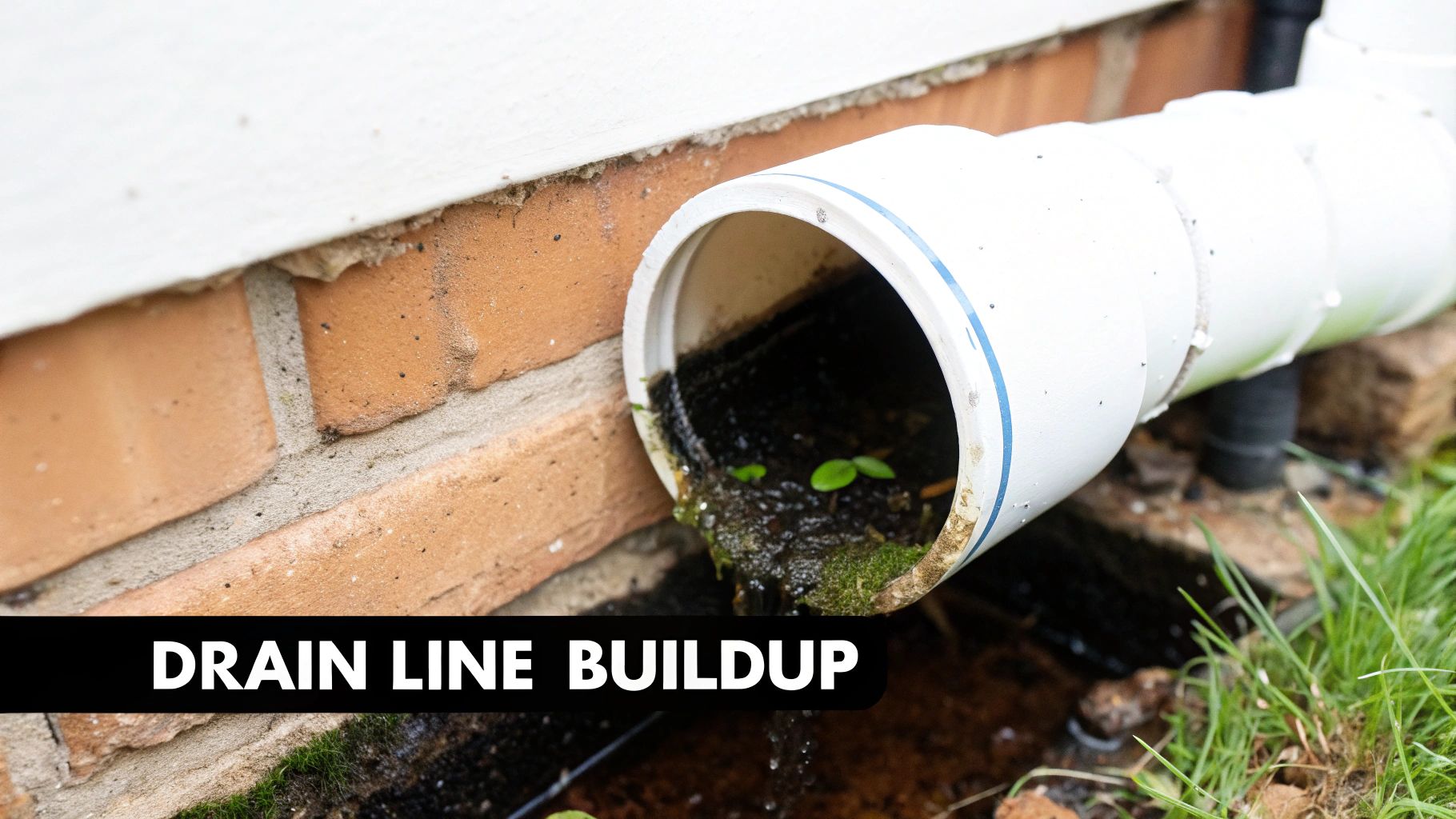
Most people know their air conditioner cools the air, but it's also a powerful dehumidifier. As the warm, humid air from inside your home blows over the ice-cold evaporator coil, moisture condenses into water droplets, just like a cold glass of sweet tea sweating on a hot Tucson day.
This water drips down into a drain pan and is supposed to flow outside through a simple PVC pipe, the condensate drain line. It's a straightforward system, but its very design creates the perfect storm for a clog.
The Perfect Environment for Blockages
Think about it: the inside of that condensate line is always dark and moist. This creates an ideal breeding ground for all sorts of biological growth. Throw in some airborne dust and debris, and you've got a recipe for a stubborn clog.
The main offenders we see causing these blockages include:
Algae and Mold: These slimy organisms thrive in damp, dark tubes, forming a biofilm that coats the pipe's inner walls.
Dust and Debris: Your HVAC system is constantly pulling in dust, pet dander, pollen, and other tiny particles. If your filter is dirty, more of this gunk gets through and settles in the drain line.
Sludge Formation: Over time, that algae, mold, and dust mix together into a thick, gelatinous sludge that slows and eventually stops the water from flowing.
This buildup doesn't happen overnight. It starts as a thin layer of slime and slowly accumulates until it acts like a dam, preventing condensation from escaping. To get a better feel for all the parts involved and what leads to a clog, it can be helpful to learn more about your entire AC piping system.
From a Minor Nuisance to Major Damage
A clog might not seem like a big deal at first, but the consequences can get serious, fast. A typical HVAC system in our climate can pull up to 20 gallons of water per day out of the air. When that water has nowhere to go, it backs up into the drain pan.
Once the drain pan overflows, that water spills out. We’ve seen it cause significant damage to ceilings, walls, insulation, and even the sensitive electrical components of a furnace or air handler. It's a surprisingly common scenario for homeowners.
In fact, a shocking 90% of central air conditioning service calls are related to water leaks that trace right back to a clogged condensate drain line. It's almost always that familiar mix of dust, dirt, and organic growth inside the PVC pipe.
Luckily, many modern AC units have a safety float switch. This little device is designed to shut the whole system off if it detects high water levels in the drain pan. While it does a great job of preventing a flood, it also means your cooling gets cut off until the clog is cleared. If you think you're dealing with an overflow, our guide can walk you through a quick diagnosis of an air conditioner condensation leak.
Understanding what causes the blockage is the first step toward preventing a costly repair bill and keeping your home cool and dry.
Before you can jump in and start clearing a clog, you first have to be sure that's actually the problem. Thankfully, your air conditioner is pretty good at sending up flares when its drain line is blocked. Learning to read these signals helps you catch the issue early, long before it becomes a major disaster.
The most obvious sign, the one you can't miss, is a full or overflowing secondary drain pan. This pan is usually right under your indoor air handler and acts as a last line of defense. It’s only supposed to have water in it when the primary drain line has failed. If you see standing water in there, it’s a dead giveaway that water isn't getting out the way it should.
Visual and Audible Clues
Beyond a full drain pan, other signs might be a bit more subtle, but they're just as critical. Keep your eyes and ears open for these telltale warnings that point straight to a blockage.
Mysterious Water Stains: Noticed new, damp spots on your ceiling or walls near the indoor AC unit? That’s a classic sign the drain pan has already overflowed, and water is starting to seep into your home's structure.
Puddles Near the Air Handler: Finding a pool of water on the floor around your furnace or indoor unit is never a good sign. For many homeowners, this is the first thing they notice when a clog gets really bad.
Odd Dripping Sounds: If you hear unusual dripping or trickling noises from your AC unit while it's running, that could be water spilling over the edge of the main drain pan because it has nowhere else to go.
Here's a critical clue many people overlook: their air conditioner suddenly shuts down and refuses to turn back on. This isn't your typical mechanical failure; it's a built-in safety feature doing its job.
The Automatic Shutdown Clue
Most modern HVAC systems come equipped with a small but mighty safety device called a float switch. This sensor sits right inside the drain pan, keeping an eye on the water level. If the water gets too high from a clog, the switch gets triggered, and it immediately cuts power to the entire AC system.
This automatic shutdown is there to prevent a catastrophic flood in your home. While it’s definitely frustrating to lose your cooling on a hot Tucson day, it's your system's way of screaming that there's an urgent drainage problem you need to fix. If your AC quits on you out of the blue, a blocked drain line should be one of the very first things you check.
That Unpleasant Smell from the Vents
Another sense you can rely on is your nose. If you catch a whiff of a musty, dirty-sock-like odor coming from your vents when the air kicks on, it's often a sign of trouble brewing in the condensate drain system.
That nasty smell is caused by all the stagnant water and organic gunk festering inside the clogged pipe. It’s the perfect dark, damp environment for mold, mildew, and bacteria to thrive, creating odors that your system's blower fan then happily circulates throughout your home. Spotting these signs gives you the confidence to know you're dealing with an ac condensation drain line clogged issue and can move on to fixing it.
Your Guide to Clearing the Clog Yourself
So, you've spotted the telltale signs of a clogged AC condensation drain line and you’re ready to roll up your sleeves. Good news, this is one of those home repairs that's often a lot less intimidating than it sounds. With a few common tools and a little bit of know-how, you can usually tackle this yourself.
But before you do anything else, let’s talk safety. This is the non-negotiable first step.
Head to your thermostat and switch the entire AC system to the "off" position. Then, find your home's main electrical panel and flip the breaker that powers your air conditioner. This double-check ensures there's absolutely no electricity running to the unit while you're working.
The flowchart below shows just how a simple clog can escalate, starting with an overflowing pan and leading all the way to a complete system shutdown.
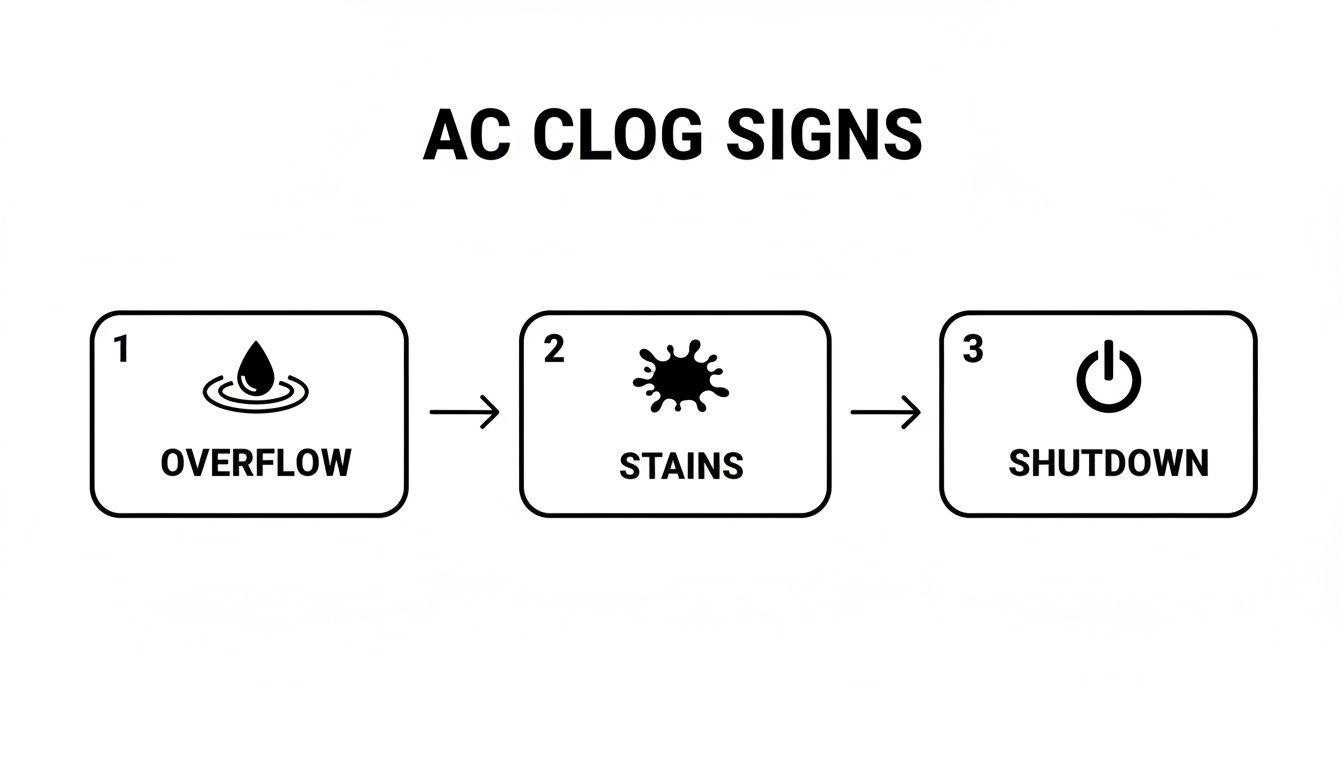
It’s a great visual reminder of why catching this early is so important, it can save you from serious water damage and a much bigger repair bill.
Finding the Condensate Drain Line's Access Point
With the power safely off, your first mission is to locate the cleanout port for the condensate line. This is almost always near your indoor air handler (the unit that's typically in a closet, the attic, or garage).
Look for a white or grey PVC pipe coming out of the unit. You're searching for a specific piece: a T-shaped pipe with a cap on top. That's the access point, designed for exactly this kind of maintenance.
Go ahead and twist or pull off the cap. If you peer inside and see standing water, that’s your confirmation, you’ve definitely got a clog on your hands.
There are a couple of tried-and-true DIY methods for clearing these blockages. Both are effective, but one might be better suited for your situation than the other.
DIY Condensate Line Cleaning Methods
Below is a quick look at the most common DIY methods for clearing out that gunk, along with what you'll need and how tough the job is.
Method | Best For | Required Tools | Difficulty Level |
|---|---|---|---|
Wet/Dry Vacuum | Tough, stubborn clogs that are completely blocked. | Wet/dry shop vacuum, duct tape or a thick towel. | Easy to Moderate |
Vinegar or Bleach Flush | Mild clogs and, more importantly, regular preventive cleaning. | Distilled white vinegar (or bleach), funnel, water. | Easy |
Each approach has its place. The vacuum method is your heavy hitter for serious blockages, while a simple flush is perfect for minor clogs and routine upkeep.
Method One: The Wet/Dry Vacuum Technique
For a really stubborn clog, a wet/dry shop vac is your best friend. This method uses powerful suction to pull the blockage out from the exterior end of the pipe.
First, you'll need to find where the drain line exits your house. It’s usually a small PVC pipe sticking out of an exterior wall, often near your outdoor condenser unit and just a few inches off the ground.
Once you’ve found it, get your shop vac ready.
Prep the Vacuum: Make sure you remove the paper filter from inside your wet/dry vac. It's designed for dry dust, and the slimy water you’re about to suck up will ruin it.
Connect the Hose: Attach the vacuum's hose to the end of the PVC drain line outside.
Create a Strong Seal: This part is key. To get enough suction to pull the clog out, you need an airtight connection. Wrap a thick towel or some duct tape tightly around where the hose meets the pipe to seal any gaps.
Now, turn the vacuum on and let it run for one to two minutes. You should hear it pulling water and whatever gunk is in there through the line. Be prepared, what comes out is usually a nasty mix of sludge, algae, and slimy water.
Pro Tip: If you have a helper, ask them to pour a small cup of water into the indoor access port while the vacuum is running outside. This not only helps flush debris but also gives you instant confirmation when the line is clear.
When you're done, turn off the vacuum and disconnect the hose. This powerful technique is often all it takes to clear even the most frustrating clogs.
Method Two: The Flushing Solution (Vinegar or Bleach)
If the clog seems minor, or if you're just doing some preventive maintenance, flushing the line is a fantastic and simple option. You can use either distilled white vinegar or a diluted bleach solution to dissolve the algae and biological buildup that causes clogs.
This is done from the indoor access point, that T-shaped pipe you opened up earlier. You’ll just need a funnel.
Start by placing the funnel into the cleanout opening. Slowly pour about one cup of distilled white vinegar (or a solution of one part bleach to ten parts water) into the line.
Let it sit for at least 30 minutes. This gives the solution time to work its magic and break down all the slimy stuff clinging to the inside of the pipes. After the wait, flush the line by slowly pouring a quart of warm water down the same opening. This will wash away the dissolved gunk and any leftover cleaning solution.
To make sure it worked, pop outside and check the termination point. You should see a steady stream of water flowing out. If you do, mission accomplished! This flush is also one of the best things you can do to prevent future clogs and is a core part of any smart homeowner's guide to air conditioner cleaning.
Crucial Safety Note: Never, ever mix vinegar and bleach. The combination creates toxic chlorine gas, which is extremely dangerous to inhale. Use one or the other, but not both.
After successfully clearing the line with either method, don’t forget to put the cap back on the access tee and restore power to your AC unit at the breaker. Your system should now be back to running smoothly, and you've just saved yourself from a costly service call.
Preventing Future AC Drain Line Clogs
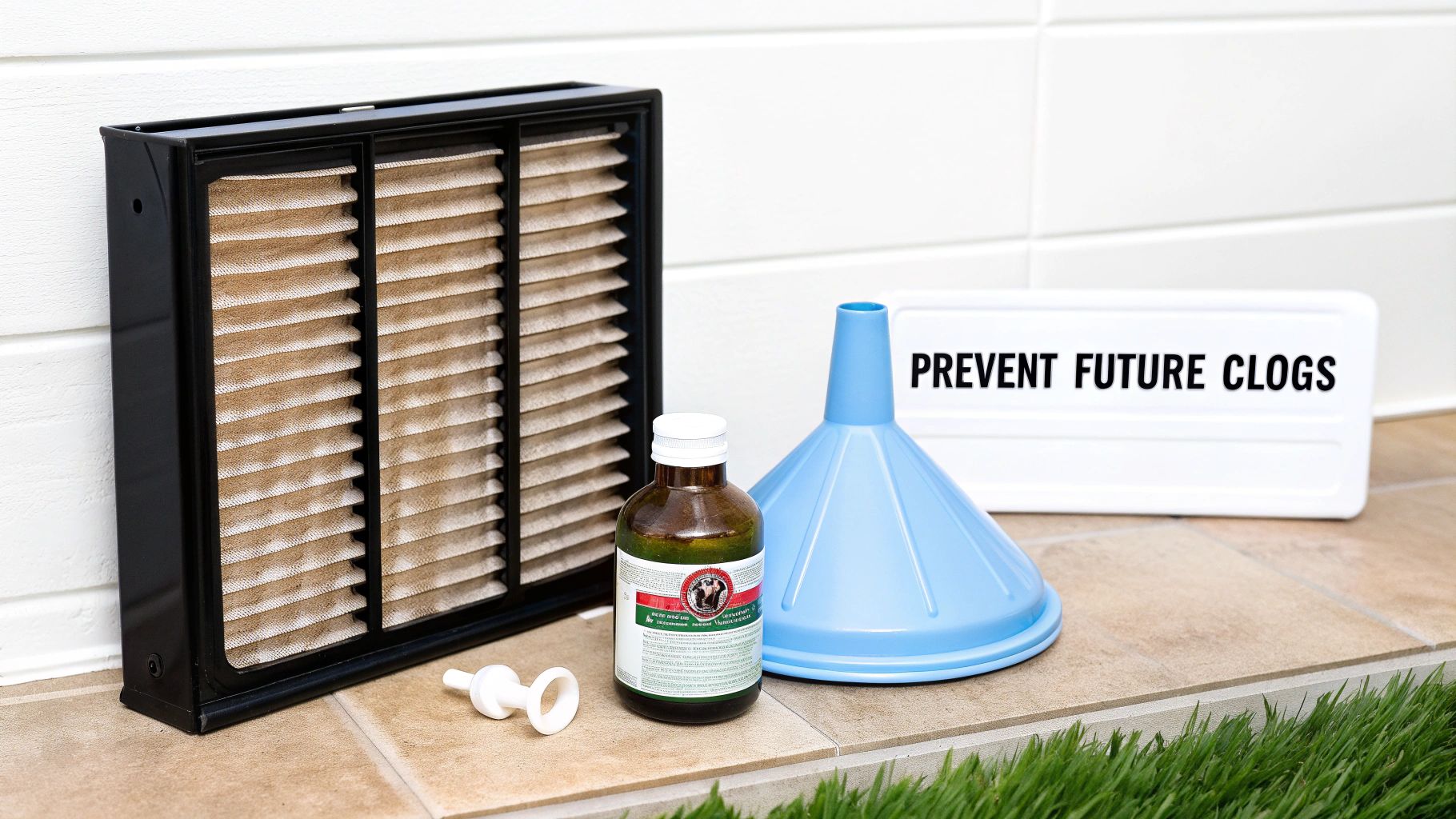
You’ve successfully cleared the clog. It’s a great feeling, but the real win is making sure you don't have to do it again anytime soon. Honestly, preventing an ac condensation drain line clogged issue is way easier than fixing one. It all comes down to a few simple habits that keep your entire HVAC system healthier in the long run.
The single most impactful thing you can do is keep up with your air filters. Think of them as the gatekeepers for your whole system, they stop dust, pet dander, and other gunk before it even gets inside. When a filter gets caked with dirt, airflow struggles, and your AC starts pulling that debris deeper into the unit where it mixes with condensation and forms that nasty sludge in the drain line.
Establish a Simple Maintenance Routine
Consistency is your best friend here. A simple, repeatable maintenance routine is what saves you from surprise water damage and those frantic, expensive emergency calls. The goal is to stop algae and mold from growing before they can form a stubborn blockage.
A quarterly flush with distilled white vinegar is probably the most effective thing a homeowner can do. It's cheap, it's safe for your pipes, and it only takes a few minutes every few months to keep that line clean and free-flowing.
Your Quarterly Preventive Flush Guide
This process is almost identical to the flushing method for clearing a minor clog, but now you're just doing it proactively to stay ahead of the game.
Kill the Power: Always, always, always start by shutting off the power. Do it at the thermostat and flip the breaker. Safety first.
Find the Access Port: Look for that T-shaped PVC cleanout pipe near your indoor air handler and twist off the cap.
Pour the Vinegar: Grab a small funnel and slowly pour one cup of distilled white vinegar into the access port.
Let It Work: Give the vinegar at least 30 minutes to sit in the line. This gives it time to break down any slime or gunk that's starting to form.
Flush It Out: After 30 minutes, slowly pour about a quart of warm water through the same port to wash away the vinegar and any crud it loosened up.
Check and Close: Head outside and check the drain opening to make sure water is flowing out. If it is, you're golden. Just replace the cap on the access port and turn the power back on.
By making this quick flush a regular part of your home maintenance, you're getting ahead of the problem. You're stopping the conditions that allow a clog to form in the first place. It’s a tiny time investment that pays off big.
The Value of a Professional Tune-Up
While these DIY steps are powerful, they don't take the place of professional maintenance. An annual or biannual tune-up from a certified HVAC tech provides a much deeper level of care.
During a professional service call, a technician does a lot more than just flush the line. They use specialized tools to deep clean the evaporator coils, check the drain pan for cracks, and inspect the whole condensate system for proper slope and function. They’re trained to spot underlying issues, like a partially collapsed line or an improperly installed float switch, that you’d likely miss on your own.
This kind of expert oversight is crucial for catching small problems before they become big, expensive emergencies. For a full rundown of what a pro visit should cover, take a look at a comprehensive HVAC preventative maintenance checklist. Think of it as an insurance policy for your home's comfort and your best defense against water damage.
When You Should Call an HVAC Professional
While there's a real sense of accomplishment in fixing a clogged AC condensation line yourself, a smart homeowner also knows when to put down the tools and call for backup. The DIY methods we've covered are great for handling the usual suspects like sludge and algae. But sometimes, a clog is a symptom of a much bigger problem.
Pushing a DIY fix too far can quickly turn a small hassle into a catastrophic, expensive failure. The most obvious sign you're out of your depth is a clog that just won't budge. If you've tried flushing and vacuuming the line a couple of times and are getting nowhere, stop. The blockage is likely too dense or too far down the line for your tools to handle, and you risk cracking the PVC pipe if you keep trying.
Red Flags That Demand an Expert
Beyond a stubborn clog, there are a few other warning signs that mean you need a pro, and fast. Ignoring these red flags can lead to thousands of dollars in water damage or even wreck your entire HVAC system. A licensed technician can get to the root of the problem safely.
It’s time to pick up the phone if you spot any of these issues:
Significant Water Damage: If you’re already seeing water stains blooming on your ceiling or the drywall feels damp, the leak has been going on for a while. A professional needs to trace the source, assess the damage, and check for secondary problems like mold.
Frozen Evaporator Coils: A clog can sometimes cause the coils inside your air handler to turn into a block of ice. This isn't just a simple drainage problem anymore; it points to a more serious airflow or refrigerant issue that cleaning the line won't fix.
System Won't Restart: Most modern AC units have a safety float switch that automatically kills the power when it detects backed-up water. If you've cleared the line but the system still won't power on, you could have a faulty switch or another electrical gremlin on your hands.
A licensed technician doesn't just clear the clog; they diagnose why it happened in the first place. They have specialized tools like pressurized nitrogen systems or powerful drain augers that can obliterate severe blockages without damaging your drain line. This professional approach ensures the problem is truly solved.
Why Professional Service Matters
An experienced HVAC technician brings a lot more to the table than just a powerful shop vac. They understand how the entire system works together. For instance, they can check if the drain line was installed with an improper slope, a common cause of chronic clogs, or spot tiny cracks in the drain pan that might be mimicking a blockage.
This kind of detailed inspection is what ensures your system runs reliably for the long haul. A pro will also verify that all safety switches and electrical components are working correctly after the repair is done, protecting your home from future water damage. Dealing with an AC emergency can be incredibly stressful, which is why having an expert you can trust is priceless. If you find yourself in a bind, our emergency air conditioning repair guide for homeowners has more tips.
Ultimately, calling a professional is a smart investment. It protects your home, your family, and your very expensive HVAC equipment. While DIY is fantastic for routine upkeep, knowing your limits is what separates a good homeowner from a great one.
Still Have Questions About Clogged AC Drains?
Even after walking through the steps, you might still have a few questions about a clogged AC condensation drain line. That’s completely normal. It’s one of the most common issues we see, so let's tackle some of the frequent concerns Tucson homeowners have. Getting clear answers helps you make the right call for your home.
One of the first things people want to know is what it will cost if they decide to call in a pro. If you’ve tried the DIY route and the clog won’t budge, you can generally expect a professional service call to clear a standard blockage to cost between $75 and $250. Of course, that price can shift depending on how stubborn the clog is and where you are in the Tucson area.
Handling Clogs and Cleaners
A question we hear all the time is about using those common household drain cleaners. People often wonder if they can just pour a product like Drano down the line and call it a day.
The answer is a firm no. You should never use harsh chemical drain cleaners in your AC's condensate line. These powerful chemicals are designed for tough metal pipes in your plumbing, not the PVC piping of your HVAC system. They can easily eat away at the plastic and might even damage sensitive components inside your air handler. It's much safer to stick with the gentle but effective solutions, like distilled white vinegar or a very diluted bleach mixture.
Ignoring a clogged AC drain line is a gamble that rarely pays off. The consequences can escalate quickly from a minor inconvenience to a major financial headache, involving costly repairs to your home and HVAC system.
What Happens if the Clog is Ignored?
It's tempting to ignore a small water puddle and hope the problem fixes itself, but that's a huge risk. The backed-up water will eventually overflow the drain pan, and from there, it's a fast track to serious water damage in your drywall, ceilings, and floors.
Beyond the structural mess, that constant moisture creates the perfect breeding ground for mold and mildew. This leads to musty odors and can pose real health risks. If you're already seeing signs of this, our guide on how to stop mold around air vents can help you tackle that secondary problem. Eventually, your system's float switch will likely shut down your AC entirely to prevent a flood, which can also end up damaging electrical parts in the process.
Taking care of a clog right away protects both your property and your wallet from what could easily become a much bigger, more expensive disaster.
If you’ve given the DIY methods your best shot and are still dealing with a stubborn clog, or if you’d just rather have an expert handle it from the start, Covenant Aire Solutions is ready to help. Our certified technicians have the professional tools and hands-on experience to clear any blockage safely and get your system running perfectly again. Protect your home and restore your peace of mind by scheduling a service with us today at https://www.covenantairesolutions.com.