
What is two stage cooling: what is two stage cooling and how it boosts comfort
- Jan 14
- 13 min read
Ever wondered what "two-stage cooling" actually means? Put simply, it’s an air conditioning system that has two different speeds: a low setting for most days and a high setting for when the heat really kicks in. This smart, dual-capacity approach offers a huge leap in comfort and efficiency compared to a traditional single-stage unit that only knows two modes: full blast or off.
Decoding Two Stage Cooling Technology
Think of a standard, single-stage air conditioner like a simple light switch. It's either all the way on or all the way off. That all-or-nothing cycle is why you sometimes feel those noticeable temperature swings; it gets a little too cold, then a little too warm. Two-stage technology is more like installing a dimmer switch for your home's climate.
Instead of hitting you with a blast of arctic air every time it turns on, a two-stage system spends about 80% of its runtime in its lower, more energy-efficient stage. This first stage runs at about 60-70% of the system's total capacity. It’s this gentle, nearly continuous cooling that erases temperature swings and makes your home feel so much more comfortable. (To get a better handle on how all the parts of your AC work, check out our guide on air conditioning basics for homeowners.)
The Two Operating Modes
The best part? It’s all automatic. Your thermostat reads the conditions inside and out, and the system intelligently picks the right mode for the job.
Stage One (Low Capacity): This is the system's go-to setting, perfect for handling those normal, milder summer days here in Tucson. It runs in longer, much quieter cycles. This is a huge win for dehumidification, as it pulls more moisture out of the air and gets rid of that sticky, stuffy feeling.
Stage Two (High Capacity): When a real heatwave hits and the afternoon sun is beating down, the system seamlessly kicks into its second stage. This unleashes 100% of its cooling power to quickly get your home’s temperature back down to where you want it.
This dual functionality means you get precisely the amount of cooling you need, right when you need it. It completely sidesteps the wasteful energy consumption you see with single-stage units that have no choice but to run at full power, even on a perfectly mild day.
To make it even clearer, here’s a quick breakdown of how each stage works.
Two Stage Cooling At a Glance
This table sums up the two distinct operational modes of a two-stage AC system, showing you what each one does and when.
Operating Stage | Capacity Level | Ideal Conditions | Main Benefit |
|---|---|---|---|
Stage One | Low (60-70%) | Mild to moderately hot days | Energy efficiency & superior dehumidification |
Stage Two | High (100%) | Extreme heat, quick cool-downs | Maximum cooling power when you need it most |
Having both modes available on-demand allows the system to perfectly match its output to your home's needs, giving you a smarter, more efficient way to stay cool.
How a Two-Stage Air Conditioner Actually Works
To really get what two-stage cooling is all about, you have to peek under the hood. The magic behind this technology isn't just one thing; it's the teamwork between two critical components: a two-speed compressor and a variable-speed air handler fan.
Think of it this way: a standard AC is like a light switch, it's either all on or all off. A two-stage system is more like a car's accelerator, giving you just the right amount of power for the road ahead.
The Heart of the System: The Compressor
The real star of this operation is the two-speed compressor. This is the workhorse in your outdoor unit, responsible for pumping the refrigerant that actually does the cooling. A traditional, single-stage unit has a compressor that only knows one speed: full blast. But a two-stage compressor is smarter; it has both a low and a high gear.
Low Stage: This is the default mode, running at about 60-70% capacity. Your system will spend most of its time here, especially on those milder days where you just need to take the edge off the heat.
High Stage: This gear kicks in for 100% capacity. It’s reserved for those brutal Tucson afternoons or when you first turn the system on and need to knock down the temperature quickly.
This dual-speed capability is what makes two-stage cooling so effective. To see just how far this technology has come, you can get a closer look at the inner workings in our detailed explainer on the mechanics of a scroll compressor. It's the most common and efficient type you'll find in modern systems today.
The Secret to Comfort: The Air Handler
The second half of this dynamic duo is the indoor unit's variable-speed air handler, which is just a fancy name for the blower fan. This is the part that pushes the cool air through the vents and into your home. In a two-stage system, this fan is smart enough to adjust its speed to whatever the compressor is doing.
When the compressor is cruising in its low stage, the fan moves the air more slowly and gently. This creates longer, more consistent cooling cycles. You don't get that jarring blast of arctic air that chills the room, satisfies the thermostat, and then abruptly shuts off. Instead, the system just hums along quietly in the background, maintaining your perfect temperature.
These longer, gentler cycles are the secret weapon for beating Tucson's humidity. By passing more air over the cold indoor coil for a longer period, the system wrings much more moisture out of the air. This gets rid of that sticky, clammy feeling that can make a room feel much warmer than the thermostat says it is.
The result? A system that works smarter, not just harder. It eliminates the noisy, jarring starts and stops of older units and creates a far more stable and comfortable home. This gentle operation also means less wear and tear on all the moving parts, since it isn't constantly slamming between off and full power. The fact that it's whisper-quiet is just a great bonus.
Comparing Single Stage, Two Stage, and Variable Speed AC Systems
Picking out a new air conditioner isn't just about the brand name on the side of the unit. It's really about choosing the right technology for your home and lifestyle. To see why a two-stage cooling system is such a popular and smart upgrade for so many homeowners, it helps to line it up against the other options out there.
Let's break down the three main types of AC systems you'll encounter.
The diagram below shows how a two-stage AC system uses a two-speed compressor and a variable-speed fan to deliver smarter, more efficient cooling.
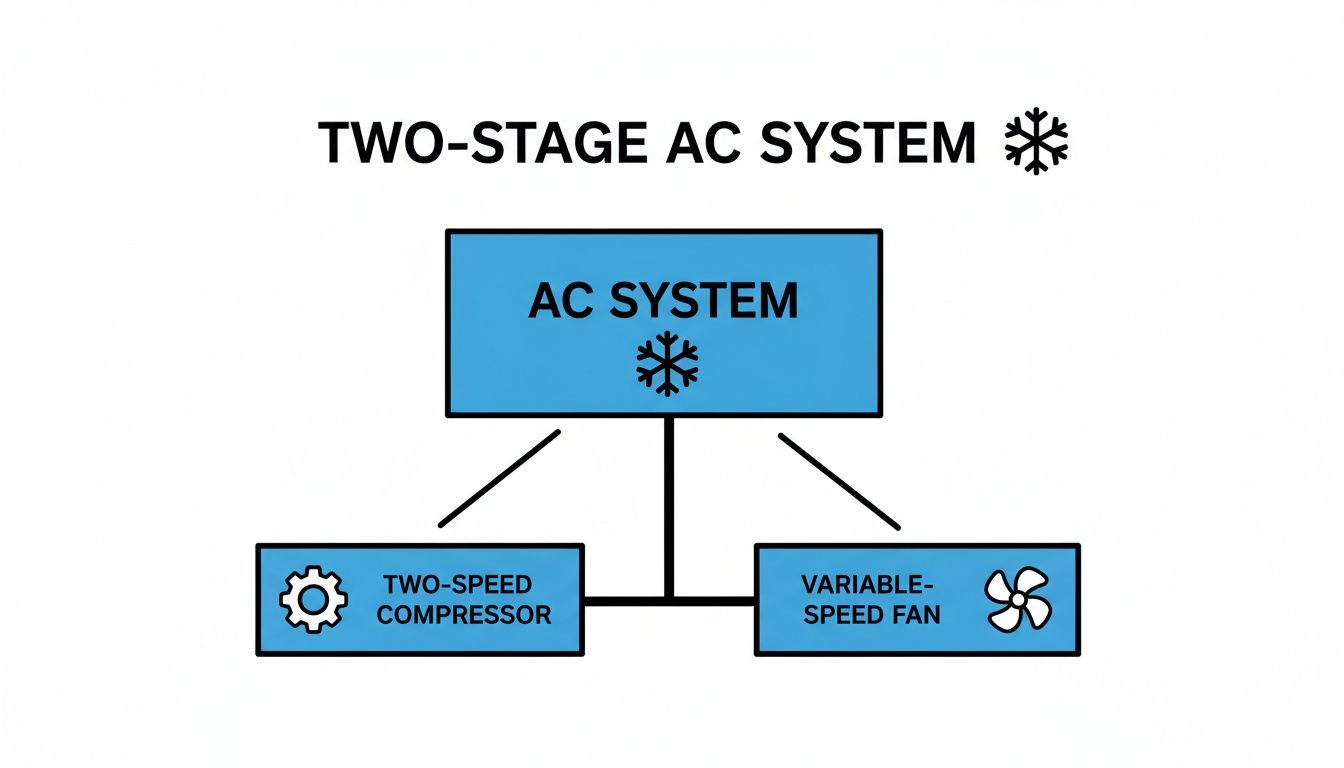
The big takeaway here is that both the compressor and the fan can adjust their output. That’s the magic behind this technology's superior comfort and efficiency.
To help you visualize the differences, we've put together a simple comparison table that breaks down the key features of each system type.
Comparing HVAC System Types
Feature | Single Stage | Two Stage | Variable Speed |
|---|---|---|---|
Compressor Speed | One speed: 100% On or Off | Two speeds: High and Low | Multiple speeds (65 to 100+) |
Energy Efficiency | Standard | High | Highest |
Humidity Control | Basic | Good | Excellent |
Temperature Control | Noticeable swings | Consistent | Very precise and stable |
Noise Level | Loudest | Quiet | Quietest |
Upfront Cost | Lowest | Moderate | Highest |
This table makes it clear how each step up in technology offers significant gains in performance and comfort, moving from a basic on/off system to one that can make hundreds of micro-adjustments.
The Single-Stage Standard
A single-stage AC is the most basic, entry-level system you can buy. Think of it as having a light switch; it’s either all the way on or all the way off.
Every time your thermostat calls for cooling, the compressor kicks on at 100% power and blasts cold air until the set temperature is reached. Then, it shuts off completely. This constant, jarring cycle of starting and stopping can be noisy, creates noticeable temperature swings, and is the least energy-efficient way to cool your home.
The Two-Stage Upgrade
This is where a two-stage AC comes in as a balanced, intelligent middle ground. It essentially has two gears: a low-power mode for most days and a high-power mode for those scorching Tucson afternoons.
It will spend most of its time running quietly on that lower setting, providing a gentle, continuous stream of cool air. This approach maintains a much more consistent temperature, does a far better job of removing humidity, and runs significantly quieter than its single-stage cousin.
By running for longer periods at a lower capacity, a two-stage system avoids the energy-guzzling spikes and mechanical wear-and-tear of constant on-off cycles. The result is real energy savings and a much more comfortable home.
The Premium Choice: Variable-Speed
At the very top of the ladder are variable-speed systems. These are the pinnacle of HVAC technology, operating less like a switch and more like a dimmer.
A variable-speed compressor can ramp its output up or down in tiny increments, sometimes as small as 1%, to perfectly match your home's cooling needs at any given moment. This precision delivers the highest possible energy efficiency and the most stable, even temperatures you can get.
If you're looking for the absolute best in performance, you can dive deeper into how these top-tier systems work in our article on variable-speed heat pumps.
It's also worth noting how two-stage and multi-stage cooling technologies are becoming essential in other areas. The market for direct-to-chip liquid cooling, where two-phase tech has over a 45.5% share, was valued at $1.85 billion and is expected to hit $11.89 billion by 2034. This growth is driven by the intense cooling demands of AI and data centers.
As you weigh your options, don't forget to look at the bigger picture. Integrated solutions like solar-powered HVAC systems can work alongside these efficient technologies to slash your home's energy footprint even further.
Why Two-Stage Cooling Is a Game Changer for Tucson Homes
This is where the real value of two-stage cooling technology snaps into focus, especially when you think about the unique demands of Tucson’s desert climate. Around here, an air conditioner isn't just a nice-to-have; it's a critical appliance that runs hard for months on end. The benefits of a two-stage system directly tackle the biggest comfort and cost headaches we face every year.
One of the most noticeable advantages is superior humidity control, which is a huge deal during our intense monsoon season. A traditional single-stage unit often blasts cold air so fast that it shuts off before it can really pull moisture from the air. This leaves you with a room that feels cool but still uncomfortably sticky and damp.
A two-stage system, on the other hand, spends most of its time running in its lower, gentler stage. These longer, slower cooling cycles pull much more air over the indoor coil, giving the system plenty of time to wring out all that excess humidity. This is the key to achieving that crisp, dry coolness that just feels better than what older systems can manage. If you want to dive deeper into this, check out our guide to ideal indoor humidity ranges in Arizona.
Eliminating Hot and Cold Spots
Here’s another common frustration in Tucson homes: uneven temperatures. You know the feeling, one room feels like a walk-in freezer while the one down the hall is always a few degrees too warm. This usually happens because the short, powerful blasts from a single-stage AC just don't allow for even air distribution.
The extended, low-speed runtime of a two-stage system solves this problem beautifully. By gently circulating conditioned air for longer periods, it gives the air a chance to mix thoroughly throughout your entire home. This process effectively eliminates those frustrating hot and cold spots, creating a much more uniform and stable temperature from room to room.
Real Energy Savings and Quieter Operation
Maybe the most compelling benefit is the impact on your utility bills. Because the system avoids the constant, energy-guzzling starts and stops of a single-stage unit, it uses significantly less electricity. It just runs smarter, using only the power it needs for the current conditions.
In a climate like ours where ACs run relentlessly, this efficiency isn't just a minor perk; it's a major financial advantage. The quieter operation is simply the icing on the cake, replacing the loud, jarring roar of an old unit with a gentle, consistent hum.
The financial impact here is substantial. Two-stage cooling has been a breakthrough for energy efficiency in hot, dry climates like Tucson, where temperatures soar past 100°F for more than 100 days a year. For a typical 2,000 sq ft home, this can easily translate into yearly savings of $500 to $1,000 on cooling costs alone, all without sacrificing comfort during the peak summer heat.
The Financial Case for a Two-Stage AC System
It’s easy to look at the price tag of a two-stage air conditioner and compare it to a basic single-stage model. Yes, the initial investment is typically higher. But if you stop there, you're missing the bigger picture, and the significant return you get over the system's life.
Think of it less as an expense and more as a smart financial decision that starts paying you back from day one.
The most immediate and satisfying return shows up on your monthly TEP bill. A two-stage system spends most of its time (up to 80%) in its lower, energy-sipping stage. It simply consumes far less electricity than a unit that only knows one speed: full blast. This efficiency difference is huge, especially during Tucson's long, intense cooling season, and it leads to substantial savings month after month.
Beyond Monthly Savings
But the financial benefits don't stop with lower energy use. The very design of a two-stage system helps your equipment live a longer, healthier life.
Reduced Wear and Tear: Single-stage systems are constantly slamming on and off. Those jarring start-stop cycles put immense mechanical stress on the compressor and other critical parts. A two-stage unit's gentle, extended run times dramatically reduce this wear, which often leads to fewer breakdowns and a longer operational life.
Fewer Repair Bills: It’s simple: less strain on components means a more reliable system. This translates directly into fewer unexpected, and expensive, repair calls over the years, making the financial case for the upgrade even stronger.
A two-stage system is an investment in both immediate savings and long-term durability. By operating more intelligently, it not only cuts your monthly energy costs but also protects itself from the mechanical stress that shortens the lifespan of lesser systems.
Maximizing Your Return with SEER Ratings
To really capitalize on these financial perks, you also need to look at the system's SEER (Seasonal Energy Efficiency Ratio) rating. A higher SEER rating means greater efficiency, and when you pair that with two-stage technology, the savings potential is truly maximized.
Here's an easy way to think about it: two-stage technology is the method for saving energy (by running at a lower speed), while a high SEER rating ensures the system is as efficient as possible whenever it's running, whether on low or high.
Choosing a two-stage unit with a strong SEER rating is the key to unlocking the greatest possible long-term value. It turns your new AC from a simple appliance into a financially sound home improvement.
How To Properly Maintain Your Two Stage System

You’ve made a smart investment in a two-stage cooling system to boost your home's comfort and efficiency. Now, the key is protecting that investment with the right kind of care.
While some maintenance tasks feel familiar, like swapping out your air filters, the advanced tech inside these units really benefits from a professional's touch.
The gentle, longer run times of a two-stage AC naturally reduce some wear and tear. However, its more sophisticated components, like the two-speed compressor and variable-speed fan, need an expert eye to keep them running at peak performance. Letting this slide can slowly chip away at your system's efficiency, quietly erasing the energy savings you invested in.
The Role of Professional Tune-Ups
This is where having a pro inspect your system twice a year becomes so valuable. A trained technician can run diagnostics that go way beyond just changing a filter, ensuring every part of your system is working exactly as it should.
A thorough tune-up for a two-stage unit should always include these key checks:
Compressor Check: The tech needs to verify that both the low and high stages are kicking on correctly based on your thermostat’s signals.
Blower Motor Inspection: They'll also inspect the variable-speed blower to make sure it’s adjusting its speed to match the compressor's output; this is crucial for both efficiency and humidity control.
Electrical and Refrigerant Levels: Checking all the connections and making sure refrigerant levels are spot-on is critical for any AC, but it's especially important for a system designed for this level of precision.
Enrolling in a trusted maintenance plan is the best way to ensure these critical checks are never missed. Consistent professional service not only preserves your system's efficiency but also helps identify potential issues before they become costly breakdowns.
Taking proper care of your two-stage cooling system is straightforward when you have the right professional partner. For a complete checklist and more tips, check out our essential guide to HVAC system maintenance. It's packed with actionable steps to keep your equipment running smoothly for years to come.
Still Have Questions About Two-Stage Cooling?
Even after laying out all the technical details, it’s completely normal to have a few more questions rattling around. Deciding on a new AC system is a big deal, so let's clear up some of the most common things homeowners ask when they're considering the upgrade.
How Much More Does a Two-Stage AC Cost Upfront?
Okay, let's get right to it: the price tag. A two-stage air conditioner will typically cost about 15% to 30% more upfront than a basic single-stage model. That extra cost covers the more sophisticated hardware, like the two-speed compressor and the smarter thermostat needed to run it.
Of course, the final price tag can shift based on a few things:
The size (or tonnage) of the unit your home needs.
The system's SEER (Seasonal Energy Efficiency Ratio) rating; higher is better but costs more.
How complex the installation will be at your specific property.
While the initial check you write will be a bit bigger, it's crucial to see this as an investment. That higher upfront cost is often balanced out over time by lower monthly energy bills and fewer repair headaches.
Will a Two-Stage System Run All the Time?
This is a really common misconception, and it's easy to see why. Yes, a two-stage system runs for longer stretches than you might be used to, but it’s almost always humming along in its low, energy-sipping mode. This is actually one of its biggest strengths.
Think of it this way: instead of the loud jolt of a single-stage unit kicking on and off, the two-stage system provides a gentle, near-constant flow of cool air. This approach keeps your home's temperature incredibly stable, does a much better job of pulling humidity out of the air, and is way quieter. It runs longer, but it runs smarter.
Is Two-Stage Cooling Worth It for a Smaller Home?
It’s easy to assume that fancier HVAC tech is only for sprawling houses, but that’s not really how it works. Square footage is part of the equation, but it’s often not the deciding factor.
The real benefits of a two-stage system often shine through based on your home's insulation, the number and quality of your windows, and our Tucson climate. Even in a smaller, well-sealed home, a two-stage unit can deliver a level of comfort and humidity control that a single-stage system just can't match.
Ultimately, there's no substitute for a professional opinion. The only way to know for sure if it’s the right move is to have an expert take a look at your home and talk through your family's comfort needs.
Ready to see if a two-stage cooling system is the right fit for your Tucson home? The experts at Covenant Aire Solutions can give you a straight answer with a personalized consultation to find that perfect sweet spot between comfort and efficiency. Visit us at https://www.covenantairesolutions.com to schedule your appointment today.