
A Tucson Homeowner’s Guide to Heat Pump Maintenance
Keeping up with heat pump maintenance is the secret sauce to making sure your system runs like a champ, especially here in Tucson where we really put them through their paces. It’s all about a mix of simple, routine checks you can do yourself and getting a professional tune-up to head off problems before they start. This keeps your system from quitting on you during a heatwave, helps trim down those energy bills, and can add years to its life.
Why Your Heat Pump Needs Regular Attention
Living in Tucson means your heat pump never really gets a break. It’s battling scorching summer days that climb well over 100°F, then it has to completely switch gears for those surprisingly chilly desert nights. That constant back-and-forth puts a ton of strain on every component.
Think of it this way: proactive care isn't a luxury, it's a necessity. If you ignore it, you’re pretty much just waiting for poor performance, high bills, and eventually, a total system failure.
A clean, well-oiled machine just works better. When your heat pump is properly tuned, it doesn't have to work as hard to heat or cool your home, which means it uses less energy. That translates directly into lower TEP bills, especially during our marathon cooling season when energy use can really get out of hand.
Preventing Breakdowns When You Need It Most
Picture this: it’s the middle of July, the monsoon storms are rolling in, and that’s when your heat pump decides to call it quits. It's almost always the worst possible time. A neglected system is practically guaranteed to fail when it's under the most stress. Regular check-ups are your best bet to catch the small, fixable issues before they turn into major headaches.
Here’s what you get with preventative care:
Rock-Solid Reliability: A system that gets regular attention is far less likely to leave you hanging. You can count on it, year-round.
Cleaner, Healthier Air: Maintenance includes cleaning filters and coils, which removes the dust, allergens, and other gunk that would otherwise be circulating through your house.
A Longer Lifespan: You wouldn't drive your car for years without an oil change, right? Same principle. A heat pump that gets regular service will last years longer than one that's ignored, which protects your investment.
The Financial Sense of Maintenance
More and more homeowners are choosing heat pumps, and the service industry is growing right along with it. In fact, the heat pump repair market is on track to hit USD 10.8 billion by 2034, which just goes to show how many people are needing both maintenance and repairs. This trend really highlights the value of getting on a preventive plan to avoid those big, unexpected repair bills.
A proactive maintenance plan is your best defense against expensive, emergency repairs. The small cost of a tune-up can save you thousands by preventing a major component failure, like a burnt-out compressor or a refrigerant leak.
At the end of the day, picking the right system for your home is only the first step. Taking proper care of it is what ensures it actually serves you well for its entire lifespan. If you're still weighing your options, getting a handle on the differences is key. You can learn more about how a heat pump stacks up against a furnace in our Arizona homeowner's guide. This kind of proactive approach is what keeps your home comfortable, no matter what the Tucson weather decides to throw at us.
Your Practical DIY Heat Pump Maintenance Checklist
You can play a huge role in keeping your heat pump efficient and long-lasting just by tackling a few simple tasks. A lot of the essential upkeep is straightforward enough for any Tucson homeowner to handle with a bit of guidance. This checklist breaks down those easy monthly and seasonal jobs that boost performance and help you catch small problems before they become big, expensive headaches.
This timeline is a perfect example of what happens when simple care gets ignored. A little neglect can quickly lead to a monsoon-season breakdown, a shocking spike in your summer bills, and a much shorter lifespan for your system.
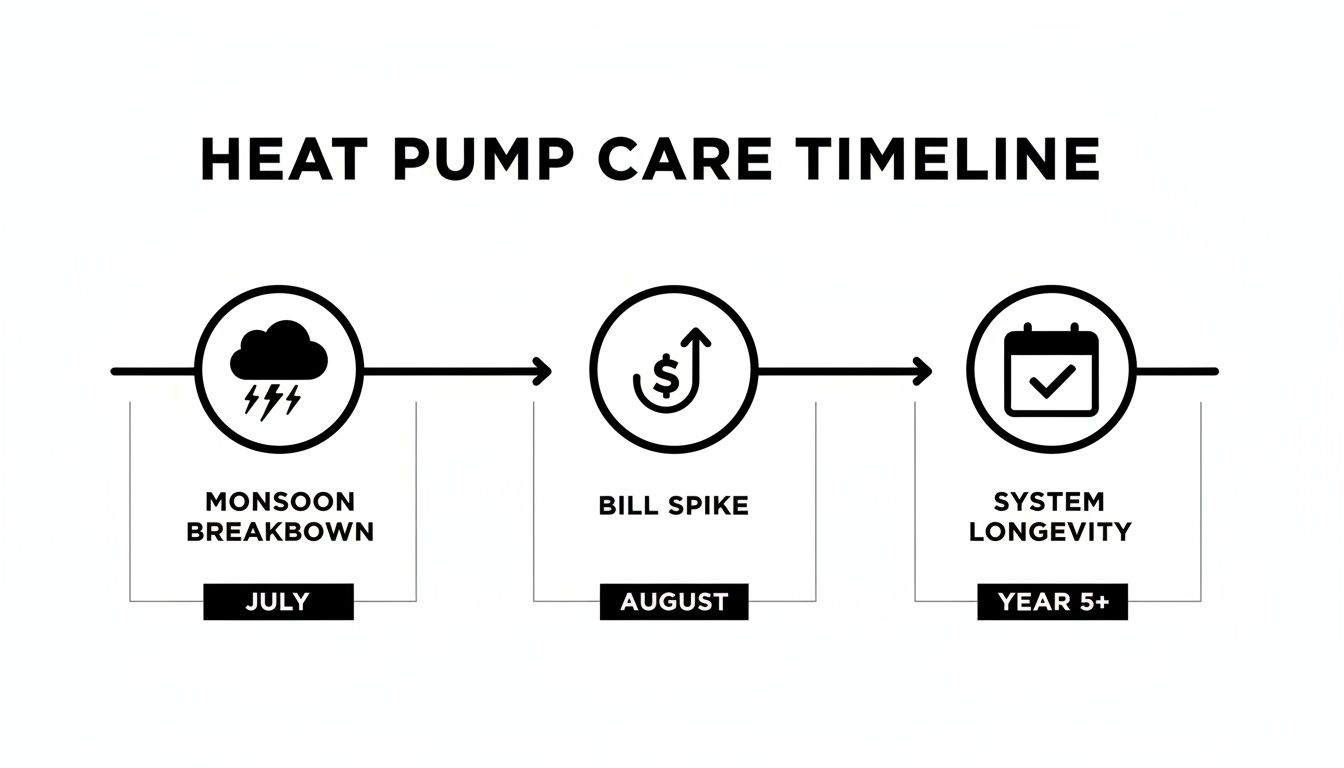
It really just shows how a few consistent, simple actions can lead to years of reliable comfort and real savings.
Monthly Maintenance You Can Handle
These quick checks only take a few minutes a month, but they make a massive difference in how your system performs, especially when it’s working overtime in the Tucson heat.
The single most important thing you can do every month is check your air filter. A clogged filter is hands-down one of the most common reasons for HVAC trouble. It chokes the system, forcing it to work much harder just to pull in air. That strain drives up your energy use and can even cause the unit to overheat.
Here in Arizona, dust is just a fact of life. That’s why picking the right filter is so important for both your heat pump’s health and the air you breathe inside.
Filter Tips for Tucson Homes:
Check Monthly: During our long summers and chilly winters, you absolutely need to inspect your filter every 30 days. It might not need changing every time, but you have to look.
Choose the Right MERV Rating: We've found a MERV (Minimum Efficiency Reporting Value) rating between 8 and 11 is the sweet spot for most homes here. It’s strong enough to trap our fine desert dust and allergens without restricting airflow too much, which can be hard on some systems.
Mind the Arrow: When you slide a new filter in, look for the arrow printed on the frame. It needs to point in the direction of the airflow, which is always toward the main unit, not toward the return vent.
Seasonal Tasks for Peak Performance
As we swing from heating to cooling season and back again, a couple of extra steps will get your heat pump ready for the brutal months ahead. These tasks are all about the outdoor unit and proper drainage.
Your outdoor unit, the condenser, needs to breathe. It works by pulling in huge amounts of air to transfer heat. When it's smothered in palo verde leaves, dust, and other yard debris, it can't do its job. The compressor is forced to run longer and harder, which wastes energy and puts serious wear and tear on the most expensive part of your system.
Before you touch the outdoor unit, always shut off the power. There are two places to do this: the breaker in your main electrical panel and the outdoor shutoff box, which is usually a small metal box mounted to the house right next to the unit. Your safety comes first.
With the power off, start by clearing away any leaves, weeds, or debris.
Gently clearing debris from around the outdoor unit is such a simple but effective task. Try to maintain a two-foot clearance on all sides. This gives the unit the breathing room it needs for proper airflow, which is critical for efficiency.
Once the big stuff is gone, look at the delicate metal fins on the coils. If they're caked with dirt, you can give them a gentle rinse with a regular garden hose. Just use a light spray; a high-pressure nozzle can easily bend and damage those fragile fins. For a more detailed walkthrough, check out our guide on how to clean condenser coils for an easy DIY project.
Another must-do, especially right before the monsoon season hits, is checking the condensate drain line. This little PVC pipe is responsible for carrying away all the moisture your system pulls out of the humid air. If it clogs with algae and sludge, that water will back up and can cause some serious water damage inside your home.
You can help keep it flowing by pouring a cup of a 50/50 distilled vinegar and water solution down the line every few months. This simple flush helps kill the gunk that causes blockages.
Finally, take a quick look at the refrigerant lines: the two copper pipes running between the indoor and outdoor units. They should be wrapped in black foam insulation. If you see spots that are cracked, torn, or missing, that's lost energy and efficiency that needs to be fixed.
Common Heat Pump Problems and When to Call an Expert
Even with the best DIY maintenance routine, your heat pump will eventually act up. Here in Tucson, our systems work overtime, and knowing the difference between a minor hiccup and a major problem is the key to avoiding a truly expensive repair bill.
This is where you shift from routine upkeep to a bit of troubleshooting.
Let's walk through some of the real-world issues we see all the time with Tucson homeowners. We'll cover what you can check yourself and pinpoint the exact moment it's time to call us at Covenant Aire Solutions.
Your Heat Pump Blows Cool Air in Heat Mode
This is probably the #1 complaint we get when the temperatures start to drop: the heat pump is running, but the air coming out of the vents is lukewarm at best. Before you assume the worst, there are a couple of simple things to check.
First, head straight to your thermostat. Make sure it’s actually set to "Heat" and the target temperature is a few degrees above the current room temperature. It sounds obvious, but you'd be surprised how often a programmable thermostat's schedule gets wonky or someone bumps the switch over to "Cool."
Next up, the circuit breaker. A tripped breaker is a common and thankfully easy fix. Go to your electrical panel, find the breaker for your "HVAC" or "Air Handler," and see if it’s flipped to the middle or off position. If it is, push it all the way to "Off" and then firmly back to "On."
A quick heads-up: your heat pump might be in its defrost cycle. This is totally normal. The system briefly reverses itself to melt any frost off the outdoor coils. But if that cool air keeps blowing for more than 10-15 minutes, it’s a sign something else is wrong.
Still getting cool air? The problem might be a bit more complicated. For a deeper look, check out our guide on what to do when your heat pump is not blowing hot air for a practical troubleshooting walkthrough. It’ll help you narrow down the possibilities.
The Outdoor Unit Is Covered in Ice
A light dusting of frost on the outdoor unit on a chilly morning is perfectly fine, as it'll melt away during the defrost cycle. A unit encased in a solid block of ice, however, is a serious problem. That ice is suffocating your system by blocking airflow.
The first move is the same as before: check for a tripped breaker and make sure your indoor air filter isn't completely caked with dust. A clogged filter is a primary cause of frozen coils because it chokes off the airflow. Also, take a quick look at the top of the outdoor unit to make sure leaves or a forgotten tarp aren't blocking the fan.
When This Becomes an Expert's JobIf you've checked all the basics and the ice returns, it's time to call in a pro. This icing is usually a symptom of a much bigger issue that you can't fix on your own.
Low Refrigerant: A leak in the refrigerant line is a classic cause of freeze-ups. Only a certified technician is legally allowed to handle and recharge refrigerant.
Faulty Defrost Control: The brain of the defrost system, a sensor or control board, might be on the fritz, preventing the cycle from ever starting.
Blower Motor Issues: If the fan inside isn't moving enough air over the indoor coil, it can trigger a chain reaction that leads to an iced-over outdoor unit.
Trying to DIY these repairs is not only dangerous but can easily lead to more expensive damage.
You Hear Strange Noises or Smell Odd Odors
Your heat pump has a normal operating sound, a consistent hum. When new, alarming sounds pop up, listen closely. They’re usually early warning signs of mechanical failure.
Grinding or Squealing: This is the classic sound of failing motor bearings. Shut the system down immediately to prevent the motor from completely seizing.
Loud Banging or Clanking: Could be a loose part, like a fan blade hitting something, or a much more serious problem inside the compressor.
Buzzing or Hissing: A loud buzz often points to an electrical fault, while a hissing noise is a tell-tale sign of a refrigerant leak.
Smells are just as important. A musty odor often means mold is growing on the indoor coil or in your ducts. But a burning smell is an emergency. If you smell anything burning, turn the system off at the breaker right away and call a professional.
Drawing the Line Between DIY and a Professional Call
While checking a few simple things yourself can be empowering, knowing your limits is what keeps you safe and protects your HVAC system. Some jobs are always for a licensed technician.
Call Covenant Aire Solutions When You Encounter:
Electrical Issues: Anything involving wiring, capacitors, or contactors is off-limits. The high voltage in these systems is incredibly dangerous.
Refrigerant Problems: As mentioned, handling refrigerant requires an EPA certification. Leaks harm your system's performance and the environment.
Compressor Trouble: The compressor is the heart of your heat pump. Problems here are complex and require specialized diagnostic equipment to fix properly.
Persistent Short Cycling: If your unit kicks on and off every few minutes, it’s a symptom of a deeper issue that needs an expert diagnosis.
Consistent heat pump maintenance is the best way to prevent these problems from happening in the first place. But when they do, making a quick call to an expert will save you a ton of time, money, and stress.
The Value of Professional Heat Pump Tune-Ups
While your own DIY efforts make a huge difference, a professional tune-up goes much deeper. It gets into the complex electrical and mechanical systems that are strictly off-limits to homeowners for good reason.
Think of it like this: changing your air filter is like checking your car’s tire pressure. A professional service, on the other hand, is the full engine diagnostic and oil change. Both are vital, but they serve very different purposes in keeping things running reliably for the long haul.
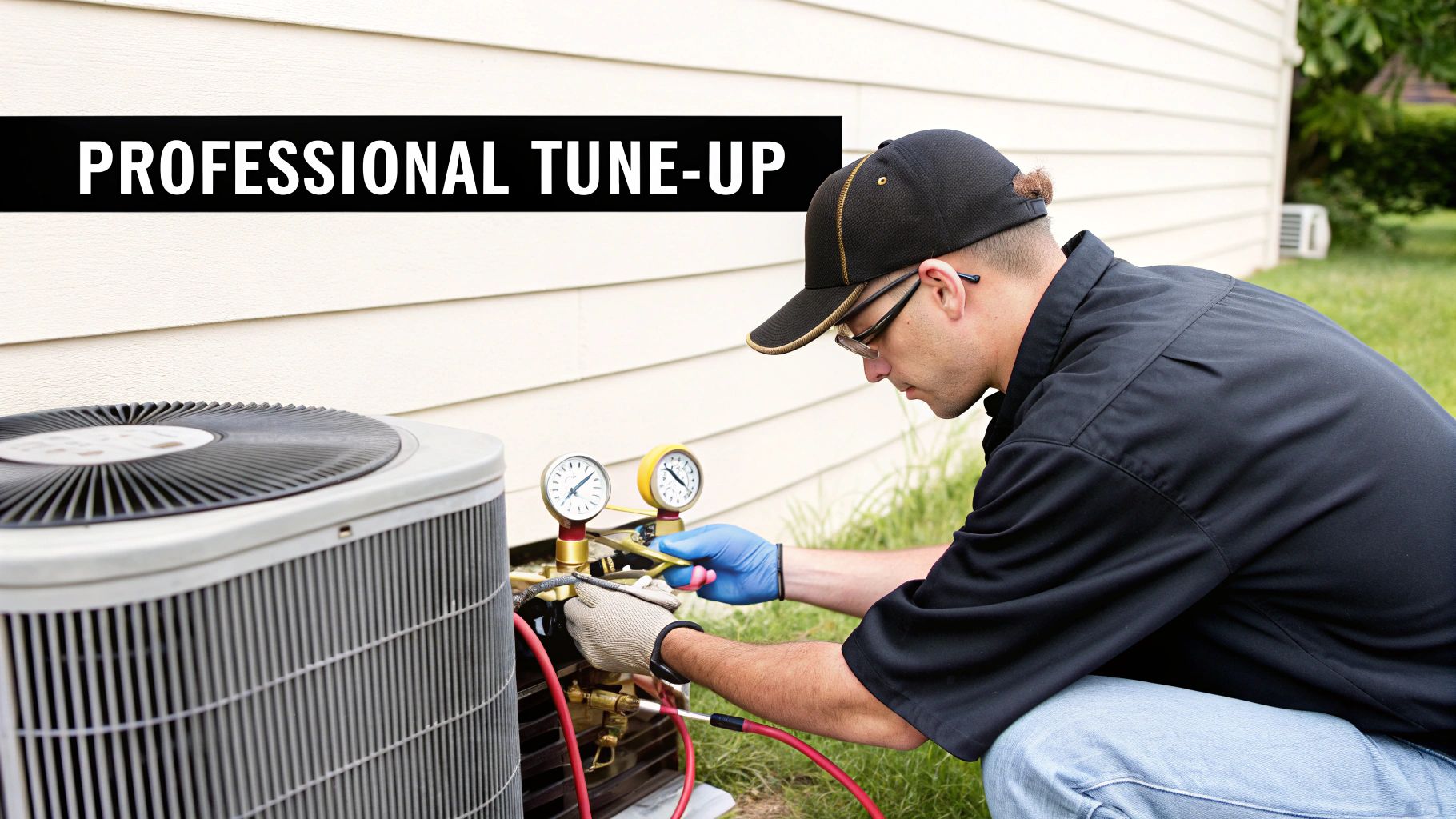
When a certified Covenant Aire Solutions technician visits your Tucson home, they aren’t just looking things over. They perform a meticulous inspection designed to restore efficiency and, more importantly, catch problems before they snowball into a mid-summer breakdown.
Beyond the Basic Checklist
A professional maintenance visit involves technical tasks that require specialized tools, training, and certifications. Our technicians methodically work through every critical component of your heat pump, making sure each part is working in perfect harmony.
Here’s a glimpse into what this detailed service actually looks like:
Verifying Refrigerant Levels: An incorrect refrigerant charge is one of the top causes of inefficiency and component failure. Our techs use precise gauges to ensure the charge matches manufacturer specs, a task that legally requires EPA certification.
Tightening Electrical Connections: Over time, vibrations can loosen electrical connections. This isn't just a performance issue; it's a serious fire hazard. We inspect and tighten every terminal and wire.
Lubricating Motors and Bearings: All those moving parts in the fans and motors need proper lubrication to cut down on friction. Without it, they can overheat and seize, leading to expensive motor replacements.
Thorough Coil Cleaning: We’re talking a deep clean of both the indoor evaporator coil and the outdoor condenser coil. This removes the stubborn, caked-on grime that a simple garden hose just can’t touch and can dramatically improve performance.
The Tangible Benefits of Expert Care
These technical services translate directly into benefits you can actually see and feel. Improved energy efficiency is the most immediate perk. A well-tuned system doesn't have to struggle to cool your home, which means it uses less electricity. That shows up on your monthly utility bill.
This level of care also significantly extends the lifespan of your system. Catching a failing capacitor or a loose wire today prevents a catastrophic compressor failure tomorrow. This proactive approach is a cornerstone of smart homeownership. For a broader look at this concept, exploring principles like the Top 10 Preventive Maintenance Best Practices can provide valuable context for making all your home systems last longer.
A professional tune-up is your best investment for ensuring better indoor air quality. By thoroughly cleaning coils and blower components, technicians remove built-up dust, mold, and bacteria that would otherwise circulate through your home's air.
The growing understanding of professional care is reflected in market trends. The global heat pump maintenance market was valued at USD 8.3 billion, a number that shows a strong economic commitment to keeping these systems in peak condition as more people adopt the technology.
Covenant Aire Solutions Preventive Maintenance Plans
We created our preventive maintenance plans to make consistent care simple and affordable for Tucson homeowners. These agreements are designed to provide complete peace of mind, ensuring your system gets the expert attention it needs without you having to remember to schedule it.
Our plans offer more than just two tune-ups per year; they provide a true partnership in your home’s comfort.
Key Advantages of Our Plans:
Priority Service: When you have a problem, you move to the front of the line. That's a huge relief during a July heatwave.
Repair Discounts: Plan members receive valuable discounts on both parts and labor for any necessary repairs, saving you money when you need it most.
No Overtime Charges: You will never pay extra for emergency service after hours or on weekends.
Peace of Mind: Honestly, just knowing your system is cared for by licensed, trusted professionals provides an invaluable sense of security.
Ultimately, deciding if a service agreement is right for you involves weighing the upfront cost against the long-term savings and benefits. You can explore a detailed breakdown of the value by reading our guide on whether an AC maintenance plan is worth it. Investing in professional heat pump maintenance is the smartest way to protect your system, lower your bills, and ensure your home remains a comfortable sanctuary all year round.
Is Heat Pump Maintenance Worth the Cost?
Let's be honest: when it comes to home expenses, every dollar counts. So, is investing in routine heat pump maintenance just another bill, or is it a smart financial move? Here in Tucson, with our demanding climate, it’s absolutely the latter.
The real value isn't just about what you're paying for; it's about what you're avoiding. Think sky-high energy bills and the kind of catastrophic repair costs that can wreck a budget. A small, planned expense now is your best defense against a huge, unexpected one later.
A Look at the Numbers
A one-time professional tune-up in the Tucson area comes at a predictable, set price. It’s a great way to get a comprehensive check-up on your system. But for even better value, most homeowners opt for an annual service agreement, like the plans we offer at Covenant Aire Solutions.
These plans typically bundle two seasonal visits into one affordable package and often come with perks like priority service and discounts on any repairs that might pop up. For a more detailed look at what goes into these costs, you can explore our complete guide on how much HVAC maintenance costs.
The philosophy is simple: pay a little now to avoid paying a lot later. Regular maintenance keeps every part of your heat pump running as it should, preventing the kind of wear and tear that leads to major breakdowns. It's one of the smartest financial decisions a homeowner can make.
This focus on efficiency has never been more critical. Modern heat pumps can slash energy use by 30-60% compared to older heating systems, but that's only if they're running correctly. With the residential sector making up 86% of the market, homeowner maintenance is the key to unlocking those savings. You can find more insights about the growing heat pump market on marketsandmarkets.com.
Calculating Your Return on Investment
So, where do you see the payoff? The first and most obvious place is your monthly utility bill. A clean, well-tuned system doesn't have to struggle to cool or heat your home, which means it uses significantly less electricity.
Imagine this real-world scenario: your system is a bit low on refrigerant and the coils are caked with a season's worth of dust. To keep your home even moderately comfortable, it might have to run almost constantly, causing a huge spike in your energy bill. A single maintenance visit could fix both issues, potentially lowering your bill by 10-25% practically overnight.
Beyond the monthly savings, the biggest financial win is avoiding an early replacement. A neglected heat pump might give up the ghost in just 10 years. A well-maintained one? It can easily keep you comfortable for 15-20 years or even longer.
Maintenance vs. Replacement: A Cost Comparison
Expense Category | Annual Maintenance Plan | Major Repair (e.g., Compressor) | Full System Replacement |
|---|---|---|---|
Typical Cost | A few hundred dollars | $1,500 - $3,000+ | $7,000 - $15,000+ |
Financial Impact | Predictable, budgeted cost | Unexpected, major expense | Significant investment |
When you see the numbers laid out like that, the choice becomes pretty clear. That consistent, small investment in maintenance is actively protecting you from the massive costs that come with neglect. It turns heat pump maintenance from just another chore into a powerful financial strategy for your home.
Your Top Questions About Heat Pump Maintenance in Tucson
Even with a checklist in hand, you've probably got some practical questions buzzing around. We get it. Let's wrap things up by tackling the real-world questions we hear most often from homeowners right here in our community.
This is your go-to spot for clear, no-nonsense advice on what it really takes to own a heat pump in our unique Arizona climate.
How Often Do I Really Need Heat Pump Service in Arizona?
This is a fantastic question because the answer for us here in Tucson is different than for folks in milder climates. Your heat pump is a workhorse, battling both scorching summer heat and surprisingly chilly winter nights. It never really gets a break.
For that reason, biannual service is essential. We can't stress this enough. One tune-up in the spring prepares it for the cooling season, and another in the fall gets it ready for heating. This schedule ensures your system is always primed for peak demand, keeping it efficient and reliable when you need it most.
Could Skipping Maintenance Void My Heat Pump Warranty?
Yes, in most cases, it absolutely can. Nearly every HVAC manufacturer makes regular professional maintenance a condition of their warranty. If you ever need to file a claim, they'll ask for proof of service.
Imagine if a major component like the compressor fails. The manufacturer can deny your claim if you can't show a consistent service history from a licensed professional. Neglecting those tune-ups could turn what should have been a covered repair into a massive out-of-pocket expense.
Think of professional maintenance as an insurance policy for your warranty. It’s a small, consistent investment to protect the much larger investment you made in your home’s comfort system.
This simple act of scheduled care is the best way to keep your warranty valid and your system protected.
Can I Do a Full Tune-Up Myself to Save Money?
While we love it when homeowners get hands-on with DIY tasks like changing filters or clearing debris from the outdoor unit, a full professional tune-up is a different beast entirely. It involves technical work that requires specialized tools, diagnostic equipment, and critical safety training.
A few key tasks should always be left to a certified technician:
Handling Refrigerant: It is illegal for anyone without an EPA certification to handle refrigerant. An improper charge won't just hurt performance; it can destroy your compressor.
Testing Electrical Components: We're talking high-voltage capacitors, contactors, and wiring. Working with these parts without proper training is extremely dangerous and a serious fire risk.
Diagnosing Internal Mechanics: Pinpointing a failing motor, a faulty control board, or a bad sensor takes a deep understanding of the system's complex inner workings.
Trying to tackle these jobs yourself not only puts you at risk of injury but can easily lead to far more expensive damage, wiping out any savings you hoped to gain.
What Is Included in a Covenant Aire Solutions Maintenance Plan?
We designed our maintenance plans to provide complete peace of mind and make professional care effortless for Tucson homeowners. It's more than just a service; it's a partnership to keep your home comfortable year-round.
Each plan, of course, includes two comprehensive seasonal tune-ups, one for cooling and one for heating. But the real value comes from the extra benefits our members receive:
Priority Scheduling: If you have an unexpected breakdown, you go straight to the front of the line.
Valuable Discounts: You get exclusive discounts on both parts and labor for any repairs that come up.
No Overtime Fees: You’ll never pay extra for emergency service on nights, weekends, or holidays.
It’s the simplest, most effective way to ensure consistent heat pump maintenance from licensed technicians who truly understand what it takes to keep a system running in our local climate.
Your comfort and peace of mind are our top priorities. At Covenant Aire Solutions, we're committed to providing honest, reliable service to our Tucson neighbors. Whether you have more questions or you're ready to schedule your next maintenance visit, our team is here to help. Protect your investment and ensure year-round comfort by exploring our maintenance plans today.