
AC Blowing Warm Air? Your Expert Troubleshooting Guide
It's one of the worst feelings on a scorching Tucson day: you crank up the AC, but the air coming out of the vents is lukewarm, or worse, just plain hot. Your first thought might be a catastrophic system failure, but more often than not, the culprit is something surprisingly simple. Before you panic and assume a major repair bill is heading your way, there are a few quick checks you can do yourself.
A functioning AC is an absolute necessity here in Arizona. When it falters, it's more than an inconvenience. It's a widespread issue, too; the global air conditioning market is projected to hit USD 377.66 billion by 2032 as temperatures rise, putting a massive strain on our home systems. In the US alone, homeowners are already spending over $10 billion each year on HVAC repairs, and that number is only going up.
So, let's walk through the first diagnostic steps you can take to figure out what's going on.
Your First Diagnostic Steps
Before you even think about calling for service, let’s cover the basics. I can't tell you how many service calls could have been avoided by running through a simple checklist first. These are the most common and easiest-to-fix issues that cause an AC to blow warm air.
Check the Thermostat Settings: This sounds obvious, but you'd be surprised. Make sure your thermostat is switched to "Cool" and the temperature is set a few degrees lower than the current room temperature. It's easy for settings to get bumped to "Heat" or "Fan Only," which will just circulate room-temperature air.
Look at the Power Supply: Head over to your home's electrical panel. Find the breaker for your AC unit: has it tripped? If it's in the middle or "Off" position, flip it firmly back to "On." If it trips again right away, that's a sign of a more serious electrical issue, and it's time to call a professional. Don't keep resetting it.
Inspect the Air Filter: A clogged air filter is a classic airflow killer. In a dusty climate like ours, filters get dirty fast. If the filter is choked with dust and debris, it can restrict airflow so severely that your system can't cool the air effectively, resulting in that lukewarm breeze you're feeling.
This simple decision tree can give you a visual guide to follow as you troubleshoot.
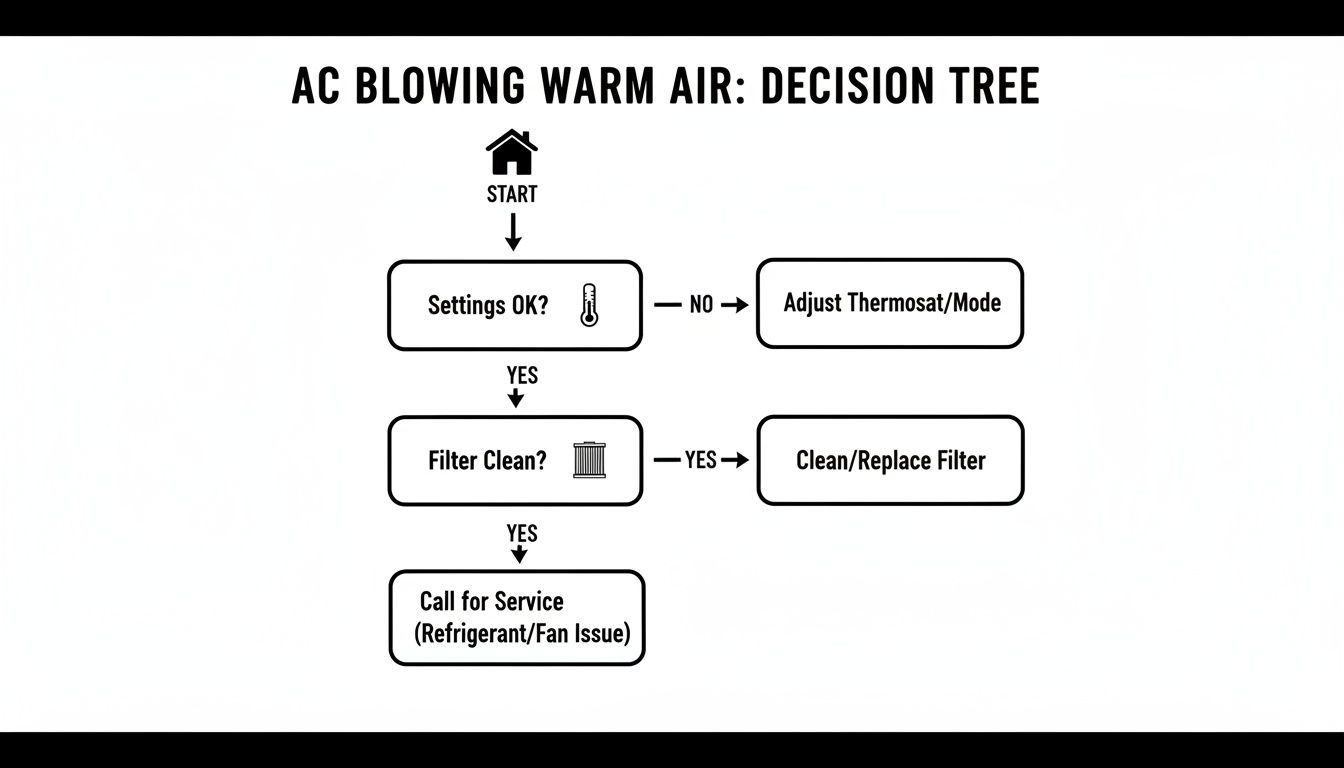
As the flowchart shows, always start by checking your system's settings and looking for simple blockages like that dirty filter. These simple steps can often get your cool air flowing again, saving you time and the cost of a service call.
To make this even easier, here's a quick table you can use to run through these initial checks.
Initial DIY Troubleshooting Checklist
Use this quick-glance table to perform initial checks before calling a professional.
Symptom Observed | Potential Cause | DIY Check or Action | Difficulty |
|---|---|---|---|
Air from vents is warm | Incorrect thermostat settings | Verify thermostat is set to "Cool" and the temperature is below the current room temperature. | Easy |
System isn't running | No power / Tripped breaker | Check the circuit breaker in your electrical panel. Reset it once. If it trips again, do not repeat. | Easy |
Airflow feels weak/warm | Clogged air filter | Inspect the air filter. If it's visibly dirty or clogged with dust, replace it with a new one. | Easy |
Outdoor unit not on | Power issue or internal safety shut-off | Confirm the breaker is on. Look for an external shut-off switch near the unit. Do not attempt further diagnostics. | Easy |
Running through this checklist should only take a few minutes and covers the most common reasons for an AC malfunction.
When Simple Fixes Aren't Enough
So, you've checked the thermostat, the breaker is on, and you've put in a fresh air filter, but your AC is still blowing warm air. At this point, the problem likely runs deeper. Issues like low refrigerant (which could mean a leak), a failing compressor, or a frozen evaporator coil are common culprits that definitely require a technician's tools and expertise.
A frozen coil is an interesting one because it can be a symptom of both restricted airflow (like from a dirty filter) and low refrigerant. You can find out more by reading our homeowner's guide to the AC evaporator coil, which dives into how this critical part of your system works.
Key Takeaway: Always rule out the simple fixes first. Incorrect thermostat settings, a tripped breaker, and dirty filters account for a significant number of "warm air" complaints and are things you can safely check yourself.
Clearing Airflow and Filter Obstructions
When your AC starts blowing warm air, don't panic just yet. More often than not, the culprit is something surprisingly simple: a lack of airflow. Your HVAC system needs to breathe to work properly, and when it can't, cooling performance is the first thing to go.
Here in Tucson, with all our dust, the prime suspect is almost always a clogged air filter. Think of the filter as your system's lungs; it traps all the dust, pollen, and pet dander floating around. Eventually, it gets so packed that it starts choking the system, forcing it to work overtime just to push out lukewarm air.
Checking and Replacing Your Air Filter
This is one of the easiest and most important bits of DIY maintenance you can do. Find the filter slot on your indoor air handler (it's usually tucked away in a closet, the attic, or garage) and slide the filter out. A quick visual check is all you need: hold it up to a light. If you can't see the light shining through, it’s long overdue for a change.
A dirty or clogged air filter is a major factor in 15-20% of cases where an AC is blowing warm air. In dusty Arizona environments, filters can clog twice as fast, forcing the system's fan to blow unfiltered warm air and increasing your monthly energy bills by 5-15%. Learn more about trends in the AC market that affect your home at Grand View Research.
For a typical Tucson home, we recommend changing a standard one-inch filter every 30-60 days. Got pets or live near a dusty construction site? You’ll want to check it even more often. Staying on top of this simple task can add years to your AC’s life and save you a headache later. For a more detailed schedule, check out our guide on how often you should change your AC filter in Arizona.
Looking Beyond the Filter
While the filter is public enemy number one, other blockages can also mess with your airflow. Take a quick walk through your house and inspect all your supply vents (where the cool air blows out) and return vents (the bigger ones that suck air in).
Make sure they aren't blocked by common culprits like:
Couches, bookshelves, or dressers pushed up against them
Rugs or carpets thrown over floor vents
Drapes and curtains covering wall-mounted vents
Finally, step outside and take a look at your condenser unit, that's the big metal box with the fan on top. It needs plenty of room to breathe and push out the heat it pulled from your house. Clear away any leaves, overgrown shrubs, or grass clippings from around the sides. A gentle rinse with a garden hose (from top to bottom, not too much pressure!) can wash away a surprising amount of caked-on dust and help it run much more efficiently.
Diagnosing Deeper Mechanical Failures
So, you’ve already checked off the easy stuff, fresh filter, thermostat settings are correct, but your home is still uncomfortably warm. When the simple fixes don’t work, it’s a sign the problem is likely a deeper mechanical issue.
It’s important to know the warning signs of these more serious failures. Catching them early can be the difference between a manageable repair and a catastrophic system failure that costs a fortune. Ignoring them is never a good idea.
Identifying a Refrigerant Leak
One of the most common issues we see in the field is a refrigerant leak. A lot of people think an AC "uses up" refrigerant like a car uses gas, but that’s a myth. Your AC operates on a closed-loop system, meaning that refrigerant should never run low unless there's a leak.
Simply "topping off" the system without finding and fixing the source of the leak is just throwing money away and harming the environment. Instead, keep an eye, and an ear, out for these telltale signs.
Listen carefully to both the indoor and outdoor units. You might hear:
Hissing noises: This is a dead giveaway that refrigerant is actively escaping from the copper lines.
Bubbling or gurgling sounds: This can also point to a leak somewhere in the refrigerant lines.
Take a look at the copper lines connected to your outdoor unit. If you see ice forming on them, especially on a sweltering Tucson day, that's a huge red flag for low refrigerant. The pressure drop from the leak causes the evaporator coil to get far too cold, freezing any condensation on contact.
Signs of a Failing Compressor
Think of the compressor as the heart of your air conditioner; it’s responsible for pressurizing and circulating the refrigerant that makes cooling possible. When this component starts to go, your entire system is on the line. A failing compressor rarely dies quietly.
Pay close attention to any odd noises coming from the big outdoor unit. A loud buzzing, clanking, or grinding sound is a serious warning that demands immediate attention.
Another big clue is a frequently tripping circuit breaker. A struggling compressor will draw an excessive amount of power trying to start up, overloading the circuit. If you notice these symptoms, it's worth understanding what causes your AC compressor to switch on and off before the component fails for good.
One of the most common culprits behind your AC blowing warm air is low refrigerant levels, a problem rooted in leaks that plague up to 30% of systems after 10 years of use. Globally, this ties into the booming HVAC repair market, where US spending tops $10 billion yearly.
Dealing with a Frozen Evaporator Coil
Another serious problem is a frozen evaporator coil, which is tucked away inside your indoor air handler. When ice builds up on this component, it completely chokes off airflow, which is why you'll feel warm air coming from your vents.
This freezing can be caused by two main culprits: severely restricted airflow (usually from a filthy, clogged filter) or a refrigerant leak.
If you suspect your coil is frozen, the first thing to do is turn your AC system completely off at the thermostat. Next, switch the fan to the "On" position; this will keep air moving across the coil to help melt the ice. Be patient, as this can take several hours.
Even after a repair, if your AC continues to struggle, looking into why repeated HVAC failures happen can shed light on deeper, underlying issues that need to be addressed.
Knowing When to Call a Professional
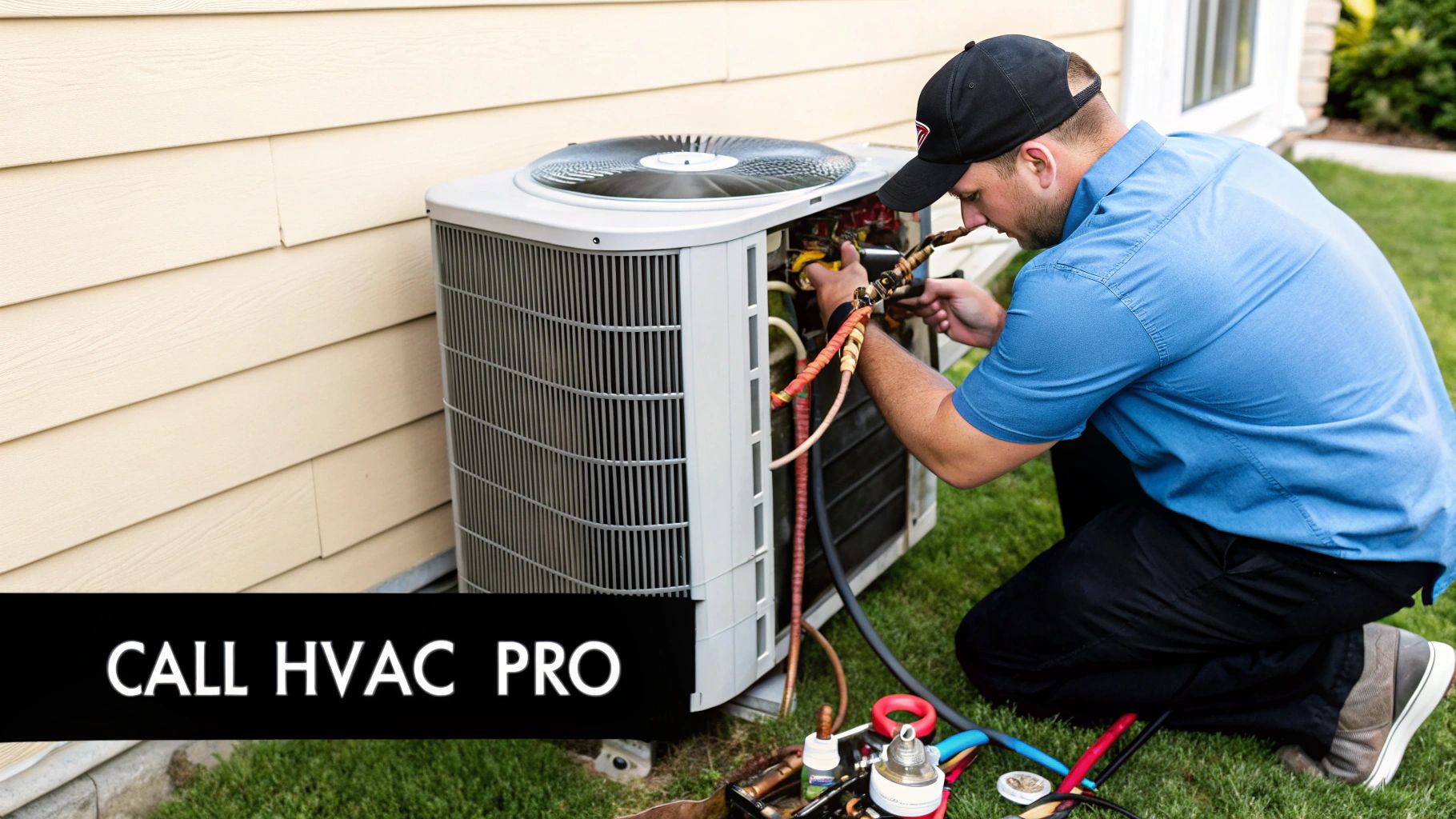
While there are plenty of simple fixes for an AC blowing warm air, there comes a point where you have to hang up your DIY hat and call in an expert. Some symptoms are clear red flags, and ignoring them can quickly turn a manageable repair into a full-blown system replacement. Even worse, some issues pose serious safety risks.
Knowing when a problem is out of your league is crucial. You're protecting not just your wallet, but your family's safety, too. Honestly, some problems just aren't worth the risk, especially when you're dealing with high-voltage electrical parts or pressurized refrigerant lines.
Urgent Warning Signs
If you notice any of the following, don't hesitate. Shut your system down immediately, first at the thermostat, then at the circuit breaker, and call a licensed technician. These signs point to serious trouble that needs a professional eye.
Loud Metallic Noises: If you hear grinding, squealing, or banging coming from your outdoor unit, something is seriously wrong. This often points to a failing compressor motor or fan, and letting it run could cause the whole thing to seize up for good.
Burning Smells: An acrid, chemical, or electrical smell is a major warning. It could be an overheating motor or melted wiring, both of which are serious fire hazards.
Visible Refrigerant Leaks: Beyond just a hissing sound, you might see an oily residue building up around the copper line fittings. Refrigerant is a hazardous chemical, and only certified pros have the right equipment to handle it safely.
Key Takeaway: Your senses are your best friends here. Strange sounds, unusual smells, or visible leaks are your AC’s way of screaming for help. When you notice these urgent signs, it's time to call in a professional, no questions asked.
If you're in an emergency situation, our emergency air conditioning repair guide for homeowners can walk you through the immediate next steps.
Repair Versus Replace
When a major repair pops up, the million-dollar question is always: "Do I fix it or replace it?" It's a tough call, and the right answer depends on a few key factors. Any honest technician should walk you through the pros and cons without pressuring you one way or the other.
At Covenant Aire Solutions, we help you look at the whole picture. We’ll consider the age of your system, because units over 10-12 years old are often less efficient and nearing the end of their useful life anyway. We'll also break down the cost of the repair against the unit's value and the likelihood of other parts failing soon.
Finally, we talk about long-term efficiency. A new high-efficiency system might have a bigger price tag upfront, but the savings on your monthly utility bills can be massive, especially during a brutal Tucson summer. We always provide transparent, upfront pricing on both repairs and replacements, giving you the clear information you need to make the best decision for your home and your budget.
Preventing Problems with Regular Maintenance
The absolute best way to handle an AC blowing warm air is to make sure it never happens in the first place. While knowing how to troubleshoot is great, proactive care is what truly keeps your cooling system reliable, especially when you're staring down another brutal Tucson summer. This is where professional, scheduled maintenance really proves its worth, shifting you from making panicked repair calls to staying ahead of problems.
Think about it this way: regular tune-ups are far more than a quick look-over. They are a deep dive into the health of your entire system. Industry studies have shown that systems getting routine maintenance can be up to 40% more energy-efficient than neglected ones. That's a huge difference that shows up directly on your monthly utility bills and puts less strain on your system’s most critical parts.
What a Maintenance Plan Actually Includes
A professional maintenance plan is all about catching the small issues before they have a chance to snowball into expensive, middle-of-the-night emergencies. Instead of just waiting for a breakdown, our technicians methodically inspect, clean, and fine-tune your system to keep it running at its best.
Our biannual check-ups are comprehensive and typically involve a thorough examination of:
Electrical Components: We hunt for loose connections, test capacitors, and inspect contactors to head off sudden electrical failures that can leave you without any AC at all.
Refrigerant Levels: Our technicians make sure your system has the exact amount of refrigerant it needs. Even being slightly low can dramatically slash its efficiency and cooling power.
Coil Cleaning: We clean both the indoor evaporator and outdoor condenser coils. Why? Because a thick layer of dirt is one of the most common culprits behind poor cooling performance.
Investing in regular maintenance is just like getting oil changes for your car. It's a small, consistent investment that prevents major, expensive breakdowns down the road. Skipping it almost guarantees you’ll face a surprise failure, and it will probably happen during the hottest week of the year.
The Long-Term Benefits of Proactive Care
Joining a maintenance program gives you more than just peace of mind; it’s a strategic move that pays off in several ways. For one, members of our maintenance plan get priority service. So, if you ever do have an emergency, you jump straight to the front of the line.
On top of that, our members also get discounts on any repairs that might be needed, saving them money if a part eventually does wear out. Over the years, this consistent care can extend the lifespan of your unit, potentially pushing back the need for a full system replacement by several years.
To get a better idea of what a quality tune-up should cover, it helps to look at a comprehensive HVAC preventive maintenance checklist. This gives you the full picture, empowering you to keep your system in top condition year after year.
Common Questions About AC Problems
When your AC starts pumping out warm air on a hot Tucson day, a million questions probably race through your mind. We get it. We hear these same questions from homeowners all the time, so let's clear the air and tackle them head-on.
Knowing what's going on with your system, and what to do next, can make a stressful situation much more manageable.
One of the first things people ask is, "Why did my AC suddenly start blowing warm air?" The truth is, it's often not as sudden as it feels. It might be a circuit breaker that finally tripped after weeks of powering a struggling part, or an air filter that became so clogged it finally stopped airflow completely.
How Much Is This Going to Cost Me?
This is usually the very next question, and for good reason. The honest answer is: it depends. The cost to fix an AC blowing warm air can vary dramatically because the potential causes are all over the map.
A straightforward fix, like replacing a faulty capacitor, is going to be on the lower end of the repair scale. But if we're looking at a major problem like a compressor failure or a hard-to-find refrigerant leak, it will be a more significant investment.
We believe in total transparency. That's why we always provide clear, upfront pricing before we start any work. You'll know the exact cost and can approve the repair with no hidden fees or surprises. Our job is to give you all the information you need to make a decision you're comfortable with.
Can I Just Add More Refrigerant?
We hear this one a lot, and it's a critical point to understand. Your air conditioner doesn't "use up" refrigerant the way a car burns through oil. It’s a closed-loop system. If the refrigerant is low, it means one thing: you have a leak.
Simply "topping off" the refrigerant without finding and fixing that leak is like putting air in a tire with a nail in it. It's a temporary, expensive band-aid, and the new refrigerant will just leak out again. A true professional will always perform a thorough leak search to pinpoint the source and provide a permanent repair.
Key Takeaway: Low refrigerant is always a symptom of a leak, not the root problem. Just adding more is a waste of money. The leak must be found and fixed by a certified professional to get your system running right and prevent more damage.
Should I Turn My AC Off if It's Blowing Warm Air?
Yes. Please do. If you feel warm air coming from your vents, the best and safest thing you can do is turn the entire system off at the thermostat.
Letting it run can turn a minor issue into a major, costly disaster. For instance, if the problem is a frozen evaporator coil, continuing to run the AC can destroy the compressor, the single most expensive component in your unit.
Shutting it down immediately prevents further strain on the system. It's the smartest first step you can take before you start troubleshooting or call for service. Sometimes, the issue is as simple as a thermostat setting; you can learn more about whether your thermostat should be set to auto or on to avoid common mistakes. Turning it off protects your investment and keeps a small problem from snowballing.
If you're done with the guesswork and just want cool, reliable air again, trust the experts at Covenant Aire Solutions. Our certified technicians can diagnose the problem quickly and provide honest, effective solutions. Don't suffer through another hot day; visit us at https://www.covenantairesolutions.com to schedule your service.