
Air Conditioning Systems Cleaning: Essential Homeowner Tips
- Sep 10, 2025
- 11 min read
Updated: Sep 11, 2025
Keeping your air conditioning system clean is one of the smartest things you can do for your home. It’s not just about ticking a box on your to-do list; it directly impacts your family’s health by getting rid of dust and allergens. Plus, a clean unit runs more efficiently, which means lower energy bills and fewer surprise repair calls.
The Real Impact of a Clean AC System
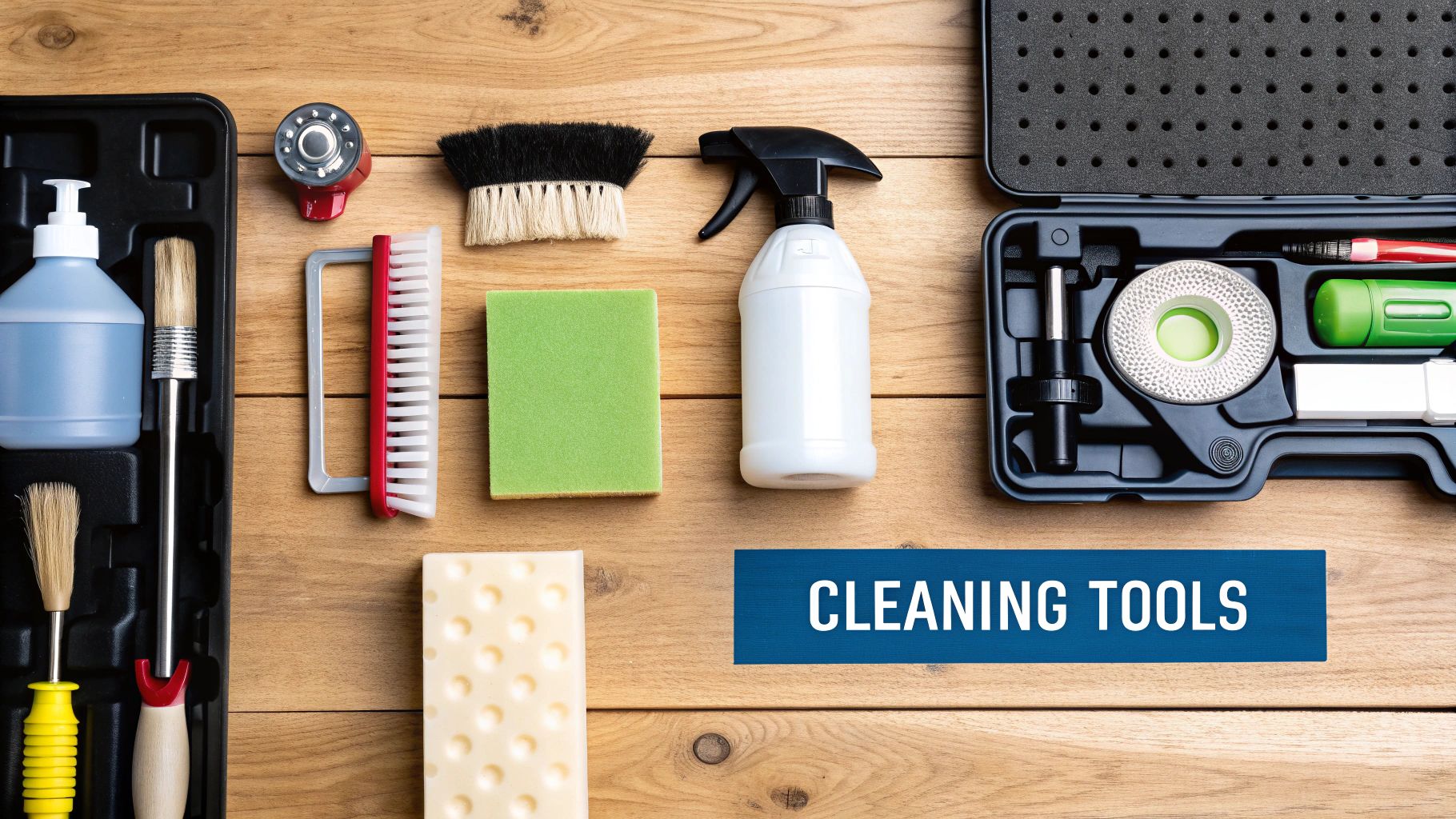
Let's be honest, cleaning your AC unit isn't the most exciting way to spend a Saturday. But the benefits go way beyond just getting a chore done. A clean system is about creating a healthier living space and making a financially savvy move.
Over time, dust, pollen, and other irritants get caked inside your unit. When the system kicks on, it blasts those particles all through your house, which can be a nightmare for allergies and other respiratory issues. A proper cleaning session removes all that gunk right at the source.
Better Health and Lower Bills
A well-maintained air conditioner is your first line of defense for better indoor air quality. When the filter is clean, it does its job: trapping airborne contaminants that could otherwise make you sick. This is especially critical if you have kids or anyone with allergies in the house.
This growing awareness around indoor air has fueled a massive boom in the global air cleaning system market. It was valued at $12.5 billion back in 2023 and is on track to more than double by 2032, all because people are more concerned about the health effects of air pollution.
Beyond the health perks, the financial upside is huge. When dirt and grime clog up the coils and filters, your AC has to work much, much harder to cool your home. All that extra effort translates directly to higher energy use and a bigger utility bill every month.
A clean AC system doesn't just run better; it runs cheaper. By simply removing obstructions, you can significantly reduce the strain on your unit, leading to noticeable savings on your monthly energy costs.
A system that isn't fighting against a wall of dirt also experiences a lot less wear and tear. This simple preventative care helps you sidestep those frustrating, and often expensive, repair calls right in the middle of a summer heatwave.
Just like seasonal tune-ups, regular cleaning is a non-negotiable part of total system care. For more on keeping your unit in top shape year-round, check out our guide to https://www.covenantairesolutions.com/post/your-guide-to-fall-hvac-maintenance.
Your AC Cleaning Toolkit and Safety Checklist
Before you even think about touching your air conditioner, let’s talk prep. A successful cleaning job isn’t about just diving in; it’s about having the right gear and a solid safety plan.
Trust me, gathering your tools first will save you from making frustrating trips back to the garage or hardware store midway through. You don’t need a professional-grade setup, but a few key items are non-negotiable for doing this right.
Getting your toolkit and safety measures in order from the start is the key to a smooth, effective cleaning session. Here's a quick rundown of what you'll need and the critical safety steps to take.
Item/Action | Purpose/Reason | Where to Find/How to Do |
|---|---|---|
Soft Brush | Gently cleans delicate coil fins without causing damage or bending them. | Available at any hardware store. Look for one with bristles that won't snag. |
Shop Vacuum | Sucks out leaves, grass, and stubborn dirt from deep within the unit. | Use a brush attachment for the best results on both indoor and outdoor components. |
Fin Comb | A specialized tool to straighten bent condenser fins, which is crucial for airflow. | An inexpensive but vital tool found in the HVAC aisle of hardware stores. |
Foaming Coil Cleaner | Dissolves grime that a brush can't reach; no-rinse formulas are easiest to use. | Purchase a dedicated AC coil cleaner. Avoid household chemicals to prevent corrosion. |
Screwdriver/Nut Driver | Needed to remove the access panels on your AC units to get to the interior. | A multi-bit screwdriver is usually sufficient for most models. |
Shut Off Power | Absolutely essential to prevent severe electrical shock and injury. | Turn off the thermostat, flip the AC breaker in your main panel, and use the outdoor shutoff. |
Wear Protective Gear | Protects hands from sharp metal edges and eyes from debris or chemical spray. | Sturdy work gloves and safety glasses are a must. |
With your tools in hand and your safety plan clear, you’re ready to tackle the cleaning process without any unexpected setbacks.
The Gear You'll Need
Your cleaning toolkit can be simple but effective. You can find everything you need at a local hardware store.
Soft Brush: The bristles need to be gentle enough to clear away loose gunk from the coil fins without bending those delicate metal strips.
Shop Vacuum: A shop vac with a brush attachment is your best friend for pulling out impacted leaves, dirt, and whatever else has built up inside.
Fin Comb: This little tool is a lifesaver. It’s designed specifically to straighten out bent condenser fins, which is absolutely critical for maintaining good airflow.
Coil Cleaner: Grab a commercial-grade, no-rinse foaming cleaner made for AC coils. Using standard household chemicals is a huge mistake; they can cause serious corrosion over time.
Screwdriver or Nut Driver: You’ll need this to get the access panels off your units. A multi-bit driver usually does the trick.
Your Non-Negotiable Safety Checklist
I can't stress this enough: safety is your number one priority. Your AC is a powerful electrical appliance, and there's no room for shortcuts here.
The single most important step in any AC maintenance task is ensuring the unit is completely disconnected from its power source. This simple action is the only way to eliminate the risk of severe electrical shock.
Before you start, methodically go through these checks. No exceptions.
Power Down the Thermostat: First thing’s first, turn the thermostat to the "Off" position. This prevents the unit from trying to kick on while you’re working on it.
Shut Off Power at the Breaker: Head to your home’s main electrical panel, find the circuit breaker for the air conditioner, and flip it to the "Off" position.
Use the Outdoor Shutoff Switch: Most outdoor condenser units have a dedicated shutoff box nearby. Open it and either pull the disconnect plug or flip the switch to off. This provides a crucial second layer of safety.
Wear Protective Gear: Always put on a pair of sturdy gloves to protect your hands from sharp metal edges. Safety glasses are also a must to shield your eyes from flying debris and cleaning sprays.
How to Clean Your Indoor AC Unit
The indoor unit of your air conditioner is a magnet for all the dust, pet dander, and allergens floating around in your home. Over time, that buildup tanks your air quality and makes your system work harder than it needs to. Giving it a good clean is one of the best things you can do for your AC’s efficiency and the air you breathe every day.
Let’s walk through the process, hitting the key spots that collect the most grime.
The first and most obvious place to start is the air filter, which is your system's front line of defense. On most indoor units, you'll find a front panel that either flips up or unclips. Pop that open, and the filter should be right there, ready to slide out. Don’t be surprised if it’s coated in a thick, gray layer of dust.
This image gives a great overview of the main components you’ll be dealing with inside the unit.
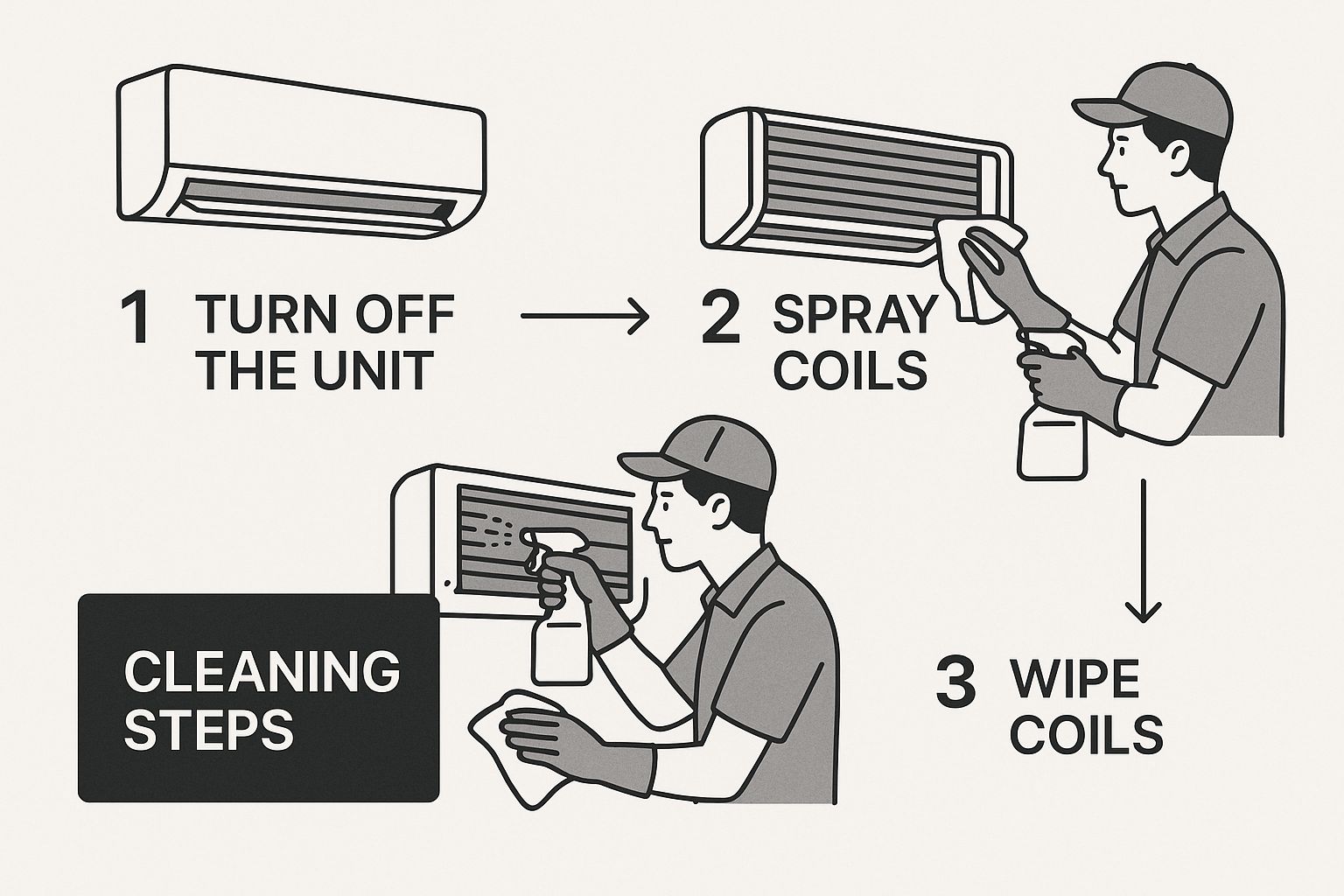
As you can see, the job involves getting to the internal parts like the coils and fins. It really drives home the point that you need to be gentle to avoid causing any damage.
Handling Filters and Evaporator Coils
First, figure out what kind of filter you have. If it has a flimsy cardboard frame, it’s disposable; just toss it and put in a new one. If it has a sturdier plastic frame, it’s probably washable. You can take it outside, give it a gentle rinse with a garden hose, and let it air dry completely before putting it back in.
Once the filter is out of the way, you’ll see the evaporator coils. They look like a radiator, with tons of thin metal fins packed closely together. When gunk builds up here, it suffocates your system, forcing it to run longer and harder. This is a critical step in a proper air conditioning systems cleaning.
Grab a can of no-rinse foaming coil cleaner and spray it evenly across all the fins. The foam will work its way into the crevices, break down all the dirt, and then liquefy, dripping harmlessly into the condensate pan below.
Important Tip: Whatever you do, never use a stiff brush or high-pressure water on the evaporator coils. Those little aluminum fins are incredibly fragile and bend easily. Bent fins will kill your airflow and cripple your AC's efficiency.
Inspecting the Condensate Drain Line
The last major component to check is the condensate drain line. It's usually a white PVC pipe that runs from the indoor unit to the outside of your house. Its job is to channel away all the moisture the AC pulls from the air.
The problem is, this line can get clogged with algae and sludge, causing water to back up and spill inside your home. This can lead to some serious water damage and mold growth if you're not careful.
Keeping this line clear is non-negotiable for preventing water damage. We have a complete guide that shows you exactly how to clean your AC condensate drain line like a pro. A quick flush once a year can save you from some very expensive headaches down the road.
Taking Care of Your Outdoor Condenser Unit
Think of your outdoor condenser unit as the workhorse of your entire air conditioning system. It sits outside day in and day out, getting blasted by the elements: everything from falling leaves and grass clippings to dust storms. This unit has a critical job: releasing all the heat it pulls from inside your home. Keeping it clean is non-negotiable for effective air conditioning systems cleaning.
The simplest thing you can do starts right now. Go outside and clear away any debris that's crowding the unit. Leaves, twigs, and overgrown shrubs can literally choke it, blocking airflow and forcing the whole system to work overtime. When that happens, your energy bills start to climb. Just making a habit of keeping a two-foot clear space around the unit will make a world of difference.
The Right Way to Clean It
Once you've cleared out the big stuff, it's time to focus on the condenser fins. These are the delicate metal grates that wrap around the unit, and they're absolutely essential for heat exchange. Grab a garden hose with a gentle spray nozzle and rinse the fins. The key is to spray from the inside out to push all that caked-on dirt and grime away from the unit, not deeper into it.
Crucial Tip: Whatever you do, never use a high-pressure washer on your condenser fins. The force is just too much. It will bend those delicate metal fins flat, completely blocking airflow and setting you up for a very expensive repair call. A gentle, steady spray is all you need.
Next up, take a quick look to make sure the unit is sitting level on its concrete pad. The ground can settle over time, causing the whole thing to tilt. An unlevel condenser is bad news because it can mess with how the lubricant is distributed, leading to serious wear and tear on the compressor, which is basically the heart of your AC.
A clean, efficient outdoor unit is one of the best ways to keep your energy bills in check. For even more ways to cut down on costs, take a look at our guide on how to reduce energy consumption in your home.
This kind of routine maintenance is becoming more common, and the market reflects it. The global market for air conditioner cleaners was valued at around $1.5 billion and is projected to hit $2.8 billion by 2033. You can read more about the growth of the air conditioner cleaner market at verifiedmarketreports.com.
Even the most dedicated DIYer has their limits. While routine cleaning can keep your AC humming along, some jobs are best left to the experts. Knowing when to put down the tools isn't about giving up; it's about making a smart, safe choice for your home and your system.
Certain warning signs are your AC’s way of screaming for professional help. Strange noises are a big one. If you hear any loud buzzing, grinding, or squealing, it often points to a serious mechanical or electrical failure brewing inside.
Likewise, if your AC is blowing warm air or cycling on and off constantly, a simple cleaning isn't going to cut it. These symptoms usually signal deeper problems that need a trained eye and specialized equipment to diagnose correctly.
Signs You Need an Expert
Some issues just aren't DIY-friendly. It's time to pick up the phone and call a certified technician if you run into any of these problems:
Electrical Problems: Are your lights flickering whenever the AC kicks on? Do you smell something burning near the unit? These are serious electrical hazards. Don't take chances.
Suspected Refrigerant Leaks: A distinct hissing sound or an oily film on the refrigerant lines is a classic sign of a leak. Refrigerant is a controlled chemical and needs to be handled by a licensed pro.
Stubborn Mold Growth: If you can see or smell mold that seems to be coming from deep within the unit, a professional-grade cleaning is the only way to make sure it's completely gone.
Attempting complex repairs without the right training can quickly lead to more expensive damage or, even worse, put you at risk of injury. A certified technician has the tools and expertise to find the root cause and ensure the air conditioning systems cleaning is done safely and thoroughly.
There's a reason the professional air conditioner cleaning service market is booming, valued at $13.38 billion in 2025 and still growing. You can see more insights about this growing market at archivemarketresearch.com. Understanding if an AC maintenance plan is worth it can also help you figure out when letting a pro take over is the best long-term move for your home.
Still Have Questions About Cleaning Your AC?
Even with a step-by-step guide, it's natural to have a few questions before you get started. Let's clear up some of the most common things homeowners ask about cleaning their air conditioning systems so you can move forward with confidence.
How Often Should I Clean My AC System?
A good rule of thumb for most homes is to clean the filter every month and give the coils and outdoor unit a deeper clean once a year.
But, this isn't a one-size-fits-all schedule. If you've got pets that shed a lot or you live in a particularly dusty area, you'll probably need to clean things up more often to keep your system running smoothly.
The single biggest mistake homeowners make is forgetting to kill the power at the circuit breaker before they start. Another common slip-up is blasting the outdoor fins with a high-pressure hose; that just bends them out of shape and chokes off the airflow completely.
Can I Use Household Cleaners on Coils?
We get this one a lot, and the answer is a hard no. Please don't use standard household cleaners like bleach on your AC coils. These chemicals are far too corrosive and will eat away at the delicate metal fins.
Your best bet is to always use a dedicated, no-rinse foaming coil cleaner that’s made specifically for HVAC systems. It's designed to do the job without causing damage.
For a truly healthy system, it's also worth looking into essential homeowner tips for cleaning air conditioning ducts. Clean ducts are just as important for air quality and efficiency. And if you run into problems that cleaning doesn't solve, our guide has some great top AC troubleshooting tips to fix common problems fast. These resources can help you figure out if it’s a quick fix or time to call a pro.
When a simple cleaning job turns into something more, don't hesitate. For professional service you can trust, contact Covenant Aire Solutions at https://www.covenantairesolutions.com and let our certified technicians get your home comfortable again.