
Ducted Heating Repair: A Complete Homeowner Guide
A ducted heating system can lose roughly 25% to 40% of the heating or cooling energy it produces through its ducts, especially when they run through an unconditioned attic or crawl space. That means a cold Tucson home doesn't automatically need a new furnace; the first step is finding out whether the trouble is in the equipment, the ductwork, or both.
On a chilly morning, the thermostat is set to warm the house, but the air from the registers feels weak or cool. It's easy to assume the furnace has failed. Yet the furnace may be running while heated air leaks into an attic, a return is restricted, or a control is switching the system off too soon.
Ducted heating repair is best treated as an energy-loss investigation, not a parts-replacement guess. A technician should test how the system moves and delivers heat before recommending a major repair or replacement. The difference matters: a carefully diagnosed repair can address the cause, while replacing a part without checking airflow may leave the rooms just as uncomfortable.
Why a Cold House Is Usually More Than a Broken Furnace
A Tucson homeowner wakes to a cold living room and turns up the thermostat. The furnace starts, but the bedrooms remain chilly and one register barely moves air. The first thought is often that the furnace has stopped working. Sometimes that's true, but uneven warmth can also point to a problem between the furnace and the rooms it's supposed to heat.
Think of the furnace as the source of heat and the ducts as the route that carries it through the house. If a duct joint has separated in the attic, the furnace may be heating air that never reaches the living space. If a flexible duct is crushed, the equipment can run while airflow to a room stays poor. The thermostat senses the temperature where it's installed, not the temperature in every bedroom.
That's why a careful technician checks the delivery system along with the furnace. The U.S. Department of Energy reports that typical duct systems lose roughly 25% to 40% of the heating or cooling energy produced by the equipment, particularly when ducts pass through unconditioned attics or crawl spaces (DOE research on duct-system efficiency). This is a national benchmark, not a prediction for any particular home. The actual loss depends on duct location and condition, system design, and how the equipment is used.
Practical rule: Don't approve a major equipment replacement until someone has checked whether the heated air is reaching the rooms.
A diagnosis-first visit should establish what's happening before parts are chosen. The technician can inspect the furnace and accessible ducts, check airflow and pressure, and explain which test results support the proposed work. That approach helps keep a repair focused on the cause, whether it's a furnace component, a leak, an obstruction, or more than one issue.
What Ducted Heating Repair Actually Covers
A ducted heating system works a little like a body. The furnace is the heart, producing heat; the blower pushes air through the system; and the ducts act like arteries, carrying heated air to different rooms. The return ducts bring air back so the cycle can continue. Each part has a job, and a failure in one can affect how the others perform.
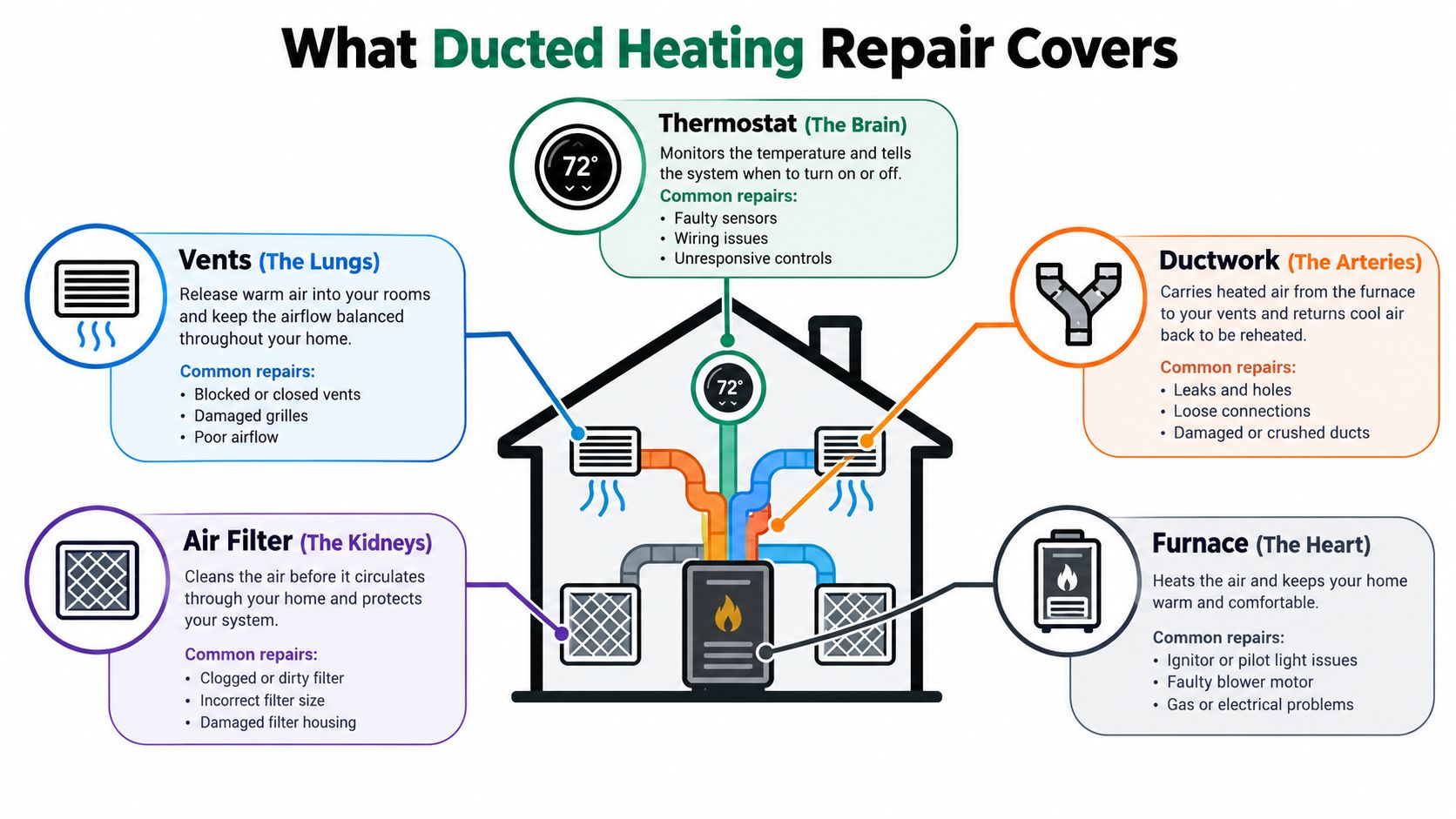
The furnace and heat exchanger warm the air. The blower moves it. A dirty or restrictive filter can make the blower's job harder, while a thermostat or safety control can affect when the system runs. On the delivery side, supply ducts carry warm air out, return ducts bring air back, and registers release it into rooms.
Repair work can involve one layer or several. A disconnected duct may need to be reconnected and sealed; a crushed flexible run may need its shape restored; a furnace may need a component inspected or replaced. ENERGY STAR estimates that approximately 20% to 30% of the air moving through a typical residential duct network is lost through holes, leaks, and poor connections (ENERGY STAR guidance on duct sealing). That helps explain why duct inspection belongs in a heating service visit, not only a furnace check.
Homeowners who want a plain-language overview of furnace service can also consult Eastern Connecticut furnace service tips. The climate and homes differ from Tucson, but the basic distinction between equipment problems and delivery problems is useful anywhere.
The system's parts work together, so a technician should consider both the heat source and the route the air takes. Knowing those terms makes it easier to ask what was tested, what failed, and why a proposed repair addresses that failure.
Common Failures and Warning Signs Homeowners Notice
Homeowners usually notice a symptom before they know its cause. A cold bedroom, a rattling sound, or a furnace that keeps starting and stopping can each come from different parts of the system. Grouping the clues helps you describe the problem accurately without trying to diagnose or repair a furnace yourself.
Airflow complaints
Weak air at a register, uneven room temperatures, or a whistle near a grille can point to a leak, a crushed duct, a blocked filter, or a blower issue. A closed or obstructed register can also change how air moves through the home. DOE guidance notes that leaky ducts in attics or crawl spaces can account for 20% or more of a home's heating and cooling energy losses, and that the problem may show up as uneven room temperatures rather than a furnace that has stopped running (DOE guidance on air sealing and duct losses).
At home: Check that registers are open and not covered by furniture, and look at the filter. Leave duct access and equipment testing to a technician.
Furnace and safety clues
Unusual smells, soot near the furnace, or repeated trouble with ignition can indicate a furnace-side fault. A dusty smell at startup may have a simple explanation, but don't dismiss a persistent or sharp burning odour. If you smell gas, leave the home and contact the appropriate emergency service from a safe location.
At home: Don't open the furnace or adjust gas components. Call a qualified professional to inspect the equipment and venting.
Controls and duct noise
Short cycling, unexpected run times, or thermostat readings that don't match the room can involve a sensor, switch, wiring, or thermostat problem. Rattling may come from loose ductwork or a panel, while visible sagging or kinks in an attic run suggest a delivery-side restriction.
At home: Note when the symptom occurs and which rooms are affected. A technician can use that pattern to guide testing; avoid handling wiring or reaching into equipment.
A clear description is useful: “The living room warms, but the back bedroom stays cold,” gives the technician more to work with than “the heater isn't right.”
How a Qualified Technician Diagnoses the Problem
A good diagnostic visit should answer a series of practical questions: Is the equipment operating safely? Can air move through it as designed? Are the ducts carrying that air to the rooms? The technician should explain the tests as they happen, then connect the results to the recommended repair.
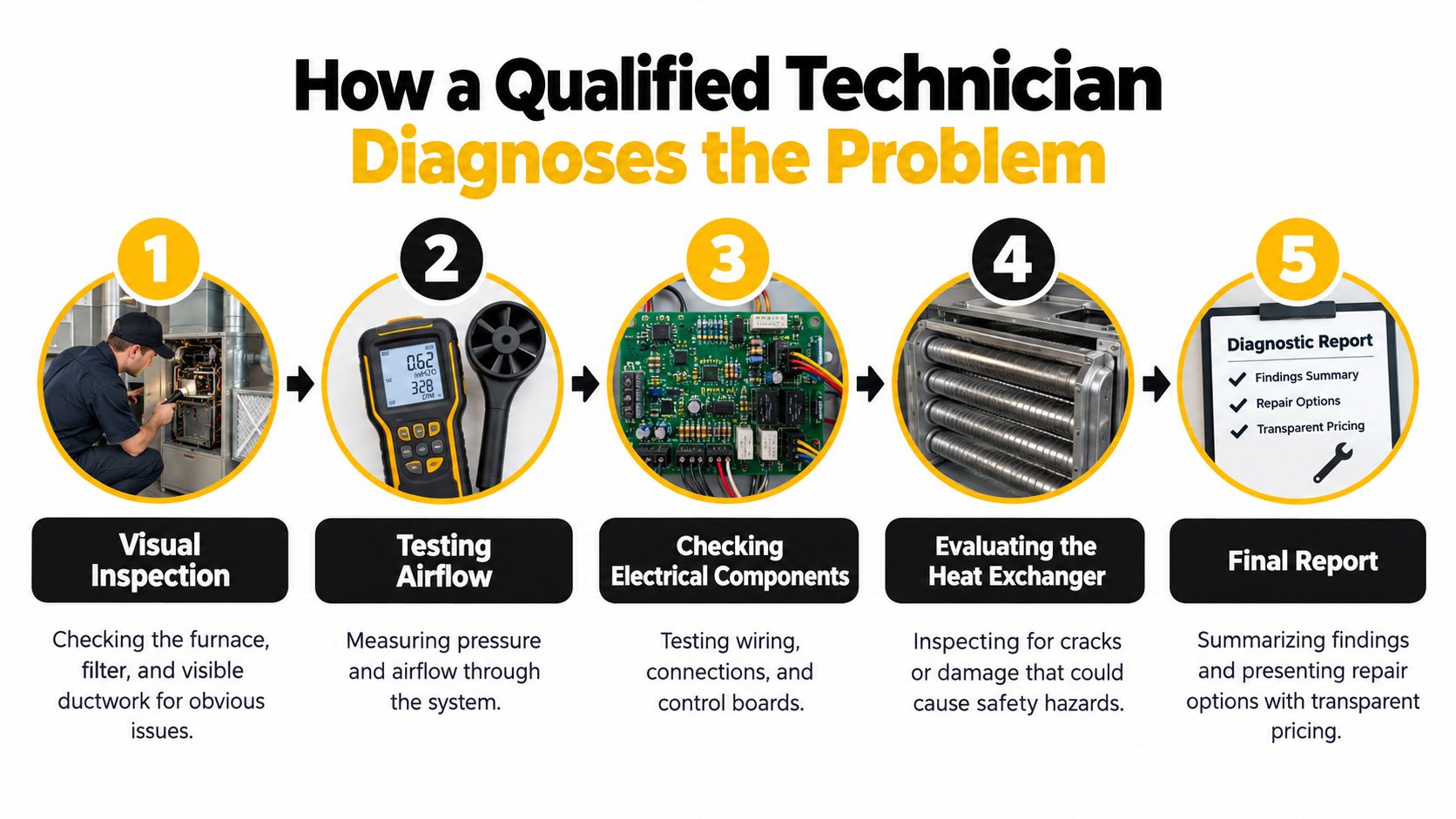
A typical inspection starts with the furnace, filter, blower, and accessible ductwork. This can reveal an obvious blockage, a loose connection, or visible damage. If the symptoms suggest air is escaping, the technician may perform a duct-leakage test to assess whether connections and duct sections are holding air.
Next, pressure and temperature measurements help show how the system is operating. Static pressure is the resistance the blower encounters as air moves through the system. High resistance can point to a restriction or a mismatch between the equipment and the ductwork; this guide to static pressure in ductwork explains why the measurement matters. A temperature-rise check compares the air entering and leaving the furnace, helping determine whether the equipment is heating within its requirements.
For a gas furnace, the technician should also assess combustion and venting. Thermostat operation and relevant electrical controls may need testing when the system cycles unexpectedly or doesn't respond reliably. A thorough visit ends with findings and repair options, not just a verbal guess.
If you're paying for a diagnosis, ask for the readings that support the recommendation and a clear explanation of what each reading means.
You can watch this overview of an HVAC diagnostic visit for a sense of how inspection and testing fit together:
A quote issued before the technician inspects or tests the system deserves a closer look, especially if it recommends replacing the furnace without checking the ducts. Ask what was measured, what failed, and whether the written findings match the proposed scope of work.
Typical Repair Steps, Costs, and Timelines
Once testing identifies the fault, the repair should follow the evidence. A technician might reconnect and seal a loose joint with duct mastic or approved metal-backed foil tape, restore the shape of a crushed flexible duct, or replace a failed furnace component. If exposed ductwork lacks insulation, insulating it may be part of the solution, but insulation alone won't stop air escaping through an active leak.
The table below is a planning guide, not a price quote. No reliable flat price or fixed appointment duration applies to every home. The work depends on access, equipment condition, duct layout, and what the tests show. Ask for a written scope and price before authorizing the repair. For additional context, see this guide to ductwork repair costs.
Repair Tier | Typical Work | Indicative Cost Range | On-Site Time |
|---|---|---|---|
Minor | Filter replacement, accessible joint sealing, or a small adjustment | Confirmed after inspection | Often a short service visit |
Mid-range | Component repair or replacement, or repairs to multiple accessible duct connections | Confirmed after inspection | Depends on diagnosis and parts |
Major | Extensive duct repair, insulation work, or complex furnace repair | Confirmed after inspection | May require longer work or a return visit |
Research helps explain why a technician shouldn't promise a particular energy saving before assessing the home. An Oak Ridge National Laboratory case study covering duct retrofits in ten homes reported costs of $0.92 to $1.80 per square foot of living area and estimated annual energy-cost savings of 1.8% to 18.5% (ORNL case study on duct retrofits). Those results vary across homes, which is why testing matters more than assuming a repair will produce a set outcome.
For any proposed repair, ask whether the price includes verification afterward. The technician should check that the repaired section is secure and that airflow or system operation has improved as intended.
Safety Considerations Every Repair Should Address
A ducted heating repair involving a fuel-burning furnace must address more than comfort and airflow. The furnace burns fuel to produce heat, and the venting system carries combustion products out of the home. If a heat exchanger is damaged or a flue is blocked or leaking, the system may present a safety concern even while it still produces warm air.
The U.S. Consumer Product Safety Commission recommends a professional inspection every year for fuel-burning home heating systems, including checks for carbon monoxide hazards, gas leaks, blocked or leaking flues, and adequate ventilation (CPSC guidance on home heating equipment). Animals, birds, insects, corrosion, or loose vent connections can interfere with safe exhaust. Fresh air also matters for proper combustion, so ventilation openings shouldn't be blocked.
A routine repair visit should include the relevant safety checks for the equipment and work being performed. If duct sealing or airflow corrections change how air moves through the system, the technician should verify operation afterward rather than assume that a repaired duct automatically means a safe furnace.
Safety first: If a carbon monoxide alarm sounds, or you suspect a gas leak, leave the home and contact emergency services or the appropriate utility from a safe location.
Learn the warning signs and recommended response in this guide to furnaces and carbon monoxide. Don't rely on smell to detect carbon monoxide; follow alarm instructions and have the system checked by a qualified professional.
Maintenance Habits That Prevent Repeat Repairs
Simple habits can help you notice problems before they turn into a no-heat call. Start with the filter: check it during periods of heavy use, and replace it when dirty or according to the equipment and filter guidance. Keep both supply registers and return grilles clear so furniture, rugs, or stored items don't obstruct airflow.
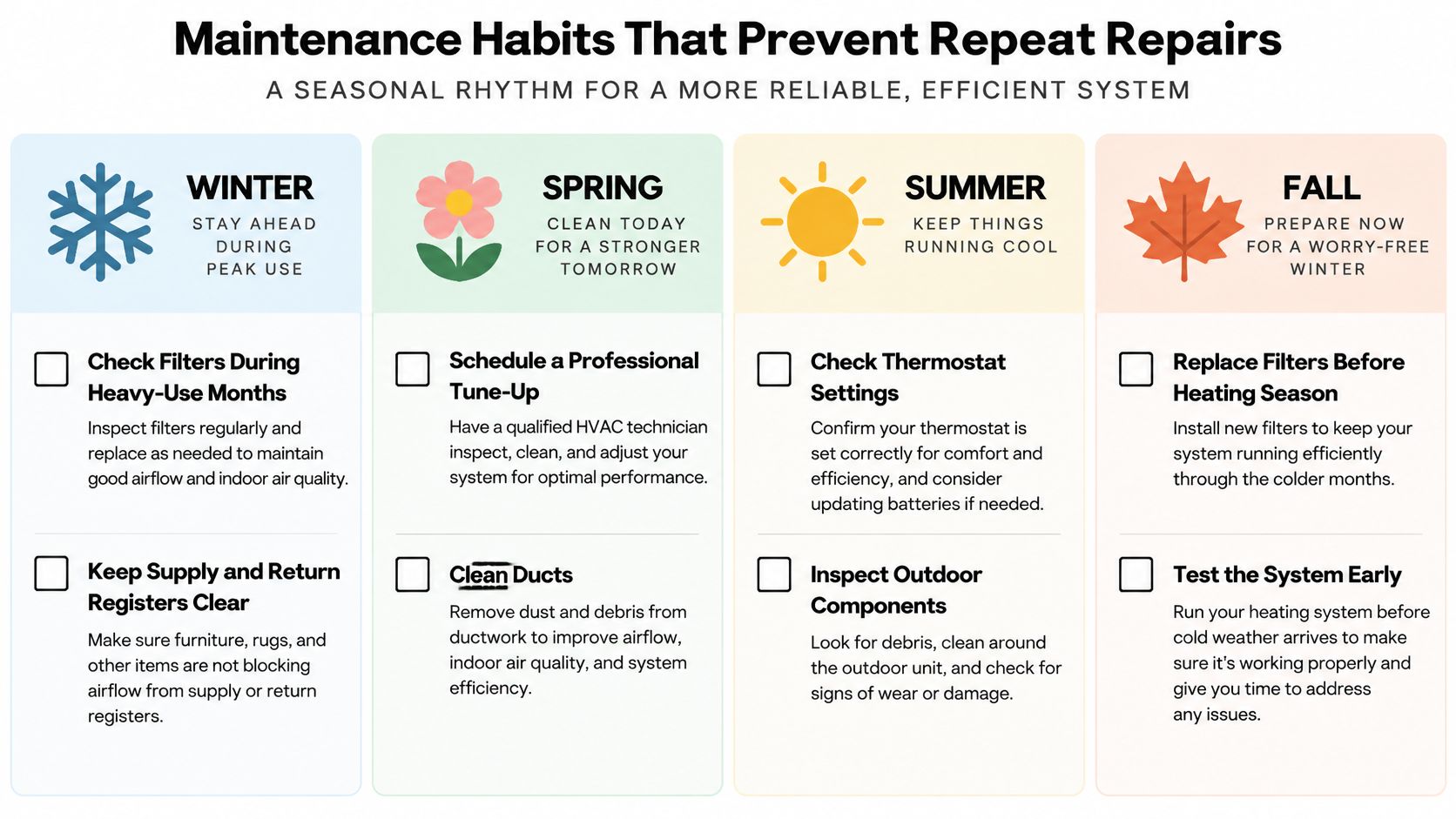
Before heating season, run the system early enough to notice unusual noise, weak airflow, or rooms that don't warm evenly. If ducts are accessible in the attic, look for visible sagging, disconnected joints, or damaged insulation without climbing onto or disturbing the ductwork. Leave repairs and equipment checks to a technician.
A practical seasonal routine looks like this:
During heavy use: Check the filter and keep supply and return openings clear.
Before heating season: Test the system, note unusual sounds, and arrange professional service if performance has changed.
Between seasons: Keep the outdoor equipment clear of debris and make sure the thermostat is set appropriately for the season.
At professional visits: Ask the technician to document concerns and explain which items need attention now.
A maintenance plan can make that schedule easier to keep. Covenant Aire Solutions offers a plan with biannual check-ups, priority service, and member discounts. The same idea can work with another qualified provider: regular inspections give a technician a chance to identify developing issues before they become urgent. For more practical advice, see this guide to home heating maintenance.
Choosing a Qualified Local Technician in Tucson
A qualified technician should be licensed, bonded, and insured, explain the diagnostic process, and provide transparent pricing before work begins. Ask whether the company tests the ductwork as well as the furnace, and whether you'll receive written findings. For gas equipment, confirm that the proposed visit includes the relevant combustion and venting checks.
Covenant Aire Solutions is a family-owned Tucson-area HVAC business founded by Danny Polangco. The company says it is licensed, bonded, and insured, and that its certified technicians work on heating systems, ductwork, and other HVAC equipment. It also offers transparent, upfront pricing, flexible financing, special rates for teachers, military personnel, and first responders, and 24/7 emergency response. Those details can help you assess whether the service fits your needs, but the most important question remains whether the technician can show how testing supports the repair recommendation.
Use these questions when comparing providers:
What will you test? Look for a clear explanation of the inspection and measurements.
What will I receive? Ask for written results and an itemized repair proposal.
What happens if the first repair doesn't solve it? Get clarity on follow-up and warranty terms before authorizing work.
This guide to choosing an HVAC contractor offers more criteria to consider. If your home has weak airflow, uneven temperatures, unusual furnace operation, or visible duct damage, request a diagnostic visit and ask for the test results before deciding between repair and replacement.

If your Tucson home has weak airflow, uneven heating, or a furnace that isn't behaving normally, Covenant Aire Solutions offers heating and duct repair with diagnostic testing and clear repair options. Contact Covenant Aire Solutions to request a visit and discuss what your system needs.