
Evaporative Cooling System Maintenance: A Practical Guide
You pull the tarp off your swamp cooler in late April, and the cabinet looks like it spent winter in a dust storm. Monsoon grit is packed around the housing, the pads are crusted, and the first hot afternoons are already pushing the 90s. In Tucson, waiting for the first uncomfortable night before testing the cooler usually means discovering a weak pump or dry pad when every HVAC company is busy.
Evaporative cooling system maintenance works best as a seasonal habit, not an emergency reaction. The U.S. Department of Energy recommends service at the beginning and end of each cooling season, and estimates that this recurring maintenance typically costs about $175 annually (DOE evaporative cooling guidance). Your part is manageable: wake the cooler in spring, watch its water and airflow during summer, then drain and protect it in fall. A technician should handle electrical diagnosis, worn mechanical components, and water-management problems that keep returning.
Why Seasonal Maintenance Matters in Tucson
A swamp cooler that performs well in May can struggle by late summer. In Tucson, dust storms can load the cabinet with debris, while hard water leaves mineral deposits wherever water circulates. Long run times put added wear on the pump, belt, pads, float, and fan motor. Small changes in airflow or cooling often appear before a complete failure.
Scale affects operation, not just appearance. Deposits can restrict water distribution, and fouled pads provide less wet surface for evaporation. A weak pump may leave dry channels across the media, producing warmer rooms, uneven cooling, or a damp, musty smell. Because an evaporative cooler adds moisture, it also needs suitable ventilation. The Building America Solution Center guide to evaporative cooling systems explains how climate, water use, and maintenance affect performance.
The Tucson maintenance rhythm
Plan the year around three operating phases:
Spring wake-up: Clean the cabinet, inspect or replace pads, flush the reservoir, test the float, and confirm that water reaches every section evenly.
Summer habits: Check pad saturation, pump delivery, water level, leaks, and belt condition during the season. A quick inspection can reveal a developing problem before a hot afternoon exposes it.
Fall wind-down: Shut off the water, dry the pads, drain the basin and lines, and cover the unit to limit rodent and dust damage.
A hose, shop vacuum, flashlight, screwdriver, and careful visual inspection handle much of the homeowner's work. The WipesBlog.com seasonal checklist can help coordinate these recurring cleaning tasks with cooler maintenance.
Practical rule: Visible scale, sludge, algae, leaking fittings, or unevenly wet pads deserve attention. Do not treat them as normal summer behavior.
Use the seasonal calendar to decide who handles each task. Homeowners can clean, inspect, flush, and monitor. A technician should measure electrical performance, diagnose worn mechanical parts, correct persistent water-management faults, and address problems that return after cleaning. Local water conditions determine how often those checks are needed.
Spring Startup Checklist for Your Cooler
Choose a mild afternoon and treat startup as one controlled job. Don't open the cabinet with power available. Turn off the breaker, use the disconnect if the unit has one, and disconnect the pump before reaching inside.
Open, inspect, and clean
Start with the cabinet. Look for rodent nests, chewed wiring, cracked panels, rusted hardware, and gaps around the housing. Tighten loose fasteners, but don't force a corroded screw that could snap into the cabinet. Seal small openings only after confirming they aren't needed for drainage or service access.
Remove the old pads and compare replacements with the model's frame dimensions. Fresh pads should sit securely, with no large bypass gaps that let air avoid the wet media. The DOE startup guidance specifically calls for hosing off intake screens and the base pan at seasonal startup, followed by reinstalling the drain plug and restoring water and power.
Flush the reservoir and supply line before installing the drain plug. Winter sediment can move into the pump or distribution channels, so let clean water carry loose debris out rather than pushing it deeper into the system.

Test water and moving parts
Restore the water supply and watch the float valve fill the reservoir. It should stop filling cleanly, without an overflow or a constant trickle through the drain. Run the pump while the fan remains off and inspect the pads. Water should travel across the distribution system evenly, with no dry strips, overflowing troughs, or isolated streams.
Turn the blower by hand with power still off. It should rotate smoothly without scraping. Inspect the belt for glazing, cracking, frayed edges, and excessive slack. Check motor and blower bearings for roughness or unusual play, then vacuum dust from the cabinet without spraying water onto electrical components.
Reconnect power and run the cooler for 15 minutes. Listen for rattling, squealing, grinding, or a pulsing pump. Confirm strong airflow at the outlets and check that the pads remain evenly saturated. For broader summer preparation, compare your work with this AC spring tune-up preparation guide, especially if your home uses both a swamp cooler and refrigerated air.
Routine Inspections Through the Cooling Season
Summer checks should follow symptoms, not guesswork. If one room feels warmer, the air smells stale, or the blower sounds different, inspect the water side before assuming the motor has failed.
Read the pads first
Check the pads at least monthly. Heavy white crust, a musty odor, or visible channels where air passes through dry media all point to a water-distribution problem or a pad that has reached the end of its useful condition. The Cinch evaporative cooler maintenance guidance recommends changing pads at least twice each season, at the beginning and midway through the cooling season, with more frequent attention when hard water leaves deposits.
Don't judge a pad only by whether it's wet. It should be damp throughout, not dry in sections and not so saturated that water carries into the blower or leaves the trough. If replacement pads become dirty quickly, note the pattern. Repeated fouling usually means the reservoir, incoming water, or bleed-off arrangement needs attention.
Watch the pump and distribution
With the cooler operating, look at the pump, hoses, emitters, and distribution troughs. A weak stream, uneven spray, or dry corner can indicate a clogged hole, restricted line, low water level, or failing impeller. Check the supply line and bleed-off valve for leaks, and make sure discharged water drains away instead of pooling beneath the unit.
Test the float valve by observing a fill cycle. It should close at the proper operating level and remain closed. An overflowing pan wastes water and can saturate the cabinet, while a low level can starve the pump and interrupt pad wetting.
The useful question isn't “Is the pump running?” It's “Is every part of the pad receiving the water the pump is supposed to deliver?”
Don't ignore the belt
Inspect belt tension and wear around the middle of the season. A glazed or slipping belt may produce a squeal, reduce blower airflow, and place extra load on the motor. If adjustment requires moving the motor mount or aligning pulleys, stop when the task moves beyond a simple visual check.
Keep a short log of pad condition, water level, odors, leaks, and unusual sounds. A preventive maintenance schedule can help you coordinate the cooler with the rest of your home's HVAC equipment. If you're comparing water-side cooler work with separate air-conditioning coil care, this evaporator coil maintenance guide provides useful context, but don't confuse a refrigerated AC coil service with cleaning an evaporative cooler basin and pads.
Tackling Hard Water, Scale, and Microbial Growth
By midseason, a cooler that looked clean at startup can develop white crust around the pads, troughs, pump screen, nozzles, and basin. Tucson's hard water leaves minerals behind as water evaporates. That buildup restricts passages and changes how evenly water reaches the media.
Odor points to a different problem. A swampy smell commonly indicates stagnant water, algae, sludge, or biofilm, not dirty pads alone. Water management requires a deliberate trade-off: bleed-off removes concentrated water and helps control scale, but it also raises water use. Automatic flushing can refresh the pan every 8 to 12 hours of operation, while bleed-off may increase water use by 10% to 50%, according to Michigan State evaporative cooling water guidance. Use those settings as equipment guidance, then account for safe drainage and local water conditions.
Match the treatment to the symptom
Start with the simplest correction that fits the evidence.
Light deposits: Turn off electrical power and the water supply. Remove accessible scale, then flush the basin and lines. Use only a descaler approved for the cooler's materials. Household vinegar can damage some pumps, seals, coatings, or galvanized parts.
Recurring mineral concentration: A bleed-off line or purge pump removes part of the concentrated water. It can reduce crust and blocked distribution, but it uses more water and needs a safe discharge point.
Persistent sediment: A replaceable cartridge or suitable inline filter can shield the pump and nozzles. Inspect it at least monthly, and more often if the source carries heavy sediment. A comparison of reverse osmosis and water filters explains the broader treatment trade-offs for whole-home and point-of-use systems.
Ongoing hygiene problems: Have a technician choose a controlled flushing, recirculation, or sanitizing method for the specific cooler. Never mix chemicals in the basin or guess at biocide dosing.
Cleaning removes buildup that is already present. Water management controls how quickly it returns. During a professional service visit, a technician can verify bleed-off, flush intervals, drainage, pump condition, and the source of recurring odor instead of treating the pad symptom alone.
Before adding filtration, identify the actual cause: hardness, sediment, algae, poor drainage, or an incorrectly set water level. That diagnosis prevents an expensive treatment device from being used to solve the wrong problem.
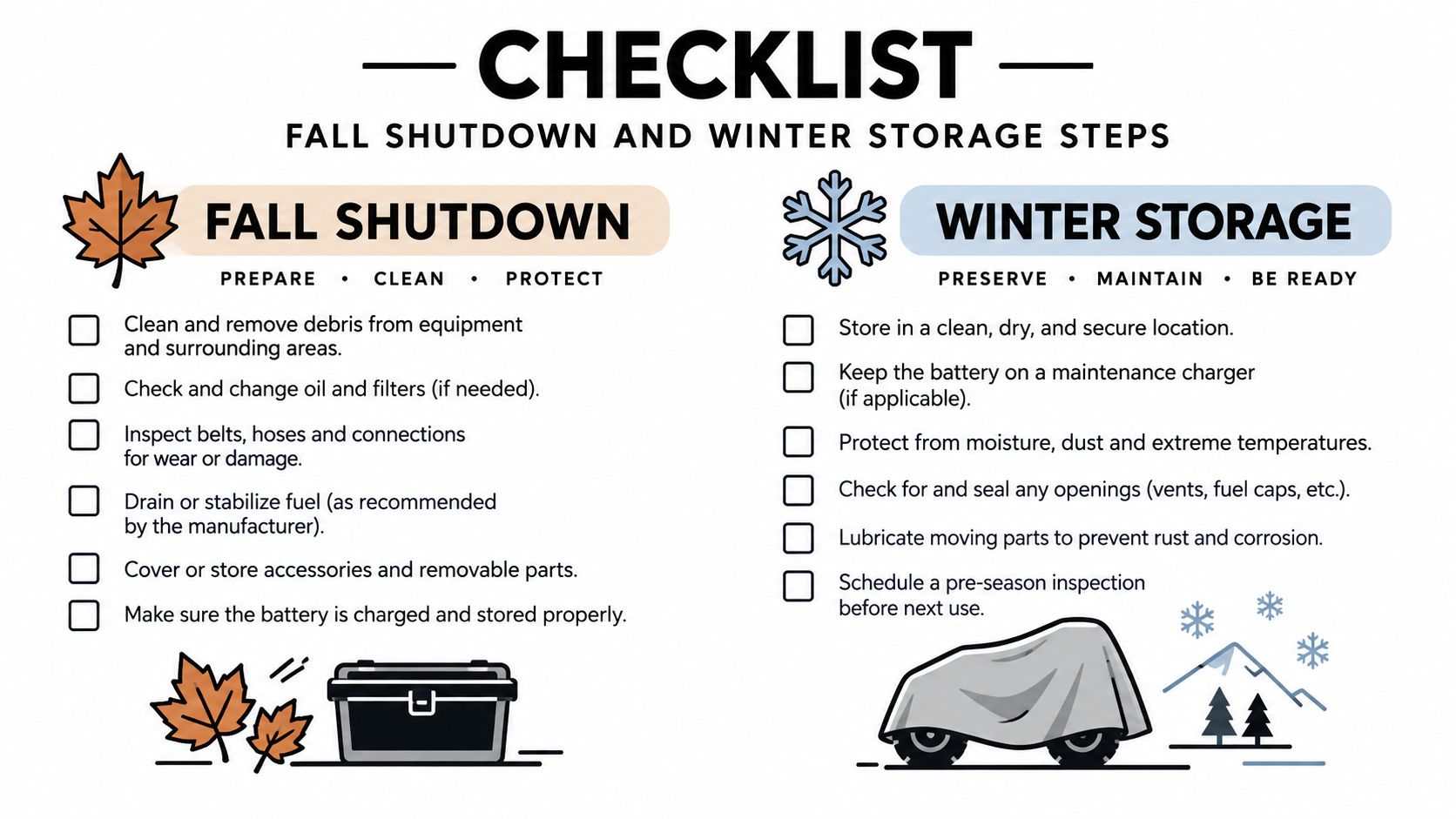
Fall Shutdown and Winter Storage Steps
Wait until cooling demand has ended and Tucson overnight lows are dropping into the 50s. Leaving water in the cooler through the off-season encourages odor, scale, and biological growth, and exposed fittings can suffer damage during freezing conditions.
Use this shutdown sequence
Cut electrical power. Switch off the cooler at its disconnect and breaker. Confirm that the fan and pump are silent before opening the cabinet.
Close the water supply. Shut the saddle valve or dedicated supply valve, then open the drain or disconnect the supply where appropriate.
Dry the pads. Run fan-only for about 20 to 30 minutes so residual water leaves the media before you drain the system. This recommendation appears in detailed evaporative cooler hygiene guidance (seasonal evaporative cooler shutdown procedure).
Drain completely. Empty the sump, pump, supply line, and base. Remove sludge and mineral scale rather than leaving it to harden over winter.
Clean the distribution path. Flush the pan, troughs, and accessible tubing. Check the pump, emitter openings, float valve, and fittings while the cabinet is open.
Handle the pads. Remove them and store them dry if they're still serviceable, or replace them before spring so startup doesn't begin with contaminated media.
Inspect mechanical parts. Look over the belt, pulleys, motor, bearings, wiring, and cabinet fasteners. Open access makes worn parts easier to identify and schedule.
Protect the cabinet. Fit a weather-appropriate cover that limits monsoon dust and rodents without trapping moisture inside.
The EVAPCO maintenance checklist reinforces the value of seasonal service, water-system flushing, pad care, and draining idle equipment. It also recommends emptying drain pans when equipment will sit unused for more than a few days because standing water can support mosquitoes and bacteria, including Legionella.
For related seasonal protection on other HVAC equipment, see this guide to winterizing an air conditioner. The hardware differs, but the principle is the same: remove water where it doesn't belong, inspect exposed components, and don't cover a damp system.
DIY Limits and When to Call a Professional
A homeowner can handle a surprising amount of evaporative cooler care, but safe ownership depends on recognizing the handoff point. Cleaning a basin and changing a pad are different from diagnosing a motor circuit, correcting bearing failure, or modifying a water-treatment system.
Task | DIY Frequency | Professional Frequency |
|---|---|---|
Visual cabinet inspection and light cleaning | Spring and fall | During scheduled seasonal service |
Pad inspection or replacement | Monthly inspection, replace as condition requires | At seasonal service when fit, saturation, or water quality is a concern |
Reservoir, trough, and accessible line flushing | Spring, summer as needed, and fall | During documented water-side cleaning |
Float valve and water-level observation | At startup and during summer checks | When the valve leaks, overfills, or cannot hold the correct level |
Belt inspection | Mid-season and whenever noise changes | When alignment, tensioning, or replacement is required |
Electrical testing and motor diagnosis | Not a homeowner task | During a service visit or fault call |
Bearing, pump, or motor replacement | Only if you have the training and proper isolation procedures | Technician task |
Cabinet resealing and difficult leak correction | Small accessible gaps only | Structural, roof, wiring, or persistent leak repairs |
Water-treatment or pump-control upgrades | Research and discuss options | Design, installation, and commissioning |
Keep weekend work within its lane
Owner maintenance is appropriate when the unit is safely de-energized and the job involves inspection, rinsing, vacuuming, pad replacement, or observing water flow. Stop if you find damaged wiring, a burned electrical smell, a motor that trips the breaker, a seized shaft, a leaking roof penetration, or a pump that runs without delivering water.
Don't keep resetting a breaker or adding treatment chemicals to hide a recurring odor. Those actions can turn a manageable repair into equipment damage or a water-hygiene concern. Professional service is also the right choice when the cooler needs variable-speed pump work, warranty-sensitive parts, cabinet resealing, or measurements that aren't available with household tools.
A technician's visit should produce more than a quick rinse. Expect inspection of electrical connections, belt and motor operation, pump performance, water distribution, drainage, pad condition, and cabinet integrity. Ask for findings in writing, especially if you're deciding whether repeated repairs justify a replacement or a different cooling arrangement.
When comparing contractors, use this guide to choosing an HVAC contractor to check licensing, insurance, written scope, diagnostic process, and warranty handling. Covenant Aire Solutions offers scheduled heating and cooling maintenance with seasonal checks and documented inspections, which can suit homeowners who want a technician to manage the heavier work while they handle simple observations between visits.
Covenant Aire Solutions can schedule seasonal HVAC maintenance for Tucson homes, including system inspections and cooling-performance checks that complement your evaporative cooler routine. Visit Covenant Aire Solutions to request service, discuss recurring water or airflow problems, and decide which maintenance tasks should stay on your weekend list and which belong with a technician.