
Heater Not Blowing Hot Air? A Practical Troubleshooting Guide
- Jan 17
- 14 min read
That sudden, unwelcome blast of cold air from your vents when you’re expecting a cozy wave of heat is always a shock. It’s one of those moments that makes you immediately think the worst, and imagine a massive repair bill.
But hold on. Before you jump to conclusions about a dead furnace, it’s worth knowing that most of the time, the culprit is something surprisingly simple. I’ve seen it countless times: a homeowner is convinced their heater is broken, only to find the fix was something they could have handled in five minutes.
So, before you panic, let's walk through the most common, and easily fixable, issues. This is your first-response checklist to rule out the simple stuff before making a service call.
Your First Checks When Your Heater Blows Cold Air
Think of this as your initial diagnosis. We're going to focus on the top five things you can check yourself, no special tools or technical skills needed.
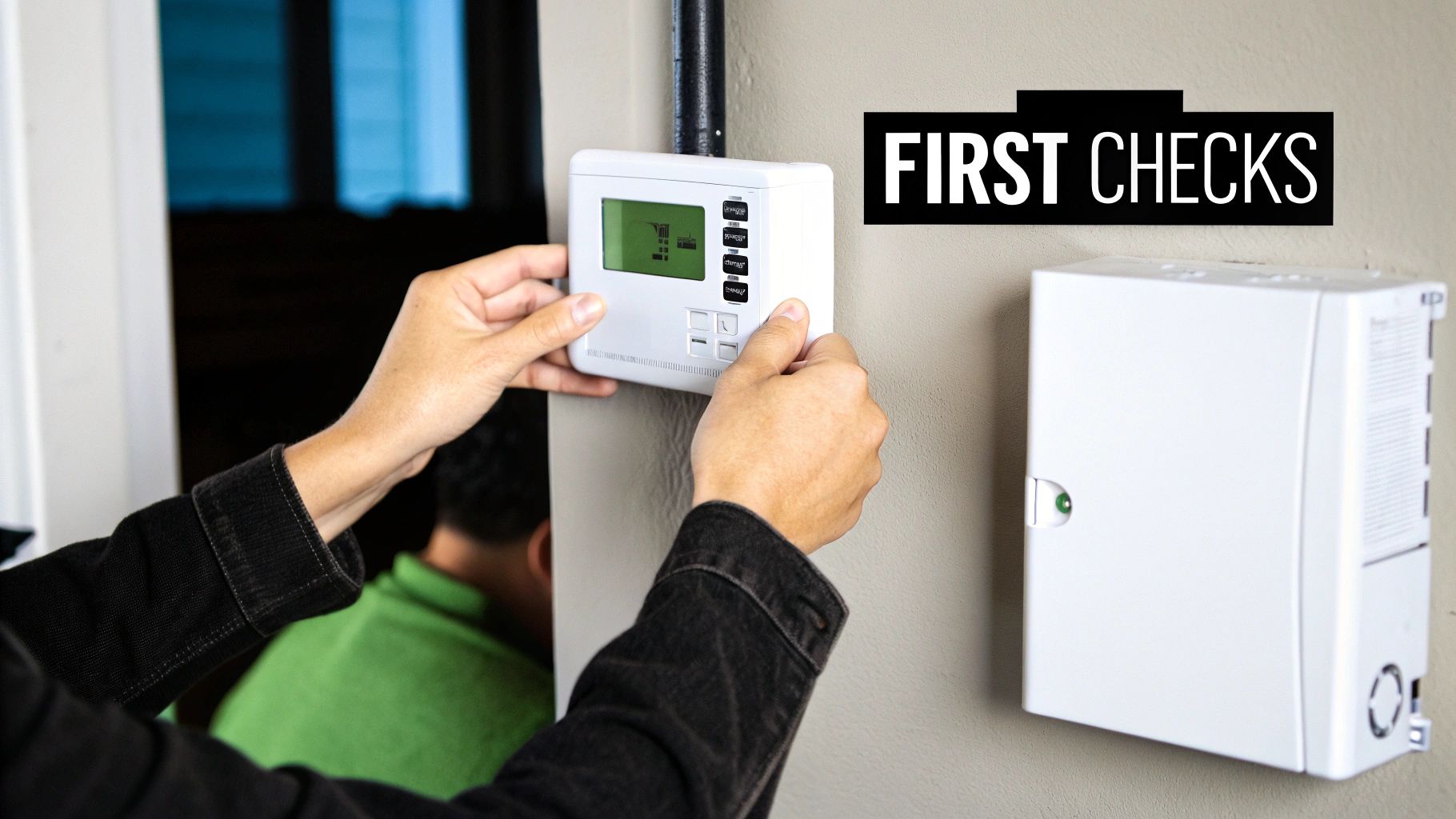
Check Your Thermostat Settings
It might sound obvious, but you’d be surprised how often a thermostat setting is the entire problem. Someone could have bumped it, or maybe it was never switched over from the last warm spell.
Take a close look at your thermostat and ask yourself:
Is it actually set to "HEAT"? Make sure it's not on "COOL" or just "FAN." The "FAN" setting will circulate air, but it won't be heated.
Is the temperature set high enough? The target temperature needs to be higher than the current room temperature for the furnace to kick on. Try bumping it up five degrees and see if that does the trick.
Could the batteries be dead? If you have a digital thermostat, low batteries can cause it to malfunction and stop sending the right signals to your heating system.
Getting the fan setting right can also make a huge difference. If you're not sure whether "ON" or "AUTO" is best for winter, our guide on choosing between thermostat fan settings can clear things up.
Inspect Your Circuit Breaker and Power Switch
Even if you have a gas furnace, it still needs electricity to run the fan, ignition system, and all the safety controls. A tripped breaker is a very common reason for a heater to stop working completely.
Head over to your home's main electrical panel. Look for the breaker labeled "Furnace," "Heater," or "HVAC." If it's in the middle or "OFF" position, flip it all the way to "OFF," then firmly back to "ON."
While you're at it, check for a standard light switch located on or near the furnace unit itself. This is a power shutoff switch that service technicians use, and it's easy for it to get flipped off by accident.
Before calling in a professional, running through these quick DIY checks can often solve the problem right away. The table below summarizes these initial steps to help you troubleshoot efficiently.
| Quick DIY Heater Checks Before You Call for Service || :--- | :--- | :--- || Check | What to Do | Potential Fix || Thermostat | Ensure it's set to "HEAT" and the temperature is above the current room temp. Check batteries. | Incorrect setting or dead batteries preventing the furnace from receiving the 'on' signal. || Circuit Breaker | Locate the breaker labeled "Furnace" or "HVAC" and reset it if tripped. | Restores power to the unit if the breaker was tripped due to a minor power surge. || Power Switch | Find the light switch on or near the furnace unit and make sure it's in the "ON" position. | Restores local power to the furnace that may have been accidentally shut off. || Air Filter | Remove the filter and check if it's clogged with dust and debris. | A clean filter restores proper airflow, preventing the system from overheating and shutting down. |
These simple checks cover the most frequent causes of a heater blowing cold air. If you've gone through this list and still don't have heat, it’s time to look a bit deeper or call for help.
One of the biggest culprits behind heating failures is a dirty air filter. When it gets clogged, it chokes off the airflow to the furnace. To prevent overheating, safety switches will trip and shut down the burners. The fan might keep running, but it will only be blowing unheated, room-temperature air.
In fact, a clogged air filter is behind 25-30% of no-heat service calls. This simple piece of maintenance, which often gets neglected for just 1-3 months, can bring an entire system to a halt. In major markets like North America, where the HVAC industry is projected to grow at a 6.95% CAGR to $505.73 billion by 2035, preventive maintenance is key. Regular upkeep can reduce system failures by up to 80%, yet only 40% of households actually participate in biannual service plans.
This flowchart gives you a clear visual path for these first troubleshooting steps.
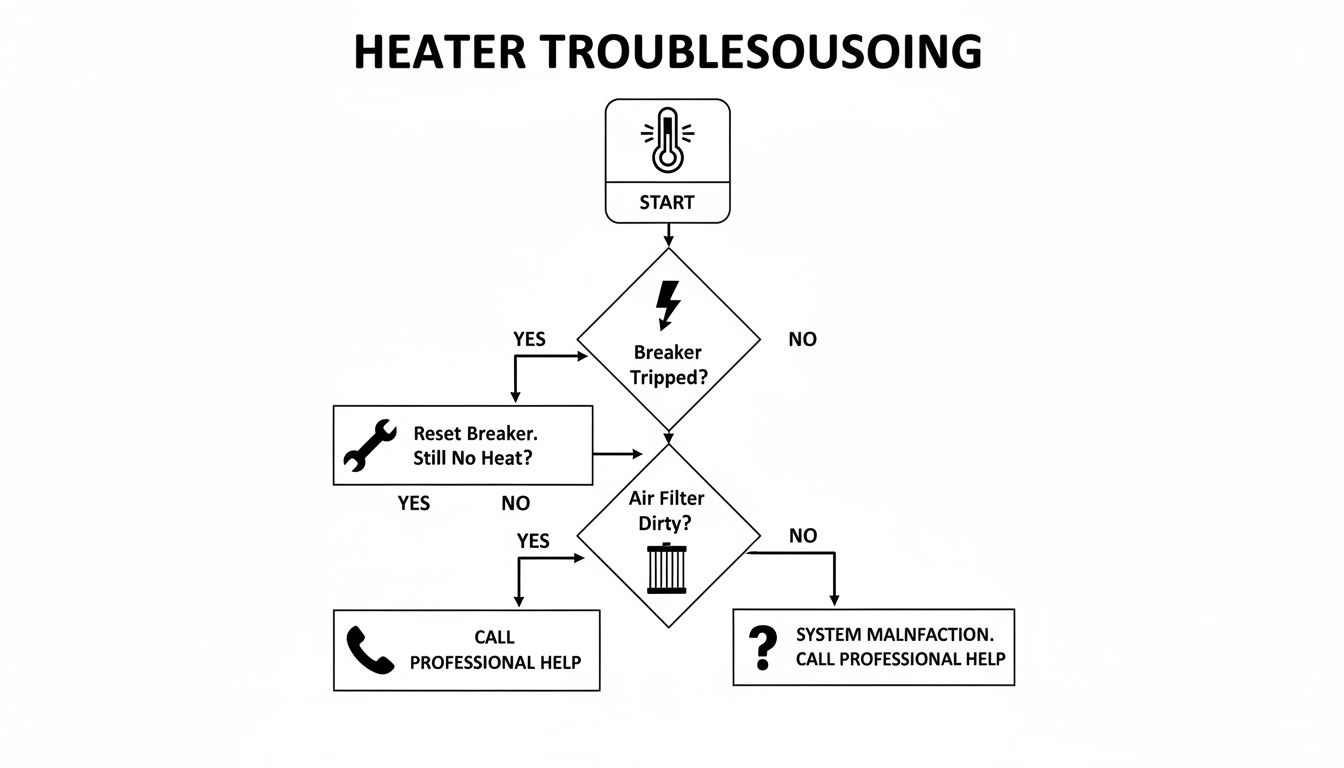
By following this logical process: thermostat, power, filter; you can quickly and confidently rule out the most common issues yourself before needing to call in a professional.
Investigating Your Furnace Ignition and Fuel Source
Alright, so the simple checks didn't do the trick. Now we need to roll up our sleeves a bit and look at the heart of the furnace: the ignition system and its fuel supply. This is where the magic, the actual heat generation, happens. A problem here is one of the most direct reasons your heater is blowing cold air.
It’s a classic Tucson scenario: a chilly winter morning hits, you've got the thermostat cranked to a cozy 72°F, but your family is still shivering. It's frustrating, and you're not alone. Problems like this account for about 45% of all residential heating service calls in the country. Since gas furnaces still hold a massive 45.1% market share, issues with ignition and fuel are something we see all the time. You can find more HVAC industry statistics on leads4build.com if you're curious.
Before you start poking around, it's really important to know what kind of furnace you have. The troubleshooting steps are similar, but there are key differences between systems. If you're not sure, check out our simple guide on how to tell if your furnace is gas or electric.
Checking Older Pilot Light Systems
If you have an older gas furnace, there's a good chance it uses a standing pilot light. This is a small flame that's always on, ready to ignite the main burners whenever the thermostat calls for heat. But sometimes, that little flame goes out, and when it does, your furnace can't produce any heat.
To check it, you'll need to carefully take off the furnace's front panel. Look for a small, steady blue flame near the burner assembly. No flame? The pilot is out.
Relighting it is usually pretty straightforward, but you absolutely must follow the specific instructions printed on a label right inside your furnace. If you find yourself relighting it over and over, that's a red flag for a bigger issue, like a bad thermocouple or a draft problem.
Inspecting Modern Electronic Ignitors
Most newer furnaces have moved on from pilot lights and use an electronic ignition system instead. These generally fall into two categories:
Hot Surface Ignitor: Think of this like the element on an electric stove. It glows a bright, fiery orange to light the gas.
Intermittent Pilot: This is a bit of a hybrid. It uses an electric spark to create a small flame just before the main burners kick on.
A dead giveaway that you have a failing electronic ignition is that you'll hear a persistent clicking sound coming from the furnace, but the burners never actually roar to life. That clicking is the sound of the spark trying, and failing, to light the gas. If you hear that, it's a strong sign the ignitor or flame sensor needs a professional look.
Verifying Your Gas Supply
It might sound obvious, but a gas furnace needs gas to work. Any interruption in the supply will stop it dead in its tracks.
Start with a simple but critical check: the gas valve connected to your furnace. Find the valve handle; it should be parallel with the gas pipe, which means it's "ON." If that handle is perpendicular to the pipe, the gas has been shut off.
Another good test is to check your other gas appliances, like your stove or water heater. If they aren't working either, the problem is likely with your utility provider. Under no circumstances should you ever try to fix gas supply lines yourself. If you smell gas, get everyone out of the house immediately and call your gas company from a safe distance.
Checking Your Blower Motor and Ductwork for Airflow Issues
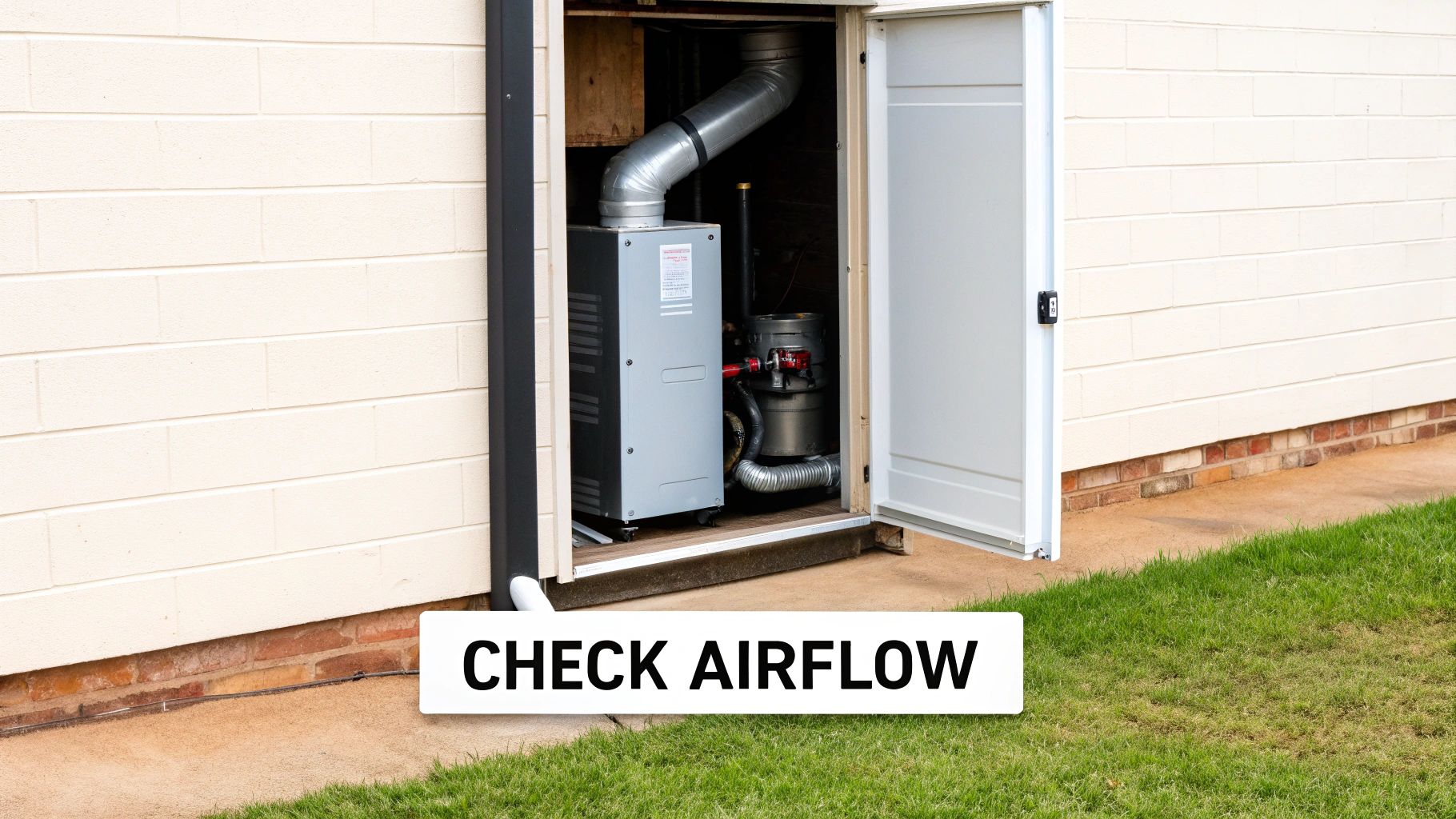
So, your furnace is definitely firing up, you can hear it running, but your rooms are still chilly. What gives? When the warmth isn't making its way through the house, the problem usually isn't about making heat, but about moving it. This classic scenario almost always points to an issue with your system's airflow, which relies on a healthy blower motor and clear ductwork.
A failing blower motor rarely dies in silence. It often gives you some pretty clear audible warnings before it quits. Instead of the gentle whoosh of air you’re used to, you might hear something much more alarming. Learning to listen to your furnace is one of the best diagnostic tools you have.
Decoding Blower Motor Noises
Those strange noises are your furnace's cry for help. Think of each sound as a clue pointing to a specific problem that’s stopping hot air from getting where it needs to go.
Here are a few of the most common sounds to listen for:
A high-pitched squeal or screeching is the classic sign of failing motor bearings. This is often just due to age or a lack of proper lubrication over the years.
Loud grinding or rattling sounds are a major red flag. This could mean a component inside the motor has broken or shaken loose, creating a dangerous situation that needs immediate attention.
A constant, loud humming that never ramps up to actually moving air often points to a bad motor capacitor. This little part is what gives the motor the jolt of energy it needs to get started.
If you're hearing any of these, it's a strong signal that the fan responsible for pushing warm air through your home is on its last legs. You can find a deeper dive into these symptoms in our homeowner's guide to furnace blower motor troubleshooting.
Inspecting Your Ductwork for Leaks and Blockages
Even with a perfectly good blower motor, that warm air still has a long journey through your ductwork to reach the vents. Any leaks or blockages along the way mean you're just paying to heat your attic or crawlspace. A quick visual inspection of any ductwork you can get to is a great next step.
Look for sections of duct that have pulled apart at the seams or joints where you can feel air escaping. Check any of the flexible ducts, too; it's common to find them crushed, kinked, or torn, especially in storage areas. These problems create massive leaks, stopping a huge amount of warm air from ever reaching its destination.
Dust and debris are silent killers for airflow. In dry climates like Tucson, airborne particulates can clog blower wheels and coils, leading to a significant drop in performance. This problem alone is responsible for 30-35% of 'no hot air' complaints in the area.
This kind of buildup can slash your airflow by as much as 50% in just 6-12 months, which often causes the system's safety switches to trip and shut everything down. In fact, U.S. homeowners spend billions every year on services to fix these kinds of labor-intensive problems. If your system seems to be struggling to breathe, a professional cleaning might be exactly what it needs.
Knowing When to Call a Professional for Heater Repair
There's a real sense of accomplishment in fixing a household problem yourself, but when it comes to your furnace, knowing your limits is key. Some issues are simple enough for a homeowner to tackle, but others are clear signals to put down the tools and call an expert. Pushing your luck with complex repairs can quickly turn a small problem into a costly disaster, or worse, a serious safety risk for your family.
So, you've gone through the basic checklist and your heater is still just blowing cool air. Now it’s time to use your senses. What you see, hear, and smell around the furnace can tell you everything you need to know about whether it's safe to keep troubleshooting or if it's time to make the call.
Red Flags That Require an Expert
Certain symptoms should never be ignored. These signs often point to serious trouble with combustion, major electrical components, or the structural integrity of your furnace, all things that are far beyond a typical DIY fix.
If you notice any of the following, it's time to call for professional service right away:
The Smell of Gas: This is the most critical warning sign. If you smell rotten eggs or sulfur anywhere near your furnace, you could have a gas leak. Don't touch anything electrical. Leave your home immediately, and from a safe distance, call your gas company and an HVAC professional.
Loud Banging or Grinding Noises: We're not talking about the gentle hum of the blower motor. Violent, loud noises like metal grinding against metal or sharp banging sounds can signal a major mechanical failure. It could be a broken motor mount or another internal part that’s about to give out completely.
Visible Soot or Burn Marks: Any sign of black soot or scorching around the furnace panels, vents, or flue pipe is a huge red flag. This almost always points to a dangerous combustion problem or, even worse, a cracked heat exchanger that could be leaking carbon monoxide into your home.
If any of these pop up, shut the system down at the circuit breaker and wait for a technician. For a more detailed checklist, it's worth reviewing these 8 clear signs your furnace needs repair.
Attempting to fix complex components like a gas valve, a cracked heat exchanger, or the main control board is not just risky; it can void your system’s warranty and violate local building codes. Professionals have the diagnostic tools and training to handle these repairs safely and correctly.
DIY vs Professional Repair Cost Estimates
Making the decision to call for help is often easier when you have a rough idea of the potential cost. Heater repair costs can vary quite a bit, but knowing the typical price range for different problems can help you act quickly and confidently.
The table below breaks down some common heater issues, showing which ones are usually safe for a DIY approach and the estimated professional repair costs for those that aren't.
Heater Problem | DIY Fix Possible? | Estimated Professional Repair Cost |
|---|---|---|
Clogged Air Filter | Yes | $75 - $150 (if included in a service call) |
Faulty Thermostat | Yes | $150 - $400 |
Failed Ignitor or Flame Sensor | No | $150 - $500 |
Bad Blower Motor | No | $450 - $1,500+ |
Cracked Heat Exchanger | No | $1,000 - $3,000+ (often leads to replacement) |
While these are just estimates, they clearly show where the line is drawn. Once a problem goes beyond a simple filter or thermostat setting, the expertise of a company like Covenant Aire Solutions becomes a necessary investment in your home’s safety and comfort.
Want to Avoid This Problem Again? Think Prevention.
So you've just wrestled your heater back to life. The last thing you want is a repeat performance during the next cold snap. Honestly, the best way to handle heating emergencies is to stop them from happening in the first place. This is where regular, professional maintenance stops being a "nice-to-have" and becomes a critical part of owning a home.
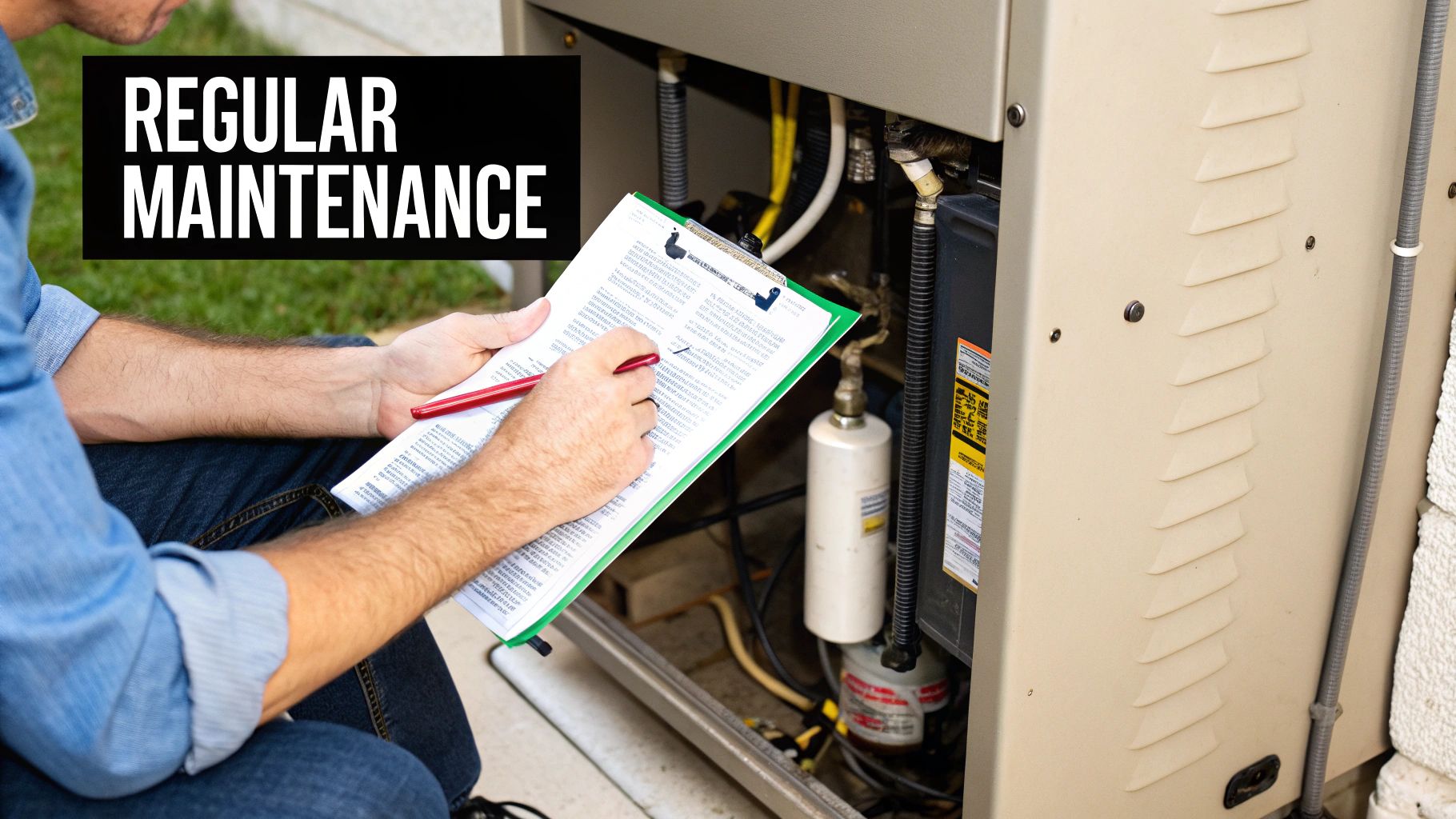
Consistent care keeps your heating system humming along reliably and efficiently. It’s all about catching those small, nagging issues before they have a chance to snowball into a full-blown, expensive breakdown. Think of it like changing the oil in your car; you can skip it for a while, but eventually, you're looking at major engine trouble. Annual furnace tune-ups work the exact same way, protecting your investment and guaranteeing your comfort.
What a Professional Tune-Up Actually Involves
A comprehensive maintenance visit is a whole lot more than just swapping out an air filter. A certified technician performs a deep-dive inspection and cleaning, all designed to optimize your furnace's performance and sniff out any hidden problems. This service is the key to preventing the very issues that cause a heater to blow cold air.
During a typical tune-up, a professional will:
Thoroughly clean and inspect the burners to ensure combustion is both efficient and safe.
Test and calibrate the thermostat to make sure temperature readings are accurate and the system cycles properly.
Inspect the heat exchanger for any cracks or corrosion, which can pose a serious carbon monoxide risk.
Clean and tighten all electrical connections to prevent shorts and unexpected system failures.
Lubricate moving parts, like the blower motor, to cut down on friction and wear.
A well-maintained furnace can last up to 20 years or more, but a neglected system might give up the ghost in as little as half that time. Routine service doesn't just extend your unit's lifespan; it can also boost its efficiency by up to 25%, which you'll see reflected in your monthly energy bills.
For a detailed look at what a quality tune-up should always include, our team put together Your Ultimate 8-Point Furnace Service Checklist for 2025. It’s a great resource to know what you should expect from any technician.
How Our Local Climate Impacts Your Heater
Here in Tucson, our dry and dusty environment puts a unique kind of stress on HVAC systems. Airborne dust and debris are constantly being sucked into your furnace, which really speeds up the wear and tear on critical components. This buildup can clog blower wheels, coat important sensors, and restrict airflow, all things that can lead to a heater blowing cold air.
This is what makes an annual maintenance plan a smart financial decision, not just a good idea. A scheduled tune-up is an investment in reliability, safety, and efficiency. It buys you peace of mind, knowing your system is ready to handle the coldest nights without a surprise breakdown. If you want to dive deeper into what homeowners can do, there's some great reading on preventive maintenance available. Ultimately, regular care ensures that when you crank up the heat, you get exactly what you paid for: consistent, comforting warmth.
Got Heater Questions? We've Got Answers
When your furnace suddenly stops pumping out warm air, a million questions can pop into your head. It's stressful, but getting straight answers can help you figure out what to do next without panicking. Here are some of the most common questions we get from homeowners dealing with a heater that's gone cold.
Why Is My Heater Running but Not Blowing Hot Air?
This is easily the number one call we get. You hear the fan kick on, you feel air coming from the vents, but it’s lukewarm at best. What’s happening is that the part of your furnace responsible for actually creating heat has shut down, but the blower fan keeps doing its job, circulating room-temperature air.
This classic symptom usually points back to a few key issues you can check yourself:
A severely clogged air filter is the most common culprit. It chokes the system, causing it to overheat and trip a safety switch that kills the burners.
The pilot light has gone out on an older gas furnace, or the electronic ignition system has failed on a newer model.
Someone might have accidentally changed a thermostat setting, or its batteries died, so it’s not sending the right signal to the furnace.
Always start with these simple checks. More often than not, one of them is the reason you're cold, and it's a fix that doesn't require a professional.
How Do I Know if My Thermostat Is the Problem?
It’s amazing how often a faulty thermostat can make you think your entire furnace is broken. Before you jump to conclusions, give your thermostat a quick once-over.
First, make sure it’s actually set to HEAT. Then, crank the target temperature up at least five degrees higher than the current room temperature to make sure you're properly calling for heat.
Next, pop open the cover and check the batteries. Dead or dying batteries are behind a huge number of service calls. If the screen is totally blank or won't respond even with fresh batteries, the thermostat itself has likely failed and needs to be replaced.
Can I Fix My Heater Myself?
Absolutely. There are plenty of basic troubleshooting steps that are perfectly safe for homeowners to tackle. You don’t need to be an HVAC expert to handle the small stuff.
For example, swapping out a dirty air filter, flipping a tripped circuit breaker back on, or making sure your thermostat has fresh batteries are all fantastic first steps. You'd be surprised how many "no heat" situations are solved by one of these simple actions.
But here’s where you draw the line: if you suspect anything involving the gas line, internal wiring, or the blower motor, stop what you're doing. These are not DIY jobs. Working on them without the right training and specialized tools is dangerous and can easily lead to much bigger, more expensive problems. For your own safety, that's the time to call in a certified pro.
If you've run through the basics and you’re still shivering, don't just wait and hope it fixes itself. The expert team at Covenant Aire Solutions is ready to help 24/7 with emergency service to get your Tucson home warm and safe again. Contact us today for a fast, honest diagnosis and a reliable repair.