
How Long Should an AC Unit Run: Cycle Times Explained
A properly sized AC unit typically runs 15 to 20 minutes per cycle and cycles 2 to 3 times per hour in moderate conditions. In an Arizona heat wave, though, a healthy system may run far longer, sometimes with only short pauses between cycles.
You may be hearing your air conditioner start, stop, and restart before the room feels fully comfortable. Or it may have been running for hours through a Tucson afternoon, leaving you wondering whether the system is struggling or just doing what the weather demands. Both patterns can be normal in the right conditions, and both can signal trouble when they don't match the indoor load.
The useful question isn't only, “How long should an AC unit run?” It's whether the runtime matches the outdoor temperature, thermostat setting, home insulation, system design, and indoor humidity. Arizona's dry climate changes the diagnosis, but it doesn't eliminate the need for steady cooling cycles.
Understanding Normal AC Run Cycles
A Tucson homeowner may notice the outdoor unit running for a while, shutting down, and starting again later. On a mild day, that rhythm should feel fairly predictable. During extreme heat, the same system may run for long stretches because the house gains heat through the roof, windows, walls, and air leaks faster than it does under moderate conditions.
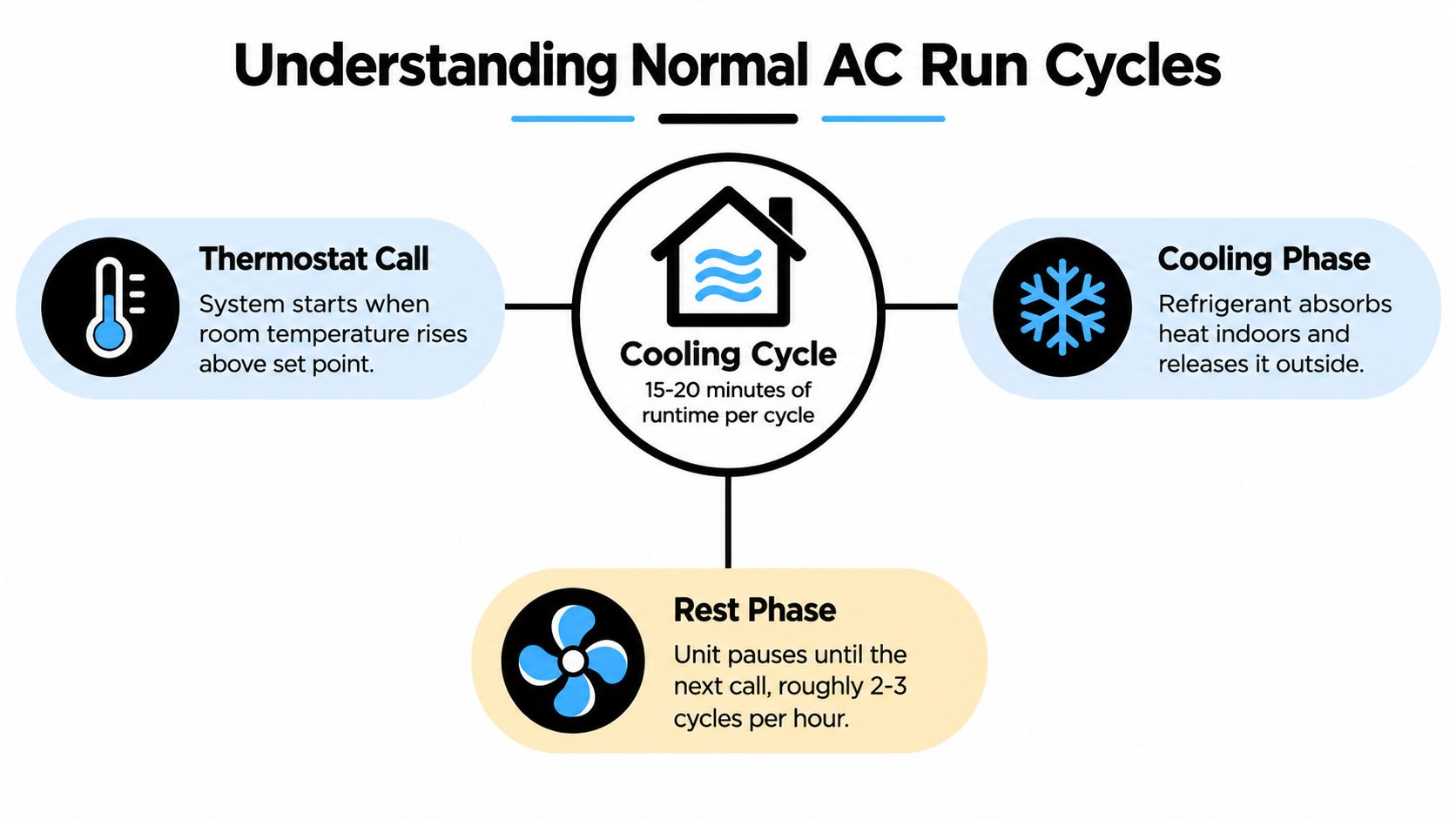
The traditional benchmark for a properly sized central air conditioner is a 15 to 20 minute cooling cycle, with the system typically starting 2 to 3 times per hour and resting about 7 to 10 minutes between cycles, according to guidance on normal AC cycling. That pattern gives the equipment enough operating time to cool the home, move conditioned air through the rooms, and remove some moisture before the thermostat ends the call.
What happens during a cycle
The thermostat starts the process when the room temperature rises above its set point. The compressor and indoor blower then move refrigerant and air through the system. Refrigerant absorbs heat indoors and releases it outdoors, while the evaporator coil becomes cold enough to condition the air passing across it.
After the thermostat is satisfied, the equipment enters a rest period. That pause matters because an air conditioner isn't designed to start and stop constantly. The compressor uses more effort during startup than during steady operation, so a balanced cycle pattern supports comfort while limiting unnecessary starts.
A system that runs continuously all day in mild weather isn't automatically healthy, just as a system that runs briefly isn't automatically efficient. The correct reference point is the load the equipment is facing. Arizona's peak summer heat can require extended operation, while a mild morning may produce shorter runs and longer pauses.
For homeowners who want a basic mechanical overview, how an AC system moves heat provides useful background. If your equipment is repeatedly starting and stopping, tracking the pattern can also support efforts to prevent HVAC equipment failures by identifying abnormal behavior before a larger breakdown occurs.
Practical rule: Judge the rhythm against the weather. A long runtime during extreme heat can be normal, but repeated rapid starts deserve attention in any season.
Why Cycle Length Affects Efficiency and Comfort
An Arizona air conditioner can bring the thermostat to its setting while parts of the home remain uncomfortable. A bedroom at the end of a duct run may still feel warm, and indoor air can feel stale even when the temperature reading looks correct. Cycle length influences both conditions because the system needs operating time to distribute cooling and manage moisture.
Desert air is often drier than air in coastal climates, but Arizona homes still gain moisture from showers, cooking, occupants, open doors, seasonal weather, and evaporative cooling equipment. The evaporator coil must stay cold long enough to pull water vapor from the air. That moisture then travels through the condensate system. HVAC guidance on AC humidity control explains that longer, steadier runtimes improve latent-load control because the coil remains below the dew point long enough to condense and drain more water.
A quick start and stop gives the coil less time to do that work. The thermostat may be satisfied, but the rooms can still feel damp, uneven, or poorly circulated.
Cooling is only half the job
A short burst can cool the air around the thermostat quickly, particularly when an oversized system delivers a large amount of capacity at once. The rest of the home may not have reached the same temperature. Hallways, bedrooms, and rooms served by longer duct branches can lag behind, while the coil has had limited time to remove moisture.
Shorter cycles are not automatically better in Arizona. They may look efficient because the equipment shuts off quickly, yet frequent starts use energy and reduce the steady operating time available for cooling and moisture control. A house can feel cool beside the thermostat while occupants elsewhere experience warm spots or inconsistent comfort.
The trade-off during extreme heat
During a very hot afternoon, a properly sized system may run far longer than it does in mild weather. High-load guidance describes cycles of roughly 20 to 45 minutes when the equipment needs more time to control heat and moisture. In this discussion of AC runtime and humidity, longer operation is presented in that high-load context. Arizona usually places less moisture burden on an air conditioner than a humid state, but intense solar gain, hot roofs, and heat stored in masonry can keep the cooling demand high.
Steady operation can also reduce repeated hard compressor starts. Continuous running is not automatically desirable, especially if the indoor temperature keeps rising, but a unit that works consistently through extreme heat may be operating more appropriately than one that starts and stops every few minutes.
The useful warning is a change in performance, not runtime alone. Investigate when the system runs unusually long, fails to lower the indoor temperature, or behaves differently from previous days with similar weather. Judge runtime alongside comfort and temperature response.
Factors That Influence How Long Your AC Runs
Start with the weather, then examine the home and the equipment. An air conditioner doesn't have one fixed runtime that applies every day, because the heat entering the house changes constantly.
Outdoor load and system capacity
A properly sized system can run only 3 to 5 minutes with long off periods in mild conditions, while hotter weather can produce hours of runtime with brief off cycles, according to Trane's explanation of HVAC short cycling. That range is why runtime alone isn't a reliable fault signal.
Arizona homes experience sharp changes in cooling demand. Direct sun through west-facing glass, a hot attic, poor duct insulation, and heat stored in masonry can keep the system working long after the outdoor temperature begins to fall. A unit that runs longer in those conditions may be responding to the building rather than failing.
Equipment sizing and airflow
An oversized air conditioner can satisfy the thermostat too quickly, especially in a smaller or well-insulated room. The result is an abrupt shutdown before the system has distributed cooling evenly. An undersized unit faces the opposite problem, it may run for long periods because its available capacity can't match the heat entering the building.
Airflow restrictions create another mismatch. A loaded filter, blocked return, dirty indoor coil, or duct restriction reduces the volume of air moving across the coil. The thermostat may still call for cooling, but the system can't deliver its rated performance.
For homeowners who want to understand how duct resistance affects delivery, this explanation of static pressure in ductwork gives useful context.
Thermostat location and the building envelope
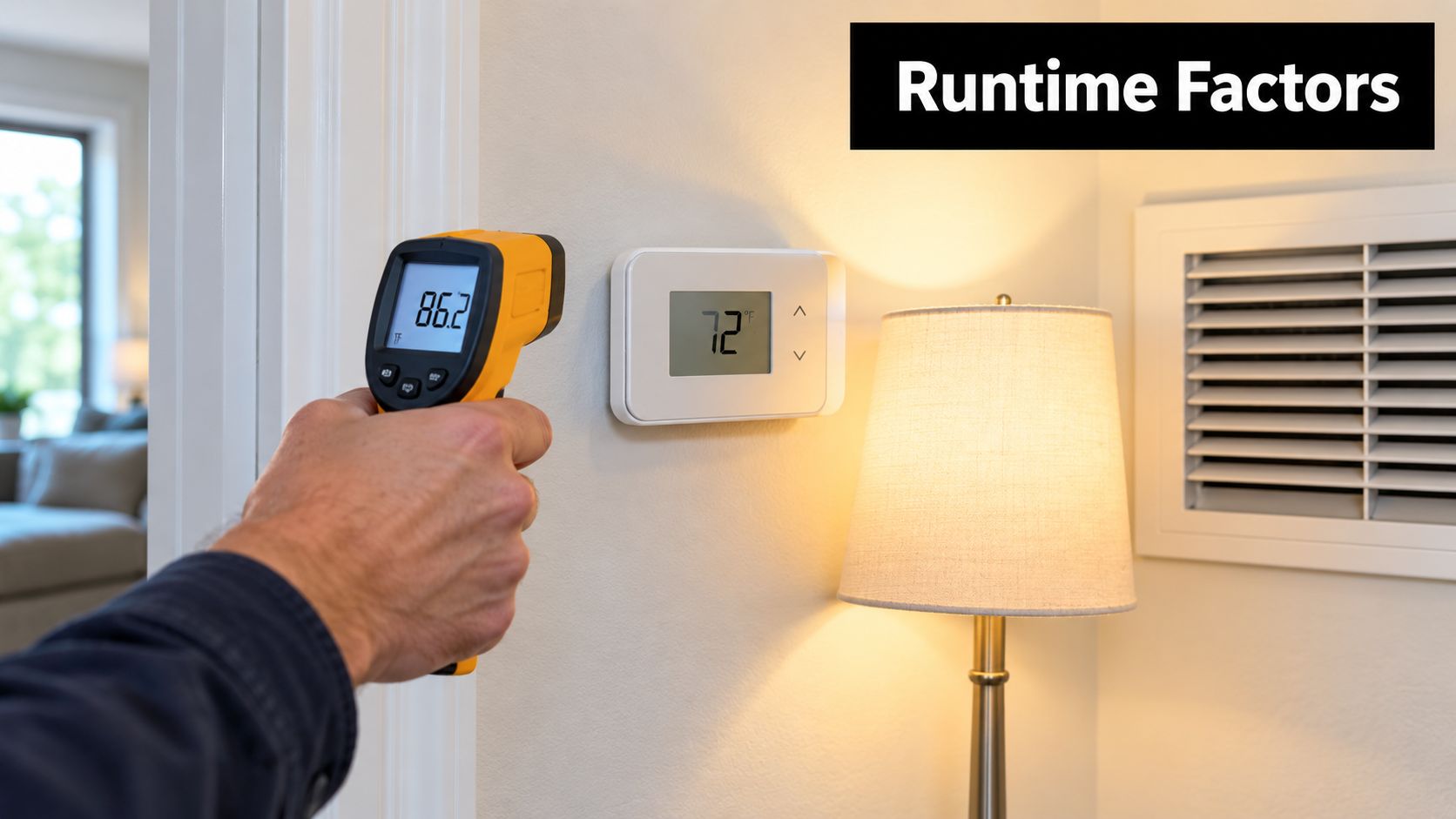
A thermostat near a supply register, sunny window, kitchen, or exterior door can read a condition that doesn't represent the rest of the house. Calibration problems can produce premature shutdowns or prolonged calls for cooling.
Insulation and air sealing matter just as much. Heat entering through the attic or leaky ducts increases runtime, while a well-sealed envelope lets the system satisfy the thermostat more consistently. Check the filter and thermostat location yourself, but leave refrigerant measurements, electrical testing, coil inspection, and sizing analysis to a qualified technician.
Warning Signs of Problematic AC Cycling
The clearest warning sign is a repeated pattern, not one unusual cycle. An air conditioner may start briefly after a door opens or after a large heat gain. Concern rises when it repeatedly starts and stops before the rooms stabilize, or when it runs without reaching the set temperature.
A residential system commonly operates in cycles of 10 to 20 minutes, with about 2 to 4 cycles per hour under steady conditions. Cycles shorter than 10 minutes are widely treated as short cycling and may point to oversizing, airflow trouble, or a control problem, as described in this residential HVAC cycling guide.
What rapid cycling tells you
Short cycling often creates several symptoms at once:
Frequent starts: The outdoor unit turns on and off repeatedly instead of completing a stable cooling call.
Uneven comfort: The thermostat reaches its setting, but distant rooms remain warmer.
Poor moisture control: The home feels clammy or stale even though the temperature appears acceptable.
Mechanical stress: Repeated compressor starts increase operating stress and can shorten component life.
Unexpected electrical use: The system spends more time initiating operation instead of providing steady cooling.
Possible causes include an oversized unit, a thermostat affected by sun or supply air, restricted airflow, low refrigerant, or an electrical control issue. A dirty filter is an easy homeowner check, but changing it won't correct a capacity or refrigerant problem.
For a focused explanation of the diagnostic process, see this guide to AC short cycling symptoms and causes. Water around the indoor unit or ceiling stains also need prompt attention. If condensate has caused property damage, trust AMPM Restoration for help with the restoration side while an HVAC professional addresses the source.
When long operation becomes a warning
Long runtime becomes concerning when the system can't reach the thermostat setting, the supply air isn't adequately cool, or the indoor temperature continues rising. A dirty outdoor coil, airflow restriction, refrigerant issue, failing compressor, duct leakage, or insufficient equipment capacity can all reduce cooling performance.
In Arizona, don't call for service solely because the AC runs through a hot afternoon. Call when long operation combines with poor temperature control, weak airflow, unusual sounds, icing, water leakage, or a noticeable change from normal performance. Those details give the technician a much better starting point than “it runs a lot.”
Short Cycling vs Continuous Running What Is Normal
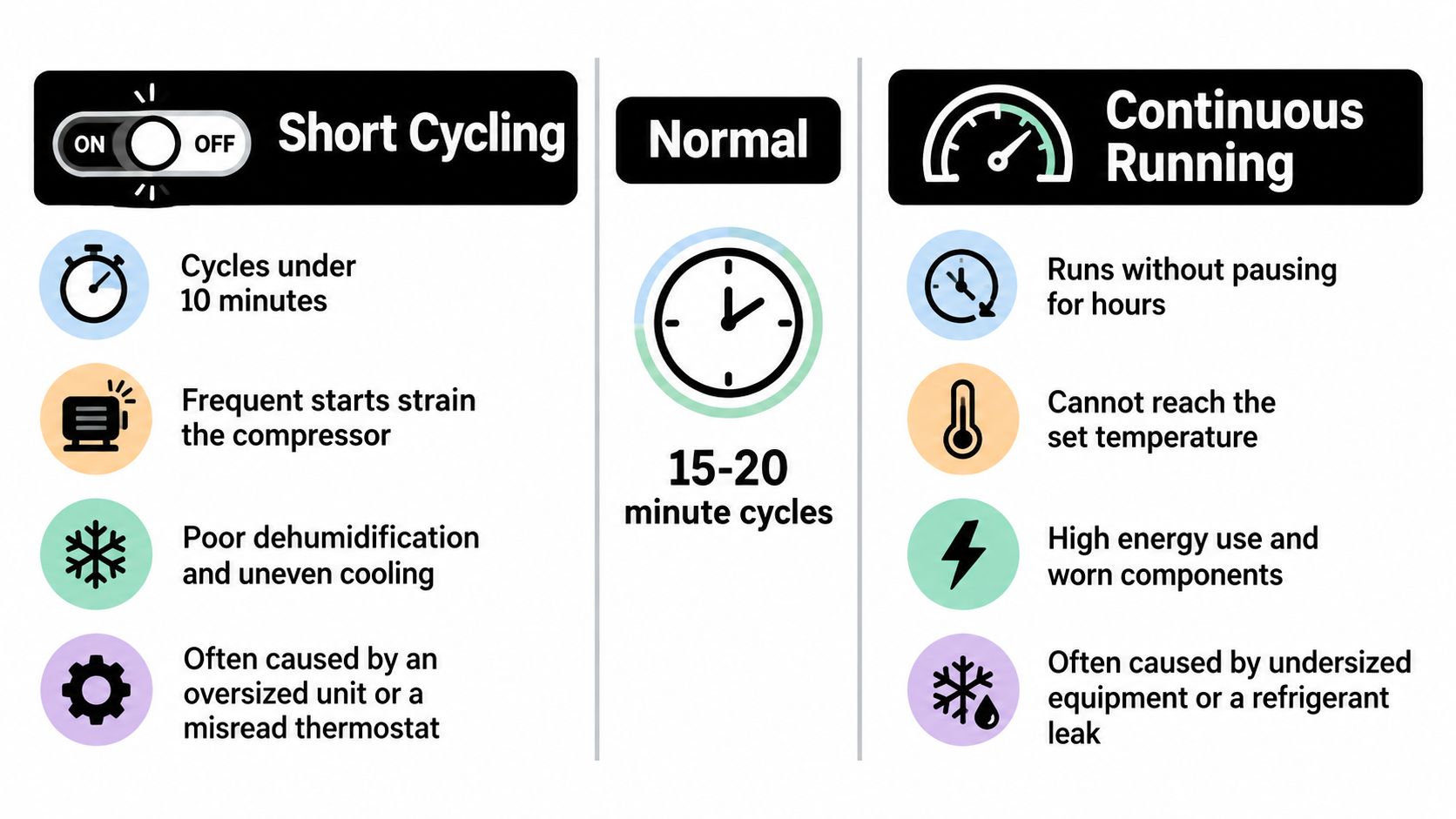
Short cycling and continuous running are opposite runtime patterns, but both can create discomfort and equipment problems when they occur under the wrong conditions. The outdoor load determines whether a long cycle is expected, while the relationship between cycle length and thermostat satisfaction helps identify a fault.
Short cycling
Short cycling means the unit satisfies the thermostat too quickly and shuts down, then starts again soon afterward. Oversizing is a common possibility, but a thermostat problem, blocked airflow, or control fault can create the same pattern.
The efficiency penalty is real. ENERGY STAR explains that oversized air conditioners short-cycle because they operate for less time than engineered for optimal performance. Its example shows that increasing operating time from 5 to 9 minutes improves efficiency by 17 percent, as documented in its right-sized air conditioner guidance.
Continuous running
Long or near-continuous operation can be normal during Arizona's most intense heat, especially when the system is maintaining the indoor set point against a large heat load. The same pattern on a mild day, especially when the house never reaches the selected temperature, suggests that the equipment or building cannot meet demand.
Use this comparison when deciding what to do:
Runtime pattern | More likely interpretation | Sensible response |
|---|---|---|
Brief starts repeated throughout the day | Oversizing, airflow, thermostat, or control issue | Check the filter and thermostat, then schedule diagnosis |
Steady operation while the home remains comfortable | High outdoor load or normal system response | Monitor temperature, airflow, and trend |
Long operation with rising indoor temperature | Capacity loss, refrigerant issue, airflow problem, or building load | Arrange professional inspection |
Longer runtime than usual under similar weather | Developing equipment or duct problem | Compare filter, airflow, thermostat history, and service records |
A system that keeps running needs a different investigation from one that shuts off too quickly. This guide to an AC that keeps running can help you organize the symptoms before arranging service.
Optimizing Your AC Runtime for Efficiency and Comfort
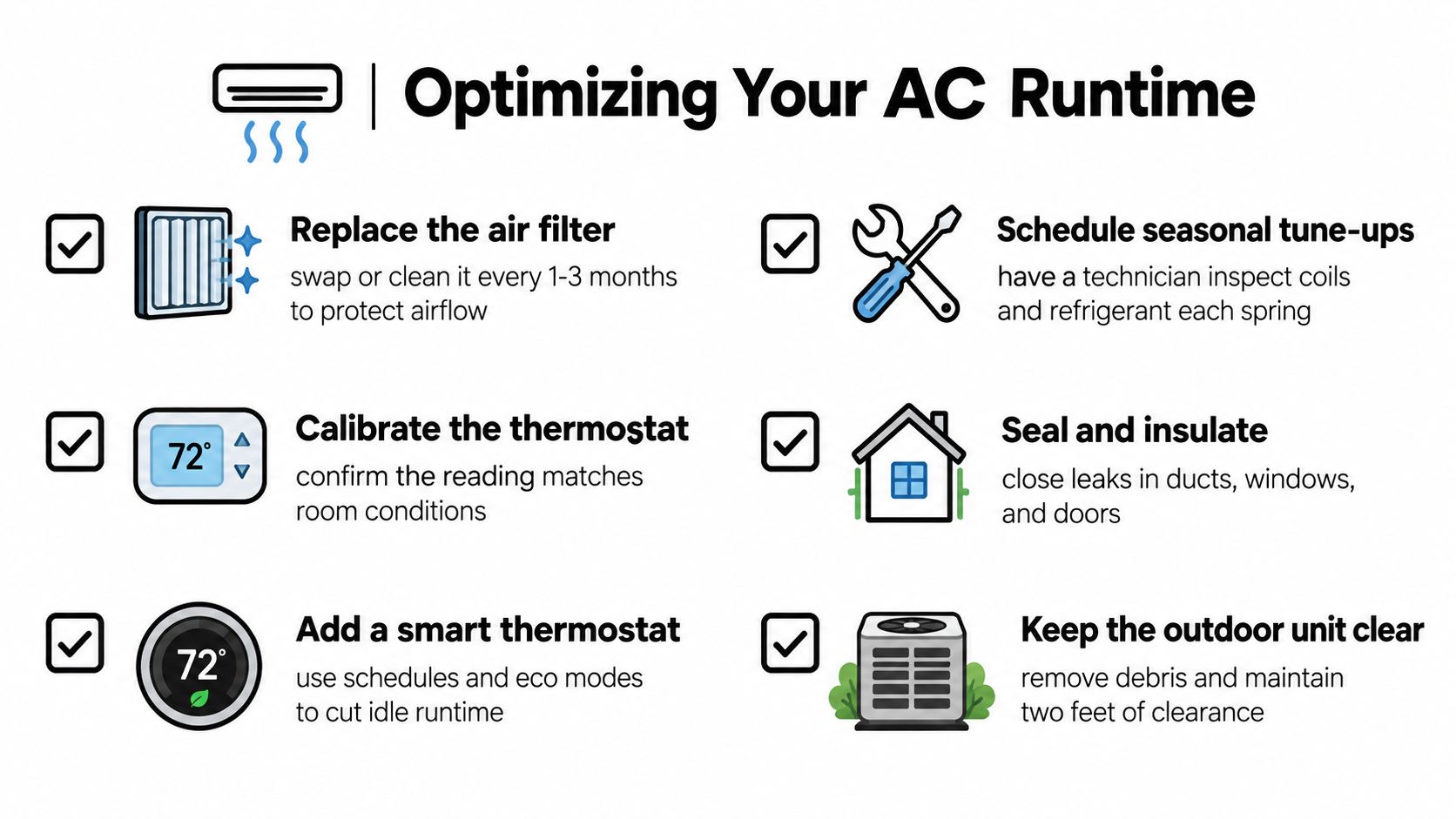
Runtime improves when the system can move air freely, reject heat outdoors, read the room accurately, and match the home's cooling load. Start with simple checks, then move to professional testing if the pattern persists.
Start with homeowner checks
Inspect the air filter: Replace or clean a loaded filter according to its design and household conditions. Restricted airflow can lengthen runtime and contribute to coil problems.
Check the thermostat: Make sure it isn't exposed to direct sun, a draft, cooking heat, or supply air. Compare its reading with the actual room conditions.
Keep supply and return grilles open: Closed registers and blocked returns make the system work against restricted circulation.
Clear the outdoor unit: Remove leaves, vegetation, and debris that obstruct heat rejection. Don't bend the coil fins or spray electrical components.
A programmable or smart thermostat can make schedules and runtime history easier to review. It won't fix incorrect sizing, low refrigerant, or a blocked coil, but its records can help show whether the pattern occurs during peak heat, overnight, or across all conditions.
For recurring care, follow a documented preventive maintenance schedule. A technician can inspect coils, airflow, electrical components, refrigerant-related conditions, condensate drainage, and thermostat behavior rather than guessing from cycle length alone.
Carrier states that an AC cycling every 10 minutes isn't normal, and repeated rapid cycling can indicate a dirty filter, poor airflow, thermostat trouble, low refrigerant, or an oversized system, as outlined in Carrier's short-cycling guidance.
This video offers another visual explanation of AC operation and runtime behavior:
If your AC starts and stops rapidly, runs unusually long without reaching the set point, or produces weak airflow and moisture problems, Covenant Aire Solutions can evaluate the equipment, controls, airflow, refrigerant-related conditions, and sizing in Tucson and surrounding areas. Visit Covenant Aire Solutions to arrange service or preventive maintenance for a more reliable cooling system.
If your Arizona AC is short cycling or running for hours without keeping the home comfortable, schedule a professional evaluation before the pattern becomes a larger repair. Covenant Aire Solutions provides cooling diagnostics, repairs, maintenance, replacements, ductwork service, and indoor air quality support for homeowners and commercial properties.