
Parts of central air conditioning unit: A Homeowner's Guide to Its Components
A central air conditioner isn't just one big machine; it's actually a split system with two main sections. You've got an outdoor unit and an indoor unit, and inside both are the critical parts like the compressor, condenser, and evaporator coil.
These core components work together in a continuous loop, using a special fluid called refrigerant to pull heat from inside your home and dump it outside.
How Your Central Air Conditioner Really Works
Ever wonder how that metal box humming away outside and the unit in your attic or closet work together to turn a sweltering Tucson day into a cool, comfortable escape? It's a surprisingly clever process that’s much simpler than it seems once you break it down.
The best way to understand the different parts of a central air conditioning unit is to see how they function as a team.
Think of your AC system like your body's circulatory system. In this scenario, the refrigerant is the "blood," constantly flowing to transport something vital. But instead of oxygen, this refrigerant transports heat. Its entire job is to grab unwanted heat from your indoor air and carry it outside, leaving only cool, refreshing air behind for you to enjoy.
This nonstop process is called the cooling cycle, a loop that relies on both the indoor and outdoor units to work. The parts in one unit absorb the heat, and the parts in the other release it.
The Basic Cooling Cycle
It all starts inside your home. Warm, humid air is pulled into your system and passes over a frigid component called the evaporator coil. As the air touches the cold coil, the heat is absorbed by the refrigerant flowing within it.
Now loaded with heat, the refrigerant travels to the outdoor unit. Here, another key player, the compressor, pressurizes the refrigerant, concentrating the heat so it can be easily released into the outside air with the help of a large fan. Once it has shed the heat, the now-cool refrigerant cycles back inside to start the process all over again.
This diagram gives you a great visual of how your system moves heat from the inside to the outside.
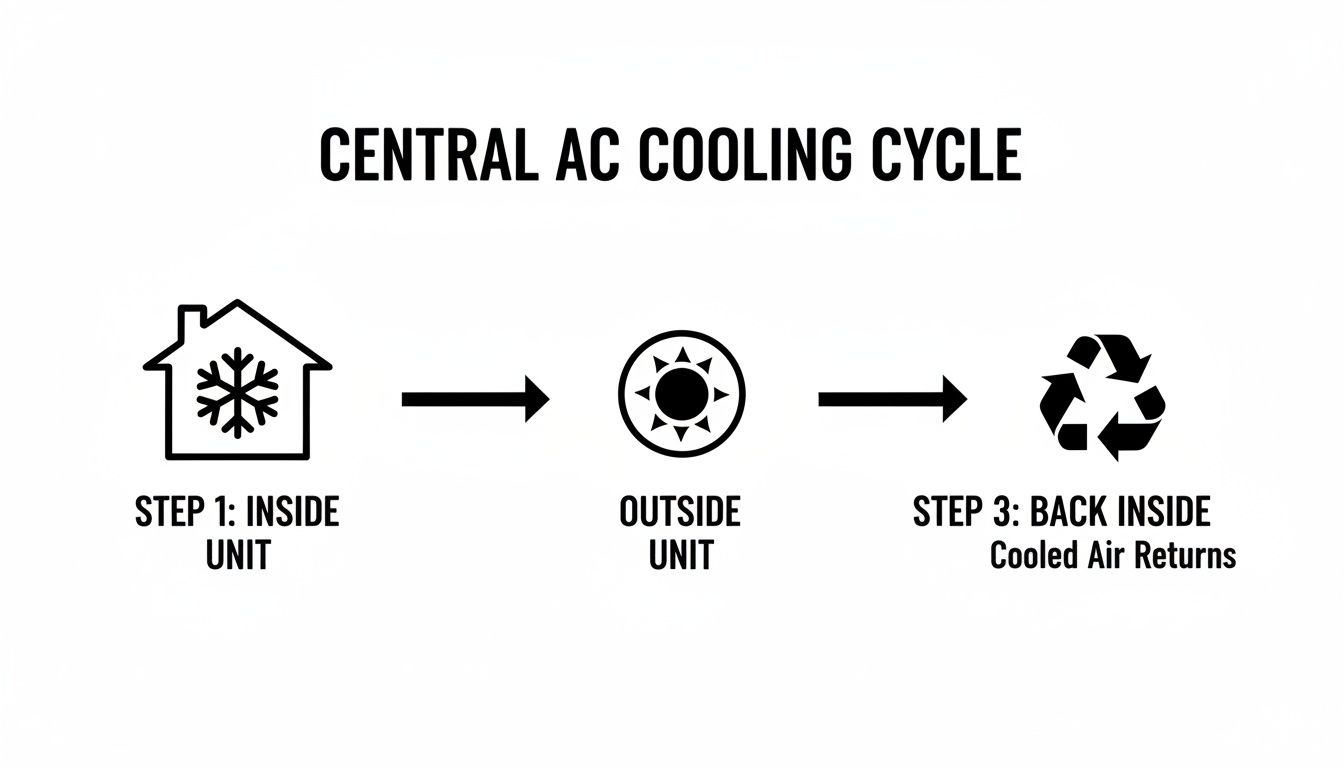
As you can see, it’s a constant loop of heat absorption (indoors) and heat rejection (outdoors). That's the fundamental principle behind modern air conditioning, and understanding this flow makes it much easier to grasp the specific role each component plays in keeping your home cool.
To give you a quick preview of what we'll cover, here’s a simple breakdown of the main players.
Quick Guide to Central AC Components
This table summarizes the core parts of a central air conditioning unit and their primary roles in the cooling process.
Component Name | Location | Primary Function |
|---|---|---|
Compressor | Outdoor Unit | Pressurizes refrigerant to prepare for heat release. |
Condenser Coil | Outdoor Unit | Releases collected heat into the outside air. |
Evaporator Coil | Indoor Unit | Absorbs heat and humidity from your home's air. |
Blower/Air Handler | Indoor Unit | Circulates air through the ductwork system. |
Now that you have the big picture, let's dive into what each of these parts does and what you, as a homeowner, should know about them.
Your System's Powerhouse: Exploring the Outdoor Unit
That big metal box sitting outside your house, humming away on a hot Tucson afternoon, is way more than just a noisy accessory. This outdoor unit is the powerful engine of your entire cooling system. It's where the real heavy lifting happens.
This unit works tirelessly to take all the heat and humidity your indoor unit has soaked up and kick it to the curb, making sure your home stays the cool sanctuary you need it to be.
Inside that tough metal casing, three critical components work in perfect harmony: the compressor, the condenser coil, and a large fan. Think of them as a powerful heat-rejection team. Understanding what this trio does is the first step to spotting problems early and keeping your system running at peak efficiency.
The Compressor: The Heart of the System
If the outdoor unit is the engine, then the compressor is its heart. This vital component has one of the most demanding jobs in the entire cooling cycle. Its task is to take the low-pressure refrigerant gas, now warm from absorbing your home's heat, and put it under intense pressure.
Imagine a powerful pump squeezing that gas. The compressor pressurizes the refrigerant, transforming it from a warm gas into a very hot, high-pressure liquid. This process is brilliant because it concentrates all that collected heat, making it much easier to release into the outside air.
The compressor is the single most important mechanical part of your central AC, driving both its performance and its cost. It’s a big deal in the industry, too; the global market for air conditioning compressors is projected to hit $48.9 billion by 2035.
Modern systems are increasingly using variable-speed compressors, which can slash energy use by 20–40% compared to the old on-or-off designs.
Because it works so hard, the compressor is also one of the most expensive parts to replace. That's why it's so important to listen for signs of trouble.
Signs of a Failing Compressor:
Loud Banging or Grinding: These aren't normal operating sounds. Violent noises often mean a serious mechanical failure is happening inside.
System Struggles to Start: If you hear the outdoor unit click or hum but fail to fully kick on, the compressor's motor might be on its last legs.
Circuit Breaker Trips: A failing compressor can draw way too much power, causing it to repeatedly trip your home's circuit breaker.
If you suspect a compressor problem, don't wait. Call a professional at Covenant Aire Solutions right away to prevent a small issue from turning into a catastrophic failure.
The Condenser Coil: Releasing the Heat
Once the compressor has done its job, that hot, high-pressure refrigerant flows into the condenser coil. This is the large network of tubing, usually covered in thin metal "fins," that wraps around the inside of the unit. It works just like the radiator in your car.
Its only purpose is to create a massive surface area so the heat can escape. As the refrigerant snakes through these coils, the big fan on top pulls the surrounding air across them. This steady airflow whisks the heat away from the refrigerant, causing it to cool down and condense back into a liquid. Now, it's ready for the return trip indoors to grab more heat.
For a deeper dive into how this all comes together, check out our guide on what a condenser unit is and how it functions.
But here’s the catch: for this heat exchange to work efficiently, the coils have to be clean. Over time, they get caked with the dust, pollen, and leaves that are all too common here in the Tucson landscape.
A layer of dirt just 1/16th of an inch thick on your condenser coil can slash its efficiency by over 20%. This forces your entire system to run longer and work harder, sending your electricity bills through the roof.
Troubleshooting Dirty Coils:
Weak Cooling: Is your AC running constantly but the house just won't get cool? Dirty coils are a very likely culprit.
Higher Energy Bills: A sudden, unexplained jump in your summer utility costs often points to an efficiency problem, and dirty coils are the number one cause.
Visible Grime: Take a peek through the vents on the side of the unit. If the coils look clogged with dirt and gunk, they need a good cleaning.
A simple maintenance task you can do yourself is to gently rinse the coils with a garden hose (never a pressure washer!) to wash away any loose debris.
The Condenser Fan: The Final Push
The third key player in this outdoor unit is the large condenser fan, the one you can see spinning through the top grate. This fan is the workhorse responsible for moving a huge volume of air across the condenser coils, making the whole heat transfer process possible.
Without this fan, the heat would just get trapped around the coils, and the refrigerant would never cool down enough to continue its cooling cycle inside. The fan's constant motion is what allows your system to effectively "dump" all that unwanted indoor heat outside.
Indicators of a Fan Problem:
The Unit Hums but the Fan Doesn't Spin: This often points to a failed fan motor or a bad capacitor, a small part that gives the motor the jolt it needs to start.
Visible Damage: If you spot cracked or broken fan blades, the fan is out of balance. This will cause a lot of noise and put a huge strain on the motor.
The Fan Cycles On and Off Randomly: This could mean the fan motor is overheating and shutting itself down to prevent permanent damage.
It’s crucial to keep the area around your outdoor unit clear. Make sure there is at least two feet of clearance on all sides and above the unit. Keep it free from overgrown bushes, weeds, or anything else you might be storing nearby. This ensures the fan has plenty of room to breathe and pull in enough air to do its job right.
What's Happening Inside Your Home: The Heat-Absorbing Crew
While your outdoor unit is working hard to dump heat outside, the real cooling magic is happening right inside your home. Usually tucked away in a closet, attic, or basement, the indoor components have one critical job: absorbing the heat and humidity from your air. This is where warm, stuffy air gets transformed into the cool, refreshing comfort you crave.
The two main players on the indoor team are the evaporator coil and the expansion valve. These parts work together in a beautifully simple process, getting the refrigerant ready to soak up all that uncomfortable heat and moisture, literally pulling it right out of the air you breathe.
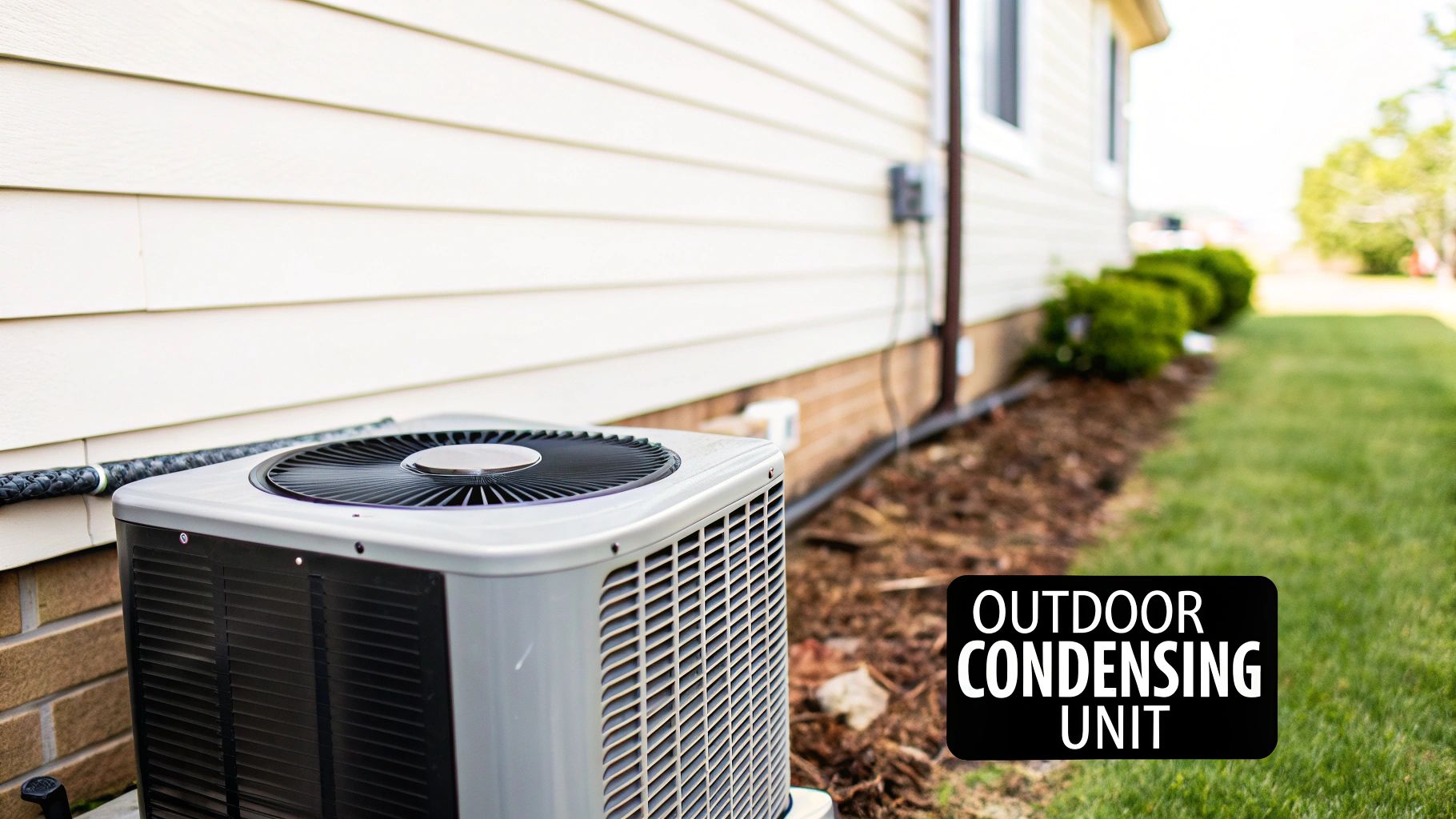
The Evaporator Coil: Your Home's Heat Sponge
The undisputed star of the indoor show is the evaporator coil. Visually, it’s a lot like the condenser coil outside, a maze of copper or aluminum tubes. But its job is the complete opposite. Instead of releasing heat, it’s built to absorb it with incredible efficiency.
Think of the evaporator coil as a giant, freezing-cold sponge. As your system’s blower pushes your home's warm air across its frigid surfaces, two things happen at once. First, the heat in the air is instantly transferred to the super-chilled refrigerant flowing through the coil. Second, moisture in the air condenses on the coil’s cold surface, much like how a glass of iced tea "sweats" on a hot day. This dehumidification is a huge part of why AC feels so good; it's not just colder, it's drier and more comfortable.
Once the air makes its way past this coil, it's both cooler and less humid. From there, it’s sent back into your home through the ductwork, giving you that much-needed relief from the Tucson sun.
The Expansion Valve: The Gatekeeper of Cold
So, how does that evaporator coil get so incredibly cold? That's the work of a small but powerful device called the expansion valve. It sits right before the refrigerant enters the evaporator coil, acting as a tiny, precise gatekeeper.
As the high-pressure liquid refrigerant flows from the outdoor unit, the expansion valve forces it through a minuscule opening. This causes a sudden, massive drop in pressure. This rapid depressurization (a principle known as the Joule-Thomson effect) forces the refrigerant to instantly expand and flash-evaporate into a low-pressure gas, becoming intensely cold in the process.
Now, the perfectly chilled refrigerant is ready to enter the evaporator coil and get to work absorbing your home's heat. The expansion valve is the final, essential step that makes the whole cooling process possible.
Common Problems with Indoor Components
When these indoor parts run into trouble, your comfort is the first casualty. Because they operate at cold temperatures and handle a lot of moisture, they're prone to some unique issues that every homeowner should know about. One of the most common and disruptive is a frozen evaporator coil.
A frozen evaporator coil becomes encased in a solid block of ice, which completely chokes off airflow. Your system might be running and burning electricity, but that cool air is trapped and has no way of getting into your home.
Several things can cause a coil to turn into an ice block:
Dirty Air Filters: This is the #1 culprit. A clogged filter restricts airflow, essentially starving the coil. Without enough warm air passing over it to keep it above freezing, ice starts to form.
Low Refrigerant Levels: A leak in the system causes the pressure to drop too low, making the coils get too cold and allowing ice to build up.
A Malfunctioning Blower Fan: If the fan isn't moving enough air across the coil for any reason, the result is the same; it will freeze over.
Signs of a Frozen Evaporator Coil:
Weak or No Airflow: You hear the AC running, but barely any air is coming out of the vents.
AC Blowing Warm Air: The ice is physically blocking the cold air from ever reaching your ductwork.
Water Leaks: When the system cycles off, that ice starts to melt. The sudden rush of water can easily overwhelm the drain pan, leading to leaks and potential water damage.
If you spot any of these signs, it's a clear red flag. Don't just let the AC keep running; a frozen coil puts immense strain on the compressor, which can quickly turn a simple fix into a catastrophic and expensive failure. For a deeper dive into what a major coil repair entails, you can learn more about our evaporator coil replacement services in Tucson.
The performance of these indoor coils is directly tied to your system's overall power. A typical central system is designed to handle a massive amount of heat, often between 120,000–240,000 BTU/h. But if the indoor coil isn't working, all that power goes to waste. If you suspect any trouble with your indoor unit, it's always best to call Covenant Aire Solutions for a professional diagnosis.
How Cool Air Travels Through Your Home
Creating that perfectly chilled, dehumidified air is an impressive feat, but it's only half the battle. After all, what good is that wonderfully cool air if it’s just stuck in your attic or basement?
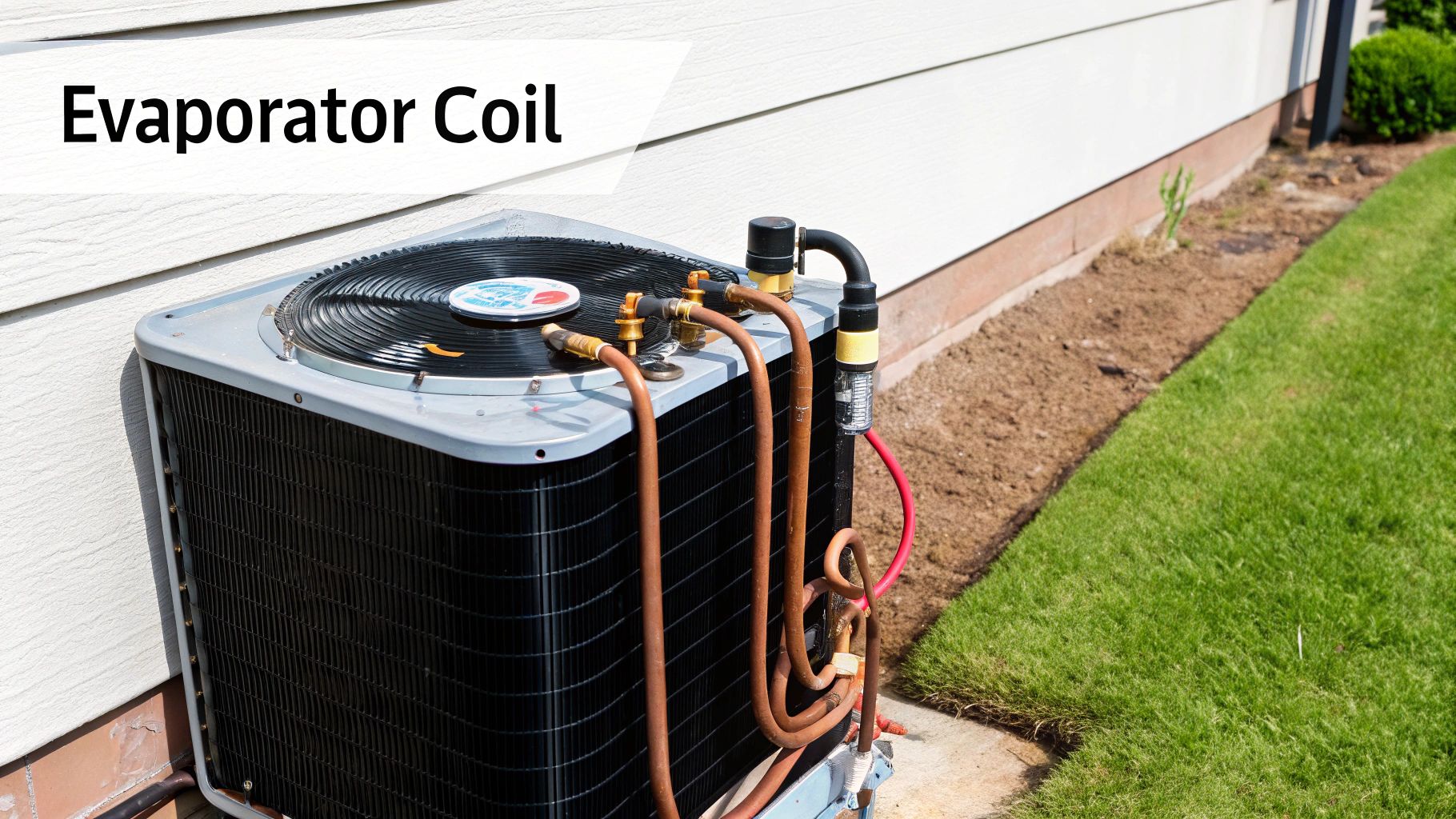
Getting that comfort delivered to every room in your home is just as critical, and that responsibility falls on the air distribution system. These are the unsung heroes among the parts of a central air conditioning unit, and they include the blower, the ductwork, and the air filter. If any one of them has a problem, your entire cooling operation can grind to a halt.
The Blower: The Lungs of Your System
Tucked away inside your indoor unit, often called the air handler, is a powerful fan known as the blower. If you think of the compressor as the heart of your AC, then the blower is definitely its lungs.
Its job is simple but vital. It inhales your home’s warm, stale air and then exhales the newly chilled air, pushing it with enough force to travel through your entire duct system. The blower motor spins a large fan that pulls warm air through the return vents, guides it across the ice-cold evaporator coil, and then propels the refreshing cool air into the supply ducts. No blower, no cool air. It's as simple as that.
Signs of a Blower Problem:
Weak Airflow: If the air trickling from your vents feels weak or anemic, the blower motor might be failing.
Strange Noises: Any squealing or screeching sounds often point to a worn-out belt or bad motor bearings that need immediate attention.
No Air at All: You hear the outdoor unit kick on, but you feel nothing moving inside. That’s a classic sign the blower motor has likely failed.
The Ductwork: Your Home's Arteries
Once the blower gives that cool air a push, it needs a clear pathway to get where it's going. That’s the job of your ductwork, a network of channels hidden away in your walls, ceilings, and attic. Think of it as the circulatory system for your house.
Supply ducts carry the conditioned air to each room, while return ducts pull warm air back to the air handler to start the cycle over. A well-designed and sealed duct system is the key to balanced, efficient cooling.
Unfortunately, ductwork is often a huge source of wasted energy, especially in older homes. Leaks, holes, and poor connections are incredibly common.
Leaky ductwork is a silent energy thief. In fact, it's common for 20% to 30% of the air moving through ducts to be lost to leaks. This forces your system to run longer and work harder just to cool your home, driving up your energy bills.
If you’ve got rooms that just never seem to get cool enough or your energy bills are through the roof, leaky ducts are a prime suspect. Properly sealing and insulating your ductwork can be one of the most effective upgrades you can make. You can learn more in our detailed homeowner's guide to the parts of ductwork.
The Air Filter: The System's Guardian
Finally, we get to one of the simplest yet most important components: the air filter. This humble screen, usually located right where the return duct enters the air handler, is the first line of defense for your entire HVAC system. Its only job is to capture dust, pollen, pet dander, and other gunk before it gets sucked into your expensive equipment.
Think of the air filter as your system’s personal bodyguard. It protects the sensitive evaporator coil from getting caked in grime, which would choke off airflow and could even cause it to freeze solid. It also keeps the blower motor and its fan blades clean so they can run efficiently.
Why Changing Your Filter Is So Important:
Protects Equipment: A clean filter prevents dirt from building up on critical parts, a leading cause of premature system failure.
Improves Airflow: A clogged filter is like trying to breathe through a straw. It suffocates your system, forcing it to work way harder.
Enhances Indoor Air Quality: It traps allergens and pollutants, helping everyone in your home breathe cleaner, healthier air.
Changing your air filter regularly, typically every 1 to 3 months, is the single most important maintenance task a homeowner can do. It's a cheap and easy step that pays you back with better efficiency, a longer system lifespan, and a more comfortable home.
We put together this quick guide to help you pinpoint what might be going on if the air isn't moving like it should.
Troubleshooting Common Airflow Issues
Symptom | Potential Cause | Homeowner Action / When to Call a Pro |
|---|---|---|
Weak airflow from all vents | Clogged air filter | Homeowner Action: Check and replace the filter if it's dirty. This is the most common cause. |
Blower motor is failing | Call a Pro: If a new filter doesn't help, the motor may need service. | |
No airflow at all | Blower motor has failed | Call a Pro: You'll hear the outdoor unit running but feel no air. The motor likely needs replacement. |
Thermostat issue | Homeowner Action: Check thermostat settings. Make sure it's set to "Cool" and the fan is on "Auto." | |
Good airflow in some rooms, weak in others | Closed or blocked vents | Homeowner Action: Walk through your home and ensure all supply vents are open and not blocked by furniture. |
Leaky or crushed ductwork | Call a Pro: This indicates a problem within the duct system itself that requires professional inspection. | |
Loud or unusual noises from the air handler | Worn motor belt or bearings | Call a Pro: Squealing or grinding noises are a red flag for mechanical failure. Turn the system off. |
Debris in the blower fan | Call a Pro: Something may have gotten past the filter. It needs to be professionally cleaned. |
If you've checked the basics and are still stumped by an airflow problem, it's always best to get a professional opinion. If you have any questions about your system’s performance, don't hesitate to contact Covenant Aire Solutions for expert advice right here in Tucson.
The Brains and Nerves Controlling Your AC System
Your central air conditioner is more than just a collection of powerful parts; it's a smart system with its own brain, nerves, and even reflexes. These control components are the quiet heroes that turn your desire for a cool room into precise mechanical action. They make sure every other part of your AC works together in perfect harmony.
Without these essential controls, the raw strength of the compressor and blower would be totally useless. Let’s break down the three key elements that manage the whole show: the thermostat, the refrigerant lines, and the critical safety controls that act as bodyguards for your system.
Your Command Center: The Thermostat
The most familiar piece of the puzzle is the thermostat, that little box on your wall that acts as the main control panel. Think of it as the brain of the whole operation. It’s where you tell the system what temperature you want, and it makes all the decisions about when to kick the cooling cycle on and off to get there.
Thermostats have come a long way. Early models were basically just fancy on/off switches, but today’s technology has given us much smarter options.
Programmable Thermostats: These let you create a cooling schedule for different times of the day or week. This saves energy by automatically raising the temperature when you're at work or asleep.
Smart Thermostats: These advanced models connect to your Wi-Fi, learning your family's habits and tweaking the settings for maximum efficiency. You can even control them from your smartphone, giving you total command from anywhere.
Just upgrading from a basic thermostat to a programmable or smart model can slash your cooling costs by as much as 10% to 15% each year. It’s one of the simplest and most effective energy-saving moves you can make.
The Circulatory System: Refrigerant Lines
If the thermostat is the brain, then the refrigerant lines are the circulatory system: the arteries and veins connecting the indoor and outdoor units. This network of copper tubing is the highway for the refrigerant as it makes its endless trip, absorbing heat from inside your home and dumping it outside.
There are two main lines in this vital network:
The Suction Line: This is the larger, insulated tube. It carries cool, low-pressure refrigerant gas from the indoor evaporator coil back to the outdoor compressor. That insulation is crucial for preventing the line from "sweating" and to keep the refrigerant from picking up unwanted heat before it gets back to the compressor.
The Liquid Line: This is the smaller, uninsulated tube. It carries hot, high-pressure liquid refrigerant from the outdoor condenser back to the indoor expansion valve to start the cooling process all over again.
A leak in these refrigerant lines is one of the most common, and most serious, AC problems. When refrigerant is low, your system can't cool properly. Worse, it forces the compressor to work way too hard, which can lead to a very expensive burnout.
The Reflexes: Safety Switches and Controls
Tucked away inside your AC are a handful of safety switches and sensors that act like your body's reflexes. Their job is to constantly monitor system pressures and temperatures, ready to instantly shut things down if they spot a dangerous condition. They are the silent guardians protecting your most expensive components from catastrophic failure.
These controls watch for problems like dangerously high pressure in the compressor or a clogged drain line that could cause a water overflow and damage your home. While you might never see them, these parts are always on duty. The complex wiring that connects them is why our technicians need to be experts. If you're curious, our guide on how to read HVAC wiring diagrams offers a peek into this electrical nervous system.
If your system suddenly refuses to turn on, a tripped safety switch is a common culprit. It’s a sign that your AC has detected a problem and is protecting itself from more damage. When that happens, it’s a clear signal to call a pro at Covenant Aire Solutions to find and fix the root cause.
Knowing When to Call an AC Professional in Tucson
Knowing your way around your central air conditioning unit is empowering, but let's be real; some jobs are best left to the pros. You can absolutely tackle simple maintenance like swapping out air filters or clearing leaves from your outdoor unit. But when your AC starts acting up in a way that goes beyond basic upkeep, it’s time to pick up the phone.
Ignoring the warning signs won’t make them go away. Here in Tucson, where our systems work overtime, a small problem can quickly snowball into a major, expensive headache.
Red Flags That Mean It's Time to Call Us
If your AC is showing any of these symptoms, it's sending up a flare for help. These aren't just quirks; they signal a deeper issue with one of your system's core components:
Weird, Loud Noises: Think beyond the usual hum. If you hear loud banging, grinding, or high-pitched screeching, it’s often a cry for help from a failing motor or a seriously stressed-out compressor.
Warm Air Coming from Vents: When the system is running but the air feels lukewarm or just plain hot, you could be dealing with a refrigerant leak or a failed compressor. Neither of these is a DIY fix.
The System Won't Stop Cycling: Is your AC turning on and off every few minutes? This constant, short cycling often points to electrical problems or an improperly sized system that’s working itself to death.
You See Leaks or Puddles: Finding water pooling near your indoor unit is a classic sign of a clogged drain line. If you spot an oily residue around the outdoor unit, that’s a big red flag for a refrigerant leak.
These issues are a league above simple maintenance. Messing with high-pressure refrigerants or complex electrical wiring isn’t just risky for your AC unit, it's dangerous. Our emergency air conditioning repair guide can help you figure out your next move in a pinch.
To handle these urgent calls around the clock, many top-tier AC companies use a dedicated HVAC answering service to make sure a real person is always there to help.
If you’re ever in doubt, just give Covenant Aire Solutions a call. Let one of our certified technicians diagnose the problem safely so you can get back to being comfortable.
Frequently Asked Questions About AC Unit Parts
Even after getting to know all the individual parts of your central air conditioner, you probably still have some specific questions. Let's tackle some of the most common ones we hear from Tucson homeowners to give you a clearer picture of your system's health.
How Long Do AC Parts Typically Last?
The lifespan of your AC's components really depends on the part itself, how well you maintain it, and the relentless demands of our Tucson climate. A well-cared-for system can give you a solid 10 to 15 years of service, but some of the individual pieces will likely need attention sooner than that.
Capacitors and Contactors: These smaller electrical parts are often the first to go, typically lasting just 3 to 5 years. The good news is they are relatively inexpensive to swap out.
Blower and Fan Motors: With clean filters and a little bit of care, you can expect these workhorse motors to last 10 to 12 years.
Compressor: This is the powerhouse of your entire AC unit. A compressor is built to last the full lifespan of the system, but it's also highly vulnerable to damage from things like low refrigerant or skipped maintenance.
Without a doubt, regular maintenance is the single best thing you can do to get the most life out of every single component in your air conditioner. Catching a small problem early can stop a domino effect of failures dead in its tracks.
Why Is My AC Making Strange Noises?
Those unusual sounds coming from your AC are its way of screaming for help. Each distinct noise can point to a specific problem with a different part of your central air conditioning unit.
A sudden, loud noise is almost always a cry of mechanical distress. Ignoring it can quickly turn what might have been a simple repair into a complete system replacement.
Here's a quick guide to help you translate what your AC is trying to tell you:
Banging or Clanking: This jarring sound often means a part has come loose or broken inside the compressor. It could also signal a component that’s come loose inside the air handler.
Screeching or Squealing: Those high-pitched, piercing squeals typically point to failing bearings in either the condenser fan motor outside or the indoor blower motor.
Buzzing or Humming: A loud, angry buzzing noise is often a red flag for an electrical problem, like a failing capacitor or a compressor motor that's struggling to start.
If you hear any of these noises, do your system (and your wallet) a favor: turn it off to prevent more damage and call a pro right away.
Your AC system is a complex network of parts all working in harmony to keep you comfortable. For any questions or concerns you have, trust the certified experts at Covenant Aire Solutions to give you honest answers and reliable service here in Tucson. Visit us online at https://www.covenantairesolutions.com for professional help you can count on.